Test Location: California, USA | Price as Tested: $75,000 ($60,000 base) | Power: 550+ HP | 0-60mph: 4.15 seconds
Reviewer’s Note: I don’t rate American cars. Never have. They’re too big, too soft, too cheap inside. Too much theater, not enough engineering. But the new Dodge Charger challenged everything I thought I knew about American muscle. Here’s what happened when a skeptical British car reviewer spent serious time with America’s most powerful sub-$55,000 car.
Quick Verdict: 50% Awesome, 50% Annoying, 100% American
Overall Rating: ⭐⭐⭐⭐ (4/5 in USA) | ⭐⭐⭐ (3/5 in UK after import costs)
The Good:
- Absolutely stunning retro muscle car design
- Incredible exhaust note from twin-turbo straight-six
- Factory-approved tire destruction mode (Line Lock)
- Phenomenal value in the US market ($60k base)
- Surprisingly good tech and touchscreen interface
- Sharp handling for a 2,185kg beast
- Real performance: 4.15s 0-60mph with launch control
The Bad:
- Terrible seating position (deck chair syndrome)
- Heavy at 2,185kg (feels it in corners)
- Disappointing braking performance (38m from 60mph)
- Some cheap interior plastics
- Tacky exterior badges (Scat Pack bees)
- All-season tires on a performance car (?!)
- UK import costs make it BMW M4 money
The Bottom Line: In America for $60-75k, this is an absolute steal – proper muscle car theatre with legitimate performance. In the UK after import costs (£85k+), save your money and buy a BMW M4 instead.
The Engine: Say Hello to “Hurricane”
Why No V8?
Let’s address the elephant in the room immediately. Yes, Dodge makes a V8-powered Charger. It’s the Drag Pack with a 5.8-liter supercharged V8 producing over 1,000 horsepower. But there are three problems:
- Not road legal
- Only 50 will be made
- You’re not getting one
So instead, we have the Scat Pack Sixpack, and honestly? After driving it, I don’t miss the V8.
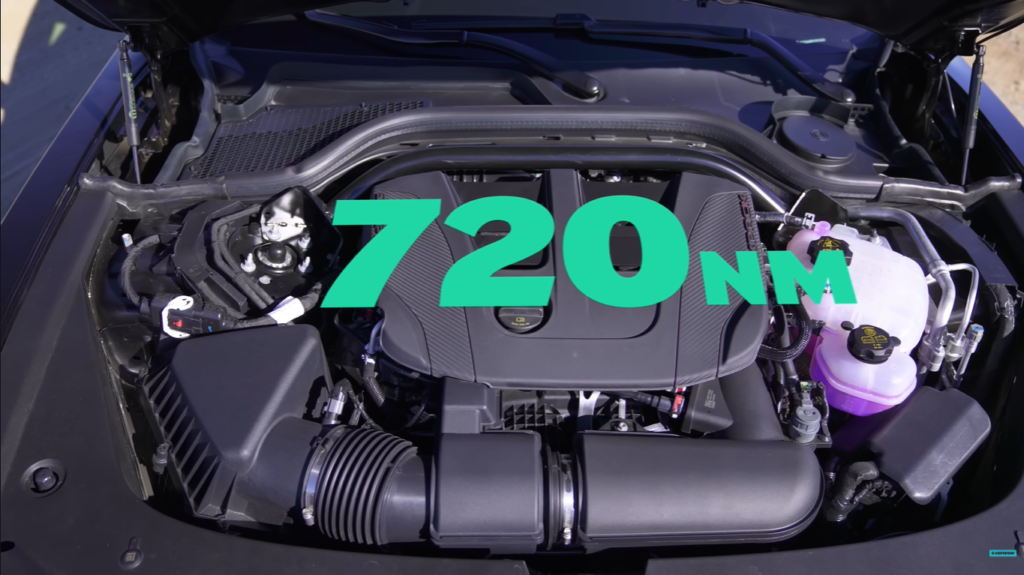
Meet the Hurricane Engine
Specifications:
- Displacement: 3.0 liters
- Configuration: Twin-turbocharged inline-six
- Power: 558 horsepower
- Torque: 720 Nm (531 lb-ft)
- Transmission: 8-speed automatic
- Drivetrain: Selectable all-wheel drive
- Redline: 6,500 RPM
The Name Game
Americans name their engines (Hurricane, Hellcat, Demon), while Germans use alphanumeric codes (BMW S58, Mercedes M139). There’s something wonderfully theatrical about shouting “HURRICANE ENGINE” versus “S58 unit.” The Hurricane sounds more powerful, and frankly, it IS more powerful than BMW’s equivalent inline-six.
How Does It Sound?
Exhaust Note Rating: 9/10
This might be the most surprising aspect of the entire car. Without EU noise regulations to neuter it, the Hurricane engine sounds absolutely magnificent. The twin-turbo straight-six produces a deep, rumbling growl that’s almost good enough to make you forget there’s no V8 under the hood.
Sound Characteristics:
- Deep, bassy idle
- Aggressive snarl under acceleration
- Pops and crackles on deceleration
- Turbo whoosh at high RPM
- No fake sound augmentation needed
The acoustic glass does an excellent job of filtering out wind and road noise during cruising, but when you plant your foot, that glorious exhaust note fills the cabin. It’s theater, yes, but it’s genuine theater – not piped through speakers like many modern performance cars.
Performance Testing: Reality Check
0-60 MPH: Three Different Results
Test 1: Rear-Wheel Drive Mode (For the Lols)
- Result: 5.81 seconds
- Issue: Too much wheel spin, couldn’t hook up
- Verdict: Fun but slow
Test 2: All-Wheel Drive, No Launch Control
- Result: Not recorded (still disappointing)
- Issue: Wheel spin off the line
- Verdict: Better but not optimal
Test 3: All-Wheel Drive WITH Launch Control
- Result: 4.15 seconds
- Method: Race mode activated, left foot on brake, full throttle, release brake
- Verdict: Now we’re talking!
The BMW M4 Comparison
For context, a BMW M4 Competition with rear-wheel drive and launch control achieves 0-60 mph in approximately 3.66 seconds. So yes, the BMW is faster, but:
- The Charger weighs 2,185 kg (significantly more than the M4)
- The Charger costs substantially less in the US market
- The Charger offers more practicality (hatchback design)
- The Charger has more torque (720 Nm vs. BMW’s 650 Nm)
Braking Test: The Disappointment
60-0 MPH Braking Distance: 38 meters
Expected Distance: ~35 meters
Equipment:
- Brembo brakes all around
- Six-piston calipers at the front
- Surprisingly… all-season tires
The Problem:
Herein lies one of the Charger’s most baffling decisions. Dodge fits this 550+ horsepower muscle car with all-season tires as standard. On a performance car. In 2025. Why?!
All-season tires compromise:
- Braking performance (as our 38m result proves)
- Cornering grip
- Acceleration traction
- Overall driving dynamics
The Solution:
First modification any owner should make: fit proper summer performance tires. This would likely:
- Reduce braking distance to ~34-35m
- Improve 0-60 times
- Enhance cornering confidence
- Transform the driving experience
The Brembo brakes themselves feel strong with good pedal feel, but the all-season tires fundamentally limit their effectiveness.
Design: 70% Perfection, 30% Tacky Disaster
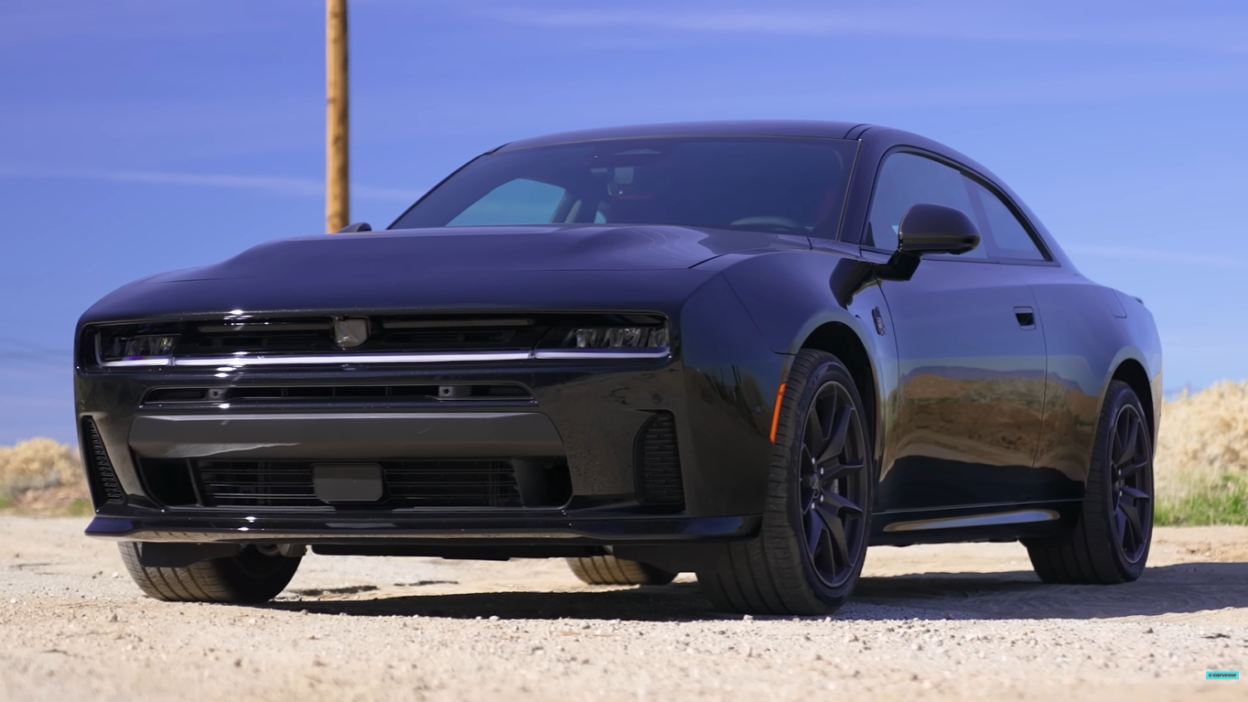
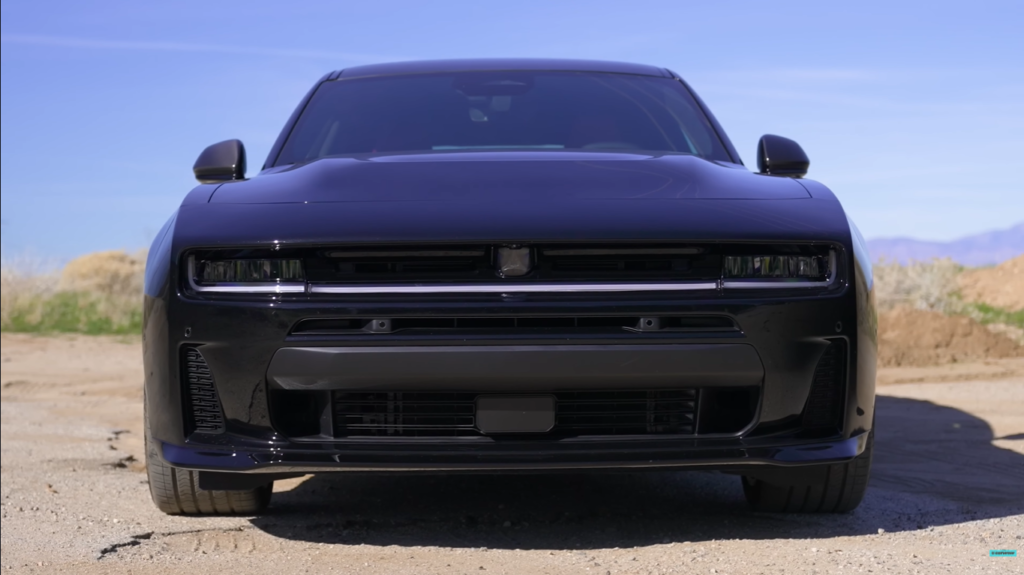
The Front End: Absolutely Perfect
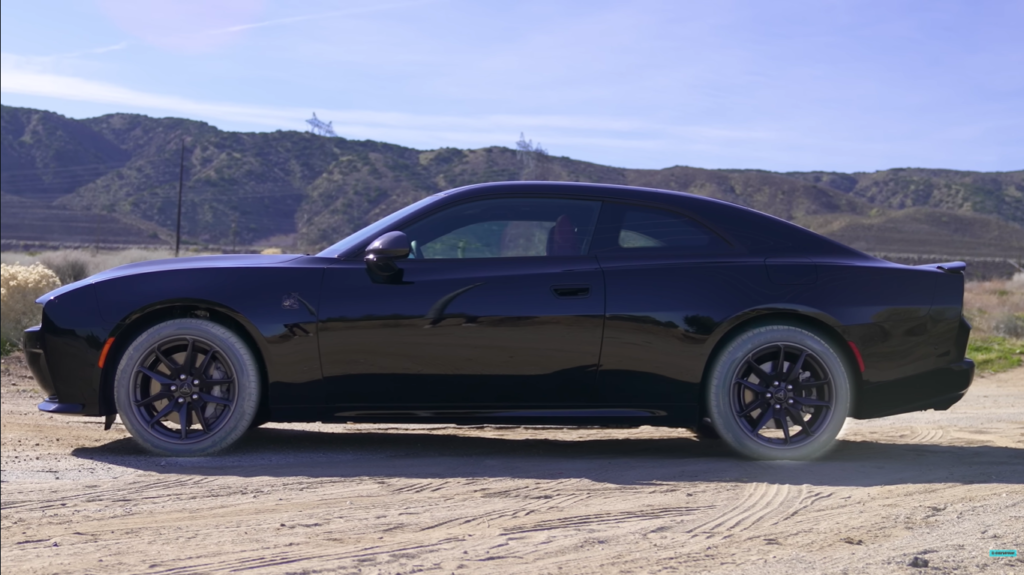
The front fascia is where Dodge absolutely nailed the brief. It’s wide, aggressive, retro, and menacing. Key design elements:
What Works:
- Wide, muscular stance
- Retro 1970s muscle car proportions
- Illuminated grille (looks incredible at night)
- LED light signature (properly menacing)
- Black paint job (enhances the aggressive aesthetic)
- Proper front splitter
This is peak American muscle car design. It looks like it could star in a modern remake of Bullitt or Vanishing Point.
The Side Profile: Ruined by Tacky Details
The side view starts strong with classic muscle car lines, but then Dodge commits two cardinal sins:
Sin #1: Fake Plastic Air Vent
There’s a horrible piece of tacky plastic molded to look like an air vent behind the front wheel. Except it doesn’t vent anything. It goes nowhere. It’s completely non-functional. In the age of aerodynamic optimization, this is inexcusable fake theatre.
Recommendation: Remove it immediately.
Sin #2: Scat Pack Bee Logos
Small bee decals scattered along the side are supposedly a reference to 1960s drag racing heritage. Cool story. Still looks tacky.
Recommendation: Straight in the bin.
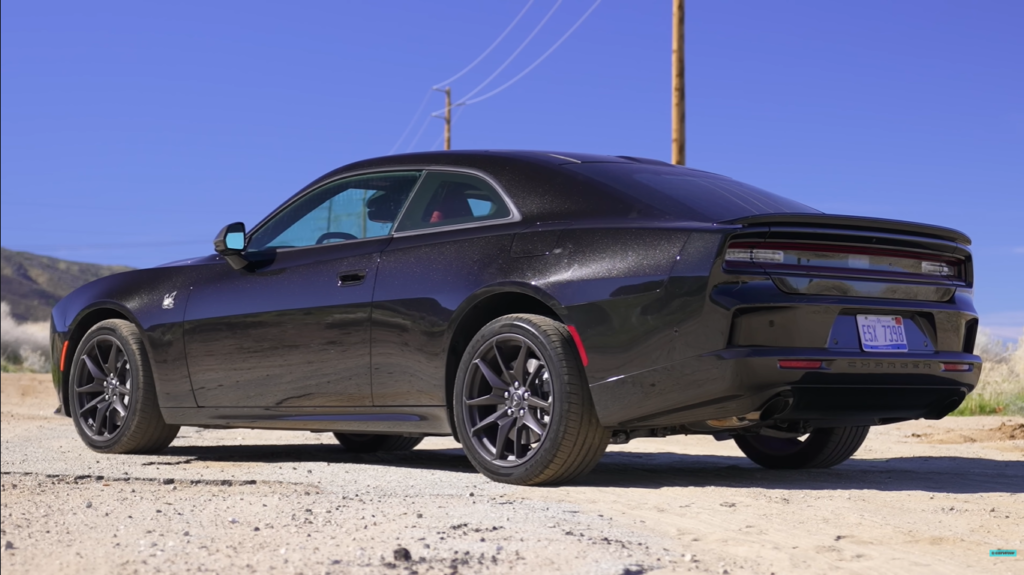
The Rear End: Redemption
Dodge regains form at the back:
What Works:
- Retro boxer design perfectly executed
- Full-width light bar (stunning at night)
- Proper muscle car stance
- Real exhaust pipes (verified with the Car Stick of Truth™)
Important Note: The EV version of the Charger has no exhaust pipes. Just… nothing. Fake tips? No. Just smooth bumper. At least Dodge had the decency to give the combustion version real pipes.
Overall Design Verdict
With 20 minutes of work removing the fake vent and bee stickers, this becomes a genuinely gorgeous muscle car that looks equally at home at a 1970s car show or a modern supercar meet. The design is 70% perfect – which in the automotive world is actually quite good.
Interior: Surprisingly Good, Frustratingly Compromised
Build Quality: More European Than Expected
What Surprised Me:
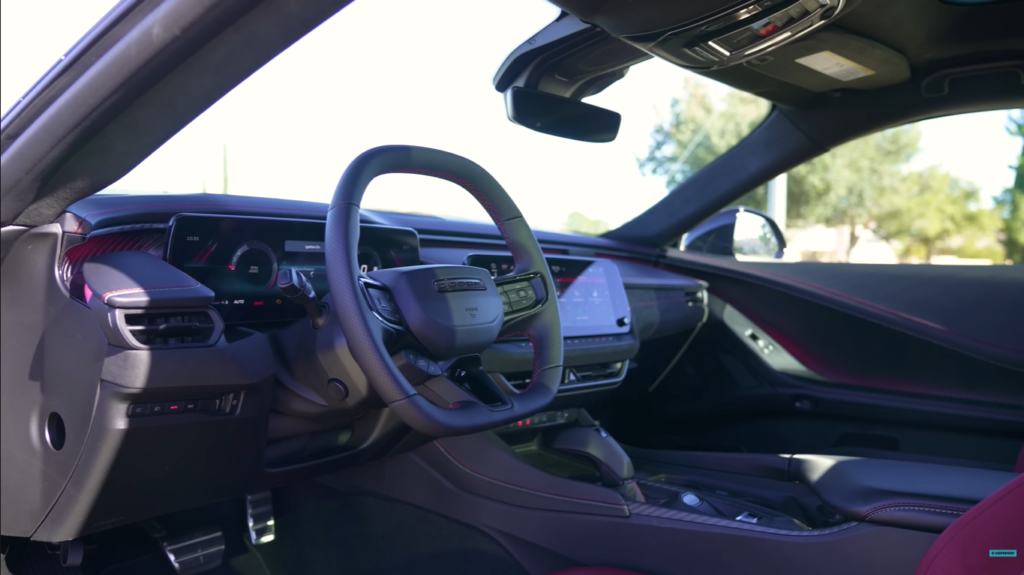
As someone who expects American cars to have cheap, plasticky interiors, the Charger shocked me. Overall quality is genuinely good – more European in feel than typical American fare.

Quality Highlights:
- Solid dashboard construction
- Decent material choices (leather, Alcantara-style fabric)
- Minimal squeaks or rattles
- Well-assembled panels (mostly)
Quality Low-Points:
- Some smaller plastic bits feel pre-production grade
- Center console doesn’t feel properly secured (wobbles)
- Roof panel fitment issues (especially on passenger side)
- Oddly long seat release tabs
Technology: America Finally Gets It Right
Touchscreen System: 9/10
Shockingly good. This is one of the best American infotainment systems I’ve ever used.
What Works:
- Sharp, crisp graphics
- Highly responsive touch input
- Colorful, modern interface
- Intuitive menu structure
- Wireless Android Auto and Apple CarPlay
- Easy to navigate while driving
What Doesn’t Work:
- Digital instrument cluster with bizarre blurred speedometer
- No physical button for surround-view cameras (more on this disaster later)
The Instrument Cluster Problem
The digital dials offer multiple view options, which sounds great until you realize the execution is baffling. To get the proper rev counter view (which you obviously want in a performance car), you cycle through several screens. Once you finally get there, you’ll notice the speedometer looks like someone in the design department discovered Photoshop’s blur tool and went crazy.
It’s like they hit “Filter > Blur > Motion Blur” and called it a day. Why? Just… why?
Heads-Up Display: Excellent
HUD Rating: 9/10
- Bright and clear
- Concise information
- Doesn’t obstruct view
- Customizable display options
No complaints here. It’s one of the best HUDs I’ve tested.
Surround-View Cameras: A Cautionary Tale
Camera Quality: 10/10 Implementation: 5/10
The surround-view cameras are absolutely crystal clear – some of the best resolution I’ve seen. But here’s where Dodge made a critical mistake: no physical camera button.
My Personal Disaster:
Picture this: Fresh off a transatlantic flight, I pick up this brand-new Charger from a California multi-story car park. I notice a high curb and think, “I’ll need the cameras for this.”
I put it in reverse – cameras appear. Perfect.
I put it in drive – cameras disappear. Not perfect.
I frantically search for a camera button. There isn’t one visible. People behind me start honking. I panic. I just go for it and…
SCRAPE.
I curbed the brand-new 20-inch powder-coated alloy wheel on a borrowed press car. In a foreign country. Within 30 minutes of picking it up.
The Twist:
There IS a camera shortcut button… hidden in a dropdown menu that I didn’t discover until hours later. Dodge, if you’re reading this: I’m not paying for that wheel. Design fault. Absolutely your fault.
Dear Dodge: Please forgive me, but also, fix this.
Practicality: Surprisingly Decent (With One Fatal Flaw)
It’s a Hatchback!
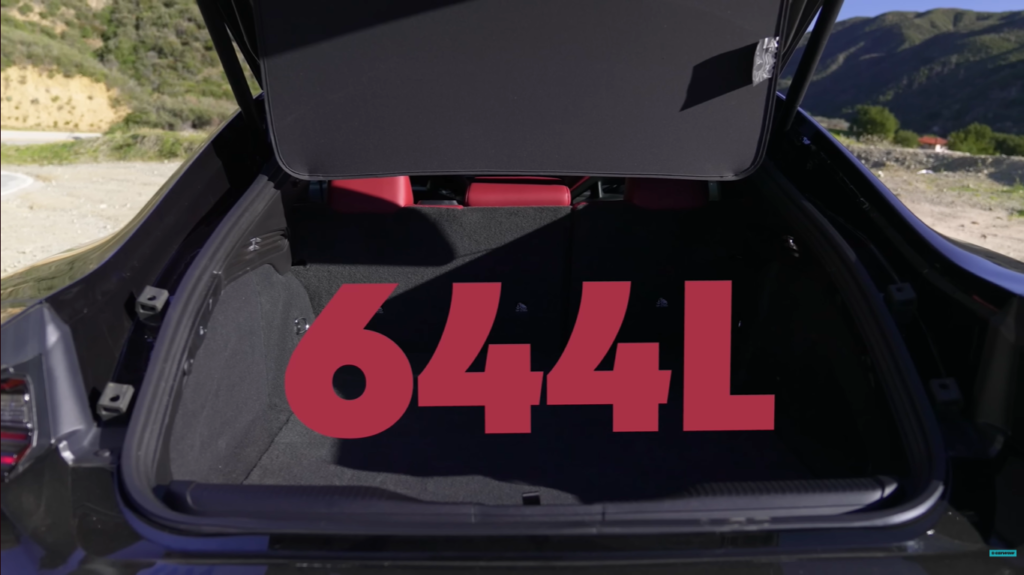
Cargo Capacity: 644 liters
Yes, the Charger is now a hatchback rather than a traditional sedan. This is actually brilliant for practicality.
What Works:
- Large opening for loading
- Lower button placement (easier to reach than most cars)
- Decent overall volume
What Doesn’t Work:
- Shallow cargo area (won’t fit tall boxy items)
- High load-lip
- Shape isn’t optimized for luggage
Still, for a muscle car, having a hatchback is a legitimate USP. You can actually go to Home Depot and bring stuff home.
Storage Solutions
Interior Storage: 7/10
- Decent cup holders
- Good door bin size
- Storage under center console
- Wireless phone charging pad
No major complaints about day-to-day storage.
The Seating Position Disaster
The Problem: EV Platform Compromise
Here’s where the Charger fundamentally fails: the seating position is terrible.
The Root Cause:
The Charger shares its platform with the upcoming electric version. To accommodate the massive battery pack underneath, Dodge eliminated the footwells. Then, when creating the combustion-engine version, they apparently forgot to add them back in.
Front Seats: Deck Chair Syndrome
The Experience:
Sitting in the driver’s seat feels like lounging in a deck chair at the beach. Your legs extend straight out in front of you with minimal knee bend. You literally cannot get the seat as low as you’d like.
The Result:
- Unnatural driving position
- Raised seating height (feels wrong in a sports car)
- Can’t achieve proper racing posture
- Compromised long-distance comfort
For a car designed for spirited driving, this is unforgivable. A proper driving position is fundamental to the driving experience, and the Charger gets it completely wrong.
Rear Seats: The Birthing Position
The Experience:
Rear seat passengers have it even worse. Despite decent headroom and impressive knee room (this car is very wide), you sit with your knees around your ears.
It’s like being in the birthing position. Genuinely uncomfortable. I needed a toilet break just from sitting back there during the review.
The Problems:
- No footwell depth
- Knees forced upward
- Unnatural sitting posture
- Uncomfortable for journeys over 20 minutes
What Works in Back:
- Heated seats
- USB charging ports
- Massive glass roof (great headroom)
- Plenty of width
If only they’d sorted the footwells, rear passenger comfort would be excellent. As it stands, it’s merely tolerable for short trips.
Driving Dynamics: Surprisingly Good (Despite the Weight)
Handling Assessment
For a 2,185 kg beast, the Charger handles far better than it has any right to.
What Works:
Steering:
- Sharp turn-in response
- Good weight and feedback
- Direct connection to front wheels
- Confidence-inspiring at speed
Chassis Balance:
- Rear differential manages power excellently
- 305-section rear tires hook up well
- Body roll well-controlled
- Predictable handling characteristics
Suspension:
- Firm but fair damping
- Comfortable in town and highway cruising
- Keeps body flat during hard cornering
- Doesn’t feel overly harsh on bad roads
The Weight Problem
Curb Weight: 2,185 kg (4,818 lbs)
You simply cannot hide this much mass. The laws of physics are undefeated.
How Weight Affects Performance:
Initial Acceleration: Despite 720 Nm of torque, the Charger doesn’t feel as punchy off the line as the BMW M4. That initial pickup is dulled by the sheer mass the engine has to motivate.
Cornering: The chassis does an admirable job disguising the weight, but you can feel it loading up in tight corners. The car feels planted and stable, but not nimble or agile.
Braking: As our test proved (38m from 60mph), all that weight takes serious stopping. Even with excellent Brembo brakes, physics demands more distance.
Direction Changes: Quick transitions reveal the mass. The car doesn’t dance through switchbacks – it muscles through them.
Transmission Performance
8-Speed Automatic: 7/10
The eight-speed auto is smooth and generally competent, but the shifts don’t feel as brutal or immediate as the BMW M4’s gearbox. There’s a slight delay between paddle pull and gear change that dulls the driving experience.
What Works:
- Smooth in automatic mode
- Decent shift speed in manual mode
- Good gear spacing
- Holds gears well in Sport mode
What Doesn’t Work:
- Shifts lack BMW-level brutality
- Paddles are tiny plastic buttons (more on this atrocity later)
- Not quite as engaging as dual-clutch alternatives
EV Comparison
For Context: The electric Charger weighs 2,600 kg but produces 680 horsepower. That’s 415 kg more weight but 122 more horsepower. The power-to-weight ratio slightly favors the EV, and you get instant torque. Something to consider.
Factory-Approved Tire Destruction: Line Lock
The Most American Feature Ever
This family-sized coupe comes with factory-approved tire destruction mode. Let me explain this glorious stupidity.
How to Activate Line Lock:
- Enter race options menu
- Select “Activate Line Lock”
- Put car in Drive
- Left foot on brake pedal
- Press and hold OK button to engage front brakes
- Continue holding OK
- Release brake pedal
- Apply full throttle
- Watch tire smoke
The Result:
The front brakes lock while the rears spin freely, allowing you to perform the most ridiculous burnouts imaginable. Clouds of tire smoke. The smell of burning rubber. Complete and utter automotive stupidity.
Why Does This Exist?
Ostensibly, Line Lock is for warming up rear tires before drag racing. In reality, it exists because Americans love showing off, and Dodge knows its customer base.
My Verdict:
It’s totally pointless. It’s completely unnecessary. It’s absolutely ridiculous.
I love it.
After doing a proper Line Lock burnout, breathing in tire smoke, and grinning like an idiot, I had to admit: sometimes automotive theater for theater’s sake is exactly what we need. Not everything has to be rational or efficient.
The Germans would never add this feature. Too frivolous. Too wasteful. Too… fun.
And that’s precisely why it’s brilliant.
The Annoying Details: Death by a Thousand Paper Cuts
The List of Irritations
Despite loving this car overall, I must document the frustrations. Some are minor quibbles; others are genuine design failures.
1. Tiny Plastic Paddle Shifters
In a big, powerful, brutal muscle car, you want substantial metal paddle shifters. Instead, you get tiny plastic buttons that feel like they belong on a coffee machine or kitchen appliance. Unacceptable.
2. Gear Lever Design
The gear lever feels like you’re giving someone a “reach around.” I don’t know what that feels like (obviously), but this lever’s motion is oddly intimate and uncomfortable.
3. Massive Camera Pod
The huge camera housing attached to the rearview mirror extends far down the windscreen, creating a blind spot in your central vision. Modern Volvo owners will sympathize with this frustration.
4. Absurdly Long Seat Release Tabs
To fold the front seats forward, you pull a release tab. Normal cars have a 2-inch tab. The Charger has what feels like a 12-inch lever. It’s like taking the seat for a walk on a leash: “Heel, boy! Heel!”
5. Ambient Lighting Reflections
The “Attitude Adjustment” (yes, that’s what Dodge calls the ambient lighting) offers brilliant, vibrant colors. But you can’t use it at night because it creates terrible reflections in the windscreen. So it’s decorative theater you can only enjoy during the day. Pointless.
6. Haptic Feedback Panel
The climate control panel uses haptic feedback rather than physical buttons or pure touch-sensitive controls. It’s the worst of both worlds – you feel compelled to press harder, but it’s not a real button. Just odd.
7. Engine-On Door-Open Warning
With the ignition on (but engine not running) and doors open, you get an incessant warning sound that never stops. It sounds like you’re reversing into a wall. Incredibly annoying when loading cargo or checking something.
8. Wheel Arch Gap
Despite 20-inch alloy wheels, I can fit my entire hand in the wheel arch gap. For a car with this aggressive stance, the ride height feels too high.
9. Seat Bolsters
The seats look fantastic – beautiful leather and Alcantara-style fabric reminiscent of Imperial Guard Star Wars figures. But the side bolsters are too wide and don’t grip firmly enough during spirited driving. They seem designed for larger-framed individuals and don’t hold average-sized drivers securely.
This isn’t “British person mocking American obesity” – the UK has similar obesity rates. The bolsters just aren’t aggressive enough for a performance car.
10. Pre-Production Quality Plastics
Some smaller plastic components feel like pre-production parts. The kind of thing manufacturers usually say, “Don’t comment on that; we’re changing it before production.” Except Dodge apparently forgot to change them.
Value Proposition: Location, Location, Location
United States Pricing
Base Model (Scat Pack Sixpack): $60,000
As Tested (with options): $75,000
California Price (with taxes/fees): ~$65,000 base
What You Get for $60-75k:
- 558 horsepower
- 720 Nm torque
- All-wheel drive
- 4.15-second 0-60 mph
- Hatchback practicality
- Stunning retro design
- Factory burnout mode
- Excellent technology
US Verdict: Absolute Steal ⭐⭐⭐⭐⭐
In the American market, this represents phenomenal value. You’re getting genuine supercar-level performance, practical everyday usability, and head-turning looks for significantly less than European competitors.
Competitors at Similar US Prices:
- BMW M3/M4: Starting ~$75k (less powerful, smaller)
- Mercedes-AMG C63: Starting ~$78k (similar power, less practical)
- Audi RS5: Starting ~$76k (less powerful, smaller)
The Charger undercuts them all while matching or exceeding performance.
United Kingdom Pricing (After Import)
Import Cost: ~£85,000 ($105,000)
What That Includes:
- Shipping costs
- Import duty
- VAT (Value Added Tax)
- Registration fees
- Conversion compliance costs
- Right-hand drive conversion (if desired)
UK Verdict: BMW M4 Territory ⭐⭐⭐
At £85,000, you’re paying the same as a BMW M4 Competition, which offers:
- Faster acceleration (3.6s vs 4.15s)
- Better braking
- Superior driving dynamics
- Better interior quality
- Proper driving position
- Lower running costs
- Established dealer network
- Better resale value
UK Conclusion: Save your money and buy the BMW.
Used Car Buying: Do Your Homework
The CarVertical Story
Before buying any used performance car (including a used Charger), you MUST run a vehicle history check. I recommend CarVertical.
Real Example:
I found a 2020 Mercedes-AMG C63 on CarWow for just over £40,000 – similar money to a new Charger in the US. The CarVertical check came back clean.
But I ran another check on a different C63 that revealed:
- Damage reports
- Accident history
- Potential hidden issues
The Lesson:
That damaged car could have been repaired and put back on sale with you none the wiser. Or you could use the damage history to negotiate a substantial price reduction.
Either way, you need to know what you’re buying.
Special Offer: Use code “carwow” for 20% off CarVertical checks (link in description).
Don’t end up with a car with a shady past – especially something as powerful as a 550hp Charger that might have been thrashed by a previous owner.
The Final Verdict: A Love-Hate Relationship
What I Expected
I expected to hate this car. I don’t rate American cars. They’re too big, too soft, too cheap inside. Too much theater and not enough engineering.
What Actually Happened
Despite documenting numerous flaws, irritations, and genuine design failures, I still genuinely love this car.
Why?
The Look: 10/10 Once you remove the tacky badges and fake vents, this is one of the best-looking cars on sale today. Pure American muscle car theater done right.
The Sound: 9/10 That Hurricane engine sounds absolutely magnificent. Deep, aggressive, theatrical – everything a muscle car should be.
The Stupidity: 10/10 Line Lock burnouts. Factory-approved tire destruction. 550+ horsepower in a family car. It’s beautifully, wonderfully, perfectly stupid.
The Experience: 8/10 Despite the flawed driving position and weight, this car delivers a genuinely engaging, entertaining driving experience that makes you grin.
The Formula
50% awesome + 50% annoying = 100% American
And somehow, that formula works. The Charger is flawed, frustrating, and occasionally infuriating. But it’s also charismatic, characterful, and genuinely lovable despite its faults.
Who Should Buy the Dodge Charger?
Perfect For (US Market):
American Muscle Enthusiasts If you love the theater, sound, and presence of American muscle cars, this is the best modern interpretation money can buy.
Value Seekers 550+ horsepower for $60k? That’s BMW M5 power at M340i pricing. Phenomenal value.
Family Performance Car Buyers Need back seats and cargo space but want serious performance? The Charger is one of the only options.
Anti-Establishment Types Tired of efficient, sensible, rational European sports sedans? Want something with character? The Charger is your car.
Driving Enthusiasts on a Budget You get 95% of the performance of cars costing $30-40k more.
Not Ideal For (US Market):
Track Day Warriors That 2,185kg weight will hurt you on track. Get a lighter sports car.
Technology Purists Some quirks and flaws in the tech implementation will frustrate detail-oriented buyers.
Comfort Priority Buyers The seating position is compromised. If comfort is paramount, look elsewhere.
Eco-Conscious Buyers This is not a sensible choice for fuel economy. Consider the EV version or a different car entirely.
UK Buyers: Just Don’t
At £85k after import costs, this makes zero financial sense. Buy a BMW M4, save £20k, and enjoy:
- Better performance
- Superior dynamics
- Proper driving position
- Established dealer network
- Better resale value
The only exception: You’re a die-hard American muscle car collector who must have one regardless of logic.
Final Recommendations by Buyer Type
US Buyer, New Car, $60-75k Budget
Recommendation: BUY IT ⭐⭐⭐⭐⭐
Absolute no-brainer. This is a phenomenal value and a genuinely great car despite its flaws.
US Buyer, Used Market
Recommendation: WAIT & RESEARCH
Run a CarVertical check. Ensure it hasn’t been thrashed. Check for curbed wheels (ahem), accident history, and proper service records. Used Chargers will depreciate like all Dodges, creating excellent value opportunities.
UK Buyer, Import New
Recommendation: DON’T ⭐⭐⭐
Buy a BMW M4 for similar money with better everything (except theater and sound).
UK Buyer, Import Used
Recommendation: REALLY DON’T ⭐⭐
Even worse value proposition. Import costs plus used car risks plus no warranty.
Track Day Buyer (Any Market)
Recommendation: WRONG TOOL
At 2,185kg, this isn’t a track weapon. Buy a Porsche Cayman, Corvette Z06, or BMW M2.
Daily Driver with Fun Factor (US)
Recommendation: STRONG CONSIDER ⭐⭐⭐⭐
Genuinely practical with hatchback, back seats, and decent tech. The seating position is annoying but tolerable for daily use.
Conclusion: I Finally Found an American Car I Love (With Conditions)
After years of reviewing cars and dismissing American vehicles as too big, too soft, and too cheap, I’ve finally found one I genuinely love.
The Catch: I only love it in America, at American prices.
The Equation
In the USA for $60-75k:
Stunning design + Fantastic sound + Legitimate performance + Practical hatchback + Factory burnouts = Absolutely buy it
In the UK for £85k:
Import costs + Compromised driving position + Weight issues + Unknown reliability + Poor dealer network = Buy a BMW M4 instead
The Surprising Truth
Despite listing dozens of annoyances, flaws, and genuine design failures, I still came away loving this car. The looks are perfect. The sound is perfect. The stupidity is absolutely perfect.
It’s theatrical, characterful, and deeply flawed – but in a way that makes it more endearing, not less.
Final Score
United States: 4.5/5 ⭐⭐⭐⭐½
Phenomenal value, genuine performance, lovable character. Highly recommended.
United Kingdom: 3/5 ⭐⭐⭐
Too expensive after import costs. Buy a BMW M4 for the same money.
The Last Word
I’ve finally found an American car I genuinely love, only when it’s here in America.
Classic.
Specifications at a Glance
| Specification | Details |
|---|---|
| Engine | 3.0L Twin-Turbo Inline-Six “Hurricane” |
| Power | 558 HP |
| Torque | 720 Nm (531 lb-ft) |
| Transmission | 8-Speed Automatic |
| Drivetrain | Selectable AWD |
| 0-60 mph | 4.15s (with launch control) |
| 60-0 mph | 38m |
| Weight | 2,185 kg (4,818 lbs) |
| Cargo | 644 liters (hatchback) |
| Price (US) | $60,000 base / $75,000 as tested |
| Price (UK Import) | ~£85,000 |
| Fuel Economy | Not good (expect 15-20 MPG combined) |
No. The M4 does 0-60 in 3.66s vs. the Charger’s 4.15s. But the Charger costs $15-20k less in the US.
In America at $60k? Yes. In the UK at £85k? No.
Have you driven the new Dodge Charger? What did you think? Would you buy one over a BMW M4? Let me know in the comments!
Review conducted in California, USA. All opinions are honest and independent. Thanks to Dodge for providing the test vehicle.