Real-World Testing, Fuel Economy, Pros, Cons & Honest Verdict
The 2026 Chery Tiggo 4 Hybrid enters the Australian market with one bold claim: hybrid SUV ownership for around $30,000 drive-away. In a market where most hybrid SUVs start closer to $38,000–$45,000, that headline price alone is enough to turn heads.
But price alone doesn’t make a great car.
So the real question is simple:
Is the Tiggo 4 Hybrid a smart budget buy—or a cheap car that feels cheap every day you drive it?
After real-world testing across city roads, highways, and everyday driving conditions, here’s the full, no-nonsense answer.
Quick Verdict (TL;DR)
Overall Rating: 5.5 / 10
The Chery Tiggo 4 Hybrid delivers strong power, impressive interior space, and quiet city driving, all at a price no other hybrid SUV can currently match in Australia. However, these positives are heavily offset by poor build quality, questionable handling dynamics, budget components, and unrefined calibration of safety systems.
This is a car that makes sense only if your budget is fixed and non-negotiable. If you can stretch even a few thousand dollars more, better-engineered alternatives exist.
Price & Market Positioning in Australia
Let’s start with the biggest selling point: price.
- Base model: ~ $30,000 drive-away
- Top-spec tested model: ~ $35,000 drive-away
That pricing makes the Tiggo 4 Hybrid:
- Around $6,000 cheaper than the MG ZS Hybrid+
- Around $8,500 cheaper than the Toyota Corolla Cross Hybrid
- Over $12,000 cheaper than the Honda HR-V e:HEV
On paper, this is incredible value. You’re getting a hybrid SUV for the price of many petrol-only rivals. For first-time hybrid buyers, that alone makes the Tiggo 4 Hybrid extremely tempting.
However, automotive pricing follows one unbreakable rule:
when something is much cheaper than the competition, the savings come from somewhere.
Exterior Design: Functional, Not Memorable
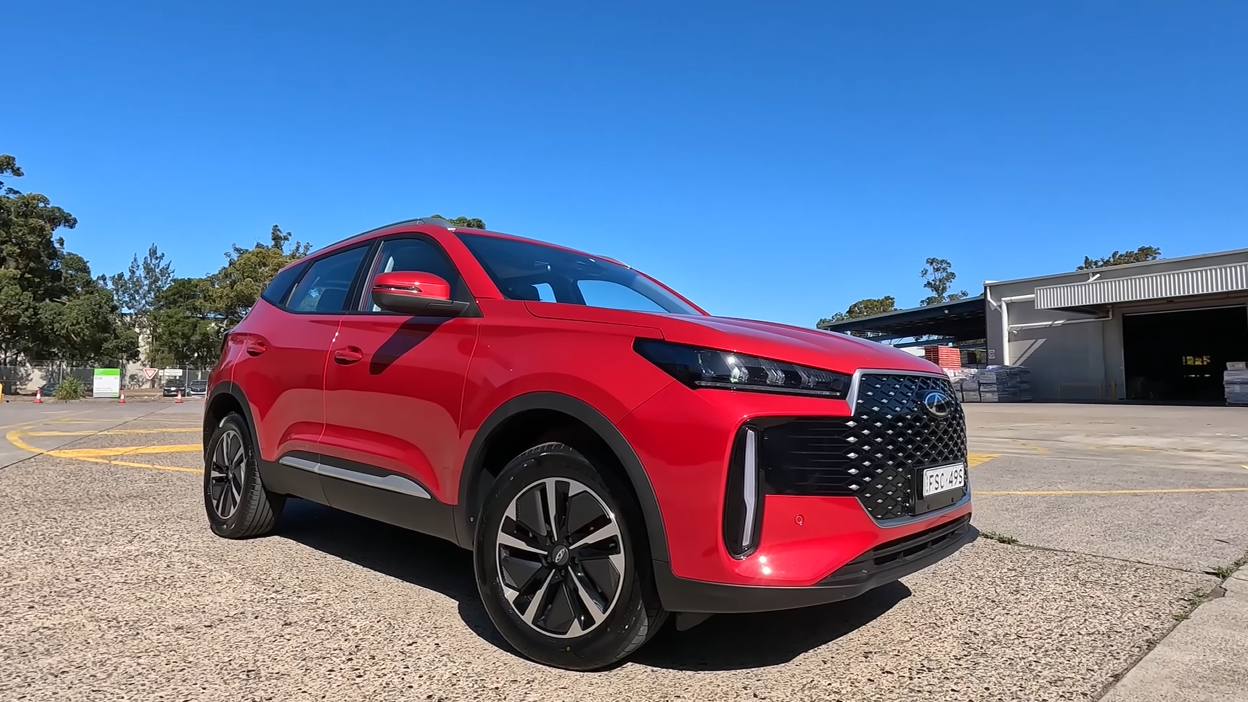
Visually, the Tiggo 4 Hybrid is best described as safe and conservative.
It follows the familiar small-SUV formula:
- Upright stance
- Modest grille design
- Standard LED lighting
- Simple body lines
Nothing about the design screams premium or sporty, but nothing looks awkward either. It blends into traffic easily, which for many buyers is perfectly fine.
Exterior Highlights
- Upright proportions help maximize cabin space
- Panoramic sunroof available on higher trims
- LED headlights and taillights add a modern touch
Where It Feels Budget
- Wheel design is basic
- Paint quality and panel fit lack refinement
- No distinctive styling elements to stand out
In short, the Tiggo 4 Hybrid looks exactly like what it is: a cost-focused SUV designed for function, not flair.
Interior: Big on Space, Weak on Quality
Interior Space — A Genuine Strength
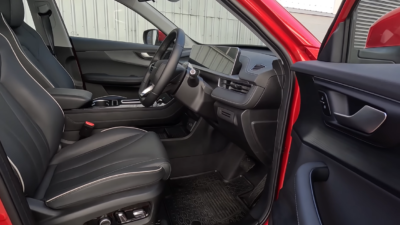
Step inside, and the Tiggo 4 Hybrid immediately redeems itself in one crucial area: space.
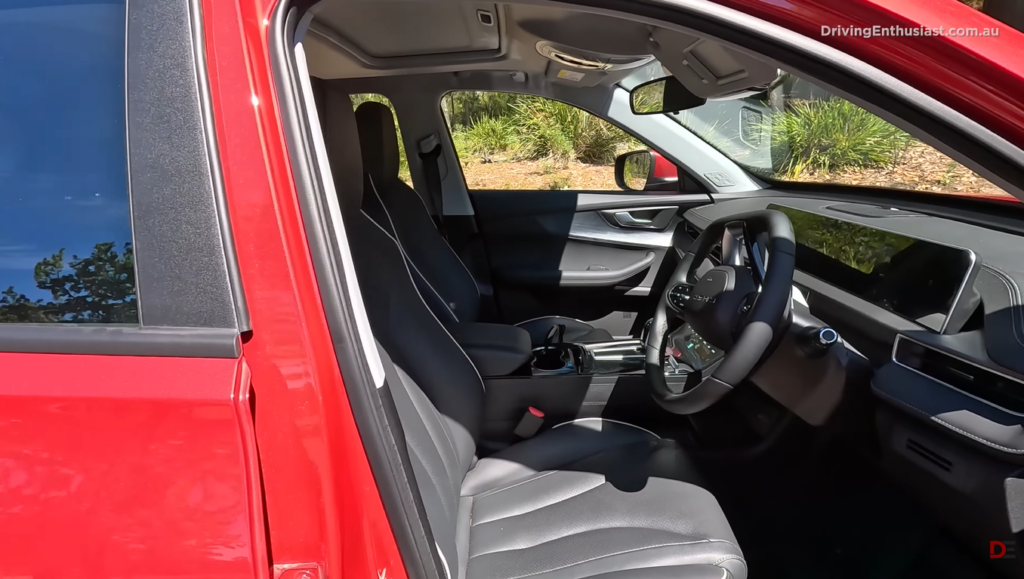
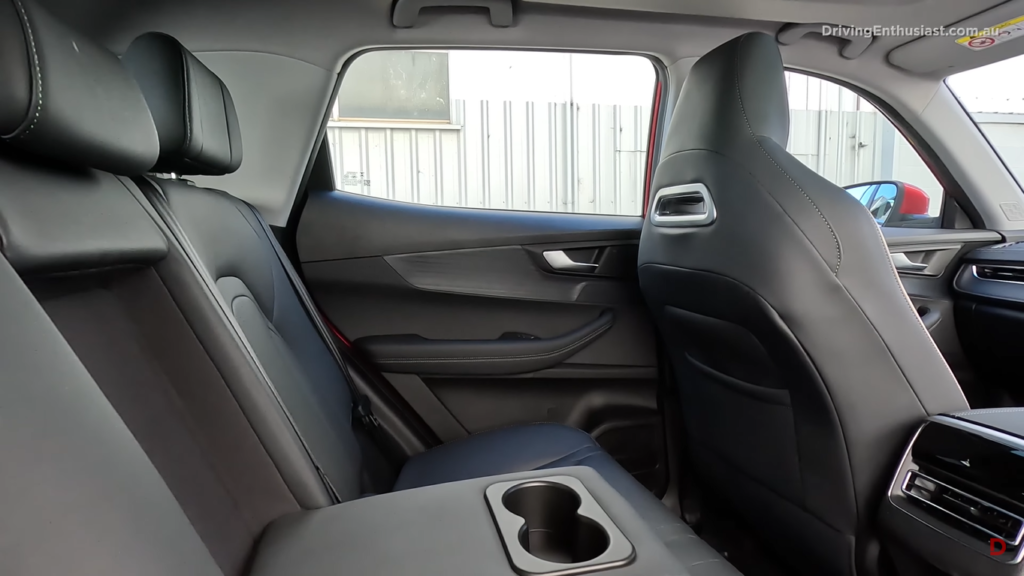
For a small SUV, the cabin feels surprisingly generous:
- Plenty of headroom for tall drivers
- Excellent rear legroom for passengers
- Comfortable seating position for daily driving
- Practical storage solutions throughout the cabin
Families, rideshare drivers, and anyone who values interior room will genuinely appreciate how airy this SUV feels.
The boot is also competitive for the segment, with a flat load floor when seats are folded and enough room for groceries, prams, or weekend luggage.
Build Quality — Where Things Fall Apart
Unfortunately, once you move past the space, the build quality issues become impossible to ignore.
From day one, the cabin suffers from:
- Persistent squeaks and rattles
- Cheap-feeling plastics in high-touch areas
- Loose-sounding panels over bumps
- An armrest that rubs against the seat, creating constant noise
These are not issues that appear after years of wear—they are present brand new.
The climate control layout is another frustration. Controls are split between physical buttons, the infotainment screen, and a separate display that doesn’t actually control anything. It feels poorly thought out and unnecessarily complicated.
Powertrain & Performance: Surprisingly Strong
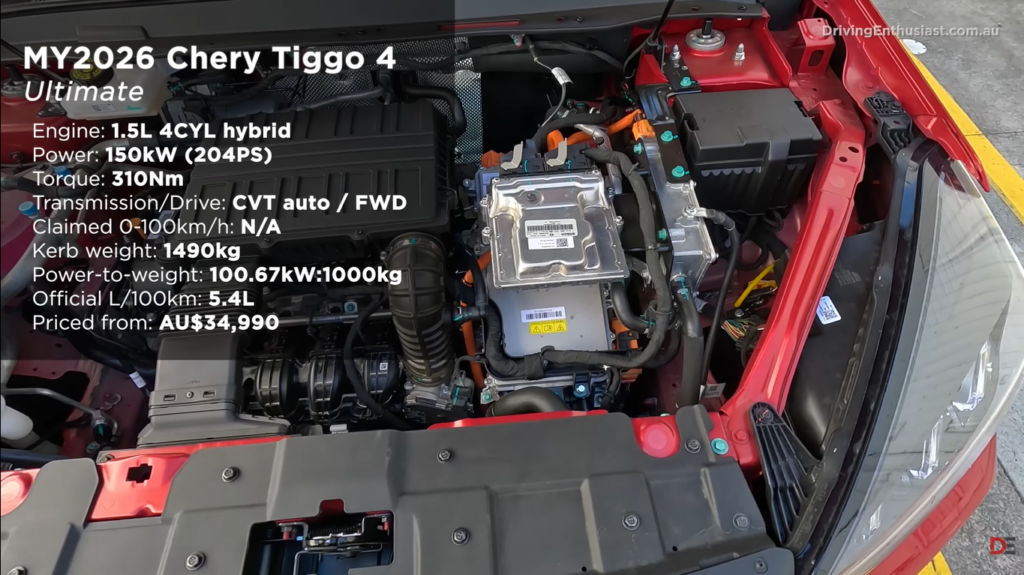
Under the bonnet, the Tiggo 4 Hybrid combines a 1.5-litre petrol engine with an electric motor, producing a healthy 150 kW of combined power.
How It Feels on the Road
- City driving: Smooth, quiet, and relaxed
- Stop-start traffic: Excellent use of electric-only mode
- Acceleration: Strong enough to feel quick around town
- Overtaking: Confident and effortless
For daily commuting, this powertrain works well. It doesn’t feel underpowered, and the electric assistance masks turbo lag effectively.
Where it falls short is refinement at speed. On highways, the petrol engine becomes noticeably loud when it kicks in, breaking the otherwise calm hybrid experience.
Real-World Fuel Economy: Decent, Not Class-Leading
Official fuel figures look promising, but real-world testing paints a more realistic picture.
Our Test Result
- Average fuel consumption: ~ 6.2 L/100 km
This is acceptable, but it’s not impressive for a hybrid SUV—especially when competitors do better.
For comparison:
- Toyota Corolla Cross Hybrid regularly achieves mid-4 L/100 km
- Honda HR-V e:HEV sits closer to 5.0 L/100 km
- MG ZS Hybrid+ averages around mid-5s
The Tiggo 4 Hybrid saves fuel compared to petrol SUVs, but it doesn’t fully capitalize on hybrid technology.
Ride Comfort & Handling: Comfort First, Control Last
Ride Comfort
On rough urban roads, the Tiggo 4 Hybrid is comfortable. The soft suspension absorbs potholes and speed bumps well, making it pleasant for city driving.
Handling & Steering
Once the road becomes twisty, the weaknesses appear quickly:
- Steering lacks feedback and precision
- Excessive body roll in corners
- Rear end feels slow to respond
- Confidence drops at higher speeds
The budget tyres are a major contributor here. They generate noticeable road noise and provide limited grip, further reducing driver confidence.
This isn’t a car for enthusiastic driving. It’s designed to be driven gently—and it demands that you do so.
Safety & Driver Assistance
The Tiggo 4 Hybrid includes a solid list of safety features:
- Autonomous Emergency Braking
- Lane Keep Assist
- Blind Spot Monitoring
- Rear Cross-Traffic Alert
However, the execution is inconsistent.
The driver monitoring system is particularly annoying, triggering frequent false alerts and requiring manual deactivation every drive. While the hardware is present, the calibration feels unfinished.
An official ANCAP rating is still pending.
Ownership, Warranty & Reliability Concerns
Chery offers a 7-year unlimited-kilometre warranty, which is excellent on paper and helps ease some concerns.
That said:
- Chery’s dealer network is still growing in Australia
- Long-term reliability data is limited
- Resale values for Chinese brands remain weaker than Japanese rivals
This makes the Tiggo 4 Hybrid a bigger question mark for buyers planning long-term ownership.
Pros & Cons Summary
Pros
- Cheapest hybrid SUV in Australia
- Spacious interior for the class
- Strong power output (150 kW)
- Quiet and smooth city driving
- Long warranty coverage
Cons
- Poor interior build quality
- Constant squeaks and rattles
- Weak handling and steering feel
- Budget tyres compromise safety and refinement
- Fuel economy isn’t best-in-class
Final Verdict: Should You Buy One?
The 2026 Chery Tiggo 4 Hybrid is not a bad car—but it is a compromised car.
If your budget is absolutely capped at $30,000–$35,000 and you want hybrid technology with lots of interior space, it delivers on those basics.
However, if you can stretch your budget even slightly, competitors like the MG ZS Hybrid+, Toyota Corolla Cross Hybrid, or Mazda CX-3 offer far better build quality, driving confidence, and long-term peace of mind.
Top 5 Reasons to Avoid Chery Tiggo 4 Hybrid (2026)
Bottom line:
The Tiggo 4 Hybrid proves that cheap hybrids are possible—but it also proves why better hybrids cost more.