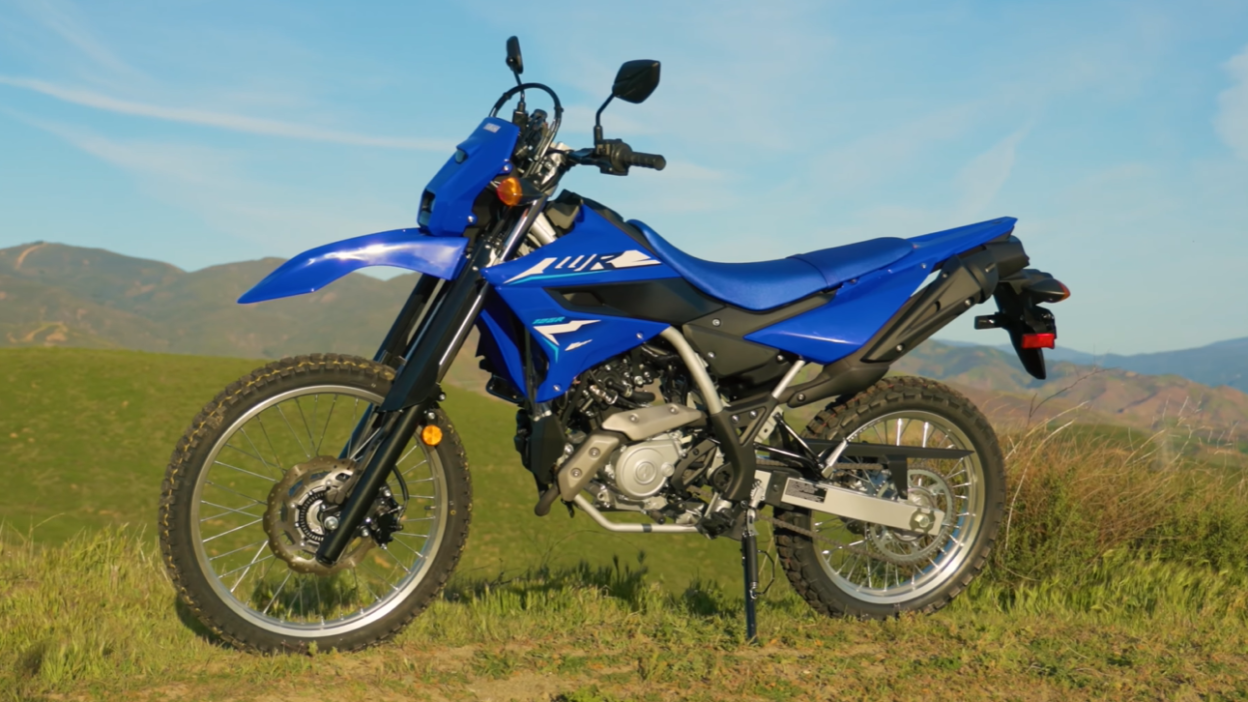
Looking for an affordable dual sport that won’t intimidate new riders but still delivers real performance? The brand-new 2026 Yamaha WR125R has entered the entry-level motorcycle market with a compelling proposition: sophisticated technology borrowed from superbikes, proper dirt bike dimensions, and an attractive under $4,000 price tag. But can a 125cc engine really satisfy both street and trail riding?
After extensive testing in the mountains above Los Angeles—tackling rocky trails, dirt roads, and winding pavement—we’ve discovered what makes the WR125R special, and where it falls short. From its groundbreaking variable valve timing (VVT) technology (normally found on $15,000+ sportbikes) to its surprisingly capable suspension, this little Yamaha punches well above its weight class. But the 34.4-inch seat height and limited top speed aren’t for everyone.
Quick Verdict: The 2026 Yamaha WR125R scores 8.5/10 as an entry-level dual sport, offering exceptional technology and build quality for under $4,000. It’s nearly perfect for taller beginners and experienced riders wanting an economical around-town bike, but the tall seat and 125cc power limitations prevent it from being universally ideal
What Makes the 2026 Yamaha WR125R Different?
Breaking New Ground in Entry-Level Dual Sports
The 2026 Yamaha WR125R isn’t just another small-displacement dual sport—Yamaha attempts to redefine what entry-level means with technology previously reserved for premium motorcycles.
Core Philosophy:
Yamaha recognized a gap in the market: new riders want affordable, approachable bikes that don’t feel cheap or outdated. The WR125R addresses this by combining:
✅ Superbike technology (VVT from GSXR1000)
✅ Proper dual sport dimensions (21″/18″ wheels)
✅ Modern features (ABS, fuel injection, LCD dash)
✅ Budget-friendly pricing (under $4,000)
Target Audience: Who Is This Bike For?
Primary Market:
- New riders seeking first motorcycle
- Budget-conscious buyers wanting quality at low price
- Urban commuters needing fuel-efficient transport
- Trail riders wanting lightweight, manageable bike
- Experienced riders downsizing or adding fun second bike
Key Selling Point:
“You don’t have to go fast to have fun.”
This philosophy defines the WR125R—it’s not about speed or power, but about accessible, enjoyable riding in a well-engineered package.
Specifications & Price Breakdown
2026 Yamaha WR125R Complete Specs
| Category | Specification | Details |
|---|---|---|
| MSRP | $3,999 | Under $4,000 out the door |
| Engine | 125cc single-cylinder | Liquid-cooled, 4-valve, SOHC |
| Technology | Variable Valve Timing (VVT) | Cam profile switching |
| Fuel System | Electronic Fuel Injection | Modern EFI system |
| Transmission | 6-speed manual | Standard shift pattern |
| Weight | 300 lbs (dry) | Lightweight for dual sport |
| Seat Height | 34.4 inches | Tall, motocross-style |
| Wheels | 21″ front / 18″ rear | Full-size dirt bike wheels |
| Suspension (F) | 41mm telescopic fork | Beefy for the category |
| Suspension (R) | Monoshock | Well-damped |
| Brakes (F) | Disc with ABS | Single disc |
| Brakes (R) | Disc with off-road ABS | Rear lockable, front ABS active |
| Fuel Capacity | ~2.0 gallons (est.) | Long range given MPG |
| Fuel Economy | 92-93 MPG (claimed) | Excellent efficiency |
| Top Speed | ~62 MPH | Tested on uphill grade |
| Lighting | LED headlight & taillight | Modern illumination |
| Instrumentation | LCD display | Tach, fuel gauge, gear indicator |
Price Comparison: Value Analysis
2026 WR125R: $3,999
Direct Competitors:
- Honda XR150L: ~$3,499 (more basic, drum brake rear)
- Yamaha TW200: ~$4,999 (fat tire, simpler tech)
- Kawasaki KLX230 Sherpa: ~$5,199 (larger engine, heavier)
- Suzuki DR200S: ~$4,749 (older tech, air-cooled)
Value Proposition:
At under $4,000, the WR125R offers:
- ✅ Most advanced engine (VVT, liquid-cooled, 4-valve)
- ✅ Best technology (ABS, FI, LCD dash)
- ✅ Proper dirt bike geometry (21″/18″ wheels)
- ❌ Smallest displacement (125cc vs 150-230cc competitors)
The Trade-off:
You sacrifice engine displacement for technological sophistication—a worthy trade for riders prioritizing modern features over raw power.
Engine Technology: VVT on a 125cc Motorcycle?
The Headline Feature: Variable Valve Timing
What Is VVT?
Variable Valve Timing adjusts cam profile based on engine RPM:
- Low RPM: Gentle cam profile for better torque
- High RPM: Aggressive cam profile for peak power
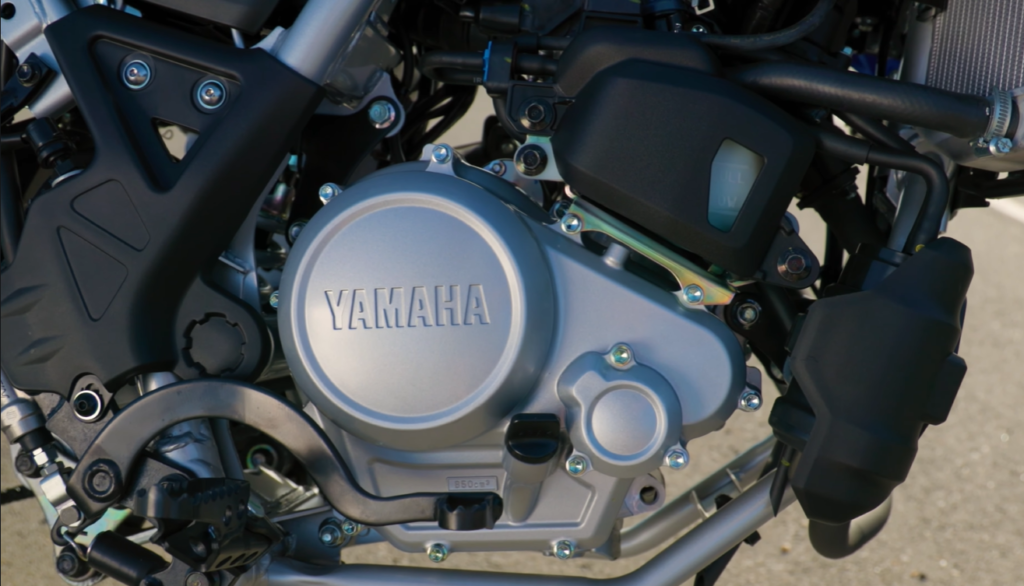
How It Works on WR125R:
A solenoid-controlled actuator physically switches between two cam lobe profiles:
- Below ~6,000 RPM: Low-RPM cam profile
- Longer valve overlap
- Better low-end torque
- Smoother power delivery
- Easier around-town riding
- Above ~6,000 RPM: High-RPM cam profile
- Shorter valve overlap
- Higher peak power
- Extended rev range
- Better top-end performance
Physical Location:
The VVT solenoid is visible on the engine—a small actuator on the cylinder head controlling the intake camshaft.
Why VVT Matters on a Small Engine
The 125cc Challenge:
Small-displacement engines inherently struggle with the torque vs power trade-off:
- Traditional cams optimized for low-end sacrifice top-end
- High-performance cams sacrifice drivability
VVT Solution:
By having both cam profiles, the WR125R achieves:
- ✅ Better low-end than fixed high-RPM cam
- ✅ Better high-end than fixed low-RPM cam
- ✅ Wider usable powerband
- ✅ More refined power delivery
VVT Technology Comparison
Where Else Do You Find VVT?
| Motorcycle | Engine Size | Price | VVT Type |
|---|---|---|---|
| Yamaha WR125R | 125cc | $3,999 | Cam switching |
| Suzuki GSX-R1000 | 1000cc | $14,799 | SR-VVT |
| Kawasaki Z H2 | 998cc | $18,500 | Supercharged + VVT |
| Honda NC750X | 745cc | $8,999 | Cam phasing |
The Significance:
The WR125R is the smallest displacement motorcycle with VVT currently available. Finding this technology on a sub-$4,000 bike is genuinely remarkable.
Real-World Engine Performance
Power Output:
Yamaha hasn’t published official horsepower figures, but based on similar 125cc engines:
- Estimated HP: 10-12 horsepower
- Estimated Torque: 7-8 lb-ft
How It Feels:
“If you’ve ever ridden a Grom or a Trail 125, then you pretty much know what this bike feels like when you open the throttle.”
Translation:
- ✅ Adequate for around-town riding
- ✅ Fun in the dirt at moderate speeds
- ❌ Not quick by any standard
- ❌ Struggles with highway speeds
- ❌ Won’t pop wheelies easily
RPM Characteristics:
- Idle: ~1,500 RPM (smooth)
- Cruising: ~6,000-7,000 RPM (comfortable)
- VVT Engagement: ~6,000 RPM (noticeable power step)
- High-RPM: 8,500+ RPM (vibration increases)
- Redline: ~10,000 RPM (estimated)
Vibration:
“At these higher RPM, spinning about 8,500 RPM… there is some vibration on the sides of the tank and in the handlebars.”
Characteristics:
- ✅ Smooth at low-mid RPM (under 7,000)
- ⚠️ Noticeable at high RPM (8,000+)
- ❌ Not ultra-smooth when working hard
- ✅ Acceptable for the category (single-cylinder nature)
Liquid-Cooled 4-Valve Design
Cooling System Advantages:
Unlike air-cooled competitors (TW200, XR150L), liquid cooling provides:
- ✅ Consistent performance in all temperatures
- ✅ Higher rev limits without overheating risk
- ✅ Longer engine life (cooler running temps)
- ✅ Better compatibility with VVT (tighter tolerances)
4-Valve Layout:
Two intake valves + two exhaust valves =
- Better breathing (more valve area)
- Higher rev potential
- More efficient combustion
- Improved fuel economy
Fuel Injection System
EFI Benefits Over Carburetion:
✅ Reliable cold starting (no choke)
✅ Consistent performance at altitude
✅ Better fuel economy (92-93 MPG)
✅ Cleaner emissions
✅ No carburetor maintenance
Real-World Starting:
“Firing up our ferocious little single cylinder…”
Electric start with EFI means instant, reliable starts in all conditions—critical for beginner-friendly design.
Fuel Economy: 92-93 MPG
Yamaha’s Claimed Economy: 92-93 miles per gallon
Real-World Translation:
With estimated 2-gallon fuel tank:
- Range: 180-185 miles per tank
- Cost per mile: ~$0.03 (at $3.50/gallon gas)
- Weekly commute: <$5 for 150 miles
Comparison:
- Honda Grom: ~100 MPG
- Yamaha TW200: ~78 MPG
- Kawasaki KLX230: ~70 MPG
- Cars: 25-35 MPG average
The Economic Advantage:
For budget-conscious commuters, the WR125R’s fuel economy is a genuine selling point. Annual fuel costs could be under $300 for typical use.
On-Trail Performance: Suspension & Handling
Off-Road Capability Assessment
Test Environment:
Mountain trails above Los Angeles:
- Rocky, uneven terrain
- Dirt roads with ruts and bumps
- Moderate elevation changes
- Mix of loose and hard-packed surfaces
Suspension Performance: Exceeding Expectations
Front Fork: 41mm Telescopic
Specifications:
- Diameter: 41mm (beefy for entry-level)
- Comparison: Most budget dual sports use 30-33mm forks
- Travel: Unknown (estimated 7-8 inches)
Real-World Performance:
“The suspension feels good… I’ve not felt it bottom yet. I’m kind of just slamming into this stuff and it’s taking it.”
Key Observations:
- ✅ Doesn’t bottom easily despite aggressive riding
- ✅ Well-damped for the price point
- ✅ Appropriate spring rate for entry-level rider weights
- ✅ Confidence-inspiring on rough terrain
Comparison to Competitors:
Typical budget dual sports have soft, under-damped suspension that:
- ❌ Bottoms frequently over bumps
- ❌ Rebounds too quickly (bouncy feel)
- ❌ Wallows through corners
WR125R Difference:
The 41mm fork and proper damping creates a noticeably more composed ride quality.
Rear Shock: Monoshock Design
Performance Characteristics:
“Doesn’t rebound too quickly in the shock, which is really common [in this category].”
✅ Controlled rebound prevents pogo-stick effect
✅ Good compression damping absorbs bumps smoothly
✅ Appropriate for beginner speeds
⚠️ May be soft for aggressive riders (experienced off-roaders)
Adjustability:
Likely preload-adjustable only (not compression/rebound damping)—standard for the category.
Wheels & Tires: Proper Dirt Bike Sizing
Wheel Dimensions:
- Front: 21 inches
- Rear: 18 inches
Why This Matters:
These are full-size dirt bike wheels, not the smaller wheels found on some entry bikes:
21″ Front Benefits:
- ✅ Rolls over obstacles better
- ✅ Better straight-line stability off-road
- ✅ Improved trail performance
- ✅ Wider tire selection available
18″ Rear Benefits:
- ✅ Good balance of traction and agility
- ✅ Standard dirt bike sizing
- ✅ Easier to find replacement tires
Tire Quality:
“Comes with decent knobby tires. Working well in the dirt here.”
Performance:
- ✅ Adequate grip on trails
- ✅ Reasonable on-road manners
- ⚠️ Not premium dual-sport tires (acceptable trade-off at this price)
Handling Characteristics Off-Road
Maneuverability:
At 300 pounds dry weight, the WR125R is:
- ✅ Light enough to manhandle over obstacles
- ✅ Easy to pick up if dropped
- ✅ Flickable through tight trails
- ✅ Confidence-inspiring for beginners
Rider Position:
Ergonomics for 5’11” Tester:
- ✅ Comfortable foot-to-peg distance
- ✅ Appropriate handlebar width
- ✅ Good handlebar height
- ✅ Motocross-style seating position (stand-up friendly)
Seat Design:
“Motocross style seat that’s long and slender. Feels fairly supportive.”
Characteristics:
- ✅ Long and narrow for standing/sitting transitions
- ✅ Firm padding (good for dirt riding)
- ⚠️ May be hard for long pavement rides
Braking Off-Road: ABS System
Front Brake:
- Type: Single disc with ABS
- Performance: Adequate stopping power
- ABS: Active to prevent front-wheel lockup
Rear Brake:
- Type: Disc with off-road ABS mode
- Special Feature: Can lock rear wheel while front ABS remains active
Off-Road ABS Explained:
“You can lock the rear tire while the front still has your back with ABS.”
Why This Matters:
Off-road riding often requires rear-wheel lock for:
- Sliding through corners
- Controlled descents
- Aggressive braking on loose surfaces
WR125R Solution:
The system allows rear lock (traditional off-road technique) while maintaining front-wheel ABS (prevents dangerous front washouts).
Beginner-Friendly Assessment:
“Pretty lenient for a beginner bike.”
This intelligent ABS system provides safety without compromising off-road fun—perfect for learning riders.
Overall Trail Performance Rating
Capability Assessment:
“Pretty capable machine. I mean, a lot of benefits in a small package.”
Strengths:
- ✅ Excellent suspension for the category
- ✅ Proper dirt bike dimensions
- ✅ Lightweight and manageable
- ✅ Intelligent ABS system
- ✅ Good tire performance
Limitations:
- ⚠️ Limited power for aggressive riding
- ⚠️ Won’t pop wheelies or spin tires easily
- ⚠️ Better suited for moderate trail speeds
Trail Performance Score: 8/10 – Exceeds expectations for entry-level, limited only by engine displacement.
On-Road Experience: Top Speed & Highway Viability
Top Speed Testing
Test Conditions:
- Paved mountain road
- Slight uphill grade
- Wide-open throttle (WOT)
- Solo rider (~170 lbs estimated)
Results:
“Wide open throttle. Let’s see if we can get a top speed run here. 60, 61, 62… I’m going to call it at 62.”
Top Speed: 62 MPH (on uphill grade)
Realistic Estimates:
- Flat ground: 65-68 MPH (estimated)
- Downhill: 70+ MPH possible
- Headwind: 55-60 MPH
- Two-up: 50-55 MPH
Highway Viability Reality Check
Can You Ride Highways?
Legal perspective:
- ⚠️ Most highways: 55-65 MPH speed limits
- ✅ Technically capable of minimum speeds
- ❌ Not comfortable at sustained highway speeds
Real-World Highway Experience:
Challenges:
- ❌ Maxed out at highway speeds (no passing power)
- ❌ High RPM constant (8,000-9,000 RPM cruising)
- ❌ Increased vibration at sustained high RPM
- ❌ Wind buffeting (light weight, upright position)
- ❌ Unsafe in fast traffic (can’t accelerate to avoid danger)
Recommendation:
Avoid sustained highway riding. The WR125R is best suited for:
- ✅ City streets (35-45 MPH ideal)
- ✅ Back roads (35-55 MPH comfortable)
- ✅ Short highway stretches (manageable)
- ❌ Extended freeway commutes (not recommended)
On-Road Handling: Surprisingly Capable
Cornering Performance:
“Something that people don’t often recognize about dual sports… they turn really well and carry lean angle really well.”
Advantages of Dual Sport Geometry:
- ✅ Tall, narrow design = quick steering
- ✅ Narrow tires = easy lean initiation
- ✅ Light weight = effortless direction changes
- ✅ Good ground clearance = lean angle confidence
Real-World Canyon Riding:
“This thing actually handles corners pretty dang well.”
Characteristics:
- ✅ Nimble through switchbacks
- ✅ Predictable handling
- ✅ Confidence-inspiring lean angles
- ⚠️ Limited by power, not handling
Vibration & Smoothness
Low-to-Mid RPM (Under 7,000):
- ✅ Smooth and refined
- ✅ Minimal vibration
- ✅ Comfortable for cruising
High RPM (8,000+ RPM):
“There is some vibration on the sides of the tank and in the handlebars. It’s not ultra smooth, but it’s working pretty hard right now.”
Vibration Characteristics:
- ⚠️ Noticeable through tank and bars
- ⚠️ Typical of high-revving singles
- ✅ Not excessive or concerning
- ✅ Acceptable given displacement
Comparison:
Most single-cylinder engines vibrate at high RPM—the WR125R is average for the category, neither exceptionally smooth nor overly buzzy.
Urban Commuting: Ideal Use Case
City Riding Strengths:
✅ Perfect power for 25-45 MPH zones
✅ Exceptional fuel economy (92-93 MPG)
✅ Lightweight for filtering traffic
✅ Narrow for tight spaces
✅ Easy to park anywhere
✅ Low operating costs
Commuter Scenario:
- Morning commute: 15 miles of city streets
- Fuel used: ~0.2 gallons (~$0.70)
- Parking: Fits in motorcycle spots or sidewalk (where legal)
- Fun factor: Enjoyable, not boring transport
The Sweet Spot:
The WR125R excels as an urban runabout where speeds rarely exceed 50 MPH and fuel efficiency matters most.
Seat Height Reality: Who Can Ride It?
The Tall Seat Challenge
Seat Height: 34.4 inches
Context:
This is a tall seat for an entry-level motorcycle—approaching full-size dirt bike territory.
Comparison to Competitors:
| Motorcycle | Seat Height | Beginner-Friendly? |
|---|---|---|
| Honda Grom | 30.0″ | Very easy |
| Yamaha TW200 | 31.1″ | Easy |
| Honda XR150L | 32.0″ | Moderate |
| Kawasaki KLX230 | 34.8″ | Challenging |
| Yamaha WR125R | 34.4″ | Challenging |
| KTM 390 Adventure | 34.6″ | Challenging |
Who Can Flat-Foot It?
Rough Height Guidelines:
- Under 5’6″: Tiptoeing on both feet (difficult)
- 5’6″ – 5’9″: One foot flat, one tiptoe (manageable)
- 5’9″ – 6’0″: Both feet touch comfortably (ideal)
- Over 6’0″: Flat-footed easily (no issues)
Tester Experience (5’11”):
“I’m 5’11 and it fits me really well… it’s fine.”
For the average-height tester, the seat height posed no issues—comfortable and confidence-inspiring.
Impact on Beginners
Why Seat Height Matters for New Riders:
Confidence Factor:
- New riders need both feet down at stops
- Tiptoeing creates anxiety and balance issues
- Fear of dropping bike inhibits learning
WR125R’s Challenge:
“If you’re a newer rider and you were shorter, that might be a problem.”
The Dilemma:
Yamaha designed a bike with:
- ✅ Beginner-friendly power and features
- ❌ Experienced-rider seat height
This mismatch limits the potential customer base.
Lowering Options
Accessory Low Seat:
“There is an accessory low seat. You can drop it down by an inch.”
Low Seat Specifications:
- Height Reduction: 1 inch
- New Seat Height: 33.4 inches
- Cost: ~$150-200 (estimated)
Does 1 Inch Help?
Marginal improvement:
- ✅ Better for 5’7″-5’10” riders
- ⚠️ Still tall for under 5’6″ riders
- ⚠️ Doesn’t solve the core issue
Additional Lowering Methods:
Suspension Lowering:
- Lower fork tubes (reduce front height)
- Shorter shock linkage (reduce rear height)
- Cost: $200-400 professional install
- Trade-off: Reduced ground clearance, altered geometry
Recommendation:
Shorter riders should test sit before buying—even with lowering, the WR125R may not suit everyone.
WR125R vs Competitors: Direct Comparison
Head-to-Head Comparison Table
| Specification | Yamaha WR125R | Honda XR150L | Yamaha TW200 | Kawasaki KLX230 Sherpa |
|---|---|---|---|---|
| Price | $3,999 | $3,499 | $4,999 | $5,199 |
| Engine | 125cc liquid | 150cc air | 196cc air | 233cc air |
| Technology | VVT, FI, 4-valve | Carb, 2-valve | Carb, 2-valve | FI, 2-valve |
| Weight | 300 lbs | 278 lbs | 278 lbs | 304 lbs |
| Seat Height | 34.4″ | 32.0″ | 31.1″ | 34.8″ |
| Wheels | 21″/18″ | 21″/18″ | 18″/14″ | 21″/18″ |
| Brakes | Disc/Disc + ABS | Disc/Drum | Disc/Drum | Disc/Disc + ABS |
| Suspension | 41mm fork | 31mm fork | 33mm fork | 37mm fork |
| Dash | LCD (tach, fuel, gear) | Analog speedo only | Analog speedo only | LCD |
| Lighting | LED | Halogen | Halogen | LED |
vs Honda XR150L: Technology Wins
XR150L Advantages:
- ✅ $500 cheaper ($3,499)
- ✅ Larger engine (150cc vs 125cc)
- ✅ Lower seat (32.0″ vs 34.4″)
- ✅ Proven reliability (decades-old design)
WR125R Advantages:
- ✅ Fuel injection (vs carburetor)
- ✅ Disc rear brake (vs drum)
- ✅ ABS braking
- ✅ Variable valve timing
- ✅ LCD instrumentation
- ✅ LED lighting
- ✅ Better suspension (41mm vs 31mm fork)
Verdict:
The XR150L is extremely basic but reliable. If you want the cheapest dual sport and don’t care about features, choose Honda.
If you want modern technology in an entry bike, the WR125R justifies the $500 premium.
vs Yamaha TW200: Different Philosophies
TW200 Advantages:
- ✅ Lowest seat height (31.1″)
- ✅ Larger engine (196cc)
- ✅ Fat tires (unique look, soft terrain capability)
- ✅ Legendary reliability (40+ year design)
WR125R Advantages:
- ✅ $1,000 cheaper ($3,999 vs $4,999)
- ✅ Modern technology (FI, VVT, ABS, LCD)
- ✅ Better fuel economy (92 vs 78 MPG)
- ✅ Proper dirt bike wheels (21″/18″ vs 18″/14″)
- ✅ Better suspension
Verdict:
The TW200 is an icon but feels dated. The WR125R offers far more technology for $1,000 less.
Choose TW200 if you want the lowest seat and unique fat-tire aesthetic. Choose WR125R for modern features and value.
vs Kawasaki KLX230 Sherpa: Power vs Tech
KLX230 Advantages:
- ✅ Much larger engine (233cc—86% more displacement!)
- ✅ More power for highway/two-up riding
- ✅ Fuel injection
- ✅ ABS braking
WR125R Advantages:
- ✅ $1,200 cheaper ($3,999 vs $5,199)
- ✅ Variable valve timing (KLX doesn’t have VVT)
- ✅ Lighter weight (300 vs 304 lbs)
- ✅ Better fuel economy (92 vs ~70 MPG)
- ✅ Lower seat (34.4″ vs 34.8″)
Verdict:
If you need more power for highway or aggressive riding, the KLX230’s 233cc engine justifies the $1,200 premium.
If you’re city/trail focused and value technology, the WR125R’s VVT and $1,200 savings make it the smarter choice.
Market Positioning: Where WR125R Fits
Budget Tier (<$4,000):
- Honda XR150L: $3,499
- Yamaha WR125R: $3,999 ⭐
Mid-Tier ($4,500-5,500):
- Yamaha TW200: $4,999
- Kawasaki KLX230: $5,199
- Suzuki DR200S: $4,749
WR125R’s Sweet Spot:
Best technology under $4,000, with the trade-off beingthe smallest displacement.
Technology & Features Breakdown
LCD Instrumentation
Display Features:
- ✅ Tachometer (RPM gauge)
- ✅ Speedometer (digital MPH)
- ✅ Fuel gauge (gas level)
- ✅ Gear position indicator (shows 1-6 + N)
- ✅ Trip meter
- ✅ Odometer
Comparison:
Most competitors offer only analog speedometer—the WR125R’s full LCD is mid-tier bike territory.
LED Lighting System
Front: LED headlight Rear: LED taillight
Benefits:
- ✅ Brighter illumination
- ✅ Lower power draw
- ✅ Longer bulb life
- ✅ Modern appearance
Comparison:
The XR150L and TW200 still use halogen bulbs—WR125R feels more contemporary.
ABS Braking System
Front Brake ABS:
- Always active
- Prevents front-wheel lockup (dangerous)
- Can’t be disabled
Rear Brake Off-Road ABS:
- Allows rear wheel lock
- Front ABS remains active
- Perfect for trail riding
Safety Benefit:
ABS prevents 90% of panic-brake crashes where riders lock the front wheel and crash. For beginners, this is invaluable safety technology.
Pros & Cons Analysis {#pros-cons}
✅ Advantages (What WR125R Does Right)
1. Exceptional Value ($3,999) Best technology-to-price ratio in entry dual sport category. VVT, ABS, FI, LCD dash for under $4,000 is remarkable.
2. Superbike Technology (VVT) Variable valve timing on a 125cc is genuinely impressive. Wider powerband than competitors.
3. Superior Suspension (41mm Fork) Best suspension in the category. Doesn’t bottom easily, well-damped, confidence-inspiring.
4. Fuel Injection Reliability No carburetor = no jetting, no cold-start choke struggles, works at any altitude.
5. Intelligent ABS System Off-road ABS mode (rear lockable, front protected) is perfect for learning riders.
6. Proper Dirt Bike Wheels (21″/18″) Full-size wheels improve trail capability vs smaller wheels on some competitors.
7. Excellent Fuel Economy (92-93 MPG) Lowest operating costs in class. Perfect for budget-conscious commuters.
8. Modern Features LCD dash, gear indicator, LED lighting, fuel gauge—feels like a $6,000 bike.
9. Lightweight Handling (300 lbs) Easy to maneuver, pick up if dropped, manage for beginners.
10. Build Quality Feels well-made, not cheap. Yamaha quality control shows.
❌ Disadvantages (Where It Falls Short)
1. Only 125cc Displacement Smallest engine in class. Limited power, struggles above 60 MPH.
2. Very Tall Seat (34.4″) Rules out shorter riders. Even with lowering kit, still 33.4″—too tall for many beginners.
3. Limited Top Speed (~62 MPH) Not highway-friendly. Maxed out at 65 MPH realistically.
4. High-RPM Vibration Buzzy above 8,000 RPM. Typical of singles, but noticeable on sustained high-speed riding.
5. Won’t Pop Wheelies Even with VVT, not enough power for aggressive off-road antics.
6. Hard Seat Firm motocross-style seat better for standing than long pavement rides.
7. No Handguards Should include handguards for off-road protection (inexpensive add-on).
8. Limited Accessory Availability Being brand new, aftermarket support is minimal initially.
9. Power Limits Two-Up Riding Insufficient power for passenger comfortably.
10. Not Highway Capable Fine for back roads, but sustained 65+ MPH riding is not this bike’s forte.
Overall Rating: 8.5/10 ⭐⭐⭐⭐
Category Breakdown:
- Technology: 10/10 (VVT on $4K bike is incredible)
- Value: 9/10 (Best features per dollar)
- Suspension: 9/10 (Exceeds expectations)
- Engine Power: 5/10 (125cc limitation)
- Seat Height: 6/10 (Too tall for many beginners)
- Fuel Economy: 10/10 (92-93 MPG outstanding)
- Build Quality: 9/10 (Yamaha reliability)
- Features: 9/10 (ABS, FI, LCD, LED)
Who Should Buy the 2026 Yamaha WR125R? {#who-should-buy}
✅ Perfect For:
Taller Beginners (5’9″+) If you’re 5’9″ or taller AND new to riding, this is an ideal first bike. Modern features, manageable power, excellent build quality.
Urban Commuters City riders wanting rock-bottom operating costs (92 MPG) and easy parking will love this bike.
Experienced Riders Downsizing Seasoned riders wanting a fun, economical second bike for around-town errands and trail riding.
Budget-Conscious Buyers Wanting Quality Best technology under $4,000. Feels like a $6,000 bike for $4,000.
Trail Riders (Moderate Pace) Perfect for exploring trails at comfortable speeds. Light weight, good suspension, manageable power.
Learners Prioritizing Safety ABS and manageable power make this exceptionally safe for learning proper technique.
Fuel Economy Focused At 92-93 MPG, this has the lowest operating costs of any dual sport.
❌ Not Ideal For:
Shorter Riders (Under 5’7″) 34.4″ seat height will be challenging. Test sit before buying—even lowering kit may not help enough.
Highway Commuters If your commute involves sustained 65+ MPH riding, the 125cc engine is inadequate.
Power Seekers Want wheelies, quick acceleration, highway passing power? Look at 230cc+ options.
Two-Up Riders Insufficient power for comfortable passenger riding.
Aggressive Off-Roaders Experienced trail riders wanting hard enduro performance need more power.
Heavier Riders (225+ lbs) Engine may feel even more underpowered with heavy rider + gear.
Impatient Beginners If you’ll outgrow 125cc in 6 months, spend more on 230-250cc bike initially.
Decision Framework
Choose WR125R if:
- ✅ You’re 5’9″ or taller
- ✅ Riding mostly city streets and trails
- ✅ Fuel economy is priority
- ✅ You value modern technology
- ✅ Budget is under $4,500
- ✅ You’re a beginner or downsizing
Choose Competitor if:
- ❌ You need more power (KLX230)
- ❌ You’re under 5’7″ (TW200 or XR150L)
- ❌ You need highway capability (KLX230 or larger)
- ❌ You want lowest seat (TW200: 31.1″)
- ❌ You want absolute cheapest (XR150L: $3,499)
Final Verdict {#final-verdict}
The “Nearly Perfect” Assessment
“This is a very welcome addition to the entry-level dual sport category. I would have been so excited if this bike was around when I started.”
The 2026 Yamaha WR125R is nearly perfect for its intended purpose—but “nearly” is the key word.
What Makes It Nearly Perfect
The Excellence:
Yamaha engineered a beginner dual sport with technology borrowed from $15,000 superbikes (VVT), wrapped it in quality components (41mm fork, ABS, FI), and priced it at just $3,999.
For taller beginners and urban commuters, this combination is genuinely hard to beat.
The Execution:
✅ Suspension exceeds category expectations
✅ Technology feels premium
✅ Build quality inspires confidence
✅ Fuel economy is exceptional
✅ Safety features (ABS) are intelligent
✅ Price undercuts competition while offering more
What Prevents Perfection
Two Thorns:
1. Displacement (125cc)
“Every rose has its thorns. First has got to be the engine… if they just put a 250 in it, it would be fine.”
A 200-250cc engine would transform this bike from “nearly perfect” to “perfect.” The 125cc limitation is the most significant compromise.
2. Seat Height (34.4″)
“The other thing is going to be the seat height… if you’re a newer rider and you were shorter, that might be a problem.”
At 34.4 inches, the WR125R excludes a significant portion of entry-level riders who are under 5’8″.
The Bottom Line
For the Right Rider:
If you’re 5’9″ or taller, ride primarily city streets and moderate trails, value modern technology, and operate on a tight budget—the WR125R is an outstanding choice.
For Everyone Else:
The tall seat and limited power mean many buyers should consider:
- Honda XR150L (lower seat, $500 cheaper)
- Yamaha TW200 (lowest seat, larger engine)
- Kawasaki KLX230 (much more power, similar seat)
Final Recommendation
Rating: 8.5/10 ⭐⭐⭐⭐
Buy it if: You fit the bike physically and match its use case
Skip it if: Seat height or power don’t meet your needs
The 2026 Yamaha WR125R proves entry-level bikes don’t have to feel entry-level. It’s a sophisticated, well-engineered motorcycle that happens to be affordable—nearly perfect for those it fits, but not universally ideal.
Yes, for most beginners. The 125cc provides enough power to learn proper technique without being intimidating. However, taller/heavier riders or those planning highway use may want 200-250cc.
Technically yes, practically no. Top speed is ~62-68 MPH, which meets minimum highway speeds but leaves no power for passing or safety margins. Best for roads under 55 MPH.
2026 Yamaha WR125R Specifications Summary:
- MSRP: $3,999
- Engine: 125cc liquid-cooled, 4-valve, SOHC, VVT
- Power: ~10-12 HP (estimated)
- Weight: 300 lbs dry
- Seat Height: 34.4″ (33.4″ with low seat accessory)
- Fuel Economy: 92-93 MPG
- Top Speed: ~65 MPH
- Wheels: 21″ front / 18″ rear
- Suspension: 41mm fork / monoshock rear
- Brakes: Disc front & rear with off-road ABS
- Features: LCD dash, LED lights, FI, gear indicator
- Best For: Taller beginners, urban commuters, trail riders
- Not For: Shorter riders, highway commuters, power seekers
Bottom Line: The 2026 Yamaha WR125R delivers flagship-level technology and quality in an entry-level package—nearly perfect for riders who fit its physical and performance parameters. At $3,999, it’s the best-equipped beginner dual sport money can buy, with only seat height and displacement preventing universal appeal. Rating: 8.5/10