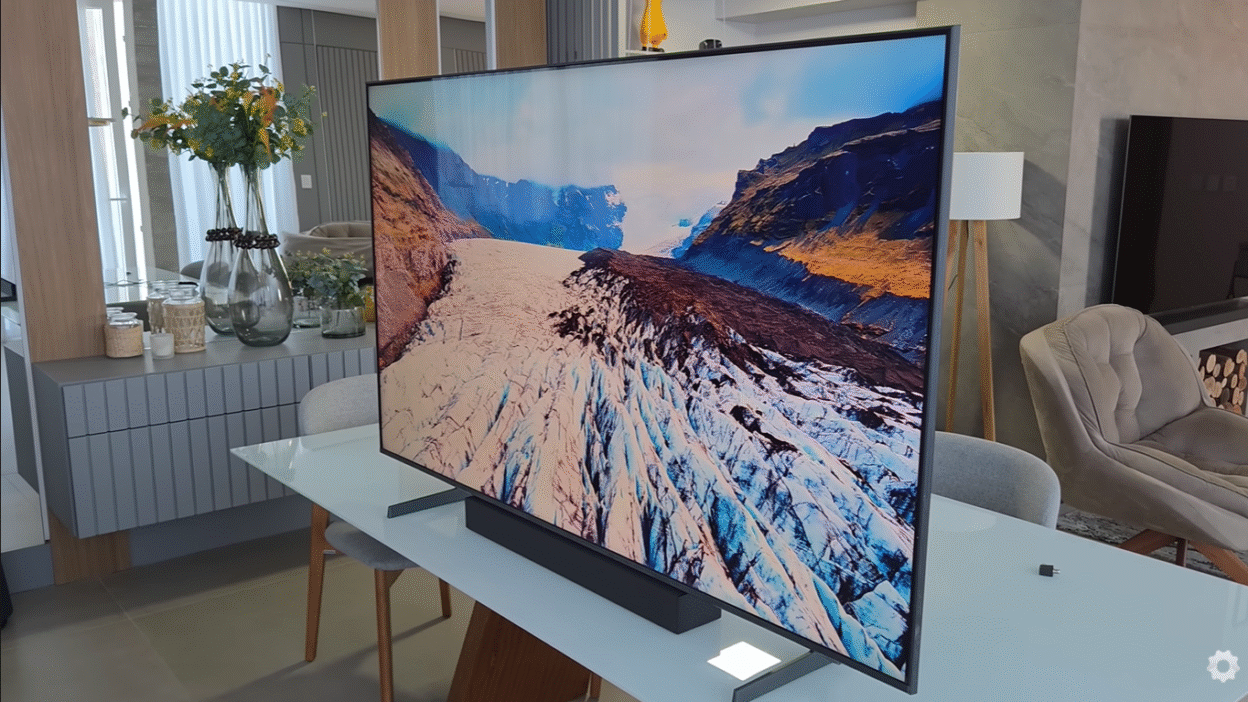
TL;DR – Quick Summary:
The Samsung QEF1 has serious limitations that make it a poor choice for most buyers. Brightness under 300 nits makes it unusable in normal living rooms, terrible viewing angles restrict seating options, no 120Hz gaming disappoints console owners, the basic remote lacks modern features, and better alternatives exist at similar prices from TCL and Hisense. Unless you have a very specific dark-room setup and love Samsung, skip this TV.
Bottom Line: The QEF1’s ultra-low brightness is a deal-breaker for 80% of buyers. For $400-$750, competitors offer significantly better value.
Thinking about buying the Samsung QEF1 QLED TV?
Hold on. Before you click “Add to Cart,” you need to know the problems Samsung isn’t advertising.
While the QEF1 has some decent features for a budget QLED, it comes with critical flaws that will frustrate most buyers. At MyPitShop, we believe in honest reviews that save you from expensive mistakes.
Here are the top 5 reasons you should avoid the Samsung QEF1 and consider better alternatives.
1. Pathetically Low Brightness – The Deal-Breaker
This Is The Biggest Problem:
The Samsung QEF1 fails at the most fundamental job of any TV: being visible in normal lighting conditions. With brightness barely reaching 300 nits (and the 55-inch model falling short of even that), this TV is essentially unusable in typical living rooms.
The Cold, Hard Numbers
Most modern budget TVs deliver 350-450 nits of brightness. Mid-range models hit 500-600 nits. The QEF1? Under 300 nits for most sizes.
That’s not just “a bit dim.” That’s fundamentally inadequate for normal viewing conditions.
Real-World Consequences
During daytime viewing:
- Any window in the room creates glare that washes out the image
- You’ll constantly adjust blinds and curtains
- Bright scenes in movies and shows look gray and washed out
- Sports broadcasts become frustratingly hard to watch
- HDR content completely fails to deliver any “wow factor”
Even with moderate lighting:
- Table lamps create visible reflections
- Evening viewing with overhead lights requires dimming
- You’ll find yourself watching in near-darkness constantly
- Family members will complain about the dim picture
Why This Matters More Than Other Flaws
You can work around many TV limitations. Can’t fix terrible viewing angles? Adjust your seating. Don’t have 120Hz gaming? Stick to single-player titles.
But you cannot fix inadequate brightness. You’re stuck watching in darkness or dealing with a washed-out, barely visible picture. This limitation affects every single minute you use this TV.
The Comparison That Hurts
TCL Q6 Series: 400+ nits, same price range
Hisense U6K: 500+ nits, often cheaper
Samsung’s own Crystal UHD: 350+ nits, costs less
The QEF1 is literally Samsung’s dimmest current TV at this screen size. Even their basic Crystal UHD series delivers better brightness.
Who Can Actually Use This?
The only viable scenarios:
- Dedicated home theater rooms with zero ambient light
- Basement installations with blackout conditions
- Bedrooms where you only watch after dark with lights off
- Dorm rooms with no windows
That’s maybe 10-15% of potential buyers. Everyone else will regret this purchase within the first week.
Bottom Line: If your TV faces any windows, gets any natural light, or lives in a room with normal lighting, the QEF1 will disappoint you daily. This isn’t a minor flaw—it’s a fundamental failure that makes the TV unusable for most households.
2. Terrible Viewing Angles – Everyone Gets a Bad Seat
The Second Major Flaw:
The QEF1’s VA panel delivers viewing angles that are genuinely bad even by budget TV standards. Sit anywhere except dead center, and picture quality tanks dramatically.
What Happens Off-Center
At just 20-25 degrees off-axis:
- Colors fade and desaturate
- Contrast collapses (blacks turn gray)
- Brightness drops noticeably
- Overall image looks washed out
At 30-40 degrees:
- Colors shift (reds look pink, blues look purple)
- Dark scenes become completely unwatchable
- You’re basically looking at a degraded, washed-out mess
This isn’t slight degradation. This is “the TV looks genuinely broken” levels of bad.
Real Family Scenarios That Don’t Work
Typical living room with a couch:
- Only the center seat gets good picture quality
- People on either end see noticeably worse colors and contrast
- Kids sitting on the floor to the side get terrible picture
- Anyone walking past the TV blocks the view for off-center viewers
Bedroom viewing from bed:
- If the TV isn’t perfectly centered to your pillow, quality suffers
- Couples sharing a bed means one person always has compromised viewing
- Lying on your side makes the picture look completely wrong
Kitchen/open concept spaces:
- Cooking while watching? Forget it—you’ll see a washed-out mess
- Multiple viewing positions around an island or table all look bad
- The TV only looks good from one specific spot
Parties or group viewing:
- Half your guests are seeing a degraded picture
- Sports watching with friends means someone always complains
- Gaming with friends means viewers not playing see terrible angles
Why VA Panels Are This Bad
VA panels prioritize contrast over viewing angles. The QEF1’s VA panel is particularly aggressive, creating excellent blacks directly in front but collapsing completely off-center.
Some VA panels manage reasonable viewing angles through compensation techniques. The QEF1 apparently skips these, delivering bottom-tier angular performance even for VA technology.
The Comparison
IPS panels (LG, some Sony): Maintain color and brightness up to 50-60 degrees
Better VA panels (Higher-end Samsung, Sony): Usable up to 30-35 degrees
QEF1’s VA panel: Noticeably degraded beyond 20-25 degrees
Living Room Math
Most living rooms have couches that are 7-10 feet wide. If you’re sitting 8-10 feet from a 55-inch TV (the recommended distance), people on either end of a standard couch are sitting at 25-35 degree angles.
That means most of your family isn’t getting good picture quality most of the time.
The Honest Truth
If you always watch TV alone, sitting perfectly centered, this limitation doesn’t matter. But that’s not how most families use TVs. Multiple viewers, varied seating positions, and movement around the room all expose this TV’s viewing angle weakness constantly.
Bottom Line: Unless you live alone and have perfectly centered seating, the QEF1’s viewing angles will frustrate you and everyone watching with you. Better alternatives exist at the same price with significantly better angular performance.
3. No 120Hz or VRR – Gamers Look Elsewhere
Console Gamers Get Shortchanged:
The QEF1 tops out at 60Hz with zero support for variable refresh rate (VRR) technologies. If you own a PS5, Xbox Series X, or game on PC, you’re leaving performance on the table.
What You’re Missing
No 120Hz support means:
- PS5 and Xbox Series X games locked to 60fps maximum
- Fast-paced shooters and racing games lack smoothness
- Competitive multiplayer puts you at a disadvantage
- You’re not using your $500 console to its potential
No VRR support means:
- Screen tearing during frame rate fluctuations
- Stuttering when games can’t maintain consistent 60fps
- No adaptive sync for smooth gaming experience
- Visible judder in demanding game scenes
The Gaming Reality
Modern consoles support 120Hz gaming in many titles:
- Call of Duty: 120fps modes available
- Fortnite: 120fps mode on PS5/Xbox Series X
- Rocket League: 120fps performance
- Rainbow Six Siege: 120fps support
- Dirt 5, Doom Eternal, Halo Infinite: All support higher frame rates
With the QEF1, all these games are capped at 60fps regardless of console capability.
The Competition Offers More
At similar or lower prices:
- TCL Q6: 120Hz support, VRR, starting at $450
- Hisense U6K: 120Hz support, VRR, often under $500
- LG UQ series: 120Hz support at comparable pricing
You’re paying Samsung premium pricing while getting budget features that competing brands include as standard.
“But I’m Just a Casual Gamer…”
Even casual gamers benefit from 120Hz and VRR:
- Smoother camera panning in exploration games
- Reduced motion blur in any game with movement
- More responsive controls in platformers
- Better experience in racing and sports games
- Future-proofing for games releasing over the TV’s lifespan
The Input Lag Situation
The QEF1 does offer decent input lag in game mode—about 10-12ms, which is acceptable. But good input lag doesn’t compensate for missing modern gaming features.
That’s like praising a car’s good tire pressure when it’s missing cruise control and backup cameras.
Some Ghosting Too
The review notes “you may perceive some ghosting effect” during gaming. While generally not disturbing, it’s another compromise in a TV already compromising too much.
Fast-moving objects leave visible trails. Competitive gamers notice this immediately. Even casual players will spot it in fast-paced action.
Seven to Ten Year Purchase
You’re likely keeping this TV for 7-10 years. Games will increasingly target 120fps as current-gen consoles mature. The QEF1 will feel more outdated every year, unable to display games as developers intended.
Bottom Line: If you own or plan to buy a PS5, Xbox Series X, or gaming PC, skip the QEF1. Competing TVs at the same price deliver the gaming features this TV should have included. Don’t pay Samsung prices for last-generation gaming specs.
4. Basic Remote Without Modern Features
The Remote Situation Is Embarrassing:
Samsung is known for their premium One Remote with solar panel—an elegant, eco-friendly design with voice control built in. The QEF1 doesn’t include it.
What You Actually Get
A basic remote with numeric keys and no microphone button. This is the budget remote Samsung includes with their cheapest TVs, and it shows.
What’s Missing
No voice control: Want to search for content by speaking? Too bad. You’re typing with arrow keys on an on-screen keyboard like it’s 2010.
No solar charging: Regular batteries you’ll replace every few months. So much for Samsung’s environmental commitment.
No premium build: Cheap plastic construction that feels dated the moment you pick it up.
Cluttered button layout: Numeric keys you’ll rarely use take up space that could be cleaner design.
The Voice Control Problem
Voice control has become essential for modern smart TVs:
- Searching for shows across streaming apps
- Quick access to specific content
- Controlling smart home devices through the TV
- Adjusting settings without menu diving
- Natural language queries
With the QEF1’s basic remote, all of this requires tedious on-screen keyboard typing. Searching for a movie title becomes a frustrating multi-minute process instead of a quick voice command.
Samsung’s Solution? Pay More
You can buy the One Remote with solar panel separately and pair it with the QEF1. But that remote costs $40-$60, eating into your “budget TV” savings.
Why should you pay extra for features that come standard on competing TVs at the same price?
The Competition Includes Better
TCL: Voice remote included standard
Hisense: Voice remote with Google Assistant built in
LG: Magic Remote with point-and-click and voice control
Budget brands: Even Roku TVs include voice remotes standard
Samsung is literally the only major brand charging extra for voice control at this price point in 2025.
The Principle Of The Thing
This isn’t about the remote’s cost. It’s about Samsung’s priorities. They’re selling you a 2025 TV with features from five years ago, nickel-and-diming you for basic functionality their competitors include free.
It signals exactly how Samsung views QEF1 buyers: second-class customers who don’t deserve premium features, even when those features have become industry standard.
Daily Frustration
You’ll feel this omission constantly:
- Every time you type a search
- Every time you adjust settings
- Every time you want quick voice control
- Every time you replace batteries
- Every time you see ads for Samsung’s premium remotes
This isn’t a one-time disappointment. It’s daily friction that makes your TV experience worse than it should be.
Bottom Line: The basic remote isn’t just disappointing—it’s insulting. Samsung knows better, charges premium brand pricing, but gives you bottom-tier accessories. Competing brands respect their budget buyers more by including voice remotes as standard.
5. Better Alternatives Exist at Similar Prices
The Final Reality Check:
Even if you could live with all the QEF1’s flaws, you shouldn’t have to. Better TVs exist at identical or lower prices, making the QEF1 impossible to recommend unless you have extremely specific needs.
The Competition Crushes It
TCL Q6 Series (55-inch: $450)
- ✅ 400+ nits brightness (actually usable in normal rooms)
- ✅ 120Hz support with VRR for gaming
- ✅ Voice remote included standard
- ✅ Dolby Vision support (QEF1 only has HDR10+)
- ✅ Better viewing angles through anti-glare coating
- ✅ More modern design
- Cost: Same price or cheaper
Hisense U6K (55-inch: $400-$500)
- ✅ 500+ nits brightness (proper HDR performance)
- ✅ 120Hz support with VRR
- ✅ Google TV with voice remote
- ✅ QLED color like the QEF1
- ✅ Mini-LED backlighting (better local dimming)
- ✅ Quantum Dot Wide Color Gamut
- Cost: Often cheaper than QEF1
Hisense U7K (55-inch: $600-$650)
- ✅ 700+ nits brightness (excellent HDR)
- ✅ 144Hz support (even better than standard 120Hz)
- ✅ Mini-LED with full array local dimming
- ✅ Dolby Vision, HDR10+, HLG support
- ✅ Google TV platform
- ✅ Dramatically better gaming features
- Cost: Only $100-150 more for massive upgrade
Even Samsung’s Own Models:
Samsung CU8000 Crystal UHD (similar price):
- ✅ 350+ nits brightness (50+ nits brighter)
- ✅ Often $50-$100 cheaper
- ✅ Same Tizen platform
- ✅ Similar motion handling
The CU8000 doesn’t have QLED, but with better brightness and lower price, many buyers will be happier with it than the dim QEF1.
The Value Proposition Fails
Let’s be clear about pricing:
- QEF1 55-inch: $550-$650 depending on sales
- TCL Q6 55-inch: $450-$500
- Hisense U6K 55-inch: $400-$500
You’re paying Samsung premium while getting budget performance. The brand name costs you $100-150 with no benefit.
When Samsung Makes Sense
The QEF1 only makes sense if:
- You already own multiple Samsung devices and want ecosystem integration
- You’re getting it at a steep discount (40%+ off MSRP)
- You have a dedicated dark room where brightness doesn’t matter
- You absolutely refuse to consider other brands due to loyalty
- You need Tizen OS specifically for some reason
That’s an extremely narrow use case that applies to maybe 5% of TV buyers.
The Opportunity Cost
Spending $550 on the QEF1 means NOT spending $500 on the Hisense U6K, which delivers:
- 70% more brightness (500 vs 290 nits)
- Modern gaming features (120Hz, VRR)
- Better remote with voice control
- Mini-LED backlighting
- Superior HDR performance
You’re literally paying more for less when better alternatives exist.
The Samsung Brand Premium Myth
Samsung charges more because of brand recognition, not superior value at this price point. Their premium QLED models (Q60C, Q70C, Q80C) justify higher prices with better performance.
The QEF1? It’s Samsung trying to compete in the budget segment while maintaining premium pricing. The result is a TV that’s outclassed by competitors costing less.
What Reviewers Actually Say
Most professional reviewers conclude: “Only buy if you love Samsung and have a dark room.” That’s not a ringing endorsement—that’s a polite way of saying “better alternatives exist.”
Independent reviewers consistently rank TCL and Hisense budget models higher than the QEF1 for overall value and performance.
The Smart Shopping Decision
At $550, you have dozens of better options. The QEF1 might be acceptable at $350-$400, but at its actual retail price, it’s simply not competitive.
Your money deserves better. Your viewing experience deserves better. You deserve better.
Bottom Line: Unless you get the QEF1 at a massive discount (40%+ off) or have extremely specific Samsung ecosystem needs, spending your money on competing models will deliver better brightness, features, and overall satisfaction. The QEF1 is a mediocre TV at a premium price when excellent TVs exist for less money.
Who Should Actually Skip This TV?
After analyzing these five critical flaws, here’s who should absolutely avoid the Samsung QEF1:
❌ Anyone with normal living room lighting – The brightness is unusable
❌ Families with multiple viewers – Viewing angles ruin the experience
❌ PS5 or Xbox Series X owners – You need 120Hz and VRR
❌ Value-conscious shoppers – Better TVs cost less
❌ Anyone wanting modern features – Voice remote, VRR, brightness are standard elsewhere
❌ Bright room installations – Sunlight renders this TV unwatchable
❌ Sports viewers – Brightness and viewing angles both problematic
❌ Competitive gamers – Missing essential gaming features
❌ Large viewing groups – Only center seats get good picture
❌ Anyone on a strict budget – TCL and Hisense offer more for less
Who Might (Maybe) Consider It?
The only buyers who could potentially accept the QEF1’s limitations:
✅ Dedicated dark room with single viewer – Brightness and angles don’t matter
✅ Hardcore Samsung ecosystem users – Already invested in SmartThings
✅ Getting it 40%+ off retail – At $350 for 55-inch, it becomes competitive
✅ Bedroom installation with blackout curtains – Dark viewing guaranteed
✅ Secondary TV for guest room – Occasional use minimizes flaws
That’s maybe 10-15% of potential TV buyers. Everyone else will find better value elsewhere.
The Better Alternatives You Should Consider
Instead of the Samsung QEF1, consider these superior options:
Best Overall Value: Hisense U6K
- Price: $400-$500 (cheaper than QEF1)
- Brightness: 500+ nits (70% brighter)
- Gaming: 120Hz + VRR
- Remote: Voice control included
- Why: More features, better performance, lower price
Best for Gaming: TCL Q6
- Price: $450-$500
- Brightness: 400+ nits (40% brighter)
- Gaming: 120Hz, VRR, low input lag
- Remote: Voice remote included
- Why: Complete gaming feature set at QEF1 price
Best Budget QLED: Hisense U7K
- Price: $600-$650 (only $100 more)
- Brightness: 700+ nits (140% brighter)
- Panel: Mini-LED with local dimming
- Gaming: 144Hz support
- Why: Massive performance upgrade for small price increase
For Samsung Loyalists: Samsung CU8000
- Price: $400-$500 (cheaper than QEF1)
- Brightness: 350+ nits (brighter)
- Platform: Same Tizen OS
- Why: Better brightness, same ecosystem, lower price
The Honest Final Verdict
The Samsung QEF1 fails the fundamental test of being a good TV: it’s not bright enough for normal use.
Everything else—viewing angles, gaming features, remote quality, value proposition—just piles onto that core failure. This isn’t a flawed TV with some redeeming qualities. It’s a TV with crippling limitations that competing brands solved years ago.
The Three Key Problems
- Under 300 nits brightness = Unusable in normal rooms
- Terrible viewing angles = Only good for single centered viewer
- Missing modern features = No 120Hz, no VRR, basic remote
Any one of these issues would be concerning. All three together make the QEF1 impossible to recommend.
Samsung’s Positioning Failure
Samsung tried to compete in the budget QLED market while maintaining premium pricing. The result is a TV that costs more than better alternatives while delivering worse performance.
The QEF1 would be acceptable at $350-$400. At $550-$650, it’s simply not competitive.
The Bottom Line
Save your money. The Samsung QEF1 delivers budget performance at premium pricing. Unless you’re getting it at a massive discount (40%+ off) or have extremely specific dark-room, single-viewer, Samsung-ecosystem requirements, dozens of better options exist.
TCL and Hisense offer superior brightness, gaming features, and value at lower prices. Even Samsung’s own Crystal UHD series delivers better brightness for less money.
Don’t let brand loyalty blind you to better alternatives. Your viewing experience—and your wallet—deserve better than the QEF1.
Looking for Better TV Recommendations? Visit MyPitShop for comprehensive reviews, real-world testing, and honest buying advice that saves you from expensive mistakes. We test what manufacturers won’t tell you.

[…] 5 Reasons to Avoid Samsung QEF1 QLED […]