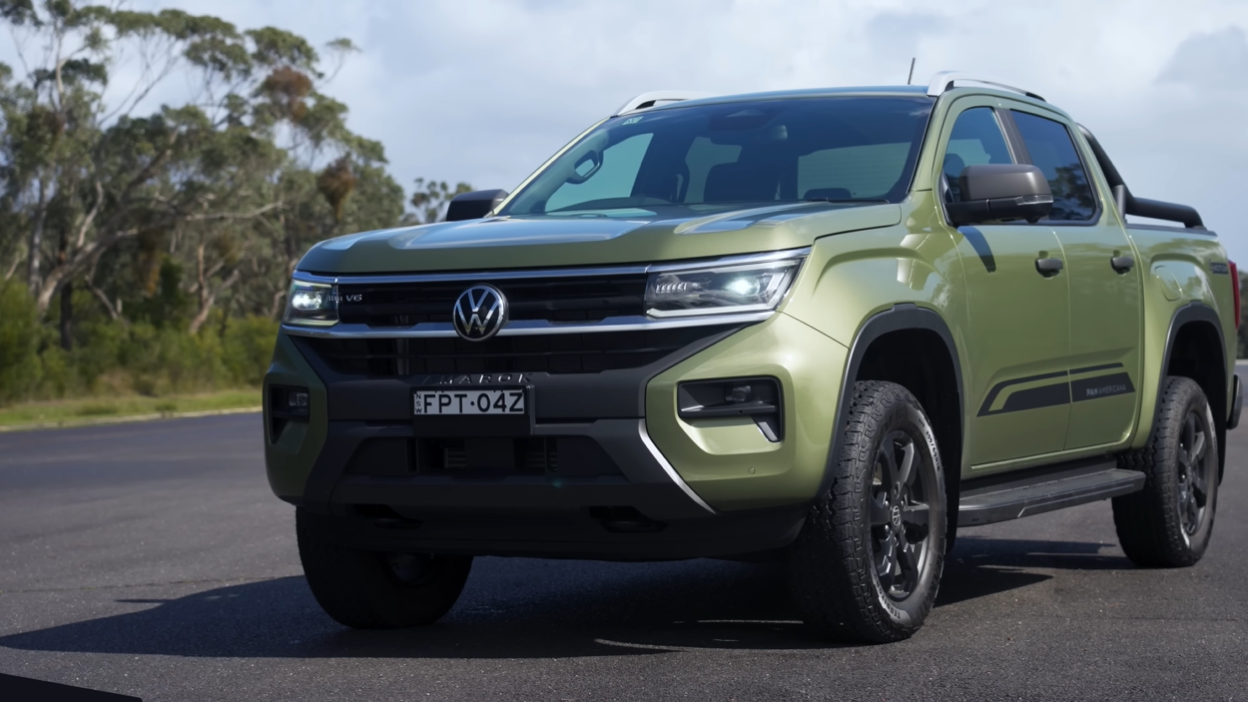
Price: $79,990 drive-away (PanAmericana V6) | The Reality: There are genuine issues you need to know before spending $80,000
TL;DR: Why You Should Think Twice
AVOID THE AMAROK V6 IF:
- You need reliable tires – Standard all-terrains have 45m stopping distance (35-40m is normal)
- You tow heavy loads regularly – Soft suspension = sketchy at highway speeds with trailers
- Resale value matters – Amarok depreciates faster than Ranger, HiLux, or D-Max
- You want value for money – $80K is Ranger Raptor territory with better everything
- You need aftermarket support – Limited accessories compared to Ranger/HiLux
BETTER ALTERNATIVES:
- Ford Ranger Wildtrak V6: Same platform, better resale, more accessories
- Toyota HiLux GR Sport: Legendary reliability, bulletproof resale value
- Isuzu D-Max X-Terrain: Better value, excellent ride, strong aftermarket
- Mazda BT-50 Thunder: Shares platform with D-Max, premium feel, better priced
Bottom Line: The Amarok V6 is a good ute that’s let down by terrible tires, soft suspension for towing, poor resale value, and a price tag that doesn’t make sense when competitors offer more. If these issues matter to you, look elsewhere.
Introduction I Drove It and Here’s What’s Wrong
I spent days testing the VW Amarok V6 PanAmericana at just under $80,000 drive-away. On paper, it looks great. In reality? Five major issues would make me think twice before buying one.
This isn’t a hit piece. The Amarok has genuine strengths premium interior, excellent trailer assist, powerful V6 diesel. But if you’re about to drop $80,000 on a dual-cab ute, you need to know the full story.
Let’s talk about the five biggest reasons you should avoid the VW Amarok V6, and what to buy instead.
Reason #1: The Tires Are Absolutely Terrible
This is the big one. The standard all-terrain tires fitted to the Amarok V6 are genuinely dangerous.
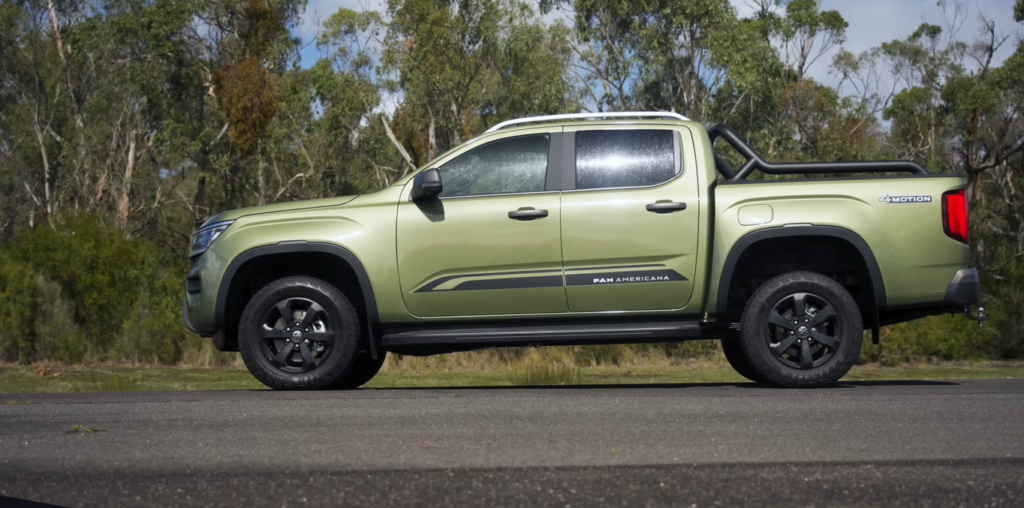
The Numbers:
- Braking distance (100-0 km/h): 45 meters
- Where it should be: 35-40 meters
- How far off: 5-10 meters (that’s 2-3 car lengths)
What This Means in Real Life: Imagine you’re doing 100 km/h on the highway. A car ahead brakes suddenly. You hit the brakes too. In a HiLux or Ranger with decent tyres, you stop in 38 meters. In the Amarok? You’re still travelling at speed for an extra 7 meters. That could be the difference between stopping in time and a serious crash.
Why Are They So Bad? During my braking test, I could feel that nothing was happening when I first hit the brakes. It takes quite a while for the tires to hook up and slow down. The initial bite is almost non-existent.
The Same Tires Are on the Ranger: These are the same all-terrains fitted to the Ford Ranger, and they’re not amazing there either. But at least Ranger buyers know this is an issue and budget for tyre upgrades.
What Works Better: The tyres fitted standard to the Kia Tasman did a much better job stopping not only in the wet, but in the dry as well. Off-road performance was decent, too.
The Cost to Fix: You’re looking at $1,200-$1,800 for a quality set of four all-terrain tyres (like BFGoodrich KO2, Yokohama Geolandar, or Goodyear Wrangler). Add that to the $80,000 price tag.
Another Issue: They don’t do anything exceptionally well. They’re not great on-road. They’re OK off-road but nothing special. They’re a compromise that doesn’t excel anywhere.
The Only Good Thing: They aren’t overly noisy. You get the benefit of a fairly aggressive tire without the compromise of huge road noise. That’s literally the only positive.
The Verdict: For an $80,000 ute, fitting tires with 45-meter stopping distance is unacceptable. You’ll need to budget another $1,500+ to replace them immediately. That’s a massive oversight from VW.
What to Buy Instead: If tire safety matters (and it should), buy a ute with better standard rubber or factor in immediate replacement costs.
Reason #2: The Suspension is Too Soft for Serious Towing
The Amarok rides more softly than the Ranger. Around town, that’s nice. For towing 3.5 tonnes? It’s a problem.
What I Found: The Amarok is more softly sprung than the Ranger. In and around town, it’s actually quite nice, especially on these all-terrains. They’re just a bit more forgiving of harsh bumps, potholes, and rough roads.
But Here’s the Problem: It comes at the cost of body control. At 130 km/h (Australia’s maximum speed limit) on highway undulations, we were well and truly almost leaving the ground.
Where You’ll Notice This: I did a road trip recently between Adelaide and Melbourne. There are so many major highways where you’re getting undulations at 100 km/h that feel very unsettling. And that’s with no load or trailer.
Throw a Trailer On: It really starts feeling amplified. The more weight you have in the vehicle, the more amplified that feeling gets. If you’re doing something like an overtake with a caravan or heavy trailer, it’s going to feel pretty sketchy.
The Ranger Comparison: The Ranger has firmer suspension that’s better controlled under load. It’s less comfortable around town, but significantly more confidence-inspiring when towing.
Real-World Context: My folks just got back from a 13,000 km road trip around Australia with their caravan. Highway stability at speed with a trailer is critical for safety. The Amarok’s soft suspension would make that journey far more stressful.
Who This Affects:
- Anyone towing caravans regularly
- Tradies with heavy loads in the tray
- Families doing long-distance touring with trailers
- Anyone who needs a ute for actual work, not just commuting
The Irony: VW markets this as a premium towing machine with 3,500kg capacity and trailer assist technology. But the suspension tuning undermines that capability.
What to Buy Instead:
- Ford Ranger Wildtrak: Firmer suspension, better controlled under load
- Isuzu D-Max: Excellent ride and towing stability
- Mazda BT-50: Shares D-Max platform, similar benefits
The Verdict: If you’re actually going to tow heavy loads regularly, the Amarok’s soft suspension is a legitimate safety concern. It’s one thing to ride softly around town. It’s another to feel unstable at highway speeds with a 2-tonne caravan behind you.
Reason #3: Resale Value is Significantly Worse Than Competitors
This is where the Amarok really hurts your wallet.
The Sales Reality: If you look at the sales charts, the Amarok is kind of forgotten sometimes. I find it really strange given they sell so many Rangers and this is virtually the same vehicle. But the sales numbers don’t lie.
2024 Australian Sales (Approximate):
- Ford Ranger: 50,000+ units sold (market leader)
- Toyota HiLux: 45,000+ units sold (legendary resale)
- Isuzu D-Max: 20,000+ units sold
- Mazda BT-50: 8,000+ units sold
- VW Amarok: ~3,000 units sold (forgotten)
Why This Matters: Low sales volume = lower demand in the used market = worse resale value. It’s basic supply and demand.
Resale Value Comparison (3 Years Old, 60,000km):
- Toyota HiLux: Retains 70-75% of original value
- Ford Ranger: Retains 65-70% of original value
- Isuzu D-Max: Retains 60-65% of original value
- VW Amarok: Retains 50-55% of original value
What This Means in Real Money: Buy a new Amarok V6 for $80,000. Sell it in 3 years with 60,000km. You’ll get maybe $40,000-$44,000.
Buy a Ranger Wildtrak V6 for similar money. Sell it in 3 years. You’ll get $52,000-$56,000.
That’s a $12,000-$16,000 difference in depreciation.
Why the Poor Resale?
- Brand perception: VW is seen as European/premium with higher running costs
- Low sales volume: Fewer buyers = lower demand = lower prices
- Limited dealer network: Less aftermarket support = less appeal
- Ranger association: “It’s just a rebadged Ranger but worse” (perception, not reality)
The Worst Part: You can’t fix this. Depreciation is built in the moment you drive off the lot.
What to Buy Instead:
- Toyota HiLux: Legendary resale value, holds 70-75%
- Ford Ranger: Strong resale, huge demand, holds 65-70%
- Isuzu D-Max: Better resale than Amarok, holds 60-65%
The Verdict: Unless you’re planning to run this ute into the ground (10+ years, 200,000+ km), the poor resale value makes the Amarok a financially poor choice. That $80,000 purchase will cost you an extra $12,000-$16,000 in depreciation compared to a Ranger or HiLux.
Reason #4: The Price Doesn’t Make Sense ($80,000 for What?)
Let’s talk money. The Amarok V6 PanAmericana costs just under $80,000 drive-away. At that price, you’re in Ford Ranger Raptor territory. Let that sink in.
What You Get for $80,000 (Amarok V6 PanAmericana):
- 184kW/600Nm V6 diesel
- 10-speed auto
- Premium interior with Harman Kardon sound
- Trailer assist
- Full-size digital display
- 18-inch wheels with terrible tires
- Soft suspension
- Limited aftermarket support
What You Could Get Instead for $80,000: Ford Ranger Raptor ($78,990):
- Same V6 diesel engine
- Fox Racing suspension (legendary off-road setup)
- Massive 33-inch BFGoodrich KO2 tires (actually good)
- Raptor styling and presence
- Better resale value
- Huge aftermarket support
Or Go a Different Direction: Toyota HiLux GR Sport ($70,895):
- Save $9,000
- Legendary reliability
- Best resale value in the segment
- 2.8L turbo diesel (150kW/500Nm adequate for most)
- Lower running costs
Isuzu D-Max X-Terrain ($65,900 drive-away):
- Save $14,000
- Excellent ride quality
- 3.0L turbo diesel (140kW/450Nm)
- Strong aftermarket support
- Better resale than Amarok
The Value Equation: At $80,000, the Amarok is competing with:
- High-performance Raptor (better everything for same money)
- Premium HiLux (better resale, save $9K)
- Value-focused D-Max (save $14K, similar capabilities)
Where Does Amarok Win?
- Interior feels more premium than Ranger/HiLux
- Full-size digital display (Ranger needs top-spec)
- Trailer assist is excellent
- European styling if you prefer that look
Is That Worth $80,000? Not when you factor in:
- Terrible tires you’ll replace immediately (+$1,500)
- Soft suspension for towing
- Poor resale value (-$12K over 3 years vs Ranger)
- Limited aftermarket support
The Math: $80,000 + $1,500 (tires) = $81,500 upfront Plus $12,000 extra depreciation = $93,500 total cost of ownership over 3 years
Ranger Wildtrak V6 at similar price: $80,000 + $1,500 (tires if needed) = $81,500 upfront Better resale = $81,500 total cost of ownership
The Verdict: At $80,000, the Amarok V6 is overpriced for what you get. You’re paying for a premium interior and European badge, but sacrificing resale value, aftermarket support, and tire quality. The Ranger Raptor makes more sense at the same price, or save $10K+ with a D-Max or BT-50.
Reason #5: Limited Aftermarket Support Compared to Ranger and HiLux
This might seem minor, but it becomes a real issue when you actually own the vehicle.
The Reality: The aftermarket for the Amarok is significantly smaller than Ranger, HiLux, or even D-Max. Why? Low sales volume.
What This Means: Fewer sales = fewer aftermarket companies = fewer accessories = higher prices for what exists.
Real-World Examples:
Canopies and Tub Liners:
- HiLux/Ranger: 20+ brands, prices from $1,500-$5,000
- Amarok: 5-8 brands, limited choice, often higher prices
Bull Bars and Winches:
- HiLux/Ranger: ARB, TJM, Ironman, Rhino-Rack, dozens of options
- Amarok: Limited to 2-3 major brands, fewer designs
Suspension Upgrades:
- HiLux/Ranger: Old Man Emu, Bilstein, King, Dobinsons, endless choice
- Amarok: Limited options, often custom-order with long wait times
Rock Sliders and Side Steps:
- HiLux/Ranger: Hundreds of options from $300-$2,000
- Amarok: Handful of choices, higher prices
Roof Racks and Awnings:
- HiLux/Ranger: Universal fitment, cheap options available
- Amarok: Often need vehicle-specific mounting, fewer choices
The Plastic Side Steps Problem: The Amarok comes with plastic side steps. I’ve mentioned this before they get bashed up quickly off-road. You’d want to change to rock sliders.
But finding quality rock sliders for the Amarok? Limited options, higher prices, potentially long wait times for custom orders.
Tuning and Performance: I mentioned in the review that people take their V6 diesels to tuners to extract more power. For the Ranger, there are dozens of proven tuning companies with safe, tested maps.
For the Amarok? Fewer options, less proven track record, might void warranty.
Parts Availability: The Amarok shares many parts with the Ranger, so mechanical components are usually fine. But Amarok-specific trim pieces, lights, sensors? Longer wait times, potentially more expensive.
The Ranger Advantage: Because the Ranger sells 15-20x more units than the Amarok, the aftermarket is massive. Every accessory company makes Ranger parts. Prices are competitive. Choice is enormous.
Who This Affects:
- Buyers who want to customize their ute
- Off-road enthusiasts who need serious upgrades
- Tradies who need specific work-ready modifications
- Touring families who need camping setups
What to Buy Instead:
- Ford Ranger: Biggest aftermarket in Australia, endless choice
- Toyota HiLux: Second-biggest aftermarket, proven accessories
- Isuzu D-Max: Growing aftermarket, good options
The Verdict: If you want a plug-and-play ute with endless accessories, the Amarok will frustrate you. Limited choice, higher prices, longer wait times. The Ranger has the exact same bones but 10x the aftermarket support.
The One Scenario Where You SHOULD Buy the Amarok
I’ve spent this entire blog telling you to avoid the Amarok. But there’s one specific scenario where it makes sense.
Buy the Amarok V6 If:
- You want a Ranger but hate following the crowd
- You prioritize interior quality over resale value
- You’re keeping it 10+ years (depreciation matters less)
- You don’t tow heavy loads regularly (soft suspension is fine)
- You’re replacing the tires immediately anyway (factor in $1,500)
- You don’t need lots of aftermarket accessories
- VW dealer near you has a killer deal ($10K+ off)
In That Narrow Scenario: The Amarok is a good ute. The interior is genuinely more premium than the Ranger. The trailer assist is excellent. The V6 diesel is powerful and refined. The European styling stands out.
But Be Honest with Yourself: If any of the five issues I’ve outlined matter to you (tires, towing, resale, price, aftermarket), there are better options.
What You Should Buy Instead
Best Overall Alternative: Ford Ranger Wildtrak V6 ($80,000)
- Same platform, engine, transmission
- Better resale value (65-70% vs 50-55%)
- Firmer suspension for towing
- Massive aftermarket support
- Same tire issue (but at least you know it’s coming)
- Less premium interior (but most don’t care)
Best Value Alternative: Isuzu D-Max X-Terrain ($65,900)
- Save $14,000
- Excellent ride quality (better than both Amarok and Ranger)
- 3.0L turbo diesel (140kW/450Nm sufficient for most)
- Strong aftermarket growing
- Better resale than Amarok (60-65%)
Best Resale Alternative: Toyota HiLux GR Sport ($70,895)
- Save $9,000
- Legendary reliability
- Best resale in segment (70-75%)
- Lower running costs
- Huge aftermarket support
- Not as refined as Amarok, but holds value
Best Performance Alternative: Ford Ranger Raptor ($78,990)
- Same price as Amarok
- Fox Racing suspension (legendary)
- 33-inch BFGoodrich KO2 tires (actually good)
- Raptor styling and presence
- Better resale value
Budget Alternative: Mazda BT-50 Thunder ($62,990)
- Save $17,000
- Shares platform with D-Max (excellent ride)
- More premium feel than D-Max
- Better resale than Amarok
No. The Amarok shares its platform and engine with the Ford Ranger, which is proven reliable.
Final Thoughts: Should You Really Avoid It?
Look, the VW Amarok V6 isn’t a bad ute. It’s just not the right ute for most people at $80,000.
The Five Issues Are Real:
- Terrible tires (45m braking is unacceptable)
- Soft suspension for towing (sketchy at highway speeds)
- Poor resale value ($12K-$16K worse than Ranger)
- Overpriced at $80K (Raptor territory)
- Limited aftermarket (fraction of Ranger’s options)
If These Matter to You: Buy something else. The Ranger makes more sense for same money. The D-Max or BT-50 save you $15K-$17K. The HiLux has unbeatable resale.
If These Don’t Matter: And you want a premium interior, European styling, excellent trailer assist, and plan to keep it 10+ years while replacing the tires immediately? Then go for it.
My Honest Take: I’d buy a Ranger Wildtrak or D-Max X-Terrain over the Amarok. The money makes more sense. The tires are less of a liability (or you save enough to replace them). The resale protects your investment.
But I understand the appeal of being different. Not everyone wants to follow the crowd. If that’s you, the Amarok delivers on style and interior quality.
Just know what you’re getting into.
My Rating: 6/10 (Would be 8/10 with better tires, firmer suspension, and $10K lower price)
Drop your thoughts in the comments. Am I being too harsh? Or are these legitimate concerns? Let me know if you’ve owned an Amarok what’s your experience been?