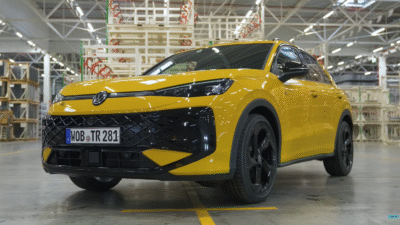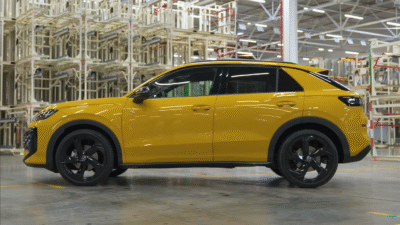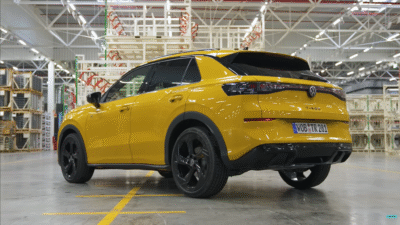
The Verdict (Spoiler Alert): Hyundai Tucson Hybrid wins. Chevy Equinox loses.
Price Range: $21,600 – $40,000+
Compact SUVs are the best-selling vehicles in America. But popularity doesn’t equal quality.
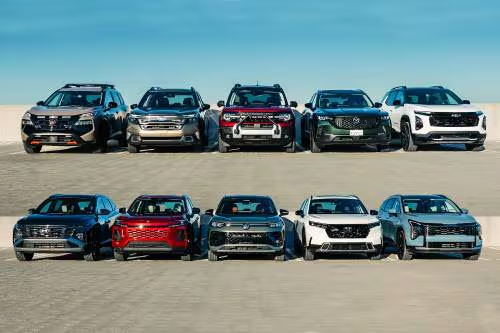
Edmunds gathered 10 of the most popular small SUVs — both gas and hybrid — and tested them head-to-head on comfort, cargo space, car seats, tech, driving dynamics, and fuel economy.
Every SUV received an Edmunds rating score (out of 10), and that’s how they ranked them from worst to best.
Spoiler: The winner is surprisingly NOT the Toyota RAV4.
Let’s break down all 10 SUVs, starting with the one you should absolutely avoid.
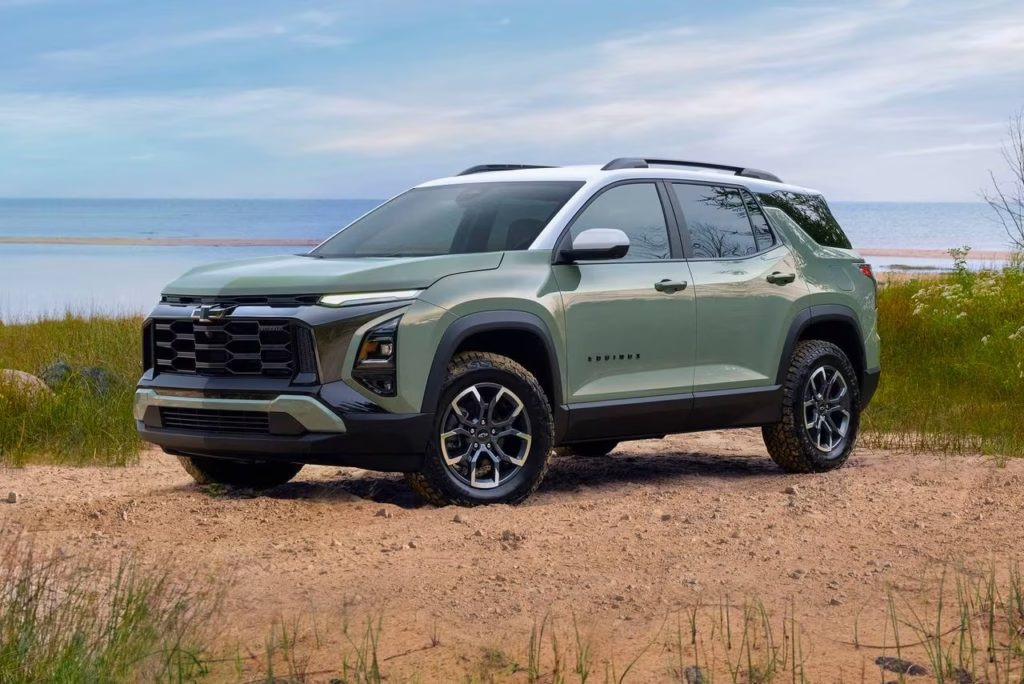
#10 (Last Place): Chevrolet Equinox — Skip This One
Edmunds Rating: Not disclosed (lowest in the test)
Starting Price: ~$26,000 (estimated)
What’s Good?
Tech is decent. You get Google integration (Maps, voice commands), a good-sized screen, and an 8-year free trial of Google services — way more generous than competitors.
The room is good. Front and rear seats have decent space, and there’s no hump in the middle of the rear floor, so the middle passenger doesn’t get penalized.
Fun paint options. Neat green color, white contrasting roof, and a cool off-road-looking Active model.
What’s Bad (Everything Else)
Driving experience is terrible. Slow, rough, floaty, disconnected. Hard to see out of.
No hybrid option. Fuel economy is below average.
Tiny door openings. Doors don’t open to 90 degrees, making it hard to load people, car seats, or cargo.
Cargo space is weak. Not much room for small items inside, and trunk space is unimpressive.
Towing is limited. Can’t pull as much as competitors.
Verdict
The Equinox is fine if you like how it looks, don’t care about driving dynamics, and can get a deal through a Chevy dealer.
But there are nine better options.
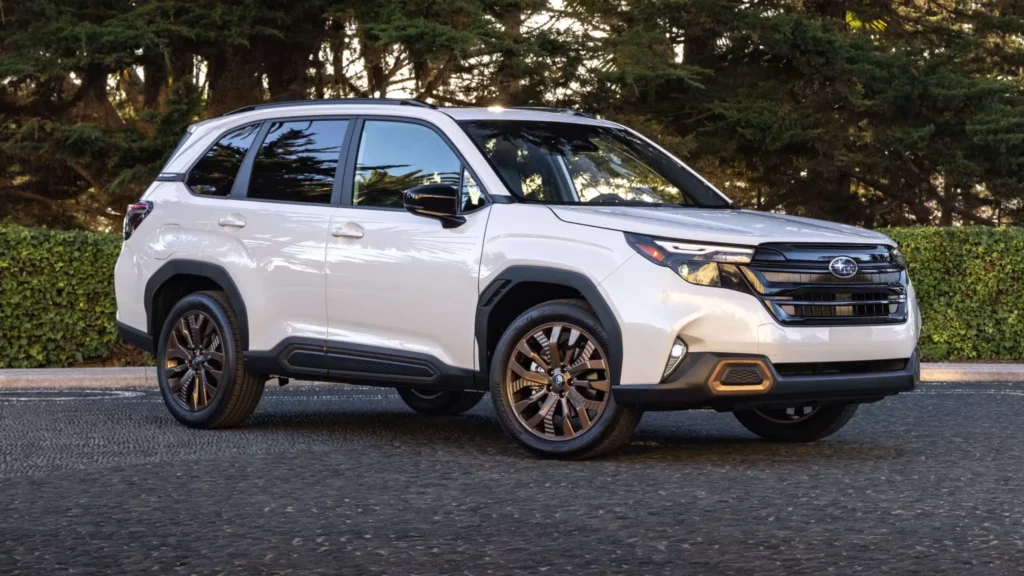
#9: Subaru Forester Hybrid — Great Visibility, Awful Tech
Edmunds Rating: Not disclosed
Starting Price: ~$30,000 (estimated)
Edmunds has been living with the Forester Hybrid for a one-year, 20,000-mile road test, so they know it intimately.
What’s Good?
Best-in-class visibility. Massive windows all around make it easy to see out and let tons of light in.
Spacious and easy to access. Roomy back seat with wide door openings and low seat height — perfect for people with limited mobility or kids.
Car seats install easily. Huge door openings and easy-to-find LATCH anchors.
What’s Terrible
Tech is one of the worst in the industry.
- Infotainment is slow, low-resolution
- The backup camera is tiny and hard to see
- Lack of physical controls forces you to use the terrible touchscreen
Driver assists are bad. Adaptive cruise control is lazy and unresponsive. Lane-keeping bounces you from line to line “like you’re playing Pong”.
Small-item storage is nonexistent. Tiny cup holders that don’t fit big water bottles. Small center console bin. The wireless charging pad doesn’t grip your phone, so it slides around and stops charging.
Gas version is even worse. Stiffer suspension, underpowered, slow to respond.
Verdict
Buy it only if visibility and easy access are your top priorities, or you really love Subarus.
Otherwise, look elsewhere.
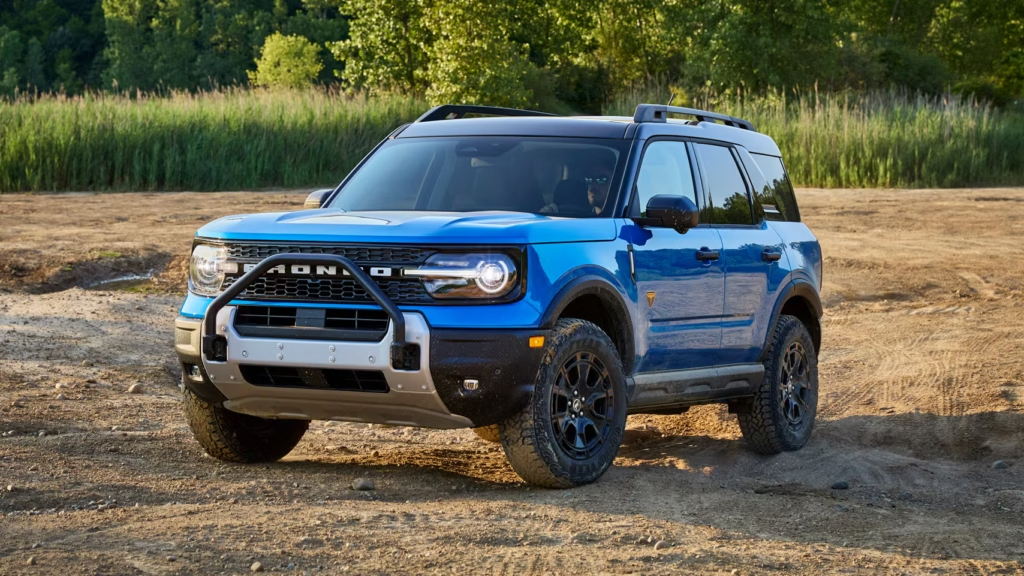
#8: Ford Bronco Sport — Off-Road King, Practicality Loser
Edmunds Rating: Not disclosed
Starting Price: ~$30,000 (estimated)
What’s Good?
The most off-road capable SUV in the test. Especially with the Sasquatch package: all-terrain tires, good ground clearance, locking differential, all-wheel drive.
Impressive towing for this class.
Clever cargo features:
- Pop-up rear window
- Dual-level cargo floor
- Shelf slides out and legs pop up to become a table — perfect for changing a baby or building tacos
Great tech. Super crisp, snappy infotainment.
Fun styling touches. Graphics packages, good paint options, and throwback Heritage Edition.
What’s Bad
More expensive and less efficient than rivals.
Way less rear legroom than any other SUV in this test.
Narrow door openings. Hard to take road trips with friends. Rear-facing car seats force you to push the front seats way forward.
Less cargo floor space than competitors (even though it’s tall). Bigger items like strollers or golf bags require folding rear seats.
Climate controls moved to a touchscreen. Ford, buttons are better.
Verdict
Buy it if you hit trails often and love the Bronco vibe.
For the average small SUV buyer, there are better options.
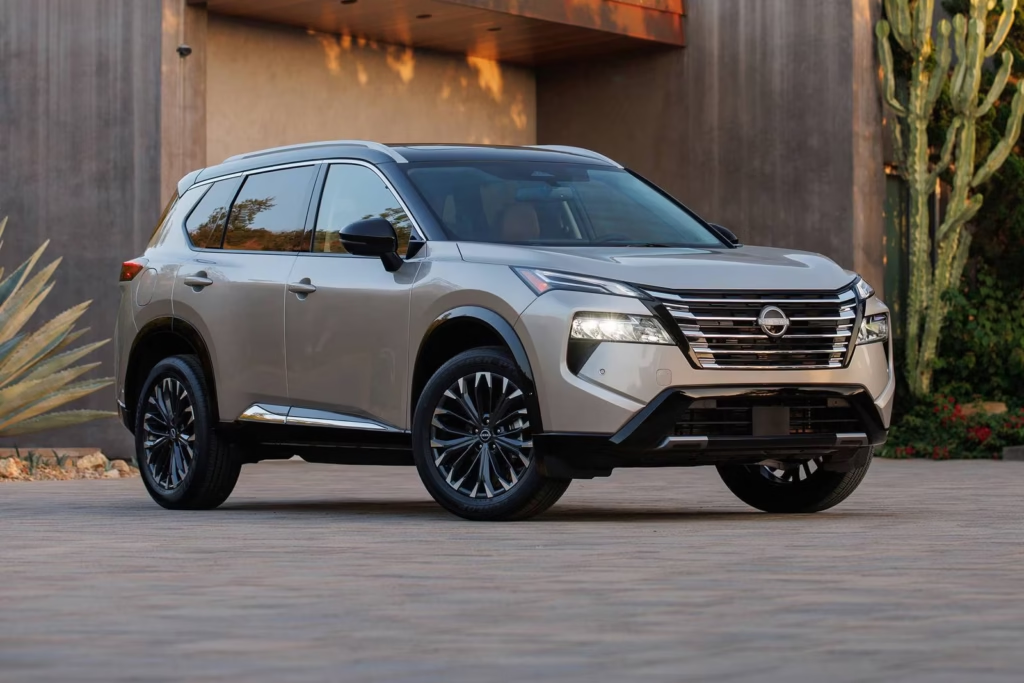
#7: Nissan Rogue — Makes a Hell of a First Impression, Then Disappoints
Edmunds Rating: Not disclosed
Starting Price: ~$29,000 (estimated)
What’s Good?
The cargo area is excellent. Plenty of room, flat load floor, two small bins on the sides for organizing.
Smart small-item storage:
- Center bin with split opening
- Big rubberized bin below the screen (houses wireless charger)
- Additional storage space underneath
- Door pockets fit big water bottles
Straightforward controls. Buttons for everything you use often: Home button, dedicated Camera button, knobs and buttons for climate controls (including heated seats).
Great fuel economy for a gas SUV. Most all-wheel-drive Rogues get over 30 MPG combined.
What’s Bad
Most trims get a dinky 8-inch screen with a terrible infotainment system.
- Laggy and slow
- Looks and feels 10 years old
- No Google built-in
- No wireless Apple CarPlay or Android Auto unless you upgrade to the larger screen
Sluggish powertrain. Hit the gas and wait for the result.
Bad ride quality and noise. Makes the Rogue feel less refined than competitors.
No hybrid option.
Verdict
The Rogue is fine. Decent value at lower trims.
But why settle for fine when you can get good or great?
Everything From Here On Gets “Very Good” or Better
From this point forward, every SUV is easily recommendable. Some are truly excellent.
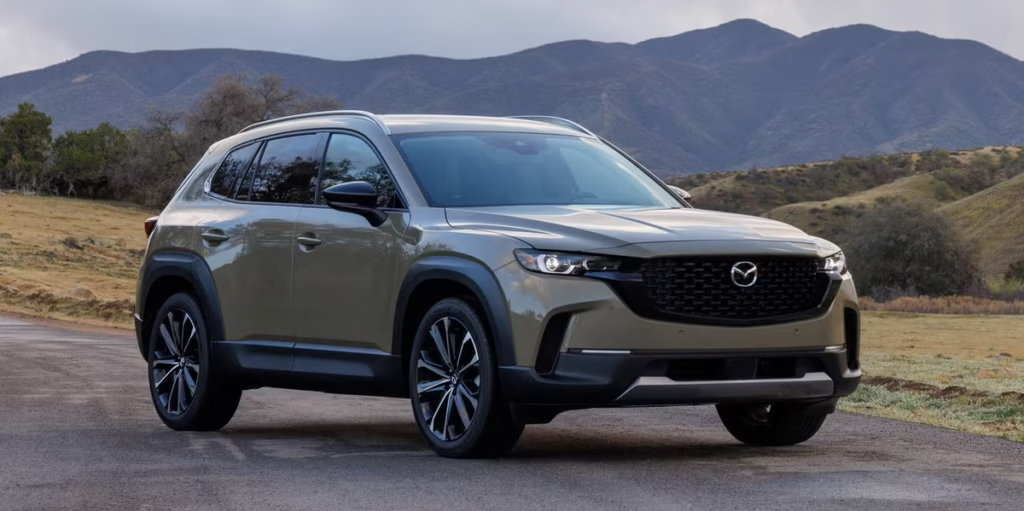
#6: Mazda CX-50 — Upscale and Sporty, But Small Cargo Space
Edmunds Rating: Very Good
Starting Price: ~$29,000 (estimated)
What’s Good?
The interior feels like a luxury car. No other interior in this test comes close in terms of look and feel. Font of the dials, feel of control knobs — everything says high quality.
Easy controls. Good steering wheel buttons, straightforward climate control.
Fun to drive. Suspension makes body motions feel controlled, inspiring confidence in handling. Power is always there for merging or passing. The turbocharged option makes 250+ horsepower.
What’s Bad (One Potential Deal-Breaker)
Less cargo space than almost all competitors.
The hybrid has even less cargo space and trades the gas engine’s responsiveness for fuel economy. This is one of the few instances where Edmunds recommends the gas version over the hybrid.
Tech could be a deal-breaker. The screen is small and mounted high (good for safety). But the OS buries functions in menus and demands you use the scroll knob.
Verdict
Buy the Mazda if you want something uniquely upscale and sporty.
It’s one of the more interesting options in a snoozy group.
But there are still better options.
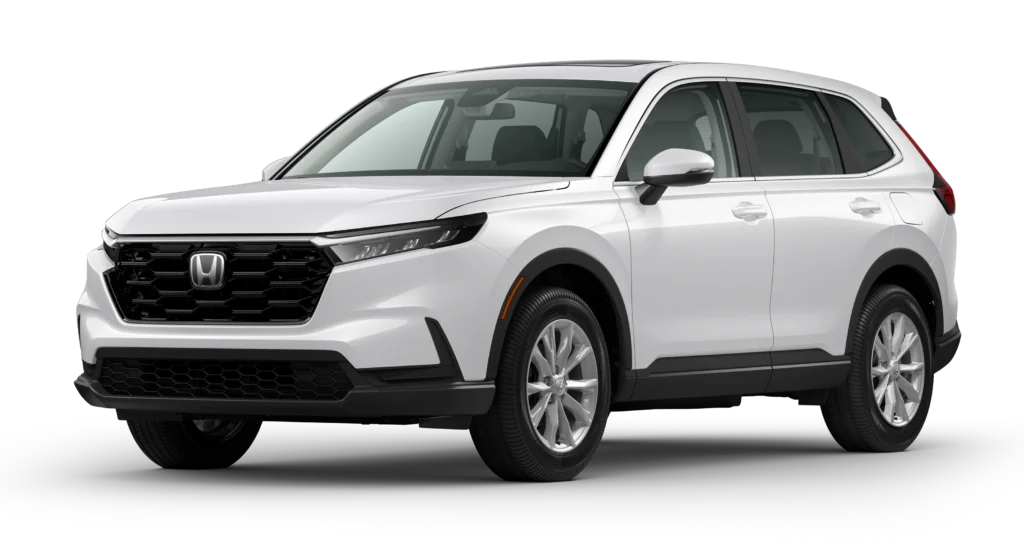
#5: Honda CR-V — High Quality, But Missing Features
Edmunds Rating: Very Good
Starting Price: ~$30,000 (estimated)
What’s Good?
Feels like a high-quality machine built to last. No squeaks or rattles.
Great touchpoints. Real metal knobs with excellent knurling. Even the joystick air vents are fun to use.
Driving experience stands out. Not as sporty as the Mazda, but steering and handling are excellent. Brake and gas pedals are easy to operate smoothly.
Ride quality is the best part. Gives the CR-V a sense of refinement many competitors can’t match.
Rear seat is great. Doors open almost 90 degrees for huge openings. Easy to load car seats. Plenty of room with comfortable recline.
What’s Bad
Down on features. Can’t get ventilated seats, surround-view camera, or panoramic moonroof — features expected on modern compact SUVs.
Google integration only on top trim. Get any other CR-V trim and you’re stuck with an older, worse infotainment system.
9-inch screen is the biggest available. Competitors offer much larger.
Hybrid version costs more. The price floor is higher than competitors.
Verdict
Easy recommendation for people who value quality, space, and driving dynamics.
We really dig this thing.
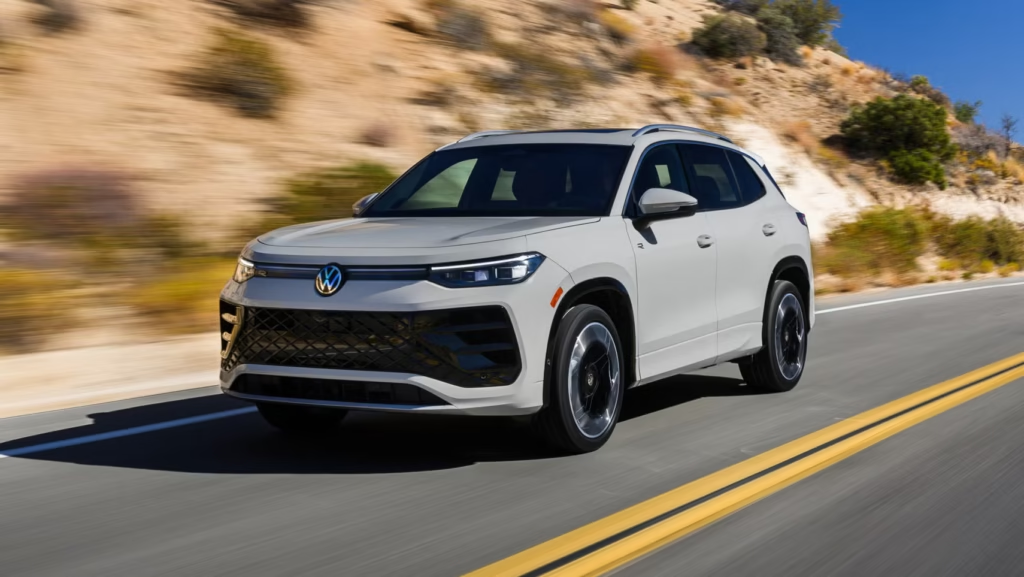
#4: Volkswagen Tiguan — Budget Audi Vibes
Edmunds Rating: Very Good
Starting Price: ~$28,000 (estimated)
What’s Good?
Feels like a budget Audi. For the first time in years, the Tiguan doesn’t feel like a cheap afterthought.
Excellent seats. Nice to look at, well-trimmed, super supportive. Top trims get heating, cooling, and massage.
High-end screen. Super sharp and responsive.
Mega quiet inside.
Top trims have a beefier engine with serious power.
Tons of rear legroom. Huge door openings make it easy to get inside. Child seat anchors hidden under plastic doors (nice touch).
Punches above its weight in refinement and features.
What’s Bad
No hybrid. Fuel economy is below average.
High-end features cost a lot. Want ventilated seats, panoramic roof, or massaging seats? The price ceiling is higher than competitors.
Climate controls are all in a touchscreen. Buttons and knobs are better.
Verdict
If you want something that feels like a German luxury car for compact SUV money, the Tiguan holds appeal.
Just know about its drawbacks.
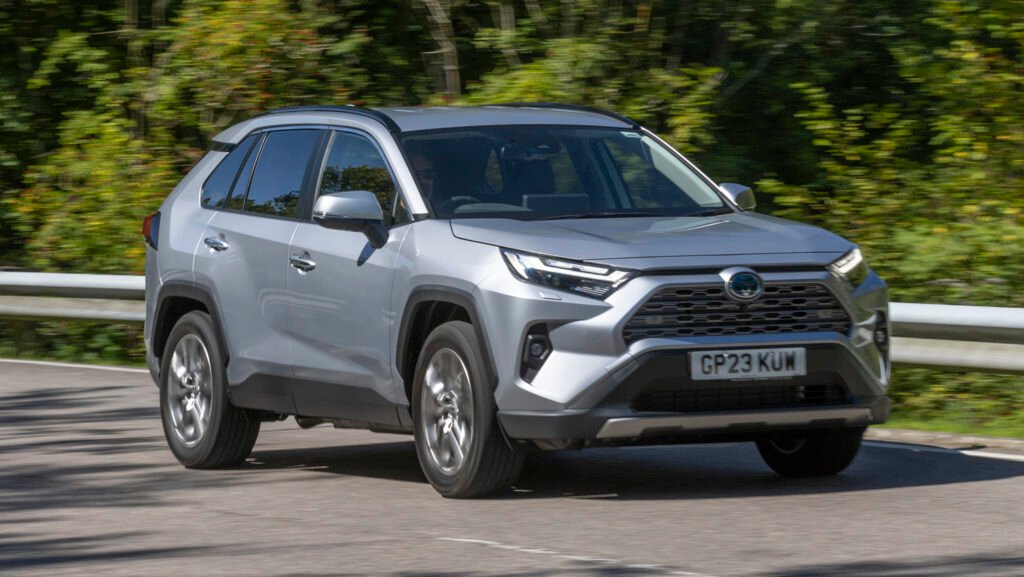
#3: Toyota RAV4 — Best-Seller Finally Good Again
Edmunds Rating: Very Good
Starting Price: ~$29,000 (estimated)
What’s Good?
Storage space everywhere. Spots for two phones, dual wireless charging pads (top trim), shelf below, shelf in front of the passenger. Center console lid flips over to use as a taco tray.
Brand-new infotainment system debuts in this RAV4. Super responsive, easy layout, massive improvement.
Two features no competitor offers:
- 12.3-inch digital instrument display (standard)
- Integrated dash cam (standard)
Quicker than expected. Ride quality is quite good.
Highest tow rating of any competitor in this test.
Available as plug-in hybrid.
Insane efficiency. Only SUV here where you can get all-wheel drive and still get over 40 MPG combined. Basically a Prius with more space.
What’s Bad
Navigation and voice commands cost money. You get one year free, then pay for a data subscription. Honda gives three years. Equinox gives eight. Makes Toyota seem stingy.
Front seats not as comfortable as competitors.
Lots of hard plastic on the interior. Items in storage bins slide around.
The rear seat is noticeably smaller than the competitors. Still way better than the Bronco Sport, but you’ll notice less room.
Rear doors don’t open wide. LATCH anchors are tough to access.
Verdict
The redesigned RAV4 is practical, powerful, modern, and efficient.
For the first time in years, Edmunds can finally recommend it.
#2 (Tied for #1): Kia Sportage Hybrid — Well-Rounded Excellence
Edmunds Rating: Tied for Best (with Hyundai Tucson)
Starting Price: ~$30,000 (estimated)
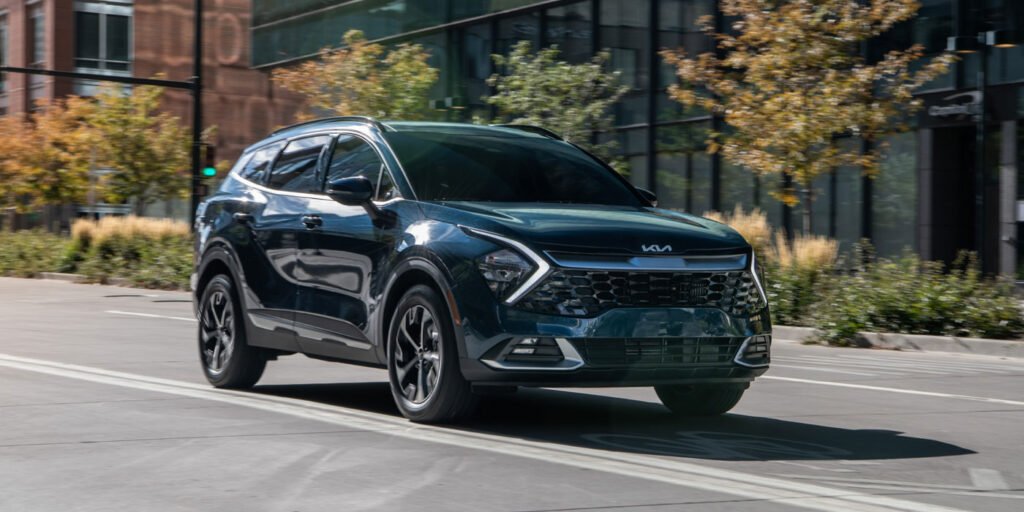
What’s Good?
Super comfortable and supportive front seats.
Tons of small-item storage. Including a unique center console cupholder design — only car in its class that can hold a big water bottle up front.
Sleek, clean design. Really nice overall vibe.
Big standard screen. Super sharp and easy to use.
Blind-spot camera on top trims. Flick turn signal, see what’s behind you. Brilliant.
Really comfortable on the road. Suspension is compliant without being floaty. Easy to drive smoothly with plenty of power.
Really quiet.
Driver assists are excellent — up there with the best.
Plug-in hybrid available.
Great back seat. Really big door openings and tons of room.
Excellent value. Same features as competitors but a few thousand dollars less.
Best warranty of any SUV here (except Hyundai).
Huge cargo area. Dual-level cargo floor. When lowered, the biggest cargo room of any SUV in this test (except the Hyundai Tucson).
Tows up to 2,000 pounds.
What’s Bad
Climate and media controls in the same menu. You swap between them with a button. Hard to use without taking eyes off the road. The problem gets worse when you’re stuck in the wrong menu.
Fuel economy is subpar despite being a hybrid. But compared to the RAV4, it’s only a couple of hundred dollars a year difference.
Verdict
Buy the Sportage Hybrid if you want one of the most well-rounded, do-it-all vehicles on sale today.
#1: Hyundai Tucson Hybrid — The Default Recommendation
Edmunds Rating: Tied for Best (Wins as Default Recommendation)
Starting Price: ~$30,000 (estimated)
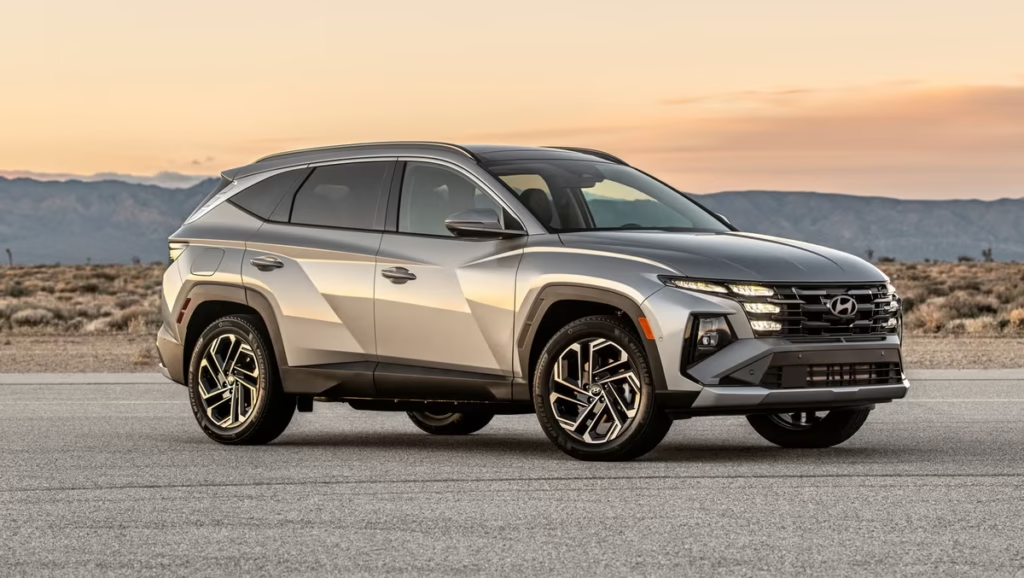
What’s Good?
Fantastic interior. Tons of room, very comfortable and supportive seats with plenty of adjustment.
Better small-item storage than the Kia:
- A giant shelf in front of the passenger
- Open area perfect for a purse or small bag (doesn’t slide around)
Same great tech as the Kia. Basically, the same infotainment system.
Perfect wireless charging pad placement. Easy to reach, rubberized bottom so phone won’t slide, light turns on while charging.
Climate controls are better than the Kia. Functionsare housed in a dedicated screen that doesn’t move or change. Solves the Sportage’s biggest problem.
Driving is great. Combines favorite attributes from other vehicles:
- Powertrain is quick and eager like Toyota ‘s
- Suspension is comfortable like Kia ‘s
- Gas and brakes easy to operate smoothly
Driver aids are excellent (like the Sportage).
Massive back seat. Big door openings, lots of knee room, lots of headroom. More than enough space for rear-facing car seats.
Massive cargo area.
Tows more than almost every competitor.
What’s Bad
Touch controls aren’t as easy as physical ones in competitors.
Hybrid isn’t as efficient as some rivals (same as Kia).
Verdict
This is the one that deserves your attention. No SUV in this test is as well-rounded or as easy to recommend.
That’s why it’s the winner.
Final Takeaways: Which One Should YOU Buy?
The Big Lesson
In almost every case, the hybrid is the better buy.
Exception: Mazda CX-50 — gas version is better.
How to Choose
If you’re shopping for a compact SUV, you can be as picky as you want.
Pick the one that excels at your biggest priority:
- Cargo room? Tucson or Sportage
- Technology? RAV4 or Tucson
- Driving dynamics? Mazda or Honda
- Luxury feel? VW or Mazda
- Off-roading? Bronco Sport
- Value? Kia Sportage
If you’re picking from the top five contenders, they’re all very good, and you’re not going to give much up.
Value Consideration
Even though these SUVs can be priced over $40,000, you’re still getting a lot of car.
5 Best 3-Row SUVs Under $40,000
Quick Comparison Table
| Rank | SUV | Rating | Best For | Worst For |
|---|---|---|---|---|
| #1 | Hyundai Tucson Hybrid | Tied Best | Overall well-roundedness | Touch controls |
| #2 | Kia Sportage Hybrid | Tied Best | Value + cargo space | Control layout |
| #3 | Toyota RAV4 Hybrid | Very Good | Efficiency (40+ MPG AWD) | Rear seat space |
| #4 | VW Tiguan | Very Good | Luxury feel | Fuel economy |
| #5 | Honda CR-V | Very Good | Ride quality + build quality | Missing features |
| #6 | Mazda CX-50 | Very Good | Driving dynamics | Cargo space |
| #7 | Nissan Rogue | Fine | Storage solutions | Tech quality |
| #8 | Ford Bronco Sport | Compromised | Off-road capability | Rear seat space |
| #9 | Subaru Forester Hybrid | Disappointing | Visibility | Tech (worst in class) |
| #10 | Chevy Equinox | Last | Google integration | Driving, space, everything |
Which compact SUV would you choose? Hyundai Tucson for overall excellence, or Kia Sportage for better value? Drop your pick in the comments below.