Is the new Nissan Navara just a rebadged Mitsubishi Triton? We drove it to find out.
The automotive world has been buzzing with questions ever since Nissan announced their partnership with Mitsubishi for the all-new 2026 Navara. Is it just a Triton with a different badge? Does it drive differently? And most importantly, is it worth buying?
We got behind the wheel of the 2026 Nissan Navara to answer these burning questions. The results might surprise you.
Quick Verdict: Worth It or Skip It?
The Bottom Line: The 2026 Nissan Navara shares its platform with the Mitsubishi Triton but offers distinctly better suspension tuning, superior exterior design, and refined driving dynamics. With the proven 2.4L bi-turbo diesel engine, improved ride quality, and competitive pricing, it’s a genuine contender in the dual-cab ute segment.
Rating: 8.5/10
Who Should Buy:
- Buyers want proven reliability with better styling than the Triton
- Those who prioritise ride quality and off-road capability
- Anyone seeking a practical work ute with improved comfort
Who Should Skip:
- Buyers are demanding cutting-edge infotainment technology
- Those wanting spacious rear seats
- Anyone allergic to sharing platforms with Mitsubishi
First Impressions: Not Your Average Rebadge
The Rebadge Question Everyone’s Asking
Let’s address the elephant in the room: Yes, the 2026 Nissan Navara shares its bones with the Mitsubishi Triton. But calling it a simple rebadge would be doing this ute a massive disservice.
The moment you see it in person, the differences become apparent. While the platform, powertrain, and interior architecture are shared, Nissan has invested serious effort into differentiating the Navara where it counts most.
Exterior Design: Nissan Absolutely Nailed It
A Fresh Face That Turns Heads
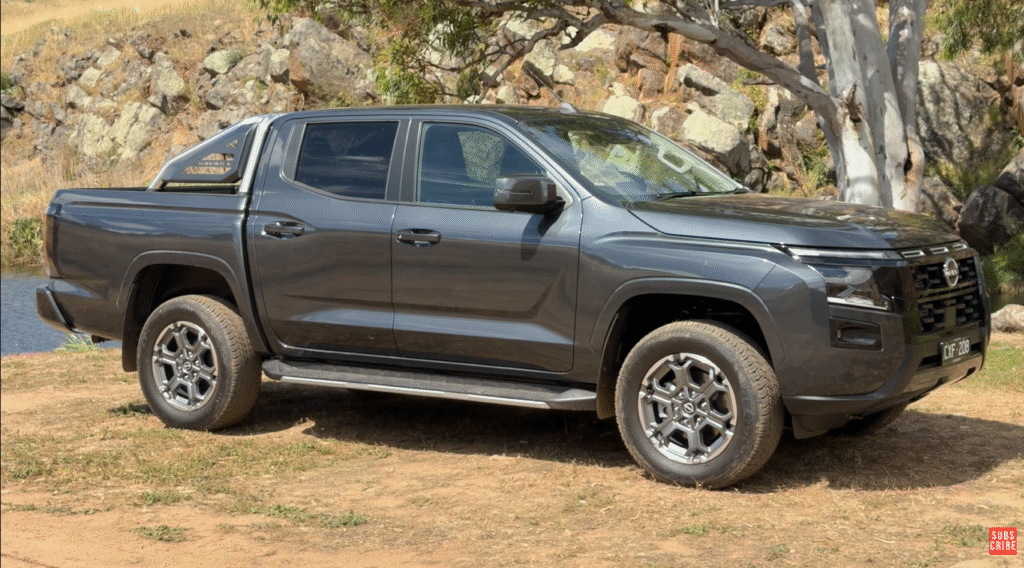
The 2026 Navara’s exterior design is arguably its strongest selling point. Nissan’s design team has created a ute that looks genuinely distinctive from its Mitsubishi sibling.
Front End Design:
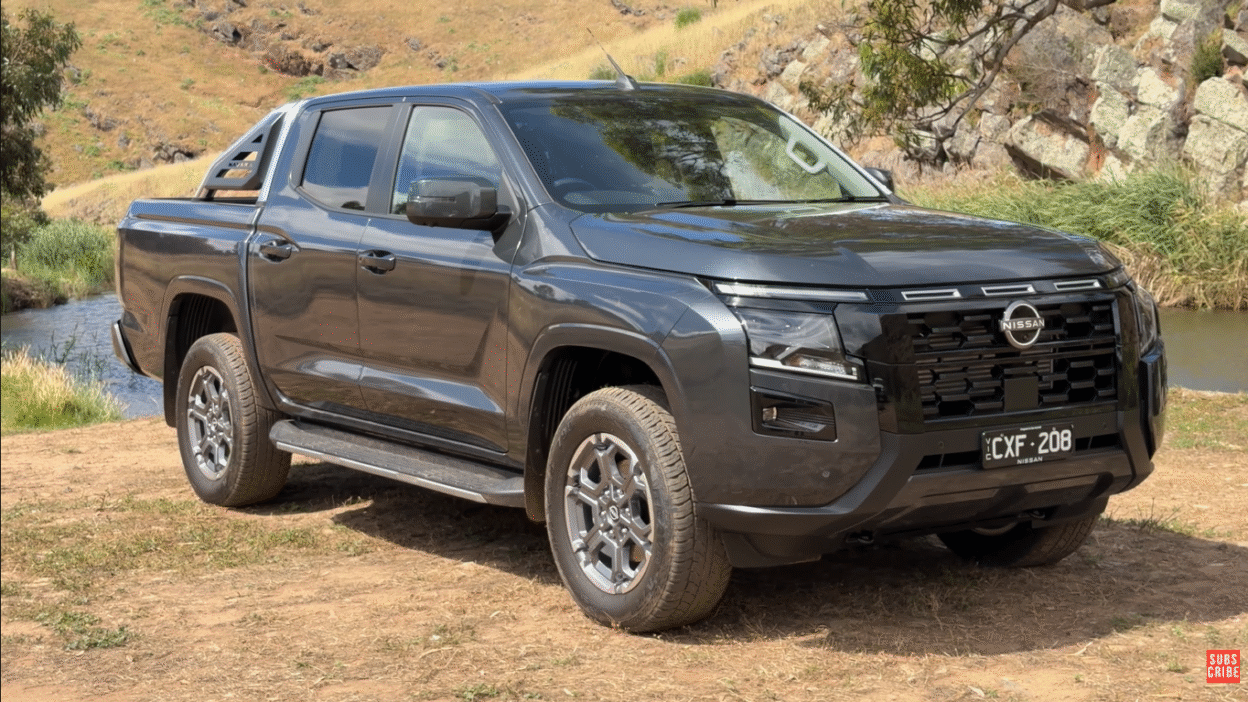
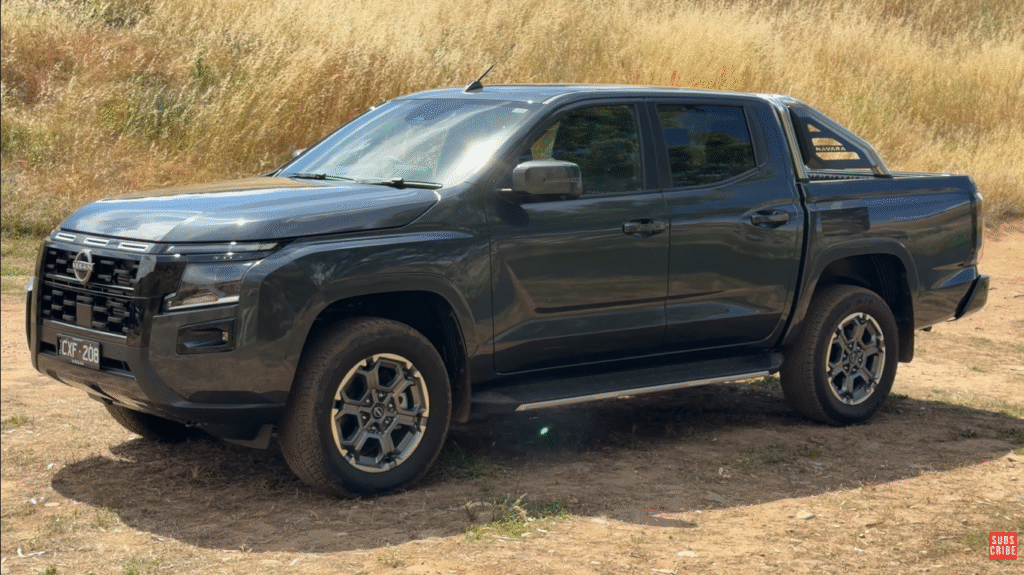
The three-slot grille design is immediately recognisable as Nissan DNA. While they claim it’s V-shaped, it reads more square in reality, but that’s not necessarily a bad thing. The prominent Nissan badge sits proudly in the centre, flanked by interlocking LED headlights that deliver both style and excellent illumination.
According to design philosophy, these interlocking elements represent Japanese craftsmanship—and they genuinely look impressive in the flesh.
Key Design Features:
✅ Three-slot signature grille – Distinctive Nissan identity
✅ Interlocking LED headlights – Modern and bright
✅ Steel bash plate – Functional and rugged
✅ 360-degree camera – Finally, a good implementation
✅ Gunmetal grey finish (tested) – Looks premium
Side Profile: Rugged Without Being Over-Styled
Moving to the side, the Navara strikes a nice balance between functional and attractive. The alloy wheel design is genuinely epic—one of the better designs in the segment—wrapped in quality Maxxis all-terrain tyres right from the factory.
What We Love:
- Excellent alloy wheel design
- Quality all-terrain tires as standard
- Cleaner fender design (no oversized GSR-style flares)
- Massive sail plane adds visual interest
- 360-degree camera coverage
- Keyless entry and go
What We Don’t Love:
- Drum brakes at the rear (yes, really)
- No side steps for bed access
- Privacy glass could be too dark for some
The Drum Brake Controversy: Yes, in 2026, the Navara still uses drum brakes at the rear. While this is disappointing from a tech perspective, it’s worth noting that drum brakes are common in the ute segment and rarely cause issues in real-world use.
Rear Design: Familiar But Better
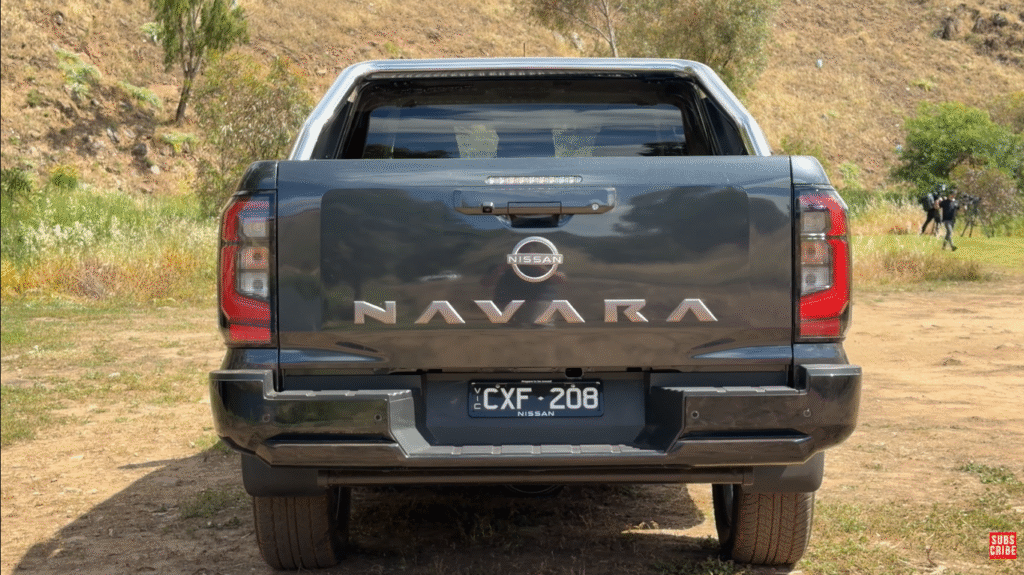
The rear design shares considerable DNA with the Triton, but Nissan has made smart changes that give it a more three-dimensional, premium appearance.
The Navara badging placement on the tailgate is particularly clever—it’s a simple change that makes a significant visual difference. You’ll find the Nissan logo prominently displayed, and while some lighting elements remain halogen, the overall presentation is clean and modern.
Towing & Payload:
- Towing capacity: 3,500kg (3.5 tons) braked
- Payload: 950kg to 1,050kg depending on variant
- Bed dimensions: Now accepts Euro pallets
The Tub: Bigger and More Practical
One significant improvement over the previous Navara is the adoption of the Mitsubishi tub dimensions. This means you can finally fit a Euro pallet in the back, making it genuinely more practical for trade work.
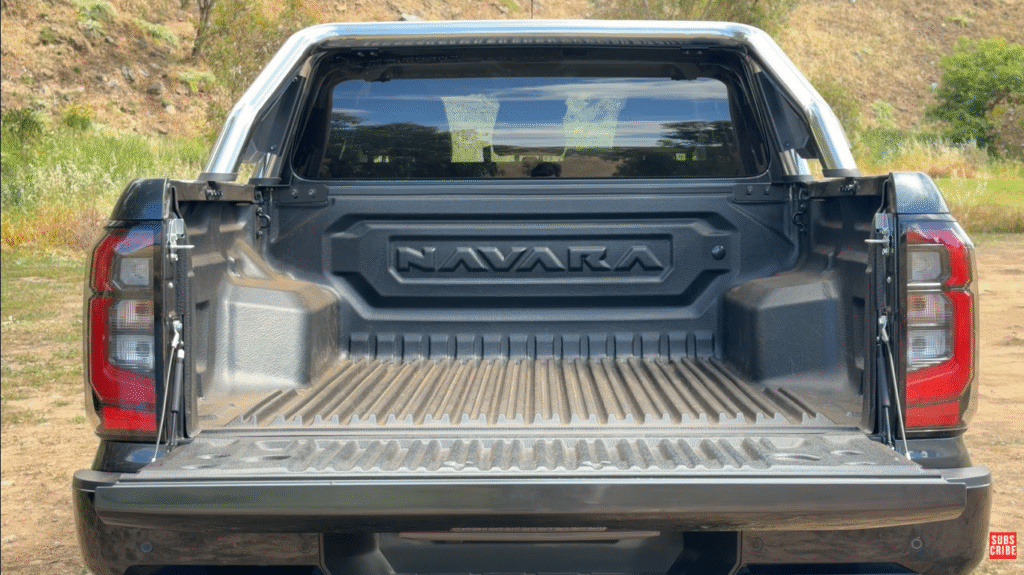
The new Navara is also notably shorter than its predecessor, which improves off-road maneuverability and approach angles—a welcome change for serious off-roaders.
Interior: Mitsubishi DNA With Nissan Tweaks
The Truth About Cabin Sharing
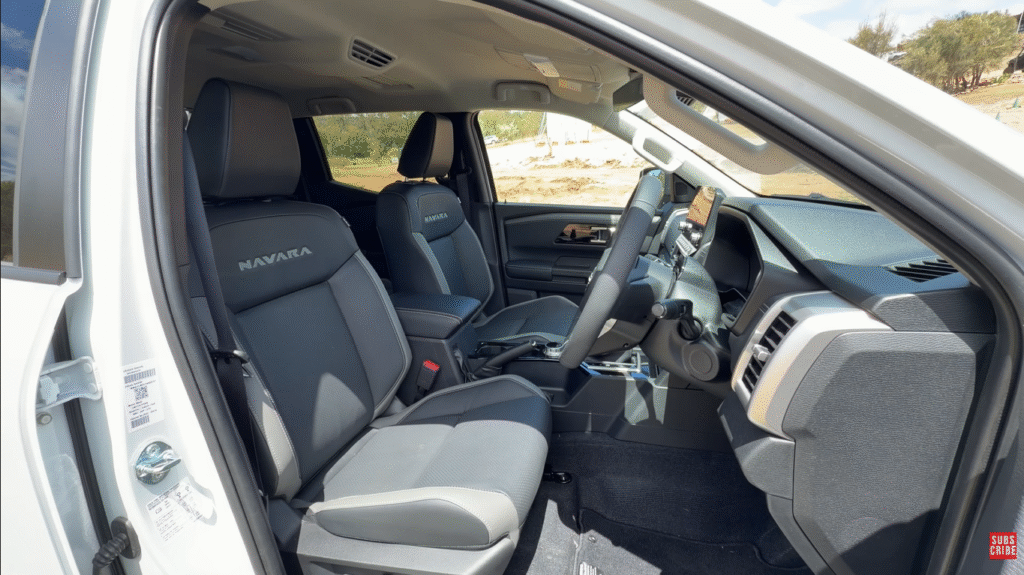
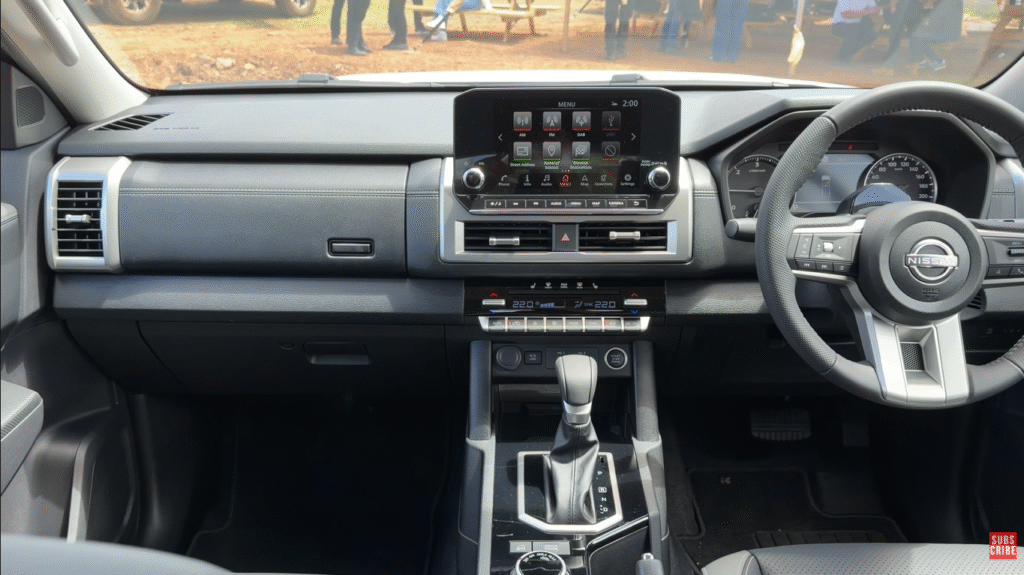
Here’s where we need to be completely honest: The interior is virtually identical to the Mitsubishi Triton. If you’ve sat in a Triton, you’ll feel immediately at home in the Navara.
But here’s the thing—that’s not necessarily bad news.
What’s Good About This Interior
Quality Where It Matters:
The cabin features a functional, no-nonsense design with soft-touch materials in high-contact areas. The leather steering wheel feels premium and features logically laid-out buttons that are intuitive to use.
Practical Design Elements:
✅ Excellent seat comfort – Highly adjustable with under-thigh support
✅ Physical climate controls – Tactile and easy to use
✅ Heated seats (STX trim and above)
✅ Wireless phone charger
✅ USB-C and USB-A ports
✅ Physical gear shifter – No electronic nonsense
✅ Mechanical four-wheel drive selector – Simple and reliable
✅ Rear diff lock button – Easy off-road setup
Storage Solutions:
The Navara excels in practical storage with a massive open storage area in the dash, a generous glove box, multiple cup holders, a soft-touch center armrest with additional storage, and substantial door bins.
This is a truck designed by people who actually use trucks.
What’s Not So Good
Missing Cup Holders:
In a bizarre move that seems to plague platform-sharing agreements, the Navara deletes the in-dash cup holders found in the Triton. This happened with the VW Amarok (vs Ford Ranger) and Mazda BT-50 (vs Isuzu D-Max) too. It’s frustrating but not a dealbreaker.
The I-View Monitor Disaster:
The Navara inherits the controversial I-View safety monitoring system from the Triton, which displays a large panel in the instrument cluster. This system caused Mitsubishi significant customer complaints at the Triton’s launch.
The good news: Software updates have improved it, and it’s less intrusive now. The bad news: It still blocks a significant portion of the instrument cluster and feels like outdated technology.
Infotainment: Functional But Dated
7-Inch TFT Display:
The digital instrument cluster is basic but functional, showing essential information without fancy graphics. It reinforces the sense that the Renault-Nissan-Mitsubishi Alliance is operating on a tight budget.
Touchscreen System:
The infotainment is frankly laggy and feels dated for a 2026 vehicle launch. It does offer wireless Apple CarPlay and wireless Android Auto, which partially saves it, but compared to competitors like the BYD Shark 6 or the new Toyota Hilux, it feels a generation behind.
Our Take: Use CarPlay or Android Auto, and you’ll be fine. The wireless connectivity is genuinely convenient.
Rear Seats: The Navara’s Weak Point
Space and Comfort
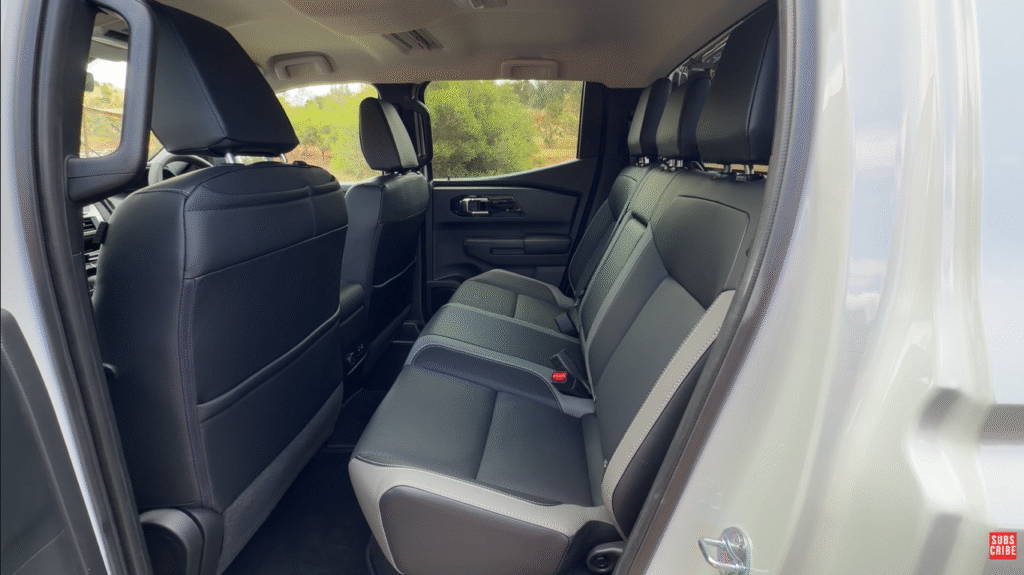
At 5’11”, rear seat space is merely adequate. Legroom is tight, toe room isn’t great, and the overall comfort doesn’t match segment leaders.
What’s Available:
- Map pockets
- USB-C and USB-A ports
- 12V outlet
- Fold-down center armrest with cup holders
Storage Disappointment:
There’s zero underfloor storage—the rear bench is actually bolted down. You can slide the bench forward to access top tether points, but that’s about it.
The Controversial Blower System
Instead of traditional rear air conditioning vents, the Navara uses a blower system that sucks air from the front cabin and redistributes it to the rear.
Mitsubishi claims this distributes air more effectively across the cabin. However, user feedback suggests it’s less effective on extremely hot days compared to traditional ducted air conditioning.
Reality Check
Among dual-cab utes, the Navara’s rear seat is merely average. It’s better than the Toyota Hilux but lags behind the Ford Ranger and some other competitors. If rear passenger comfort is a priority, test drive before buying.
Engine & Powertrain: Mitsubishi’s Proven Performer
Not a Nissan Engine—And That’s Good News
Nissan is upfront about this: The powerplant is an “Alliance engine,” which is corporate speak for “it’s the Mitsubishi Triton engine.”
2.4L Bi-Turbo Diesel Specifications:
| Specification | Details |
|---|---|
| Engine Type | 2.4L bi-turbo 4-cylinder diesel |
| Power Output | 150kW (201hp) |
| Torque | 470Nm (347 lb-ft) |
| Fuel Tank | 75 liters |
| Claimed Efficiency | 7.7L/100km |
| AdBlue | Yes, required |
| Real-World Economy | Low 7s L/100km (highway) |
Why This Engine is Actually Great
The bi-turbo configuration delivers torque across the entire RPM band, making it responsive and flexible for both towing and daily driving. Real-world testing in the Triton has shown fuel economy in the low sevens on the highway, which is excellent for a diesel ute.
The AdBlue Factor:
Yes, the engine now requires AdBlue (diesel exhaust fluid). While this might concern some buyers, AdBlue is widely available across Australia, and you only need to top it up roughly every 10,000 kilometers. It’s a minor inconvenience for significantly reduced emissions.
Reliability Proven:
This engine has been in service in the Triton and has proven reliable. That’s a major advantage over some competitors still sorting out teething issues with new powertrains.
Drivetrain: Super Select 4WD System
One of the Best Four-Wheel Drive Systems Available
The Navara inherits Mitsubishi’s excellent Super Select II four-wheel drive system (Nissan markets it with their own branding, but it’s the same hardware).
Key Features:
✅ Trick center differential – Seamless transitions
✅ Mechanically locking rear differential – Serious off-road capability
✅ Limited-slip differential – Additional traction control
✅ Multiple drive modes – 7-9 modes depending on 4WD setting
✅ Hill descent control – Confident descents
This system has been battle-tested for years and is one of the most capable setups in the segment. Mitsubishi was among the first manufacturers to develop this level of sophistication in four-wheel drive systems.
Suspension: The Game-Changing Difference
Leaf Springs Replace Coils—But There’s a Silver Lining
The previous Navara featured a coil-sprung rear suspension, which was unique in the segment. The new model switches to leaf springs (three to four leaves, depending on variant) to match the Triton platform.
Why the Change?
The old coil spring setup had reliability issues—Nissan changed that suspension setup three times in approximately 18 months. The leaf spring design is proven, durable, and better for heavy payloads.
Bremach-Tuned Dampers: The Secret Sauce
Here’s where things get interesting. While the springs are shared with the Triton, Nissan contracted Bremach (an Australian suspension specialist) to develop unique dampers.
The Development Process:
Bremach tested 550 different shim configurations and multiple damper designs before finalizing the Navara-specific setup. These dampers are manufactured in Australia and represent a genuine investment in ride quality.
The Result:
The suspension tuning makes an immediately noticeable difference. The Navara rides noticeably better than the Mitsubishi Triton, which has been criticized for its firm ride quality since launch.
While it doesn’t quite match the Ford Ranger’s excellent ride quality (the segment benchmark), it’s significantly closer than the Triton and represents a major improvement over the previous Navara.
Off-Road Performance: Genuine Capability
Tested in Challenging Conditions
Off-road testing revealed the Navara is a highly capable performer with several advantages:
Off-Road Specifications:
| Measurement | Specification |
|---|---|
| Approach Angle | 30.2 degrees |
| Departure Angle | 22+ degrees |
| Ground Clearance | 228mm |
| Water Wading Depth | 700mm |
Performance Highlights:
✅ Excellent traction control – Works effectively even in 4H
✅ Low-range functionality – Proper off-road gearing
✅ Hill descent control – Effective and smooth
✅ All-terrain tires standard – Maxxis rubber performs well
✅ Shorter wheelbase – Better maneuverability than previous gen
Real-World Off-Road Observations
The four-wheel drive system proved highly capable on steep inclines, loose surfaces, and technical terrain. The hill descent control system works intelligently, using individual wheel braking (even with drum brakes) to maintain control on steep descents.
The rock mode drive setting performed well on challenging surfaces, and the all-terrain tires provided confident traction throughout testing.
Water Wading:
At 700mm, the wading depth is respectable for the class, though not class-leading. It’s a significant improvement over the previous generation Triton’s 500mm capability.
On-Road Driving: First Impressions
Improved Steering and Handling
Nissan and Bremach claim improved steering linearity and better cornering performance. While full road testing wasn’t possible during the launch event (exclusively off-road), initial impressions support these claims.
The steering feels more refined than the Triton, with better feedback and more progressive responses. The previous Navara Warrior edition was already a significantly better-handling vehicle than the standard model, so expectations are high.
Ride Quality: The Star of the Show
Even on rough off-road surfaces at higher speeds, the suspension improvements were evident. The Navara doesn’t ride rough despite the leaf spring setup—it actually feels composed and controlled.
This addresses the Triton’s biggest weakness: ride quality. The Triton has been criticized for its firm, uncomfortable ride since launch, despite claims of Australian tuning. The Navara’s Bremach-developed dampers make a genuine, noticeable difference.
Engine Performance Observations
The 2.4L bi-turbo diesel feels responsive and smooth, with torque available throughout the rev range. The engine character is refined, without excessive noise or vibration. Fuel efficiency should match the Triton’s impressive real-world economy.
Technology & Features
Safety Features
The Navara includes comprehensive active safety equipment:
✅ 360-degree camera system – Finally a good implementation
✅ I-View monitoring (controversial but updated)
✅ Multiple airbags
✅ Stability and traction control
✅ Hill descent control
✅ Radar-based safety systems
Convenience Features
STX Trim Includes:
- Heated front seats
- Wireless phone charging
- Keyless entry and go
- Auto-dimming rearview mirror
- Privacy glass
- Leather steering wheel
The Technology Gap
Let’s be honest: The infotainment technology feels dated. Competitors like BYD, Toyota, and Ford offer more sophisticated systems. However, the Navara’s focus on mechanical reliability and proven technology has its own appeal.
For buyers who value simple, reliable technology over cutting-edge screens, the Navara’s approach makes sense.
Navara Pro 4X: The Off-Road Specialist
What Makes the Pro 4X Different
The range-topping Pro 4X variant adds:
- Red accent stitching on seats
- Additional underbody protection
- Enhanced off-road tuning
- Pro 4X badging and styling elements
While we didn’t test the Pro 4X specifically, it represents Nissan’s answer to off-road-focused variants like the Ford Ranger Raptor and Toyota Hilux GR Sport.
Pricing & Variants (Expected)
Competitive Positioning
While final Australian pricing wasn’t confirmed at the launch event, expectations point to competitive pricing similar to the Mitsubishi Triton:
Expected Pricing Structure:
- SL: Entry-level work truck
- ST: Mid-spec with essential features
- STX: Upper mid-spec (tested variant)
- Pro 4X: Range-topping off-road variant
Value Proposition
If priced competitively with the Triton (expected), the Navara offers:
- Better exterior design
- Improved suspension tuning
- 10-year/200,000km warranty
- Proven reliability
- Superior ride quality
Nissan Navara vs Competitors
How It Stacks Up
vs Mitsubishi Triton:
- Design: Navara wins decisively
- Ride Quality: Navara noticeably better
- Interior: Essentially identical
- Powertrain: Identical
- Value: Depends on final pricing
vs Toyota Hilux:
- Reliability: Both proven
- Technology: Hilux more modern
- Rear Seats: Hilux worse, Navara average
- Off-Road: Both capable
- Ride Quality: Navara likely better
vs Ford Ranger:
- Ride Quality: Ranger still ahead
- Technology: Ranger significantly better
- Price: Navara expected to undercut
- Reliability: Time will tell
vs BYD Shark 6:
- Technology: Shark 6 destroys it
- Powertrain: Shark 6 offers hybrid/electric
- Proven Reliability: Navara wins
- Traditional Ute Feel: Navara preferred
The Navara D22 Legacy
Will It Match the Legend?
The Nissan Navara D22 became legendary for its reliability and durability. Can the 2026 model recapture that magic?
Reasons for Optimism:
- Proven Mitsubishi powertrain
- Simplified technology
- Robust leaf spring rear end
- 10-year warranty coverage
- Focus on durability over complexity
The partnership with Mitsubishi actually works in Nissan’s favor here—the Alliance engineering has been proven reliable in the Triton.
Who Should Buy the 2026 Nissan Navara?
Perfect For:
✅ Tradies and commercial users – Practical, durable, reliable
✅ Off-road enthusiasts – Genuine capability with good ride quality
✅ Value-focused buyers – Expected competitive pricing
✅ Reliability prioritizers – Proven powertrain and 10-year warranty
✅ Former Navara owners – Familiar brand with genuine improvements
✅ Those who want a Triton with better style and ride
Consider Alternatives If:
❌ You need cutting-edge infotainment technology
❌ Rear passenger comfort is a top priority
❌ You’re philosophically opposed to platform sharing
❌ You demand disc brakes all around
❌ You want the absolute best ride quality (Ford Ranger)
❌ You’re interested in hybrid/electric technology
Final Verdict: Surprisingly Good
The Shocking Truth
The “shocking” part isn’t that the Navara shares its bones with the Triton—we all knew that was coming. The shock is how much better it is than expected.
What Nissan Got Right:
🎯 Exterior design – Genuinely distinctive and attractive
🎯 Suspension tuning – Noticeably better than Triton
🎯 Powertrain choice – Proven reliability over risky new tech
🎯 Off-road capability – Excellent system with genuine ability
🎯 Practical focus – Built for actual truck use
What Needs Improvement:
⚠️ Infotainment – Dated and laggy
⚠️ Rear seats – Average at best
⚠️ Drum brakes – Optically disappointing
⚠️ Technology gap – Feels behind competitors
Is It Worth Buying?
Yes—if the price is right.
The 2026 Nissan Navara is a genuinely improved vehicle that addresses the Triton’s biggest weakness (ride quality) while adding superior styling. With a 10-year warranty, proven powertrain, and expected competitive pricing, it represents solid value.
Is it the most technologically advanced ute? No. Will it have the best ride quality in the segment? Probably not (that’s still the Ranger). But it offers a compelling package of reliability, capability, and value that will appeal to traditional ute buyers.
Our Rating: 8.5/10
Braked towing capacity is 3,500kg (3.5 tons), which is competitive for the class.
The Bottom Line
The 2026 Nissan Navara isn’t trying to revolutionise the ute segment—it’s focusing on doing the fundamentals really well. With improved suspension tuning, attractive design, proven reliability, and expected competitive pricing, it’s a genuine alternative to segment stalwarts.
For buyers prioritising reliability, capability, and value over cutting-edge technology, the Navara hits the sweet spot. The partnership with Mitsubishi, rather than being a weakness, has allowed Nissan to deliver a competitive product with proven engineering.
Would we recommend it? Absolutely—especially if pricing matches or undercuts the Triton. It’s the better-looking, better-riding version of an already capable ute.
Disclaimer: This review is based on an off-road launch event. Full road testing and final pricing details are pending. Individual experiences may vary based on driving conditions and variant chosen.