TL;DR – Quick Picks:
Best Budget OLED: LG B5 ($1,099 for 65″) – OLED quality without breaking the bank
Best Budget Mini-LED: TCL QM7K ($799-999 for 65″) – 2,000 nits brightness, excellent gaming
Best Mid-Tier OLED: LG C5 or Samsung S90F ($1,500-2,000) – Perfect bang for buck
Best Mid-Tier Mini-LED: Hisense U8QG or Samsung QN90F ($1,100-1,500) – Brightness champions
Best Premium OLED: Samsung S95F or LG G5 ($2,500+) – Ultimate picture quality
Best Premium Mini-LED: Sony Bravia 9 ($3,000+) – Best bright room performance
Bottom Line: Most buyers will be happiest with mid-tier options (LG C5, Samsung S90F) offering 90% of flagship performance at 50-60% of the cost.
Picking a TV in 2025 feels overwhelming.
Hundreds of models, confusing model numbers, and prices ranging from $300 to $10,000+. OLED, QLED, Mini-LED, QD-OLED—the terminology alone causes headaches.
But here’s the reality: despite the chaos, certain TVs consistently rise above the rest. Whether you’re shopping budget-friendly or building a dream home theater, specific models deliver the best value at every price point.
This guide cuts through the noise. We’re organizing recommendations into three categories—Budget (under $1,000), Mid-Tier ($1,000-$2,000), and Best of the Best ($2,000+)—using 65-inch models as our reference point since that’s America’s most popular TV size.
Let’s find your perfect TV.
Budget Category: Best TVs Under $1,000
Shopping under $1,000 for a 65-inch TV? You’re not compromising nearly as much as you’d think. Both OLED and Mini-LED technologies are accessible at this price point with performance that satisfies most viewers.
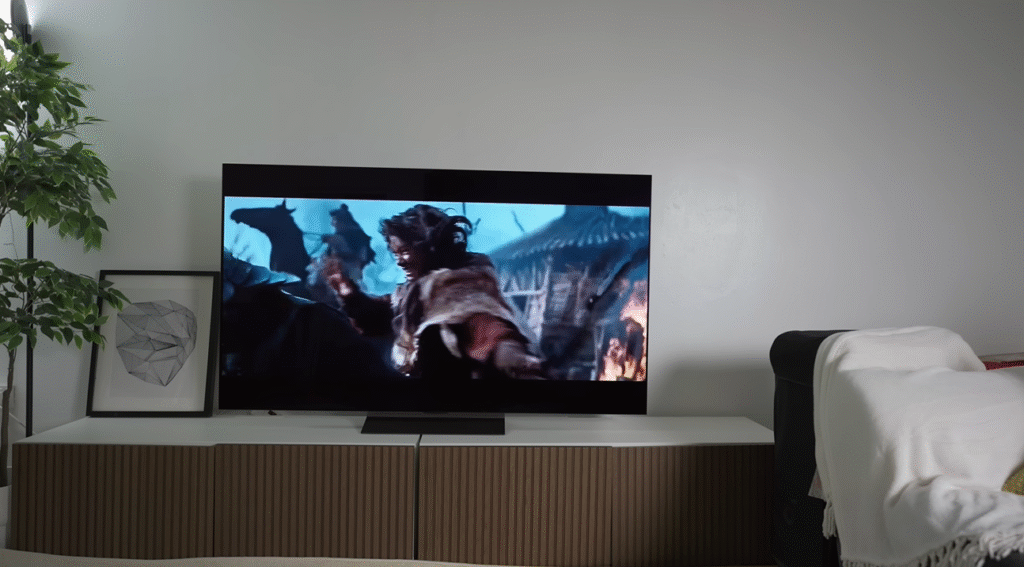
Best Budget OLED: LG B5
Price: $1,099 (65-inch)
Technology: WOLED (White OLED)
Why It Wins: Cheapest way to get 2025 OLED quality
What You Get
The LG B5 delivers all the advantages of OLED technology—perfect blacks, infinite contrast, wide viewing angles—at a price that doesn’t require a second mortgage. This is genuine OLED performance, not some compromised “budget” version.
Key Specs:
- Four HDMI 2.1 ports (full 48Gbps bandwidth)
- 120Hz refresh rate for gaming
- Dolby Vision support for movies
- Wi-Fi 6E connectivity
- α8 AI Processor Gen2
- webOS 25 smart platform
Why This Matters
Just a few years ago, OLED meant spending $2,500+. The B5 at $1,099 represents a revolution in accessibility. You’re getting technology that delivers perfect black levels (pixels turn completely off), eliminating the blooming and clouding that plague even premium LED TVs.
Performance Highlights
Gaming: Full HDMI 2.1 support means PS5 and Xbox Series X can run at 120fps in 4K. Input lag is low enough for competitive gaming. VRR (Variable Refresh Rate) eliminates screen tearing.
Movies: Dolby Vision HDR delivers spectacular picture quality with rich, accurate colors. The infinite contrast ratio means dark movie scenes maintain detail without looking washed out.
Sports: Wide viewing angles (178°) ensure everyone on the couch sees the same great picture. Fast motion handling keeps sports action crisp.
Viewing Conditions: Perfect for dim to moderately lit rooms. In very bright rooms with lots of windows, the B5’s lower brightness (around 700 nits peak) will struggle.
The Only Downside
Brightness. If you need a TV for a sun-drenched living room, Mini-LED options below deliver 2-3x more brightness. But for most viewing environments, especially evening TV watching, the B5’s brightness is perfectly adequate.
The Competition
Samsung’s S85F at $1,100 is the only comparable budget OLED, but it doesn’t quite make our under-$1,000 budget category. When on sale, it’s worth considering, but availability is inconsistent.
Best for: Evening movie watchers, gamers wanting OLED response times, and anyone prioritizing perfect black levels over maximum brightness.
Best Budget Mini-LED: TCL QM7K
Price: $799-$999 (65-inch, regularly on sale)
Technology: QD Mini-LED (Quantum Dot + Mini-LED backlighting)
Why It Wins: Flagship features at a budget price
What You Get
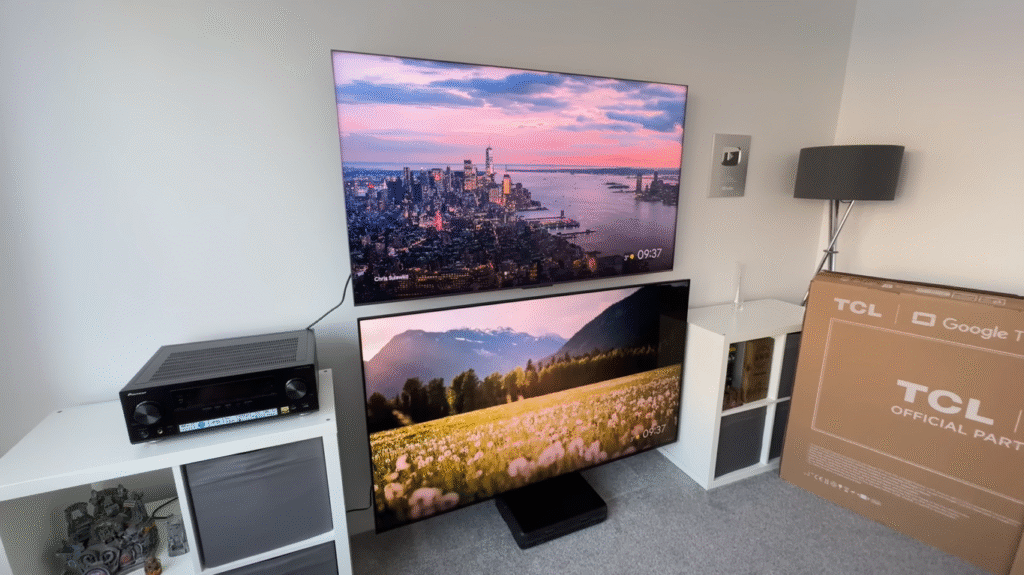
The TCL QM7K represents the sweet spot in TCL’s 2025 lineup—stepping up significantly from the QM6K without reaching QM8K pricing. It’s comfortably in the middle, delivering 80-90% of flagship performance at 40-50% of the cost.
Key Specs:
- Up to 2,500 local dimming zones (65-inch)
- 2,000-3,000 nits peak brightness
- 144Hz native refresh rate (288Hz VRR via Game Accelerator)
- Quantum Dot color technology
- Google TV smart platform
- Bang & Olufsen audio system
- Dolby Vision, HDR10+, IMAX Enhanced
- Backlit remote with voice control
Why This Matters
The QM7K delivers brightness that competes with TVs costing $2,000+. That 2,000-3,000 nit peak brightness means HDR content pops with eye-searing highlights, and daytime viewing in bright rooms poses zero challenges.
The 2,500 dimming zones (in 65-inch) create impressive local dimming performance. Dark scenes maintain deep blacks with minimal blooming—performance approaching OLED for a fraction of the cost.
Performance Highlights
Brightness: This is the QM7K’s superpower. At 2,000+ nits, it’s 3x brighter than the LG B5. Bright rooms, sunny windows, daytime viewing—no problem. HDR content delivers the “wow factor” that requires serious brightness.
Gaming: 144Hz native panel with 288Hz VRR support, AMD FreeSync Premium Pro, Dolby Vision gaming, ALLM (Auto Low Latency Mode), and 13.5ms input lag. This matches or exceeds gaming features on TVs costing twice as much.
Color: Quantum Dot technology delivers over a billion color shades with exceptional color volume. Colors stay vibrant even at high brightness levels.
HDR Performance: Improved brightness and contrast compared to QM6K make HDR content genuinely spectacular. This is where spending the extra money over cheaper models pays dividends.
The Halo Control System
TCL’s new Halo Control suite addresses Mini-LED’s traditional weakness: blooming around bright objects on dark backgrounds. While not eliminated entirely, blooming is significantly reduced compared to previous generations and competing models.
The Compromises
Viewing Angles: Mini-LED means VA panel technology. Colors and brightness degrade when viewed from extreme angles (beyond 30-35°). Not a dealbreaker for most setups, but OLED wins here.
Black Levels: Despite impressive local dimming, blacks aren’t as perfect as OLED. You’ll notice this in very dark scenes in dark rooms.
Reflections: The glossy screen can pick up reflections from lamps and lights during dark scenes. Anti-reflective coatings help but don’t eliminate this entirely.
Why You’d Choose This Over LG B5
- You have a bright room with windows
- You need maximum HDR brightness
- Gaming at 144Hz/288Hz matters
- You watch mostly during daytime
- You want louder, better built-in speakers
Best for: Bright room viewing, HDR enthusiasts, gamers wanting high refresh rates, anyone prioritizing brightness and pop over perfect blacks.
Budget Category: The Missing Models
You’re probably wondering: “What about Hisense U6K? What about cheaper Samsung QLEDs?”
They’re fine. The Hisense U6K offers good value around $500-600, but it doesn’t top the QM7K in performance. Samsung’s budget QLEDs exist, but pricing rarely beats TCL or Hisense while delivering worse performance.
If you need to spend even less, drop down to 55-inch versions of these same models and save $200-300. The 55-inch LG B5 regularly hits $799, and the 55-inch QM7K drops to $649.
Mid-Tier Category: Best TVs $1,000-$2,000
This is where most buyers find their perfect TV. Mid-tier models deliver 90% of flagship performance at 50-60% of the cost. Unless you’re building a dedicated home theater or have unlimited budget, these TVs satisfy completely.
Best Mid-Tier Mini-LED: Hisense U8QG
Price: $1,100 (65-inch, frequently on sale)
Technology: QD Mini-LED
Why It Wins: Flagship brightness at mid-tier pricing
The Value Champion
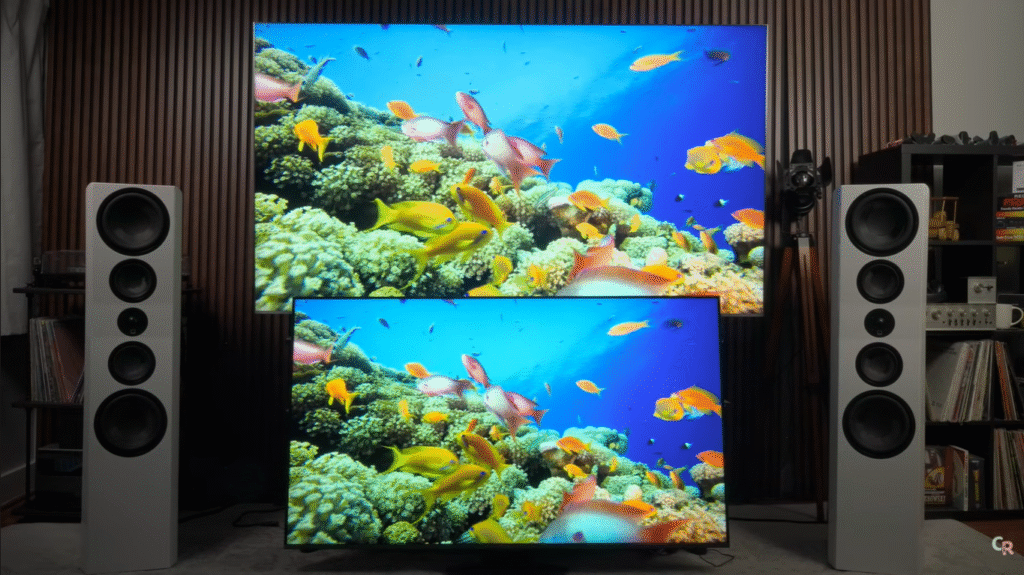
The Hisense U8QG continues seeing incredible discounts. As this guide goes live, it’s under $1,100 brand new. At that price, it almost made the budget category and would have easily been the best.
What You Get
Hisense U8 series TVs consistently punch well above their class. The U8QG delivers brightness that embarrasses TVs costing $1,000 more, contrast rivaling OLED, and gaming features matching premium models.
Key Specs:
- Mini-LED with extensive local dimming
- 2,000+ nits peak brightness
- 144Hz refresh rate
- Full array local dimming
- Quantum Dot color
- Google TV
- Dolby Vision, HDR10+, IMAX Enhanced
- VRR and ALLM
Performance Highlights
Brightness Is King: This TV’s calling card is brightness. At 2,000+ nits peak, the U8QG excels in rooms with ambient light or sunshine pushing through windows. HDR content delivers spectacular pop that makes premium TVs look dim.
Contrast Performance: While not quite reaching OLED’s infinite contrast, the U8QG holds its own as one of the best in class among Mini-LED TVs. Dark scenes maintain impressive depth with minimal blooming.
Value Proposition: If you want to save a few hundred dollars over pricier options and put that money toward a soundbar or audio system, the U8QG delivers satisfaction matching more expensive alternatives.
The Catch
Reflections: The U8QG struggles with reflections more than some competitors. In office settings with lots of windows, doors, lamps, and lights, you’ll notice reflections on dark scenes. In dedicated viewing spaces, this is less problematic.
Most of the time, the U8QG is bright enough to overpower ambient light. Reflections mainly matter during dark movie scenes.
Best for: Bright room viewing, HDR enthusiasts wanting maximum brightness, value-conscious buyers, and anyone putting savings toward audio upgrades.
Best Mid-Tier Mini-LED Alternative: TCL QM8K
Price: $1,400-$1,600 (65-inch)
Technology: QD Mini-LED
Why It’s Here: Goes punch-for-punch with U8QG
The Flagship TCL
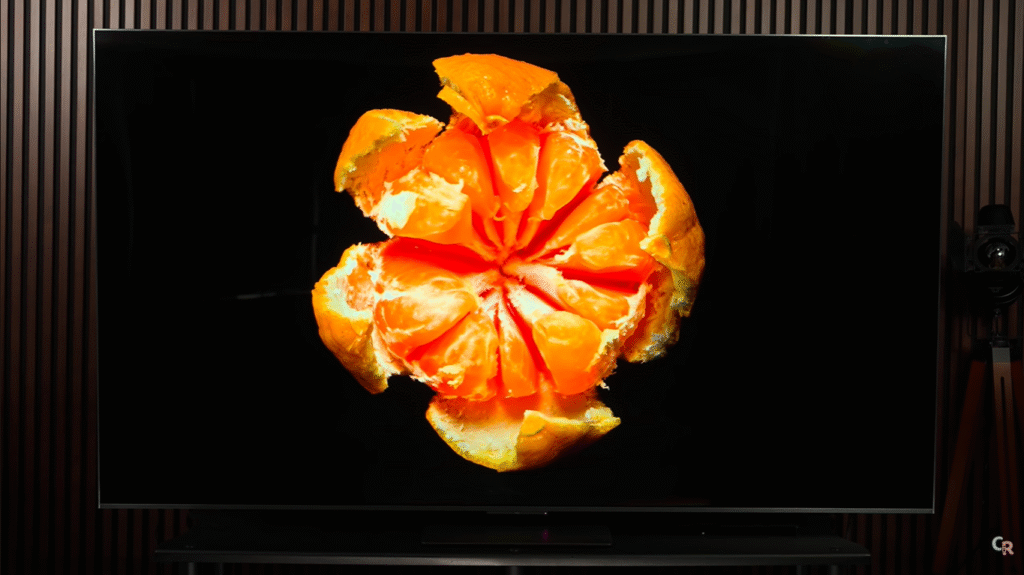
The TCL QM8K represents TCL’s top Mini-LED for 2025. It delivers everything the QM7K offers but with even better performance—deeper blacks, better contrast, more dimming zones, and refined picture processing.
Key Advantages Over QM7K:
- 3,000 nits peak brightness (vs 2,000 nits)
- More local dimming zones
- Deeper blacks and better contrast
- More advanced picture processing
- ATSC 3.0 tuner support
Performance Comparison
Many reviewers rate the QM8K as better than the U8QG due to its deeper blacks and superior contrast. The gap isn’t enormous, but it’s noticeable in direct comparison.
Both TVs share the reflection issues mentioned earlier—glossy screens pick up reflections in bright office environments during dark scenes. In dedicated viewing spaces, both perform excellently.
The Price Factor
At $1,400-$1,600, the QM8K costs $300-500 more than the sale-priced U8QG. That premium buys you incremental improvements that matter most to videophiles and home theater enthusiasts.
For most buyers, the U8QG at $1,100 delivers such strong performance that spending extra on the QM8K feels optional rather than essential.
Best for: Home theater enthusiasts, videophiles wanting the best-in-class Mini-LED, anyone prioritizing ultimate black levels in LED technology.
Best Mid-Tier Mini-LED (Premium Option): Samsung QN90F
Price: $1,500-$1,800 (65-inch)
Technology: Neo QLED (Samsung’s Mini-LED)
Why It’s Here: Anti-glare technology changes the game
The Samsung Difference
The Samsung QN90F represents Samsung’s premier Mini-LED technology, pushing into the best-of-the-best category. It delivers performance rivaling TCL and Hisense with key Samsung-specific advantages.
The Anti-Glare Advantage
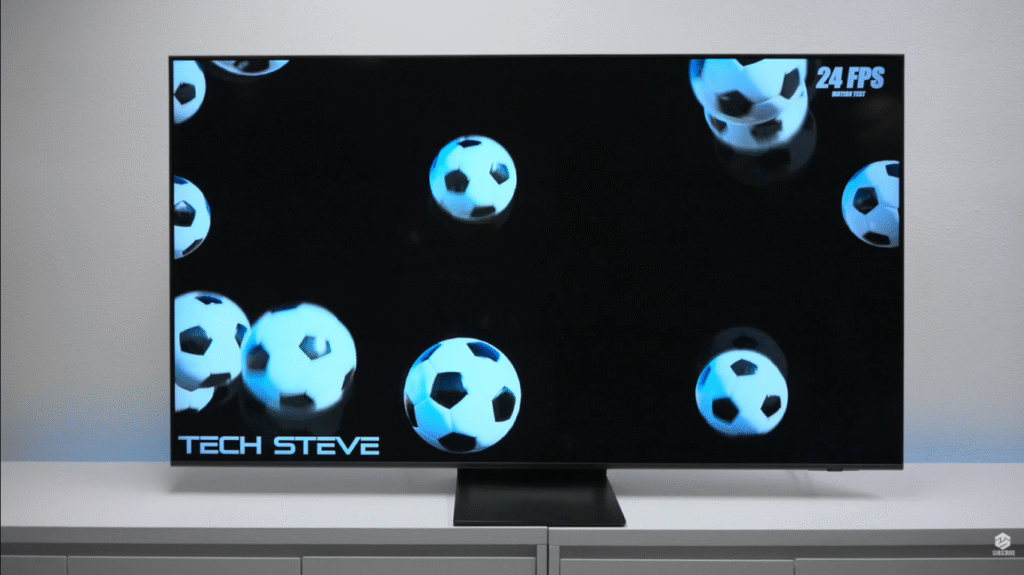
The most glaring difference: anti-glare screen coating. Instead of glossy finishes used by TCL and Hisense, Samsung applied the same anti-glare coating to the QN90F as their best OLEDs.
How It Works: The screen spreads out ambient light to avoid direct reflections that distract. You get the same dazzling picture quality as glossy screens, but when light could cause reflections, the coating diffuses it into non-distracting haze.
In practice, it works. You’ll still notice some haze in very bright conditions, but it’s far less bothersome than sharp reflections on glossy screens.
The Trade-Off: Some viewers notice the matte coating during regular viewing. It’s subtle—Samsung designed it to be invisible—but if you’re sensitive to screen coatings, test before buying.
Samsung Ecosystem Benefits
Tizen OS: Samsung’s smart platform offers a departure from Google TV. Some prefer its interface and organization, others miss Google Assistant integration.
HDR Formats: Samsung doesn’t support Dolby Vision and won’t support the upcoming Dolby Vision 2. They instead push HDR10+ Advanced, which Amazon Prime Video already supports. This isn’t a dealbreaker—HDR10+ delivers excellent results—but Dolby Vision remains more widely supported.
Best for: Bright room installations, buyers wanting anti-glare benefits, Samsung ecosystem users, and anyone prioritizing reflection control.
Best Mid-Tier OLED: LG C5 and Samsung S90F
Price: $1,500-$2,000 (65-inch)
Technology: OLED (LG uses WOLED, Samsung uses QD-OLED)
Why They Win: Perfect picture quality at accessible pricing
The Sweet Spot
These two TVs represent the perfect balance between performance and price. Most buyers sitting blind in front of either TV would say the same thing: “Awesome picture quality.”
Both deliver:
- Perfect black levels (infinite contrast)
- Rich, accurate colors
- Excellent HDR performance
- Gaming-ready 120Hz panels
- Premium build quality
LG C5: The Well-Rounded Champion
The LG C5 continues LG’s tradition of delivering exceptional OLED performance at competitive pricing. It’s probably all the TV most people need.
Key Features:
- α9 AI Processor Gen7
- Brightness Booster technology
- Four HDMI 2.1 ports
- webOS 25 smart platform
- Dolby Vision, HDR10, HLG
- Wide viewing angles
- VRR, ALLM, G-Sync, FreeSync
Performance: Bright enough for most rooms, colorful display with accurate color science, perfect for gaming and movies, excellent motion handling.
Samsung S90F: The QD-OLED Alternative
Samsung’s S90F uses QD-OLED (Quantum Dot OLED) technology at 55, 65, and 77-inch sizes, delivering slightly more colorful displays than LG’s WOLED panels.
Key Features:
- Neural Quantum Processor 4K
- Quantum HDR OLED+ technology
- Four HDMI 2.1 ports
- Tizen smart platform
- HDR10+ (no Dolby Vision)
- Glossy screen finish
- VRR, ALLM, FreeSync Premium Pro
Performance: Slightly brighter than C5 in HDR, more saturated colors due to QD-OLED, excellent gaming performance, glossy screen for maximum contrast.
How to Choose Between Them
Choose LG C5 if:
- You want Dolby Vision support
- You prefer webOS interface
- You like LG’s Magic Remote
- You want slightly better motion processing
Choose Samsung S90F if:
- You want maximum color saturation
- You prefer Tizen interface
- You’re in Samsung ecosystem
- You want glossy screen finish
The Bang-for-Buck Reality
These mid-tier OLEDs deliver 90% of flagship OLED performance at 60% of flagship pricing. Unless you’re chasing that last 10% of performance or building a reference-quality home theater, these TVs satisfy completely.
Best for: Movie enthusiasts, gamers, mixed-use viewing, anyone wanting OLED benefits without flagship prices.
Best of the Best: Premium TVs $2,000+
This category is for those who want the absolute best, won’t compromise, and have budget to match. These TVs represent the cutting edge of display technology in 2025.
Best Premium OLED (Matte Finish): Samsung S95F
Price: $2,500-$3,000 (65-inch)
Technology: QD-OLED with anti-glare coating
Why It’s Here: Brightest OLED with reflection control
The Flagship Samsung
The Samsung S95F represents Samsung’s best OLED, improving significantly over the S90F in ways beyond just the matte vs glossy screen finish.
Key Improvements Over S90F:
- Brighter overall (especially SDR content)
- Better picture processing
- One Connect Box included
- Superior build quality
- More refined calibration
The One Connect Box
This might seem trivial, but the One Connect Box adds genuine convenience. Instead of plugging Blu-ray player, game console, soundbar, and streaming device directly into the TV (creating cable chaos behind your stand), you plug everything into the One Connect Box and run one wire to the TV.
Practical Benefits:
- Cleaner cable management
- Easier to reorganize devices
- Less strain on TV ports
- Future connectivity upgrades possible
For wall-mounted installations, the One Connect Box is transformative. Your TV has one nearly invisible cable running to it instead of five visible cables.
The Anti-Glare Debate
Samsung’s anti-glare coating on the S95F divides viewers. Some love the reflection control. Others prefer traditional glossy screens for maximum contrast punch.
We’ve tested both extensively. The anti-glare coating works—reflections are diffused into subtle haze rather than distracting bright spots. But it’s not invisible. Some viewers notice slight texture or haze that bothers them.
Our Take: For bright rooms with reflection challenges, the S95F’s coating is beneficial. For dark dedicated theaters, the S90F’s glossy screen might deliver slightly more satisfying contrast.
Best for: Bright room OLED viewing, anyone with reflection concerns, Samsung ecosystem users, buyers wanting One Connect convenience.
Best Premium OLED (Glossy Finish): LG G5
Price: $2,500-$3,000 (65-inch, 77-inch available)
Technology: WOLED with MLA (Micro Lens Array)
Why It’s Here: Biggest year-over-year improvement
The Gallery Series
LG’s G5 took the biggest leap past its predecessor (G4) than any TV on this list. It’s notably brighter and more colorful than the already-excellent G4.
What Makes It Special:
- MLA technology for improved brightness
- Enhanced color processing
- α11 AI Processor 4K Gen2
- Gallery design (slim profile, no stand included)
- Four HDMI 2.1 ports
- Dolby Vision, HDR10, HLG
- webOS 25
The Brightness Revolution
The G5’s MLA (Micro Lens Array) technology uses microscopic lenses to direct more light toward the viewer, achieving OLED brightness levels that compete with Mini-LED TVs. Peak brightness exceeds 1,500 nits—remarkable for OLED.
This makes the G5 versatile. It performs beautifully in dark rooms (perfect blacks) and holds its own in bright rooms (sufficient brightness).
The Stand Situation
LG doesn’t include a stand with the 65-inch G5—only a wall mount. This is the Gallery Series philosophy: slim build designed for wall mounting.
Don’t let this stop you. Aftermarket stands cost $50-100, or you can wall-mount as LG intends. The slim profile looks spectacular on walls.
Dark or Bright Room?
The G5 excels in both. In dark rooms, perfect blacks and infinite contrast create reference-quality images. In bright rooms, the enhanced brightness ensures visibility without washing out.
This versatility justifies premium pricing for buyers wanting one TV that handles all viewing conditions.
Best for: Dedicated home theaters, bright living rooms, anyone wanting ultimate OLED versatility, and wall-mount installations.
Best Premium OLED (Processing Champion): Sony Bravia 8 Mark II
Price: $2,800-$3,200 (65-inch)
Technology: QD-OLED
Why It’s Here: Sony’s legendary picture processing
The Videophile’s Choice
If you place the most emphasis on picture quality—accurate colors, natural motion, detail retrieval, and overall image processing—this is your TV.
Sony’s picture processing remains unmatched. The Cognitive Processor XR analyzes content the way human eyes and brains process visual information, delivering images that feel natural and effortless.
Key Features:
- Cognitive Processor XR
- QD-OLED panel
- XR OLED Contrast Pro
- Acoustic Surface Audio+
- Google TV
- Dolby Vision, IMAX Enhanced
- Perfect for PS5 integration
Where It Excels
Picture Processing: Sony’s motion handling, upscaling, and overall image refinement exceed competitors. Lower-resolution content looks better on Sony than other brands.
Color Accuracy: Out-of-box color accuracy is reference-level. Videophiles and calibration enthusiasts appreciate Sony’s commitment to accurate color science.
HDR Tone Mapping: Sony’s approach to HDR tone mapping preserves filmmaker intent while maximizing impact. Some prefer this to more aggressive HDR implementations.
Where It Falls Short
SDR Brightness: The Bravia 8 Mark II comes up short in SDR (Standard Dynamic Range) brightness compared to Samsung S95F and LG G5. For regular cable TV and streaming content not in HDR, Samsung and LG deliver brighter images.
This matters more than you’d think—most content is still SDR. If maximum SDR brightness matters, consider Samsung or LG instead.
Size Limitation
The Bravia 8 Mark II only sells up to 65-inch. If you want 77-inch Sony QD-OLED excellence, the 2023 Sony A95L remains available and is still outstanding.
Best for: Videophiles, home theater enthusiasts, PS5 owners, anyone prioritizing picture processing over maximum brightness.
Best Premium Mini-LED: Sony Bravia 9
Price: $3,000-$3,500 (65-inch)
Technology: Mini-LED with advanced local dimming
Why It’s Here: Closest to OLED precision in LED technology
Sony’s Flagship
Sony considers the Bravia 9 their flagship TV, positioned above even their premium OLEDs. The reason: spectacular backlight technology delivering unprecedented local dimming precision.
What Makes It Special:
- Best-in-class local dimming zones
- Backlight Master Drive technology
- Cognitive Processor XR
- Extreme brightness capability
- XR Backlight Master Drive
- Google TV
- Acoustic Multi-Audio+
The Backlight System
The Bravia 9’s backlight system represents the closest you’ll get to OLED precision in Mini-LED technology. Sony’s local dimming algorithm and extensive zone count create blacks approaching OLED quality with LED brightness advantages.
Brightness Beast
As Mini-LED, the Bravia 9 can achieve incredibly high brightness—way brighter than you need in most cases. Peak brightness exceeds 3,000 nits, making it spectacular for HDR content and bright room viewing.
Versatility Champion
Dark Rooms: Near-OLED black levels with impressive contrast. While OLED still wins slightly, the gap is smaller than any other LED TV.
Bright Rooms: This is where Bravia 9 dominates. It powers through reflections and glare with sheer brightness. Sunny living rooms, large windows, daylight viewing—no problem.
Off-Angle Viewing: Usually LED TVs’ weakness, but the Bravia 9’s off-angle performance is well above average for LED technology. Not OLED-level, but better than competitors.
The Safe Choice
If you have money and want a TV guaranteed to overcome whatever deficiencies your viewing environment may have, the Bravia 9 is the safest pick. It handles all scenarios well, with no critical weaknesses.
Best for: Bright rooms, mixed lighting conditions, anyone wanting LED brightness with near-OLED blacks, buyers prioritizing versatility.
How to Choose Your Perfect TV
After reviewing all these options, here’s the decision framework:
Choose Budget OLED (LG B5) If:
- Your budget caps at $1,100
- You watch mostly in dim/dark rooms
- Perfect blacks matter more than brightness
- Gaming response time is priority
- Wide viewing angles matter
Choose Budget Mini-LED (TCL QM7K) If:
- Your budget is $800-1,000
- You have a bright room with windows
- HDR brightness is priority
- Gaming at 144Hz+ matters
- You want best value per dollar
Choose Mid-Tier OLED (LG C5/Samsung S90F) If:
- Your budget is $1,500-2,000
- You want OLED quality without flagship pricing
- You watch mix of content types
- Gaming and movies matter equally
- You want 90% of flagship performance at 60% of cost
Choose Mid-Tier Mini-LED (Hisense U8QG/TCL QM8K) If:
- Your budget is $1,100-1,600
- Brightness is non-negotiable
- You have very bright viewing environment
- Value matters but you want excellent performance
- HDR pop is priority
Choose Premium OLED (Samsung S95F/LG G5/Sony Bravia 8 II) If:
- Your budget is $2,500+
- You want absolute best picture quality
- Perfect blacks with excellent brightness
- Building dedicated home theater
- No compromises accepted
Choose Premium Mini-LED (Sony Bravia 9) If:
- Your budget is $3,000+
- You need maximum brightness
- Viewing environment is very bright
- You want OLED-like blacks with LED brightness
- Versatility across all scenarios matters
The Final Recommendation
For most buyers, we recommend mid-tier options ($1,500-2,000 range):
First Choice: LG C5 or Samsung S90F (OLED versatility)
Second Choice: Hisense U8QG (incredible brightness value)
Third Choice: Samsung QN90F (anti-glare benefits)
These deliver 90% of flagship performance at 50-60% of flagship cost. Unless you’re building a reference home theater or have unlimited budget, these TVs satisfy completely.
Budget champions: LG B5 (OLED) or TCL QM7K (Mini-LED)
Premium champions: Samsung S95F or LG G5 (OLED), Sony Bravia 9 (Mini-LED)
The TV market in 2025 offers incredible value at every price point. Whether you spend $800 or $3,500, you’re getting technology that delivers spectacular picture quality unimaginable just years ago.
Choose based on your viewing environment, budget, and priorities. You can’t go wrong with any TV on this list.
Looking for More TV Buying Advice? Visit MyPitShop for comprehensive reviews, real-world testing, comparison guides, and expert recommendations that help you find the perfect TV for your needs and budget