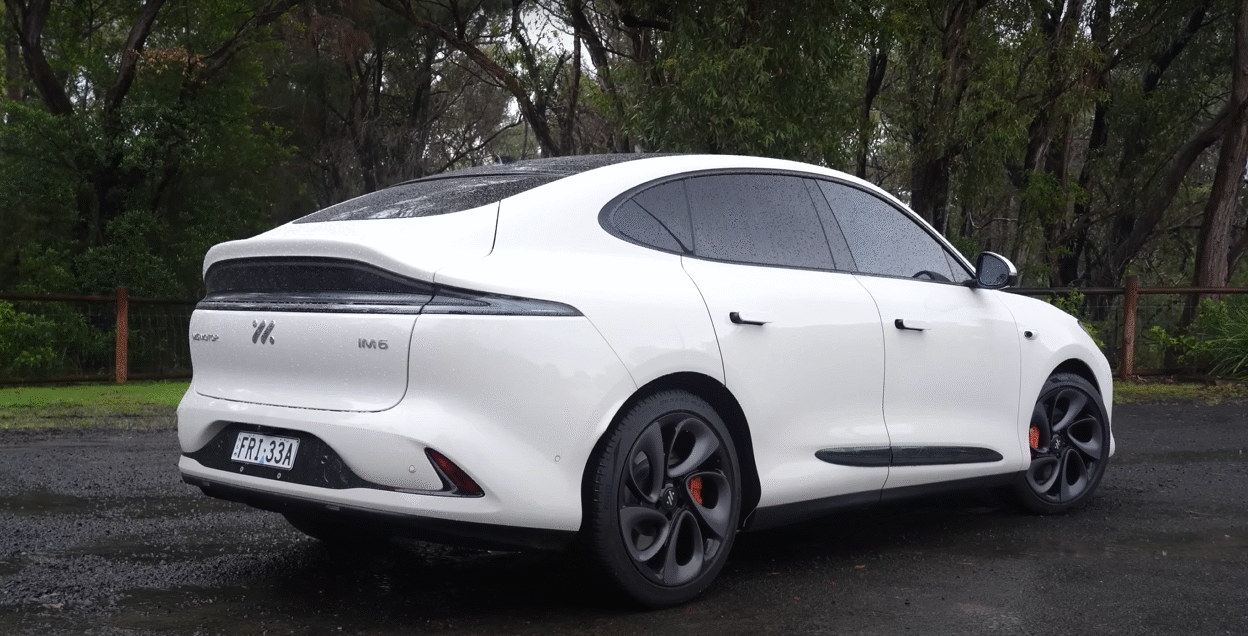
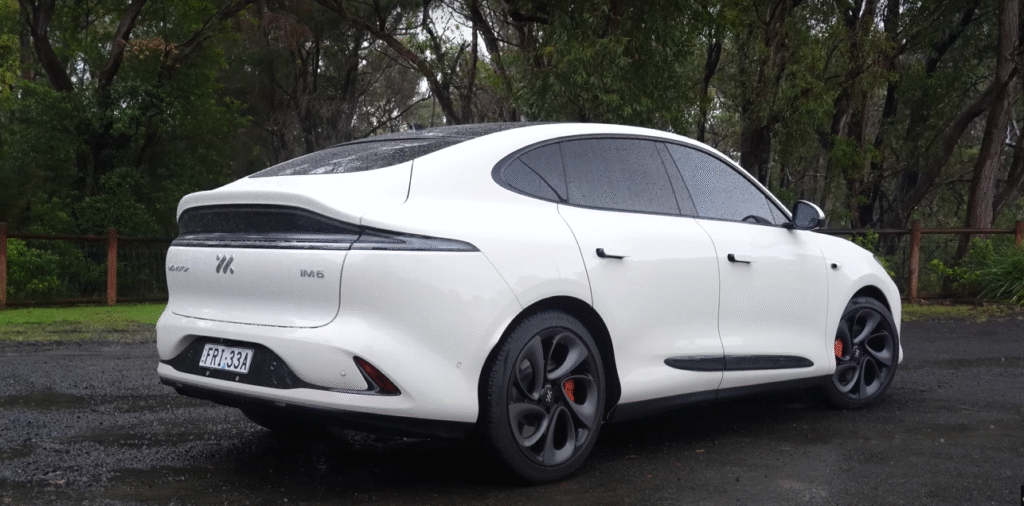
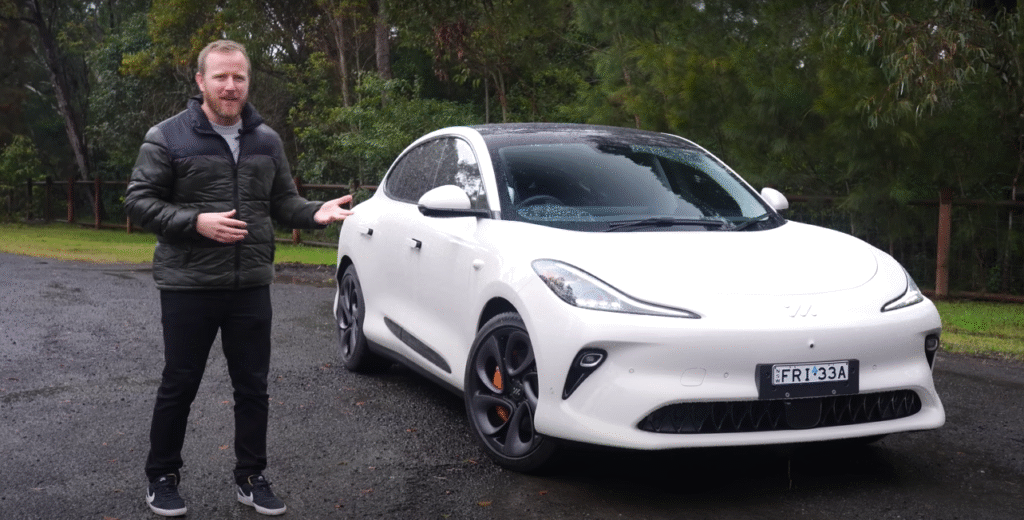
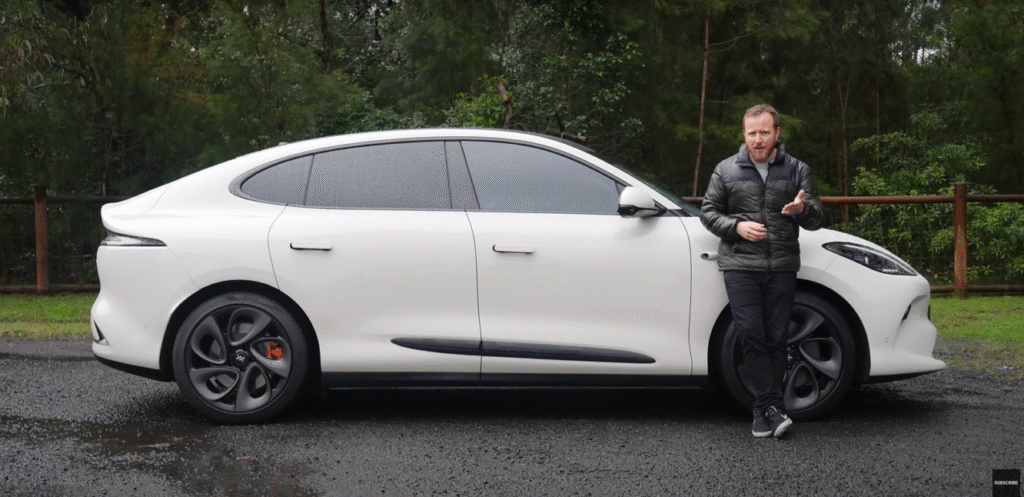
The 2026 MG IM6 looks incredible on paper. For $60,990 to $80,000, you’re getting supercar acceleration, luxury interior appointments, rear-wheel steering, air suspension, and features typically reserved for six-figure vehicles. The value proposition seems almost too good to be true.
And here’s the problem: it is too good to be true.
While the IM6 delivers impressive hardware and genuinely luxurious touches, living with this vehicle daily reveals frustrations that no amount of feature-packed spec sheets can overcome. After extensive testing, here are the five critical reasons why you should think twice—or three times—before signing on the dotted line for MG’s luxury EV experiment.
Reason #1: The Safety Systems Are Genuinely Dangerous
This isn’t hyperbole or nitpicking about overly cautious warnings. The IM6’s safety and driver assistance systems are so poorly calibrated that they actually create hazardous driving conditions—the opposite of their intended purpose.
The Adaptive Cruise Control Nightmare
The adaptive cruise control and lane-keeping systems simply haven’t been calibrated for Australian roads. Here’s what happens in real-world driving:
Around corners: The system drastically reduces speed—far more than necessary—causing following traffic to pile up behind you. You’ll have cars riding your bumper, flashing lights, or dangerously overtaking because your vehicle is inexplicably slowing to a crawl on curves that could be taken at normal highway speeds.
This isn’t just annoying—it’s unsafe. Creating unpredictable speed variations on highways puts you at risk of rear-end collisions. Other drivers can’t anticipate your vehicle suddenly braking for no apparent reason.
The Warning System Overload
The safety warning systems are described as “possibly one of the worst in any car” and “genuinely the most annoying thing ever.” These aren’t minor inconveniences:
- Overly aggressive alerts that trigger for non-existent threats
- False forward collision warnings that startle drivers unnecessarily
- Lane departure warnings that activate even when you’re safely within your lane
- Constant beeping and visual alerts that distract rather than assist
The workaround: You can press “Close All” to disable these systems—but you’ll need to do this every single time you start the vehicle. They reset with each drive cycle, meaning this becomes part of your daily routine just to make the car drivable.
Poor Sensor Performance Despite “High Performance” Claims
The vehicle proudly displays its “IMHR HP” (High Performance) sensors on the front fascia. Yet the actual performance of these sensors is mediocre at best. The 360° camera is merely “okay” when you’d expect excellence from a 2026 luxury Chinese EV known for tech leadership.
The Bottom Line: Safety systems should enhance confidence and reduce stress. The IM6’s systems do the opposite—they create anxiety, distraction, and potentially dangerous situations. Until MG invests in proper Australian market calibration, these systems are more liability than asset.
Impact on Daily Driving: Every highway trip becomes an exercise in managing malfunctioning technology rather than an opportunity to enjoy the drive. If you frequently use adaptive cruise control—and most EV buyers do for efficiency—this alone should disqualify the IM6 from consideration.
Reason #2: Software Quality That Questions Everything Else
When you encounter multiple typos, translation errors, and confusing interfaces in a vehicle’s software, it raises a fundamental question: what else did they rush or overlook?
The Typo Problem
The most glaring example: the vehicle misspells “energy” in “New Energy Vehicle.” This isn’t a minor translation quirk—it’s a basic spelling error in English that made it through to production.
Other Software Issues Found:
- “Rammed on” instead of “Random” for air vent positioning
- “Customize” button when you want to turn all systems back on (confusing and counterintuitive)
- Inconsistent terminology throughout menus
- Poor menu logic requiring multiple steps for simple functions
Why This Matters More Than You Think
Software quality isn’t just about aesthetics or minor annoyances. It reflects:
Development Process: If basic spell-checking didn’t happen, what about safety-critical software validation?
Quality Control: Did anyone test this thoroughly before release, or were they rushing to market?
Attention to Detail: These errors suggest a company culture that accepts “good enough” rather than pursuing excellence.
Future Updates: If they can’t get spelling right, how confident should you be in their ability to deliver meaningful over-the-air updates?
The User Experience Suffers
Beyond typos, the overall software experience is described as “nightmarish” in daily use:
- Laggy responses in some menu areas despite decent hardware
- Counterintuitive layouts that require hunting for basic functions
- Inconsistent design language across different screens
- Poor information hierarchy making critical data hard to find quickly
Comparison to Competitors
Chinese EV makers like BYD, Xpeng, and NIO have proven they can create sophisticated, polished software experiences. Tesla set the standard years ago. The IM6’s software feels like it’s from 2018, not 2026.
The Bottom Line: You’ll interact with the software every single time you drive. Typos erode confidence. Poor interfaces create frustration. The cumulative effect turns what should be a premium experience into a constant reminder that you bought an unfinished product.
Impact on Daily Driving: Every adjustment to climate control, every attempt to navigate menus, every misnamed function chips away at the premium feeling the hardware creates. You’ll constantly be pulled out of the luxury experience by amateurish software.
Reason #3: Efficiency So Poor It Undermines the EV Value Proposition
Electric vehicles are supposed to be efficient. That’s literally the point. The IM6 fails this fundamental requirement so badly that it calls into question whether MG understands EVs at all.
The Shocking Numbers
During real-world testing in 11°C weather, the IM6 Performance achieved 26kWh/100km. To put this in perspective:
Comparable EVs:
- Hyundai Ioniq 6 N: ~21kWh/100km (despite having more power)
- Tesla Model Y Performance: ~19-22kWh/100km
- BYD Seal Performance: ~22-24kWh/100km
- BMW iX xDrive50: ~23-24kWh/100km
The IM6 is consuming 15-25% more energy than competitors with similar or superior performance.
Why Is It So Inefficient?
Several factors contribute:
Weight: At 2.4 tons, it’s heavy—but not exceptionally so for this class.
Aerodynamics: Despite active grille shutters and a relatively sleek shape, the aerodynamic efficiency isn’t as good as claimed.
Power Delivery: The dual-motor setup may be poorly optimized, with inefficient power distribution between front and rear motors.
Tire Choice: The Pirelli Scorpion tires, while grippy, create significant rolling resistance.
Software Optimization: Poor regenerative braking calibration and motor efficiency mapping suggest inadequate software tuning.
Real-World Range Impact
Even with the larger 100kWh battery, your actual range will disappoint:
Official Range: ~500-550km (claimed)
Real-World Range: Likely 380-420km in mixed driving
Highway Range: Potentially as low as 300-350km at 110km/h
Cold Weather: Range could drop to 280-320km
Comparison: A Tesla Model Y Long Range with a 75kWh battery often achieves similar or better real-world range than the IM6 with its 100kWh pack. That’s embarrassing.
The Cost Implications
Electricity Costs: At Australian average electricity rates (~$0.30/kWh):
- IM6: $7.80 per 100km
- Tesla Model Y: $6.00 per 100km
- Ioniq 6: $6.30 per 100km
Over 20,000km annually, you’re spending $300-400 more on electricity with the IM6. Over five years of ownership, that’s $1,500-2,000 in additional running costs.
Charging Frequency: Poor efficiency means:
- More frequent charging stops on road trips
- More time wasted at charging stations
- More degradation on the battery from additional charge cycles
- More range anxiety in daily driving
The Fast Charging Catch
Yes, the IM6 supports up to 396kW DC fast charging—impressive on paper. But:
Australia’s Infrastructure Reality:
- Most public fast chargers max out at 150-250kW
- That 396kW capability is purely theoretical for Australian buyers
- Even with fast charging, you’re still charging more frequently due to poor efficiency
The Bottom Line: Buying an EV with poor efficiency is like buying a hybrid that gets worse fuel economy than a regular gas car. It defeats the purpose. The IM6’s inefficiency undermines every EV advantage: lower running costs, reduced environmental impact, and convenient charging.
Impact on Daily Driving: You’ll spend more time and money charging, experience more range anxiety, and question why you bought an EV in the first place. This is the antithesis of the EV ownership experience.
Reason #4: Questionable Safety Features That Could Cause Injury
Beyond poor software calibration, the IM6 includes physical design choices that raise genuine safety concerns—decisions that seemingly bypassed basic risk assessment.
The IM Mag Projectile Problem
The vehicle features multiple “IM Mag” (MagSafe-compatible) mounting points throughout the cabin:
- One on the dashboard (near airbag deployment zone)
- Several in the rear cabin
- On a removable handbag accessory
The Critical Flaw: The magnetic hold is extremely weak. One finger is enough to dislodge a mounted phone. The metal pucks weigh several hundred grams, and combined with a phone, you’re looking at 300-500g of projectile mass.
The Danger Scenarios:
Emergency Braking: Under hard braking (which this 578kW vehicle encourages with its ludicrous acceleration), these items will fly forward. The dashboard mount sits in the direct path between the passenger and the windscreen—and near where the passenger airbag deploys.
Hard Acceleration: With 0-100km/h in 3.65 seconds available on demand, rear-mounted phones and accessories become rearward projectiles. Rear passengers could be struck in the face by their own devices.
Accidents: In a collision, these unsecured metal objects become dangerous debris flying around the cabin. Their placement near airbag zones is particularly concerning.
Real-World Testing: During performance testing, the magnetic mounts couldn’t keep items secured even during normal spirited driving, let alone emergency maneuvers.
The Folding Rearview Mirror Mystery
Perhaps even more baffling: you can completely fold away the rearview mirror while driving.
The Problem:
- The digital mirror alternative only displays for a few seconds before disappearing
- You must press a button every time you want to check behind you
- The physical mirror is so small it barely functions anyway
How This Passed Australian Safety Regulations: It’s genuinely surprising that ADR (Australian Design Rules) allowed a vehicle where drivers can eliminate their rearview mirror entirely. While there’s a digital option, its temporary nature makes it inadequate for continuous rear visibility.
Poor Rear Visibility Overall
Even with the mirror functioning:
- The beautifully sculpted rear design severely limits visibility
- The small rear window and thick C-pillars create massive blind spots
- The 360° camera is merely adequate, not excellent
- Parking and lane changes require extra caution
For a vehicle with:
- 578kW of power
- 3.65-second 0-100km/h capability
- 2.4 tons of mass
- Limited visibility
This combination is genuinely concerning.
The Double-Glazing Phone Problem
The excessive double-glazing and soundproofing (which make the cabin beautifully quiet) actually block GPS signals. During testing, GPS devices had to be placed directly on windows to function properly.
Implications:
- Navigation unreliability
- Emergency services location tracking issues
- Ride-sharing driver problems
- Dash cam GPS accuracy concerns
Build Quality Unknowns
As a new model from a relatively new brand in the luxury space:
- Long-term durability is completely unknown
- Australian crash test data is limited
- Real-world accident performance hasn’t been validated
- Service network experience with repairs is minimal
The Bottom Line: A vehicle should never make you question whether using its features could cause injury. The IM Mag system’s weak magnetic hold combined with its placement near airbag zones suggests inadequate safety assessment. Combined with the foldable mirror and poor visibility, these design choices prioritize novelty over occupant safety.
Impact on Daily Driving: Every time you use the IM Mag mounts, you’re accepting unnecessary risk. Every spirited acceleration becomes a concern about projectiles. Every parking maneuver reminds you that visibility is compromised. This constant low-level anxiety isn’t acceptable in a vehicle marketed as luxurious.
Reason #5: Unfinished Product Sold as Complete
The overarching issue that encompasses all others: the IM6 feels like a beta test sold as a finished product. It’s approximately 80% complete, with that missing 20% making all the difference.
The “Good Hardware, Bad Integration” Problem
What’s Excellent:
- Chassis dynamics and suspension tuning
- Interior material quality and seat comfort
- Raw performance capability
- Feature list and specification
What’s Poor:
- Software integration and polish
- Safety system calibration
- Efficiency optimization
- Quality control and attention to detail
The hard product is genuinely impressive. The integration is genuinely poor. This disconnect suggests rushed development and premature market launch.
Examples of the Unfinished Experience
Speaker Placement: The vehicle has a 20-speaker sound system using quality components, but speakers are positioned to fire at your legs or bounce off the windscreen rather than at your ears. This is acoustic engineering 101—yet somehow no one caught it before production.
Tire Specification: 578kW of power on Pirelli Scorpion tires that break traction constantly. Any enthusiast could have predicted this in five minutes of test driving, yet it made it to production.
USB Charging: One USB-C port in the front of a luxury vehicle in 2026. One. This is the kind of cost-cutting you’d expect from a budget car, not an $80,000 luxury EV.
Climate Control: While the interface is generally good, it requires multiple taps through touchscreen menus for adjustments that should have physical buttons. Function follows form when it should be the opposite.
The “We’ll Fix It Later” Approach
The IM6’s problems suggest MG’s strategy is:
- Launch quickly to market with impressive specs
- Price aggressively to generate sales
- Promise improvements via over-the-air updates
- Let early adopters beta test the vehicle
The Problem With This Approach:
OTA Updates Aren’t Guaranteed:
- Will MG prioritize Australian market calibration?
- How long will updates take?
- Will they actually fix fundamental issues?
- What if MG decides the Australian market isn’t worth the engineering resources?
You’re Paying to Beta Test: You’re spending $60,000-$80,000 to test an unfinished product. That’s supposed to be what development vehicles and press fleet cars are for—not customer vehicles.
Depreciation Risk: If MG never fixes these issues, resale values will crater. Early adopters will lose money while waiting for updates that may never come.
Comparison to How It Should Be Done
Tesla’s Approach: Say what you will about Tesla, but they iron out issues before full production launch. Yes, they use OTA updates, but for enhancements—not to fix fundamental calibration problems.
European Manufacturers: Brands like BMW, Mercedes, and Audi spend years refining software and calibration before launch. They don’t release vehicles with typos in the UI.
Better Chinese Competitors: BYD, Xpeng, and NIO have shown Chinese manufacturers can deliver polished products. The IM6’s issues aren’t about Chinese manufacturing—they’re about MG’s specific rush to market.
The Value Proposition Illusion
On Paper: $80,000 for a vehicle with $150,000 worth of features seems like incredible value.
In Reality: $80,000 for a vehicle with $150,000 worth of features but $40,000 worth of integration quality means you’re not getting a bargain—you’re paying full price for half a car.
The Math:
- Well-integrated $60,000 EV: You get 100% of a $60,000 experience
- Poorly-integrated $80,000 EV: You get 70% of an $80,000 experience
- Which is the better value?
The Opportunity Cost
By purchasing an IM6, you’re not purchasing:
At Similar Price:
- Tesla Model Y Performance: More polished, better efficiency, proven reliability
- BMW iX xDrive40: True luxury experience with refined software
- Mercedes EQE: Established brand with comprehensive service network
- Genesis Electrified GV70: Better software, warranty, and dealer experience
The Bottom Line: An unfinished product at a discount isn’t a bargain—it’s a gamble. You’re betting that MG will fix these issues, that you can tolerate the frustrations until they do, and that the vehicle will hold its value despite these problems. That’s a lot of assumptions for $60,000-$80,000.
Impact on Daily Driving: Every drive reminds you that this vehicle could be excellent if MG had just taken another year of development. You’ll constantly feel like you’re driving potential rather than achievement. That’s frustrating in a way that no amount of features can compensate for.
Who Should Still Consider the IM6 Despite These Issues?
To be fair, some buyers might find the trade-offs acceptable:
Early Adopters: If you enjoy being first with new technology and don’t mind beta testing, the IM6 offers unique features at a compelling price.
Value-Above-All Buyers: If getting the maximum features per dollar is your priority and you can tolerate imperfection, the spec sheet is undeniably impressive.
Secondary Vehicle Owners: If this is your second car for occasional use rather than primary transportation, the daily frustrations matter less.
Brand Loyalists: If you’re committed to MG or love supporting underdog brands, you might accept the flaws as growing pains.
DIY Minded: If you’re comfortable disabling safety systems, working around software quirks, and accepting compromise, you can make this work.
The Better Alternatives at Similar Price Points
Instead of the IM6, consider these options:
Tesla Model Y Long Range ($73,400)
Advantages:
- Proven efficiency and range
- Polished software experience
- Extensive Supercharger network
- Strong resale value
- Regular meaningful updates
Trade-offs:
- Less luxurious interior
- More expensive
- Less outright power
BYD Seal Performance ($65,000)
Advantages:
- Better software integration
- More reliable efficiency
- Established support network
- Similar performance
Trade-offs:
- Less interior space
- Not as premium feeling
- Less advanced suspension
BMW iX xDrive40 (~$135,000)
Why Consider Despite Higher Price:
- Actually delivers luxury experience
- Refined software and calibration
- Comprehensive dealer network
- Proven German engineering
Trade-offs:
- Significantly more expensive
- Less outright performance
- Higher running costs
Genesis Electrified GV70 ($109,000)
Advantages:
- Genuine luxury experience
- Excellent warranty (5yr unlimited)
- Refined software
- Premium dealer experience
Trade-offs:
- More expensive
- Less power
- Smaller interior
Or Wait for:
Updated IM6 (2027+): Let MG work out the kinks with early adopters’ feedback. A refined version could be genuinely excellent.
MG4 XPower ($55,000): If you want MG value without the luxury pretensions, this hot hatch offers similar fun without the complications.
Final Verdict: Potential Doesn’t Equal Performance
The 2026 MG IM6 is simultaneously one of the most impressive and most disappointing vehicles you can buy. It proves MG can build excellent hardware while simultaneously proving they can’t integrate it into a cohesive, refined package.
The Five Critical Flaws:
- Dangerous safety system calibration that creates hazards rather than prevents them
- Amateur software quality that erodes confidence in everything else
- Terrible efficiency that undermines the fundamental EV value proposition
- Questionable safety features that prioritize novelty over occupant protection
- Unfinished product sold as if it’s complete and refined
Any one of these would give buyers pause. All five together make the IM6 impossible to recommend despite its attractive pricing and impressive spec sheet.
The Analogy:
Buying an IM6 is like buying a beautiful house with:
- Gorgeous architecture and premium finishes (the hardware)
- Non-functional plumbing (the software)
- Electrical outlets that sometimes shock you (safety systems)
- Foundation cracks hidden by fresh paint (efficiency/integration)
No matter how beautiful the house looks, you can’t live comfortably in it. The same applies to the IM6.
Our Recommendation:
Wait. Let MG prove they can deliver meaningful updates. Let early adopters identify additional issues. Let the market determine if this vehicle holds value. Let competitors respond with better offerings at similar prices.
The promise of future fixes isn’t worth $60,000-$80,000 of your money. If MG truly addresses these issues through updates, the IM6 could become recommendable in 12-18 months. Until then, it’s a showcase of potential that never quite becomes achievement.
Your money deserves a finished product. The IM6 isn’t one.
What MG Needs to Fix (And Whether They Will)
For the IM6 to become recommendable, MG needs to:
Essential Fixes:
- Complete recalibration of adaptive cruise and lane keeping for Australian roads
- Allow permanent disabling of overly aggressive safety warnings
- Fix all typos and translation errors (the easy one!)
- Improve efficiency by 15-20% through software optimization
- Strengthen IM Mag magnetic hold or remove the feature entirely
Important Improvements: 6. Redesign speaker positioning (requires physical changes—unlikely) 7. Offer higher-performance tire options from factory 8. Add more USB charging ports (physical limitation) 9. Improve 360° camera quality 10. Better integrate all software interfaces
Nice to Have: 11. Increase AC charging speed to 22kW 12. Improve digital mirror permanence 13. Better phone GPS signal penetration 14. Enhanced climate control responsiveness
The Reality: Items 1-5 are technically achievable via software updates. Whether MG will invest the engineering resources to do so, specifically for the Australian market, remains to be seen.
Items 6-8 require physical changes—they’re not happening on existing vehicles.
Track Record: MG’s history with comprehensive after-sale software updates is limited. They’re more likely to implement changes in the next model year while leaving current owners with current frustrations.
The Bottom Line: Don’t Be Dazzled by the Spec Sheet
The automotive industry has a saying: “You can’t put lipstick on a pig.” The IM6 inverts this—it’s a potentially great vehicle wearing the makeup of unfinished software and poor calibration.
Impressive hardware means nothing if the daily experience is frustrating. Premium features are worthless if you can’t use them confidently. Incredible value isn’t valuable if the product doesn’t work properly.
The IM6 looks amazing in brochures and sounds incredible in spec lists. But you don’t drive brochures—you drive actual vehicles.
And the actual vehicle, despite its potential, fails to deliver the experience its price tag promises.
Save your money. Skip this generation. Wait for MG to finish what they started.
When the IM6 becomes the vehicle it should be—if it ever does—we’ll be the first to celebrate. Until then, there are simply too many well-sorted alternatives to justify gambling on MG’s promise of future perfection.
Your next EV should excite you every time you drive it, not frustrate you. The IM6, despite its impressive party tricks, delivers more frustration than joy.
Rating: Do Not Recommend (Yet)
Check back in 2027 to see if updates have transformed this flawed diamond into something worth buying.
Have you test-driven the IM6? Are you an early adopter living with these issues daily? Share your experiences in the comments below. Real-world owner feedback helps prospective buyers make informed decisions.