After 10 days of intensive testing, the OnePlus 15R proves to be one of the most controversial releases of 2025. It delivers flagship-level performance with the brand-new Snapdragon 8 Gen 5 chipset and a massive 7,400mAh battery, yet makes puzzling camera decisions that’ll leave photography enthusiasts scratching their heads. Is this the ultimate sub-₹50,000 smartphone, or should you look at the competition? Let’s find out.
At a Glance: The Complete Picture
Rating: 4/5 Stars
Pros
✅ World’s first Snapdragon 8 Gen 5 chipset
✅ Massive 7,400mAh battery (9-10 hour screen-on-time)
✅ Proper IP69K water resistance
✅ 165Hz AMOLED display with improved brightness
✅ Ultrasonic fingerprint scanner (first on R-series)
✅ 120/165 FPS gaming capability
✅ Upgraded 32MP selfie camera with autofocus
✅ Clean Oxygen OS 16 with 4 years OS updates
Cons
❌ No telephoto camera (downgrade from 13R)
❌ Same 8MP ultrawide camera
❌ LTPS display instead of LTPO (no 1Hz refresh)
❌ No alert slider (replaced with Plus Key)
❌ No wireless charging
❌ Slightly thicker and heavier than 13R
Expected Price: ₹45,000-46,000 (with bank offers)
Best For: Performance enthusiasts, heavy users, gamers, and battery life seekers who can compromise on camera versatility
Skip If: Photography is your top priority or you need wireless charging
Design: Familiar Territory With Meaningful Upgrades
First Impressions
The OnePlus 15R shares significant design DNA with the flagship OnePlus 15—flat edges, boxy design, and a fresh color palette. While it’s not a dramatic departure from the 13R, the refinements add up.
Build & Materials
Dimensions:
- Thickness: 8.3mm (slightly thicker than 13R)
- Weight: 219g for glass-backed versions
- Violet variant uses fiberglass back (slightly lighter and thinner)
Color Options:
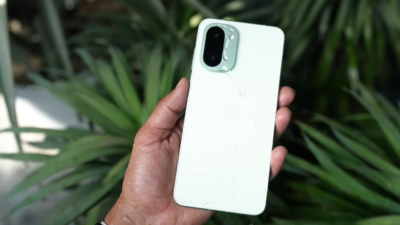
- Fresh Green (glass back)
- Shadow Black (glass back)
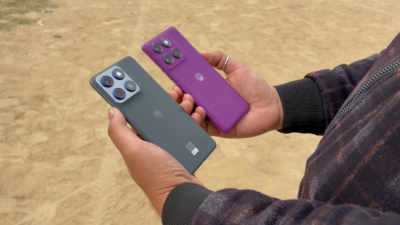
- Violet (fiberglass back – lighter option)
In-Hand Feel
Despite being a tall phone, the weight balance is excellent. The soft, rounded edges make it comfortable to hold for extended periods. The 219g weight is noticeable but not burdensome—it feels substantial rather than heavy.
The Camera Island Controversy
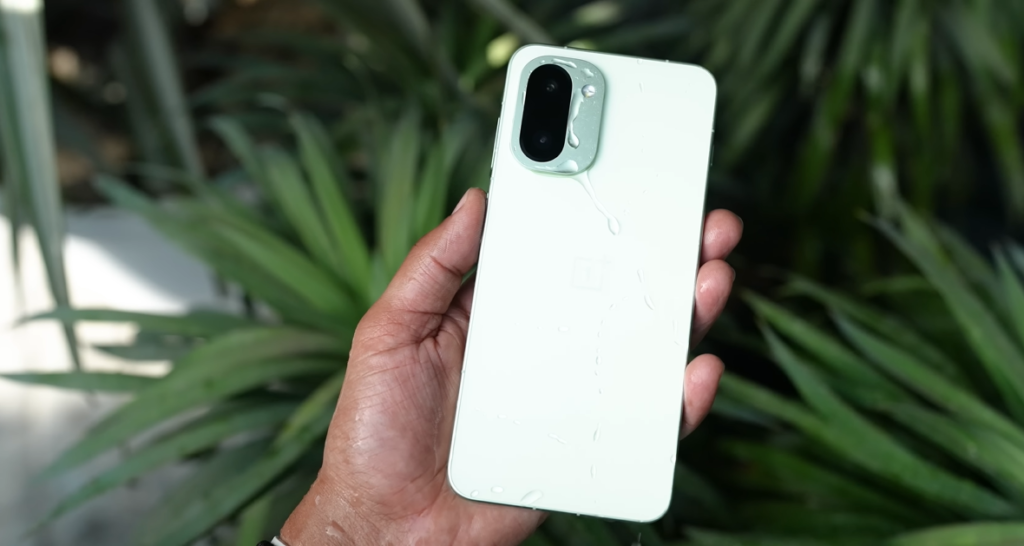
Let’s address the elephant in the room: that camera housing. At first glance, it looks like an afterthought with the flash awkwardly integrated into the module. But there’s a method to the madness—one camera has indeed gone missing (more on that later), and the design reflects this change.
Water Resistance: Finally Proper Protection
The Highlight: Full IP69K certification matching the OnePlus 15. This means:
- Dust-tight protection
- Submersion resistance
- High-pressure water jet resistance
This is a massive upgrade for the R-series and brings true flagship-level durability to the mid-range.
What’s in the Box
OnePlus continues its generous accessory policy:
- Color-matched protective case (good quality)
- Pre-applied screen protector
- 80W fast charger
- USB-C cable
Port & Button Layout
What’s There:
- USB 2.0 Type-C port
- IR blaster (still here!)
- NFC support
- Dual SIM slots (no eSIM support)
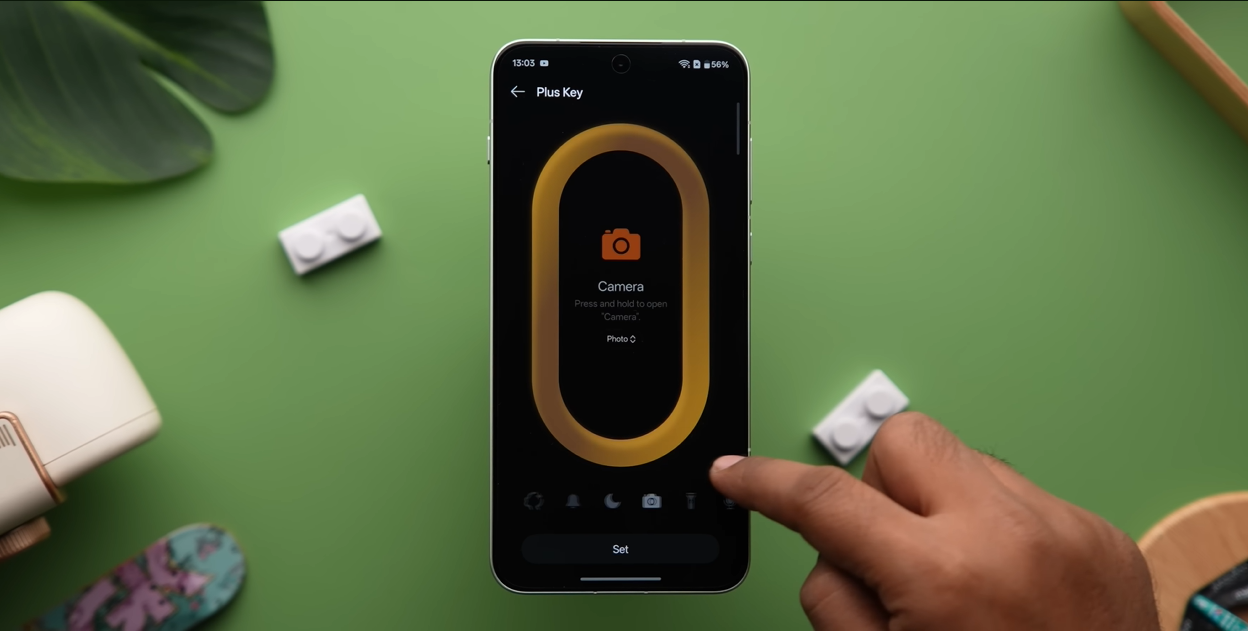
- Plus Key (customizable action button)
What’s Gone:
- Alert Slider (RIP to a beloved feature)
- 3.5mm headphone jack (no surprise)
The Plus Key replaces the alert slider with more customization options, including integration with the Mind Space AI feature. It’s functional but lacks the tactile satisfaction of the classic alert slider.
Display: Faster Refresh, But One Step Back
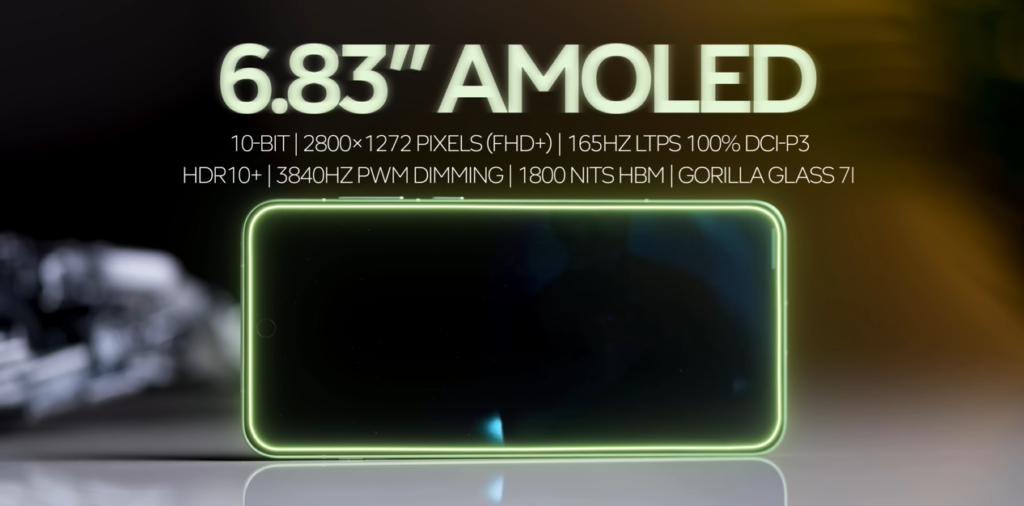
Display Specifications
- Size: 6.78 inches
- Resolution: 1.5K (1264 × 2780 pixels)
- Panel Type: 10-bit AMOLED (LTPS, not LTPO)
- Refresh Rate: 165Hz (upgraded from 120Hz)
- Brightness: Higher peak brightness than 13R (approximately 4,500 nits peak)
- PWM Dimming: Improved dimming frequency
- HDR Support: HDR10+ and Dolby Vision
The LTPO Trade-Off
Here’s the controversial bit: The 15R uses an LTPS display instead of the LTPO panel found in the 13R. This means:
What You Lose:
- No 1Hz refresh rate capability
- Slightly less battery efficiency during static content
What You Gain:
- Much faster 165Hz refresh rate
- Higher peak brightness
- Better outdoor visibility
- Slimmer, more symmetrical bezels
Always-On Display Limitation: The full-screen AOD feature isn’t permanent on either the 15R or 13R. It automatically turns off after a few seconds (unlike the flagship OnePlus 15/13).
Real-World Display Performance
Sharpness: The 1.5K resolution delivers crisp, detailed visuals with excellent viewing angles.
Brightness: Outdoor visibility is exceptional. The improved peak brightness makes the screen easily readable in direct sunlight.
HDR Performance: Watching movies reveals better highlight control in HDR content compared to the 13R. Netflix streaming with Dolby Vision looks fantastic.
Bezels: The symmetrical bezels are noticeably slimmer than the 13R, though not quite as thin as the flagship OnePlus 15.
Gaming & High Refresh Rate
The 165Hz refresh rate is a game-changer (literally). Scrolling feels buttery smooth, and games that support high frame rates benefit significantly. The upgrade from 120Hz to 165Hz is perceptible, especially in fast-paced content.
Audio & Haptics: Subtle But Noticeable Improvements
Stereo Speakers
Loudness: Very similar to the OnePlus 13R (already quite loud)
Quality Improvements:
- Better bass response
- Fuller, richer sound overall
- Good separation between channels
Real-World Performance: Perfect for watching videos, gaming, or casual music listening without headphones. No distortion at maximum volume.
Haptic Feedback
The OnePlus 15R features O Haptics—crisp, precise vibrations that enhance the user experience.
Quality Assessment:
- Not quite flagship-level refinement
- Still excellent for the price point
- Slightly less crispy than the 13R (marginal difference)
- Precise feedback when adjusting brightness, volume, or typing
Biometrics: Welcome to the Ultrasonic Era
Ultrasonic Fingerprint Scanner
First Time on R-Series: The 15R debuts an ultrasonic fingerprint scanner—a significant upgrade from optical sensors.
Advantages:
- Much faster unlock speeds
- Works reliably when fingers are wet
- Better placement (more comfortable reach)
- More secure than optical alternatives
Real-World Experience: Unlocking is nearly instantaneous and works consistently in various conditions. This is one of those quality-of-life improvements you don’t appreciate until you use it daily.
Performance: Snapdragon 8 Gen 5 Explained
The Chipset Confusion
Let’s clear this up: Qualcomm threw everyone a curveball by launching the Snapdragon 8 Gen 5 instead of the expected Snapdragon 8 Elite Gen 2. This has caused massive confusion in the market.
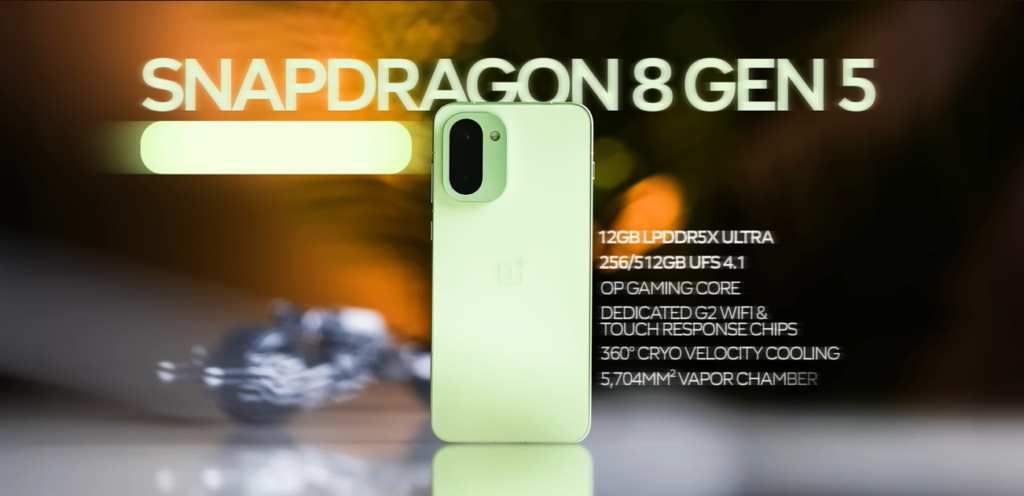
Snapdragon 8 Gen 5 Breakdown:
- Same 3nm manufacturing process as 8 Elite
- Same third-gen Orion CPU cores (clocked slightly lower)
- Adreno 840 GPU (cut-down version of 8 Elite’s GPU)
- Spectra ISP from 8 Elite
- X85 5G modem from 8 Elite
The Simple Truth: It’s basically an 8 Elite with lower clock speeds and a slightly less powerful GPU.
Performance Hardware
Beyond the chipset:
- Fast LPDDR5X RAM
- Fast UFS 4.0 storage
- Dedicated Wi-Fi chip
- Dedicated touch response chip
- Same cooling system as OnePlus 15
Benchmark Results
Testing Methodology: All tests conducted with phones fully charged, high-performance mode enabled, maximum screen resolution, identical brightness levels.
AnTuTu Benchmark:
- OnePlus 15R (8 Gen 5): ~3.1 million
- OnePlus 13 (8 Elite): ~3.2 million
- OnePlus 13R (8 Gen 3): ~2.4 million
Result: The 15R scores about 25% higher than the 13R and comes very close to the flagship 8 Elite.
Geekbench Results:
Single-Core:
- 15R: ~2,800 (very close to 8 Elite)
Multi-Core:
- 15R: ~9,700 (actually higher than 8 Elite!)
3D Mark Stress Test:
- Stability: 71% (slightly lower than 8 Elite but still good)
The Pattern: 8 Gen 5 delivers massive improvements over 8 Gen 3, nearly matches 8 Elite in CPU performance, but falls slightly behind in GPU-intensive tasks.
Real-World Performance
Everyday Usage: The phone feels incredibly snappy and responsive. App launches are instantaneous, multitasking is effortless, and there’s zero lag in any scenario.
Heavy Gaming Results:
Wuthering Waves (Maxed Graphics):
- Average FPS: 58.4
- Smoothness: 100%
- Temperature: 41-42°C maximum
Genshin Impact at 120 FPS:
- Average FPS: 119.8
- Smoothness: 100%
- Note: Only the second Android phone to support this
BGMI at 120 FPS:
- Average FPS: 119.5
- Smoothness: 100%
- Can push to 165 FPS using interpolation
165 FPS Gaming: Some games run natively at 165 FPS, utilizing the full potential of the display’s refresh rate.
Thermal Performance
The Standout: No overheating whatsoever. Even during extended gaming sessions, temperatures stayed between 41-42°C (tested in winter, but still impressive).
Stability: No crashes, no thermal throttling warnings (unlike some issues seen on the OnePlus 15 during 3D Mark testing).
Battery Performance During Testing
After running all these intensive benchmarks:
- OnePlus 15R: 70% battery remaining
- OnePlus 13R: 61% battery remaining
- OnePlus 13: 50% battery remaining
This clearly demonstrates the efficiency of the 8 Gen 5 chipset combined with the massive battery.
Battery Life: The 7,400mAh Monster
Battery Specifications
- Capacity: 7,400mAh (massive upgrade)
- Charging: 80W fast charging (same as 13R)
- Wireless Charging: Not available
Real-World Battery Performance
Heavy Usage Testing: 7 hours screen-on-time with:
- High-performance mode enabled
- Intensive benchmarking
- Heavy gaming sessions
- Extensive camera use
Normal Daily Usage: Easily achieves 9-10 hours screen-on-time with regular use patterns.
The Bottom Line: This is a true two-day phone for moderate users and will last heavy users through a full day without anxiety.
Charging Speeds
80W Fast Charging: Charges from empty in just over an hour. While not the absolute fastest, it’s more than adequate given the massive battery capacity.
No Wireless Charging: OnePlus offers magnetic cases for accessories, but they lack wireless charging support. This might disappoint some users but keeps costs down.
Cameras: The Controversial Compromise
Camera Hardware
Rear Cameras:
- Primary: 50MP Sony IMX906 (rebranded LYT700 from 13R)
- Ultrawide: 8MP (same as last year—disappointing)
- Telephoto: None (removed from 13R)
Front Camera:
- 32MP with autofocus (major upgrade!)
- 4K 30fps video recording capability

Software Processing
- Detail Max Engine (from OnePlus 15)
- Improved computational photography
The Missing Telephoto Problem
The removal of the dedicated telephoto lens is the most controversial decision. While the phone offers 2x sensor crop from the main camera, it can’t match the quality of a dedicated telephoto.
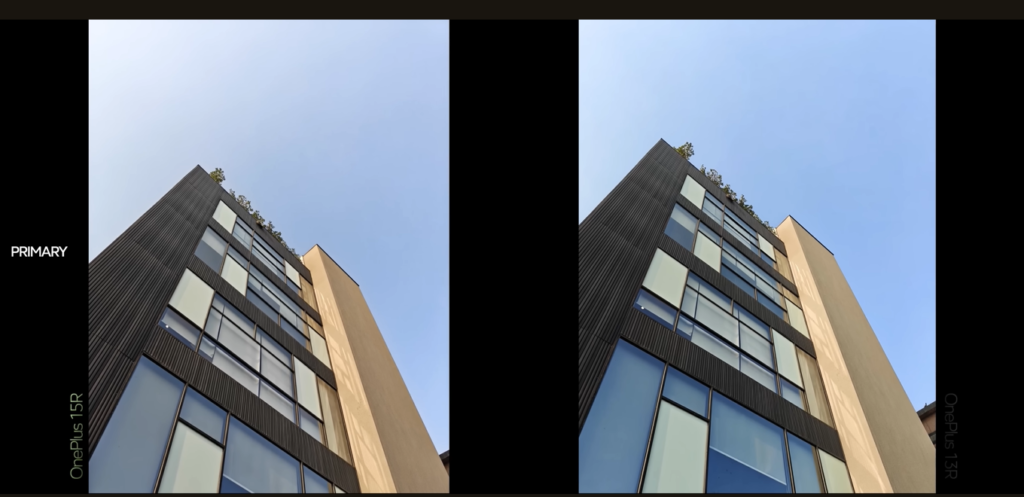
OnePlus 15R vs 13R: Photo Comparison
Main Camera:
Color Science:
- 15R: Cooler, more neutral tones
- 13R: Warmer tones (can be off-putting)
Detail & Sharpness:
- 13R: Slightly more detail
- 15R: Better chromatic aberration handling
HDR Performance:
- 15R: Better highlight control
- 15R: More accurate colors
Winner: 15R for overall image quality and color accuracy
Low Light:
- 13R: Slightly better detail retention
- 13R: Warm tones can distort colors
- Difference is minimal overall
Winner: Marginal victory for 13R, but 15R is more color-accurate
Ultrawide Camera:
- 15R: Slightly sharper (but oversharps a bit)
- 13R: Warmer tones that affect color accuracy
Winner: 15R by a small margin
Zoom Performance:
2x Zoom:
- 15R: Good details with sensor crop
- 13R: More detail, better shadow/highlight handling (dedicated telephoto advantage)
Winner: Clear victory for 13R due to dedicated telephoto
Portrait Mode:
- 13R: Oversharpens, artificial skin tones
- 15R: More natural, realistic look
- 13R: May appear sharper on first glance
Winner: 15R for natural results
Selfies:
- 15R: Much wider field of view
- 15R: Significantly more facial detail
- 15R: Natural skin tones
- 15R: Optional 2x zoom mode
- 13R: Narrower, less detailed
Winner: Decisive victory for 15R
Video Recording
Rear Camera Video:
- Both phones: 4K 60fps capability
- 13R: Slightly sharper
- 15R: Better color accuracy, stability, and highlight control
- 15R: Can shoot 4K 120fps (new feature)
Front Camera Video:
- 15R: 4K 30fps (huge upgrade)
- 13R: Limited to 1080p
Ultrawide Video:
- Still stuck at 1080p 30fps (disappointing)
Winner: 15R for overall video versatility and quality
OnePlus 15R vs Vivo X200 FE
For context, we compared the 15R with the Vivo X200 FE (priced around ₹46-47K):
Main Camera:
- Vivo: Slightly better detail and sharpness
Ultrawide:
- Vivo: Better quality overall
Zoom:
- Vivo: Wins decisively (dedicated 3x periscope telephoto)
Portraits:
- Vivo: Better overall
- OnePlus: May prefer skin tones depending on preference
The Takeaway: If camera quality is your absolute priority, the Vivo X200 FE is the better choice in this price range.
Camera Conclusion
The cameras do a “pretty good job” but aren’t class-leading. The 15R is adequate for casual photography but won’t satisfy enthusiasts who prioritize versatility and zoom capability.
Software: Oxygen OS 16 Experience
Operating System
- Version: Oxygen OS 16 based on Android 16
- Update Policy: 4 years of OS updates + 6 years of security patches
User Experience
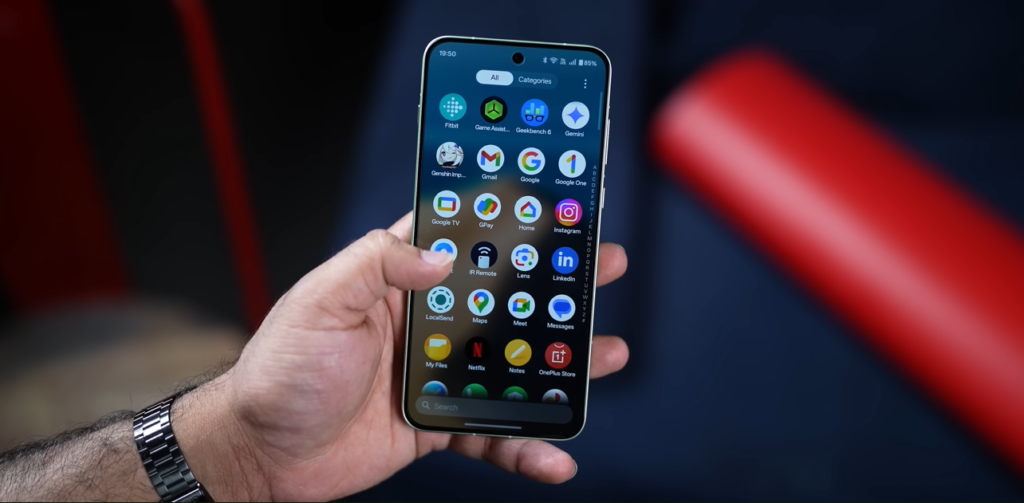
Animation & Smoothness: “Smooth AF” animations make navigation feel premium and responsive.
Bloatware: Minimal pre-installed apps:
- App Pics
- Much cleaner than competitors
Key Features
Plus Key Customization: The physical button offers extensive customization options and integrates with Mind Space AI features.
AI Integration: Multiple AI features are built-in, though their usefulness varies by user preference.
Oxygen OS Advantages:
- Clean, intuitive interface
- Excellent performance optimization
- Regular security updates
- Good customization options
The Competition: How Does It Stack Up?
Under ₹50,000 Landscape
The Reality: There’s surprisingly little direct competition at this price point with comparable specifications.
Key Alternatives
Vivo X200 FE (₹46-47K offline):
- Choose if: Camera quality is your top priority
- Advantage: Better overall camera system, dedicated telephoto
- Disadvantage: Slightly weaker performance
Samsung Galaxy S24 (Snapdragon version):
- Choose if: You want flagship polish and ecosystem integration
- Advantage: Premium build, excellent cameras, longer software support
- Disadvantage: Smaller battery, higher price, compact size
Google Pixel 9a (Expected):
- Choose if: You want the best computational photography and pure Android
- Advantage: Pixel camera magic, clean software
- Disadvantage: Weaker chipset, smaller battery
Compact Phone Category: Most competitors at this price point are compact phones, making the 15R’s large screen and massive battery unique selling points.
Who Should Buy the OnePlus 15R?
Perfect For
✅ Performance Enthusiasts: Best-in-class performance for the price
✅ Heavy Users: 9-10 hour screen-on-time battery life
✅ Mobile Gamers: 120/165 FPS gaming with excellent thermals
✅ Content Consumers: Large, bright 165Hz display
✅ OnePlus Ecosystem Users: Seamless integration with other OnePlus devices
✅ Value Seekers: Flagship features at mid-range pricing
Skip If
❌ Photography is your primary use case
❌ You need wireless charging
❌ You prefer compact phones
❌ You miss the alert slider desperately
❌ You need a dedicated telephoto camera
Quality of Life Features That Matter
Daily Conveniences:
- IP69K water resistance (use in rain, by the pool)
- Ultrasonic fingerprint scanner (wet finger unlock)
- Improved speakers (better media experience)
- IR blaster (universal remote capability)
- Pre-applied screen protector (immediate protection)
- Quality case in box (no additional purchase needed)
These seemingly small features add up to a significantly improved user experience compared to the 13R.
The Pricing Question
Expected Launch Price: ₹45,000-46,000 with bank discounts
Value Assessment: At this price point, the OnePlus 15R offers exceptional value if your priorities align with its strengths (performance, battery, display) rather than its weaknesses (camera versatility).
Recommendation: Check the pinned comment for final pricing and launch offers, as early bird deals can make this even more attractive.
Top 5 Reasons to Avoid the OnePlus 15R
Final Verdict: Balanced Excellence With Caveats
Rating: 4/5 Stars
The OnePlus 15R is an excellent all-rounder that makes one significant compromise (camera versatility) to deliver exceptional value in every other area. It’s a phone that knows its audience and serves them extremely well.
The Three-Sentence Summary
If you want killer performance, a gorgeous screen, crazy-good battery life, polished software, and cameras that range from decent to good (but not great), the OnePlus 15R won’t disappoint. The lack of a telephoto camera and wireless charging are the main compromises, but the quality-of-life upgrades like proper water resistance, better speakers, and an ultrasonic fingerprint scanner sweeten the deal. In the sub-₹50,000 segment, there’s no real high-end competitor that offers this complete package—making the 15R the default choice for performance-focused users.
Final Recommendation by User Type
Buy Without Hesitation:
- Gamers seeking maximum performance
- Heavy users who hate charging anxiety
- Performance enthusiasts who watch occasional photos
Consider Carefully:
- Photography enthusiasts (look at Vivo X200 FE)
- Compact phone lovers (Samsung S24)
- Wireless charging devotees
Perfect For Most People: The 15R represents the best overall package in its price segment for the vast majority of users. Unless you have specific needs that it doesn’t meet (photography, wireless charging), this is the phone to get under ₹50,000.
It nearly matches 8 Elite in CPU performance and actually beats it in some multi-core tests, but the 8 Elite has a more powerful GPU. For real-world usage, the difference is minimal.
Significantly better. The 15R easily delivers 2-3 hours more screen-on-time thanks to the 7,400mAh battery.
The Bottom Line
The OnePlus 15R is a controversial phone only because it makes deliberate trade-offs to maximize value. Remove the telephoto camera? Sure. Skip wireless charging? Okay. But in exchange, you get the best performance, best battery life, and best display in the sub-₹50,000 segment, wrapped in software that actually works well.
This isn’t the phone for everyone—but for most people, it’s exactly the phone they need.
What’s your take on the OnePlus 15R? Are the camera compromises worth it for the performance gains? Let us know in the comments which phone you’d choose under ₹50,000!
Stay tuned to My Pit Shop for more smartphone reviews, comparisons, and tech insights that help you make the right choice!