Ford’s Ranger Super Duty has exploded onto the scene as the “ultimate ute” – huge towing numbers, insane payload, mine‑site credentials, and off‑road capability that embarrasses most dual‑cabs. Yet that doesn’t automatically make it the right choice for everyday buyers. The very things that make it impressive on paper can turn into big drawbacks in real life.
This detailed guide breaks down the top 5 reasons to avoid the Ford Ranger Super Duty, especially if you’re a typical tradie, tourer, or family buyer rather than a mining company or fire service.
Introduction
The Ford Ranger Super Duty is being hailed as a game‑changer: a midsize ute with full heavy‑duty numbers. It runs a beefed‑up chassis, serious 8‑stud wheels, a 4.5‑tonne GVM, 8‑tonne GCM, huge payload, 4.5‑tonne towing, and off‑road hardware that lets it walk through tracks that have stressed or nearly tipped other utes. Reviewers call it “bloody awesome” and “the most capable midsize ute ever sold in Australia”.
But buried inside that praise is a more important truth: this is a highly specialized tool, not a one‑size‑fits‑all upgrade over a regular Ranger.
If you mostly:
- Drive on the road
- Tow a caravan or trailer well under 4.5 tonnes
- Do light to moderate off‑roading
- Want comfort and efficiency as much as capability
…then the Super Duty’s compromises and costs may easily outweigh its benefits.
This blog focuses on core value, not hype: price, performance, running costs, real‑world usability, and whether you’ll actually use what you’re paying for.
Reason #1: A Six‑Figure Work Ute – Before On‑Roads
The first and most obvious reason to avoid the Ranger Super Duty is its brutal pricing.
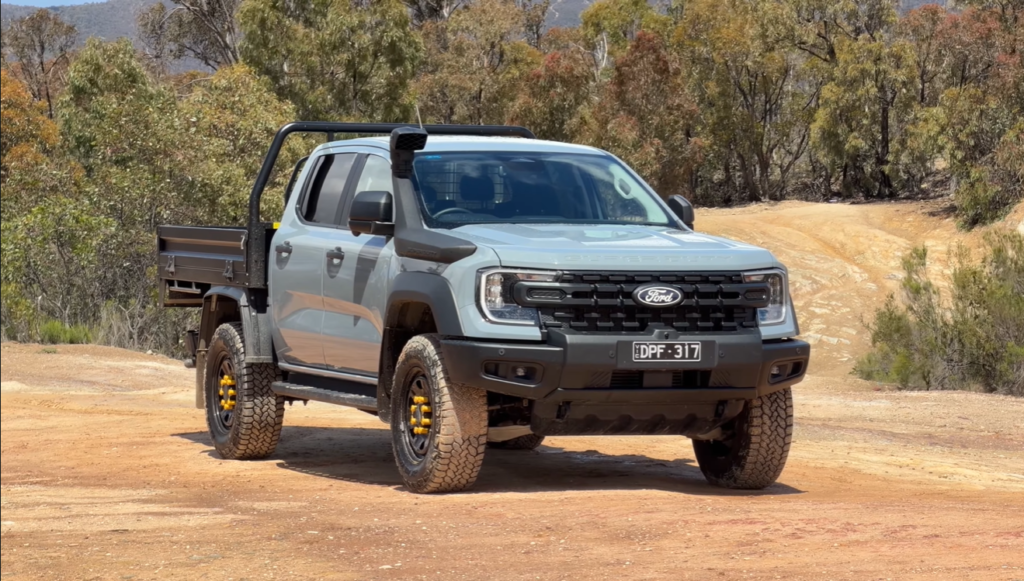
The Base Price Reality
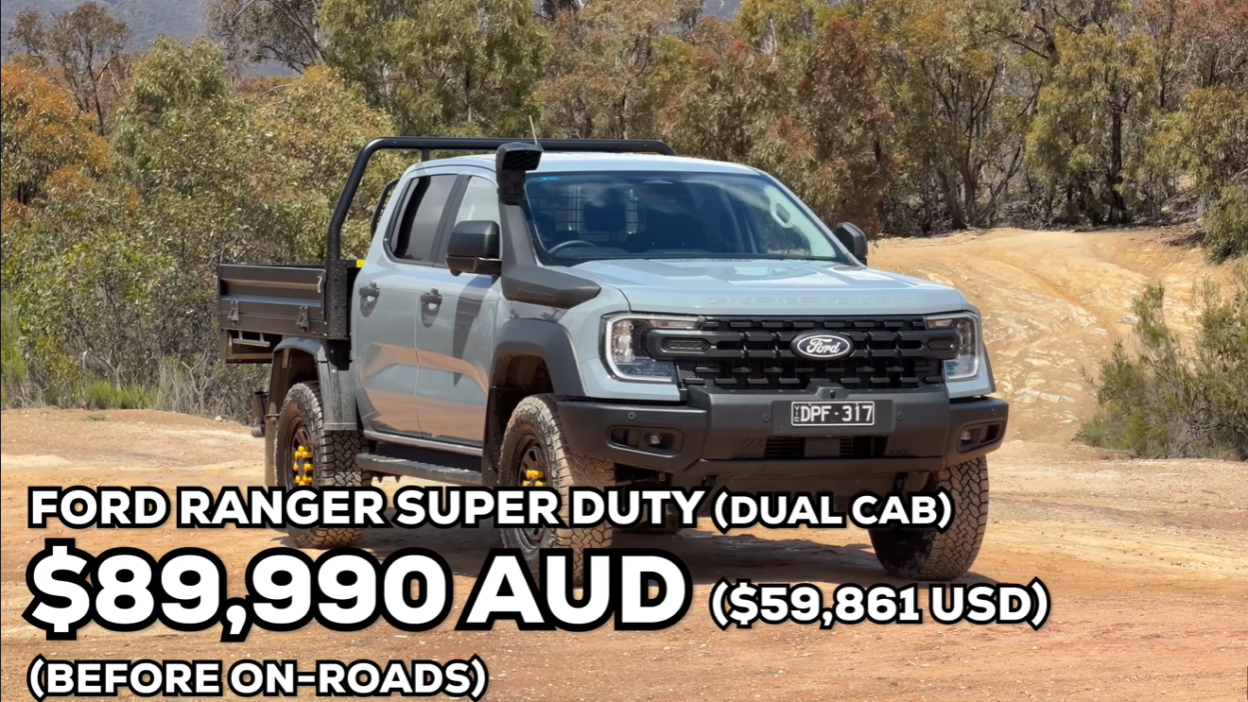
The dual‑cab Super Duty comes in one trim only, a fleet‑spec configuration that’s meant for serious work rather than lifestyle luxury. Yet the number attached to that “base” spec is staggering:
- Around $89,990 before on‑road costs for the dual‑cab.
- That figure is without a tray.
So before you’ve even added registration, stamp duty, insurance, and accessories, you’re already deep into premium territory for what is still, at heart, a Ranger‑based ute.
The “Work Package” Shock
Want it to actually carry things like a proper work vehicle?
- The sort of tray shown in the review, part of the “work package”, adds roughly $11,000.
- That pushes the pre‑on‑road total to over $100,000.
And that’s still before you consider:
- Bullbar
- Canopy or toolboxes
- Long‑range tank
- UHF, lights, suspension tweaks, and the usual touring/working extras
It’s easy to creep toward the cost of high‑end 4×4 wagons or extensively modified LandCruiser 70s – except you’re starting at a price point that already assumes serious commercial or fleet use.
“Good Value” Only If You’re Already Spending Big
The reviewers make a fair point: if you built a LandCruiser 70 Series up to match the capability and hardware of the Super Duty, you’d be close to $200k, and in that context, the Ranger Super Duty looks like “good value”.
But that logic only works if:
- You’re comparing it to extreme, fully built rigs, not mainstream dual‑cabs.
- You’re already comfortable spending six figures on a ute for work.
For many buyers who simply want:
- 3.0–3.5‑tonne towing
- Solid off‑road performance
- Good reliability and comfort
…there are far cheaper options in the Ranger, HiLux, D‑Max, Amarok and similar line‑ups.
If your budget is under six figures – or you actually care what your monthly repayments look like – the sticker price alone is a legitimate reason to avoid this ute.
Reason #2: Heavy, Detuned and Disappointingly Slow
With “Super Duty” in the name and a 3.0‑litre V6 diesel under the bonnet, you’d expect the kind of punch that shoves you down the road even when loaded. The reality is more complicated – and much less exciting.
The Engine Specs on Paper
The Super Duty uses the same 3.0‑litre V6 origin as the regular Ranger, but it’s been reworked:
- Power: around 154 kW, which is roughly 30 kW less than in the standard Ranger V6.
- Torque: a healthy 600 Nm, which matches the regular V6’s torque figure.
- Cooling: upgraded with about 25% better cooling and a 1,000 W cooling fan.
Why the detune? Mainly Euro 6 emissions compliance and the need to keep things cool and reliable under big loads (towing, heavy payload, high GCM usage).
The Weight Problem
All that heavy‑duty hardware comes at a cost:
- The lightest versions sit around 2.4 tonnes.
- The dual‑cab in this spec is closer to 2.6–2.7 tonnes.
That’s a huge amount of mass to haul around with a detuned engine, even if the torque number looks solid.
Real‑World Performance: 0–100 km/h in 14.56 Seconds
When actually tested, the Super Duty’s acceleration was flat‑out disappointing:
- Using brake‑boosting and both reviewers on board, the best 0–100 km/h run came in at around 14.56 seconds.
- The reaction on camera: “That was really bad”, “she’s slow”, and clear frustration despite initially “high expectations”.
Yes, they did it on a slight incline, but even allowing for that, this is slow for a modern V6 diesel ute – especially one carrying a six‑figure price tag.
The combination of:
- Extra weight
- Reduced power
- Emissions hardware and tuning
means that, while the Super Duty builds speed steadily enough, it never feels genuinely strong or eager. You feel the mass every time you put your foot down.
When This Actually Matters
If you:
- Tow near its 4.5‑tonne capacity
- Frequently pull up long highway hills
- Need confident overtakes when loaded
…the lack of performance becomes more than a spec‑sheet annoyance. It affects how relaxing the ute is to live with.
The reviewers nicely summarise it: “Sure, could there be more power? 100%. But it rides and handles so well you almost forgive it.”
That’s the point: you have to forgive the engine, not enjoy it. For many buyers, that’s a big reason to look elsewhere.
Reason #3: High Fuel Use and AdBlue Complexity
For a modern, Euro 6‑compliant diesel that’s been detuned and fitted with AdBlue, you’d expect impressive fuel consumption as the payoff. Instead, you get the worst of both worlds.
Fuel Economy Reality
During their time with the ute, over a reasonably long sample:
- The average sat around 14.1–14.2 L/100 km.
- That’s over ~2,000+ km of mixed use, not just a few hard test loops.
- The reviewers pointed out that this is “not very good”, “not far off a Ranger Raptor” in terms of thirst.
The sting in the tail: the Raptor is much faster, more entertaining, and aimed at performance driving, while the Super Duty is supposed to be the sensible, work‑focused diesel.
For something positioned as a serious workhorse, that sort of consumption:
- Increases running costs significantly over high mileage
- Eats into fleet budgets
- Makes long touring trips more expensive and refuelling stops more frequent
The AdBlue Factor
To meet Euro 6 standards, the Super Duty uses an AdBlue system:
- There’s a dedicated AdBlue tank, which needs topping up periodically.
- In the presentation, it sounded like it may need refilling every few thousand kilometres, depending on how heavily the vehicle is used (towing, load, driving style).
That means:
- More consumables to think about
- More things to monitor on long trips
- Another way to get caught out if you ignore the warnings
For fleet and mine operators, that’s just part of the compliance game. For private owners, it’s another layer of hassle on top of already high fuel use.
Running Cost Reality Check
Put it together and you get:
- High upfront price
- Detuned performance
- Heavy real‑world fuel consumption
- AdBlue dependency
If you were getting exceptional range or class‑leading economy in exchange, this might be tolerable. But you’re not. You’re paying more at the pump without getting more from the engine. For many buyers, that is a clear reason to avoid it.
Reason #4: Over‑Engineered for What Most People Actually Do
On paper, the Ford Ranger Super Duty is spectacular. In real life, that extreme spec is massive overkill for 90–95% of typical ute buyers.
The Capability Overload
Here’s what this thing is built to do:
- GVM: 4.5 tonnes
- GCM: 8 tonnes
- Towing: 4.5 tonnes
- Payload: around 1,825 kg – close to 2 tonnes, compared with an already strong ~1‑tonne payload in a regular Ranger.
- Ground clearance: 299 mm
- Angles: approx. 36° approach, 27° ramp‑over, 29° departure.
- Wading depth: 850 mm, thanks to a sealed, Safari‑designed snorkel – Ford even suggests it can go deeper, but they won’t officially push it.
Hardware highlights include:
- 8‑stud wheels, engineered to cope with the torque and load at high GCM.
- 4 mm steel bash plates and serious rated recovery points front and rear.
- Front diff from a Ford Transit Jumbo, bespoke front suspension and wishbones designed for articulating heavy loads off‑road.
- Rear axle derived from a Ford Bronco Raptor, plus locking front and rear diffs you can control independently.
In testing:
- It walked through gnarly clay climbs where a Jimny and Jack T9 had almost tipped or struggled.
- It maintained traction with both diffs locked on hardcore rock and ruts.
- It dealt with steep reverse hill starts and heavy off‑road abuse without complaint.
From a pure engineering standpoint, it’s brilliant.
The Overkill Problem
The question is: do you need all that?
Most private buyers will:
- Tow a 2.5–3.0‑tonne caravan or work trailer
- Drive on highway and suburban roads most of the time
- Hit dirt roads, sand tracks and moderate 4×4 trails a few times a year
- Load the tray but rarely run at or near full GVM
For that use case:
- A regular Ranger V6
- A HiLux, D‑Max, BT‑50, Amarok, or similar
…will comfortably handle the job, often with:
- Better performance for the weight
- Lower cost of entry
- Less complexity and emissions hardware
- Friendlier everyday manners
The Super Duty’s extreme spec is perfect for:
- Mining fleets and contractors hauling heavy gear daily
- Fire service and emergency response in remote areas
- Operators who genuinely need 4.5‑tonne towing and near‑2‑tonne payload, repeatedly, in harsh conditions
If that’s not you, you are:
- Paying a premium for capability you won’t exploit
- Accepting performance and economy compromises you don’t need
- Adding size, weight and complexity to your everyday life for no real gain
And that is a very good reason to avoid it.
Reason #5: Fleet‑Spec Livability and Frustrating Tech
For a ute that easily blows past $100k before on‑roads and accessories, you might expect luxury‑ute refinement. That is not what the Ranger Super Duty is about – and for many buyers, that’s a deal‑breaker.
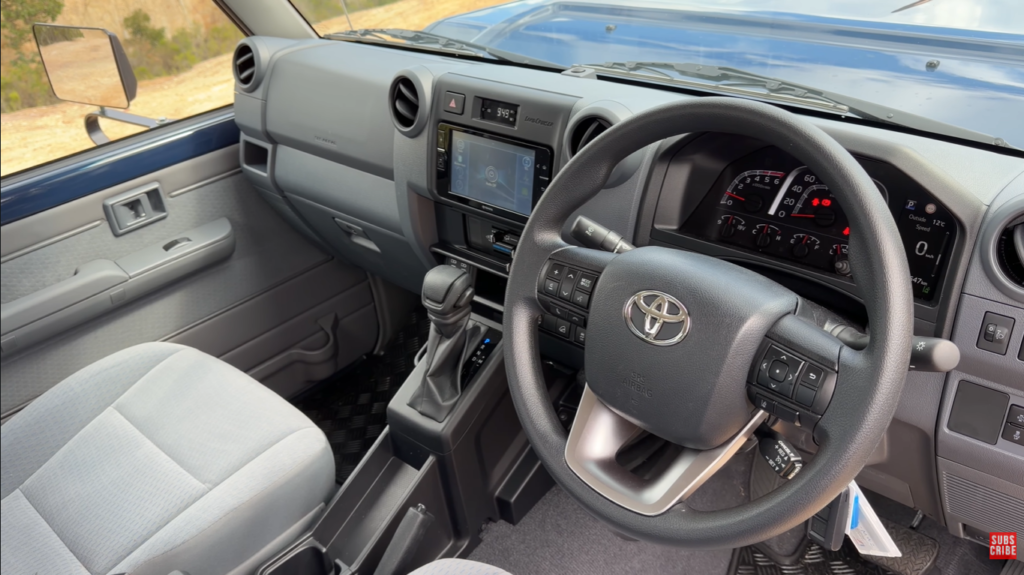
Fleet‑Spec Cabin with Work‑First Materials
Inside, Ford has stayed true to the Super Duty’s workhorse brief:
- Only one trim level is offered, essentially a fleet spec with a few nicer touches.
- There’s a leather steering wheel and soft‑touch centre armrest, and the front seats are comfortable enough.
- But the main surfaces are hard plastics, chosen because they can be easily wiped down.
Downsides:
- Those plastics scuff easily and don’t look premium.
- Hard surfaces reflect sound, so cabin noise is higher than in more lifestyle‑oriented dual‑cabs.
- Seats are “rental spec” cloth; everything is manually adjusted, and there’s no sunroof option.
Compared with a LandCruiser 70, it feels like a limo. Compared with a Ranger Wildtrak, Amarok Aventura, or any modern high‑spec dual‑cab, it feels utilitarian, because that’s exactly what it is.
Rear Seat and Practical Quirks
The back row is actually pretty good for space:
- At 5’11”, the reviewer had good legroom, toe room and headroom.
- There are rear vents, a 12V outlet, and even a 230V 400W household socket – great for work gear or charging larger devices.
But:
- There’s a massive hump in the centre of the floor, more intrusive than in a standard Ranger, likely due to the upgraded drivetrain. That makes the middle seat less comfortable.
- There are no rear USB‑C ports, which is a strange omission in a modern, premium‑priced ute.
For families or tradies who double their ute as a people‑mover, these details matter.
Infotainment and Control Annoyances
The central screen is packed with clever features:
- Onboard scales to measure payload weight.
- Smart Hitch to help align and balance trailer loads.
- A 360° camera and trail cam, even with washer jets to clean the camera lens.
- Detailed off‑road menus and diff‑lock controls.
But the everyday user experience isn’t as polished as the spec sheet suggests:
- The system still shows stutters and glitches with Apple CarPlay and Android Auto, even after years of the Ranger platform being on sale.
- The reviewers openly say they recommend using a wired connection because the wireless experience is unreliable.
- Some climate controls are integrated into the touchscreen; while key functions have physical buttons, you’re still forced into the screen for certain adjustments.
For a heavily work‑oriented buyer, this might be tolerable. For someone paying luxury‑ute money and expecting seamless, modern infotainment, it’s underwhelming.
Expectation vs. Reality at $100k+
At this price, many buyers expect:
- Near‑SUV levels of refinement and quietness
- Plush seating and high‑end materials
- Flawless phone integration
- Thoughtful rear passenger amenities
Instead, the Ranger Super Duty gives you:
- Fleet‑spec practicality and durability
- Great ergonomics for work use
- Functional but sometimes clunky tech
If your priority is daily comfort and tech refinement, not mine‑site capability, that mismatch is a strong reason to avoid it.
Who Should Actually Avoid the Ford Ranger Super Duty?
You should think very carefully – and probably walk away – from the Ranger Super Duty if:
- You won’t regularly tow near 4.5 tonnes or operate close to its 4.5‑tonne GVM and 8‑tonne GCM.
- You value strong, responsive performance and don’t want to live with a ute that does 0–100 km/h in around 14.5 seconds.
- Fuel economy and running costs matter to you; 14+ L/100 km in a diesel with AdBlue is a real concern.
- You want a refined, quiet, family‑friendly interior rather than a hard‑wearing, fleet‑spec cabin.
- Your use is mostly urban and highway, plus occasional off‑roading and moderate towing.
- You’re looking at finance and don’t want six‑figure repayments or heavy depreciation on a niche‑duty vehicle.
In those scenarios, better‑balanced options include:
- Regular Ford Ranger V6 – more power, lower weight, better performance, still very capable.
- Ford Ranger Raptor – if you value fun and performance more than payload and GCM.
- Other mainstream dual‑cabs like Toyota HiLux, Isuzu D‑Max, Mazda BT‑50, VW Amarok, which will comfortably tow and tour without the Super Duty’s cost and compromises.
The Ford Ranger Super Duty is a phenomenal piece of engineering. It has:
- Class‑leading payload and towing
- Incredible off‑road ability straight from the factory
- Clever work‑focused tech like onboard scales and Smart Hitch
- Ride and handling that genuinely shame many other utes
But that doesn’t make it the best ute for everyone – or even for most people.
The top 5 reasons to avoid it are straightforward:
- A six‑figure price tag once you add a tray and on‑roads.
- Detuned, heavy and slow despite the V6 badge.
- High fuel consumption and AdBlue complexity for a modern diesel.
- Over‑engineered for typical use, with capability most owners will never touch.
- Fleet‑spec livability and glitchy tech that don’t match its price expectations.
If you are a mining company, emergency service, or contractor who truly needs 4.5‑tonne towing and 8‑tonne GCM every day, the Ranger Super Duty might be the perfect tool.
If you’re a regular buyer who wants a tough, capable, comfortable dual‑cab for mixed work and play, you’ll likely be better served by a less extreme – and less expensive – alternative.