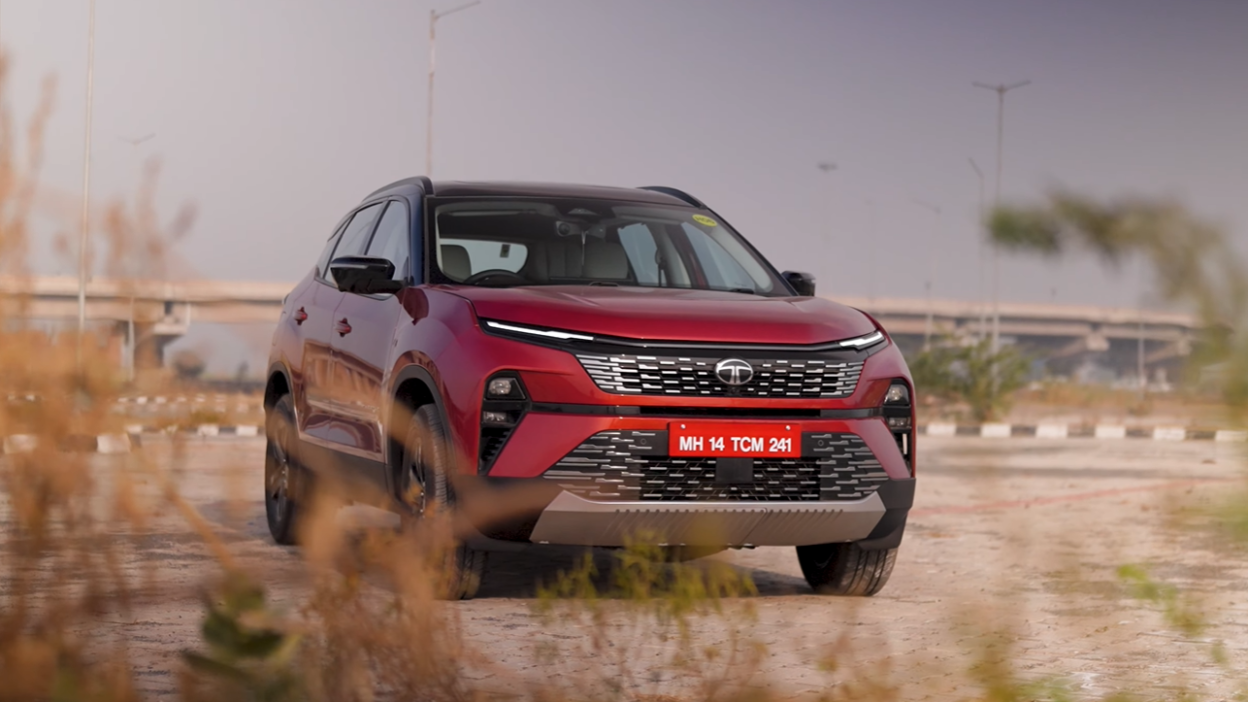
For the first time ever, the Tata Harrier is available with a petrol engine. But here’s the controversial part: it’s the same 1.5-liter turbocharged unit from the Curvv, which was perfectly adequate for that lighter SUV. The big question—can this relatively small engine handle a vehicle weighing between 1,700-1,800kg? After 100+ kilometers of real-world driving, here’s the brutally honest answer.
At a Glance: Quick Verdict
Rating: 3.5/5 Stars
The Good
✅ Surprisingly adequate performance for a 1.5L engine
✅ Better ride quality than Curvv
✅ Excellent torque converter tuning by Aisin
✅ Good sound insulation and cabin refinement
✅ 14-inch Samsung OLED touchscreen
✅ 360° camera with washers
✅ Improved JBL audio system
✅ Digital IRVM with dual cameras
✅ 65W Type-C charging ports throughout
The Bad
❌ Inconsistent ORVM memory function (safety hazard)
❌ Poor low-light camera quality
❌ Paddle shifters not working on some units
❌ Manufacturing glitches (45W labeled as 65W)
❌ Thick A-pillars create blind spots
❌ Realistic fuel economy: 8-10 kmpl city, 14-16 kmpl highway
❌ Turbo lag still noticeable at very low RPMs
Expected Price Range: ₹15-18 lakh (ex-showroom, estimated)
Who Should Buy: Urban drivers, short-distance commuters, those concerned about diesel future regulations
Who Should Skip: Highway warriors, those who prioritize fuel efficiency, drivers needing maximum power
The Elephant in the Room: 1.5L Engine in 1,800kg SUV
The Skepticism Was Real
Let’s address the obvious concern first. A 1.5-liter engine in a vehicle weighing nearly 1.8 tons sounds like a recipe for disaster on paper. The Curvv, which weighs significantly less, found this engine perfectly adequate. Would the Harrier feel lethargic? Lazy? Underpowered?
Surprisingly, no.
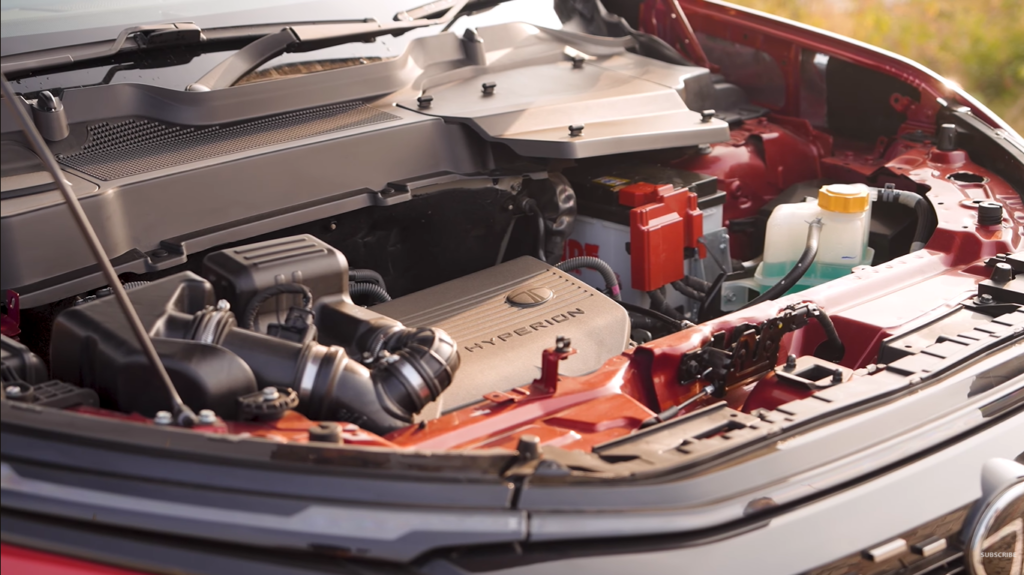
Engine Specifications
- Displacement: 1.5-liter turbocharged petrol
- Peak Torque: 280 Nm
- Transmission: Aisin automatic torque converter
- Manual: Also available (not tested)
Real-World Performance Assessment
After 86 kilometers of varied driving (which extended to 100+ km by the end), here’s what actually happens when you drive the Harrier Petrol:
Low-End Performance (Starting from Standstill): The initial lag at extremely low RPMs has been reasonably well managed. It’s not buttery smooth—you’ll notice a slight hesitation—but it’s far from the disaster many expected. For a 1.5-liter engine moving this much mass, it’s commendable.
Mid-Range Performance (Highway cruising): This is where the Harrier Petrol shines. At around 90 km/h, the engine hovers around 1,600-1,700 RPM. Push it to 100 km/h, and you’re sitting comfortably at approximately 1,800 RPM.
What this means: Peak torque availability kicks in around 1,650-1,700 RPM, which solves the lethargic feeling problem. The torque is accessible when you need it most.
The Aisin Collaboration: Tata has worked closely with Aisin (or Hyundai Transys, depending on terminology) on the torque converter tuning, and it shows. This is a dramatic improvement over Tata’s previous attempts with their in-house DCT paired with their GDI engine.
Exhaust Note Surprise
The exhaust system appears to have been worked on as well. Subjectively, the Harrier Petrol sounds slightly better than the Curvv when you push the accelerator. Whether this is actual tuning or just different acoustics in the larger cabin is debatable, but the sound is more satisfying.
Speed Testing
Tested speeds (within legal limits): 150, 170, 180 km/h were achieved comfortably. While we won’t demonstrate this, the engine doesn’t feel strained even at these higher speeds.
What’s New: Design & Exterior Changes
Color Options
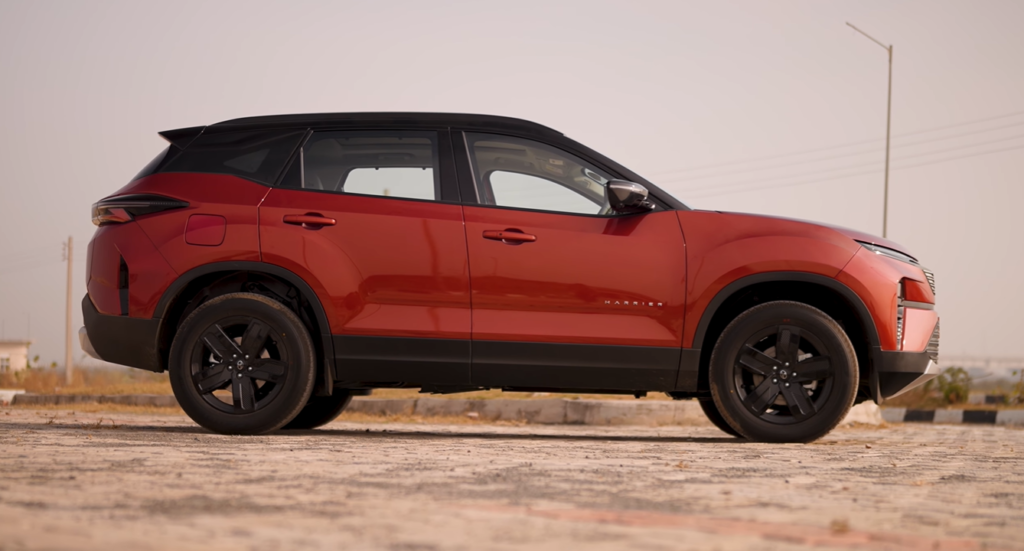
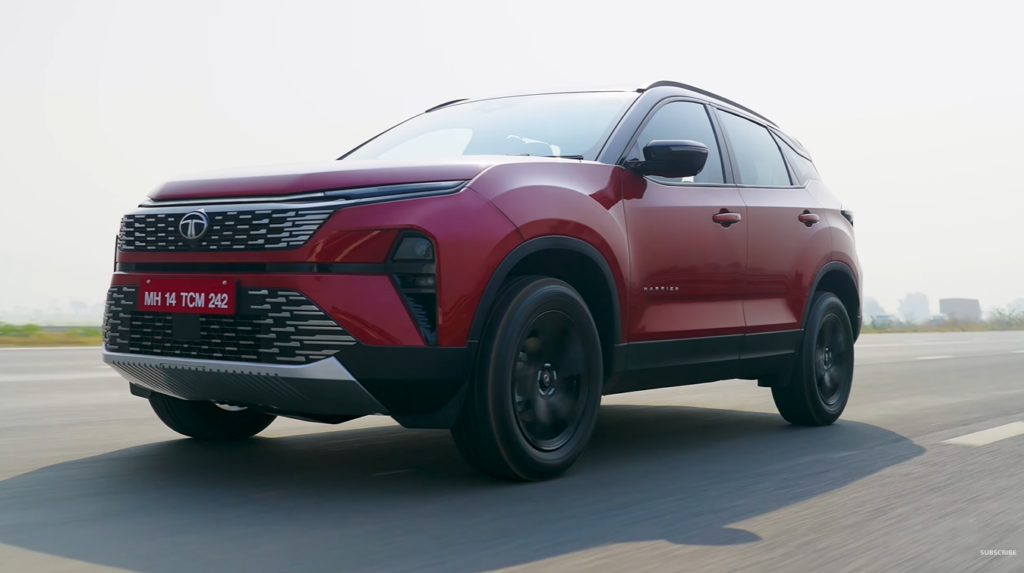
A new color option is available—a different shade/tint than what we’ve seen before. It’s subtle but refreshes the lineup.
360° Camera Washers
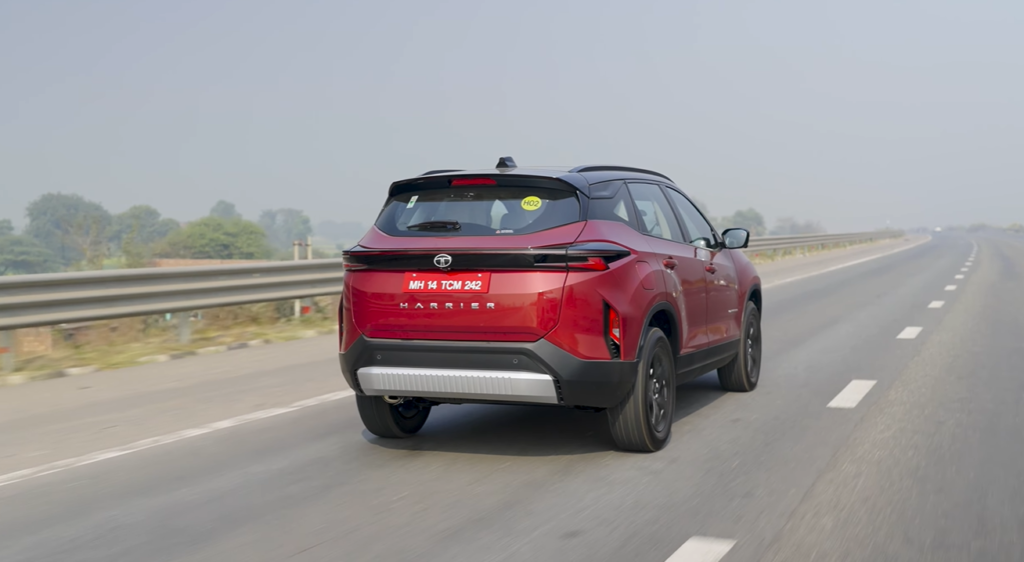
The Problem: 360° cameras attract dirt and dust like magnets. In India, where dusty roads are the norm, this becomes a significant issue.
The Solution: Front and rear camera washers have been integrated. However, there’s no dedicated button—when you activate the front windshield washer, it simultaneously washes the front camera. Same applies to the rear.
Effectiveness: This is a practical addition that addresses a real-world pain point.
Wheels & Tires
- Size: 18-inch wheels (same as before)
- Section: 235/60 R18
- Spare Wheel: Also 235 section (good) but 16-inch, mounted underneath (not full-size)
Exterior Design Philosophy
No major visual changes outside. The Harrier Petrol looks identical to its diesel sibling, with the exception of minor badging differences.
Interior Updates: The Good, The Bad, and The Glitchy
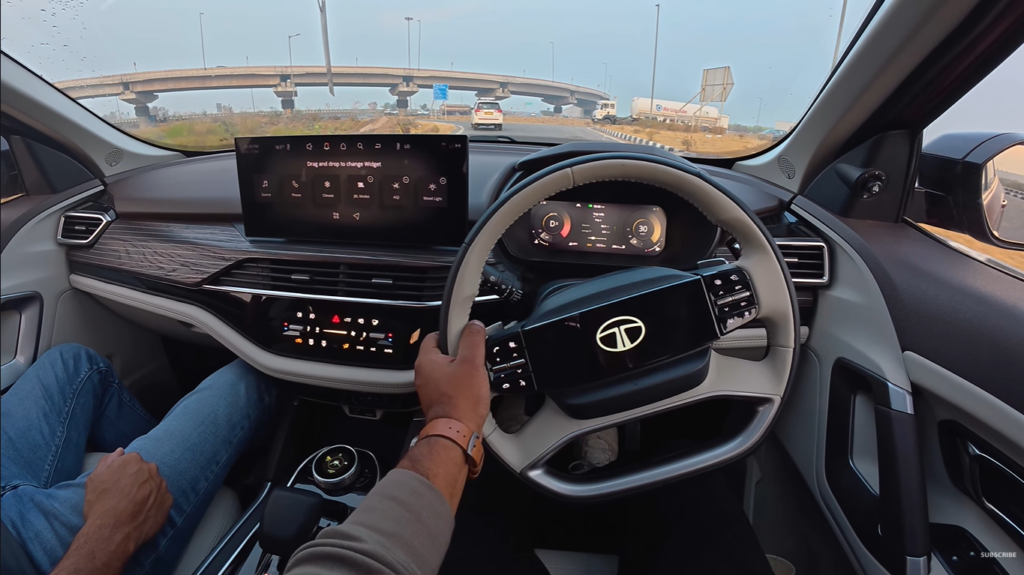
The 14-Inch Samsung OLED Display
Screen Size: 14 inches (remember when 14-inch TVs were a thing?)
Technology: Samsung OLED panel providing excellent clarity
Brightness: Adequate but could be brighter, especially in direct sunlight
Placement: Doesn’t intrude into your vision—well-positioned
Responsiveness: Generally smooth, though occasional slight lag was noticed
The Arms Race: Brands are competing for the largest screens. We joke that one day we’ll see 36-inch displays, but 14 inches is currently competitive.
JBL Audio System
Tata continues to excel in audio tuning. The JBL system with multiple sound modes delivers fantastic audio quality. In terms of music experience, speaker quality, and tuning, Tata is arguably the best in the business right now.
Digital IRVM (Interior Rear-View Mirror)
The Technology: Borrowed from the Harrier EV, this system uses front and rear cameras to provide a digital view.
Day Performance: Decent quality with some zoom and view angle adjustment capabilities
Night Performance: This is where it fails. The quality in low-light conditions is extremely poor. You’re better off trusting the traditional IRVM and OE-RVMs.
Dash Cam Function: Both cameras record footage and can capture snapshots. Whatever the camera sees is recorded.
The Verdict: Interesting technology but not reliable enough to replace traditional mirrors, especially at night.
Sliding Armrest
A new feature—the armrest slides forward and backward. Given the width of the Harrier, this allows two people to comfortably use the armrest simultaneously. Small detail, big improvement in daily usability.
The ORVM Memory Function Disaster (Safety Hazard Alert)
How It Should Work
The memory function is supposed to:
- Save your seat position
- Save your ORVM positions
- Return to these positions when you press Memory 1, 2, or 3
Additionally, when you shift to reverse, the ORVM should tilt downward to help with parking, then return to the saved position when you shift back to drive.
The Reality: Inconsistent and Dangerous
What Actually Happens:
During testing, the ORVM behavior was erratic and inconsistent:
- Reverse Mode: ORVM tilts down (correct)
- Back to Drive Mode: Sometimes returns to the correct position, sometimes doesn’t
- After restarting the Car: it sometimes returns to the memory position, sometimes goes to completely different angles
- Multiple Attempts: Behavior varies—sometimes it works, sometimes it doesn’t
The Safety Concern:
On one morning drive, after reversing, the ORVM wouldn’t return to the correct position despite:
- Shifting back to drive
- Restarting the vehicle
- Pressing the memory button multiple times
The mirror stayed in the tilted parking position, creating a blind spot while driving. Only after multiple attempts did it finally correct itself.
Why This Is Serious:
This isn’t a touchscreen glitch or minor annoyance. This is a safety hazard. Tata Motors, a company that emphasizes safety, needs to fix this immediately. Unreliable mirrors are unacceptable in any vehicle, let alone one marketed on safety credentials.
Steering Adjustment
- Tilt & Telescopic: Standard adjustable steering
- Quality: Curvv’s steering adjustment feels slightly smoother and better weighted (subjective observation)
Other Interior Features & Quality Control Issues
USB-C Charging Ports
Good News: 65W Type-C charging ports throughout the cabin—front and rear
Bad News (Manufacturing Glitch): Some units have labels showing “45W” despite being 65W chargers. This is a typical Tata manufacturing inconsistency that needs sorting.
Paddle Shifters: Hit or Miss
The Problem: Paddle shifter functionality is inconsistent across units.
Experience:
- In a previous Curvv test, paddle shifters didn’t work at all
- In this Harrier Petrol unit, they worked but were slightly slow
- In a companion unit (driven by the navigator), paddle shifters weren’t working at all
The Pattern: This suggests quality control issues that need addressing.
Rear Space
No changes compared to the diesel Harrier. Space remains generous and family-friendly.
Build Quality Observations
The cabin feels solid with good sound insulation. However, the various electronic glitches and inconsistencies suggest that while the hardware is good, the software and quality control need work.
Ride Quality & Handling: A Pleasant Surprise
Ride Comfort
Compared to Curvv: The Harrier Petrol actually rides better than the Curvv, despite (or perhaps because of) having 18-inch wheels versus the Curvv’s 19-inch setup.
Road Conditions: The test route included typical Delhi-NCR roads (Faridabad area) with potholes and uneven surfaces.
Curvv Observation: The Safari on 19-inch wheels exhibited the typical Hyundai-like “thud” noise over bad roads that we usually criticize. Surprisingly, this was less noticeable on the Harrier’s 18-inch setup.
Overall Assessment: Genuinely comfortable for both driver and passengers. The suspension absorbs road irregularities well without excessive body roll.
Handling Characteristics
Body Roll: Interestingly, body roll feels less pronounced than in the Curvv, despite the Curvv having a newer chassis design that should theoretically be better.
Lane Changes: Quick lane changes don’t unsettle the vehicle. It feels planted and confident for such a heavy SUV.
Driver Confidence: The Harrier inspires confidence through corners and highway speeds.
Passenger Comfort: According to the navigator (passenger perspective): “It feels like being a driver without the steering wheel”—meaning passengers experience minimal discomfort.
The Visibility Issue: Thick A-Pillars
The thick A-pillars continue to create blind spots. This is an inherent design characteristic of the Harrier/Safari platform that hasn’t changed.
Fuel Economy: The Reality Check
The Claimed Numbers
Tata claims fuel economy figures in the range of 25+ kmpl (likely ARAI test cycle numbers).
The Reality
A Quirk: The instrument cluster won’t display fuel economy below 8 kmpl. At 82 km showing 8 kmpl, at 88 km showing 8 kmpl, even at 41 km showing 8 kmpl. The car will keep you happy by never showing below 8 kmpl on the display.
Real-World Expectations:
City Driving: 8-10 kmpl
Highway Driving: 14-16 kmpl
The Truth About 1.5L Turbos: No 1.5-liter turbocharged engine has ever delivered the claimed 25+ kmpl figures in real-world driving. Physics doesn’t work that way, especially when moving 1,800 kg.
Who Should Care About Fuel Economy?
If you’re considering this vehicle:
- You drive short distances mainly in the city
- You’re concerned about diesel’s future (emission norms, regulations)
- You want a petrol SUV for peace of mind
- Fuel economy isn’t your primary concern
If fuel economy matters most: This isn’t the vehicle for you. Look at diesel options or smaller, lighter vehicles.
Safari Petrol: The Same Story
The Safari also gets this same 1.5-liter engine with almost identical characteristics. The main differences:
- Safari: Comes with 19-inch wheels
- Harrier: Comes with 18-inch wheels (better ride quality)
- Dynamics: Nearly identical performance and feel
The question: Will buyers upgrade from Curvv to Harrier, or will the Curvv’s popularity cannibalize Harrier Petrol sales?
The Software & Electronics Situation
What Works Well
✅ Main touchscreen responsiveness (mostly)
✅ JBL audio system integration
✅ Basic ADAS features
✅ Lane departure warning
✅ Memory seat function (when it works)
What Needs Work
❌ ORVM memory consistency (critical issue)
❌ Digital IRVM low-light performance
❌ Paddle shifter reliability across units
❌ Manufacturing label inconsistencies
❌ Overall software polish
The Pattern
Tata’s hardware is solid. The new electronic architecture shows promise. But the execution is inconsistent—some units work perfectly, others have multiple issues. This unit was actually the “most sorted” Harrier Petrol encountered, yet it still had ORVM issues.
Different people are experiencing different problems with different units, suggesting quality control rather than fundamental design flaws.
Comparison: Harrier Petrol vs Curvv
Where Harrier Wins
Ride Quality: Better absorption of road irregularities
Body Roll: Less pronounced
Cabin Space: Significantly more spacious
Premium Feel: More upmarket interior
Sound: Slightly better exhaust note
Where Curvv Wins
Fuel Efficiency: Lighter weight helps slightly
Modern Design: Newer, fresher styling
Handling: Sharper, more agile
Steering: Slightly better weighted and smoother adjustment
Price: Lower entry point
The Cannibalization Question
Will Curvv buyers upgrade to Harrier Petrol? It depends on:
- Whether you need the extra space
- If you prefer the Harrier’s more traditional SUV styling
- Whether the price difference makes sense
- Your priority between handling (Curvv) and comfort (Harrier)
Who Should Buy the 2026 Tata Harrier Petrol?
Perfect For:
Urban Commuters
- Short daily drives
- City-focused usage
- Parking in residential areas
Diesel-Concerned Buyers
- Worried about future diesel regulations
- Want to avoid diesel maintenance costs
- Planning long-term ownership beyond emission norm changes
Space Seekers
- Need genuine SUV space
- Regular family trips
- Occasional highway runs (not daily)
Tata Loyalists
- Trust the brand
- Value safety features
- Prefer Tata’s after-sales network
Not Recommended For:
Highway Warriors
- Daily long-distance drivers
- Regular highway cruising above 120 km/h
- Maximum power seekers
Fuel Economy Focused
- Calculating every rupee per kilometer
- High monthly mileage (2,000+ km)
- Commercial use
Performance Enthusiasts
- Want immediate throttle response
- Zero turbo lag tolerance
- Spirited driving preferences
Tech Perfectionists
- Zero tolerance for software glitches
- Want flawless electronic integration
- Demand perfect quality control
The Price Question
Expected Pricing
While official prices aren’t announced, expect:
Estimated Range: ₹15-18 lakh (ex-showroom)
Variant-wise expectations:
- Base variant: ₹15-15.5 lakh
- Mid variants: ₹16-17 lakh
- Top variant: ₹17.5-18 lakh
Value Proposition
Depends entirely on pricing strategy:
If priced aggressively (₹15-16 lakh):
Excellent value for space and features
If priced near diesel variants:
Questionable value given fuel economy compromise
Compared to Curvv:
Needs to justify ₹2-3 lakh premium with space and prestige
The Final Verdict: Surprisingly Sensible
The Bottom Line
The 2026 Tata Harrier Petrol is a good attempt that defies expectations. A 1.5-liter engine in an 1,800 kg SUV sounds absurd on paper, but Tata and Aisin have made it work through clever tuning and torque converter optimization.
What Makes It Work
Excellent Torque Converter Tuning: Aisin’s collaboration shows its worth
Smart Power Delivery: Peak torque at usable RPMs (1,650-1,700)
Ride Quality: Comfortable and composed
Cabin Refinement: Good insulation and premium feel
Space: Genuine SUV practicality
What Holds It Back
Software Glitches: Inconsistent electronics across units
ORVM Memory: Serious safety concern that needs immediate fixing
Fuel Economy: Reality doesn’t match marketing claims
Quality Control: Too many unit-to-unit variations
The Recommendation
Buy if:
- You drive primarily in the city (under 50 km daily)
- Diesel’s future concerns you
- You need SUV space and don’t want diesel
- You trust Tata and value safety features
- Pricing comes in aggressively
Skip if:
- You’re a high-mileage driver (100+ km daily)
- Fuel economy is a top priority
- You need consistent, flawless electronics
- You want the ultimate power and performance
- You’ll regret every rupee spent on fuel
Future Implications
These same features and changes will eventually make their way to the diesel variants. What’s exclusive to petrol now won’t remain so for long.
The real question: Will buyers choose this over the Curvv, which has the same engine but better fuel economy? Or will they stick with proven diesel variants?
Surprisingly, yes—for city and occasional highway use. Not ideal for high-speed highway cruising or fully loaded mountain drives.
Diesel if you drive 50+ km daily or do regular highway trips. Petrol if you’re mainly urban with under 1,000 km monthly usage.
The Honest Final Word
The Tata Harrier Petrol is sensible for specific buyers, not everyone. It’s an engineering achievement to make a 1.5L engine work in this heavy SUV without feeling lethargic. The Aisin torque converter tuning deserves applause.
But let’s be honest:
- It won’t match diesel’s efficiency
- Software still needs polishing
- Quality control is inconsistent
- Fuel economy claims are fantasy
If you:
- Drive mostly in the city
- Want to avoid diesel
- Value space and safety
- Can live with 8-10 kmpl city mileage
Then yes, this makes sense.
If you:
- Drive long distances regularly
- Prioritize fuel economy
- Want flawless electronics
- Need maximum power
Then no, stick with diesel or look elsewhere.
The Harrier Petrol won’t be for everyone. But for the right buyer, in the right use case, at the right price—it’s surprisingly good.
Would the Harrier Petrol work for you? Let us know in the comments! And if you’re considering this vs the Curvv or diesel Harrier, tell us what matters most to you.
Stay tuned to My Pit Shop for more honest, no-BS automotive reviews that tell you what manufacturers won’t!