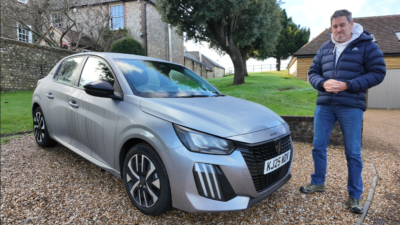
In a world of £60,000 SUVs, million-pound hypercars, and soulless electric crossovers, the humble Peugeot 208 Style is a revelation. With just 100 horsepower, a manual gearbox, and a proper handbrake, this £20,000 pocket rocket proves that driving joy doesn’t require a six-figure price tag. Here’s why this brilliantly basic hatchback might be the most important car on sale today.
At a Glance: Back to Basics Brilliance
Price: £20,000
Engine: 1.2L 3-cylinder petrol (100 bhp, 151 Nm)
Transmission: 6-speed manual
0-62 mph: 10.1 seconds
Combined MPG: 50 mpg
Weight: Just over 1,000 kg
Wheels: 16-inch steel wheels with plastic covers
Tires: Michelin e.Primacy
What You Get
✅ Manual gearbox with proper clutch pedal
✅ Handbrake (yes, a real pull-up handbrake!)
✅ Character-filled 3-cylinder petrol engine
✅ Lightweight construction
✅ Proper buttons and simple controls
✅ 50 mpg fuel economy
✅ Five doors
✅ Fantastic styling
What You Don’t Get
❌ Sport mode (doesn’t need one)
❌ Fancy infotainment system
❌ Electronic parking brake
❌ Massive wheels
❌ Complicated drive modes
❌ Adult-friendly rear seat space
The Revelation: What We’ve Forgotten About Driving
When Basic Became Surprising
Here’s the sad reality: Things that were completely normal on cars 10-15 years ago are now surprising luxuries. Getting into the Peugeot 208 and discovering:
- A manual gearbox – Remember when this was standard?
- A clutch pedal – Three pedals used to be the norm
- A proper handbrake – Not an electronic button, an actual handbrake
- A petrol engine – With character and a proper sound
- Simple controls – Buttons that do one thing
…These should be standard features, not pleasant surprises in 2024.
The Context: £20k vs £230k
Let’s put this in perspective. This year alone, the reviewer has driven:
- Cars costing £40,000-60,000 (common price range now)
- Performance cars exceeding £100,000
- Two cars costing over £230,000
- Two cars valued at over £1 million
Yet the £20,000 Peugeot 208 Style delivers more pure driving joy than most of them. That’s not hyperbole—it’s a fundamental truth about what makes driving special.
Design: Character Returns to the Peugeot Lineup
Exterior Styling – A Modern Classic
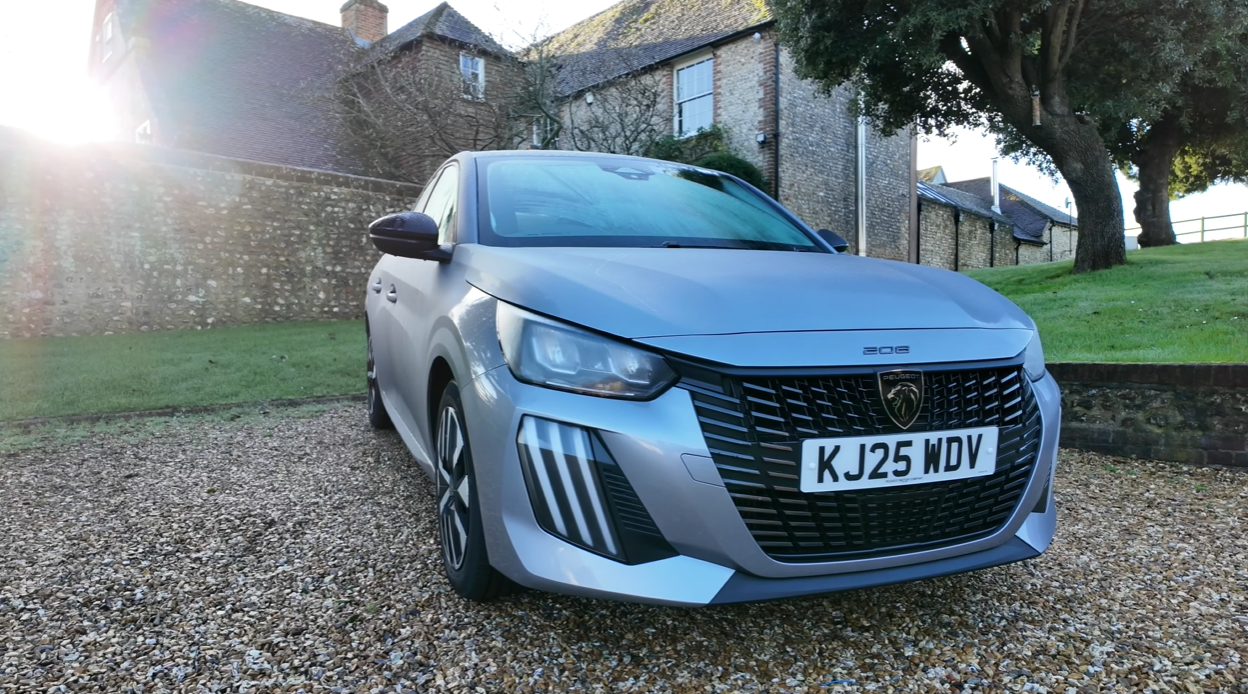
The Front End: Peugeot’s recent design language really shines on the 208. While the new badge isn’t everyone’s cup of tea (it does look a bit Proton-like), the overall package works brilliantly:
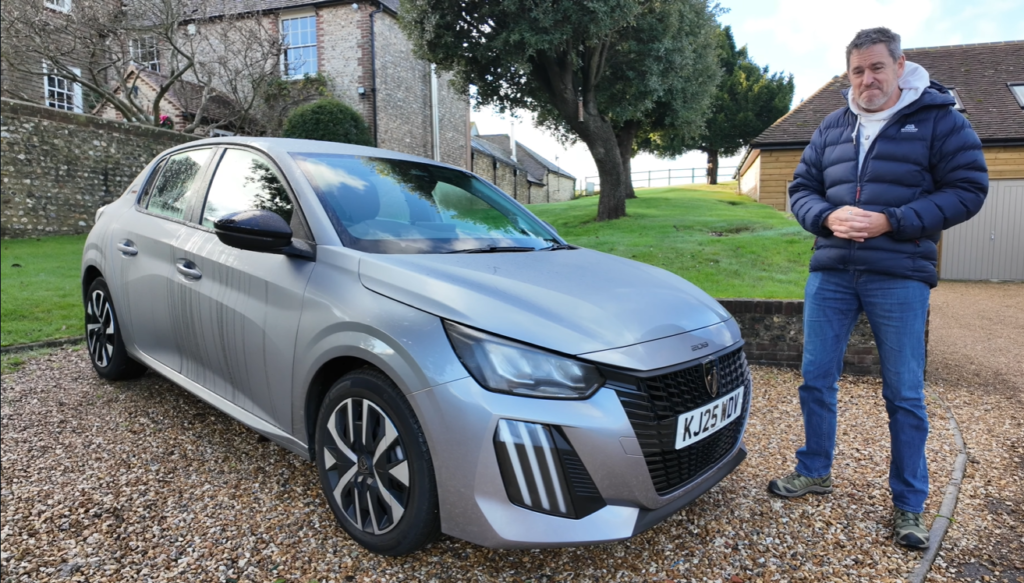
- Strong character and presence
- Distinctive light design
- Attractive grille treatment
- Modern yet purposeful appearance
Historical Context: The 208’s lineage traces back through:
- 207 (forgettable)
- 206 (solid but uninspiring)
- 205 (the legendary icon)
The 205—particularly the GTI variants and the Group B T16 rally car—was epic. While this 208 isn’t trying to be a Group B monster, it has regained the character that was lost for years.
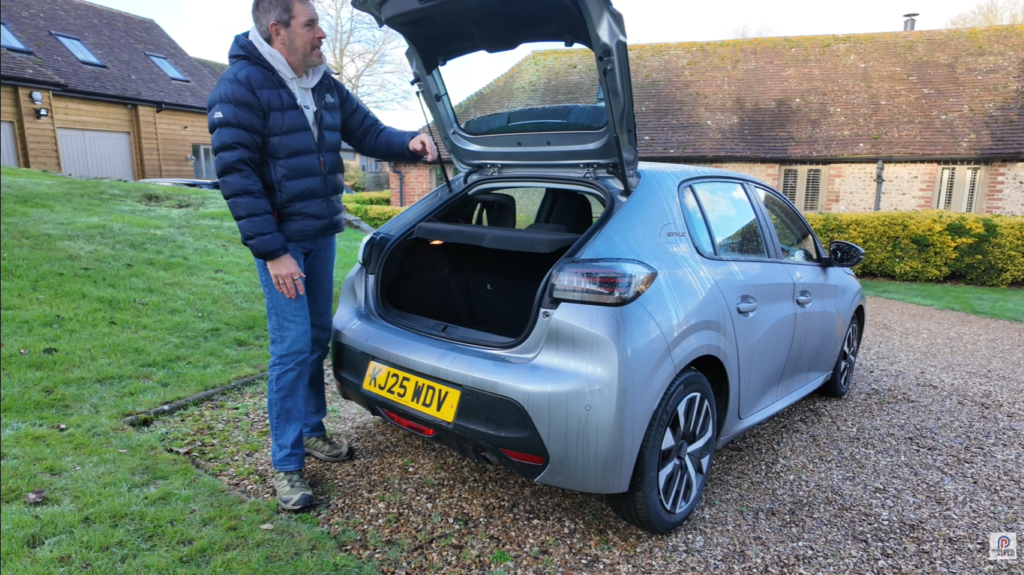
The Rear End: Continuing the strong styling:
- Large bar across the back with Peugeot lettering
- Attractive font and graphics
- Clean, purposeful design
- Proportionate to the car’s compact size
Wheels & Tires: Refreshingly Honest
16-Inch Steel Wheels with Plastic Covers
In an era where B-segment cars come with 20-21 inch alloys, the 208’s honest steel wheels are refreshing:
The Reality:
- Steel wheels with plastic hub caps
- 16-inch diameter (when 20s are common)
- Shod with Michelin e.Primacy tires for efficiency
- No pretense of being something it’s not
Why This Matters: Small, lightweight cars like this are super efficient. The combined cycle MPG of 50 can probably be beaten with careful driving. The modest wheel size and efficient tires are part of what makes this possible.
Size Reality Check
This is a small car. Boot space isn’t massive, but it’s:
- Comparable to a Mini JCW
- Adequate for the segment
- Perfect for nipping to the shops
- Not your big family estate car (but could be if needed)
Interior: Brilliantly Basic (Mostly)
What Works: The Good Stuff
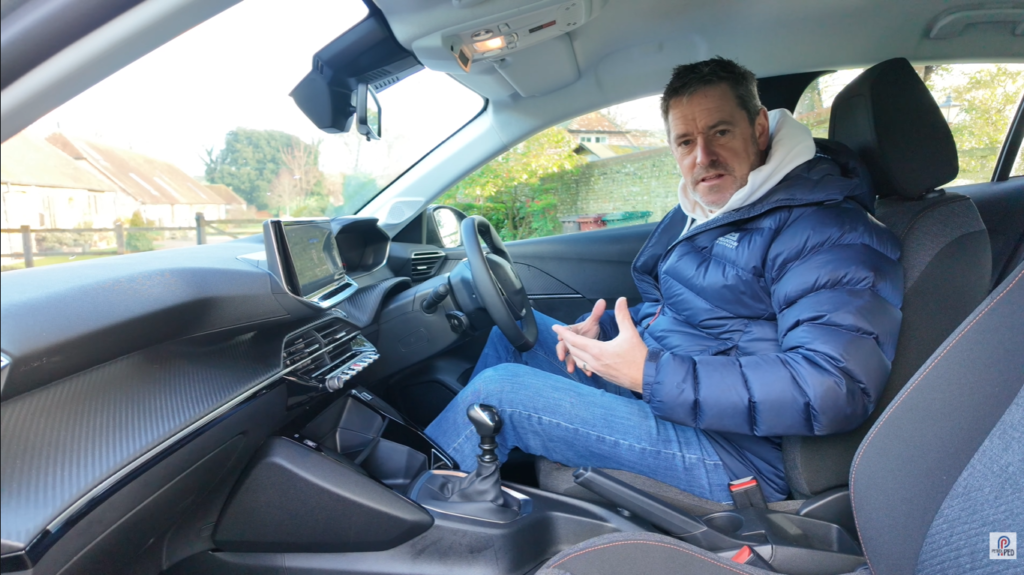
Seating:
- Cloth seats with almost denim-like texture
- Warm in winter (unlike cold leather)
- Comfortable and supportive
- Really nice to sit in
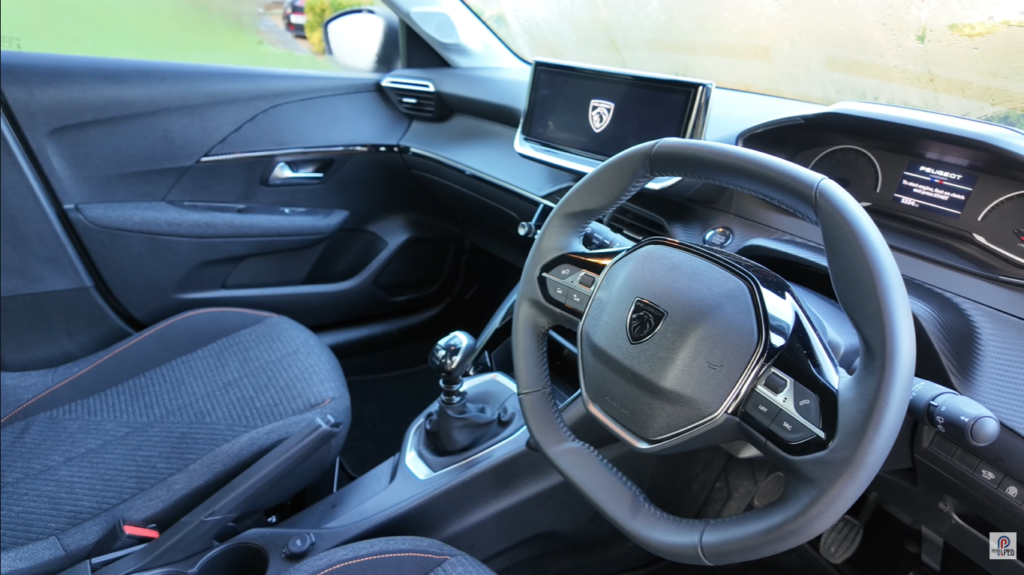
Materials:
- Faux carbon fiber effect details
- Minimal glossy piano black (thank goodness)
- Some tasteful plastic trim
- Feels appropriately specced for price
Controls:
- 6-speed manual gearbox (proper shifting!)
- Real handbrake (handbrake turns possible!)
- Real physical buttons
- Most functions through infotainment (not the best)
The Temperature Controls – Peak Simplicity:
This is brilliant: The 208 doesn’t show temperature in °C or °F. It has:
- A hot/cold slider
- Plus button for hotter
- Minus button for colder
- You adjust until it feels right
No precise temperature setting—just pure, simple functionality. This is genuinely refreshing.
Instrument Cluster:
- Speedo on the left (sweeping one way)
- Rev counter on the right (sweeping opposite way)
- Reminiscent of Aston Martin’s layout
- Actual analogue gauges with character
The Infotainment: Not Great
The Reality:
- System isn’t particularly good
- Smartphone pairing issues
- Not the best interface
- But honestly, who cares?
This isn’t a tech showcase—it’s a driving machine. The infotainment shortcomings are forgivable when everything else is so right.
The One Major Flaw: That Steering Wheel
The Problem:
This is potentially a deal-breaker for many. The Peugeot i-Cockpit steering wheel design is controversial:
What They’re Trying: You’re supposed to look over the top of the steering wheel at the instruments, not through it.
Why It Fails:
- If the wheel is low enough to see over it, your knees foul
- If it’s high enough for knee room, you can’t see the speedo
- Hands at quarter-to-three position cover instruments
- The small rim doesn’t feel right
- It compromises the driving position
Why This Matters: The steering wheel is your primary interface with the car. It’s the first thing you touch, how you feel the car respond, and it’s in your hands constantly. Getting this wrong affects the entire driving experience.
The Verdict: This almost ruins what is otherwise a brilliant package. For tall drivers, especially, the compromise is frustrating.
Rear Seat Reality: Compact Means Compact
The Back Seat Truth
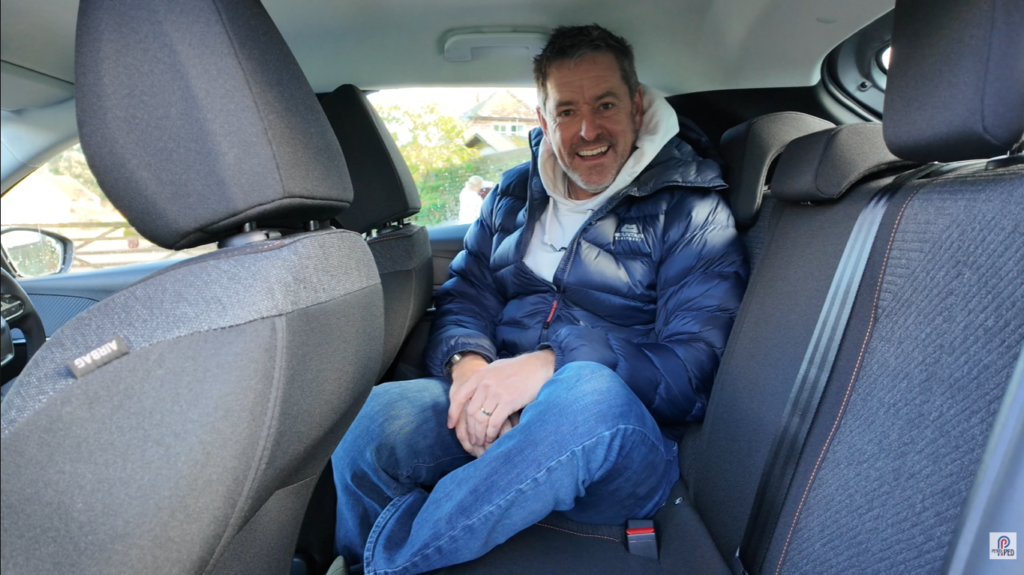
Adult Space: Minimal. Actually, less than minimal—it’s genuinely cramped for adults.
The Experience:
- Knees hit the front seats
- Headroom is tight
- Getting in requires contortions
- Getting out is “too emotional to film”
Historical Context: This is what it used to be like. Remember getting in the back of your mate’s car? It was never a luxurious saloon. You squeezed in and dealt with it.
The Upside:
- It’s got five doors (rear access exists)
- Kids will fit fine
- Better than a two-door with drop-down seats
- Accurately sized for the segment
Engine & Performance: Character Over Speed
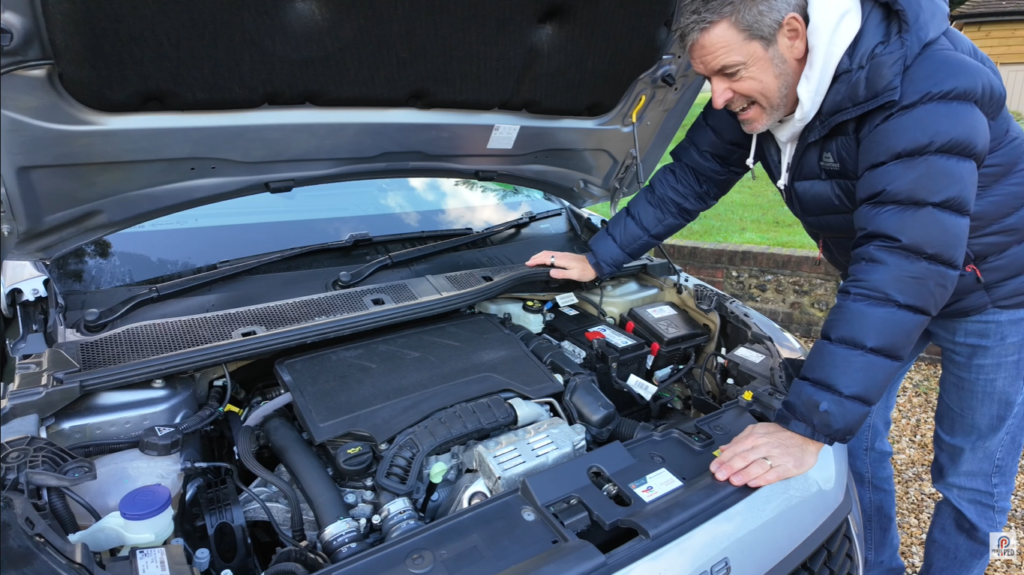
The Heart: 1.2L 3-Cylinder Petrol
Specifications:
- Displacement: 1,199cc inline-3
- Power: 101 bhp
- Torque: 151 Nm
- Transmission: 6-speed manual (front-wheel drive)
- 0-62 mph: 10.1 seconds
Not Fast, But Full of Character
The Sound: This 3-cylinder petrol engine sounds fantastic. It has:
- A distinctive thrum
- Character reminiscent of a 5-cylinder (like a baby TT RS)
- A proper engine note you can enjoy
- Genuine personality
The Performance Philosophy:
With just 100 bhp and weighing just over 1,000 kg, this isn’t about straight-line speed. It’s about using every bit of performance.
The Joy:
- You have to rev it hard to get anywhere
- You’re working the gearbox constantly
- You’re exploiting every horsepower
- You can drive flat-out and still be at legal speeds
Real-World Example: On a favorite back road where a 911 GT3 or Ferrari 296 would be doing 120+ mph without trying, the 208 is doing just over 60 mph flat-out. And it feels absolutely brilliant.
Why This Matters: The Modern Performance Problem
The Issue with Modern Performance Cars:
- 400-800 horsepower
- Speeds become illegal instantly
- Can’t exploit performance on public roads
- Expensive consequences for mistakes
The 208 Solution:
- Rev to redline in every gear
- Feel like you’re pushing hard
- Stay at or below speed limits
- Zero anxiety, maximum fun
Driving Experience: Pure, Unfiltered Joy
Setting Up: No Sport Mode Needed
The Process:
- Turn key (or press button)
- Drive
That’s it. No sport mode selection. No drive mode menu. Cars didn’t used to have these—they just had one mode: go.
On the Road: Surprising Competence
Initial Observations:
Shortcomings Noticed:
- Infotainment isn’t great (couldn’t pair smartphone)
- Driving position compromised by steering wheel
- Clutch footrest fouls the clutch pedal occasionally
- Gear knob is horrible (but forgivable)
Positive Surprises:
- Quite roomy for the driver
- Nice ride quality
- Doesn’t feel fragile or tinny
- Quite robust feeling despite light weight
- Competent road manners
Pushing Hard: Where Magic Happens
The Experience:
When you take the 208 to proper driving roads and give it some stick, everything clicks:
Handling:
- Surprisingly composed
- Good body control
- Responsive steering (despite the wheel design)
- Confidence-inspiring
Braking:
- Disc brakes all around
- Good pedal feel
- Adequate stopping power for the performance
- Progressive and predictable
Engine Character:
- Sounds fantastic when revved
- Rewards high RPM
- Smooth power delivery
- Engaging to extract performance
The Gearbox:
- Decent shift action
- No auto-blip (you heel-and-toe yourself)
- Engaging to use
- Proper mechanical connection
The Smile Factor
The Truth: Everywhere this car was driven, it put a massive smile on the driver’s face. It’s just:
- Joyous
- Engaging
- Fun
- Brilliant
The Comparison: This £20,000 Peugeot 208 delivers the same driving pleasure as:
- The latest 911
- The latest Ferrari from Maranello
- Cars costing 5-10x as much
That’s not faint praise—it’s the highest compliment possible.
Fuel Economy: Efficiency as Standard
The Numbers
Official Combined Cycle: 50 mpg
Real-World Expectations:
- Could probably exceed 50 mpg with careful driving
- Lightweight helps efficiency
- Small engine is frugal
- Efficient tires contribute
The Benefit: Running costs remain low even with enthusiastic driving. The power-to-weight ratio means you’re frequently at high RPM, but the small displacement keeps consumption reasonable.
The Forgotten Joy: Simple, Lightweight, Fun
What We’ve Lost
Modern cars have become:
- Heavy (2,000+ kg is common)
- Complicated (dozens of drive modes)
- Expensive (£30-60k is “normal”)
- Soulless (too much power, not enough engagement)
What the 208 Reminds Us
Driving Joy Requires:
- Manual gearbox for engagement
- Light weight for agility
- Modest power to exploit fully
- Simple controls
- Mechanical connection
- Character and personality
It Doesn’t Require:
- 500 horsepower
- £100,000 price tag
- Electronic everything
- Track-ready performance
- Massive wheels
- Complex technology
The Learning Experience Context
Personal History: The reviewer learned to drive in the Peugeot 205 (though a diesel version). His father had a 309, particularly the GTI Goodwood edition—his favorite old-school Peugeot.
The 309 GTI Goodwood Edition:
- Released long before Goodwood became personally significant
- Coolest Peugeot in his opinion
- Would love to film one
- Represents peak simple performance
The Point: Those early driving experiences in modest, simple cars created a lifelong love of driving. The 208 rekindles that same feeling.
Competition Context: What Else for £20k?
The Market Reality
Most New Cars Cost:
- £30,000+ for “reasonably priced”
- £40-60,000 commonly
- £100,000+ for performance cars
The 208’s Position: At £20,000, it’s genuinely affordable for a new car in today’s market.
Used Market Consideration: In 12-18 months, these could be available for around £15,000 used, making them even more accessible.
What You’re Actually Comparing
At £20k New:
- Base spec crossovers (joyless)
- Entry-level EVs (limited range, characterless)
- Mainstream hatchbacks (often automatic, heavy)
The 208’s Advantage:
- Manual gearbox (most competitors are auto)
- Light weight (rivals are heavier)
- Petrol engine with character (vs CVTs or EVs)
- Proper handbrake (vs electronic buttons)
- Simple controls (vs touchscreen everything)
Who Should Buy the Peugeot 208?
Perfect For:
✅ Driving Enthusiasts on a Budget
- Want engagement over outright speed
- Appreciate manual gearboxes
- Value light weight and simplicity
✅ First-Time New Car Buyers
- Affordable entry point
- Low running costs
- Easy to drive and park
✅ City Dwellers
- Compact dimensions
- Efficient around town
- Easy to maneuver
✅ Solo or Couple Drivers
- Rear seats not critical
- Perfect for two people
- Small boot adequate for most needs
✅ Former Hot Hatch Fans
- Remember what made cars fun
- Don’t need 300 bhp
- Appreciate character over speed
✅ Eco-Conscious on a Budget
- 50 mpg is genuinely efficient
- Don’t want/can’t afford EV
- Want low running costs
Not Ideal For:
❌ Families Needing Space
- Rear seat space very limited for adults
- Boot isn’t huge
- Better suited as second car
❌ Tall Drivers Particular About Position
- Steering wheel design may be deal-breaker
- Driving position compromises possible
❌ Tech Enthusiasts
- Infotainment is basic
- No advanced driver aids
- Simple feature set
❌ Highway Cruisers
- 100 bhp means working hard at speed
- Not the most relaxing motorway car
- Better alternatives for long-distance comfort
❌ Speed Seekers
- 10.1 seconds to 62 mph
- Top speed not impressive
- Not about straight-line performance
Value Proposition: Worth Every Penny
Price Breakdown
New: £20,000
Used (12-18 months): ~£15,000 (estimated)
What You Get for Your Money
The Tangibles:
- New car warranty
- 50 mpg economy
- Low insurance group
- Affordable servicing
- Good build quality
- Five doors
- Decent equipment level
The Intangibles:
- Pure driving joy
- Manual gearbox engagement
- Light weight responsiveness
- Engine character
- Simple ownership experience
- Smile-per-mile value
The Reality Check
“But £20,000 is Still a Lot”
Yes, for most people, £20,000 is significant money. But:
- It’s remarkably affordable for a new car in 2024
- Used examples will depreciate to £15k quickly
- Running costs are low (fuel, insurance, maintenance)
- You’re getting genuine fun, not just transportation
The Alternative: Spend £40-60k on a joyless crossover SUV with electronic everything, or spend £20k on something that makes you smile every time you drive it?
The Bigger Picture: Why This Matters
The State of the Industry
The Problem:
- Most new cars are expensive, heavy, and complicated
- EVs dominate conversation but lack character (for now)
- Simple, fun, affordable cars are disappearing
- Driving engagement is being engineered out
The 208’s Importance: It proves you don’t need:
- Six-figure budgets
- 500 horsepower
- Complex technology
- Massive size
You Just Need:
- Manual gearbox
- Light weight
- Modest power
- Good chassis
- Character
The Hope for the Future
The Takeaway: We shouldn’t get too depressed about the automotive future. There are fun, lightweight, nicely-designed cars out there. The Peugeot 208 Style is proof.
The Challenge: Will manufacturers continue making cars like this? Or will regulations, market demands, and electrification kill off the simple, engaging, affordable hatchback?
Final Verdict: An Absolute Peach
Rating: 5/5 Stars (despite the steering wheel)
The Summary
The Peugeot 208 Style is everything right about affordable motoring:
- £20,000 price tag
- 100 bhp of characterful 3-cylinder power
- Manual gearbox with proper handbrake
- Just over 1,000 kg of lightweight fun
- 50 mpg efficiency
- Stunning styling
- Pure driving joy
The One Flaw: The i-Cockpit steering wheel design is genuinely frustrating and could be a deal-breaker for some.
The Bottom Line: If you can live with (or adapt to) the steering wheel, this is one of the most enjoyable new cars you can buy at any price. It delivers the same driving pleasure as cars costing 5-10x as much.
The Recommendation
Buy This If:
- You want driving engagement over speed
- You appreciate manual gearboxes
- You value simplicity and light weight
- You want to smile every time you drive
- You need an affordable, efficient, fun car
Skip This If:
- The steering wheel design is unforgivable
- You need proper adult rear seat space
- You want the latest tech and features
- You prioritize comfort over engagement
5 Reasons to Avoid the Peugeot 208
Top 10 Reasons to Buy Peugeot 208
The Final Word
In a year of driving million-pound hypercars, the humble £20,000 Peugeot 208 delivered equal joy. That tells you everything you need to know about what really matters in driving.
This isn’t just a good affordable car—it’s a reminder of why we fell in love with driving in the first place.
Have you driven the Peugeot 208? Does this remind you why you fell in love with driving? Let us know in the comments what you think of this back-to-basics approach to affordable motoring!
Stay tuned to My Pit Shop for more honest reviews that celebrate driving joy at every price point!