Introduction: The Biggest Update in 20 Years
Welcome to the most significant Scrambler update Triumph has ever delivered. After two decades of evolution, the 2026 Triumph Scrambler 900 represents a fundamental reimagining of what this iconic modern classic can be.
I recently attended the international press launch in California to ride the new 2026 Bonneville lineup, but this Scrambler 900 stood out as the most substantial update of the entire range. With changes to the way it looks, the chassis, and the technology package, Triumph has clearly repositioned this bike.
But here’s the million-dollar question: Does it actually make for a better bike, or did the original have it right?
After spending quality time on California roads testing every aspect of this motorcycle, I’m ready to give you my honest verdict. Let’s dive into everything that’s new, what’s stayed the same, and whether this evolution represents genuine progress or a compromise of the Scrambler’s soul.
What’s New for 2026: A Complete Transformation
The Visual Revolution
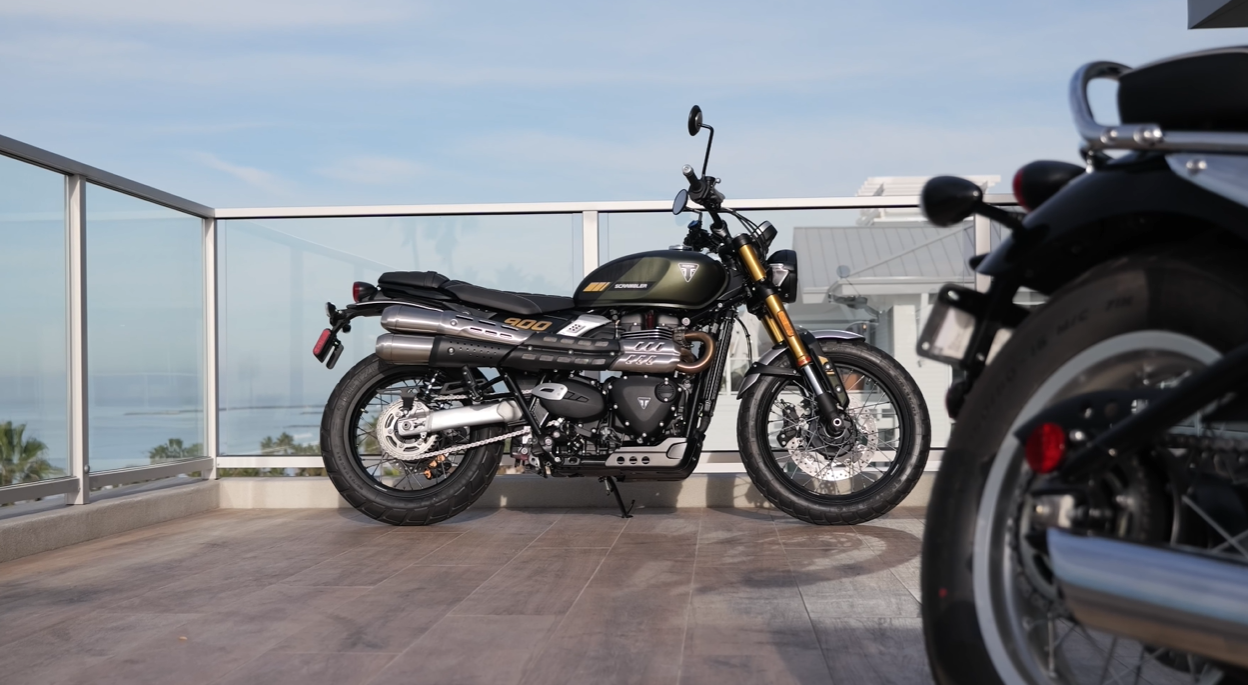
If you’re at all familiar with the previous generation Street Scrambler, you’ll immediately notice the visuals have been modernized quite significantly.
The old bike—formerly known as the Street Scrambler when first introduced—had a fairly traditional look, similar to the T100 but made slightly more robust to suit the Scrambler name. It was heritage-focused, retro-inspired, and conventionally styled.
The 2026 model? Completely different.
Modern Design Language
You’ll immediately see:
- Forward-leaning angles creating a more dynamic stance
- Less traditional, more contemporary overall aesthetic
- More graphical styling elements
- Upside-down forks (a major visual departure)
- Piggyback rear shocks giving it a Speed Twin-inspired look
This bike now sits at the more contemporary end of the Bonneville lineup, rather than the heritage-focused side.
My Take on the Styling
Whether this is good or bad really comes down to personal preference. I acknowledge that Triumph has to keep models fresh and visually interesting to stay competitive.
If you want a more heritage-inspired look, you could always get a T100, stick some semi-knobbly tires on it, add a high exhaust, and create something closer to previous-generation Scramblers.
But make no mistake: this is more than just a styling exercise.
Chassis & Suspension: The Real Engineering Story
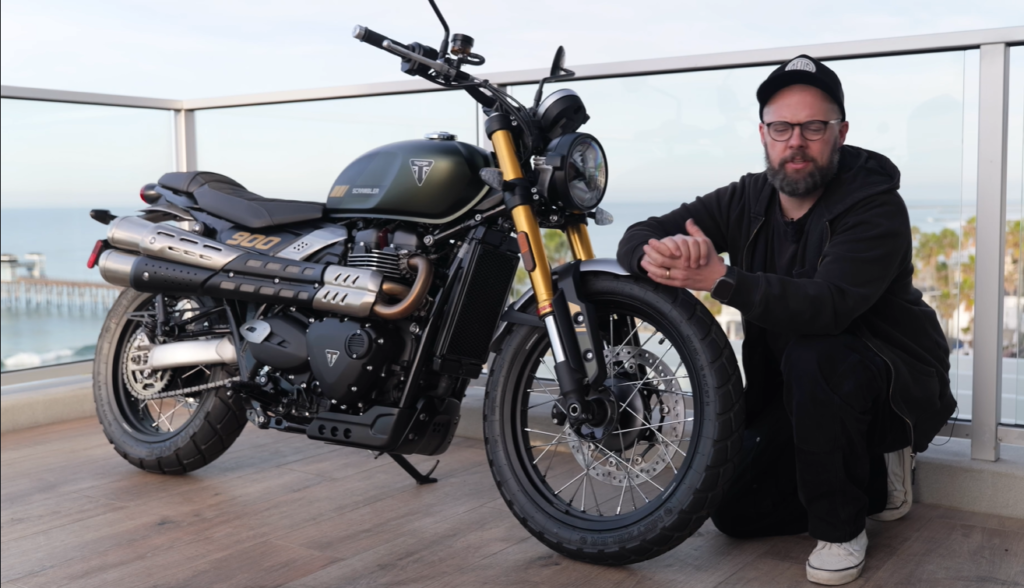
Upside-Down Forks: Function Over Form
The switch to USD (upside-down) forks isn’t just about looks—it delivers genuine performance benefits:
✅ Less unsprung mass (lighter components that move with the wheel)
✅ More rigid fork structure for better handling precision
✅ Improved suspension action and feedback
The previous right-way-up 41mm forks with rubber gaiters looked authentic and retro, but they were compromised by comparison.
Piggyback Rear Shocks: A Welcome Upgrade
The new piggyback reservoir shocks are a substantial improvement over the previous generation.
What I noticed immediately:
- More composed through corners and over bumps
- Less bouncy than the previous rear shocks (a known weak point)
- No sacrifice in ride quality or comfort—it’s actually better
The previous generation’s rear suspension was a bit too bouncy for spirited riding, but Triumph has absolutely nailed the balance this time.
Aluminum Everywhere: The Weight Reduction Program
Another major factor allowing the suspension to work more effectively is reduced unsprung mass throughout:
Aluminum Rims
The switch from steel to aluminum wire-spoke rims is huge. We’ve seen this upgrade across the Bonneville lineup recently:
- T120 got them a few years back
- Speed Master and Bobber received them for 2026
- Now the Scrambler 900 joins the club
Why it matters:
- Less unsprung mass = better suspension performance
- Less rotating mass = easier acceleration, deceleration, and direction changes
- Despite the big 19″ front wheel and semi-knobbly Metzeler Tourance tires, this bike feels light on its feet
Aluminum Swingarm
The rear swingarm is now cast aluminum instead of steel, further reducing weight and improving rigidity.
Net result: The 2026 Scrambler 900 weighs 487 pounds (221 kg) with a full 3.2-gallon fuel tank—a 5-pound reduction despite all the added technology.
Brakes: Finally Addressed
The Problem With the Previous Generation
Braking wasn’t exactly a strong point of the old Scrambler. While it had a Brembo-branded caliper, it was an old-fashioned axial-mount design that felt vague and required more lever pressure than ideal.
2026 Solution: Radial-Mount Four-Piston Caliper
Triumph has fitted a four-piston radially-mounted caliper up front (Triumph-branded, likely Brembo-manufactured).
Real-world difference:
- ✅ Firmer, tighter, more reassuring brake feel
- ✅ Better modulation for precise control
- ✅ Confidence-inspiring when riding quickly
- ✅ Meaningful improvement you feel instantly
If you’re riding quicker and need to scrub off speed rapidly, this upgrade is absolutely welcome. The brakes finally match the bike’s capabilities.
Lean-Sensitive ABS
Thanks to the new IMU (Inertial Measurement Unit), both ABS and traction control are now lean-sensitive. This means:
- The system knows your lean angle mid-corner
- It adjusts braking intervention to prevent washing out the front
- You get safety without compromising feel
You might think you’ll never need it, but if it saves you that one time when you lose traction mid-corner, you’ll be extremely grateful it’s there.
Technology Package: The Biggest Leap
Out With the Old
The previous generation featured:
- Single analog clock
- Small LCD display with limited functionality
- Basic switchgear
- Minimal electronic rider aids
In With the New: Speed Twin 900 Tech
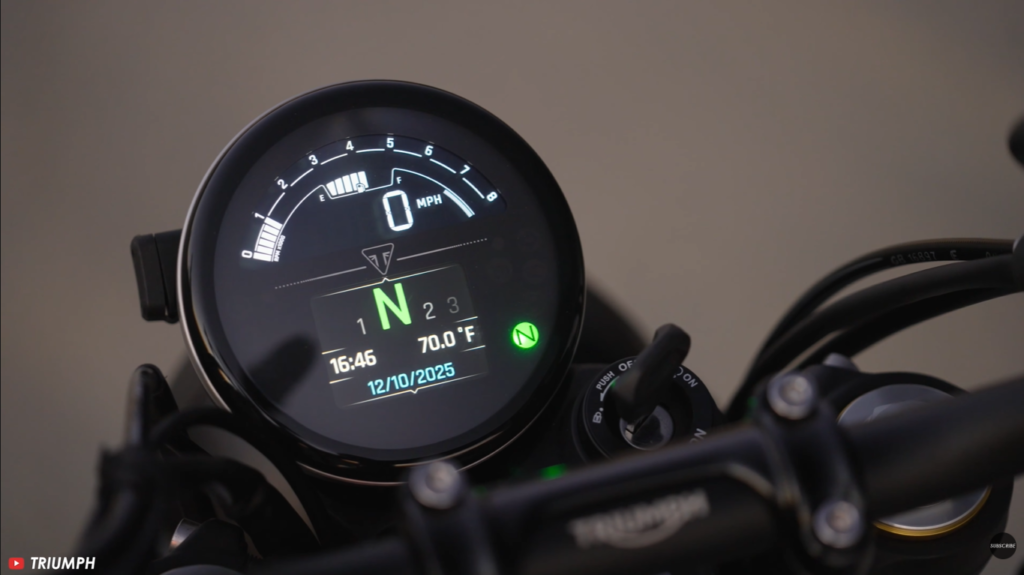
The 2026 Scrambler 900 now shares the same technology package as the Speed Twin 900, which you could consider its sibling model.
Split Digital Display
Gone is the single analog clock. You now get:
- Inverted LCD at the top (main display)
- Small TFT at the bottom (info screen)
This opens up comprehensive menus and settings far beyond what the previous small LCD could offer.
New Switchgear
The left handlebar now features:
- Direction pad for menu navigation
- Select button for confirming choices
- Mode button for quick riding mode changes
It feels like a contemporary modern bike—exactly what you’d expect from a 2026 motorcycle.
Riding Modes
You now get three distinct modes:
- Road – Balanced performance and safety
- Rain – Reduced power, increased intervention
- Off-Road – ABS disabled for rear wheel, traction control relaxed
The Off-Road mode is new and genuinely useful for playing on dirt roads or trails.
Lean-Sensitive Traction Control
The Continental-made IMU enables cornering traction control that works mid-corner, not just in straight lines. This is a huge safety advancement.
Optional Extras
- Cruise control (accessory fitment)
- Heated grips (fitted to test bikes—very welcome on cold mornings!)
- USB-C charging port (standard, mounted on the side of the dash)
Connectivity Options
There’s an optional Bluetooth module for:
- Turn-by-turn navigation on the display
- Phone connectivity
- Music control
My personal preference? I still mount my phone on the bars using a Quadlock setup for my favorite navigation apps (shoutout to Quadlock for sponsoring this content and making these videos possible—check the links below for their full product lineup).
But if you want a cleaner look without a phone on the bars, the Bluetooth option is there.
The Mixed Reaction I’m Expecting
I know this technology package will get mixed reactions because it moves the bike away from the pure retro image.
The dash itself gets mixed comments online—some think it doesn’t look that good aesthetically, especially compared to the classic analog clock.
My honest take after riding it:
✅ It’s really easy to use and navigate through menus
✅ It’s easy to read for basic riding information at a glance
✅ Having riding modes and comprehensive settings is genuinely useful
✅ From a functional perspective, I prefer it to the previous generation
Yes, it’s less traditional. Yes, it’s more “in your face” with the techy stuff. But you can simply stick it in one riding mode and forget about it, using the dash as a simple readout of basic information. You don’t have to dive into menus constantly.
The Engine: If It Ain’t Broke…
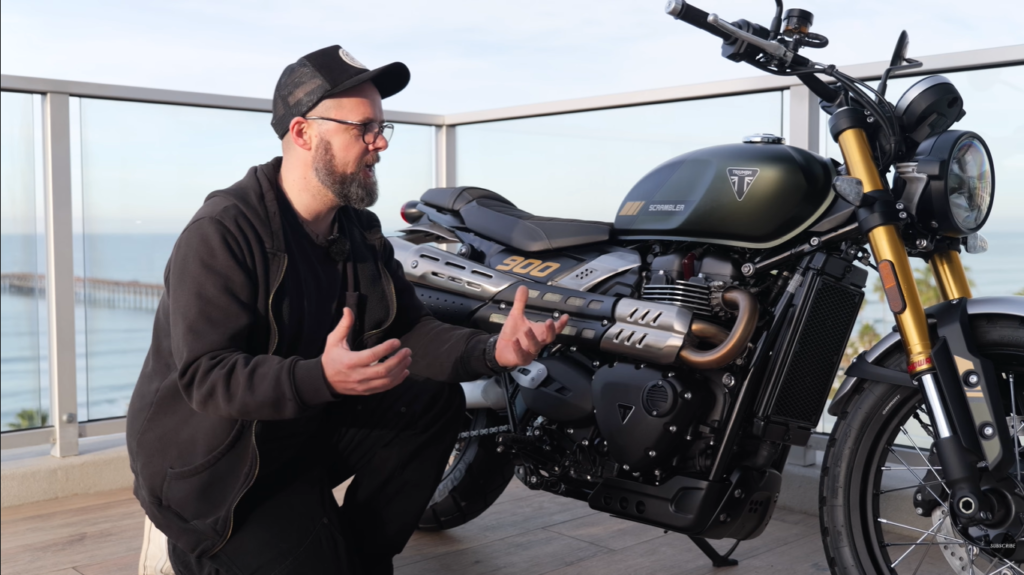
900cc Bonneville Parallel Twin
Perhaps the only component that hasn’t received substantial changes is the engine—and that’s actually wonderful news.
Specifications:
- Displacement: 900cc (actually 899cc)
- Configuration: 270-degree crank parallel twin
- Power: 64.1 hp @ 7,250 rpm
- Torque: 59 lb-ft (80 Nm) @ 3,250 rpm
- Compression: 11:1
- Bore x Stroke: 84.6mm x 80mm (near-square)
- Valvetrain: SOHC, 4 valves per cylinder
- Transmission: 5-speed (not 6!)
- Clutch: Slip-and-assist type
- Final drive: X-ring chain (upgraded from O-ring)
Why This Engine Is Special
This might not sound particularly powerful for a 900cc bike, but this engine is all about torque delivery and usability.
What you get is:
- Dollops of torque really low in the rev range
- Nice, predictable, usable power delivery throughout
- Flexibility that makes 5 gears feel adequate
- Smooth, refined operation
I’ve owned a Street Twin (which became the Speed Twin 900) with this exact engine. I’ve borrowed countless press bikes with this motor. And every single time I jump on one of these Bonneville twins, it’s my absolute favorite thing about them.
The Exhaust Note
The high-level pipe delivers:
- A nice snarl and growl
- A bit of a rasp to it
- Sounds more aggressive than the T100’s twin peashooter pipes
It doesn’t have the same depth as the T100’s exhausts, but in some ways it sounds more aggressive and exciting.
The High Pipe Trade-Off
The only downside of the high exhaust is that it warms your legs during slow riding in hot conditions or heavy traffic commuting.
If you do a lot of stop-and-go city riding in hot climates, you might prefer a bike like the T100 with low-mounted pipes.
But let’s be honest: the high pipe looks cool, sounds great, and is essential to the Scrambler image. Most riders will happily accept a warm leg for the overall aesthetic and sound.
Ergonomics: Accessible Scrambler Comfort
Low, Approachable Seat Height
One aspect I’m very glad Triumph retained is the accessible ergonomics.
Seat height: 790mm (31.1 inches)—unchanged from previous generation
This makes the Scrambler 900 a great choice if you want the off-road Scrambler image without the height typically associated with adventure bikes or dual-sports.
Who this works for:
- ✅ Experienced riders
- ✅ Newer riders
- ✅ Shorter riders
- ✅ Anyone who wants confidence at stops
Wide Scrambler Handlebars
The typically wide Scrambler-style bars provide:
- Lots of leverage over the front end
- Very open, commanding riding position
- Excellent control and confidence
Everyone in our press group—riding both the Scrambler and T100—really enjoyed the commanding riding position this bike offers.
Off-Road Friendly Foot Pegs
The pegs feature:
- Removable rubber inserts
- Keep rubbers in = reduced vibes for street riding
- Remove rubbers = more grip for muddy/slippery conditions
All-Day Comfort
The general picture for comfort is a bike that’s:
- ✅ Nice and easy to get on with
- ✅ All-day comfortable for touring
- ✅ Manageable for all rider types
- ✅ Non-intimidating for beginners
The seat is redesigned for 2026 to match the new styling, and while we’ll need more miles to fully judge it, initial impressions suggest it’s comfortable for long rides.
Riding Impressions: Does It Deliver?
Handling: A Massive Improvement
The handling is a significant upgrade that transforms the riding experience.
What makes it so good:
- Better suspension (USD forks + piggyback shocks)
- Much better brakes (radial four-piston caliper)
- Lighter wheels (aluminum rims reduce rotating mass)
Despite the big 19″ front wheel and not-particularly-road-biased Metzeler Tourance tires, this bike feels light on its feet and quick to turn.
The combination of reduced unsprung mass and improved suspension tuning means it flows through corners with poise, grace, and a feeling of lightness—despite weighing 487 pounds.
The Engine Experience
Every time I ride a bike with this 900cc Bonneville twin, it reminds me why I love this engine.
On the road, it delivers:
- Effortless low-end torque for easy overtaking
- Smooth, linear power delivery with no surprises
- Refined vibration levels
- Engaging exhaust note that adds character
It’s not about peak horsepower—it’s about usability, character, and real-world enjoyment.
Ride Quality & Comfort
One of the standout features is how roomy this bike feels:
- Tall riders: Plenty of space, not cramped
- Small riders: Low seat height, manageable weight
- Everyone: Open, comfortable riding position
The bike is well-made with fastidious attention to detail—from engine finishes to paintwork quality. This is premium motorcycle manufacturing.
The Big Question: Better Bike or Lost Soul?
At the beginning of this review, I asked: Have they made a better bike with all these changes, or has it sacrificed soul to become more contemporary?
What I Think After Riding It
The handling is a massive improvement.
Better suspension, much better brakes, and lighter wheels mean it feels agile and confidence-inspiring. From that perspective alone, it’s a huge tick for me.
The engine remains one of the best things about any Bonneville—unchanged and still brilliant.
It’s retained the easy-to-ride accessibility that makes these bikes so appealing to such a wide range of riders.
The Tech Package: Make or Break?
I think it will come down to the tech package as to whether you’ll like this bike or not.
The T100/T120 Approach
Other bikes in the lineup like the T100 and T120 have similar tech under the surface:
- Cornering ABS
- Cornering traction control
- IMU-based rider aids
But it’s all hidden behind traditional-looking twin clocks. Visually, they feel coherent with the retro aesthetic while still being modern and safe underneath.
The Scrambler 900 Approach
This bike is more in-your-face with the techy stuff. The split LCD/TFT display and modern switchgear make no attempt to hide the technology.
But here’s the thing:
You can stick it in one riding mode and forget about the tech. Just use the dash as a simple, readable display of basic information. You don’t have to dive into menus constantly.
My Verdict
On reflection, I very much enjoyed riding this bike.
You should think of it as less of an off-roader (it doesn’t have the height for serious off-road work) and more of a stylish and robust road bike with a lot of soul and character.
It’s fun, easy to ride, flows through corners beautifully, and has that intangible Triumph quality that makes every ride enjoyable.
Specifications at a Glance
| Specification | Details |
|---|---|
| Engine | 900cc liquid-cooled parallel twin |
| Bore x Stroke | 84.6mm x 80mm |
| Power | 64.1 hp @ 7,250 rpm |
| Torque | 59 lb-ft (80 Nm) @ 3,250 rpm |
| Compression | 11:1 |
| Transmission | 5-speed |
| Clutch | Slip-and-assist |
| Final Drive | X-ring chain |
| Frame | Tubular steel (redesigned) |
| Swingarm | Cast aluminum |
| Front Suspension | USD Showa forks |
| Rear Suspension | Piggyback Showa shocks |
| Front Brake | 320mm disc, 4-piston radial caliper |
| Rear Brake | 255mm disc, 2-piston Nissin caliper |
| ABS | Lean-sensitive (IMU-based) |
| Traction Control | Lean-sensitive (IMU-based) |
| Wheels | Aluminum wire-spoke |
| Front Tire | 100/90-19 |
| Rear Tire | 150/70 R17 |
| Seat Height | 790mm (31.1 in) |
| Fuel Capacity | 3.2 gallons (12 L) |
| Wet Weight | 487 lbs (221 kg) |
| Colors | Kingfisher Blue, Jet Black, Matte Khaki Green, Mineral Grey/Cosmic Yellow, Urban Grey |
| Price (US) | Starting at $12,395 |
| Price (UK) | Starting at £10,395 |
| Availability | December 2025 (US), February 2026 (others) |
Pricing & Value
United States Pricing
- Base Model (Urban Grey): $12,245
- Two-Tone Models: $12,395
- Matte Khaki Green / Matte Phantom Black
- Mineral Grey / Cosmic Yellow
United Kingdom Pricing
- Base Model: £10,395
- Two-Tone Models: £10,595+
The £600 / $150 Price Increase
The 2026 model costs about £600 more than the 2025 predecessor (£9,795).
Is it worth it?
Looking at the upgrades included as standard:
- ✅ USD forks (significant upgrade)
- ✅ Piggyback shocks (better performance)
- ✅ Aluminum wheels (major improvement)
- ✅ Radial four-piston brake caliper (much better)
- ✅ Lean-sensitive ABS and traction control (safety)
- ✅ IMU-based electronics (modern tech)
- ✅ Improved dash and connectivity
That price hike looks like something of a bargain when you consider everything you’re getting.
Comparison to Competitors
Ducati Scrambler: ~$11,000-$15,000 (depending on model)
Royal Enfield Scram 411: ~$5,000-$6,000 (budget option)
BSA Gold Star: ~$7,000-$8,000
BMW R nineT Scrambler: ~$13,000+
The Triumph sits in the middle of the pack on price, but offers excellent build quality, proven reliability, and extensive dealer networks.
Who Should Buy the 2026 Scrambler 900?
Perfect For:
✅ Riders wanting modern classic style with contemporary performance
✅ Those who appreciate British motorcycle heritage
✅ Shorter riders needing confidence at stops (790mm seat)
✅ New riders wanting a manageable, forgiving bike
✅ Experienced riders seeking character over outright performance
✅ Urban and backroad riders (not serious off-roaders)
✅ Anyone wanting a versatile, comfortable all-rounder
Skip It If:
❌ You want pure retro aesthetics (get a T100 instead)
❌ You need serious off-road capability (seat height too low)
❌ You want maximum performance (Speed Twin 900 is faster)
❌ You prefer minimalist, tech-free motorcycles
❌ You’re on a tight budget (Royal Enfield is half the price)
Alternatives Worth Considering
1. Triumph Bonneville T100 (~$10,000)
Choose if: You want traditional twin clocks, lower pipes, pure retro styling.
Trade-offs: Less capable suspension, older tech, steel wheels.
2. Triumph Speed Twin 900 (~$11,500)
Choose if: You want the same engine with sportier handling and styling.
Trade-offs: Less upright riding position, lower handlebars, road-focused.
3. Ducati Scrambler Icon (~$11,000)
Choose if: You want Italian style, V-twin character, more power (73 hp).
Trade-offs: Higher maintenance costs, less torque, Italian reliability concerns.
4. Royal Enfield Scram 411 (~$5,000-$6,000)
Choose if: Budget is priority, you want genuine off-road capability.
Trade-offs: Much less power, basic tech, lower build quality.
5. BMW R nineT Scrambler (~$13,000+)
Choose if: You want a boxer-twin character, a premium feel, and German engineering.
Trade-offs: More expensive, heavier, less torque down low.
Accessories & Customization
Triumph offers an extensive accessory lineup for the Scrambler 900:
Performance Upgrades:
- Arrow exhaust systems
- Performance air filters
- ECU tuning options
Protection:
- Engine bars
- Sump guards
- Handlebar protectors
- Tank pads
Comfort:
- Comfort seats
- Heated grips (highly recommended!)
- Cruise control kit
- Touring screens
Style:
- Various seat options
- Tank graphics
- Fender options
- LED indicators
Luggage:
- Panniers and mounting systems
- Tank bags
- Tail packs
- Top box options
Tech:
- Bluetooth connectivity module
- Navigation systems
- GoPro mounts
As one review noted: “There’s always a buffet of aftermarket parts on offer when it comes to Triumphs.” While the starting price is $12,395, you could spend considerably more customizing it exactly how you want.
Long-Term Ownership Considerations
Maintenance & Running Costs
Service Intervals: Every 10,000 miles or annually
Oil Capacity: 3.5 L (3.7 quarts)
Valve Clearances: Every 20,000 miles
Triumph’s modern classics are known for reasonable maintenance costs and good reliability when properly serviced.
Warranty
- Standard: 2 years unlimited mileage
- Extended options: Available through dealers
Resale Value
Bonneville-family bikes typically hold value well due to:
- Strong brand recognition
- Timeless styling
- Extensive dealer network
- Parts availability
- Enthusiast community
Common Accessories Owners Add
Based on owner forums and reviews:
- Heated grips (essential for year-round riding)
- Exhaust upgrade (Arrow systems popular)
- Comfort seat (for longer rides)
- Engine bars (protection)
- USB charging (now standard on 2026!)
Final Verdict: A Proper Evolution
The Bottom Line
The 2026 Triumph Scrambler 900 represents the biggest update in the model’s 20-year history, and it’s genuinely impressive.
What Triumph Got Right:
- ✅ Massively improved handling
- ✅ Much better brakes
- ✅ Modern safety tech (lean-sensitive ABS/TC)
- ✅ Retained the brilliant engine
- ✅ Maintained accessibility and comfort
- ✅ Premium build quality throughout
What’s Controversial:
- ⚠️ More contemporary styling (less traditional)
- ⚠️ Tech-forward dashboard (not for purists)
- ⚠️ Price increase (though justified)
My Rating: 8.5/10
Pros:
- Excellent handling and composure
- Fantastic engine character
- Accessible ergonomics
- Premium build quality
- Modern safety features
- Great exhaust note
- All-day comfort
Cons:
- Styling won’t appeal to traditionalists
- Not a serious off-roader (despite the name)
- Tech display polarizing
- High pipe warms legs in traffic
- Price increase over predecessor
Who Wins?
If you loved the old Street Scrambler’s traditional looks and simplicity, you might prefer sticking with a used model or choosing a T100.
But if you appreciate modern performance, contemporary safety tech, and refined handling while maintaining Scrambler soul, the 2026 model is objectively better in almost every measurable way.
Final Thoughts
I genuinely enjoyed every mile on this bike during the California press launch. It’s fun, capable, comfortable, and characterful—everything a modern classic should be.
Yes, it’s moved slightly away from pure retro appeal. But in exchange, you get a bike that’s safer, faster through corners, more confidence-inspiring, and more capable on real-world roads.
The 2026 Scrambler 900 proves you can have modern performance and classic soul—you don’t have to choose.
Yes! The 790mm seat height, manageable 64 hp, predictable power delivery, and forgiving ergonomics make it excellent for new riders. The modern safety tech (lean-sensitive ABS/TC) adds confidence too.
Massively improved handling, much better brakes, modern electronics, lighter wheels, and upgraded suspension. The engine is essentially unchanged (which is good). Styling is more contemporary, less traditional.
Expect around 50-60 mpg (4.7-5.6 L/100km) in normal riding. The small 3.2-gallon tank means range of approximately 160-190 miles between fills.
Have questions about the Scrambler 900? Drop them in the comments below and I’ll respond with honest answers based on my riding experience.
Don’t forget to subscribe if you want to see more Bonneville reviews and coverage of the latest 2026 motorcycles.
A massive thanks for reading, and I’ll see you in the next review!
Last Updated: December 2025
Bike Tested: 2026 Triumph Scrambler 900 (Press Launch, California)
Miles Ridden: Full day testing on varied California roads
Disclaimer: This was a manufacturer-hosted press launch. Triumph provided bikes, accommodation, and meals. All opinions are my own based on genuine riding impressions. I receive no compensation for positive reviews.