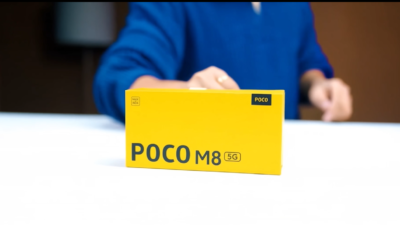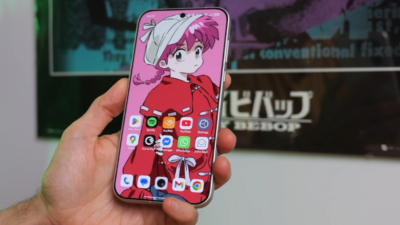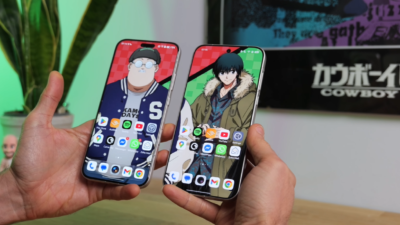
The budget smartphone market in 2026 kicks off with a bang as POCO launches not one, but two compelling options: the POCO M8 and the POCO M8 Pro. These budget-friendly devices promise to deliver premium features at accessible price points, but the question remains: which one should you actually buy, and is the Pro worth the premium over the standard M8?
After spending several days using both phones as daily drivers, conducting side-by-side comparisons, and testing everything from gaming performance to camera capabilities, here’s the comprehensive breakdown of what makes these phones tick—and which one deserves a place in your pocket.
Note: This review is based on early review units that were not yet commercially available at the time of testing. Some software issues mentioned may be resolved in retail versions.
Design Philosophy: Two Very Different Approaches
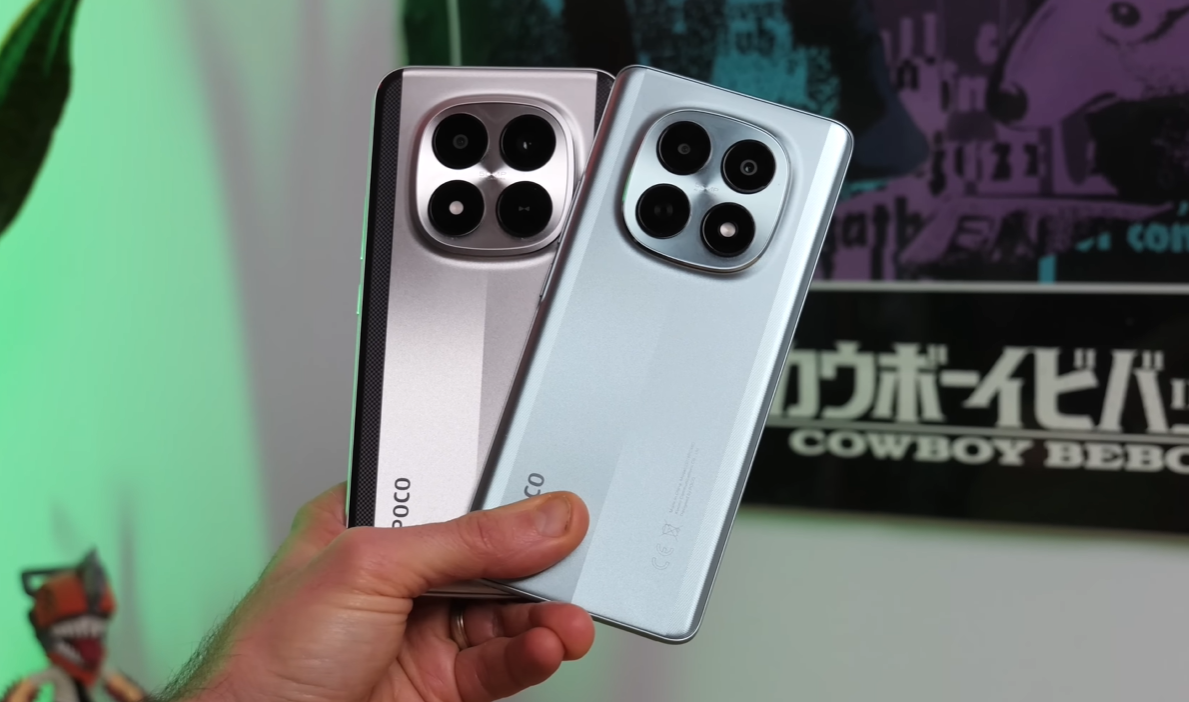
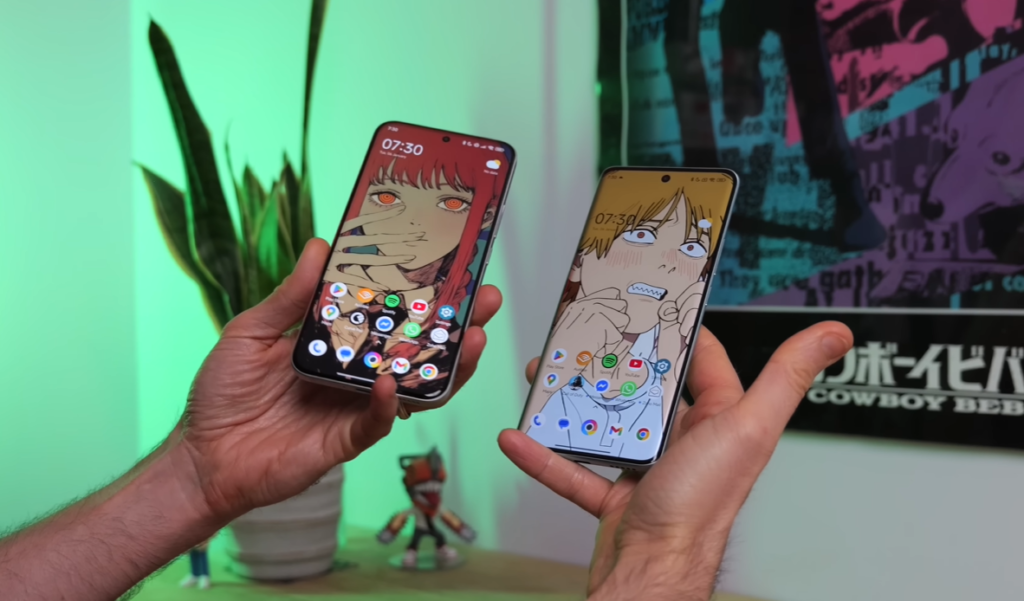
Perhaps the most surprising aspect of the POCO M8 lineup is how dramatically different the two phones look and feel, despite sharing the same model name.
POCO M8 Pro: Modern Flat Design
The POCO M8 Pro sports what the reviewer describes as a “fairly standard smartphone design” characterized by:
Design Elements:
- Flat edges throughout the frame
- Screen fills the front with minimal bezels
- Slight curvature on both display and back (subtle, not dramatic)
- Modern aesthetic similar to flagship phones
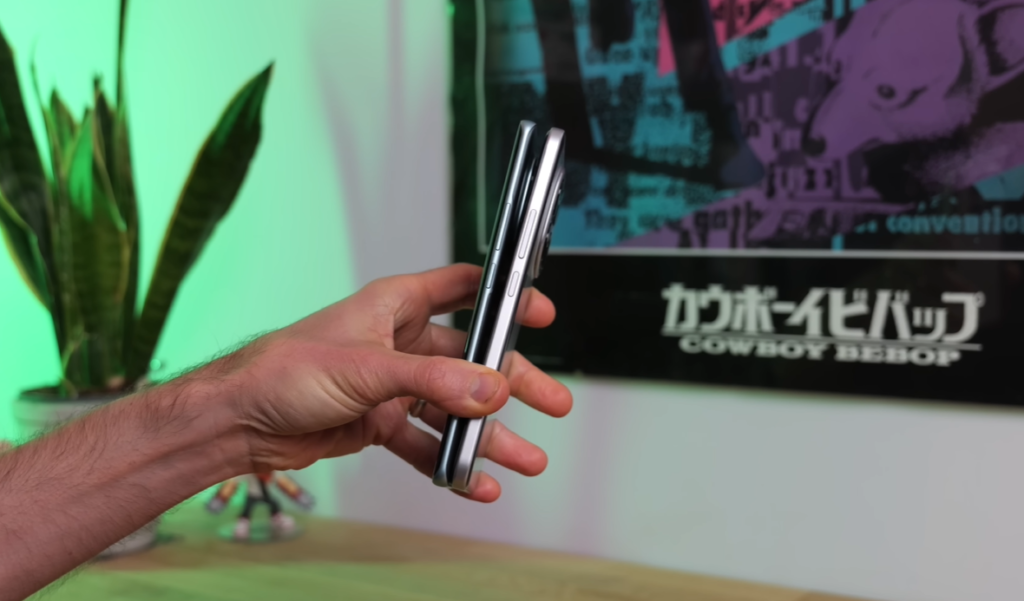
In-Hand Feel: The subtle curvature improves grip comfort compared to sharp-cornered designs that have become common. The phone feels substantial without being bulky.
Weight: 206 grams (fairly standard for modern smartphones)
POCO M8: Retro Rounded Design
The standard POCO M8 takes a completely different approach with what’s described as a “fully rounded old-school finish”:
Design Characteristics:
- Serious sloping at the edges for both screen and rear
- Completely rounded form factor reminiscent of older smartphone generations
- Exceptional grip comfort (described as “easily my favorite thing I’ve had in my hand so far in 2026”)
Weight: 178 grams (remarkably light)
Important Caveat: While the rounded design feels wonderful, there’s a significant usability issue: when gripping the phone tightly (especially in landscape orientation for photography), palm flesh can intrude on the display edges and interfere with touch responsiveness. This can prevent you from taking photos or interacting with edge-positioned UI elements.
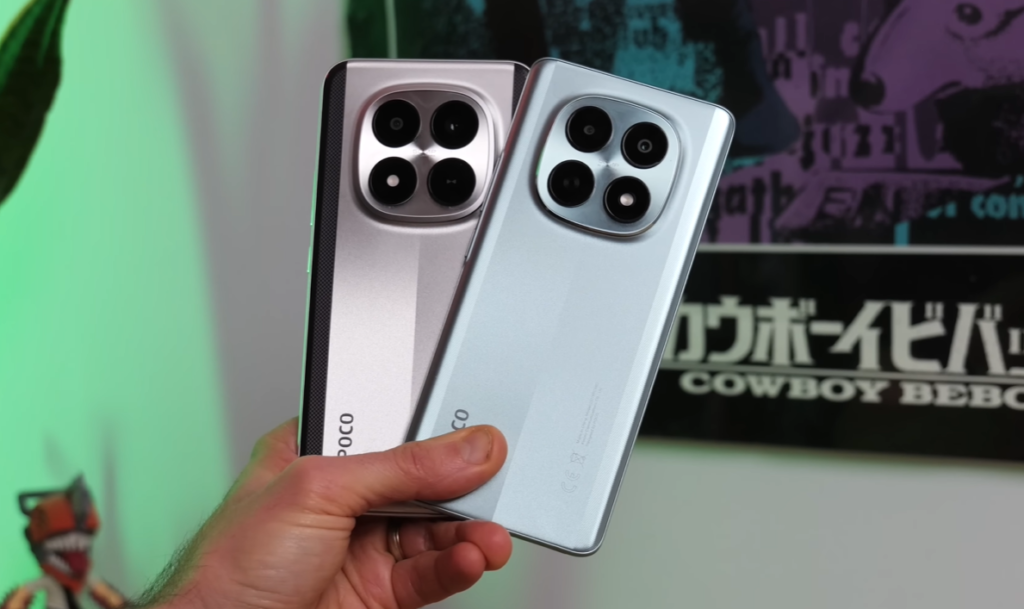
Back Panel Design: Similarities
Both phones share a more unified design language on the rear:
Funky Multi-Tone Finish: A striking aesthetic that differentiates these POCO devices from monochrome competitors.
Color Options:
- POCO M8 Pro Review Unit: Black and silver
- Also Available: Green (in the UK market)
The multi-tone design creates visual interest without being garish, striking a balance between premium appearance and youthful appeal.
Build Quality and Durability: Pro Takes the Lead
POCO M8 Pro: Premium Protection
Display Protection:
- Corning Gorilla Glass Victus 2 (upgraded protection)
- Highly scratch-resistant for daily use
- Excellent drop resistance compared to standard glass
Pre-Applied Screen Protector: POCO includes a factory-applied screen protector, though the reviewer had to remove it immediately due to irritating air bubbles. Your mileage may vary depending on manufacturing tolerances.
Water and Dust Resistance:
- IP68 rating (full water submersion protection)
- Can be fully submerged in water without damage
- Complete dust protection
Upgrade Significance: The IP68 rating represents a meaningful upgrade over the previous POCO M7 Pro generation, which lacked comprehensive water resistance.
POCO M8: Splash Resistance Only
Water Protection:
- IP65 rating (splash resistant only)
- Cannot be submerged in water
- Protected against water jets but not immersion
Important Distinction: While IP65 handles rain and splashes, don’t take the POCO M8 swimming or drop it in water. The difference between IP65 and IP68 is substantial for real-world durability.
Perceived Slimness
Despite being the same actual thickness as the Pro, the standard POCO M8 feels and looks slimmer thanks to its curved design. This is a psychological effect of the rounded edges making the phone appear more svelte than its flat-edged sibling.
Display: HDR Advantage Goes to Pro
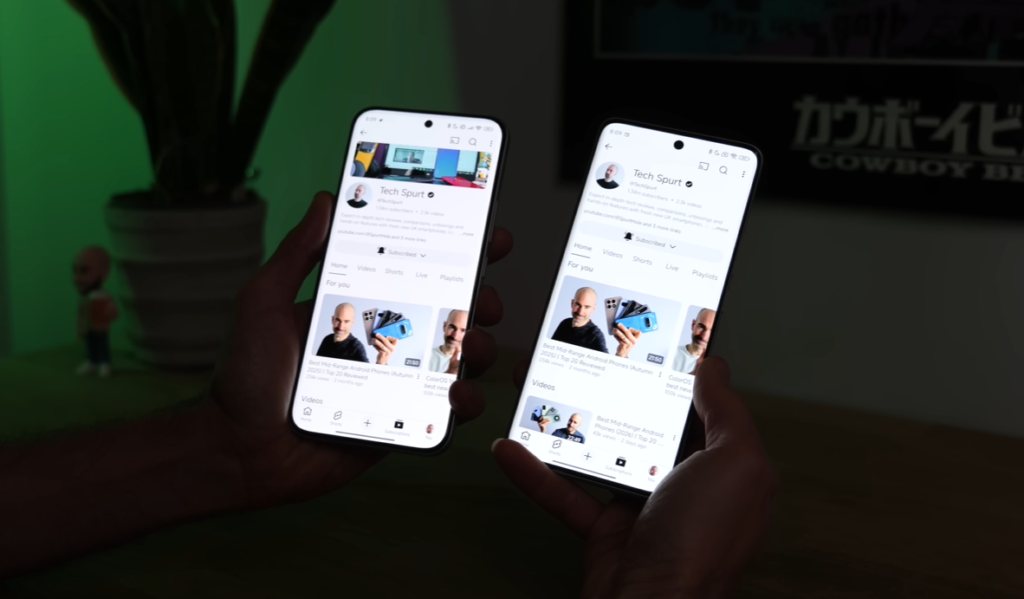
POCO M8 Pro Display Specifications
Size: 6.83 inches (slightly larger)
Resolution: 1280p (higher resolution/sharper)
Panel Type: AMOLED
Refresh Rate: 120Hz
Special Features:
- HDR10+ support
- Dolby Vision support (for Netflix and compatible services)
- 3840Hz PWM dimming (for flicker-sensitive users)
POCO M8 Display Specifications
Size: 6.77 inches
Resolution: 1080p
Panel Type: AMOLED
Refresh Rate: 120Hz
Special Features:
- No HDR10+ or Dolby Vision
- 3840Hz PWM dimming (same as Pro)
Real-World Display Performance
Brightness: Both displays are powerfully, icily bright when maxed out, making them suitable for sunny outdoor environments. They also dim sufficiently low for comfortable evening viewing without eye strain.
Color and Contrast: Both phones deliver:
- Nice, poppy colors that make content engaging
- Decent contrast typical of AMOLED technology
- Good viewing angles
Eye Comfort Features:
- Reading mode on both to filter blue light
- 3840Hz PWM dimming reduces perceptible flicker for sensitive users
- Adjustable color temperature
The HDR Difference
The POCO M8 Pro’s HDR10+ and Dolby Vision support creates a noticeable difference when streaming compatible content on Netflix and other services:
HDR Benefits:
- Brighter highlights in HDR content
- Deeper shadows with maintained detail
- Wider color gamut for more vivid, accurate colors
- Better dynamic range in high-contrast scenes
The standard POCO M8, while still excellent for content consumption, simply can’t match this enhanced viewing experience with HDR content.
Verdict: The POCO M8 screen is described as “still a banger” and “perfect for Netflix, YouTube, and whatever.” However, the Pro model is objectively superior for serious multimedia consumption.
Audio: 400% Volume on the Pro
Stereo Speaker Configuration
Both phones feature stereo speaker setups, but with an interesting difference in maximum volume:
POCO M8:
- Maximum volume: 300% (somehow)
- Balanced stereo output
- Top and bottom speakers both contribute meaningfully
POCO M8 Pro:
- Maximum volume: 400% (troubling mathematicians even further)
- Noticeably louder than the standard M8
- “Incredibly loud in fact”
- May have increased the reviewer’s tinnitus levels
Audio Quality Assessment
Loudness: The Pro model is significantly louder when maxed out, though both achieve impressive volume levels for budget devices.
Distortion: Impressively, even at maximum volume, neither phone becomes overly tinny or distorted. The sound remains relatively clear, though obviously not audiophile-grade.
Music Listening: The reviewer notes he wouldn’t sit listening to Spotify through the speakers—a Bluetooth headset is preferred for music. However, the speakers are “perfectly great for Netflix, YouTube, or whatever.”
Balance: Unlike many budget phones where the bottom-firing speaker does most of the work, both POCO M8 models have well-balanced audio with the top speaker pulling its weight.
Audio Enhancement Features
Dolby Atmos: Audio tuning available on both
Xiaomi Sound: Additional audio optimization
Graphic Equalizer: Manual fine-tuning available for customization
Bluetooth Performance
Generally Dependable: Bluetooth streaming works well most of the time on both phones.
Occasional Issues (POCO M8 Pro):
- Couple of cutouts during extended use
- Limited range: Patchy connection when leaving phone in one room and moving to an adjacent room
- Random stream stops: Occasionally stops for no apparent reason
These issues may be attributable to early review unit software and could be resolved in retail versions.
Performance: Snapdragon Advantage for Pro
Processor Specifications
POCO M8:
- Chipset: Qualcomm Snapdragon 6 Gen 3
- GPU: Adreno 710
- RAM: 8GB standard (only option)
POCO M8 Pro:
- Chipset: Qualcomm Snapdragon 7s Gen 4
- GPU: Adreno 810 (more powerful)
- RAM: 8GB standard, 12GB optional (review unit had 12GB)
Performance Differences
Faster Clock Speed: The Snapdragon 7s Gen 4 in the Pro model delivers higher peak performance.
More Capable GPU: The Adreno 810 provides better graphics performance than the 710 in the standard M8, though both are budget-tier GPUs.
Real-World Performance
Everyday Use (POCO M8 Pro):
- Reasonably smooth for typical tasks
- Occasionally requires patience but apps usually load quickly
- Side-by-side multitasking doesn’t grind to a halt (good for split-screen use)
Gaming Performance: The Reality Check
Demanding Games (Wuthering Waves on POCO M8 Pro):
- Can “just about cope” on lowest graphics settings
- Frame rate dips into single digits during heated moments, especially at game start
- Far from ideal experience
- Not recommended for hardcore gaming
Optimized Games (PUBG, Call of Duty Mobile):
- Run really well on both POCO M8 and M8 Pro
- Can handle graphics settings bumped all the way up
- Perfectly responsive screens for online multiplayer
- Ideal for competitive gaming
Cooling System: Xiaomi’s Ice Loop cooling system keeps both phones perfectly cool even during extended gaming sessions (well over an hour).
Gaming Recommendation: Stick to optimized mobile games rather than demanding open-world adventures. Both phones handle popular mobile titles excellently but struggle with bleeding-edge graphics showcases.
Battery Life: Massive Capacity, Days of Use
Battery Specifications
POCO M8:
- Capacity: 5,520mAh (substantial)
- Charging: 45W wired fast charging
POCO M8 Pro:
- Capacity: 6,500mAh (mighty)
- Charging: 100W wired fast charging (vastly upgraded)
Real-World Battery Performance
POCO M8: Easily survives the longest of days on a single charge, even with double-digit screen-on time.
POCO M8 Pro:
- Can endure a full 2 days on a single charge with moderate use
- Can last an entire weekend if you’re not going too crazy
- Heavy camera use drains battery faster (expected)
Gaming Endurance (POCO M8 Pro):
- Over 7 hours of Wuthering Waves on lower graphics settings at 100% charge
- Well into double digits for optimized games like Call of Duty Mobile
Standard POCO M8: Similar impressive gaming endurance for optimized titles.
Charging Speed
POCO M8: 45W charging is adequate but not exceptional by 2026 standards.
POCO M8 Pro: 100W charging is genuinely fast, especially impressive given the massive 6,500mAh battery. Charges significantly faster than the standard M8 despite having over 900mAh more capacity.
Battery Protection: Both phones include battery protection modes to prevent overheating and potential battery damage during charging.
What’s Missing: Neither phone supports wireless charging, which remains a premium feature not yet trickling down to the budget segment.
Software: HyperOS 2.0 with Caveats
Operating System
Both phones run Xiaomi’s HyperOS 2.0, which the reviewer finds “a lot better than the MIUI days of yesteryear.”
Current Version Issue: Both POCO M8 models are stuck on HyperOS 2.0 while more premium Xiaomi and POCO devices already have version 3. There’s hope for an update, but timing is uncertain.
Update Commitment: Xiaomi has committed to:
- 4 OS updates (Android version upgrades)
- 6 years of security patches
This is genuinely impressive for budget phones and provides long-term value.
The Bloatware Problem
Massive Crapware Issue: The POCO M8 Pro (and presumably the standard M8) comes absolutely swamped with preinstalled apps:
Examples of Bloatware:
- Amazon
- Temu
- AliExpress
- Various other third-party apps
Specific Complaint: Out of 10 apps in the top two rows of the app drawer, the reviewer personally only installed one. The rest were pre-installed bloatware.
The Good News: Most of this can be uninstalled, though you’ll need to “set aside a full afternoon to actually bloody do it.”
The Better News:
- Minimum 256GB storage on POCO M8 Pro
- 512GB option available if you want more space
- MicroSD expansion available on standard POCO M8 (but NOT on Pro)
Software Issues (Potentially Pre-Release)
The reviewer experienced several bugs that may be attributed to testing an early unit:
No True Always-On Display: Despite claiming to have an always-on display, it only turns on for 10 seconds when you tap the screen—”that’s not always on, is it, mate?”
Calendar Widget Issue: A perpetually loading calendar widget that didn’t resolve after a week of testing.
Wi-Fi Connectivity: Struggled to connect to a publicly available Wi-Fi network on one occasion.
Bluetooth Streaming: Generally dependable but occasionally stopped for no apparent reason.
Reviewer’s Hope: These issues will be “sorted right out by the time it hits shelves,” though confidence in this is qualified.
Offline Communication (POCO M8 Pro Only)
The Pro model supports Xiaomi’s offline communication, allowing contact with nearby supported Xiaomi or POCO smartphones when off-grid.
Limited Use Case: Admittedly a niche feature that the reviewer hasn’t been able to test (not being much for “rambling in the wilderness”).
Practical Application: Could be useful for:
- Hiking groups
- Festival attendees
- Emergency communication in areas without cell service
- Coordinating in large venues
No eSIM Support
Unfortunately, both phones rely on physical SIM cards only—no eSIM support whatsoever. This is increasingly dated as eSIM adoption accelerates globally.
Biometric Security: Optical and Face Unlock
Fingerprint Scanner
Both phones use a basic, bog-standard optical fingerprint sensor built into the display.
Performance:
- Generally dependable through the week of testing
- Struggles when hands are proper wet or seriously dry
- Works well in typical conditions
Major Complaint: The sensor is positioned right down at the bottom of the display, requiring you to reach your thumb way down to meet it. This is ergonomically poor design that adds unnecessary effort to unlocking.
Face Unlock
Both phones include face unlock as a backup biometric option.
Performance:
- Generally okay when lighting is adequate
- Fails with shadows on face or poor lighting
- Not as reliable as fingerprint in varied conditions
Security Note: Optical face unlock (as opposed to 3D structured light) is less secure than fingerprint authentication and can potentially be fooled with photos.
Storage Options
POCO M8:
- 256GB minimum
- MicroSD expansion via hybrid SIM slot (can use second SIM slot for memory card)
POCO M8 Pro:
- 256GB minimum
- 512GB maximum
- No microSD expansion (unfortunate omission)
For users who need massive storage for offline content, the standard POCO M8’s expandability is a genuine advantage over the Pro.
Camera System: Pro Delivers Meaningful Upgrades
Main Camera Sensors
Both phones feature 50-megapixel main shooters, but with completely different sensors:
POCO M8:
- Sensor: Light Fusion 400
- Size: 1/2.88 inch (small)
POCO M8 Pro:
- Sensor: Light Fusion 800 (upgraded)
- Size: 1/1.55 inch (considerably bigger)
Low-Light Photography: Pro’s Advantage
The larger sensor in the Pro model delivers significantly better low-light performance:
POCO M8 Pro Low-Light:
- Richer colors compared to standard M8
- Less noisy visuals with better detail retention
- Decent night photography for a budget handset
- Quite crispy results in challenging lighting
Limitation: Like most budget phones, it’s scuppered when subjects won’t keep still in low light, resulting in motion blur. This is physics rather than a specific POCO limitation.
Daytime Photography
Color Accuracy:
- POCO M8 Pro: More accurate colors compared to standard M8
- POCO M8: Tends to produce warmer tones by default (some might actually prefer this)
Contrast Handling: Both phones exhibit saturation issues when shooting against tricky contrast scenarios, particularly bright blue skies. This results in crushed highlights or boosted shadows attempting to balance exposure.
Detail Levels: Generally good enough for viewing on tablets or laptops, suitable for social media sharing and personal archives.
Digital Zoom
3x Zoom: Acceptable quality for both phones at 3x magnification.
Beyond 3x: Described as producing “a fuzzy sack of cack”—in other words, don’t zoom beyond 3x if you care about image quality.
Ultra-Wide Camera (POCO M8 Pro Only)
The Pro model includes an 8-megapixel ultra-wide-angle shooter:
Performance:
- Generally okay in good light
- Gets pretty grainy pretty quick in softer light
- Basic but functional for occasional wide shots
Standard POCO M8: No ultra-wide camera—just the single main 50MP shooter.
Video Recording
Rear Camera:
- 4K resolution at 30fps maximum on both phones
- 60fps available only at Full HD (1080p) resolution
Front Camera:
- POCO M8 Pro: 32-megapixel selfie shooter
- POCO M8: 20-megapixel selfie camera
- Video: Full HD only on both (no 4K option)
Stabilization: Image stabilization is “absolutely fine” for video chats and vlogging. You can wander about without jarring footage.
Microphone: Audio pickup is reasonably clear and acceptable for budget devices.
The Verdict: Which POCO M8 Should You Buy?
POCO M8 Pro: Solid All-Rounder
Strengths:
- Bigger, sharper display with HDR10+ and Dolby Vision
- Significantly better low-light camera performance
- Ultra-wide camera for versatility
- Massive 6,500mAh battery with 2-day endurance
- 100W ultra-fast charging
- IP68 water resistance (full submersion protection)
- Better processor for demanding tasks
- Gorilla Glass Victus 2 protection
Weaknesses:
- Heavier than standard M8 (206g vs 178g)
- No microSD expansion
- More expensive than standard M8
- HyperOS bugs (potentially resolved in retail units)
- Bloatware nightmare requiring cleanup
- No wireless charging
POCO M8: Comfortable Budget Option
Strengths:
- Remarkably light at 178 grams
- Wonderfully rounded, comfortable design
- MicroSD expansion for unlimited storage
- Good gaming performance for optimized titles
- Solid 5,520mAh battery with excellent endurance
- Lower price than Pro model
- Same excellent AMOLED display (minus HDR)
Weaknesses:
- Rounded design causes touch issues when gripping tightly
- Smaller, lower-res display (6.77″ 1080p)
- No HDR support for streaming content
- Only IP65 splash resistance (can’t be submerged)
- Weaker processor than Pro
- Inferior low-light photography
- No ultra-wide camera
Who Should Buy the POCO M8 Pro?
Ideal For:
- Users who prioritize camera quality, especially night photography
- Netflix and content consumers who want HDR
- Heavy users who need 2-day battery life
- Users who need water resistance (swimming, beach, rain)
- Anyone wanting the best overall budget phone POCO offers
Not Ideal For:
- Users on the tightest budgets
- Those who need microSD expansion
- People who want the lightest possible phone
Who Should Buy the Standard POCO M8?
Ideal For:
- Budget-conscious buyers wanting good performance
- Users who prioritize lightweight comfort (178g is remarkably light)
- Anyone needing expandable storage via microSD
- Casual users who don’t need HDR or ultra-wide camera
- People who prefer warmer photo tones
Not Ideal For:
- Photography enthusiasts (especially night shooters)
- Those who need full water submersion protection
- HDR content consumers
Final Verdict: Best Budget Phone for 2026?
The POCO M8 Pro represents a solid all-rounder that punches well above its weight class in the budget segment. The meaningful upgrades over both the standard M8 and the previous M7 Pro generation—better performance, bigger battery with ultra-fast charging, upgraded camera tech particularly capable in low light—create a compelling package.
The HyperOS Caveat: The main issues stem from software: being on an older HyperOS version, persistent bugs and shonkiness, and the bloatware nightmare. If these are resolved in retail units (or through updates), the POCO M8 Pro becomes even more compelling.
Rating: 4.0/5 stars (Pro) | 3.7/5 stars (Standard M8)
Best Budget Phone for 2026? It’s certainly a strong contender for that title, offering flagship-adjacent features at budget pricing. The massive battery, fast charging, HDR display, and capable camera make it punch far above its price class.
Recommendation:
- Get the Pro if you can afford the premium—the upgrades are meaningful
- Get the standard M8 if budget is paramount and you don’t need HDR or ultra-wide camera
- Wait a few weeks after launch to ensure software bugs are resolved in retail units
What’s your take on the POCO M8 lineup? Does the Pro justify its premium, or is the standard M8 the sweet spot for budget buyers? Share your thoughts in the comments below!