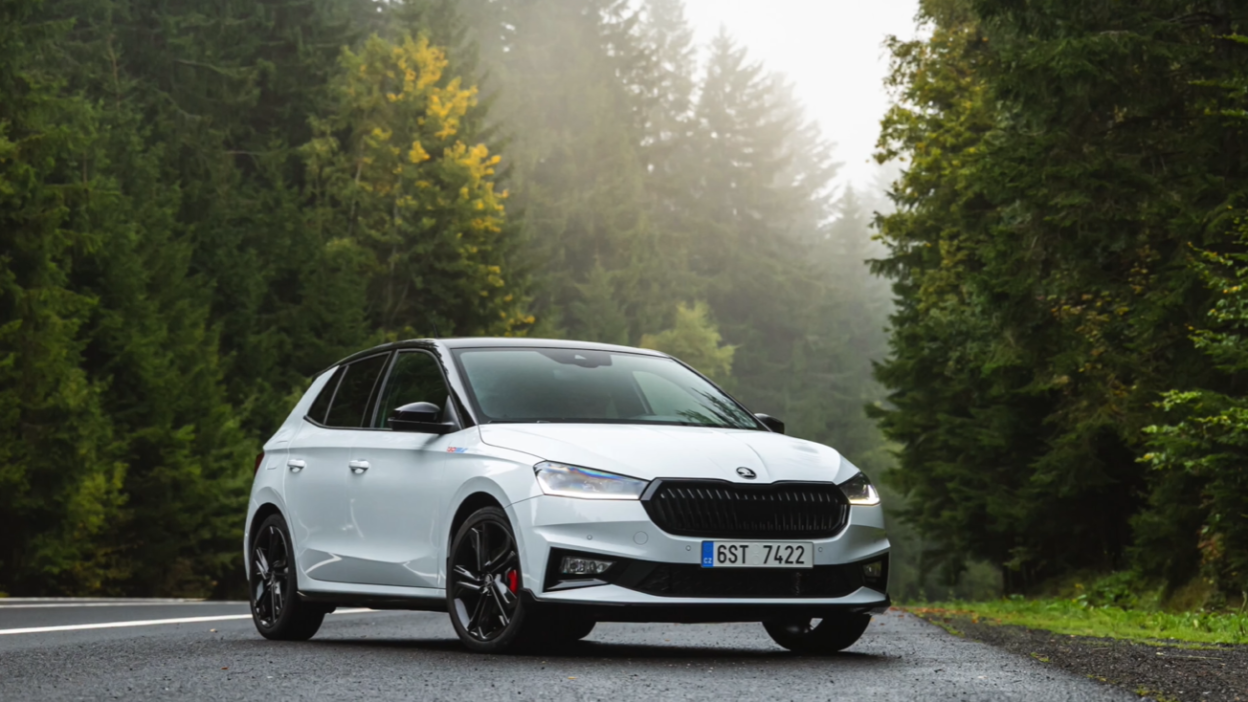
I just got my hands on something special. The Škoda Fabia 130 landed on Friday afternoon, and within five minutes of driving, I knew this little thing had something about it.
It’s not an RS. It’s not called a VRS. It’s just called the 130, and there’s a story behind that. But after spending time with this limited-edition warm hatch, I’ve fallen for it in a way I didn’t expect.
Let me explain why this €37,000 Fabia might just be one of the smartest hot hatch alternatives you can buy in 2026.
The Name Game: Why It’s Called 130
Škoda has deep roots in motorsport, particularly rallying. They used to make a Fabia RS, or VRS as it was called in the UK. That VRS designation disappeared thanks to a legal letter from Ford, who apparently don’t like other manufacturers using the RS letters.
So now we have the Fabia 130 instead.
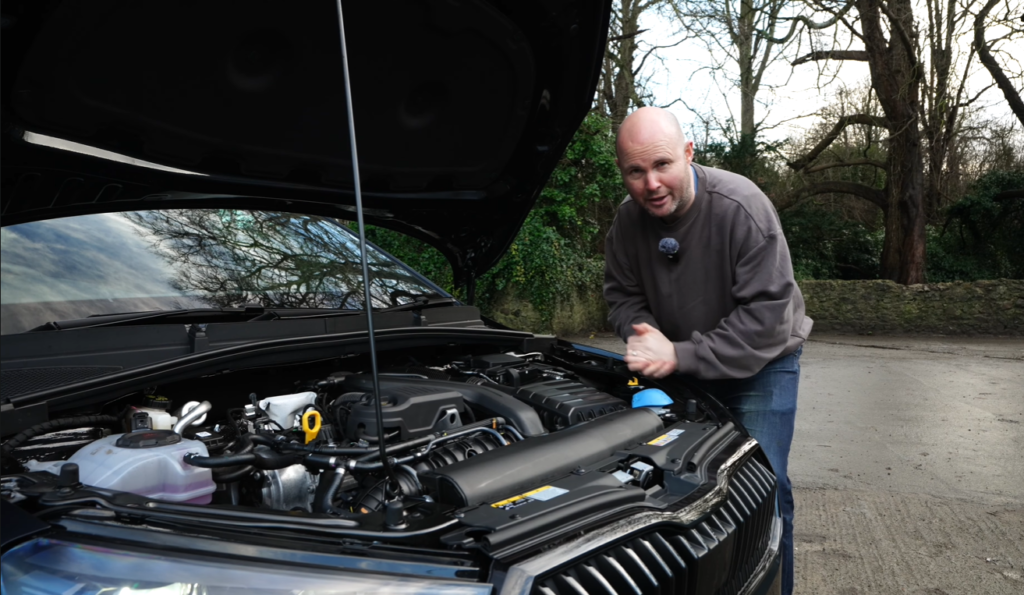
That number isn’t random. It represents 130 kilowatts of power output, which translates to 177 brake horsepower from a 1.5-liter turbocharged petrol engine. It’s one of the last small segment cars you can still buy with a proper petrol engine, which already makes it somewhat special.
Only about 40 of these are coming to Ireland, and availability in the UK is similarly limited at roughly £30,000 before options. This isn’t a mass-market car. It’s for Škoda enthusiasts and people who remember the old RS Fabias with genuine affection.
First Impressions: Understated Performance
Here’s my first criticism. The grille looks like a regular Sportline Fabia. There’s no 130 badge on the front. Come on, Škoda. If you’re making a special edition, make it obvious from the front.
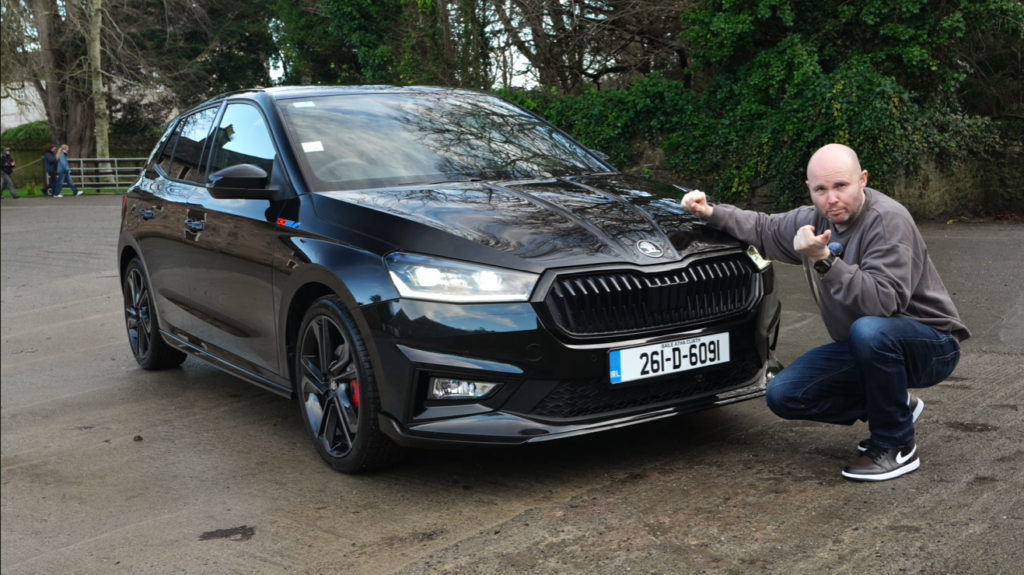
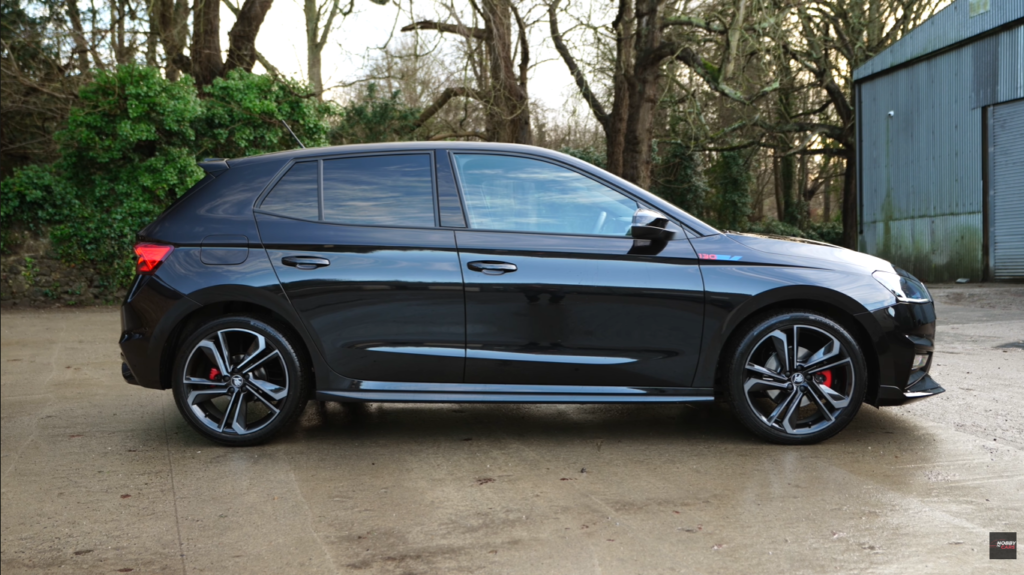
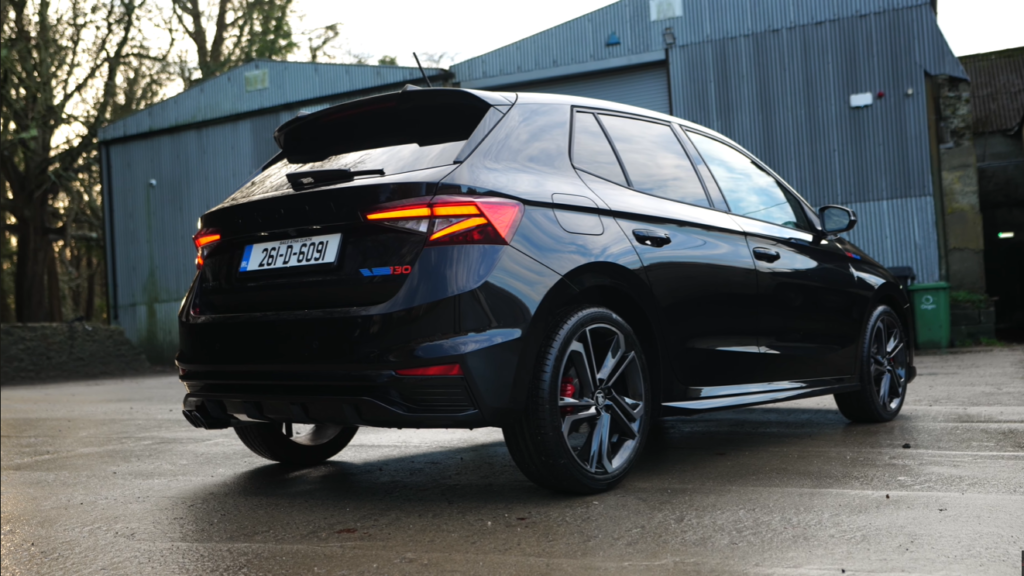
But step back and look at the whole package, and things improve. The body kit includes side skirts, a diffuser, splitters, and upgraded 18-inch alloy wheels. On this black example, everything blends together into a cohesive, stealthy package.
If you get the Fabia 130 in red, white, or blue, the A-pillars come in contrasting black, which helps it stand out more. The black-on-black look I’m testing is subtle, maybe too subtle for some people’s taste.
There are flashes of 130 badging on the front wings, the rear, and the door sills. Fair warning though, they’re stickers. They might rub off over time, which seems like an odd choice for a limited edition car.
Those Wheels: Gorgeous But Vulnerable
The 18-inch alloy wheels look fantastic, sitting in front of red brake calipers. The discs look a bit small given the wheel size, and they’re wrapped in Continental tires which grip beautifully.
But here’s the problem. These alloys come very close to the edge of the tire. I don’t see them lasting long against curbs. Sorry in advance, wheels. You’re probably going to get damaged.
Those big wheels also make the ride quite firm. There’s no adjustable damping, so you’re stuck with the suspension setup Škoda chose. More on that in a moment.
Styling Details: The Little Touches
I love the stubby aerial. I remember everyone with a Mk5 Golf GTI desperately wanting to swap their standard aerial for a stubby one. Škoda just fitted one from the factory. It’s complete.
The boot spoiler adds a nice detail without being obnoxious. The Škoda and Fabia lettering on the back is rendered in black to match the theme. And those twin exhausts just look cool, especially on a Fabia.
The whole car presents well, even if it doesn’t scream “special edition” quite as loudly as I’d like.
The Origin Story: Engineers Having Fun
Here’s an interesting tidbit from someone at Škoda headquarters. This car might actually be the result of engineers and designers getting in a room and asking, “What if we put the 1.5 turbo engine into the Fabia and stuck some 130 badges on it? What’s the worst that could happen?”
That’s simultaneously hilarious and brilliant. Sometimes the best cars come from people just wanting to build something fun rather than following a detailed business case.
I can verify Škoda’s rally heritage because I’ve been in an actual RS Fabia rally car on a frozen lake in Sweden with a professional rally driver who started driving at age five. It was a lot of fun rather than terrifying, and it proved these cars have legitimate motorsport DNA.
Inside: The Good, The Bad, The Surprising
Climbing into a €37,000 Fabia and finding manual air conditioning controls was a surprise. No climate control unless you specifically order it. For a car at this price point, that feels like an odd omission.
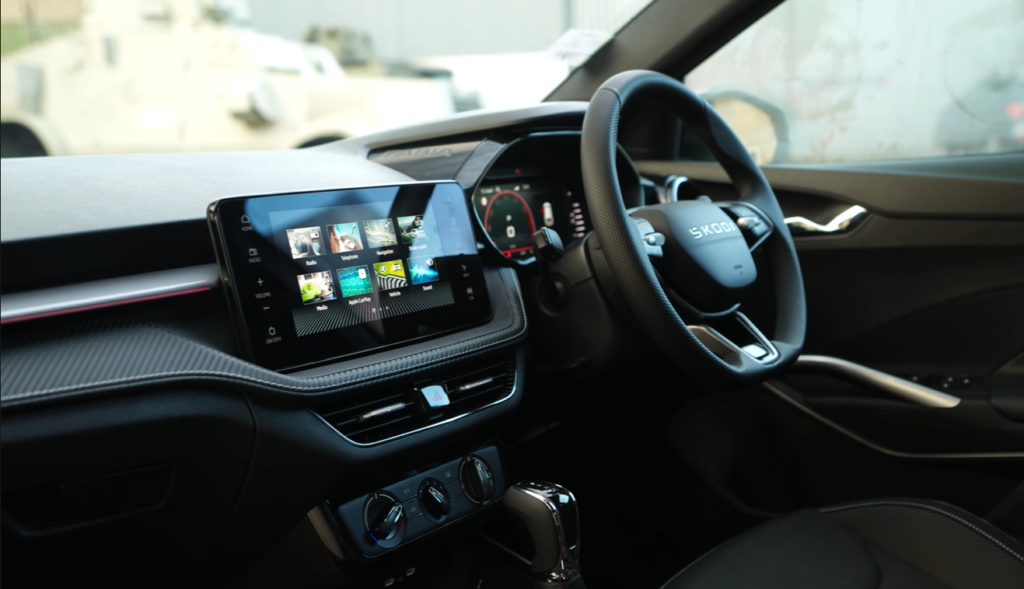
The flappy paddles aren’t standard either. You have to order them as part of a pack that also includes a winter pack with heated steering wheel. The paddles alone are €300, but you’re forced to take the whole package at €800 total.
Would I use flappy paddles? Honestly, probably not. I’m more of a manual gearbox person. But for a limited edition performance car, having to pay extra for them seems backwards.
That said, you do get a lot as standard. Wireless CarPlay and Android Auto work flawlessly. There’s air conditioning, just not automatic climate control. The steering wheel looks smart, though even the headrests could have received 130 branding to really complete the theme.
There’s a surprising amount of similarity between this and a Monte Carlo Fabia. If you’ve never sat in a Monte Carlo, you’d be impressed by the carbon fiber accents, silver trim pieces, ambient lighting, and perforated steering wheel. It feels nice inside.
But if you have experienced the Monte Carlo, you’ll notice this doesn’t feel dramatically more special, which is slightly disappointing given the price premium.
The Practical Stuff
There’s a pen holder, courtesy of cousins at SEAT. Two car park ticket holders in convenient locations. Two USB-C ports but no wireless charging plate, which feels like a miss in 2026.
There’s a mode selector button that lets you switch into Sport mode or Individual mode. You can turn off traction control and put the ESC into Sport mode for a bit of fun, but that’s about it. There’s no exhaust sound manipulation, no damping adjustment, nothing to physically tune.
But there is a handbrake. A proper handbrake for handbrake turns if you’re feeling hooligan-ish. That’s becoming increasingly rare, and I appreciate it.
Driving Experience: Light, Nimble, Fun
The moment I jumped into this car on Friday afternoon, I knew something was special. It’s so much lighter than the electric hot hatches currently on the market.
Compared to the VW ID.3 GTX, the Alpine A290, or even the Renault 5, this Fabia feels nimble and agile. It’s light on its toes in a way heavy EVs just can’t match. All those electric cars are fun in their own right, but there’s something fundamentally different about a lightweight petrol-powered car.
The ride is firm. That clunk you hear over bumps is a constant reminder that Škoda set this up for handling rather than comfort. Without adjustable dampers, you’re stuck with their choice, but honestly, I think they got the balance right.
The steering weight is spot on. Not too heavy, not too light. Just right, like Goldilocks found the perfect porridge. As you chuck it into corners, there’s minimal body roll. The car feels controlled and eager rather than fighting excess weight.
Performance: Plenty Fast Enough
With 177 horsepower from the 1.5 turbo, this isn’t a proper hot hatch. It’s a warm hatch, and that’s fine. It pulls cleanly through the rev range with nice torque delivery.
I’ve been driving in the wet with traction control off, and around bends, there’s not huge amounts of understeer. It’s impressive how well the front tires can put the power down and grip through corners without fancy limited-slip differential technology.
Torque steer is remarkably well-controlled. At around 80 kilometers per hour, I noticed some wheel hop once or twice in the wet, but that’s more about available grip than the car’s fault.
The brakes have a nice bite point, always important in a car like this. They feel progressive and confidence-inspiring.
Fuel Economy: Depends on Your Right Foot
Škoda claims you could potentially get 50 miles per gallon from this engine. I’ve been seeing about 7.5 liters per 100 kilometers at best, which isn’t quite manufacturer claim territory.
But that’s very much dependent on how much you enjoy that power. If you drive conservatively, better economy is achievable. If you drive it like I have been, expect something in the sevens to eights.
The Gearbox Question: Crying Out for a Manual
This comes with a seven-speed DSG automatic transmission, and while it’s smooth and quick, this car is absolutely crying out for a manual gearbox.
I know every single person testing this car on YouTube is probably saying the same thing, and that’s okay because it’s true. A manual would transform this from a fun car into something genuinely special for enthusiasts.
The DSG works well. It shifts cleanly, it doesn’t get confused, and it does everything an automatic should. But a lightweight warm hatch with a 1.5 turbo just begs for three pedals and a stick shift.
The Price Reality: €37,000 Makes It Complicated
Here’s where things get difficult. At €37,000 before any options, this is not a cheap car.
For context, a brand new Golf GTI now costs almost €60,000 before a single extra is added. There’s a 50th anniversary GTI coming soon that will probably tick boxes up to €80,000 with options.
So compared to a Golf GTI, the Fabia 130 represents relatively affordable hot hatch fun. But it’s not cheap in absolute terms.
You could buy a base Fabia for the low €20,000s. Asking people to spend €37,000 for this version is a tall order, even with the limited production numbers.
For that money, you could also buy:
- A used Alpine A110
- A VW ID.3 GTX (fully electric with more power)
- An Alpine A290 (electric hot hatch)
- A Renault 5 (electric retro hatch)
All very different cars, admittedly. But the competition at this price point is fierce.
Who Should Buy This?
This is clearly aimed at diehard Škoda fans and people who had an RS Fabia back in the 2000s and want to recapture some of that magic.
With such limited numbers, Škoda Ireland knows this won’t be for everybody, and that’s probably fine. This is a car for enthusiasts who understand what they’re getting and why they want it.
If you really want something that’s not quite a hot hatch, not quite an RS, but something lighter and more engaging than heavy electric alternatives, this could be your car.
A demo model could be a really smart buy. Because production numbers are so limited, I genuinely think this will become a bit of a collector’s item. Škoda enthusiasts will seek these out in years to come.
What Makes It Special
In 2026, if you want a fast-ish, warm-ish hatch at this budget price point, options are running thin. Proper hot hatches have become incredibly expensive. Electric alternatives are heavy despite being fun. Manual gearboxes are disappearing.
The Fabia 130 occupies a unique space. It’s one of the last small petrol-powered performance cars, limited in production, surprisingly engaging to drive, and light in a world of increasingly heavy vehicles.
It makes you feel back to basics in the best possible way. There’s no complicated drive mode system, no adaptive this or that, just a lightweight chassis with a punchy engine and decent suspension.
A more accomplished driver than me would set impressive lap times in this thing because the fundamentals are all there. Low weight, decent power, good chassis balance.
The Verdict: Insane Fun Despite the Price
At €37,000, plenty of people will say there are countless cars they could buy for that money. I get it. The price is genuinely difficult to justify on paper.
But here’s the thing. I paid less than this for a Mk5 Golf GTI brand new, albeit 21 years ago. But when you remind yourself that a Golf GTI is now €60,000, suddenly the Fabia 130’s pricing doesn’t seem quite as insane.
It’s insane fun for what it is. Yes, it’s crying out for a manual gearbox. Yes, the price seems high for a Fabia. Yes, it’s not a proper hot hatch RS model.
But if you’re a Škoda fan, if you want something lightweight and engaging, if you understand this represents one of the last opportunities to buy a small petrol-powered performance car, you could definitely do worse than taking a close look at this baby.
I love it. It’s not perfect, but it puts a smile on my face every time I drive it. And isn’t that what cars like this are supposed to do?
What do you think? Would you spend €37,000 on a Fabia 130, or is that too much for a warm hatch? Let me know in the comments.