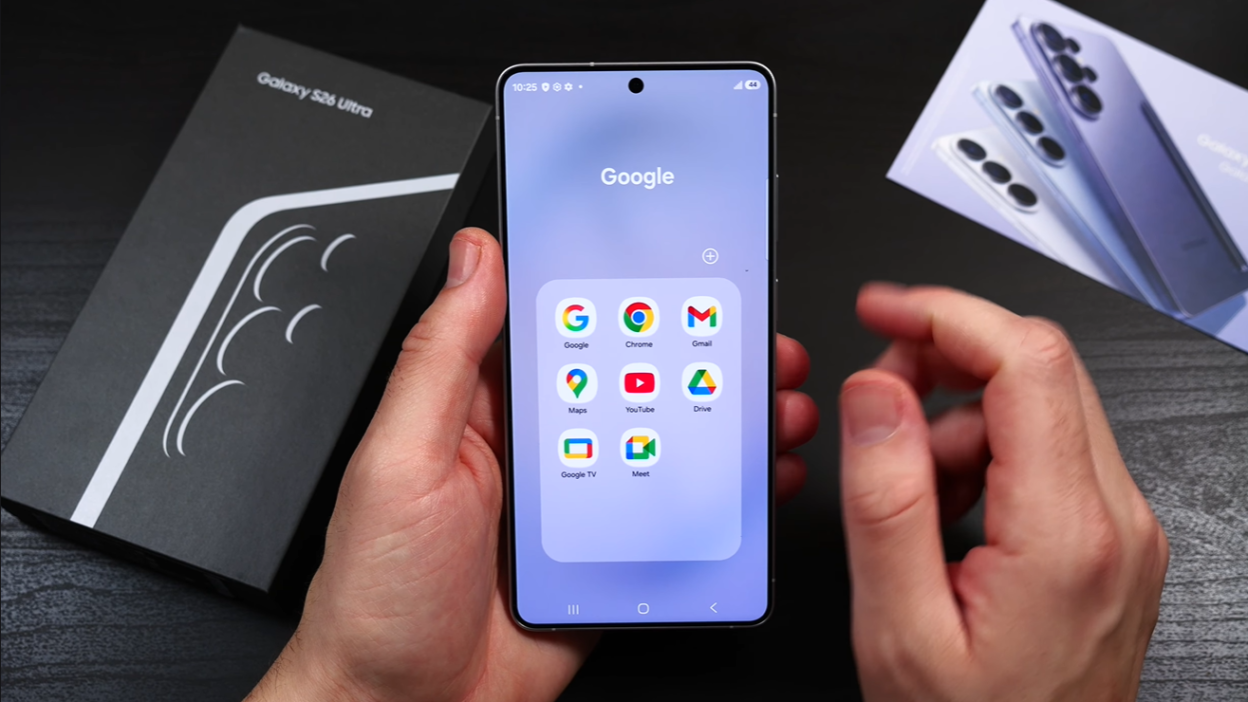
🚨 Before You Spend $1,299 on the S26 Ultra, Read This
Samsung wants you to believe the Galaxy S26 Ultra is worth $1,299.
I’m here to tell you why it’s not — at least not for everyone.
After weeks of testing, comparing it against Chinese flagships, running 14-hour battery tests, and actually using all those “hundreds of AI features,” I’ve identified 5 major reasons why you should seriously reconsider buying this phone.
This isn’t clickbait. These are legitimate deal-breakers that Samsung’s marketing won’t tell you about.
Reason #1: Samsung’s Cameras Are Falling Behind (And They Know It)
The Uncomfortable Truth
Samsung hasn’t changed the core camera hardware in TWO YEARS.
The S26 Ultra uses the same 200MP sensor from the S24 Ultra and S25 Ultra. Yes, they widened the aperture from f/1.7 to f/1.4 (47% more light). Yes, there are AI processing improvements.
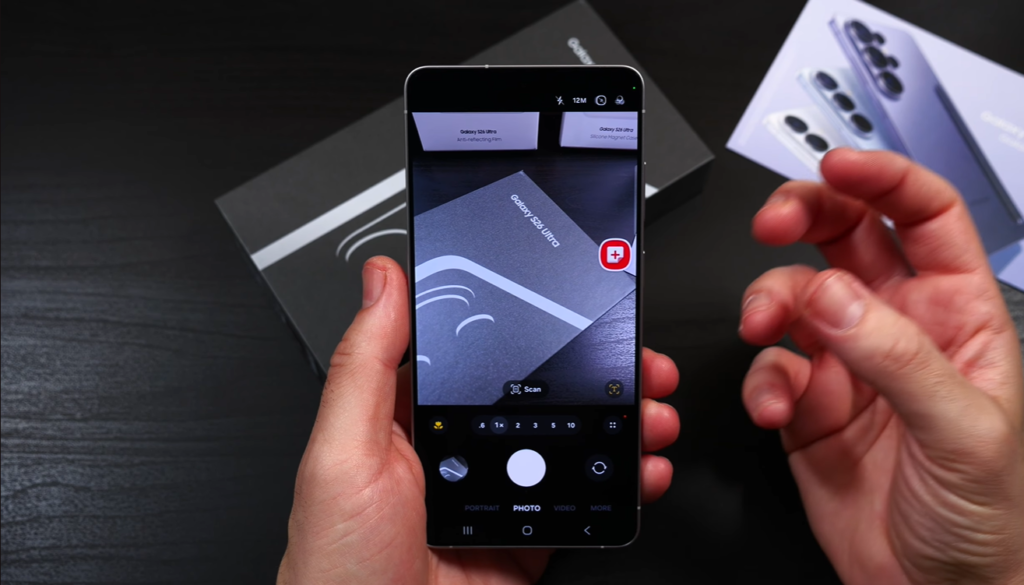
But the fundamental sensor hasn’t changed since 2024.
Meanwhile, Chinese flagships are making massive leaps:
Xiaomi 17 Ultra:
- 1-inch main sensor (vs Samsung’s 1/1.3-inch)
- Variable aperture f/1.6-f/4.0
- 50MP Sony LYT-900 sensors across all cameras
Oppo Find X9 Ultra:
- Dual 1-inch Sony LYT-900 sensors
- 200mm periscope telephoto
- Far superior low-light performance
Vivo X200 Pro:
- 1-inch LYT-900 sensor
- APO telephoto lens
- Better dynamic range
The Real-World Camera Test
We took the exact same photo in the gym on two phones:
- Samsung S26 Ultra
- Xiaomi 17 Ultra
Samsung’s result: A balanced photo. Good exposure. Punchy colors. Nothing to complain about… in isolation.
Xiaomi’s result: Immediately, obviously better.
Why Xiaomi wins:
- More depth from the larger 1-inch sensor
- Real, organic detail on faces instead of Samsung’s artificial oversharpening
- Better dynamic range in mixed lighting
- More natural bokeh in portrait mode
The gap is noticeable. And it’s widening every year.
Portrait Mode: Samsung vs Xiaomi
Same story. Samsung’s portraits are good. Xiaomi’s are genuinely better:
- More natural background blur
- Better subject separation
- More accurate skin tones (no aggressive smoothing)
Low-Light Photography: Where Samsung Falls Apart
This is where the sensor size difference becomes painfully obvious.
Samsung’s Night Mode: Solid. Usable. Fine.
Xiaomi/Oppo/Vivo Night Mode: Legitimately impressive.
Why Chinese flagships win in low light:
- Larger sensors capture more light (physics, not software)
- Variable apertures adapt to lighting conditions
- Better computational photography (yes, better than Samsung)
We tested this in a dimly lit restaurant. Samsung produced a bright but noisy photo with aggressive noise reduction that smoothed out details.
Xiaomi produced a naturally bright photo with real detail preserved.
The Oversharpening Problem
Samsung applies aggressive sharpening to compensate for the smaller sensor’s lack of fine detail.
Result: Photos look great on Instagram thumbnails but fall apart when you:
- Zoom in
- Print them
- View them on a large screen
Xiaomi’s photos have genuine, organic detail. Samsung’s photos have artificial sharpness painted on top.
“But Most People Won’t Notice”
This is Samsung’s defense, and it’s technically true.
For 99% of casual users:
- Samsung’s cameras are more than good enough
- Photos are bright, colorful, Instagram-ready
- The subtle face-tuning makes people look good
But here’s the problem:
If you’re spending $1,299 on a flagship phone in 2026, you deserve cutting-edge camera hardware, not recycled sensors from 2024.
You’re paying flagship prices for mid-cycle camera specs.
And that’s unacceptable.
Reason #2: The Same Damn Battery for THREE YEARS
5,000mAh. Again.
Let me be very clear about this:
The Samsung S26 Ultra has a 5,000mAh battery. The Samsung S25 Ultra has a 5,000mAh battery. The Samsung S24 Ultra has a 5,000mAh battery. The Samsung S23 Ultra has a 5,000mAh battery.
FOUR YEARS. SAME BATTERY.
What Competitors Are Doing
While Samsung has been copy-pasting the same battery spec for four years, here’s what Chinese flagships are packing:
OnePlus 15 Pro: 6,100mAh
Xiaomi 17 Ultra: 6,000mAh
Oppo Find X9 Pro: 6,500mAh
Realme GT 8 Pro: 7,100mAh
iQOO 15 Pro: 6,500mAh
These are 20-40% LARGER batteries in phones that are often thinner and lighter than the S26 Ultra.
“But the Battery Life Is Great!”
Yes, I know. In our 14-hour battery test, the S26 Ultra lasted 14 hours and 23 minutes.
It beat:
- Samsung S25 Ultra (13h 51m)
- iPhone 17 Pro Max (14h 2m)
- Xiaomi 17 Ultra with 6,000mAh (13h 47m)
How? More efficient Snapdragon 8 Elite Gen 5 chip. Better display optimization. Software improvements.
And Samsung will tell you: “See? We don’t need a bigger battery. Optimization is better than raw capacity.”
Why This Argument Is BS
Here’s what Samsung isn’t telling you:
If Samsung’s optimization is this good with a 5,000mAh battery, imagine what they could achieve with a 6,000mAh or 6,500mAh battery.
Think about it:
- Current S26 Ultra: 14.5 hours with 5,000mAh
- Hypothetical S26 Ultra with 6,500mAh: ~19 hours (30% more capacity)
You could get TWO FULL DAYS of heavy use.
Instead, Samsung is optimizing software to compensate for hardware stagnation.
The Real Reason Samsung Won’t Upgrade
Cost.
Bigger batteries cost more. They require more internal space (which means redesigning the chassis). They add weight.
Samsung has calculated that most users don’t complain about battery life, so why spend money upgrading it?
But you’re paying $1,299. You deserve better than “good enough.”
The Charging Speed Copium
Samsung will point to the 65W fast charging (up from 45W on S25 Ultra) as evidence they’re improving battery experience.
My response: Cool. Now give us both — bigger battery AND faster charging.
Chinese flagships have:
- Bigger batteries (6,000-7,000mAh)
- Faster charging (120W-150W wired, 50W-80W wireless)
OnePlus 15 Pro:
- 6,100mAh battery
- 100W wired charging (0-100% in 25 minutes)
- 50W wireless charging
Samsung S26 Ultra:
- 5,000mAh battery
- 65W wired charging (0-100% in 55 minutes)
- 25W wireless charging
Samsung is literally years behind on both fronts.
Reason #3: 90% of the AI Features Are Useless Toys
Hundreds of AI Features. Zero actually matters.
Samsung’s entire marketing pitch for the S26 Ultra is: “We have more AI features than anyone else!”
And they’re right. The S26 Ultra has hundreds of AI features.
The problem? Almost all of them are toys you’ll never use after the first week.
Let me break down Samsung’s AI into two categories:
Category 1: Automatic AI (That Doesn’t Work Well)
These are AI features that work in the background to improve your daily experience:
Bixby Assistant:
- I asked: “How well-reviewed is this London restaurant?”
- Bixby answered: About a restaurant in North Carolina
Now Nudge:
- Supposed to suggest actions based on context (e.g., share your location when someone asks “where are you?”)
- After hours of testing, I gave up trying to make it work reliably
- It needs far too many nudges to actually be useful
Live Translation:
- This actually works well
- But Google Translate does the same thing for free
Verdict: The “smart” AI features aren’t smart enough yet to rely on.
Category 2: Manual AI (That Better Tools Do Better)
These are AI features you actively choose to use:
AI Wallpaper Generation:
I generated a cool space-themed wallpaper with my partner. Took 10 seconds. Looked great!
Then I checked the resolution: 1024×1024 pixels.
The S26 Ultra’s screen is 3120×1440 pixels.
Samsung’s own AI feature doesn’t generate wallpapers at the right resolution for Samsung’s own phone.
How embarrassingly sloppy is that?
AI Photo Merging:
You can merge two photos together (e.g., add your cat to a family photo he wasn’t actually in).
The problem: You lose 30% of the resolution every time you do this.
The quality drop is significant enough that you might as well:
- Buy a Galaxy S10 instead
- Use the money you saved to buy a real cat
- Take real photos with the real cat
AI Photo Editing (Sky Replacement, Object Removal):
These work… okay. But:
- Photoshop does it better
- Google Photos does it for free
- Snapseed does it for free
If you care enough about photo editing to actually use these features, you’ll use dedicated tools, not Samsung’s half-baked implementations.
AI Writing Tools:
You can rewrite your messages as:
- An 18th century pirate
- Formal business language
- Casual slang
My life was truly in shambles before I could rewrite my shopping list as a pirate.
The AI Invitation Disaster
Samsung heavily promoted the AI Event Invitation Generator.
I tested it: “Create invitation for sophisticated dinner, Natural History Museum London, 7 PM, formal attire, March 15th.”
Result: A pretty image with dinosaur skeletons in the background.
Problems:
- No time listed (just a vague image)
- No location details (no address, no map)
- No context (what am I invited to?)
If you actually wanted to invite someone to an event, you’d use Canva. It takes the same amount of time and produces something actually usable.
The Fog-to-Sunny Photo Scam
This went viral on X:
- User took a foggy cityscape photo
- Used Samsung AI to “remove fog”
- Result: Beautiful sunny day with clear buildings
Samsung’s marketing: “Unleash your imagination! Create the photo you wanted!”
Reality: You just created fake content.
Are you going to set that as your wallpaper and pretend you “captured this beautiful miracle of nature at 5 AM”?
It’s not a photo anymore. It’s AI-generated fiction.
The Real AI Problem
On-device AI: Limited by the phone’s processing power (not very capable)
Cloud AI: Limited by cost (Samsung can’t run powerful models for free)
Result: You get a bunch of half-baked toy features instead of genuinely useful AI tools.
90% of these AI features will never be touched after the first week.
And Samsung knows it.
Reason #4: Privacy Display Killed the Anti-Reflective Coating
The Trade-Off Nobody Talks About
Samsung’s big new feature is Privacy Display — technology that blacks out your screen when viewed from side angles.
It’s genuinely clever technology. Two sets of subpixels (wide and narrow) that selectively turn off to reduce side-angle visibility.
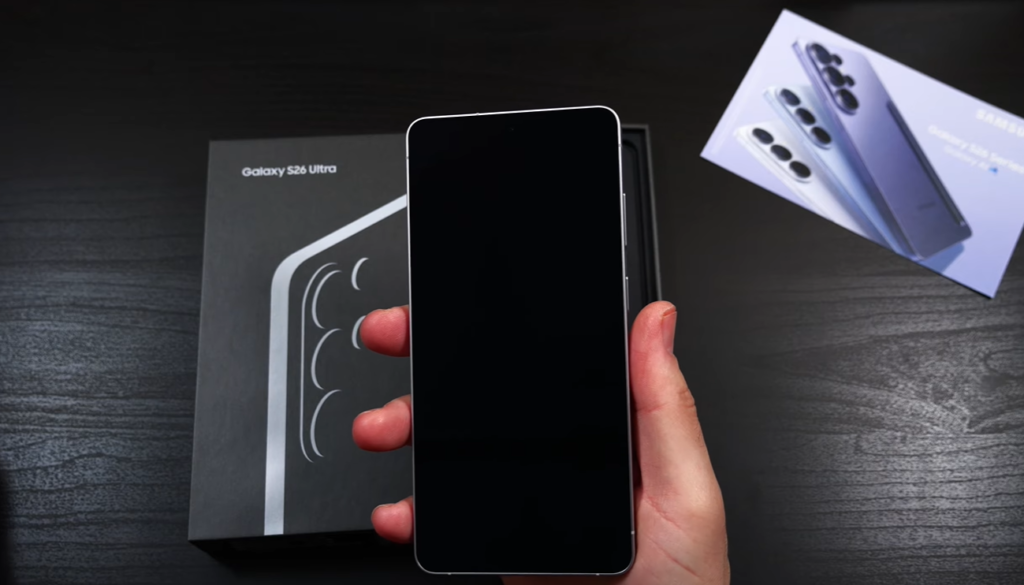
But here’s what Samsung didn’t tell you:
To implement Privacy Display, Samsung had to weaken the anti-reflective coating that made previous Ultra phones the best outdoor displays in the industry.
Let me repeat that:
Samsung took the single best feature of their displays — the anti-reflective coating that 100% of users benefited from every day — and nerfed it to add a feature that maybe 10-20% of users will use occasionally.
The Anti-Reflective Coating Was a Game-Changer
The S24 Ultra and S25 Ultra had the best anti-reflective coating ever put on a smartphone.
Benefits:
- Screens were readable in direct sunlight
- Minimal glare from overhead lights
- Vibrant colors even in bright environments
- No annoying reflections in car windows
It was universally loved. Every review praised it. Users noticed it immediately.
The S26 Ultra Is More Reflective
We tested the S26 Ultra side-by-side with the S25 Ultra in bright sunlight.
The S26 Ultra is noticeably more reflective.
Not dramatically worse. But enough that you’ll notice if you’re upgrading from an S25 Ultra.
Samsung sacrificed a universal benefit for a niche feature.
Does Privacy Display Even Work?
We tested extensively. Here’s the reality:
Standard Privacy Display Mode:
- Screen dims slightly from side angles
- Still clearly readable at 30° angles
- Only becomes unreadable at 60°+ angles
Maximum Privacy Protection Mode:
- Aggressive dimming makes side viewing impossible
- But it also makes YOUR screen look washed out
- Reduced contrast, brightness, and color accuracy
- You won’t want to use this mode
The Phone Number Leak Incident
In our first hands-on video of the S26 Ultra, we were filming at an angle with Privacy Display turned ON.
We accidentally leaked someone’s phone number on camera.
That person received over 100 text messages in 2 hours.
Privacy Display was ON. It still didn’t work.
Who Is This Feature Even For?
Privacy Display is useful for:
- Entering passwords on public transport (maybe)
- Banking apps in cafes (sometimes)
- Viewing sensitive emails in crowded spaces (occasionally)
Privacy Display is useless for:
- Most of your daily use
- When you’re at home
- When no one’s around (which is most of the time)
You’re trading a feature you used 100% of the time (anti-reflective coating) for a feature you’ll use 5% of the time (Privacy Display).
That’s a bad trade.
Reason #5: You’re Paying $1,299 for Aluminum After Two Years of Titanium
The Downgrade Nobody Saw Coming
Samsung S24 Ultra: Titanium frame
Samsung S25 Ultra: Titanium frame
Samsung S26 Ultra: Aluminum frame
Wait, what?
After two years of marketing titanium as the premium material, Samsung downgraded to aluminum on the S26 Ultra.
Samsung’s Official Excuse
Samsung’s explanation: “Easier to color-match the aluminum frame to the Gorilla Armor 2 glass.”
Translation: “Titanium is expensive, and customers don’t care enough for us to keep using it.”
The Optics Are Terrible
Forget the technical details for a moment. Let’s talk about perception.
What this looks like to consumers:
- Samsung is cutting corners
- Samsung is reducing build quality
- Samsung is charging the same price for less premium materials
iPhone 17 Pro Max: Still titanium.
Samsung S26 Ultra: Downgraded to aluminum.
The message this sends: Samsung is prioritizing profit margins over premium materials.
“But Aluminum Is Actually Better!”
I’ll give Samsung this: Aluminum does have some advantages.
Aluminum vs Titanium:
- Lighter: 214g (aluminum) vs 218g (titanium)
- Thinner: 7.9mm (aluminum) vs 8.2mm (titanium)
- Better heat dissipation: Aluminum conducts heat better
- Easier to repair: Aluminum frames are cheaper to replace
In terms of practical daily use, aluminum is fine. Some people even prefer it.
But that’s not the point.
The Problem Is the Principle
Here’s why this matters:
Samsung spent two years marketing titanium as a premium feature. They justified the $1,299+ price tag partially on the strength of “premium titanium construction.”
Now they’ve removed that feature while keeping the same price.
What’s next?
- S27 Ultra: Plastic frame “because it’s lighter and more eco-friendly”?
- S28 Ultra: Remove the S Pen “because only 20% of users use it daily”?
This sets a dangerous precedent.
If Samsung can remove premium features without reducing the price, what’s stopping them from removing more features in the future?
You’re Subsidizing Samsung’s Profit Margins
Here’s the uncomfortable truth:
Titanium costs more than aluminum. By switching to aluminum, Samsung saves money on every S26 Ultra sold.
But they didn’t pass those savings to you.
The S26 Ultra costs the same $1,299 as the titanium-framed S25 Ultra.
You’re paying the same price for objectively less premium materials.
That’s not a good deal.
The Bottom Line: Who Should Actually Buy the S26 Ultra?
✅ Buy the S26 Ultra If:
1. You absolutely need the S Pen
- It’s the only flagship with an integrated stylus
- If this is a dealbreaker feature for you, there’s no alternative
2. You’re deep in the Samsung ecosystem
- Galaxy Watch, Buds, Tab, Book integration is excellent
- Switching would be expensive and inconvenient
3. You value 7-year software support above all else
- Samsung guarantees 7 years of updates
- Best long-term support in Android
4. You don’t care about bleeding-edge cameras
- For casual photography, Samsung is still good enough
- Instagram photos will look fine
❌ Don’t Buy the S26 Ultra If:
1. You care about camera quality
- Xiaomi 17 Ultra, Oppo Find X9 Pro, Vivo X200 Pro are objectively better
- Even iPhone 17 Pro Max has better video
2. You want cutting-edge battery technology
- 5,000mAh is the same as 2023
- Chinese flagships have 6,000-7,000mAh batteries
3. You actually want to use AI features
- 90% are toys, not tools
- Better free alternatives exist for everything Samsung AI does
4. You’re upgrading from S25 Ultra
- Improvements are marginal
- Privacy Display isn’t worth the anti-reflective coating sacrifice
- Save your money, wait for S27 Ultra
5. You want the best value
- OnePlus 15 Pro offers similar performance for $999
- Pixel 10 Pro has better cameras and AI for $899
- Xiaomi 17 Ultra has better cameras and a battery for $1,099
What You Should Buy Instead
If You Want Better Cameras
Xiaomi 17 Ultra ($1,099)
- 1-inch main sensor
- Variable aperture
- Superior low-light performance
- 6,000mAh battery
- 120W charging
Vivo X200 Pro ($1,149)
- 1-inch LYT-900 sensor
- 200mm APO telephoto
- Best-in-class zoom quality
- 6,500mAh battery
If You Want Better Value
OnePlus 15 Pro ($999)
- Snapdragon 8 Elite Gen 5 (same chip)
- 6,100mAh battery
- 100W charging
- Similar performance, $300 less
Google Pixel 10 Pro ($899)
- Best computational photography
- Free unlimited Google Photos storage
- 7 years of updates
- Better AI features (actually useful)
- $400 less than S26 Ultra
If You Want the Best All-Around Experience
Oppo Find X9 Pro ($1,199)
- Dual 1-inch sensors
- 6,500mAh battery
- 100W charging
- ColorOS 16 (arguably better than One UI)
- $100 less than S26 Ultra
Final Thoughts: Samsung Is Coasting
The Samsung Galaxy S26 Ultra isn’t a bad phone.
It’s a disappointing phone.
Disappointing because Samsung is clearly coasting on brand recognition instead of pushing boundaries.
What Samsung is doing:
- Recycling camera sensors from 2024
- Copy-pasting battery specs from 2023
- Downgrading from titanium to aluminum
- Adding hundreds of AI gimmicks nobody will use
- Trading universal benefits (anti-reflective coating) for niche features (Privacy Display)
What Samsung should be doing:
- Upgrading to 1-inch camera sensors
- Increasing battery to 6,000-6,500mAh
- Keeping premium materials (or reducing price)
- Adding genuinely useful AI features
- Maintaining universally loved features
Samsung is making tiny tweaks while competitors are making leaps.
And they’re charging $1,299 for the privilege.
If you’re okay with “good enough,” the S26 Ultra is fine.
But if you want the absolute best your money can buy in 2026, look elsewhere.
Because Samsung isn’t trying to be the best anymore. They’re trying to be “good enough” while maximizing profit margins.
And you deserve better than that.
What do you think? Are these deal-breakers for you, or am I being too harsh? Let me know in the comments.
Disclaimer: This article represents the author’s opinion based on extensive hands-on testing. Your priorities and use cases may differ. Always test phones in person before purchasing.