aBy MyPitShop Tech Team | March 2026 | 10 Min Read
Nothing has built a loyal fan base by doing things differently. Transparent backs, glyph lighting, a clean software experience — the brand has always carried an air of “we care about design and usability more than the big guys.” The Nothing Phone 4a arrives with that same promise. But does it deliver, or does it ask you to compromise a little too much?
After spending significant time with the device — including waiting for an OTA update to ensure the camera samples reflect the best the phone can currently offer — here is a thorough breakdown of everything you need to know before you decide.
What’s in the Box?
Right out of the gate, Nothing keeps things simple. Inside the box you get:
- The Nothing Phone 4a
- A USB-C charging cable
- A rubber/plastic protective case (a nice touch at this price point)
- No charger — as has become standard across the industry
The inclusion of a case is genuinely appreciated. It’s a small gesture, but it signals that Nothing understands its audience. Most buyers at this price range are budget-conscious, and not having to immediately spend extra on a case is a small but real win.
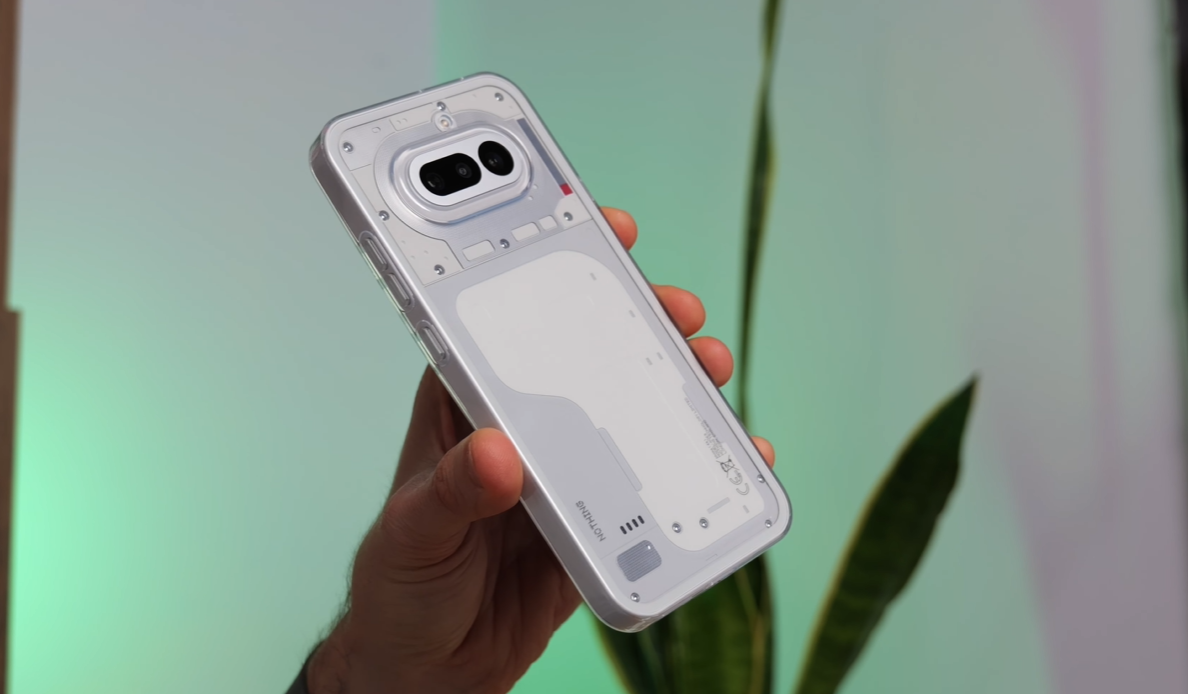
The glyph interface — Nothing’s signature LED lighting system on the back — is noticeably more restrained on the 4a compared to previous models. It’s reduced to a single bar, and there’s a red indicator light that glows during recording. For those who found the glyphs gimmicky or distracting in the past, this version is far less “in your face.” It’s subtle, functional, and honestly quite tasteful.
The Cons: Where the Nothing Phone 4a Falls Short
Let’s get the frustrations out of the way first.
1. Button Wobble — A Returning Problem
The volume up, volume down, and power buttons all have a noticeable wobble. This is not a new issue — the Nothing Phone 3 had the same problem — and it’s disappointing to see it carry over to the 4a. Physical buttons should feel solid, precise, and tactile on a phone at this price. A wobbly button is a constant, low-level reminder that corners were cut somewhere.
The essential button, to its credit, does not wobble. But that partial fix only makes the other three stand out more by comparison. It’s worth noting this is a review unit, and retail units may differ — but it’s a concern worth flagging.
2. Ergonomics: Too Wide for Comfort
On paper, the Nothing Phone 4a has a 6.78-inch screen. That sounds normal in a world full of 6.7-inch and 6.9-inch phones. But here’s the problem: the width.
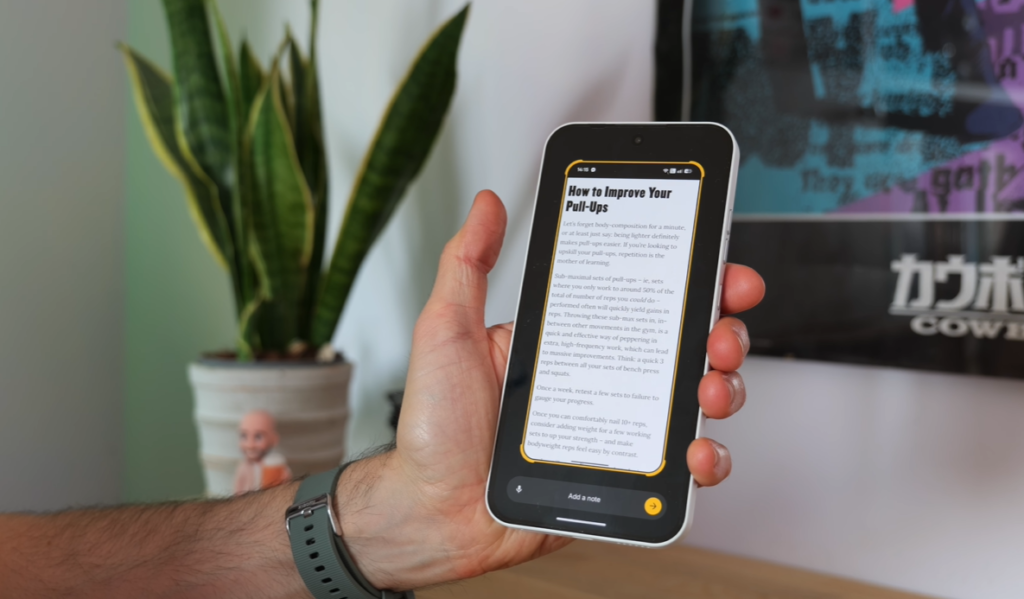
When compared side by side with phones like the Samsung Galaxy S26 Ultra (which has an even larger 6.9-inch screen), the Google Pixel 10 Pro XL, and the Motorola Edge 7T Fusion, the Nothing Phone 4a is actually harder to hold one-handed than all of them. The width is so pronounced that even with an average-sized hand, your thumb can barely reach across the display. You have to stretch — genuinely stretch — just to reach the other edge.
The S26 Ultra, with its physically bigger screen, is still easier to grip. That’s not a coincidence; it’s the result of thoughtful industrial design.
At 205 grams, the phone also feels heavier than that number suggests. More critically, it feels top-heavy while typing — an ergonomic issue that creates real fatigue during extended use.
This is described as one of the biggest missed opportunities on the 4a. Nothing already has the 4a Pro for the premium segment. They could have differentiated the base 4a with a slightly narrower build and a screen around 6.5 inches — making it more comfortable to hold while still being competitive. Instead, they went wide, and it costs the user experience in a meaningful way.
3. The 3.5x Camera: Big Promise, Poor Execution
The headlining camera feature of the Nothing Phone 4a is its 3.5x optical zoom lens — an 80mm equivalent focal length that should be excellent for portraits and mid-range telephoto shots. On paper, this is a differentiating feature at this price point. In practice, it’s a letdown.
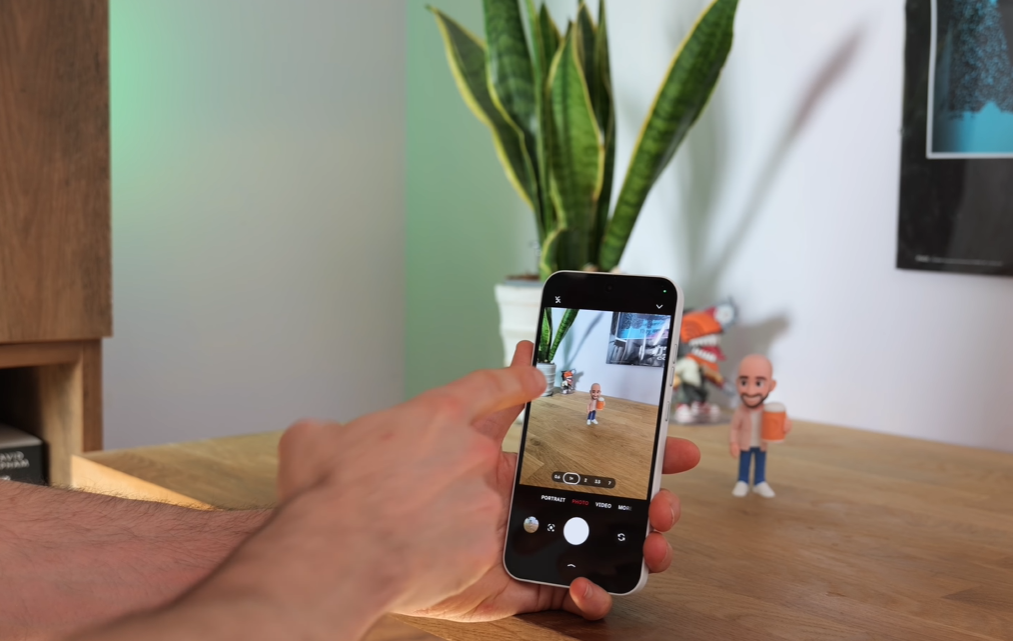
Here’s what the testing revealed:
- In good outdoor lighting: The 3.5x produces usable shots, but sharpness and detail trail behind the primary lens.
- In artificial lighting: Performance drops noticeably.
- In low light: The 3.5x struggles badly. Shutter speeds stretch to nearly 3 seconds to compensate for the small aperture, resulting in blurred shots unless additional light is introduced.
- Skin tones with the 3.5x: Simply not good. Portrait shots with the telephoto lens produce skin tones that look off — neither natural nor flattering.
- Video with the 3.5x: The quality is poor. When switching to the 3.5x during video recording, the footage lacks sharpness and fails to match what you’d expect from an optical zoom lens.
For a feature that Nothing has specifically highlighted as a reason to buy this phone, the 3.5x camera underdelivers significantly.
4. The Ultra-Wide Camera: 8MP in 2026?
The ultra-wide lens on the Nothing Phone 4a is only 8 megapixels — a resolution that feels out of place on a phone targeting this segment in 2026. The consequences are predictable:
- Ultra-wide shots show visible weakness in artificial light and at night
- Colors from the ultra-wide don’t match the primary camera — there’s a noticeable color shift between lenses
- In video mode, the ultra-wide is locked out entirely when shooting in 4K — you can only use it in 1080p at 30fps
A 13-megapixel ultra-wide would have been a meaningful improvement. The choice to go with 8MP feels like a deliberate cost cut that hurts the real-world camera experience.
5. Artificial Limitations in Video
This is perhaps the most frustrating category of complaints, because the limitations don’t appear to be hardware-related — they appear to be software choices.
- Ultra-wide in video: Not available in 4K. Limited to 1080p at 30fps — not even 1080p at 60fps.
- Front-facing camera in 4K: Disabled entirely. The front camera maxes out at 1080p at 30fps or 60fps.
Here’s the thing: the Snapdragon 7s Gen 4 chipset inside the Nothing Phone 4a is fully capable of doing all of this. Competitors using the same chipset — including the Motorola Edge 7T Fusion — support 4K recording across all cameras without issue.
The strong suspicion here is that these are intentional software limitations designed to push buyers toward the higher-priced Nothing Phone 4a Pro. Whether that’s fair is a matter of opinion, but it’s hard to look at this evidence and reach any other conclusion.
6. Pricing Needs to Be More Aggressive
The Nothing Phone 4a starts at approximately ₹32,000 for the 8GB/128GB base variant. There are card-based discounts available that bring the effective price down a couple of thousand rupees, but even accounting for those, the value proposition is under pressure.
The Motorola Edge 7T Fusion — its most direct rival — comes with LPDDR5X RAM and a charger included in the box. The Nothing Phone 4a ships with LPDDR4X RAM and no charger. These aren’t tiny differences at this price point; they matter to buyers who are carefully comparing specifications.
The Pros: Where the Nothing Phone 4a Gets It Right
Now for the good news — and there is genuinely a lot of it.
1. Exceptional Software Optimization
Nothing’s NothingOS continues to be one of the cleanest, most well-optimized Android experiences available at this price point. The Phone 4a runs on the Snapdragon 7s Gen 4 — the same chipset used in several competing devices — but the software experience here is noticeably more refined.
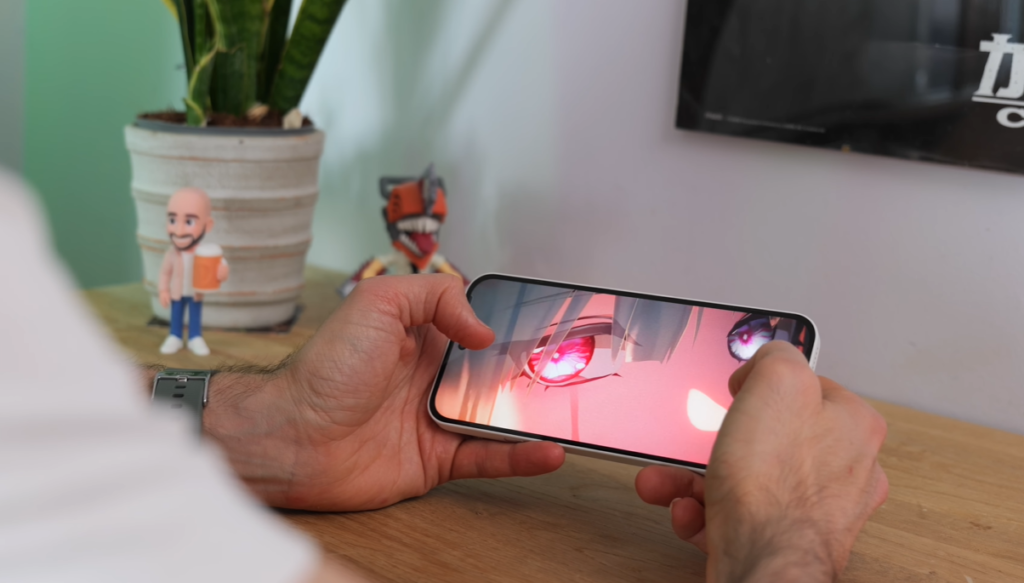
At 120Hz, scrolling is butter-smooth. Apps open quickly. Animations are fluid. There was no lag, no jank, and no hesitation noticed during testing. For anyone who has used a mid-range phone and felt that occasional stutter that breaks the flow of a UI — this phone simply doesn’t have it.
This is the result of real engineering effort, and it shows. Nothing is putting genuine work into software optimization, and the 4a benefits from everything they’ve learned across previous devices.
2. Zero Bloatware (Almost)
The Nothing Phone 4a ships with a remarkably clean software experience. Yes, Facebook and a handful of typical pre-installed apps are present — but that’s unavoidable in today’s market. Every major brand, including Samsung, ships with third-party apps.
What Nothing avoids is the really intrusive stuff — extra app stores, duplicate apps, notification-spamming services, and questionable background processes. The phone feels like yours from the moment you set it up, not like a vehicle for someone else’s advertising.
The NothingOS interface has its own distinctive visual style with custom icon shapes and layouts, but if you prefer a standard Android look, you can switch during setup. Flexibility without forcing an aesthetic on you — that’s the right approach.
3. Outstanding Battery Life
The Nothing Phone 4a packs a 5,400 mAh battery — not the largest on the market, and it doesn’t use the newer silicon-carbon chemistry found in some competitors. But the battery performance in real-world use is remarkable.
In actual testing, the phone delivered a screen-on time of 8 hours and 32 minutes over nearly two full days of use — including significant mobile data usage of around 1.65GB. The battery sat at 2% when the test concluded, meaning essentially every drop of charge was used efficiently.
For context, that’s the kind of endurance you’d expect from a phone with a 6,500 mAh battery. The optimization Nothing has done with the software and power management more than compensates for the battery size. Most users will easily get a day and a half on a single charge. Heavy users will get through a full day without anxiety.
4. Fluid 120Hz AMOLED Display — Beautiful in Real Life
The display on the Nothing Phone 4a is a proper AMOLED panel with a 120Hz refresh rate and genuinely good quality. Color reproduction is accurate, blacks are deep (as AMOLED screens deliver), and the overall viewing experience is polished.
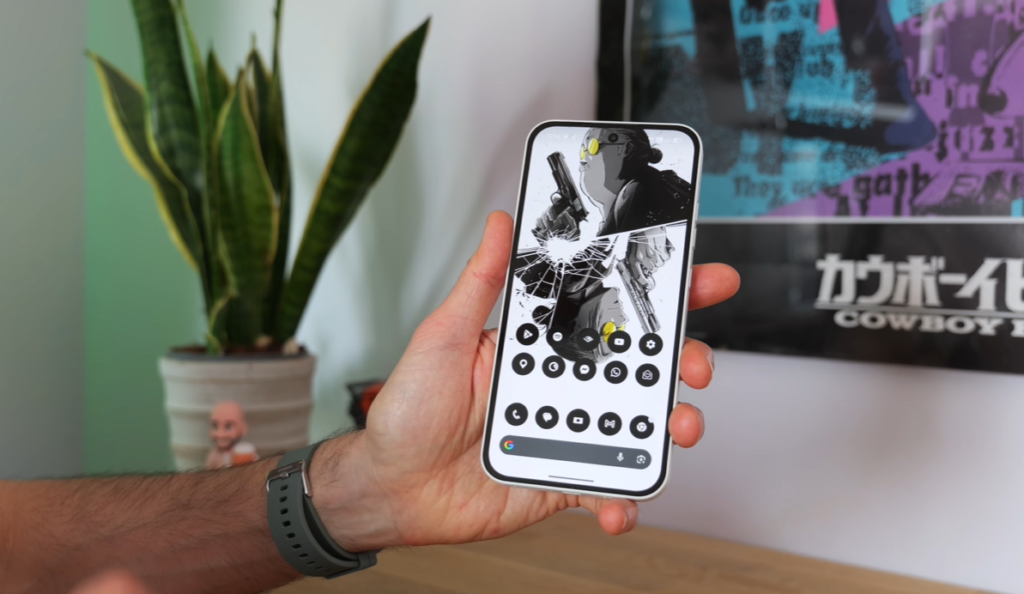
More importantly, the real-world brightness is impressive for this price range. Testing in direct morning sunlight at around 8:30 AM — a legitimate stress test for any smartphone screen — the display remained easily legible. Manufacturers often advertise peak nit values that are only achievable in narrow bursts under specific conditions. What matters is whether you can read your screen on a bright day. This phone passes that test comfortably.
5. Stereo Speakers That Impress
The stereo speakers on the Nothing Phone 4a are loud and clear. At 60% volume, they fill a room. At maximum volume, there’s a slight harshness in the very top end — but very few people ever listen above 60-70% anyway.
For media consumption, music, and speakerphone calls, the audio output here is solidly above average for the price segment. This is one of those features that doesn’t show up well in spec sheets but makes a real difference in day-to-day enjoyment.
6. In-Display Fingerprint Scanner Works Well
No complaints here. The in-display fingerprint scanner is fast, accurate, and reliable. It unlocks without hesitation and there were no issues with misreads during the review period. At this price point, a well-implemented under-display fingerprint reader is still something worth noting.
7. Primary Camera and Front Camera Are Solid
While the telephoto and ultra-wide cameras disappoint, the 50MP primary camera with OIS holds up well. In good lighting, it produces sharp, detailed images with natural colors. The optical image stabilization helps in video, and 4K at 30fps on the main lens is a capable and smooth recording experience.
The front-facing camera is also a genuine strength. Even in artificial and low lighting, selfies came out well-exposed and detailed. Portrait mode (bokeh) on the front camera handles edge detection competently. For the video call and selfie use case, this phone delivers.
Camera Summary
| Camera | Performance |
|---|---|
| 50MP Primary (1x) | Good — sharp, well-exposed in daylight |
| 3.5x Optical Zoom | Disappointing — poor in low light, bad skin tones |
| 8MP Ultra-Wide | Weak — color inconsistency, poor in low light |
| Front Camera (1080p max) | Good — strong selfies and portrait mode |
| 4K Video (Main) | Solid — good stabilization and dynamic range |
| 4K Ultra-Wide Video | Not available — limited to 1080p 30fps |
| 4K Front Video | Not available — artificial limitation |
Quick Verdict: Who Should Buy the Nothing Phone 4a?
Buy it if:
- Software fluidity and a clean Android experience matter more to you than camera versatility
- Battery life is a top priority — this phone punches well above its weight here
- You want a great AMOLED display and stereo speakers at a mid-range price
- You value a bloat-free experience out of the box
Look elsewhere if:
- Photography is a key reason you’re buying this phone — the 3.5x and ultra-wide cameras are real disappointments
- Ergonomics matter — the wide form factor is genuinely uncomfortable for many hands
- You need 4K front camera video or ultra-wide 4K video
- You’re comparing it closely against the Motorola Edge 7T Fusion, which offers newer RAM, a charger in the box, and similar performance
Final Thoughts
The Nothing Phone 4a is a phone that gets a surprising amount right — and then trips over some frustratingly avoidable mistakes.
The software optimization is best-in-class for the chipset. The battery life is exceptional. The display is beautiful. The speakers are impressive. If you gave Nothing a scorecard purely on the daily-use experience, they’d score very well.
But the ergonomics are a genuine issue that affects every interaction with the device. The 3.5x camera — the feature Nothing chose to highlight — is arguably the phone’s biggest disappointment. And the artificial video limitations feel like a manufacturer holding back a product to protect a more expensive sibling.
The sense you’re left with is that Nothing didn’t put their full effort into the 4a because they want to push you toward the 4a Pro. But in a market where Motorola, Xiaomi, and others are fighting aggressively at every price point, half-measures don’t go unnoticed.
The Nothing Phone 4a is a good phone. It could have been — and probably should have been — a great one.
Based on the hands-on review by Ranjit Kumar. Camera samples and video footage captured after the latest OTA software update.
For more smartphone reviews and comparisons, visit our Mobile Review and Tech Review sections at MyPitShop.com.