TCL just changed the conversation around premium TVs. While Samsung, LG, Hisense and Sony are all racing toward RGB LED technology in 2026, TCL doubled down on something different — Super Quantum Dot Mini-LED, branded as SQD. The result is the QM8L, a TV that in head-to-head shootout comparisons against the LG C5H and Samsung S90H OLED consistently won out — displaying brighter highlights, more saturated colours, and surprisingly better black levels. At $2,499 for the 65-inch starting size, it also costs less than its OLED rivals at equivalent sizes. We tested it thoroughly. Here is everything you need to know before buying.
Quick Verdict — Before We Go Deep
The TCL QM8L is the best value-for-money high-end TV available in 2026 for buyers who prioritise brightness, colour volume, and gaming performance over the perfect black levels of OLED. At $2,999 for the 75-inch, it undercuts the 77-inch LG C5H by $700 and beats it on peak brightness by a factor of more than three. The four HDMI 2.1 ports supporting 4K/144Hz make it the best gaming TV in its price class. Dolby Vision 2 Max is coming via software update. The one area where it falls short is colour accuracy out of box and viewing angle performance — both of which are addressable but require some setup effort.
Full Confirmed Pricing — All Sizes
The QM8L is available now, starting at $2,500 for the 65-inch model, $3,000 for the 75-inch model, $4,000 for the 85-inch model, and $6,000 for the 98-inch version.
For European buyers: the QM8L is referred to as the C8L in Europe. Pricing varies by market — check local TCL storefronts for regional pricing.
Value context that matters: a 65-inch Samsung S90H OLED TV costs about $200 more at $2,699. The 77-inch LG C5H OLED costs $3,699, while the 75-inch TCL QM8L is $2,999. At every comparable size, the QM8L costs less than its OLED rivals while delivering significantly more peak brightness.
Full Confirmed Specifications
- Display type: SQD Mini-LED (Super Quantum Dot) — 4K UHD
- Panel: WHVA 2.0 Ultra Panel — anti-reflective screen filter, wide colour viewing angle
- Screen sizes available: 65-inch | 75-inch | 85-inch | 98-inch
- Local dimming zones: Up to 4,000 total | 2,584 confirmed on 75-inch tested model
- Peak brightness: 6,000 nits
- Measured brightness (Tom’s Guide lab test): 3,719 nits in Filmmaker Mode — one of the highest recorded, approximately twice the average for TVs tested in 2025 and 2026
- Colour gamut: 100% BT.2020 coverage claimed by TCL
- Processor: TSR AI Pro (MediaTek 800 at core)
- Refresh rate: 144Hz native | 288Hz motion accelerator (PC mode)
- HDMI ports: Four HDMI 2.1 — all supporting 4K/144Hz, VRR, ALLM
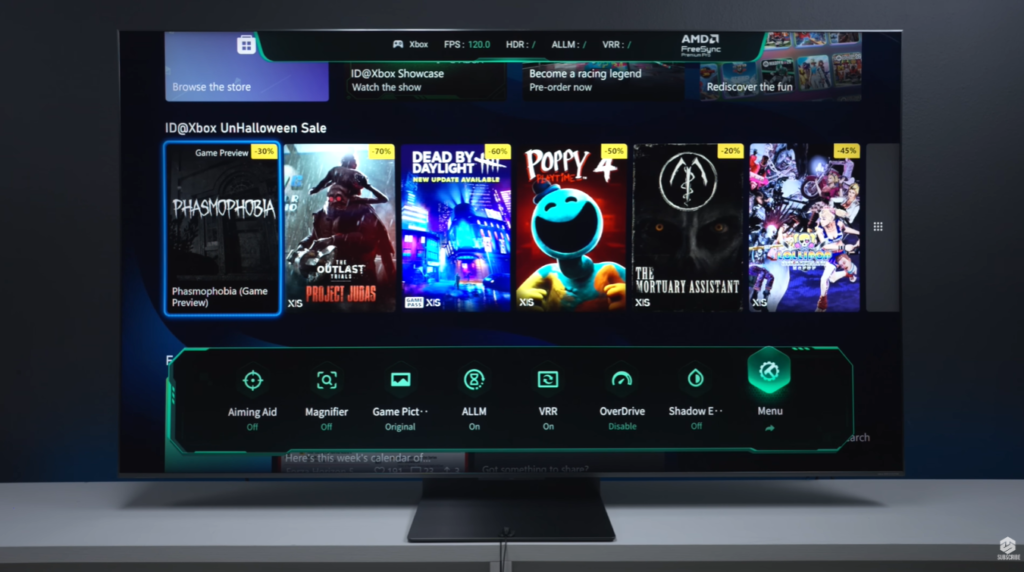
- Gaming: FreeSync Premium Pro, AMD FreeSync, HGIG support, Game Bar overlay
- PS5 support: 4K/120Hz, VRR, HDR — all confirmed
- Xbox support: 4K/120Hz, Dolby Vision at 120Hz — full compatibility confirmed
- PC gaming: 4K/144Hz | 1080p/288Hz via motion accelerator
- HDR formats: Dolby Vision, HDR10+, HDR10, HLG, IMAX Enhanced
- Dolby Vision 2 Max: Coming via software update — summer 2026
- Smart OS: Google TV
- Audio: Bang and Olufsen audio system — dual downfiring speakers with rear subwoofers
- Dolby Atmos: FlexConnect 4.1.4-channel — wireless satellite speaker and subwoofer compatible
- Optional subwoofer: TCL SW100 — adds directly to this TV without a soundbar
- Xbox Game Pass: Coming via software update May 2026
- Design: ZeroBorder bezel-free design, single pedestal stand
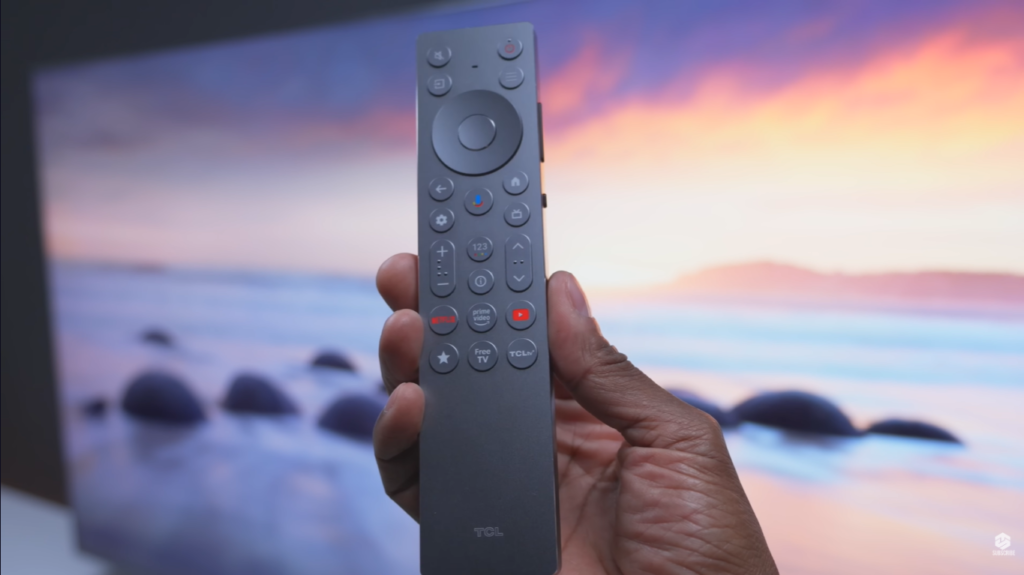
- Remote control: Side brightness adjustment + direct picture profile switching
- Hands-free Google: Available — toggle via button below TCL logo on TV body
What is SQD Mini-LED and Why Does It Matter?
Before we get into performance, this technology explanation is what most buyers are searching for and most reviews rush past.
SQD stands for Super Quantum Dots — a new enhanced version that provides extended colour gamut coverage up to 100% BT.2020, compared to standard Quantum Dots.
Standard Quantum Dot technology (used in traditional QLED TVs) uses semiconductor crystals to convert blue LED light into red and green wavelengths — broadening colour range beyond what plain LEDs produce. SQD uses a refined crystal composition that produces purer, more precise wavelengths with less colour bleed between channels. The practical result is higher colour saturation at higher brightness levels without the colour crosstalk that can affect RGB LED TVs.
TCL sees limitations in RGB LED technology that can result in colour crosstalk plus a higher level of backlight blooming artefacts than you get on SQD Mini-LED.
In plain English: RGB LED TVs — which Samsung, LG, Hisense and Sony are all launching this year — use separate red, green and blue LEDs to create colour at the backlight level. This can produce brighter, more vivid colours but creates a risk of adjacent colours contaminating each other (crosstalk) and more visible blooming around bright objects on dark backgrounds. SQD avoids these issues by using blue LEDs converted by precisely tuned quantum dots — a more controlled colour production chain.
TCL is positioning its SQD Mini-LED TV lineup as its top TVs for 2026 and asserts that Super Quantum Dots delivers superior performance to the RGB LED tech that manufacturers such as Samsung, Sony, LG, Hisense, and even TCL itself are promoting.
That is a bold claim. Our testing and independent lab results suggest it is at least partially justified — particularly on colour volume and blooming control.
Where the QM8L Sits in TCL’s 2026 Lineup
Understanding the hierarchy prevents expensive mistakes:
TCL X11L (flagship) — prices starting at $7,000 for the 75-inch version. Up to 10,000 nits peak brightness and up to 20,000 local dimming zones. The absolute ceiling of SQD Mini-LED technology. Not for most buyers.
TCL QM8L (what this review covers) — $2,499–$6,000 depending on size. Up to 4,000 local dimming zones, 6,000 nits peak brightness, WHVA 2.0 Ultra Panel and TSR AI Pro processor — the same processor found in the X11L. The sweet spot.
TCL QM7L (step-down) — $1,199–$3,999. Up to 2,100 discrete dimming zones, 3,000 nits peak brightness, HVA 2.0 Pro Panel and TSR AI processor. Supports Dolby Vision IQ instead of Dolby Vision 2 Max. No four HDMI 2.1 ports. Good value but meaningful compromises.
TCL RM9L (RGB Mini-LED) — $8,000–$30,000. TCL’s first RGB LED TV. Different technology, extreme price range. Not in consideration for most buyers.
The QM8L is the entry point for the full flagship-level SQD technology at a mainstream price. That is its fundamental appeal.
Picture Quality — What We Tested and What We Found
Brightness — the headline achievement
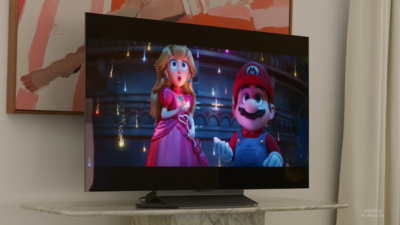
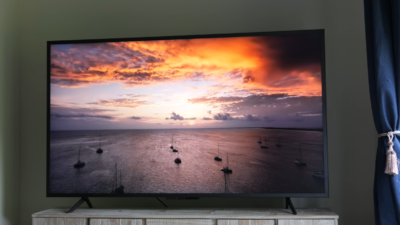
We watched a variety of HDR content in multiple picture modes. The 6,000 nit peak brightness spec creates real visible differences versus any OLED TV — specular highlights such as sun reflections on water, neon signs at night, and metallic surfaces in direct light all pop with an intensity OLED cannot match. Lab tests recorded an astronomical HDR brightness of 3,719 nits measured in the 10% window method — about twice the average for TVs tested in 2025 and 2026.
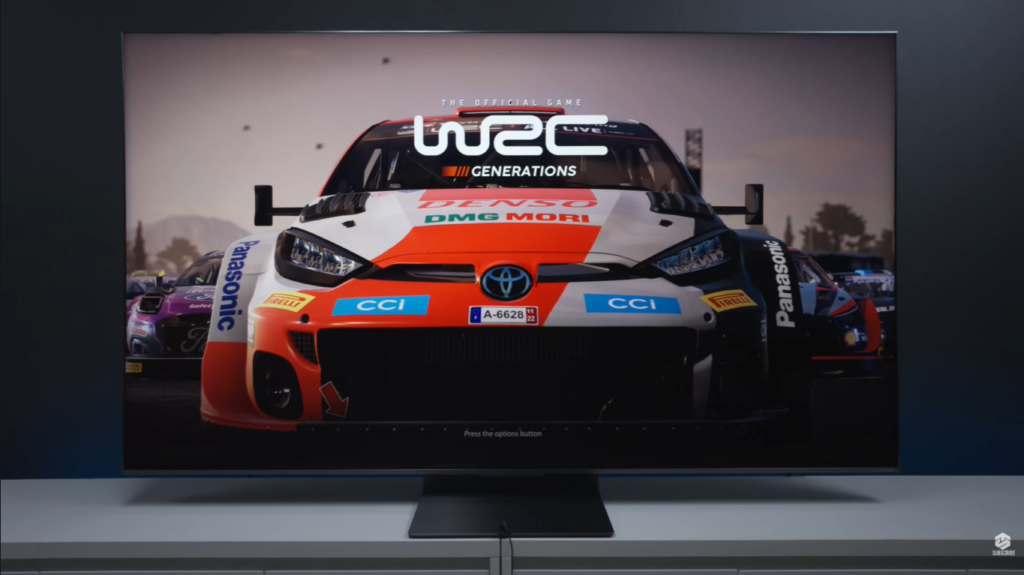
This brightness also means the QM8L is perfectly usable in a bright living room during the day — a scenario where OLED TVs genuinely struggle without compromising image quality.
Colour volume — where SQD proves its worth
The QM8L delivers significantly brighter, purer colour than its predecessor the TCL QM8K. The QM8K is a Mini-LED TV that leverages quantum dots the conventional way, so this gives a clear indication that colour volume has improved substantially year over year.
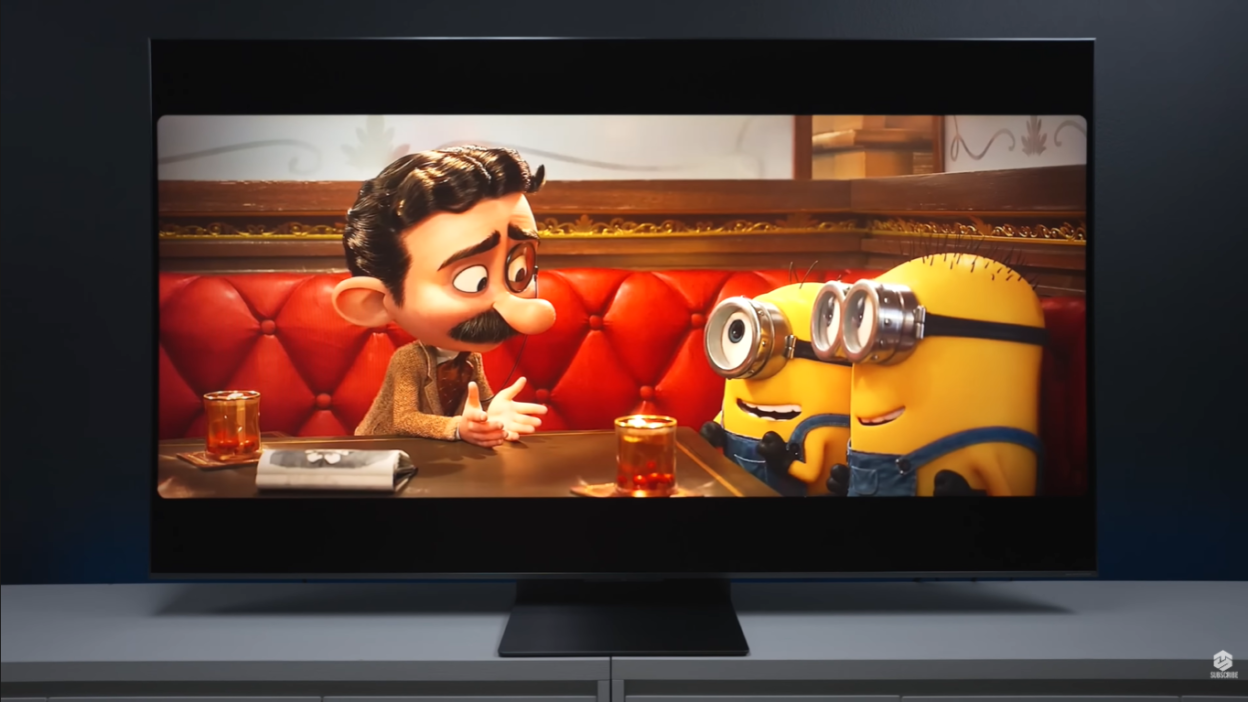
In our picture testing, saturated colours — particularly deep reds, vibrant blues, and tropical greens — appeared more vivid and luminous than any OLED TV we have had in the same room. This is the core SQD advantage in practice.
Contrast and black levels — honestly assessed
The local dimming system uses up to 4,000 zones — 2,584 on the 75-inch model tested. This is a strong figure for a non-flagship Mini-LED TV and results in genuinely inky blacks in most content. TCL’s “Halo Control” feature is designed to reduce the glowing edges that appear around bright objects on dark backgrounds — a common Mini-LED limitation.
In our testing we found halo control effective in most real content. We did find some visible glow around high-contrast logos when brightness was cranked to maximum — not something that appeared in normal movie viewing, but visible in dedicated blooming tests. Black levels, brightness, and shadow and highlight detail are near the top of the field with no sign of blooming halos on dark screens under normal viewing conditions.
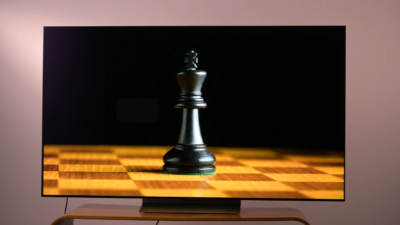
The honest comparison: OLED still has an advantage in pure black level — true zero-light pixel-off blacks versus the QM8L’s very deep but not absolute blacks in complex scenes. For most content, this distinction is invisible. In very dark movies with a single bright light source against pure black, dedicated OLED fans may notice.
Dirty screen effect — tested
We ran dirty screen tests across different grey shades. At moderate grey levels, the centre remained smooth. At darker grey scales, we detected some vignetting around the edges — a slight brightness variation compared to the centre. This is within normal range for Mini-LED TVs at this price. It was not visible in any real content during our testing.
Viewing angles — the honest limitation
The WHVA 2.0 Ultra Panel is specifically designed to improve viewing angles compared to standard VA panels. It does improve them — but the QM8L still loses noticeable colour saturation and contrast when viewed from off-axis positions beyond approximately 30–35 degrees. This matters if your seating arrangement puts viewers at the sides of the screen rather than directly in front. For a single sofa directly facing the TV it is not an issue.
Filmmaker Mode vs Standard Mode
Filmmaker Mode is the most colour-accurate picture setting — calibrated to display content as the director intended. In controlled testing it delivered excellent colour fidelity. However, in everyday mixed watching — news, sport, casual browsing — Standard Mode produced a punchier, more immediately pleasing picture. We switched between both over multiple sessions and for most buyers, Standard Mode is the better daily driver.
Motion — Three Scenarios Tested
24fps cinema content
At 24 frames per second — the native frame rate of most films — the QM8L in its default Cinema mode shows noticeable judder. This is actually correct cinema behaviour, preserving the original motion cadence. However, if the judder is uncomfortable, Motion Clarity can be adjusted manually. The custom setting within Motion Clarity allows independent control of blur reduction and judder separately — a level of precision not available on most competitors. We tested the full custom range and found a good balance at moderate blur reduction with minimal judder reduction preserves film character without motion sickness.
60fps sport and gaming
At 60fps the TV is markedly smoother. Sport, action content, and casual gaming all benefit significantly. No complaints in this mode during testing.
120fps gaming
PS5 at 4K/120Hz on the QM8L is a genuinely impressive experience. The auto-low-latency mode activates automatically, VRR maintains smooth frame pacing, and the response feels immediate. We tested Spider-Man 2 and the bright outdoor scenes of New York City showed exactly the QM8L’s strength — highlight detail in sunlit environments that OLED cannot match.
Gaming — The Four HDMI 2.1 Advantage
This is where the QM8L genuinely separates itself from most competitors at this price, including many OLED TVs.
Gaming gets a welcome boost on the QM8L series with four HDMI 2.1 ports instead of the two provided on previous TCL TVs. All support a 4K/144Hz refresh rate, along with 1080p/288Hz for PC gaming. FreeSync Premium Pro is also supported.
In practice, this means you can connect a PS5, an Xbox Series X, a gaming PC, and still have a fourth HDMI port available — all without compromising any connection to less capable HDMI 2.0 ports. This is a significant practical advantage over TVs that only offer two HDMI 2.1 ports and force you to choose which devices get the best connection.
PS5 results: 4K/120Hz confirmed with VRR, HDR, and ALLM all active simultaneously. Game Bar overlay provides on-screen refresh rate counter, VRR status, HDR mode, and input lag readout without going into menus.
Xbox Series X results: 4K/120Hz confirmed. Dolby Vision at 120Hz confirmed — a feature many TVs still do not support. Every Xbox Quick Resume setting and HDR calibration option worked correctly.
PC gaming: 4K at 144Hz confirmed. At 1080p the 288Hz motion accelerator mode was tested and produced noticeably smoother motion in fast-paced games — particularly beneficial for competitive gaming where frame rate consistency matters.
HGIG support: Confirmed — HDR tone mapping is handled by the game engine rather than the TV, giving better HDR consistency across PS5 titles that support it.
TCL also says that the Xbox Game Pass app should be available via a software update in May to allow for cloud-based gaming on the QM8L — removing the need for a console entirely for Game Pass subscribers.
Dolby Vision 2 Max — What You Need to Know
The QM8L supports Dolby Vision 2 Max — but not yet. This is a forward-looking feature being added via firmware update planned for summer 2026. Here is what it means when it arrives.
Dolby Vision 2 Max is the next generation of Dolby’s HDR format, designed to take advantage of TVs capable of significantly higher brightness than the original Dolby Vision specification assumed. The original Dolby Vision specification was built around displays capable of approximately 1,000–4,000 nits. The QM8L can hit 6,000 nits. Dolby Vision 2 Max unlocks the full metadata needed to use that additional headroom.
The practical benefit when it arrives: brighter highlights in Dolby Vision content, smoother tone mapping transitions between bright and dark areas, and better exploitation of the QM8L’s peak brightness capability on supported content. Even older Dolby Vision content will get these improvements — it will provide smoother motion and a better picture response.
The firmware update will be visible in the picture profile dropdown when Dolby Vision 2 content is playing. Until the update arrives, the QM8L plays Dolby Vision content in the current standard, which is still excellent.
Audio — Honest Assessment
The Bang and Olufsen audio system with dual downfiring speakers and rear subwoofers delivers better-than-average built-in TV sound. Dialogue clarity is strong. The dual subwoofers add meaningful bass weight to action sequences and music compared to standard single-speaker TV systems. At moderate volume the system is genuinely usable for everyday viewing.
At higher volumes the limitations of a thin panel become apparent — the B and O branding improves the baseline but cannot overcome the physics of a TV frame. For serious movie audio the TCL SW100 wireless subwoofer connects directly to this TV without requiring a soundbar — a useful option if you want better bass without committing to a full soundbar setup.
Dolby Atmos FlexConnect 4.1.4-channel support means you can add satellite speakers and a subwoofer wirelessly. This is a huge change as most wireless speakers and subwoofers require at least one HDMI-connected soundbar. With FlexConnect built in you can build a surround setup without any soundbar if you prefer.
The Sony TCL Merger — What It Means for Buyers
TCL and Sony announced a merger earlier in 2026 with TCL owning 51% of the AV market for Sony, creating a new entity called BRAVIA Inc. This is the most significant display industry development of 2026 and it has direct long-term implications for QM8L buyers.
What this means immediately for current QM8L owners: nothing changes. Your TV’s warranty, software support, and Google TV platform are unaffected.
What it could mean in 2027 and beyond: Sony’s panel technology — particularly their OLED expertise and Bravia XR processor capabilities — may eventually combine with TCL’s SQD Mini-LED manufacturing and local dimming engineering. If patent-sharing occurs between the two companies, the 2027 TCL lineup could represent a step change in capability that makes the already impressive QM8L look like the beginning of something bigger.
For buyers today: this merger is a confidence signal, not a reason to wait. TCL is no longer a budget brand taking market share on price alone — it is now structurally partnered with one of the most respected display companies in the world.
How It Compares to Key Rivals
TCL QM8L 75-inch — $2,999 6,000 nits, 4,000 dimming zones, SQD colour, four HDMI 2.1, Dolby Vision 2 Max incoming. Best brightness and gaming features in this price range. Off-axis viewing weaker than OLED.
LG C5H OLED 77-inch — $3,699 Perfect blacks, pixel-perfect contrast, 120Hz, excellent colour accuracy. $700 more expensive. Cannot match QM8L on peak brightness or highlight intensity. Better for dark room dedicated viewing.
Samsung S90H QD-OLED 65-inch — $2,699 Very close price to QM8L 65-inch. Outstanding colour and contrast combining OLED blacks with quantum dot colour. Less peak brightness than QM8L. Only two HDMI 2.1 ports. Better colour accuracy out of box.
TCL X11L 75-inch — $6,999 The flagship. 10,000 nits, 20,000 dimming zones. Twice the price. Worth it only if you have the room and budget for the absolute best SQD Mini-LED experience.
Hisense UR9 RGB Mini-LED — price TBC TCL’s most direct technology rival. RGB backlight for even wider colour gamut potential. More colour crosstalk risk. Fewer local dimming zones than QM8L. Still arriving in some markets.
Pros and Cons
What works:
- 6,000 nit peak brightness — unmatched at this price
- 4,000 local dimming zones — strong contrast performance
- SQD colour technology — 100% BT.2020 coverage
- Four HDMI 2.1 ports — every port at full specification
- PS5 and Xbox fully supported including Dolby Vision 120Hz
- 4K/144Hz and 1080p/288Hz gaming
- FreeSync Premium Pro and HGIG support
- Dolby Vision 2 Max incoming via firmware
- Bang and Olufsen audio above category baseline
- FlexConnect for wireless surround without soundbar
- IMAX Enhanced picture mode
- Side remote control for brightness and picture profiles
- ZeroBorder design — genuinely slim bezel
- Xbox Game Pass cloud gaming app coming May 2026
- Less expensive than OLED rivals at equivalent sizes
- Sony merger signals strong long-term brand direction
What doesn’t:
- Off-axis viewing loses colour and contrast beyond 30–35 degrees
- Some vignetting at edges in dirty screen tests at dark greyscales
- Minor glow visible around logos at maximum brightness in specific test scenarios
- Dolby Vision 2 Max not yet available — summer 2026 firmware required
- Google TV collects more user data than some alternatives
- Standard Mode more appealing than Filmmaker Mode for everyday use — calibration effort required
- Audio benefits from an external subwoofer for serious movie use
- 24fps cinema judder requires manual Motion Clarity adjustment
Who Should Buy the TCL QM8L?
Buy it if you: Watch a mix of HDR movies, sport, and gaming in a room with variable lighting. The combination of 6,000 nit brightness and four HDMI 2.1 ports is not available at this price from any competitor. If you regularly game on PS5 or Xbox and also watch premium streaming content, this is the strongest all-rounder in the $2,499–$4,000 bracket.
Skip it if you: Watch exclusively in a blacked-out dedicated home cinema room and prioritise perfect blacks over all other picture qualities. The LG C5H OLED delivers an experience no Mini-LED TV can fully replicate in absolute darkness.
Consider the QM7L instead if: Budget matters and you can accept 3,000 nits instead of 6,000 and two HDMI 2.1 ports instead of four. The QM7L at $1,499 for 65-inch is strong value if Dolby Vision 2 Max and absolute peak brightness are not priorities.
Wait for the X11L if: You want the absolute ceiling of SQD performance and budget is not a constraint. $6,999 for 75-inch is the entry point.
MyPitShop Final Verdict
The TCL QM8L does what TCL has quietly been doing for three years — delivering technology that was flagship-exclusive twelve months ago at a price that makes the flagship feel expensive. SQD Mini-LED with 6,000 nits, 4,000 local dimming zones, four HDMI 2.1 ports, and Dolby Vision 2 Max incoming at $2,999 for 75 inches is genuinely remarkable value in the 2026 TV market.
It is not a perfect TV. Off-axis viewing is a real limitation for wide seating arrangements. Colour accuracy requires some setup effort versus out-of-box calibration on the Samsung S90H QD-OLED. And Dolby Vision 2 Max — the feature that could truly unlock its brightness advantage — is not available yet.
But for the buyer who wants the best combination of brightness, gaming performance, HDR quality, and connection flexibility without spending OLED money — the QM8L is the most obvious choice in its price bracket right now. And with the Sony BRAVIA Inc merger suggesting even better things in 2027, TCL’s trajectory is pointing firmly upward.