The Amazon Echo Studio has long been the flagship of Amazon’s smart speaker lineup—the “big daddy” that serious audiophiles and smart home enthusiasts turn to when they want premium sound quality coupled with Alexa’s voice assistant capabilities. But for 2026, Amazon has made some significant changes that fundamentally alter what the Echo Studio represents.
Gone is the large cylindrical tower that dominated shelf space. In its place: a smaller, lighter, spherical design that’s more compact and living room-friendly. But as any audiophile knows, speaker size matters—and reducing the physical footprint inevitably means compromises in audio performance.
After extensive testing with various music genres, voice commands, smart home integration, and real-world daily use, here’s the comprehensive breakdown of whether the 2026 Echo Studio justifies its £219 ($219) price tag, or if you should wait for a sale—or skip it entirely.
Design Revolution: From Tower to Sphere
Size and Weight Transformation
The most immediately noticeable change is the dramatically smaller form factor:
Previous Echo Studio:
- Large cylindrical design
- Substantial footprint
- Heavy and immovable
2026 Echo Studio:
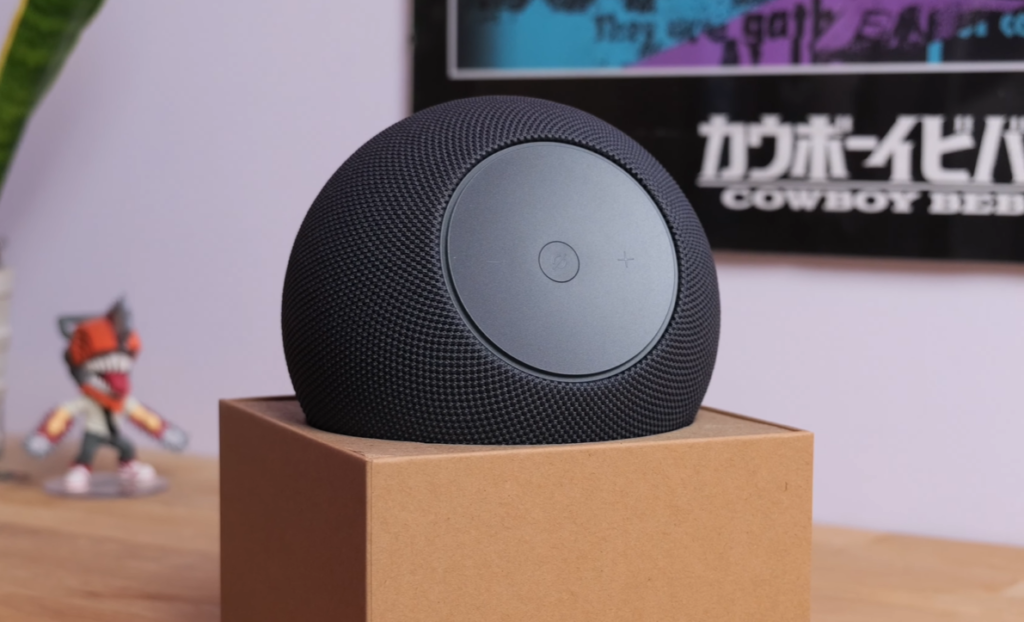
- Spherical design (charming and modern)
- Significantly smaller than predecessors
- 1.63 kilograms (considerably lighter than earlier models)
Practical Benefits:
- Takes up less space on desks, tables, and shelves
- Easier to integrate into smaller living spaces
- Less visually imposing in room decor
- More portable (though still designed to remain stationary)
Exterior Finish and Color Options
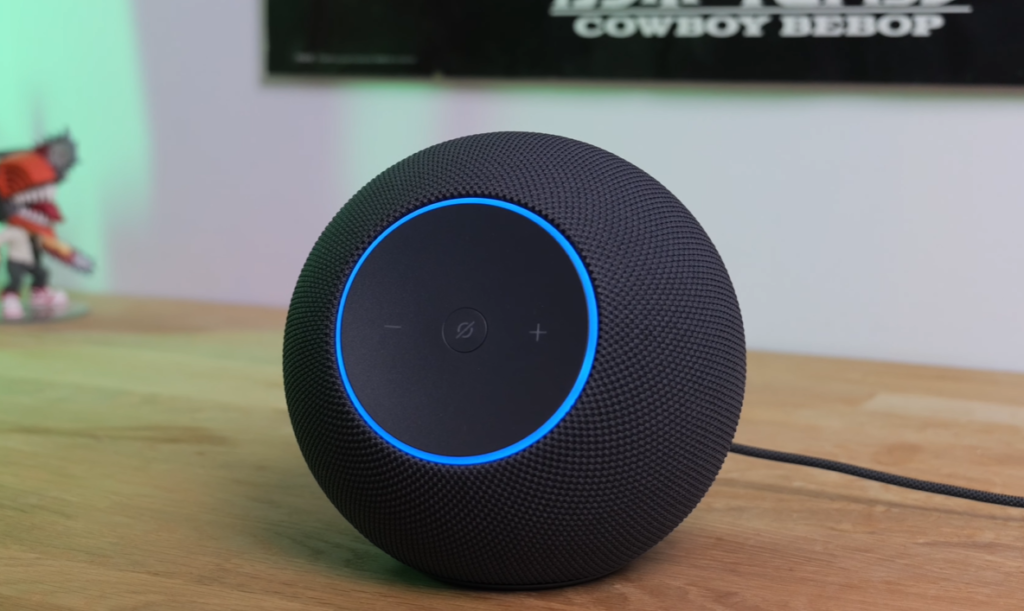
Material: The Echo Studio maintains the lovely fabric exterior that’s become synonymous with Amazon’s Echo lineup. The textile covering provides an attractive, soft appearance that integrates well into home environments.
Color Options: This is where disappointment sets in. The 2026 Echo Studio is only available in black (which Amazon calls “graphite”).
What’s Missing:
- No Glacier White option
- No bold or vibrant color choices
- Limited personalization for different decor styles
Hope for the Future: Amazon may introduce additional colors later in 2026, but at launch, your choices are limited to black or… black.
The Light Ring: Now More Visible
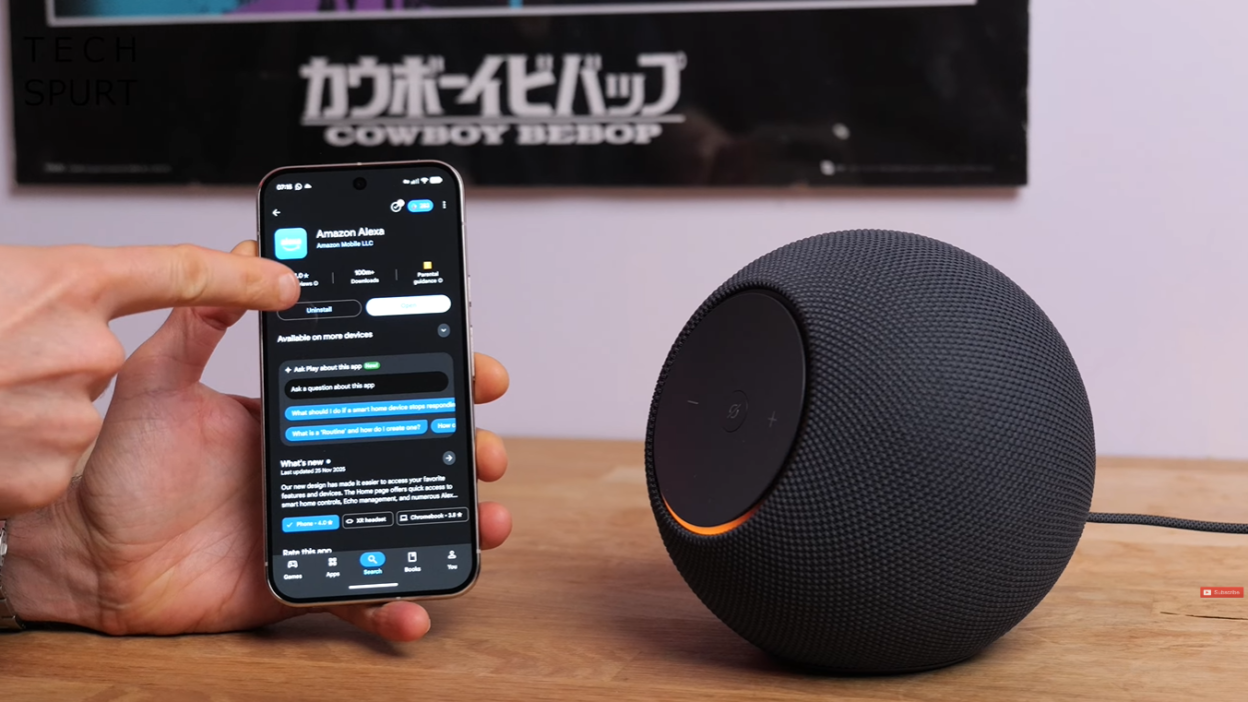
Amazon has repositioned the light ring so it’s more easily visible from the front, creating several benefits:
Aesthetic Enhancement: Provides “a nice bit of atmosphere” to your kitchen counter or living room, particularly effective in evening settings when the ambient glow adds character to the space.
Functional Indicator: The light ring clearly shows when Alexa is actively listening, providing visual confirmation of voice command recognition and processing.
Design Integration: The front-facing position makes the light ring a deliberate design element rather than something hidden away, embracing its dual role as both indicator and ambient lighting.
Physical Controls: Front and Center
The control buttons have moved to the front of the device for easier access:
Button Layout:
- Volume Down button (left)
- Microphone Mute button (center)
- Volume Up button (right)
Functionality: The controls work “perfectly well” and are intuitive to locate and use even without looking.
Minor Disappointment: When the microphone is muted, only the button itself lights up—there’s no sultry red ring around the entire speaker as on previous models. This visual feedback is less dramatic and noticeable from across the room.
Configuration Limitation: There’s no option in the Echo Studio settings to change the mute indicator behavior, which is a missed opportunity for customization.
Touch Controls: Pat to Pause
A charming feature retained from previous generations:
Gesture Control:
- Pat the top of the Echo Studio to pause music
- Pat again to resume playback
This tactile interaction adds a satisfying physical dimension to controlling the speaker without voice commands or reaching for your phone.
Port Situation: Wireless Only
What’s Available:
- Power port (obviously essential)
- Threaded mounting point on the bottom (for tripod mounting if desired)
What’s Missing: Amazon has removed the 3.5mm auxiliary port from this generation, a significant change that eliminates:
- Wired connections to phones, tablets, or computers
- Direct connection to turntables (without Bluetooth adapter)
- Fallback option when wireless connectivity fails
Connection Options Now:
- Bluetooth (wireless from compatible devices)
- Wi-Fi (streaming services, Amazon Music, etc.)
Verdict: For most users in 2026, this won’t be a dealbreaker—wireless has become the default. However, audiophiles who prefer the reliability and quality of wired connections will be disappointed.
Setup: Ridiculously Simple
Even in an inebriated state (the reviewer notes managing setup “after half a dozen particularly strong piña coladas”), the Echo Studio setup is straightforward:
Setup Steps
Step 1: Remove from box
Step 2: Plug in the power cable
Step 3: Download the Alexa app
Step 4: Open app, tap the plus sign, follow instructions to add Echo Studio
Step 5: You’re done
Voice Guidance: Alexa herself reminds you to download the app, in a variety of languages if needed. The reviewer notes that “Italian Alexa” is particularly appealing—a charming detail.
Total Time: The entire process takes minutes and requires no technical knowledge whatsoever.
Audio Performance: The Compromise of Compactness
Here’s where the design changes create tangible trade-offs. The smaller form factor necessitates smaller drivers, which inevitably affects sound quality.
Speaker Configuration Changes
Previous Echo Studio:
- 5.25-inch woofer (substantial bass driver)
- Larger overall driver array
2026 Echo Studio:
- 3.75-inch woofer (significantly smaller)
- Three 2.25-inch drivers
The reduction in driver size, particularly the woofer, fundamentally changes the speaker’s sonic character.
Genre-by-Genre Performance Assessment
Vocals and Spoken Content (Excellent)
Performance: Vocals come through “nice and crisp and clear”, making the Echo Studio fantastic for:
- Audiobooks (dialogue remains intelligible and engaging)
- Podcasts (voices are well-defined and easy to follow)
- Vocal-focused music (singer-songwriter content sounds great)
Why It Works: The mid-range reproduction is clean and articulate, prioritizing clarity over raw power—perfect for content where understanding words matters most.
Acoustic Music (Great)
Performance: Acoustic music “sounds great” through the Echo Studio.
Why It Works:
- Natural instruments (guitar, piano, strings) are reproduced with good tonal accuracy
- The lack of heavy bass doesn’t detract from the experience
- Detail and texture come through clearly
Pop Music (Pretty Good)
Performance: Pop music sounds “pretty good” with satisfying reproduction of the typical pop production elements.
Strengths: Modern pop production tends to be mid-range focused with moderate bass, playing to the Echo Studio’s strengths.
Hip-Hop (Surprisingly Good)
Performance: Hip-hop performs well with a “surprising amount of bass” given the speaker’s compact size.
Physical Impact: When playing hip-hop tracks, the reviewer “could actually feel the vibrations in the floor” beneath them—impressive for a speaker this size.
Why It Works: Hip-hop production emphasizes punchy, tight bass rather than extended sub-bass, and the 3.75-inch woofer handles this admirably.
Dance/Electronic (Good)
Performance: Dance music benefits from the same bass punch that makes hip-hop work well.
Physical Presence: The bass output creates tactile feedback, making dance tracks feel more immersive and engaging.
Rock (Absolutely Fantastic)
Performance: Rock music sounds “absolutely fantastic” through the Echo Studio.
Why It Works: Rock production typically features:
- Clear vocal lines (the speaker’s strength)
- Punchy drums (handled well by the woofer)
- Guitar-focused instrumentation (mid-range clarity)
Metal and Industrial (Not Great)
Performance: This is where the Echo Studio struggles. Metal and industrial music sound “quite muddy” with everything “mixed up a little bit.”
Specific Issues:
- Poor instrument separation: The speaker struggles to distinguish individual elements in dense, layered mixes
- Vocals get lost: Aggressive vocals can disappear into “muddy, bassy guff”
- Lacks clarity: Complex metal production becomes a sonic mess
Recommendation: The reviewer explicitly advises metal fans to “definitely look elsewhere” for a speaker that can handle these genres properly.
Why It Fails: Metal and industrial production features:
- Dense, layered instrumentation
- Extended frequency ranges (deep bass + screaming highs)
- Complex mix elements that require precise separation
The smaller drivers simply can’t resolve all this complexity cleanly.
Volume and Room-Filling Capability
Maximum Volume: At top volume, the Echo Studio is “absolutely ear-splitting” and “will quite happily fill an entire ground floor of a house.”
Impressive for Size: The reviewer repeatedly emphasizes that the volume capability is remarkable considering the compact form factor.
Neighbor-Annoying Potential: If your goal is to “piss off your neighbors,” the Echo Studio will accomplish this effectively.
Physical Presence: Even at the reviewer’s location, playing music at high volume created vibrations felt “in my very soul”—the bass output is genuinely impressive for the size.
Built-in Microphone Quality
An often-overlooked aspect of smart speakers is microphone performance, and the Echo Studio excels:
Test Scenario: Music was played at ear-splitting volume while the reviewer issued a voice command to stop playback.
Result: Alexa clearly picked up the voice command even though the music was “so loud I could barely hear myself think.”
Practical Benefit: You don’t need to shout or walk closer to the speaker for voice commands—even in very noisy environments, Alexa hears you clearly.
Spatial Audio: Dolby Atmos and Sony 360 Reality Audio
Supported Formats
Dolby Atmos: The Echo Studio supports Dolby Atmos output for immersive, three-dimensional soundscapes.
Sony 360 Reality Audio: Also supported, providing an alternative spatial audio format for compatible content.
The Catch: You Need Two
Single Speaker Limitation: To get the “full proper immersive effect,” you need to sync at least a pair of Echo Studios running together in stereo configuration.
Testing Limitation: The reviewer only had one unit, so couldn’t properly evaluate the spatial audio capabilities in their intended configuration.
Cost Consideration: At £219 each, a stereo pair costs £438—a significant investment that puts the system in competition with dedicated hi-fi separates and soundbars.
Alexa Integration: Solid Foundation, Missing Features
Voice Control: The Primary Interface
While you can connect via Bluetooth from your smartphone or control via the Amazon app, the easiest and most natural method is simply speaking commands.
What Works Well:
- Playing music (songs, albums, playlists) works “absolutely fine”
- Smart home control functions without issues
- Voice recognition is excellent even in noisy environments
Alexa Plus: Still MIA in the UK
Advertised but Unavailable: Despite being advertised on the box, Alexa Plus is still unavailable in the UK with no indication of when it will roll out.
Current Status: Alexa Plus remains “very much US only” as of the review date.
What You’re Missing: Alexa Plus is supposedly more like Google’s Gemini Assistant, allowing:
- Natural, free-flowing conversation rather than discrete commands
- Contextual understanding across multiple exchanges
- More human-like interaction as you would with a friend
UK Users: Stuck with “regular Alexa,” which the reviewer acknowledges is “still pretty good to be fair.”
Quirks and Issues
Temperature Feature: During setup, the Echo Studio advertises the ability to ask about room temperature. The reviewer couldn’t get this feature to work at all.
Information Currency: When asking about current sports results, Alexa provided information from two months prior, showing potential issues with real-time data updates.
Smart Home Control: No issues reported with smart home device control—lights, thermostats, and other connected devices respond as expected.
What’s Missing: No Battery
Mains Power Only: There is no built-in battery in the 2026 Echo Studio.
Practical Limitation: You cannot disconnect from mains power and use it as a portable Bluetooth speaker in the garden, at picnics, or anywhere without an outlet.
Design Philosophy: The Echo Studio is designed to be a stationary fixture in your home, not a portable speaker.
Alternative: If portability is essential, consider the Echo Dot or other battery-powered Amazon speakers in the lineup.
Pricing and Value Proposition
UK Pricing
Retail Price: £219 (approximately $219 USD)
Reviewer’s Assessment: The price is described as “a bit steep” with the recommendation to “wait for one of those Amazon sales” as it will “be discounted soon enough.”
Is It Worth £219?
For Whom:
- Users prioritizing Alexa integration over pure audio quality
- Those with limited space who need compact smart speakers
- People listening primarily to podcasts, audiobooks, pop, and rock
Not Worth It For:
- Audiophiles seeking the best possible sound quality
- Metal and industrial fans (sound quality is poor for these genres)
- Users who already own older Echo Studios (no compelling reason to upgrade)
- Those wanting a dedicated audio speaker rather than assistant-first device
Competitive Context
Sonos Comparison: The reviewer suggests that if you want a “dedicated audio speaker rather than an assistant-led speaker,” you should “probably look at the likes of Sonos instead.”
Why Sonos:
- Superior audio quality across all genres
- Better build quality and materials
- Longer software support lifecycle
- Audiophile-focused tuning
Trade-off: Sonos speakers lack the deep Alexa integration and smart home control that the Echo Studio provides.
Who Should Buy the 2026 Echo Studio?
Ideal For:
Alexa Ecosystem Users: If you’re heavily invested in Amazon’s ecosystem with Prime Music, Audible, and Alexa-controlled smart home devices, the Echo Studio is the natural flagship choice.
Space-Conscious Buyers: The smaller, spherical design fits better in modern living spaces than the tower-style predecessors.
Podcast and Audiobook Listeners: The clear, articulate vocal reproduction makes this excellent for spoken content.
Pop and Rock Fans: These genres sound great through the Echo Studio without notable deficiencies.
Multi-Room Audio Seekers: If you’re building an Amazon multi-room audio system, the Echo Studio serves as the premium anchor point.
Skip It If:
You Own an Older Echo Studio: There’s “no need to upgrade here at all”—the older models actually sound better for many genres due to larger drivers.
You’re a Metal/Industrial Fan: The muddy, indistinct sound quality for these genres makes the Echo Studio a poor choice.
You Want Pure Audio Quality: Dedicated speakers from Sonos, Bose, or traditional hi-fi brands will outperform the Echo Studio sonically.
You Need Portability: The lack of battery makes this unsuitable for outdoor or portable use.
You Want Wired Connections: The removed 3.5mm jack eliminates wired connectivity options.
Budget is Primary Concern: At £219, this is expensive. Wait for sales or consider mid-tier Echo speakers.
Comparison with Previous Echo Studio Models
What Got Better
Size and Weight: Dramatically more compact and lighter—easier to integrate into spaces.
Design: The spherical aesthetic is more modern and visually appealing.
Light Ring Visibility: Front-facing position makes it more functional and attractive.
Setup Process: Already simple, remains effortless.
What Got Worse
Audio Quality: Smaller drivers mean reduced bass extension and poorer handling of complex music.
Connectivity: Loss of 3.5mm port eliminates wired connection options.
Genre Versatility: Struggles with metal and industrial music where older models were adequate.
Physical Presence: Less impressive and substantial in a room.
What Stayed the Same
Alexa Integration: Identical voice assistant capabilities (still waiting for Alexa Plus).
Smart Home Control: Same excellent integration with Amazon’s ecosystem.
Fabric Exterior: Maintains the attractive textile covering.
The Alexa Plus Problem
A recurring frustration throughout the review is the absence of Alexa Plus in the UK:
Box Advertising: Amazon advertises the feature on the packaging, creating expectation.
Actual Availability: Feature is completely unavailable outside the US with no timeline for international rollout.
Consumer Impact: UK buyers pay full price for a feature they cannot access, with no guarantee they ever will.
False Advertising? While not technically false advertising (it’s a US market box), it creates genuine frustration for international customers.
Final Verdict: A Mixed Upgrade
What Amazon Got Right
Compact Design: The smaller, spherical form factor is attractive and space-efficient.
Voice Recognition: Microphone quality is excellent, working even in very loud environments.
Vocal Clarity: Spoken content sounds crisp and clear—great for audiobooks and podcasts.
Easy Setup: The user experience remains effortlessly simple.
Volume Capability: Impressive room-filling capability for the size.
What Amazon Got Wrong
Driver Downgrade: Smaller woofer and drivers compromise audio quality, particularly for complex genres.
Removed 3.5mm Port: Eliminates flexibility for users who prefer or need wired connections.
Single Color Option: Limited personalization frustrates design-conscious buyers.
Alexa Plus Absence: Advertising an unavailable feature creates false expectations.
Price Point: £219 is steep for the compromised audio quality—sales pricing is more appropriate.
No Battery: Maintains the non-portable limitation despite the smaller form factor.
The Bottom Line
The 2026 Amazon Echo Studio is a smart speaker that prioritizes compactness and convenience over audio excellence. It’s a device for people who want Alexa integration first and audio quality second.
For Existing Owners: If you own an older Echo Studio, don’t upgrade. The previous generation actually sounds better due to larger drivers.
For New Buyers: Consider carefully whether you prioritize:
- Alexa integration + good-enough audio = Get the Echo Studio (on sale)
- Best possible audio quality = Look at Sonos, Bose, or traditional hi-fi
Rating: 3.2/5 stars
Strengths: Compact design, excellent voice recognition, clear vocals, impressive volume, easy setup, strong smart home integration
Weaknesses: Compromised audio quality (especially metal/industrial), removed 3.5mm port, expensive at full price, single color option, no battery, missing Alexa Plus (UK)
Best For: Alexa ecosystem users, podcast/audiobook listeners, pop/rock fans in small spaces
Skip If: Audiophile, metal fan, already own older Echo Studio, want portability, need wired connections
The reviewer’s final advice is clear: wait for a sale. At discounted pricing during Amazon’s frequent promotions, the Echo Studio becomes more palatable. At full retail, the compromises are harder to justify.
What’s your take on smart speakers prioritizing compactness over audio quality? Is the Alexa integration worth the sonic trade-offs? Share your thoughts in the comments below!