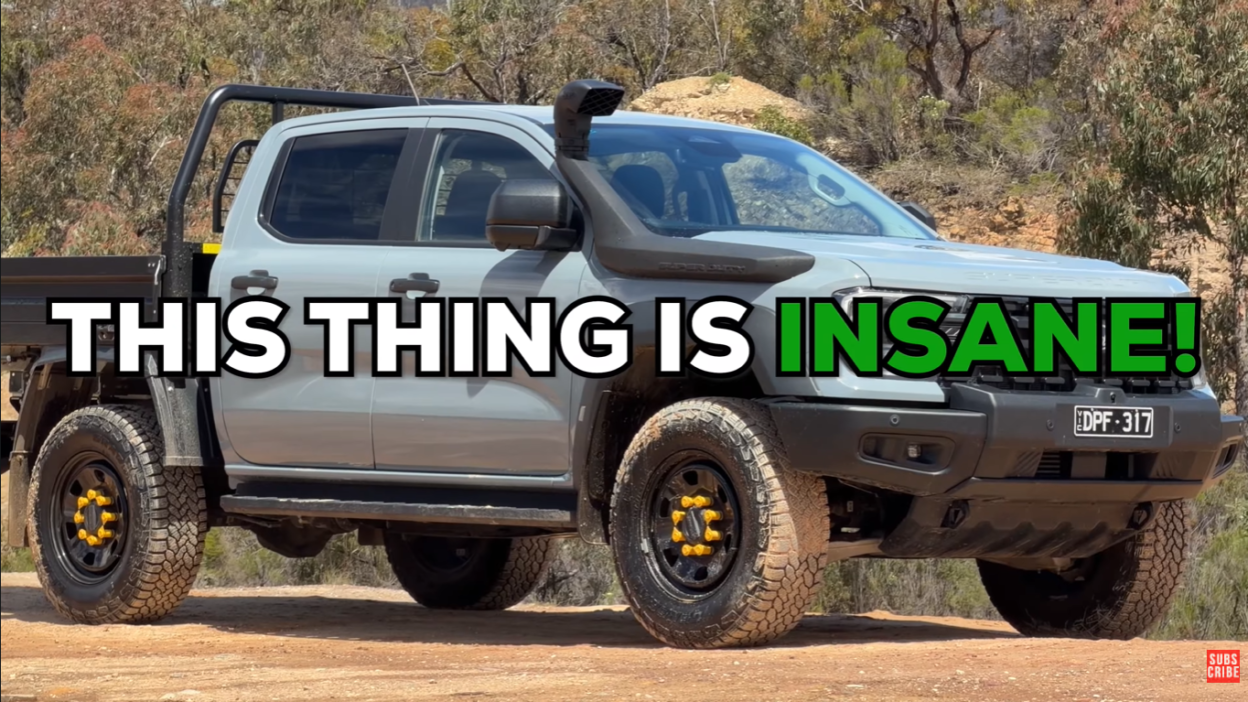
“Ford have absolutely just won. I agree. It’s game over.”
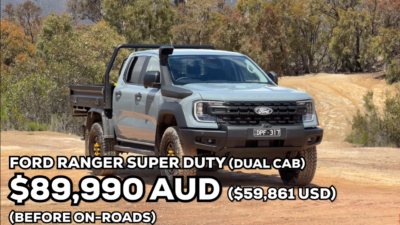
Those are bold words, but after spending extensive time with the Ford Ranger Super Duty both on-road and off-road, through hail storms and mud, I can confidently say: Ford has delivered something extraordinary.
When Ford first announced the Ranger PHEV (plug-in hybrid), many enthusiasts were disappointed. It wasn’t the vehicle Australia’s toughest industries and adventurers needed. But the Super Duty? This is Ford’s redemption arc—and they’ve absolutely nailed it.
The Ford Ranger Super Duty isn’t just another ute variant. It’s a purpose-built workhorse that bridges the gap between the standard Ranger and Ford’s American F-Series Super Duty trucks. Designed and engineered in Australia, specifically for Australian conditions and customer demands, this is the most capable mid-size ute ever sold globally.
Today, I’m bringing you everything you need to know about the Ford Ranger Super Duty: what makes it special, how it performs, whether it’s worth the premium price, and why it’s making vehicles like the Toyota Hilux and even the legendary Land Cruiser 70 Series look outdated.
Let’s dive in.
Pricing: Premium Territory, But Is It Worth It?
What You’ll Actually Pay
Let’s be brutally honest upfront: the Ford Ranger Super Duty is not cheap.
Base Pricing (Before On-Road Costs):
- Dual Cab Cab-Chassis: $82,990
- Super Cab Cab-Chassis: $82,990
- Single Cab Cab-Chassis: $82,990
- Dual Cab Pick-Up (arriving mid-2026): $93,990
- XLT Series (arriving mid-2026): TBA (premium pricing expected)
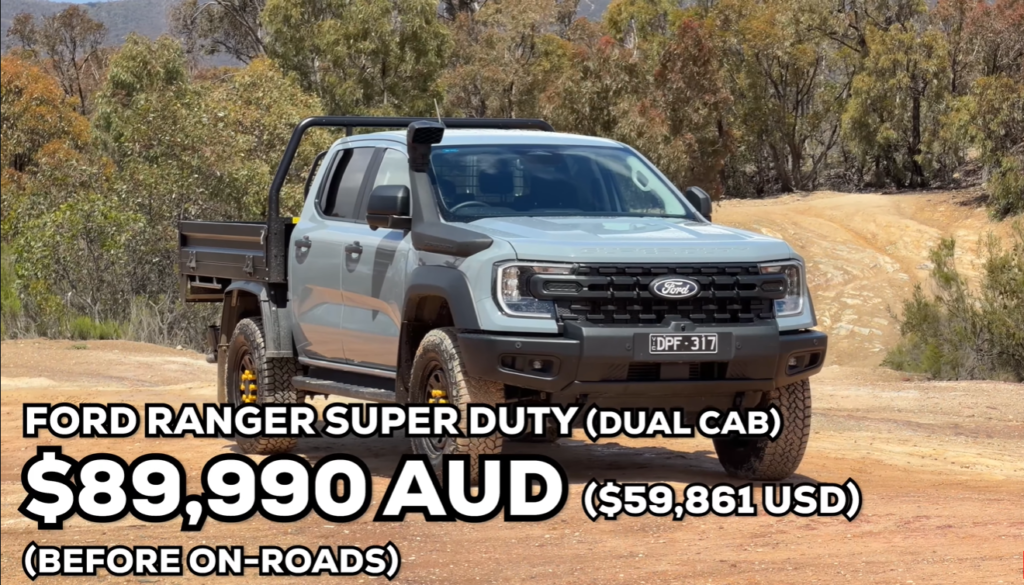
But here’s the catch: That base price does NOT include a tray. If you want the work package (which includes the heavy-duty tray like the one tested), add another $11,000.
Total Price as Tested: Over $100,000 before on-road costs for the dual cab with work package.
The Reality Check
At first glance, $100K+ for a ute seems insane. But consider this: If you were to build up a Land Cruiser 70 Series to the same specification and capability level, you’d easily be spending close to $200,000. Suddenly, the Super Duty starts looking like exceptional value.
What You’re Paying For:
- 4,500kg braked towing capacity
- 1,825kg payload (dual cab) / 1,982kg (single cab)
- 8,000kg gross combined mass (GCM)
- Factory-engineered heavy-duty components
- 5-year Ford warranty covering everything
- Capability that would cost double to replicate after-market
Bottom Line: It’s expensive, but for what you’re getting—a turnkey solution that replaces the need for expensive aftermarket modifications—it’s actually good value.
Design & Exterior: Familiar Yet Transformed
The Ranger DNA Remains (Just 9%)
Despite sharing only 9% of the platform with the standard Ranger, the Super Duty still looks like a Ranger—just on serious steroids.
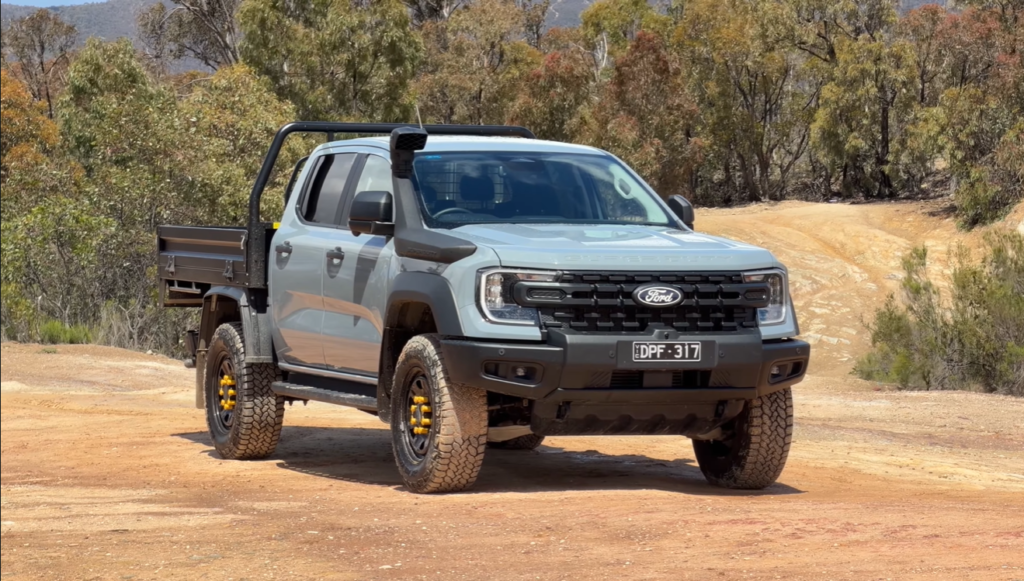
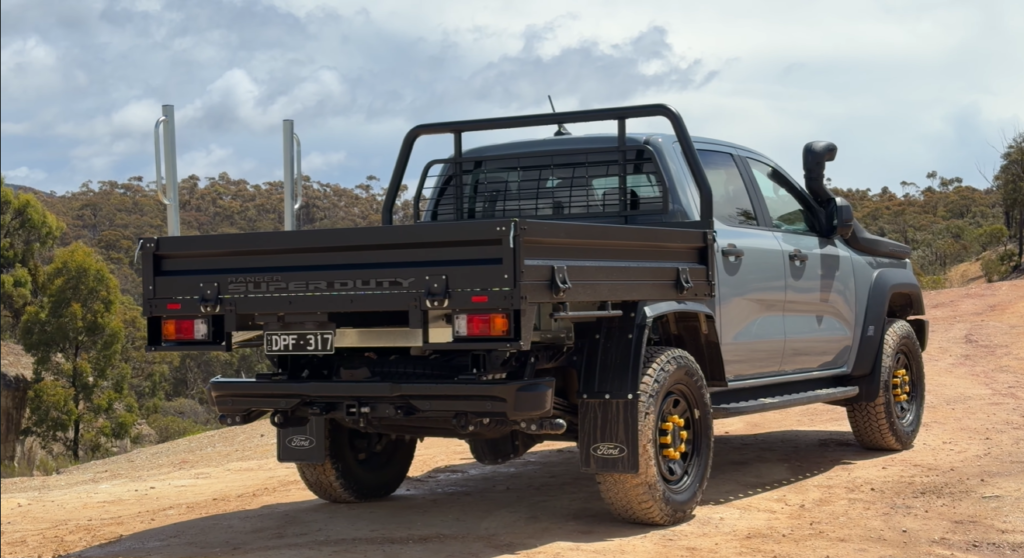
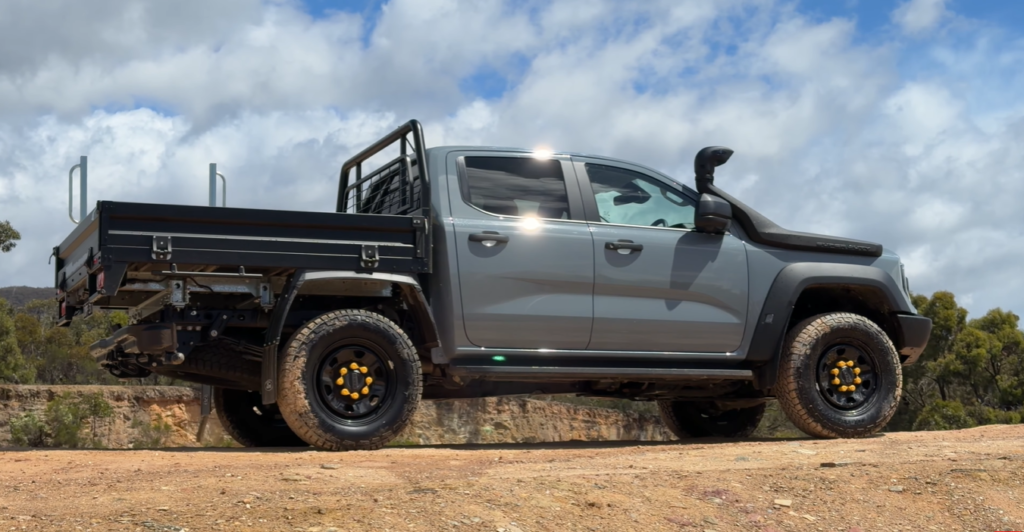
Key Design Changes:
Front End:
- Custom bonnet design: Different stamping and sheet metal (likely previewing the next Ranger facelift)
- Massive grille with “Super Duty” badging
- C-clamp LED headlights: Standard across all models, though still relatively basic with incandescent turn signals (a miss at this price point)
- Safari-designed sealed snorkel: Standard on all Super Duty models, providing 850mm wading depth
Underbody Protection:
- 4mm thick steel bash plates: Protecting the entire underbody
- Front differential from Ford Transit Jumbo: Heavy-duty commercial-grade component
- Rated recovery points: Each rated to the vehicle’s GVM (4,500kg)
Wheels & Tires:
- 8-stud wheels: Necessary to handle the massive torque forces at 8-ton GCM
- General Grabber all-terrain tires: Gnarly off-road rubber designed for serious work
- Bespoke front suspension and wishbones: Completely redesigned for increased capability
Side Profile:
- Massive fender cutouts: Allows for significantly more wheel articulation
- Large towing mirrors: Compliance requirement for vehicles over 3.5 tons
- Larger side indicators: Also a compliance requirement
- Plastic side steps: Functional but not the highest quality (one area that could be improved)
- Tinted privacy glass: Standard
- AdBlue filler: Required for Euro 6 emissions compliance
The Footprint: Ranger Raptor Size
The Super Duty fits into the same footprint as a Ford Ranger Raptor, which is impressive considering everything it’s capable of. The track width is 1,710mm—significantly wider than a Land Cruiser 70 Series, which this thing absolutely dwarfs in person.
The Tray: Serious Work Capability
The work package tray tested is a significant upgrade over the base galvanized steel option:
- Pull-out step for easier bed access
- 1,800kg-rated tie-down hooks
- Integrated smart hitch system with sensors built into the chassis
- 360° camera integration
- Full-size spare tire
- Rated recovery points front and rear
Payload Capacity by Body Style:
- Single Cab: 1,982kg (nearly 2 tons!)
- Super Cab: 1,885kg
- Dual Cab: 1,825kg
For reference, the standard Ford Ranger already leads its segment with around 1,000kg payload. Getting close to 2 tons is absolutely wild—and the way this thing rides, you’d never know it’s capable of such numbers.
Interior: Base Spec with Smart Touches
First Impressions: Better Than Expected
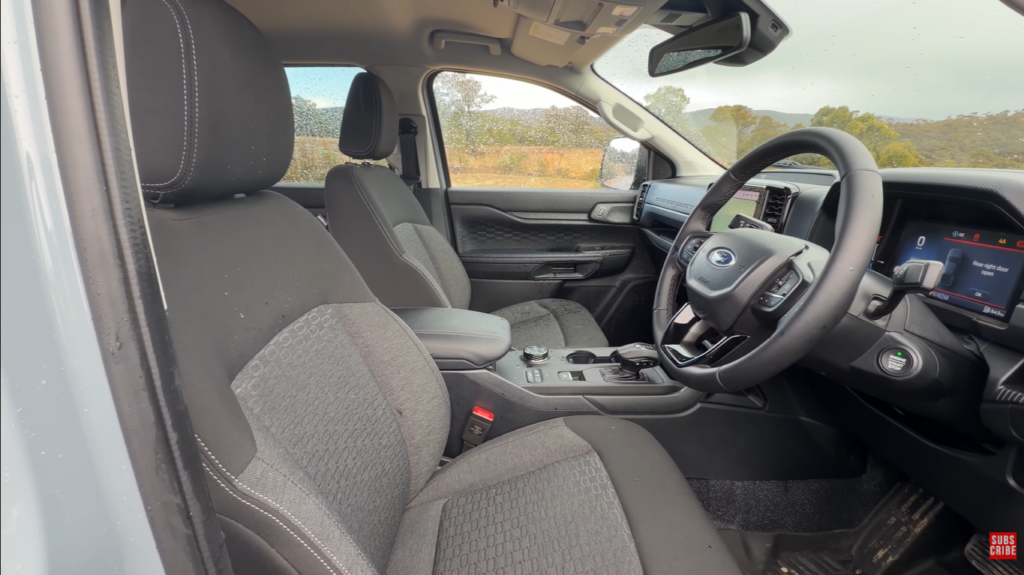
Walking into the cabin, I honestly expected a completely stripped-out fleet spec interior. Instead, Ford has cleverly added just enough premium touches to make the Super Duty feel like a legitimate daily driver—not just a work truck.
Premium Features (Surprisingly):
✅ Leather-wrapped steering wheel: Feels great to hold, perfect button layout
✅ Soft-touch center armrest: Nice tactile quality
✅ Dual cup holders in the dash: My favorite feature
✅ Decent sound system: Shockingly good for a base model
✅ Wireless charger: Convenient placement
✅ SYNC 4 touchscreen: Functional, though showing its age
✅ 360° camera: Excellent quality
Base Spec Reality:
❌ Hard plastic surfaces throughout: Wipe-clean, but reflective and noisy
❌ Manual seat adjustments: No power seats
❌ No sunroof: Not missed in a work truck
❌ Cloth seats: Rental-spec, but surprisingly comfortable
The Work Package Features
What really sets this apart are the work-oriented features:
Six Auxiliary Switches: Four are pre-wired (for lights, winches, etc.), two require additional wiring. This is fantastic for fleet customisation.
Tablet Mounting Point: What looks like a cup holder in the dash is actually a mounting point for tablets, radios, or other work equipment.
Onboard Scales: Built into the system—you can see your payload weight in real-time to ensure you’re not exceeding limits. Brilliant feature.
Smart Hitch System: Ford’s Pro Trailer Backup Assist with settings memory for up to 10 trailers. The system even tells you how to distribute load on your trailer.
Integrated Trailer Brake Controller: Recalibrated specifically for the Super Duty’s towing capacity.
Storage Solutions
Interior Storage:
- Top glove box with rubberized lining
- Massive lower glove box
- Cup holders in dash (both sides)
- Center console storage
- Under-seat storage: Pull forward the seat backs for hidden storage
Back Seat Amenities:
- Dual air vents
- 12V outlet
- 400W 230V household power outlet: Fantastic for tools or devices
- No USB-C ports (disappointing—you’ll need to use the household outlet with an adapter)
Infotainment: Showing Its Age
The SYNC 4 touchscreen works, but it’s clearly showing its limitations:
- Laggy Apple CarPlay/Android Auto: Stutters and glitches even after 5+ years on the market
- Physical climate controls are missing: Too much control is through the touchscreen
- Wireless connectivity issues: Highly recommend wiring in for CarPlay
Pro Tip: The display itself is very good with excellent functions—just the wireless connection and processing power need improvement.
Back Seat: Surprisingly Comfortable
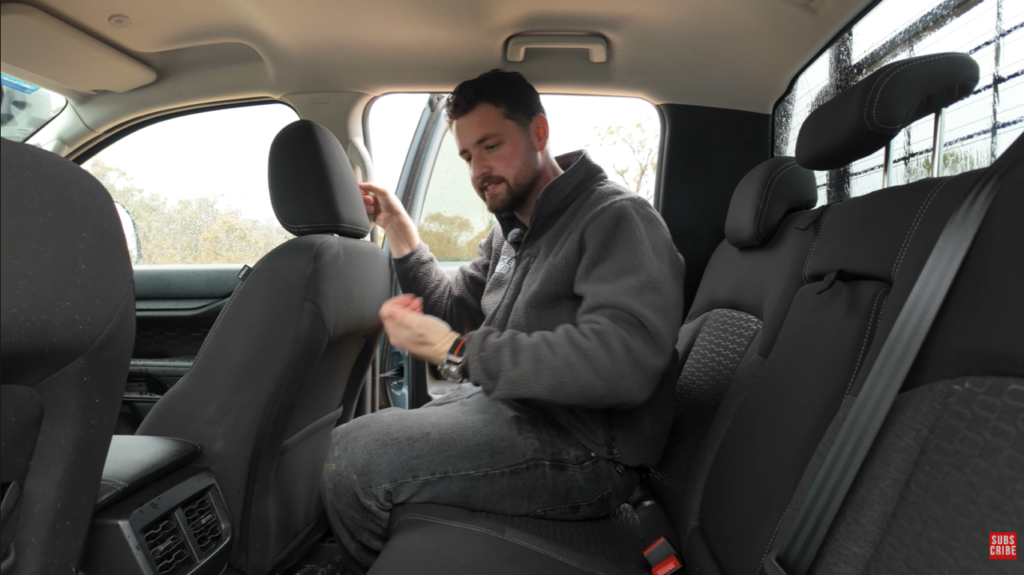
Space & Comfort
At 5’11”, I had:
✅ Ample legroom: No issues whatsoever
✅ Good toe room: Feet fit comfortably under front seats
✅ Excellent headroom: Plenty of clearance
✅ Solid door thunk: That satisfying sound of quality construction
Note: There’s a massive hump in the floor (larger than the standard Ranger) due to the upgraded drivetrain components. Middle seat passengers will notice.
Back Seat Features
- Comfortable cloth seats (rental-spec but supportive)
- Pull-down center armrest with cup holders
- Map pockets
- Air vents
- 12V outlet
- 400W household power outlet
- Under-seat storage
Verdict: The back seats are genuinely impressive for a work truck. Comfortable enough for long-distance touring.
Engine & Performance: The Euro 6 Trade-Off
Power & Torque
Engine: 3.0L V6 turbo-diesel (same unit as standard Ranger, but recalibrated)
Specifications:
- Power: 154kW (down from 184kW in standard Ranger)
- Torque: 600Nm (same as standard Ranger)
- Transmission: 10-speed automatic
- Drive: Permanent 4WD with low-range transfer case
What Changed?
- 25% improved cooling system: 1,000W cooling fan
- Euro 6 emissions compliance: Requires AdBlue
- Recalibrated for heavy-duty use: Peak torque at just 1,750rpm
The Power Deficit Reality
Let’s not sugarcoat it: losing 30kW hurts.
0-100km/h: 14.56 seconds (tested with 1.6% incline, but still… ouch)
This thing is slow. When you put your foot down, it doesn’t go anywhere quickly. The weight (2.6-2.7 tons for the dual cab) combined with the de-tuned engine makes acceleration feel labored.
However—and this is important—for normal driving, you won’t really notice. The engine builds power smoothly, and most people using this truck for its intended purpose (towing, hauling, off-roading) won’t care about 0-100 times.
Fuel Economy: Not Impressive
Real-World Fuel Consumption: 14.1-14.2 L/100km (over 12,000km of testing)
That’s barely better than the Ranger Raptor, which has more power and can go Baja racing. For a diesel, it’s disappointing.
Why Accept These Trade-Offs?
- Understressed engine = Better reliability for heavy-duty use
- Proven 3.0L V6 platform with thousands of hours of testing
- Better than the old 2.0L turbo (which is now discontinued)
- Designed for longevity, not performance
Off-Road Performance: Absolutely Unstoppable
Off-Road Specifications
Ground Clearance: 299mm (so close to 300mm—Ford, why?)
Approach Angle: 36°
Breakover Angle: 27°
Departure Angle: 29°
Wading Depth: 850mm (with sealed snorkel—can go even deeper)
Track Width: 1,710mm
Off-Road Features
- Locking front and rear differentials: Can be locked independently
- Rear differential from Ford Bronco Raptor: Heavy-duty component
- Low-range transfer case: Standard
- Off-road cruise control: Set speed (tested at 3km/h) and let the truck handle terrain
- Multiple drive modes: Mud & Ruts, Sand, Rock Crawl
- Trail camera: Shows where tires will track
- Camera washers: Spray jets clean cameras after water crossings
Real-World Off-Road Testing
We tested the Super Duty on the same brutal off-road track where we’ve almost tipped vehicles like the Suzuki Jimny and JAC T9.
The Results? This truck made the track look effortless.
Wheel Articulation: The massive fender cutouts allow incredible suspension travel. We were climbing obstacles at severe angles where other utes would be on three wheels—the Super Duty barely broke a sweat.
Locking Differentials: With both diffs locked, this thing climbed a muddy, vertical rock face without breaking traction once. The ABS and traction control barely had to intervene.
Tight Turn Radius Assist: Press a button, and the system brakes the inside rear wheel during tight turns—we nearly pulled off a U-turn on a narrow trail. Mind-blowing.
Water Wading: We drove through water crossings with water lapping at the bottom of the doors—850mm of wading depth is no joke.
Reverse Hill Climb: Locked the front and rear diffs, reversed up a steep, loose hill. The truck just nailed it without drama. No diff destruction here (looking at you, JAC T9).
Verdict: This is the most capable mid-size ute ever tested, period. It makes difficult trails feel like a drive through a parking lot.
On-Road Ride Quality: The Black Magic
The Shocking Truth
Here’s what stunned me most: This truck rides incredibly well with ZERO weight in the back.
Most utes with heavy-duty suspension ride terribly when unloaded—bouncy, harsh, unsettled. Not the Super Duty.
How Ford Did It:
- Four-leaf spring rear suspension (not massive numbers)
- Magic in the bump stops and damper tuning
- Bespoke suspension geometry
Real-World Experience:
We drove on one of the worst roads you’ll find—potholed, broken pavement, rough dirt sections. The Super Duty felt insanely comfortable. Switch to a smooth dirt road? It felt like nothing changed.
Handling: Shockingly good for a vehicle this size and with this much capability. The stiff suspension (needed for the massive GVM) actually translates to excellent body control and confident cornering.
My Take: “I can’t get over the ride comfort. And with the ride comfort also comes better handling. This thing shouldn’t handle as well as it does, but it is genuinely one of the best, if not the best handling utes out there.”
Key Features & Technology
Safety & Driver Assistance
- 360° camera system: Excellent quality with multiple views
- Trail camera: Shows tire placement for technical terrain
- Parking sensors: Front and rear
- Integrated into smart hitch: Sensors built into chassis (brilliant engineering)
- Camera washers: Spray jets clean lenses after water crossings
Connectivity & Tech
Standard Features:
- Keyless entry and push-button start
- Dual-band Wi-Fi support
- Bluetooth connectivity
- USB-A and USB-C ports (front only)
- Wireless phone charger
- Apple CarPlay and Android Auto (wired recommended)
Missing Features:
- No advanced driver aids (no adaptive cruise, lane keep assist, etc.)
- Basic infotainment processor (laggy at times)
Practical Work Features
- Onboard Scales: Monitor payload in real-time
- Smart Hitch: Pro Trailer Backup Assist with memory for 10 trailers
- Integrated Trailer Brake Controller: Recalibrated for 4,500kg towing
- Six Auxiliary Switches: Four pre-wired for lights, winches, etc.
- 400W Household Power Outlet: In rear cabin
- DPF Manual Regeneration: Burn off particulate filter manually when needed
- No Start-Stop System: Deleted for mine site compatibility
Who Is This Truck For?
Perfect Buyers
✅ Fleet Operators: Mining companies, fire services, emergency services
✅ Tradies: Need maximum payload and towing for daily work
✅ Serious 4WD Enthusiasts: Want factory-backed extreme capability
✅ Caravan Tourers: Towing heavy trailers long distances
✅ Farm & Station Owners: Need reliable, high-capacity workhorse
✅ Land Cruiser 70 Series Buyers: Want modern comfort with LC capability
Not Ideal For
❌ Performance Enthusiasts: It’s slow (0-100 in 14.5 seconds)
❌ Urban Commuters: Overkill for city driving, large size challenging
❌ Budget Shoppers: Over $100K as tested
❌ Weekend Warriors: Standard Ranger is plenty capable for light use
Ford Ranger Super Duty vs. Competitors
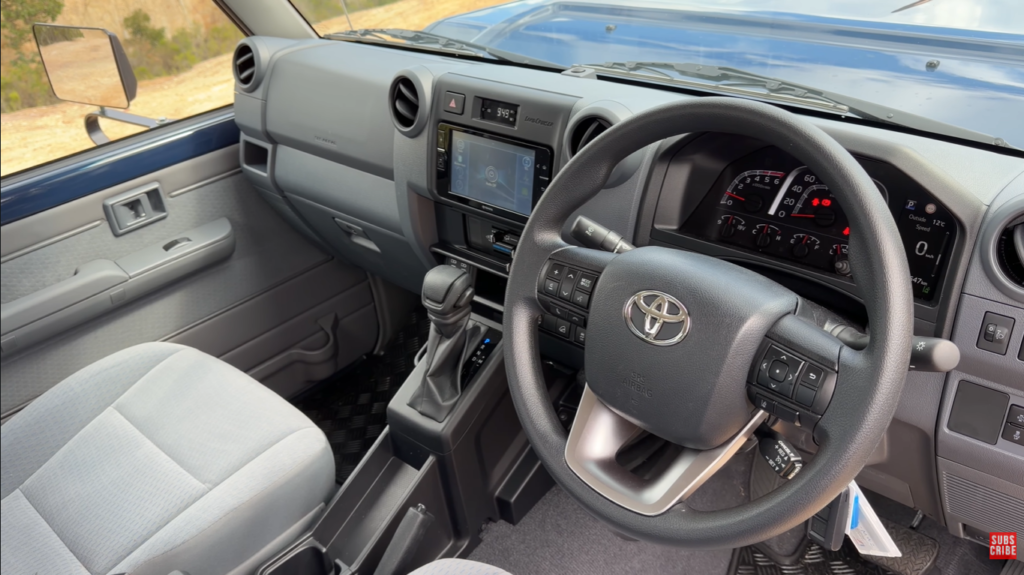
vs. Toyota Land Cruiser 70 Series
Super Duty Wins On:
- Modern technology (360° camera, smart hitch, digital displays)
- Ride comfort (massively better)
- Towing capacity (4,500kg vs. 3,500kg)
- Payload (1,825kg+ vs. ~1,000kg)
- Price (half the cost when fully spec’d)
- Interior refinement
Land Cruiser 70 Wins On:
- Legendary reliability reputation
- Simplicity (easier DIY maintenance)
- Resale value
- Heritage and cult following
Verdict: The Super Duty makes the 70 Series feel like a relic. For half the money, you get double the capability and modern comfort.
vs. Toyota HiLux
Super Duty Wins On:
- Towing capacity (4,500kg vs. 3,500kg)
- Payload (1,825kg+ vs. ~900kg)
- Off-road capability
- Technology
- Ride quality
HiLux Wins On:
- Price (significantly cheaper)
- Fuel economy
- Service network size
- Lower running costs
Verdict: The HiLux is a great ute, but the Super Duty plays in a different league entirely.
vs. RAM 1500
Super Duty Wins On:
- Size (easier to park and maneuver)
- Fuel economy (relatively speaking)
- Service costs
- Parts availability
- More practical for Australian trails
RAM 1500 Wins On:
- Interior luxury
- Ride comfort
- Towing capacity (slight edge)
- V8 power
- American truck presence
Verdict: The RAM is a luxury truck; the Super Duty is a serious work tool that happens to be comfortable.
vs. Ford Ranger Raptor
Super Duty Wins On:
- Towing capacity (4,500kg vs. 3,500kg)
- Payload (1,825kg vs. ~740kg)
- GCM (8,000kg vs. 6,000kg)
- Practical work capability
- Underbody protection
Raptor Wins On:
- Power (300kW vs. 154kW)
- Performance (way faster)
- Fox Racing shocks
- Baja-ready suspension
- Cool factor
Verdict: Completely different missions. Raptor is a performance toy; Super Duty is a heavy-duty workhorse.
Common Questions & Concerns
“Why is it so slow?”
Answer: Euro 6 emissions compliance required significant detuning. However, the engine is understressed for reliability under heavy loads. For towing and hauling (its intended purpose), the torque delivery is perfectly adequate.
“Do I really need to refill AdBlue frequently?”
Answer: Ford’s presentation suggested refills every couple of thousand kilometres depending on towing/load. The system will warn you when levels are low. It’s an unavoidable trade-off for Euro 6 compliance.
“Can I get more power?”
Answer: Ford engineers specifically calibrated this engine for longevity and reliability under extreme loads. Tuning for more power would void the warranty and potentially compromise durability.
“Will the ride quality deteriorate when loaded?”
Answer: Actually, the opposite—this truck is designed to be loaded. With weight in the back, it will feel even more planted and comfortable.
“Is 299mm ground clearance enough?”
Answer: Absolutely. Combined with the excellent approach, breakover, and departure angles, plus the incredible wheel articulation, this truck will go places most utes can’t dream of.
The Verdict: Game Over for Competitors
What Ford Got Right
✅ Ride quality: Absolutely magical engineering
✅ Off-road capability: Best-in-class, no contest
✅ Towing & payload: Class-leading numbers
✅ Durability: Built to Ford Super Duty standards
✅ Value: Half the cost of a modified 70 Series
✅ Factory warranty: 5 years covering everything
✅ Smart features: Onboard scales, smart hitch, etc.
✅ Daily drivability: Comfortable enough for family duty
What Could Be Better
❌ Power output: Euro 6 compliance really hurts
❌ Fuel economy: 14+ L/100km isn’t great
❌ Infotainment: Laggy, outdated processor
❌ Price: Over $100K as tested is steep
❌ Incandescent turn signals: Come on, Ford
Final Thoughts: The Ute That Changed Everything
Five years ago, if you told me Ford would build a mid-size ute with:
- 8,000kg GCM
- Nearly 2-ton payload
- 4,500kg towing
- Ride quality rivaling premium SUVs
- Full warranty coverage
- Under $100K starting price
…I would have laughed you out of the room.
Yet here we are. Ford has fundamentally changed what’s possible in the mid-size ute segment.
The Engineering Achievement
The Super Duty isn’t just about big numbers—it’s about integration. Ford took:
- A Ford Transit Jumbo front diff
- Ford Bronco Raptor rear axle
- Bespoke suspension engineering
- Safari snorkel integration
- Smart Hitch technology
- On-board scales
…and made it all work seamlessly with full warranty coverage. That’s not easy. That’s not cheap to develop. And that’s why competitors haven’t done it.
Who This Really Competes Against
Make no mistake: this isn’t competing against the Hilux or D-Max. Those are excellent utes, but they’re playing a different game.
The Super Duty is competing against:
- Modified Land Cruiser 70 Series builds
- RAM 1500s
- Aftermarket-upgraded Rangers
- Custom commercial vehicle conversions
And against those? It’s destroying them on value.
The Only Real Question
There’s only one question you need to ask yourself:
“Do I actually need 4,500kg towing and 1,800kg+ payload?”
If yes → Buy the Super Duty without hesitation
If no → Save $30-40K and get a regular Ranger or competitor
It’s that simple.
My Personal Take
After testing over 50 utes in my career, the Super Duty represents something rare: a vehicle that actually delivers on every promise.
Ford said “no compromises.” I was skeptical. But they’ve done it.
Yes, it’s slow. Yes, it drinks fuel. But when you’re hauling 4 tons of caravan through the outback, or towing equipment to a remote mine site, or carrying a full material load to a job site—you simply don’t care about 0-100 times.
You care that it’s comfortable. You care that it’s capable. You care that it’s unbreakable.
And the Super Duty is all three.
Game Over
Ford promised to win the heavy-duty ute segment in Australia. After this review, I can confidently say:
Mission accomplished.
Game over, indeed.
[…] detailed guide breaks down the top 5 reasons to avoid the Ford Ranger Super Duty, especially if you’re a typical tradie, tourer, or family buyer rather than a mining company or […]