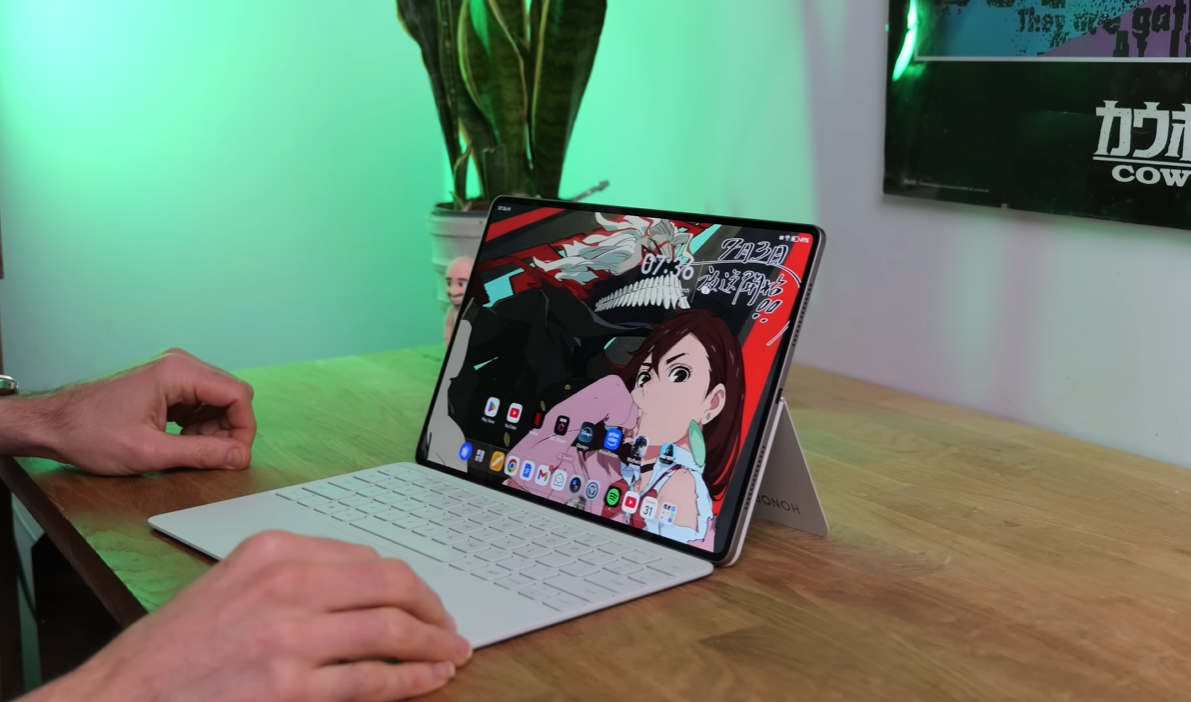
At £599 / ~₹65,000, the Honor MagicPad 4 gives you an OLED display, Snapdragon 8 Gen 5, eight speakers, and a 4.8mm chassis — while iPad Pro and Galaxy Tab S10 Ultra owners quietly cry into their wallets. But does it earn the hype, or are there hidden catches? We spent two full weeks with it to find out.
MyPitShop Quick Verdict
- World’s slimmest tablet at just 4.8mm — and it’s not a gimmick, the specs back it up
- OLED finally returns after MagicPad 3’s LCD downgrade — and it’s a proper flagship-grade panel
- Snapdragon 8 Gen 5 keeps everything buttery fast with zero heat issues tested over 1+ hour gaming
- 8-speaker IMAX audio is genuinely better than most mid-range laptops
- Biggest catches: no cellular support, no IP rating, MagicOS has bloatware, and those bezel-less edges cause accidental touches
Full specs at a glance
| Display | 12.3-inch OLED, 3000×1920 (290 PPI), 165Hz, 2400-nit peak HDR |
| Chipset | Snapdragon 8 Gen 5 + Adreno 829 GPU |
| RAM / Storage | 12GB / 256GB (base) | 16GB / 512GB (top) |
| Battery | 10,100 mAh silicon-carbon cell, 66W wired fast charging |
| OS | MagicOS 10 (Android 16) — 6 years of OS + security updates |
| Audio | 8 speakers, IMAX Enhanced, DTS:X Ultra, aptX HD, LDAC |
| Cameras | 13MP rear (4K@30fps) | 9MP front (4K@30fps) |
| Connectivity | Wi-Fi 7, Bluetooth 6 — Wi-Fi only, no eSIM |
| Eye care | 5280Hz PWM dimming, blue light filter, defocus mode, motion sickness tool |
| Dimensions | 4.8mm thick | 450g weight |
| IP Rating | None |
| Price (UK) | £599.99 (12/256GB) | £699.99 (16/512GB) |
| Colors | Gray, White |
Design and build: thinner than belief, heavier on impressions
The first time you pick up the MagicPad 4, there’s a genuine double-take moment. At 4.8mm, it is thinner than the iPad Pro M5 (5.1mm) and Samsung Galaxy Tab S10 Ultra (5.1mm) — the two devices that were previously trading blows for the slimmest flagship tablet. Honor didn’t just match them. It beat both.
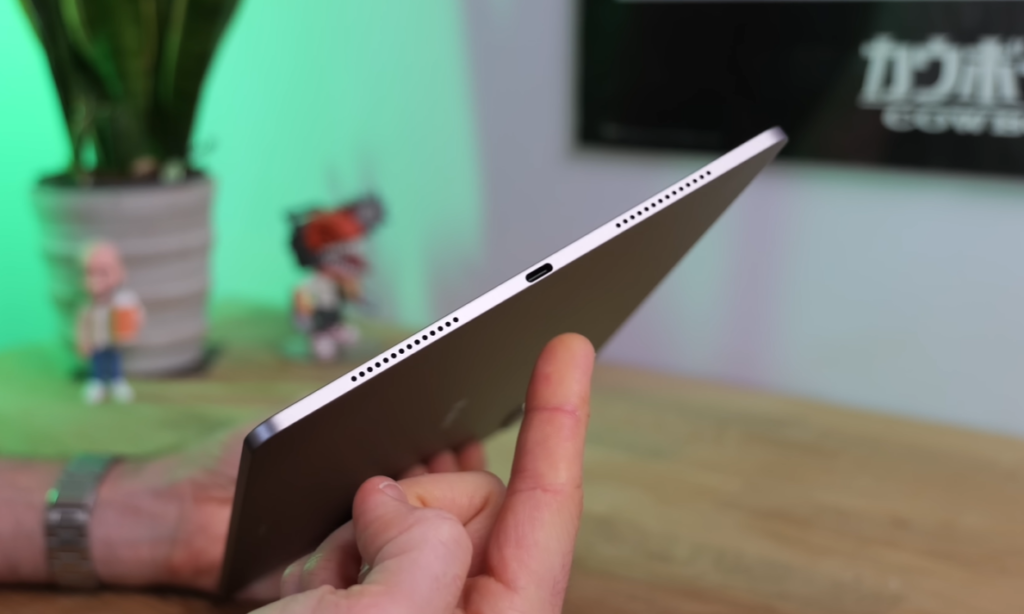
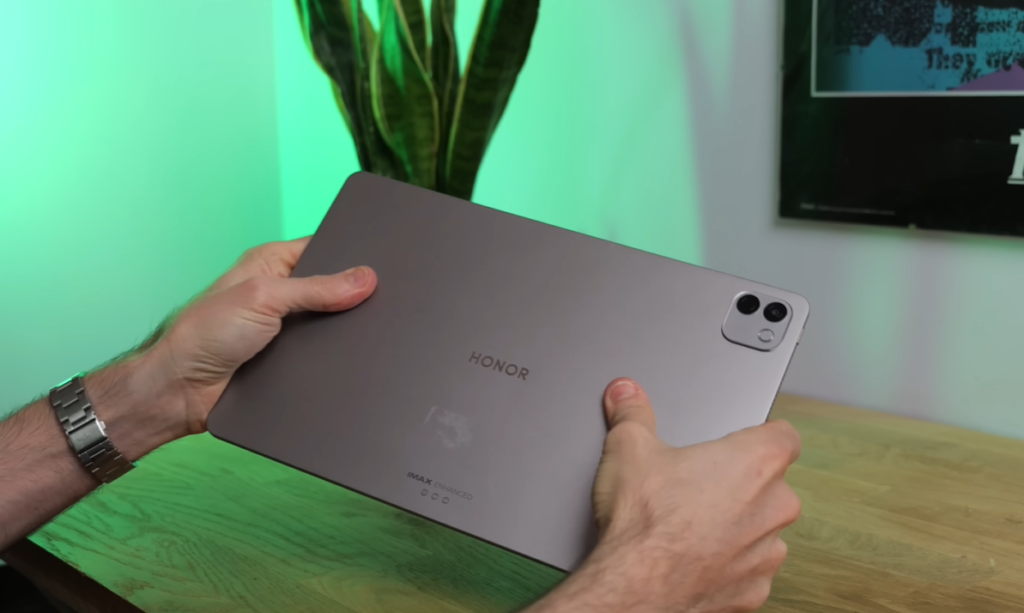
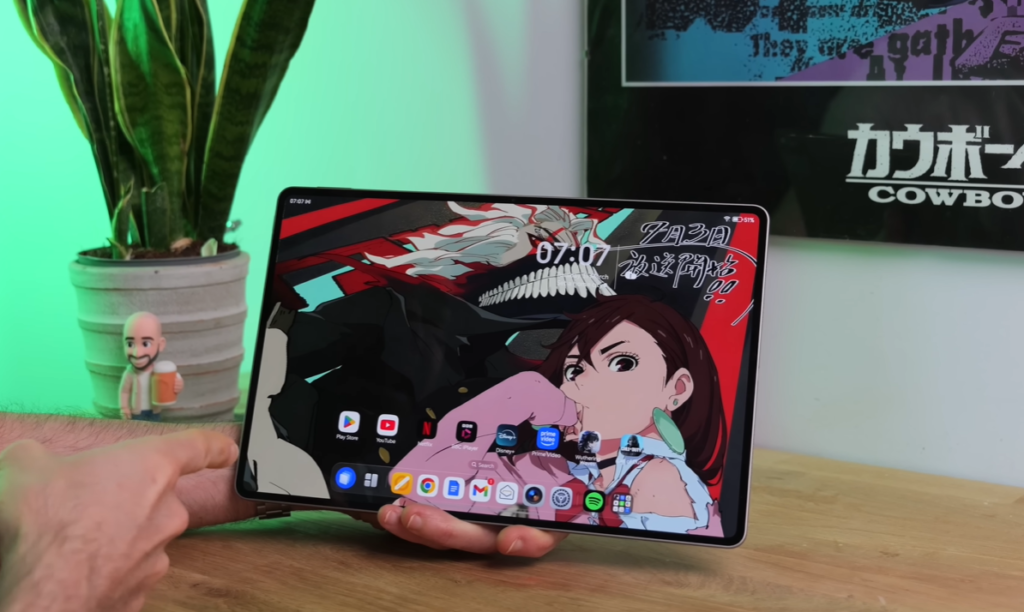
The all-metal unibody feels premium and rigid, not hollow or flex-prone. Honor uses what it calls a “Crescent Structure” with aerospace-grade special fibre to keep the chassis from bending under daily pressure — a valid concern when a tablet is this thin. In two weeks of use, including being grabbed by kids and tossed into bags, no flex, no creak, no scuffs.
At 450g, it’s light enough for one-handed reading sessions without your wrist giving up after 10 minutes. For a 12.3-inch screen, that’s not a given — the Galaxy Tab S10 Ultra is 718g by comparison.
One real-world gripe that reviewers aren’t exaggerating: the ultra-slim bezels look stunning, but your thumbs will frequently drift onto the screen when holding it in landscape. It requires a deliberate grip adjustment. Annoying for free-hand use, non-issue when docked in the keyboard case.
There’s no IP rating here, which matters if you’re a poolside reader or a clumsy coffee drinker. Honor’s omission isn’t unusual at this price — the Samsung Galaxy Tab S10 FE+ doesn’t offer IP68 either — but it’s worth flagging.
The OLED display: why this is the MagicPad 3’s biggest correction
The MagicPad 3 shipped with an LCD panel. In 2025. For a “premium” tablet. The backlash was justified. Honor heard it. The MagicPad 4 comes back swinging with a proper 12.3-inch 3K OLED panel, and the difference in day-to-day use is not subtle — it’s dramatic.
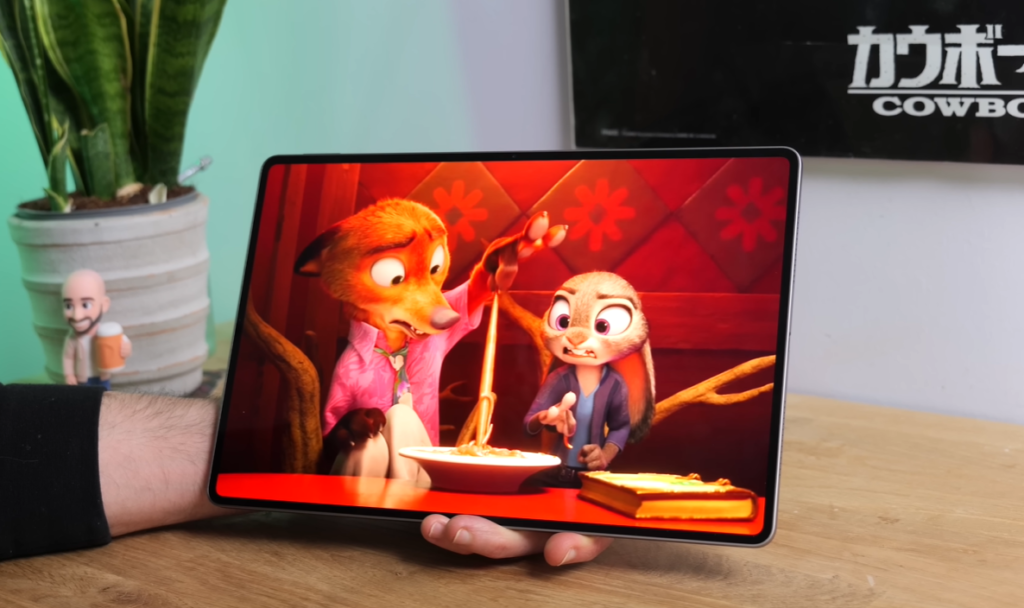
OLED means true blacks — not “very dark gray” that you squint at during moody film scenes, but actual off-pixel black. HDR content, streaming on Netflix or Prime, gaming environments with dark atmospheres — all of it pops the way LCD simply cannot replicate.
What the spec sheet doesn’t tell you about this display
Peak brightness reaches 2400 nits for HDR, which means even in harsh studio lighting the panel holds up comfortably. The 5280Hz PWM dimming rate is a standout — most OLED displays flicker at 240Hz or 480Hz, which causes the eye strain that long-time OLED users know too well. At 5280Hz that flicker is effectively imperceptible, making this panel significantly more comfortable for extended reading and work sessions than similarly priced OLED rivals.
The refresh rate adapts between 60Hz and 165Hz. In everyday use it sits at 120Hz, which is smooth enough that you notice when you go back to anything running at 60Hz. The 165Hz ceiling only kicks in for supported games, but it’s a meaningful ceiling when gaming on the right title.
One genuine gap: no anti-glare coating. The Xiaomi Pad 8 Pro has a matte glass option that handles reflections more gracefully. The Honor’s display is bright enough to overcome most glare, but in strong natural light you’ll notice the difference.
Performance: Snapdragon 8 Gen 5 and what it actually means in practice
The Snapdragon 8 Gen 5 is not the top-tier “Elite” variant, but calling it a compromise would be misleading. It’s a genuinely powerful chip — fast app switching, no lag in multitasking, smooth 120Hz scrolling, and gaming performance that held up across one-hour continuous sessions of Wuthering Waves at maxed-out settings without thermal throttling.
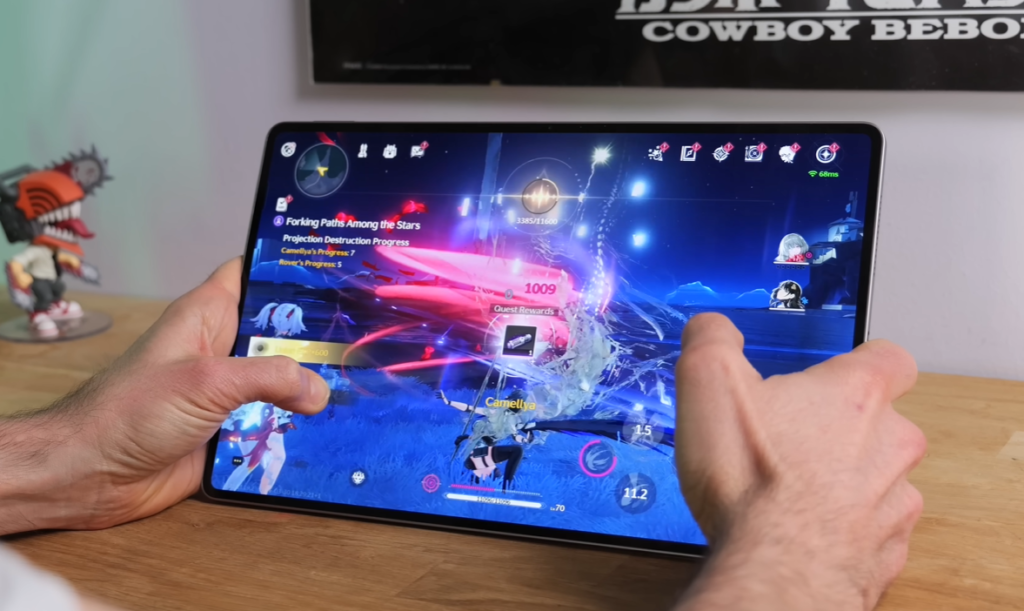
The dual-direction vapour chamber is the key story here. Even during sustained heavy gaming the device barely crossed “slightly warm” — never uncomfortable. For a tablet this thin, that is seriously impressive thermal engineering.
Multitasking and PC Mode — where it genuinely surprises
Split-screen is fluid. PC Mode — which activates a desktop-style windowed interface supporting up to 20 apps simultaneously — is genuinely useful for productivity. You can minimise, maximise, resize and overlap windows exactly like a desktop OS. It’s not perfect (some apps behave oddly at unusual aspect ratios), but for a tablet-first device it punches well above expectations.
Where it trails OnePlus and Oppo tablets is in the fluidity of MagicOS animations and overall software polish. Multitasking gestures aren’t as intuitive, and the transition between modes can feel slightly clunky. Not a dealbreaker, but it’s noticeable if you’re coming from OxygenOS or ColorOS.
Battery life: smaller capacity, but does it matter?
The MagicPad 4 drops from its predecessor’s 12,450 mAh to 10,100 mAh — a reduction that looks alarming on paper. In practice it matters far less than the numbers suggest, for two reasons: the display is smaller (12.3-inch vs 13.3-inch) and the Snapdragon 8 Gen 5 is considerably more efficient than the chip that powered the MagicPad 3.
In mixed use — browsing, video streaming, app switching, light document work — expect around 10 hours. Under full gaming load (Wuthering Waves, max settings, performance mode active), the battery held up for around 6 hours. The 66W fast charging means a 30-minute cable session buys you several more hours of use.
No wireless charging and no charger in the box. The latter is an increasingly common cost-cutting move, but still frustrating at £599.99.
Audio: 8 speakers in a 4.8mm tablet — and they actually work
Eight speakers sounds like a marketing checkbox. In practice, the MagicPad 4’s audio setup is one of the most impressive built-in sound systems in the Android tablet space at this price. IMAX Enhanced tuning, DTS:X Ultra spatial audio, support for aptX HD and LDAC — the codec list is comprehensive.
More importantly, the speakers are loud without distorting and warm at the low end without being muddy. For movies in landscape mode, the stereo separation is wide and the soundstage is immersive. It’s genuinely better audio than many mid-range laptops.
Software: MagicOS 10 — the honest picture
Android 16 with MagicOS 10 on top brings genuine features — AI Meetings, AI Creation tools, a robust PC Mode, and Honor’s cross-device connectivity with other Honor devices. The 6 years of OS and security update commitment is meaningful, and well above what most Android tablet makers promise.
The real friction is bloatware. The out-of-box experience has apps you didn’t ask for. The UI can feel cluttered compared to the cleaner approach on stock-adjacent experiences. It doesn’t affect performance, but it does affect the feel — especially in the first week.
How it stacks up against rivals at this price
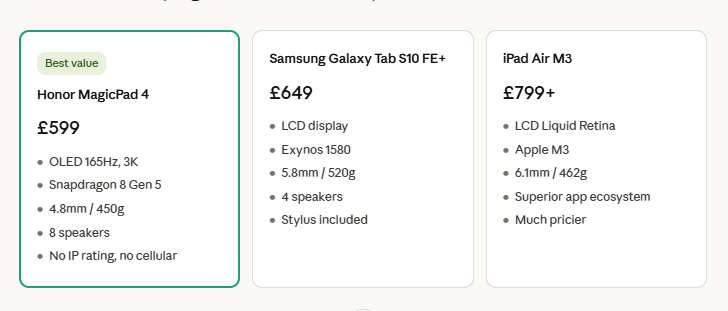
At £599, the MagicPad 4 is the only device in this price band with a flagship-grade OLED panel. That alone reshapes the comparison.
Pros and cons — the honest summary
What we love
- Genuinely flagship OLED at mid-range price
- 4.8mm chassis — thinner than iPad Pro M5
- Snapdragon 8 Gen 5 with zero thermal issues
- 8-speaker audio that embarrasses laptops
- 5280Hz PWM — comfortable for long sessions
- Wi-Fi 7 and Bluetooth 6 — future-proof
- 6 years of OS + security updates
- 66W fast charging
What holds it back
- No IP rating for dust or water
- No cellular / eSIM option
- Slim bezels cause accidental touches
- MagicOS has notable bloatware
- No charger in the box
- No anti-glare screen coating
- Keyboard is wobbly on laps
- Battery capacity down vs MagicPad 3
Who should actually buy this?
Buy it if you are…A media consumer, casual gamer, or hybrid worker who wants the best OLED display under £700 and doesn’t need cellular connectivity.
Skip it if you are…A frequent traveller who needs mobile data built in, someone who works near water/outdoors, or a heavy OneUI / iPadOS user used to polished software.
Seriously consider it if…You were eyeing the iPad Air or Samsung Tab S10 FE+ and feel the price-to-spec ratio matters more than brand loyalty.
Wait if…You use your tablet 90% on the go away from Wi-Fi, or if Honor’s software track record in your region concerns you for long-term support.
MyPitShop final verdict
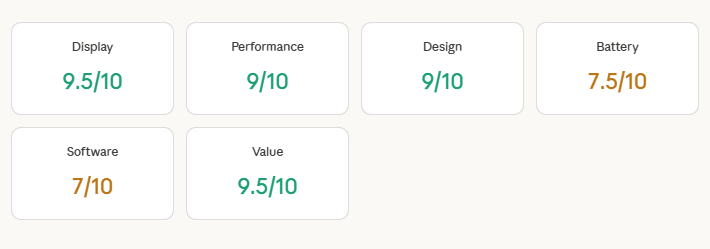
The Honor MagicPad 4 does something rare in the Android tablet market: it makes a genuine, no-asterisk argument for itself against devices that cost significantly more. An OLED panel with 5280Hz PWM dimming, a Snapdragon 8 Gen 5 that doesn’t sweat under pressure, eight speakers that shame the competition, all packed into the world’s slimmest tablet chassis at £599 — it’s hard to argue with the value proposition.
The MagicOS bloatware and lack of IP rating or cellular keep it from being perfect. But if your primary use is content consumption, productivity at a desk or cafe, and gaming at home, those gaps rarely surface in daily life.
Pound for pound, this is the most interesting Android tablet launch of 2026 so far. Samsung and Apple need to pay attention.
OLED tablet Android tablet 2026 Honor MagicPad 4 Snapdragon 8 Gen 5 iPad Pro alternative best tablet under £700


