Testing Date: December 2025 | Total Distance Covered: 82 kilometers | Test Duration: 5+ hours
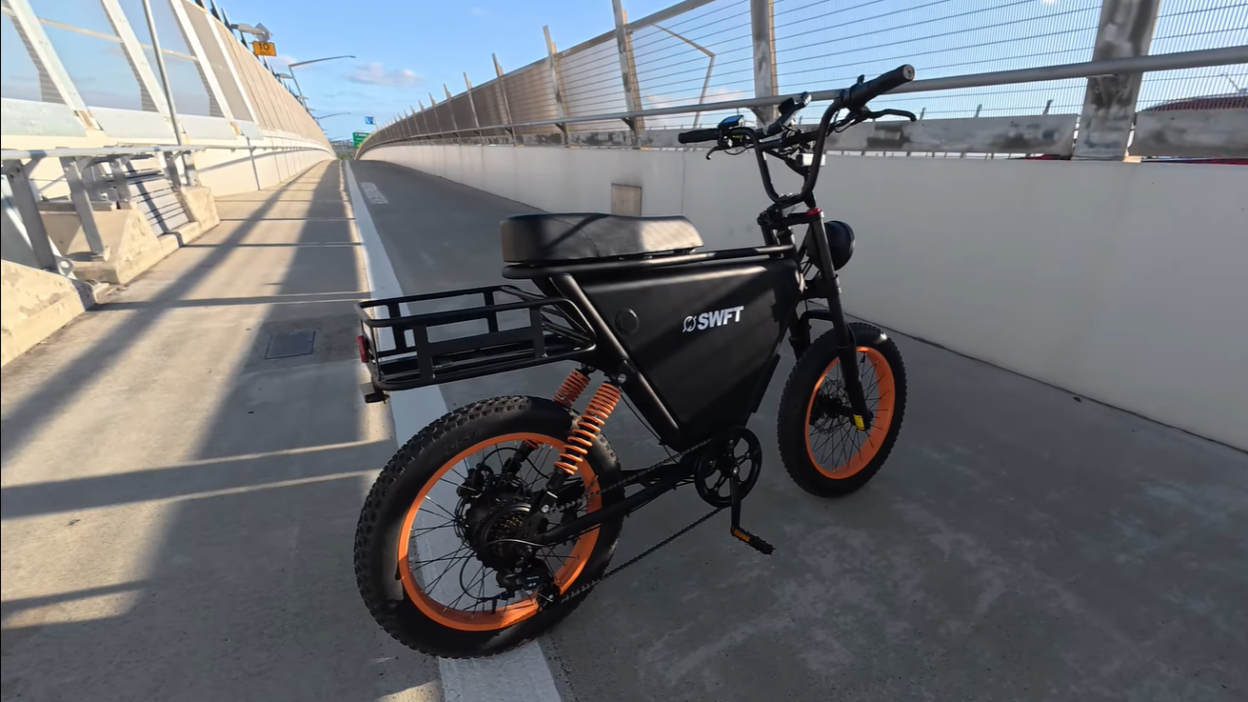
When e-bike manufacturers claim their products can travel 100 miles (160 km) on a single charge, it sounds incredible. But what happens when you actually ride the bike the way most people would – with pedal assist level 3, using throttle liberally, and traveling at comfortable speeds? I decided to find out by taking the Mukkpet SWFT Cargo E-bike on an epic journey from Logan City to the Gateway Bridge and back, riding it until both batteries were completely drained.
This isn’t a controlled lab test or a manufacturer’s best-case scenario. This is a real-world, no-holds-barred range test that shows you exactly what to expect from this dual-battery cargo e-bike when you’re actually having fun riding it.
Quick Verdict: Is the Mukkpet SWFT Worth It?
Overall Rating: ⭐⭐⭐⭐ (4/5)
Pros:
- Dual battery system with easy switching
- Exceptionally smooth suspension
- Agile handling despite cargo design
- Reliable Logan brakes
- Great throttle response
- Comfortable for long rides
- Stable in crosswinds despite enclosed frame
Cons:
- Real-world range significantly less than claimed 160 km
- Slight wind whistle noise at higher speeds
- Battery depletes faster in higher pedal assist levels
- Takes longer to charge with two batteries
Best For: Urban commuters, delivery riders, parents needing cargo capacity, and recreational riders who want extended range without range anxiety.
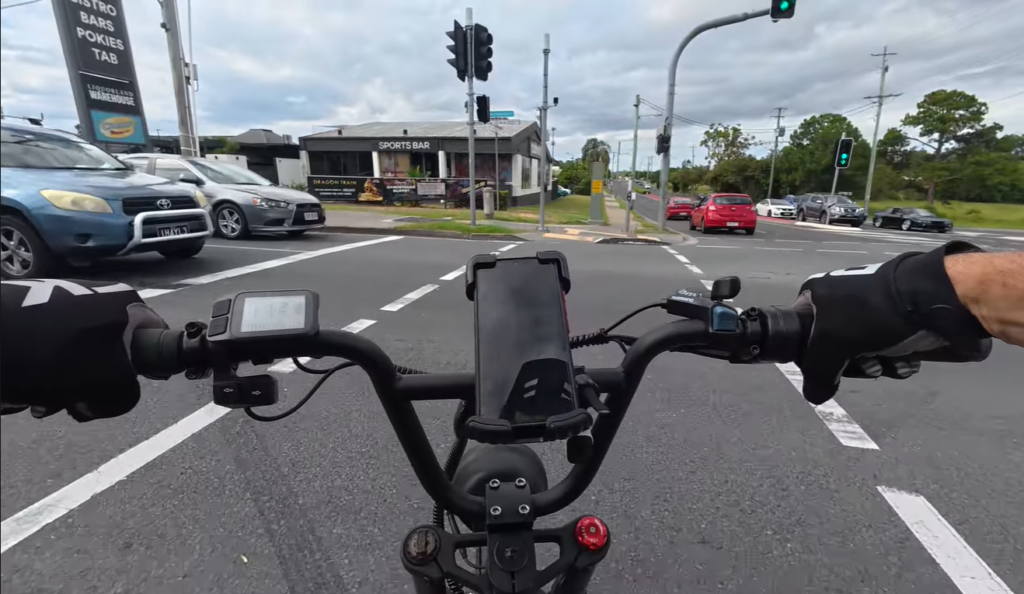
The Test Setup: How I Rode the SWFT
Starting Conditions
- Location: Logan City, Queensland, Australia
- Start Time: 3:30 PM
- Weather: Cloudy with moderate breeze
- Route: Logan City → V1 → Belinda Creek Bikeway → Gateway Bridge apex → Return journey
- Riding Style: Pedal assist level 3 (occasionally level 4), generous throttle use
- Average Speed: Approximately 30-40 km/h (targeting realistic commuting speeds)
- Terrain: Mixed – flat bikeways, moderate hills, bridge climb
Why This Test Matters
Most e-bike range tests use pedal assist level 1, minimal throttle, and unrealistic riding conditions. That’s not how most people ride. I wanted to test the SWFT the way I’d actually use it daily – with enough power to make the ride enjoyable and fast enough to get places efficiently. If you’re considering this bike, you want to know the real range, not the theoretical maximum.
The Route: Logan City to Gateway Bridge
Leg 1: Logan City to Belinda Creek Bikeway (43 minutes)
Starting from Logan City in the late afternoon, I headed toward the V1 shopping center before turning onto the stunning Belinda Creek Bikeway. This section covered approximately 15 kilometers of mixed urban streets and dedicated bike paths.
First Impressions:
- The suspension immediately impressed me – it’s “smooth as” (Australian for exceptionally smooth)
- Throttle response was instant and reliable
- The Logan brakes (yes, that’s actually what they’re called, and I’m from Logan City!) provided confident stopping power
- The bike handled the transition from road to bikeway seamlessly
Leg 2: Belinda Creek Bikeway (The Highlight)
The Belinda Creek Bikeway is an absolute gem – a hidden pristine cycling paradise tucked under power lines with multiple creek crossings, bridges, and lush bush scenery. If you’re in the Brisbane/Logan area and haven’t ridden this bikeway, you’re seriously missing out.
Bikeway Features:
- Multiple scenic bridges over creeks
- Well-maintained paths with minimal obstructions (except one fallen tree I had to detour around)
- Beautiful drainway underpasses
- Graffiti tunnel sections with Brisbane street art
- Criterion Raceway for lap enthusiasts
- Meadowlands parklands
Bike Performance on the Bikeway:
The SWFT really shines on dedicated bike paths. The enclosed frame design, which some might worry about catching crosswinds, proved stable even in breezy conditions. I could hear a slight wind whistle at higher speeds – likely from air reverberating off the enclosed center triangle – but it didn’t affect handling.
The agility surprised me. Despite being a cargo bike, the SWFT turns sharply and handles technical sections effortlessly. Standing up on the pedals when needed was comfortable, and the overall riding position felt natural for extended periods.
Leg 3: The Gateway Bridge Climb
Distance to Apex: Approximately 1 kilometer of climbing
Battery Status at Start: Flashing low (first battery nearly depleted)
Time from Logan City: 1 hour 39 minutes
Distance Covered: 39.69 km
The Gateway Bridge climb is the ultimate test for any e-bike. It’s a sustained incline that reveals how well a bike’s motor and battery work under stress. I dropped to pedal assist level 1 for this climb to conserve battery, and the SWFT handled it beautifully – smooth, steady power delivery with no motor strain.
Reaching the apex at 39.69 kilometers, my first battery was flashing empty. This gave me valuable data: riding in pedal assist 3 with liberal throttle use, I got approximately 40 kilometers from one battery.
The Battery Switch: How the Dual System Works
At the Gateway Bridge apex, I confirmed what I suspected about the dual battery system:
Dual Battery Operation:
- Each battery has its own on/off switch
- You run one battery until it’s depleted
- Then switch to the second battery (not simultaneous operation)
- The manual isn’t crystal clear on this, but field testing confirmed it
What Happens When a Battery Dies:
- The bike gradually slows down
- Power delivery becomes less responsive
- Even on “zero percent,” you can eke out another 2-3 kilometers
- No sudden cutoff – it’s a gradual decline
After switching to the fresh battery at the top of the Gateway Bridge, I had a full charge indicator and confidence to make the return journey.
Return Journey: Testing Battery #2
Distance Covered on Second Battery
I switched to the second battery at 47 kilometers (after descending from Gateway Bridge to Meadowlands Parklands). By the time I returned home to Logan City, I had covered an additional 35 kilometers, for a total journey of 82 kilometers.
Second Battery Performance:
- Similar range to the first battery
- Consistent power delivery throughout
- Battery indicator dropped to two bars around 65 km total distance
- Reached “empty” at 82 km but still had residual power
Evening Ride Observations
Riding back as the sun set provided additional insights:
Lighting Conditions:
- The late afternoon/evening provided beautiful lighting for the first half
- As darkness approached around Belinda Creek, visibility became challenging
- I’d recommend equipping proper lights for evening rides
Traffic and Path Conditions:
- Minimal traffic on dedicated bikeways
- Had to navigate through the Slacks Creek tunnel in dimming light
- Urban sections were busier with evening commuters
Real-World Range Analysis: The Numbers Don’t Lie
Claimed vs. Actual Range
Manufacturer Claim: 100 miles (160 km) on pedal assist level 1
My Real-World Results:
- Pedal Assist Level 3 + Throttle: 82 km total (41 km per battery)
- Average Speed: 30-40 km/h
- Riding Style: Recreational/commuter pace (not grandma speed)
Breaking Down the Range Discrepancy
The manufacturer’s 160 km claim assumes:
- Pedal assist level 1 (minimal motor assistance)
- Light throttle use or no throttle
- Slower speeds (likely 15-20 km/h)
- Ideal conditions (flat terrain, no wind)
- Lighter rider weight
My test used:
- Pedal assist level 3 (occasionally level 4)
- Liberal throttle application
- Higher speeds (30-40 km/h average)
- Mixed terrain including significant climbs
- Real-world conditions
Is 82 km Disappointing?
Not necessarily. Let me put this in perspective:
- 82 km is still excellent range for an e-bike when riding at enjoyable speeds
- Most daily commutes are 10-30 km round trip – the SWFT easily handles this
- You could theoretically extend range to 100-120 km by riding more conservatively
- The dual battery system means you’re never stranded – just switch batteries
What Range Can You Realistically Expect?
Based on my testing, here’s what I’d estimate for different riding styles:
| Riding Style | Pedal Assist Level | Estimated Range |
|---|---|---|
| Conservative/Eco | Level 1 | 120-140 km |
| Moderate Commuting | Level 2 | 100-110 km |
| Spirited Riding | Level 3 | 80-90 km |
| Maximum Performance | Level 4 + Heavy Throttle | 60-75 km |
Detailed Performance Review
Suspension: The Star of the Show
The suspension on the SWFT cargo bike is genuinely impressive. Throughout 82 kilometers of varied terrain – smooth bikeways, rough urban roads, bridge approaches, and even some off-path detours – the suspension absorbed everything beautifully.
Why It Matters:
- Reduces fatigue on long rides
- Makes the bike comfortable for cargo carrying
- Absorbs shocks from potholes and rough surfaces
- Allows you to maintain speed over uneven terrain
Coming from someone who’s tested numerous e-bikes, the SWFT’s suspension rivals bikes costing significantly more.
Throttle Response: Instant Power When You Need It
The throttle proved to be one of the SWFT’s best features. Unlike some e-bikes where throttle response is laggy or requires a few pedal rotations to activate, the SWFT’s throttle is immediate and progressive.
Throttle Characteristics:
- Zero lag from standstill
- Smooth power curve (not jerky)
- Works independently of pedaling
- Useful for starting on hills or navigating traffic
I’ll be honest – the throttle did most of the work on this ride, even though I was pedaling. This is perfect for cargo loads or when you’re tired but need to maintain pace.
Braking: Logan Brakes Live Up to Their Name
The Logan brakes (and yes, I’m still amused that they share a name with my city) provided confident, progressive stopping power throughout the test. Even with the bike’s weight plus cargo capacity, I never felt uncertain about stopping ability.
Brake Performance:
- Consistent bite point
- No fade even after repeated use on descents
- Adequate modulation for smooth stops
- Effective in emergency situations
Handling and Agility: Surprisingly Nimble
For a cargo bike with an enclosed frame design, the SWFT handles remarkably well. I was initially concerned that the enclosed center triangle might make the bike feel unwieldy or catch crosswinds excessively.
Handling Highlights:
- Sharp cornering capability
- Stable at speed (tested up to 40+ km/h)
- Easy to maneuver in tight spaces
- Crosswind stability better than expected
- Comfortable to ride standing up
The only minor issue was the wind whistle noise at higher speeds, which I attribute to air flowing around the enclosed frame. It’s not loud enough to be annoying, just noticeable.
Comfort: Built for Long Rides
After 5+ hours in the saddle covering 82 kilometers, I can confidently say the SWFT is comfortable for extended rides.
Comfort Features:
- Well-padded seat with good support
- Natural riding position (not too upright, not too aggressive)
- Ability to stand up easily when needed
- Suspension smooths out road imperfections
- Handlebar positioning reduces wrist strain
The ability to stand up periodically made a huge difference. When your backside gets sore, just stand for a bit, then sit back down. This flexibility makes long rides much more enjoyable.
Build Quality: Solid and Reliable
Throughout the test, the SWFT felt solid and well-constructed. Nothing rattled, no components felt loose, and the overall build inspired confidence.
Build Quality Observations:
- Sturdy frame construction
- No flexing under power
- Quality welds and joints
- Weather-resistant components
- Professional finish
Cargo Capacity and Practical Use
While I didn’t carry heavy cargo on this test ride, the SWFT’s design clearly accommodates significant loads.
Cargo Considerations:
- Enclosed frame provides protection for batteries and mounted cargo
- Rear rack suitable for panniers, bags, or cargo platforms
- Front mounting options available
- Low center of gravity helps with loaded stability
Ideal Use Cases:
- Grocery shopping runs
- Delivery services
- Carrying work equipment
- Child seats or trailers
- Weekend camping gear transport
Charging and Battery Management
Charging Time
With two batteries, charging logistics become important:
Estimated Charging Times:
- Each battery: 4-6 hours (depending on depletion level)
- Both batteries from empty: 8-12 hours total
- Partial charges: 2-3 hours
Charging Strategies:
- Charge overnight for next-day use
- Stagger charging if you have limited outlets
- Consider purchasing a second charger for simultaneous charging
Battery Longevity Tips
Based on my experience with e-bike batteries, here’s how to maximize the SWFT’s battery lifespan:
- Don’t Fully Deplete Regularly: While I drained them for this test, regularly depleting lithium batteries reduces their lifespan
- Charge Before Storage: Store batteries at 50-80% charge
- Avoid Extreme Temperatures: Don’t leave the bike in direct sun or freezing conditions
- Use Both Batteries: Rotate between batteries to balance wear
- Don’t Leave on Charger: Unplug once fully charged
Real-World Scenarios: How Far Can You Actually Go?
Let’s put the 82 km range into practical contexts:
Daily Commuting
Scenario: 15 km each way to work
Result: 30 km round trip = 2-3 days of commuting per charge
Verdict: Excellent – you’d only need to charge 2-3 times per week
Food Delivery
Scenario: 50 km of city riding per shift
Result: Easily covers a full shift, even in hilly areas
Verdict: Perfect – you could potentially do 1.5 shifts before recharging
Weekend Recreation
Scenario: 60 km bikeway ride with family
Result: Complete the ride with power to spare
Verdict: Ideal – you’ll return home with battery remaining
Long-Distance Touring
Scenario: 100+ km day trips
Result: Need to ride conservatively or plan a midday recharge
Verdict: Possible but requires strategic planning
Comparison: How Does the SWFT Stack Up?
Against Traditional Cargo Bikes
Advantages:
- Electric assistance makes cargo hauling effortless
- Faster than traditional cargo bikes
- Less physical effort required
Trade-offs:
- Heavier overall
- Requires charging infrastructure
- More expensive upfront
Against Other E-Cargo Bikes
| Feature | Mukkpet SWFT | Typical Competitor |
|---|---|---|
| Price Range | Mid-range | Varies widely |
| Battery Capacity | Dual battery system | Usually single |
| Real-world Range | 80-90 km (spirited) | 60-80 km average |
| Suspension | Excellent | Varies |
| Cargo Capacity | Good | Similar |
| Build Quality | Solid | Varies |
Who Should Buy the Mukkpet SWFT Cargo E-bike?
Perfect For:
Urban Commuters If you have a 10-30 km commute each way, the SWFT provides more than enough range while making the ride enjoyable. The cargo capacity means you can stop for groceries without worrying about carrying capacity.
Delivery Riders With 80+ km of real-world range at good speeds, delivery riders can complete full shifts without range anxiety. The cargo design makes loading packages efficient.
Active Families Parents who want to do longer bike rides with kids (using trailers or child seats) will appreciate the extra power and range. The dual battery system means you won’t be pedaling a dead e-bike back home with tired children.
Recreational Riders If you love exploring bikeways and trails but want assistance on longer rides or hilly sections, the SWFT provides the perfect balance of range and performance.
Car Replacement Seekers For those looking to replace short car trips with cycling, the SWFT’s cargo capacity and range make it a viable alternative for errands, shopping, and local transportation.
Not Ideal For:
Budget-Conscious Buyers While the SWFT offers good value, it’s still a significant investment. If budget is your primary concern, there are cheaper options available.
Minimalists If you want a lightweight, compact e-bike for easy storage and portability, the SWFT’s cargo design might be overkill.
Performance Enthusiasts If you want maximum speed (45+ km/h) and don’t care about cargo capacity, there are sleeker sport e-bikes better suited to your needs.
Off-Road Adventurers While the SWFT handles light trails fine, serious off-road riding requires a mountain e-bike with appropriate tires and suspension geometry.
Tips for SWFT Owners: Getting the Most from Your Bike
Maximizing Range
- Use Pedal Assist Strategically: Start in level 1 on flats, increase to 2-3 on hills
- Throttle Conservation: Use throttle for starts and hills, pedal on flats
- Tire Pressure: Maintain proper pressure (reduces rolling resistance)
- Smooth Riding: Anticipate stops, avoid rapid acceleration
- Wind Awareness: Plan routes to minimize headwinds when possible
Maintenance Schedule
Weekly:
- Check tire pressure
- Inspect brakes
- Clean chain and apply lubricant
- Check battery charge levels
Monthly:
- Deep clean frame and components
- Check spoke tension
- Inspect tires for wear
- Test brake pad thickness
Quarterly:
- Professional tune-up
- Check electrical connections
- Inspect suspension components
- Update firmware if available
Recommended Accessories
- Quality Lock: Cargo bikes are valuable – invest in serious security
- Lights: Front and rear lights for evening rides
- Phone Mount: For navigation (I used one during this test)
- Panniers/Cargo Bags: Maximize the cargo capacity
- Fenders: Keep yourself clean in wet conditions
- Spare Battery Charger: For faster charging of both batteries
- Bike Computer: Track your rides and optimize battery use
Common Questions About the SWFT
“Can it really go 160 km?”
Technically, yes – but only under ideal conditions with pedal assist level 1, minimal throttle, slower speeds (15-20 km/h), flat terrain, and lighter rider weight. In real-world conditions with enjoyable riding speeds, expect 80-120 km depending on your style.
“How long does charging take?”
Each battery takes approximately 4-6 hours to fully charge from empty. Plan for overnight charging, especially if depleting both batteries. Consider getting a second charger if you need faster turnaround times.
“Is the enclosed frame a problem in wind?”
I was concerned about this too, but the bike proved stable even in moderate crosswinds. There’s a slight wind whistle at higher speeds, but handling isn’t affected. The enclosed design actually protects the batteries and electrical components.
“What about hills?”
The SWFT handles hills admirably. I climbed the Gateway Bridge (a sustained 1 km climb) without issues. The motor provides consistent power on inclines, though obviously battery drains faster on climbs than flats.
“Can I ride it like a regular bike if the battery dies?”
Technically yes, but it’s heavy. The good news is that even when the battery indicator shows empty, you still have a few kilometers of reduced power. Plus, with the dual battery system, you’re unlikely to be caught completely without power if you plan reasonably.
“How does it handle in traffic?”
Surprisingly well. The throttle allows quick starts from intersections, and the agility means you can navigate through urban environments confidently. The brakes provide reassuring stopping power in emergencies.
Environmental and Cost Considerations
Environmental Impact
Positive Aspects:
- Replaces car trips for errands and commuting
- Zero emissions during operation
- Encourages active transportation
- Reduces urban congestion
Considerations:
- Battery production has environmental costs
- Electricity for charging (ideally from renewable sources)
- End-of-life battery disposal/recycling
Cost Analysis
Upfront Costs:
- E-bike purchase: $1,500-$2,500 (estimated)
- Essential accessories: $200-$400
- Maintenance budget: $200-$300/year
Operating Costs:
- Electricity for charging: ~$0.10-$0.20 per charge
- Maintenance: $20-$40/month
- Replacement parts: Variable
Savings vs. Car:
- No fuel costs
- No insurance (or minimal)
- No registration fees
- No parking costs
- Reduced maintenance vs. automobile
For someone replacing even 50% of car trips with the SWFT, the payback period could be 1-2 years depending on local fuel prices and driving habits.
Final Verdict: Should You Buy the Mukkpet SWFT?
After riding 82 kilometers until both batteries died, testing it through urban streets, dedicated bikeways, and significant climbs, I can confidently recommend the Mukkpet SWFT Cargo E-bike – with realistic expectations.
What You’re Getting:
✅ Excellent suspension that makes long rides comfortable
✅ Reliable dual battery system with ~80 km real-world range per charge
✅ Responsive throttle for effortless riding
✅ Quality brakes (Logan brakes for the win!)
✅ Stable, agile handling despite cargo design
✅ Good build quality that inspires confidence
✅ Cargo capacity for practical daily use
What You’re Not Getting:
❌ The claimed 160 km range (unless riding very conservatively)
❌ A lightweight, compact e-bike
❌ Silent operation (slight wind whistle at speed)
❌ Instant charging (plan for overnight)
My Rating: ⭐⭐⭐⭐ (4/5)
The Bottom Line: The Mukkpet SWFT Cargo E-bike delivers where it matters most – real-world usability, comfort, and reliability. While the actual range doesn’t match the optimistic claims, 80+ kilometers of enjoyable riding at good speeds is more than adequate for 95% of users. The dual battery system, excellent suspension, and solid build quality make this a worthy investment for commuters, delivery riders, and recreational cyclists who need cargo capacity.
If you can accept that manufacturer range claims are always optimistic and that 80-100 km of real-world range is actually excellent for an e-cargo bike, the SWFT won’t disappoint. It’s a practical, enjoyable, reliable e-bike that makes cycling a viable alternative to driving for daily transportation needs.
Where to Buy and Final Thoughts
The Mukkpet SWFT is available through various online retailers and select bike shops. Before purchasing:
- Test ride if possible – every rider has different preferences
- Check warranty terms – understand what’s covered
- Research local service options – find shops that can service e-bikes
- Compare prices – watch for seasonal sales
- Read recent reviews – ensure quality remains consistent
After this comprehensive 82-kilometer test, I’d happily recommend the SWFT to friends and family looking for a capable cargo e-bike. It’s not perfect, but it’s very, very good at what it’s designed to do: make cycling practical, enjoyable, and accessible for longer distances with cargo capacity.
Now if you’ll excuse me, I need to charge these batteries for tomorrow’s ride. Because yes, even after 82 kilometers, I want to get back on this bike.
Happy riding, and may your batteries never die mid-journey!
Have questions about the Mukkpet SWFT or want to share your own e-bike experiences? Drop a comment below! I’m always happy to discuss e-bike adventures and help fellow riders make informed decisions.
Related Articles You Might Enjoy:
- Best E-bikes for Urban Commuting in 2025
- How to Maximize Your E-bike Battery Life
- Top Bike Trails in Brisbane and Logan City
- E-bike vs. Car: The Real Cost Comparison
This review is based on personal testing and real-world use. Your results may vary based on rider weight, terrain, weather conditions, and riding style.