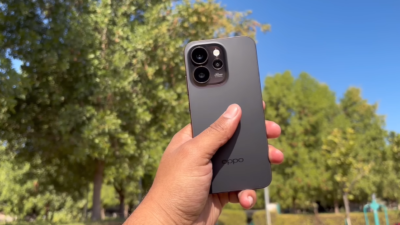
The smartphone landscape has shifted dramatically, and nowhere is this more evident than in OnePlus’s evolution. Since the launch of the OnePlus 15 and the brand’s full return to the Oppo family, one thing has become increasingly clear: OnePlus no longer excels at making flagship phones. The upper limit of OnePlus flagships is now firmly capped by Oppo’s Find X series, leaving OnePlus in an identity crisis at the premium end.
However, there’s a silver lining to this story. Modern OnePlus is actually much better at making sub-flagship and mid-range phones—and the OnePlus Ace 6T proves this thesis brilliantly. At just $370, this phone packs a Snapdragon 8 Gen 5 platform, a 165Hz display, and an absolutely massive 8,300mAh battery. Is there any other phone that can pull this off? Let’s dive deep into whether the Ace 6T represents the future OnePlus should embrace.
Design: Familiar but Functional
The OnePlus Ace 6T doesn’t break new ground in design. It features the familiar OnePlus family look we’ve seen for years—clean lines, recognizable camera module placement, and overall aesthetic that screams “OnePlus” from across the room.
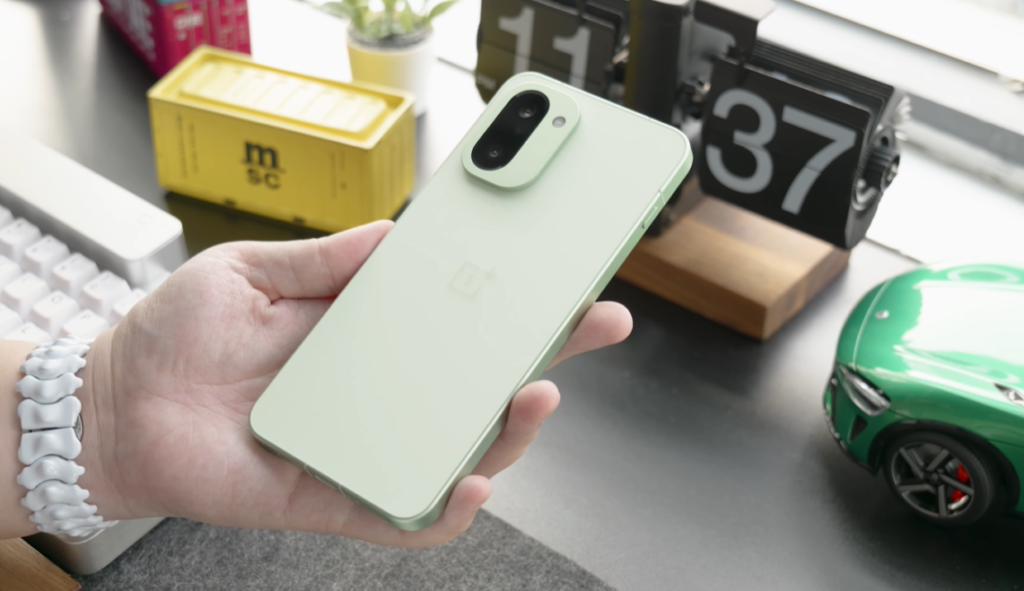

Why Familiar Design Works for Mid-Range
While looking the same might be a significant downside for a flagship phone where differentiation and premium feel matter immensely, it matters far less for a mid-range device. Buyers in this segment prioritize value, features, and performance over having the absolute latest design language.
The Ace 6T’s design familiarity actually works in its favor—it looks like a proper OnePlus phone, maintaining brand identity without requiring expensive design overhauls that would increase the price.
Build Quality Exceeds Price Point
Despite the budget-friendly price, OnePlus hasn’t skimped on materials:
Metal Frame: Provides structural rigidity and a premium feel in hand Glass Back: Gives the phone a more upscale appearance than plastic alternatives IP69K Water Resistance: One of the highest IP ratings available, protecting against high-pressure water jets and extended submersion NFC Support: Essential for contactless payments and modern connectivity IR Blaster: Allows the phone to function as a universal remote control
These features collectively create a build quality that punches well above the $370 price point. The phone feels solid, well-constructed, and durable—exactly what you want from a daily driver.
The Inevitable Compromises
Of course, reaching this price point requires some trade-offs:
USB 2.0: Makes yet another appearance rather than the faster USB 3.0 or USB-C data transfer speeds. For most users who primarily charge via USB rather than transfer large files, this won’t matter. But for power users, it’s a noticeable limitation.
Weaker Vibration Motor: The haptic feedback feels slightly less refined than previous OnePlus models. The vibrations are adequate but lack the precision and satisfying “thunk” of premium haptic engines. You’ll notice this most when typing on the keyboard or receiving notifications.
These compromises are perfectly reasonable given the aggressive pricing. OnePlus has clearly prioritized features that matter most to the majority of users while making strategic cuts in areas that affect fewer people.
Display: High Refresh Rate Excellence
The display on the Ace 6T is carried over from the standard Ace 6, which means you’re getting proven, reliable screen technology.
Impressive Specifications
165Hz Refresh Rate: On paper, this represents one of the highest refresh rates available on any smartphone. The ultra-smooth scrolling and animations create a premium feel that makes the interface feel incredibly responsive.
1,800 Nits Peak Brightness: Outdoor visibility is excellent, with the screen remaining clearly readable even in direct sunlight. Indoor viewing is comfortable across all lighting conditions.
Quality Panel: The display delivers good color reproduction, deep blacks (for an LCD), and viewing angles that remain consistent from various positions.
The 165Hz Reality Check
However, there’s an important caveat about that 165Hz refresh rate: it’s only available in a very small number of apps. Most applications are limited to 120Hz, which is still excellent but not the advertised 165Hz.
Why This Matters: App developers must specifically optimize for 165Hz, and most haven’t bothered since it’s such a rare specification. For daily use, you’ll primarily experience 120Hz, which remains smooth and responsive but isn’t quite the cutting-edge experience the spec sheet suggests.
Touch Sampling Rates: The same limitation applies here. Most apps run at 120Hz touch sampling, while only a few competitive games can boost this to 300Hz. For gaming enthusiasts, this means only specific titles will benefit from the ultra-responsive touch input.
Overall Display Assessment
Despite the refresh rate limitations, the Ace 6T’s display is excellent for the price. The 120Hz experience that you’ll get in most apps is still significantly smoother than 60Hz standard displays, and the high brightness makes outdoor use practical. For a $370 phone, this display delivers flagship-level visual quality in daily use.
Performance: The Snapdragon 8 Gen 5 Reality
The Ace 6T is powered by the Snapdragon 8 Gen 5—note the absence of “Elite” in the name. Qualcomm has dropped the “S” branding this generation, which creates some confusion about positioning.
What “8 Gen 5” Actually Means
On paper, the naming suggests a full flagship chip. In reality, this is still a sub-flagship processor with overall performance roughly comparable to last year’s Snapdragon 8 Gen 3 Elite.
The Good News: Thanks to TSMC’s advanced N3P manufacturing process and the latest flagship architecture, the 8 Gen 5 performs very well in games that aren’t extremely demanding.
Real-World Performance: In terms of thermal management, smoothness, and power efficiency during light-to-moderate use, the Ace 6T is almost indistinguishable from true flagship phones. Most users will never notice they’re using a “sub-flagship” processor during daily tasks like social media, web browsing, messaging, and casual gaming.
The Heavy Load Weakness
The real weaknesses of sub-flagship chips emerge under sustained heavy load. Once demanding tasks ramp up, several things happen:
Power Consumption Spikes: The processor draws significantly more power to maintain performance Temperature Rises Sharply: Surface temperatures can approach 50°C (122°F), which is generally uncomfortable to hold during extended gaming sessions Throttling Occurs: To manage thermals, the chip reduces clock speeds, impacting performance
The Gaming Paradox
Here’s where things get interesting. When you examine frame rate graphs during demanding games, the Ace 6T doesn’t actually look bad at all. Sometimes it even performs better than some flagship phones. How is this possible if the chip is supposedly weaker?
The Resolution Secret: OnePlus limits the maximum rendering resolution in demanding games. Even with all settings maxed out, games like Honkai: Star Rail render at only around 770p—far lower than most flagship phones that render at 1080p or higher.
This clever compromise means the phone can maintain higher, more stable frame rates because it’s pushing fewer pixels. The visual quality suffers slightly, but the gameplay experience remains smooth.
Frame Interpolation vs. AI Upscaling: The Ace 6T supports frame interpolation (creating intermediate frames to boost perceived smoothness) but not AI upscaling (using machine learning to enhance lower resolution rendering). This means smoother motion but potentially softer image quality compared to flagships with both technologies.
Gaming Recommendation
If you’re buying specifically to play games at the highest possible visual quality with maximum detail and resolution, the regular Ace 6 (without the “T”) is actually the better choice despite costing the same. The standard Ace 6 has a more powerful chip that can handle higher rendering resolutions.
However, if you prioritize smooth frame rates and playability over absolute maximum visual fidelity, the Ace 6T delivers an excellent gaming experience that most users will find perfectly satisfying.
Battery Life: The Standout Feature
The 8,300mAh battery is the Ace 6T’s headline feature and its most compelling reason to buy.
Massive Capacity in Context
8,300mAh is genuinely enormous. For context, most flagship phones today pack 5,000-5,500mAh batteries. The Ace 6T’s battery is roughly 50-65% larger than typical flagship capacity.
What This Means in Practice: The Ace 6T is one of the longest-lasting phones you can buy right now, period. Heavy users who typically need to charge daily will likely make it to a second day. Moderate users might stretch to three days between charges.
The Power Efficiency Question
Testing reveals that the Snapdragon 8 Gen 5 does consume significant power under heavy load, particularly in demanding games like Honkai: Star Rail and Genshin Impact. However, the massive battery capacity simply overwhelms the power consumption.
Even during extended gaming sessions that would drain typical phones quickly, the Ace 6T keeps going. The combination of good day-to-day power efficiency (comparable to flagship processors during light use) and the enormous battery creates genuinely impressive endurance.
Fast Charging Complements Long Life
100W Wired Charging: Despite the massive capacity, charging is surprisingly fast:
- 28% charge in just 10 minutes
- Full charge in only 48 minutes
For such a large battery, these charging speeds are much faster than expected. If you do run low on battery, a quick 10-15 minute charge provides hours of additional use.
No Wireless Charging: The Ace 6T lacks wireless charging capability. For a phone at this price point targeting practical users, this omission is understandable and unlikely to bother most buyers.
Battery: The Defining Feature
The battery alone makes the Ace 6T worth considering. If you’re tired of daily charging anxiety, if you need a phone that just keeps going, or if you’re a heavy user who burns through typical phone batteries quickly, the Ace 6T solves your problem definitively.
Ace 6T vs. Ace 6: Which Should You Buy?
The Ace 6 and Ace 6T cost the same and look virtually identical. So how do you choose between them?
The Three Key Differences
Processor:
- Ace 6: More powerful chipset
- Ace 6T: Snapdragon 8 Gen 5 (sub-flagship)
Battery Capacity:
- Ace 6: Standard capacity
- Ace 6T: Massive 8,300mAh
Charging Speed:
- Ace 6: Faster charging
- Ace 6T: 100W (slower relative to Ace 6)
Clear Recommendations
Mobile Gamers Should Pick the Ace 6: If gaming at maximum visual quality is your priority, the more powerful processor in the standard Ace 6 is worth the trade-off of smaller battery capacity.
Everyone Else Should Choose the Ace 6T: For typical users who prioritize battery life, day-to-day performance, and overall endurance, the Ace 6T is the better choice. The processor is plenty powerful for everything except the most demanding gaming scenarios.
The decision ultimately comes down to this simple question: Do you prioritize maximum gaming performance or maximum battery life? Answer that, and your choice becomes clear.
Camera: Exactly What You’d Expect from $370
If you’re buying a mid-range OnePlus phone, you really shouldn’t expect too much from the cameras. The Ace 6T delivers exactly the camera performance you’d anticipate at this price point.


Main Camera: Adequate for Daily Use
The main camera delivers average results with common mid-range issues present:
Color Issues: Large yellowish areas sometimes appear in images, particularly in mixed lighting White Balance: Occasionally overcorrects toward cooler tones, creating images with blue-ish casts Edge Quality: Image quality deteriorates around the edges of photos, with softness and distortion becoming visible
The Bright Side: Despite these limitations, most photos are perfectly usable for social media, messaging, and casual documentation. You won’t win photography contests, but you’ll capture memories adequately.
2x Zoom: The 2x digital zoom produces generally satisfying results. Photos remain sharp enough for most purposes, and the zoomed images are usable rather than severely degraded.
Ultra-Wide Camera: The Disappointment
The ultra-wide camera is less satisfying, and it’s not primarily about image quality.
8MP Sensor: Nobody expects great results from an 8-megapixel ultra-wide sensor. At this price point, the low resolution is understandable. The real issue runs deeper.
Removed Macro Function: OnePlus has completely eliminated the macro photography mode. This means if you shoot from too close to your subject, there’s a high chance it will end up badly out of focus. The camera simply cannot focus at close distances, severely limiting its utility.
Night Performance: You need to hold the phone very steady when shooting in low light, or you’ll likely get blurry shots. The lack of optical image stabilization and the small sensor create challenges in dim conditions.
Video Recording: Barely Functional
Video recording with the ultra-wide camera is genuinely problematic:
1080p Maximum Resolution: Already a limitation, but it gets worse. Actual Clarity: The footage looks closer to 720p in terms of detail and sharpness, despite being nominally 1080p. Unusable for Serious Use: The video quality is so poor that most users won’t want to use this camera for video recording at all.
Camera Reality Check
The Ace 6T’s camera performance is around the level of a $200 phone. That’s the honest assessment. For a device with so many other strengths, the camera is clearly where OnePlus made strategic cuts to hit the aggressive price point.
Who This Affects: If photography is a priority—if you frequently take photos and care about image quality—the Ace 6T will disappoint. Look elsewhere.
Who It Doesn’t Affect: If you primarily use your phone camera for quick snapshots, social media posts, and occasional documentation rather than serious photography, the Ace 6T’s camera is adequate for those needs.
Ace 6T vs. Redmi K90: Different Philosophies
Even though they’re priced similarly, the Ace 6T and Redmi K90 have completely different positioning and priorities.
Redmi K90: The Balanced Approach
The K90 aims for all-around competence without any glaring weaknesses. It offers:
- Better camera system with telephoto lens
- More balanced performance across all areas
- No single standout feature, but no major compromises either
Ace 6T: The Specialist
The Ace 6T makes a deliberate choice: sacrifice the telephoto camera and some camera quality in exchange for an absolutely massive battery and solid performance.
The Philosophy: The Ace 6T says “battery life matters more than having every camera lens.” It’s designed for users who value endurance and day-to-day usability over photographic versatility.
Which Approach Is Better?
Neither is objectively superior—they serve different users. The K90 is for well-rounded buyers who want competence everywhere. The Ace 6T is for buyers with clear priorities: battery life and smooth performance matter more than photographic excellence.
The Broader Message: OnePlus’s True Strength
Compared to the OnePlus 15 flagship, the Ace 6T is absolutely worth its $370 price tag in ways the flagship struggles to justify its premium pricing.
Why OnePlus Should Focus Here
The Ace 6T represents what modern OnePlus does best: deliver tremendous value in the sub-flagship space. The features, performance, and battery life at $370 are genuinely impressive and difficult for competitors to match.
Meanwhile, OnePlus flagships are constrained by their position within the Oppo family hierarchy. The Find X series will always get the best technology, features, and innovation, leaving OnePlus flagships as slightly compromised alternatives.
The Value Proposition
At $370, the Ace 6T offers:
- Sub-flagship processor that performs like a flagship in daily use
- Display quality that matches phones costing twice as much
- Battery life that exceeds virtually every competitor at any price
- Build quality and features that feel premium
- Fast charging that eliminates range anxiety
The compromises—camera quality, USB 2.0, weaker haptics—affect fewer people less severely than the benefits help the majority of users.
Who Should Buy the OnePlus Ace 6T?
You’re a Perfect Candidate If:
Battery Life Is Your Priority: You’re tired of daily charging and want a phone that just keeps going
You’re a Moderate-to-Heavy User: You use your phone extensively throughout the day for social media, messaging, web browsing, and video consumption
Gaming Is Secondary: You enjoy mobile gaming but don’t need absolute maximum visual quality—smooth frame rates matter more
Photography Isn’t Critical: You take casual photos for social media and documentation rather than serious photography
You Value Practical Features: NFC, IR blaster, water resistance, and metal frame matter more to you than having the latest camera technology
You Want Flagship Feel Without Flagship Price: You appreciate premium build quality and smooth performance but refuse to pay $1,000+
Look Elsewhere If:
Photography Is Important: The camera system will disappoint anyone who regularly takes photos and cares about image quality
You Need Maximum Gaming Performance: The resolution limitations and sub-flagship chip make the standard Ace 6 a better choice for serious mobile gamers
You Require Fast Data Transfer: USB 2.0 speeds will frustrate anyone regularly transferring large files via cable
You Want Cutting-Edge Everything: This is a value-focused phone, not a technology showcase
The Final Verdict: OnePlus Found Its Lane
The OnePlus Ace 6T brilliantly demonstrates where modern OnePlus excels: creating compelling mid-range phones that deliver flagship experiences in the areas that matter most to typical users.
At $370, this phone punches dramatically above its weight class. The massive battery alone justifies the purchase for many users, and the solid performance, quality display, and premium build quality create a package that feels far more expensive than its price suggests.
The Honest Truth: OnePlus no longer makes the best flagship phones. The brand’s position within the Oppo family hierarchy ensures the Find X series will always have the premier technology and features.
But OnePlus is making some of the best value mid-range phones available. The Ace 6T represents the future OnePlus should embrace—delivering tremendous value through smart feature prioritization rather than chasing flagship status it can no longer achieve.
For $370, the OnePlus Ace 6T is genuinely worth buying. It won’t satisfy everyone, but for its target audience—practical users who value battery life, performance, and build quality over photographic excellence—it’s an outstanding choice that’s difficult to match.
OnePlus should stick to what it now does best: budget and mid-range phones with flagship aspirations. The Ace 6T proves this strategy works brilliantly.