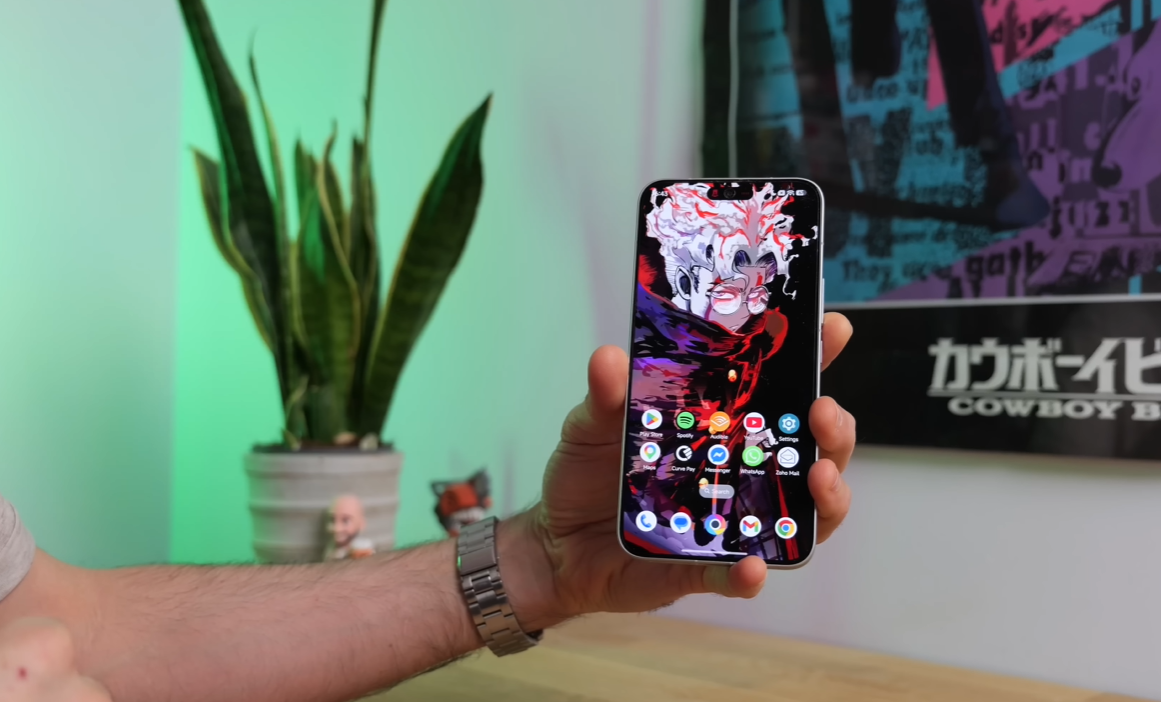
Complete Testing: MediaTek Dimensity 9500S, 8,500mAh Battery, Flagship Features at $469
In a smartphone market where flagship prices continue spiraling upward while mid-range phones deliver increasingly diminishing returns, the Poco X8 Pro Max arrives as a refreshing middle finger to conventional pricing wisdom. This is a phone that costs under $500 yet packs flagship specifications that make $1,000+ phones look embarrassingly overpriced.
After two weeks of intensive testing—gaming marathons on Wuthering Waves, camera comparisons against flagship rivals, battery endurance challenges, and real-world daily use—the verdict is unequivocal: the Poco X8 Pro Max delivers stupidly good value that fundamentally questions why anyone would pay flagship prices anymore.
With the world’s first MediaTek Dimensity 9500S chipset, a massive 8,500mAh battery (second-largest ever tested), RGB dynamic lighting, 100W fast charging, and a stunning 6.83″ AMOLED display, all for just $469 USD (£400 GBP), this phone doesn’t just compete with flagships—in many areas, it surpasses them.
This comprehensive review breaks down everything: design and build quality, display performance, camera capabilities, gaming prowess, battery life supremacy, and the critical question: can a mid-range phone truly replace a flagship?
Quick Verdict: Is the Poco X8 Pro Max Worth It?
TL;DR Summary
- Price: $469 USD / £400+ GBP (starting)
- Processor: MediaTek Dimensity 9500S (world’s first phone with this chip)
- RAM/Storage: 12GB RAM / 256GB-512GB storage
- Display: 6.83″ AMOLED, 1.5K resolution, 120Hz, Dolby Vision, 3840Hz PWM dimming
- Battery: 8,500mAh (silicon-carbon technology) with 100W wired charging + 27W reverse charging
- Camera: 50MP Light Fusion 600 main + 8MP ultra-wide | 20MP front
- Build: Gorilla Glass 7i front, fiberglass back, IP68/IP69 rating, 218g
- Special Features: RGB dynamic lighting rings, ultrasonic fingerprint sensor, stereo speakers, Wi-Fi 7
Key Strengths
- ✓ Flagship-crushing value ($469 vs $1,000+ flagships)
- ✓ 8,500mAh battery life (weekend-long endurance, 6 hours gaming continuous)
- ✓ Dimensity 9500S performance (maxed-out Wuthering Waves flawlessly)
- ✓ Stunning AMOLED display (1.5K, 120Hz, Dolby Vision, bright enough for UK sun!)
- ✓ 100W fast charging (refills massive battery quickly)
- ✓ RGB dynamic lighting (customizable, actually useful notification system)
- ✓ Ultrasonic fingerprint sensor (fast, reliable, premium feature)
- ✓ IP68/IP69 rating (water, dust, high-pressure spray resistant)
- ✓ Wi-Fi 7 support (future-proofed connectivity)
- ✓ Affordable storage upgrades ($60 to double to 512GB vs Apple’s $200)
Notable Limitations
- ○ No wireless charging (only omission vs flagships)
- ○ No telephoto camera (digital zoom only)
- ○ Heavy at 218g (trade-off for massive battery)
- ○ HyperOS bloatware (removable but annoying)
- ○ Always-on display timeout (10 seconds, not truly always-on)
Verdict
9.5/10 – Ridiculously Good Value
The Poco X8 Pro Max is “stupidly, ridiculously good value for money” that makes flagship phones—including the $600 iPhone 17e—look like “complete wastes of money.” It matches or surpasses expensive flagships in nearly every department while costing less than half. This is the mid-range phone that beats flagships.
Design & Build Quality: Premium Feel, Not-Premium Price
First Impressions: Big, Bold, Beautiful
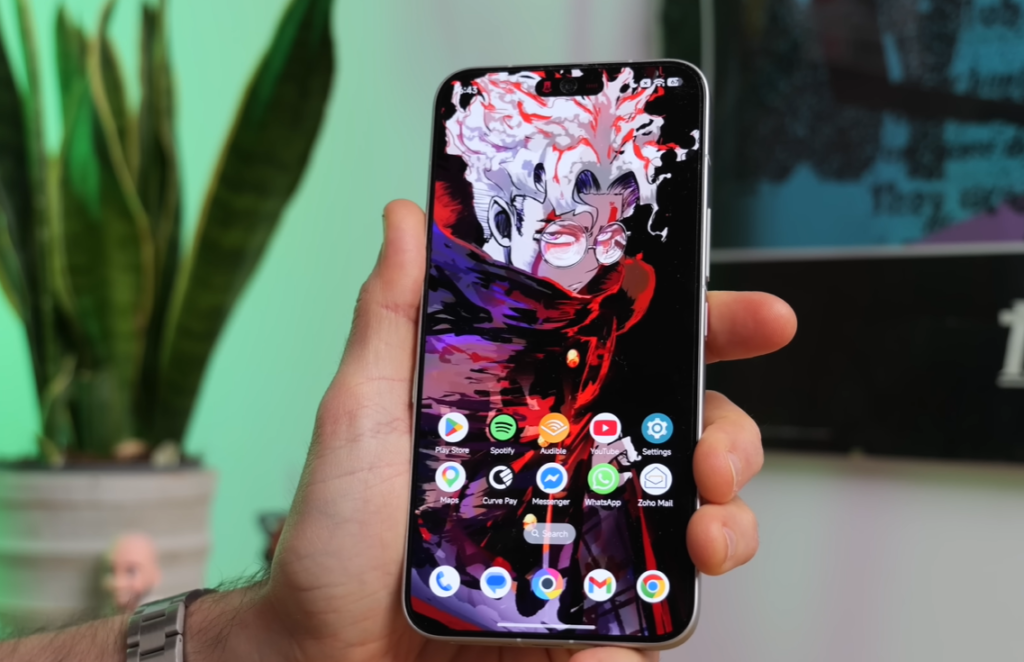
“It’s a bit of a big’un,” but that’s the point. The Poco X8 Pro Max makes no apologies for its size—with a near-7-inch screen, this is a phone designed for maximum visual real estate.
Dimensions & Weight
- Screen size: 6.83 inches (just shy of 7″)
- Weight: 218g (substantial but justified)
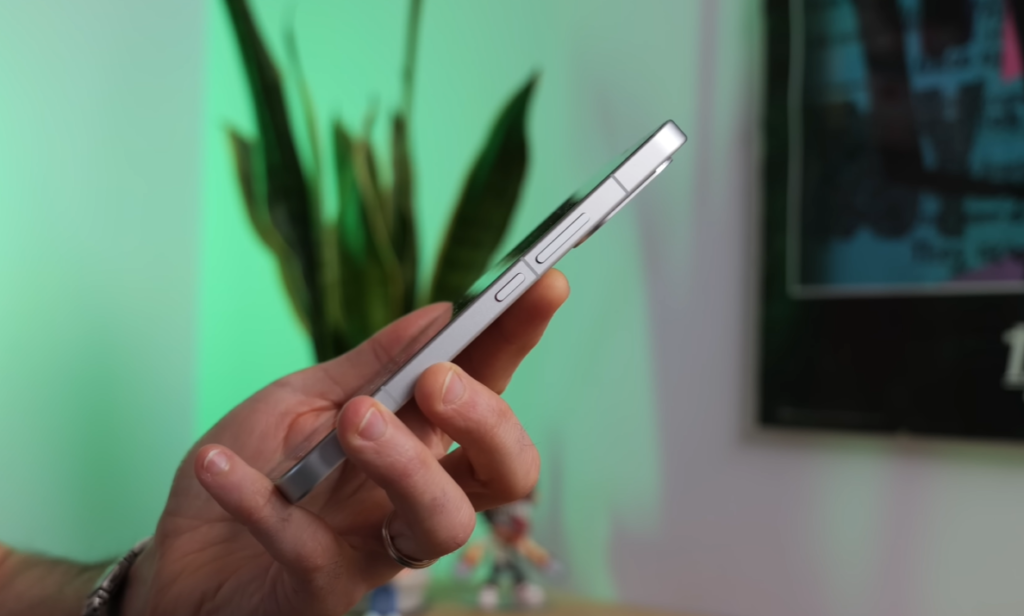
- Thickness: Not particularly chunky (silicon-carbon battery enables thinness)
Weight context: “This thing weighs as much as some full-sized foldables I’ve reviewed recently.”
At 218g, this is a hefty phone. The warning is real: “If you’re reclining in bed at 2:00 AM doom scrolling, make sure you put it down before you fall asleep. Otherwise, you’ll drop it and probably crush your mug.”
Design Philosophy: Subtle Sophistication
Color Options
Three variants available:
- White (reviewed unit)
- Black
- Blue
Design Elements
What makes it work:
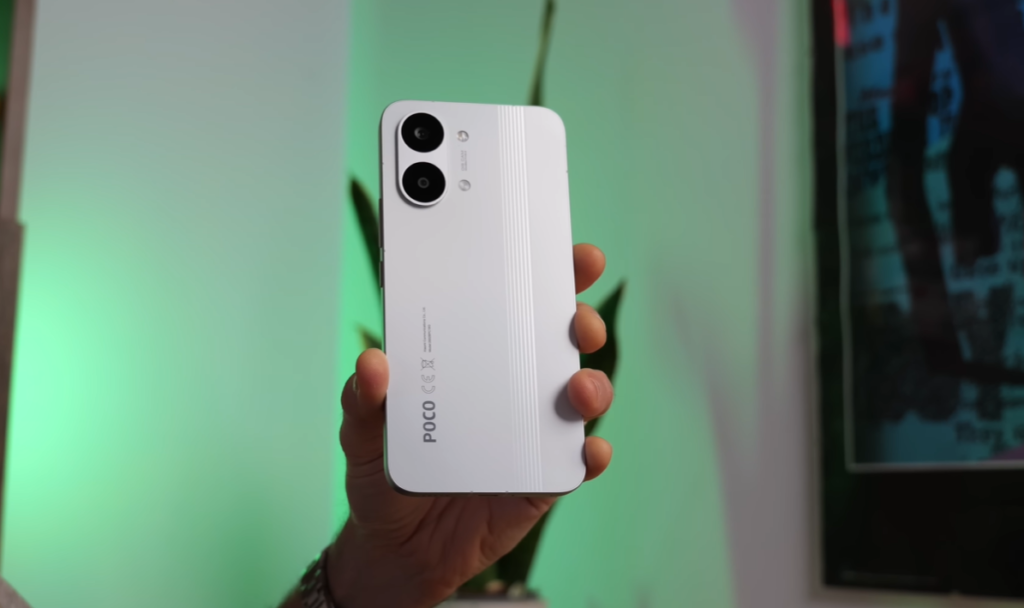
- Two-tone effect: Subtle pattern down one edge creates visual interest
- Matte finish: Metal frame and back panel both matte
- Subtle camera bump: “Not a honking great thing that takes up most of the top half”
- Minimal bezels: “Incredibly dinky” bezels maximize screen-to-body ratio
Practical benefit: “It doesn’t get all greasy and nasty when you fondle it, even after a sausage sandwich supper.”
The matte finish is genuinely practical—it resists fingerprints and grease far better than glossy finishes common on budget phones.
Durability: Built to Survive
Protection Layers
- Front: Gorilla Glass 7i (latest generation protection)
- Back: Fiberglass finish (durable, lightweight)
- Claim: “More solid than Jason Statham’s tits”
Poco claims the X8 Pro Max “can survive all kinds of bangs and drops,” though this wasn’t torture-tested (“I’m not Jerry Rig Everything”).
Water & Dust Resistance
IP68 and IP69 certification:
- IP68: Dust-tight, submersible up to 1.5m for 30 minutes
- IP69: High-pressure, high-temperature water jet resistant
This dual certification is exceptional for a sub-$500 phone and matches flagship-level protection.
RGB Dynamic Lighting: Form Meets Function
The Design Statement
“One of the fancier design elements here is that dynamic RGB light effect—basically a pair of light-up rings slapped around the back end surrounding those camera lenses.”
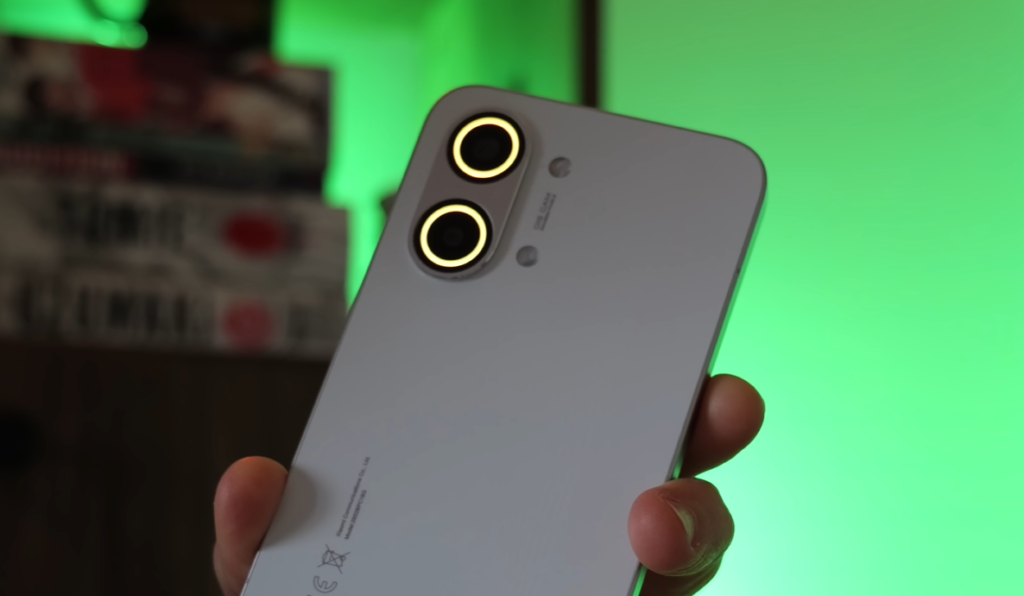
Described as: “A jazzy disco-ey take on notification lights.”
Functionality & Customization
Access: Settings → Additional Settings → Backlight Effects
Customization options:
- ✓ Turn off completely (if you hate RGB)
- ✓ Flash for incoming calls
- ✓ Flash for specific notifications (à la Nothing Phone glyph interface)
- ✓ Slow pulse while charging
- ✓ Flash to countdown camera timer
- ✓ Pulse when playing music
- ✓ Gaming RGB effects (limited game support currently)
Practical Use Case
“You can slap your Poco X8 Pro Max face down on a table, and whenever you get an important notification—a work email or WhatsApp—you can have those lights flash to alert you and everything else just be silent.”
This transforms RGB from gimmick to genuinely useful notification management tool.
Fingerprint Sensor: Premium Ultrasonic Tech
Technology: Ultrasonic in-display fingerprint sensor (not basic optical)
Performance: “Incredibly fast to act and super reliable. It’s fooled me like one time the entire time I’ve been testing—I think that was after a doner kebab special.”
Why Ultrasonic Matters
Ultrasonic sensors offer advantages over optical:
- ✓ Works with wet fingers
- ✓ Works with dirty fingers
- ✓ More secure (3D fingerprint mapping)
- ✓ Faster unlock speed
- ✓ More reliable in varied conditions
This is premium technology usually reserved for flagship phones, not $469 devices.
Design Verdict
What Works
- ✓ Premium materials (Gorilla Glass 7i, fiberglass)
- ✓ IP68/IP69 protection (flagship-level)
- ✓ Subtle, sophisticated aesthetic
- ✓ Practical matte finish
- ✓ Functional RGB lighting
- ✓ Ultrasonic fingerprint sensor
- ✓ Minimal bezels
Trade-offs
- ○ Heavy at 218g (battery trade-off)
- ○ Large size not for everyone
- ○ Fiberglass back less premium than glass
The Bottom Line
For $469, the design and build quality are exceptional. This doesn’t feel like a mid-range phone—it feels like a flagship that fell off a truck at a discount.
Display: Flagship Visual Experience
Display Specifications
- Size: 6.83 inches (massive viewing area)
- Technology: AMOLED
- Resolution: 1.5K (2712 x 1220 pixels)
- Refresh Rate: 120Hz
- Color Depth: 12-bit color support (claimed)
- HDR: HDR10+ and Dolby Vision
- PWM Dimming: 3840Hz (reduces OLED flicker)
- Brightness: High enough to counter fierce sunlight
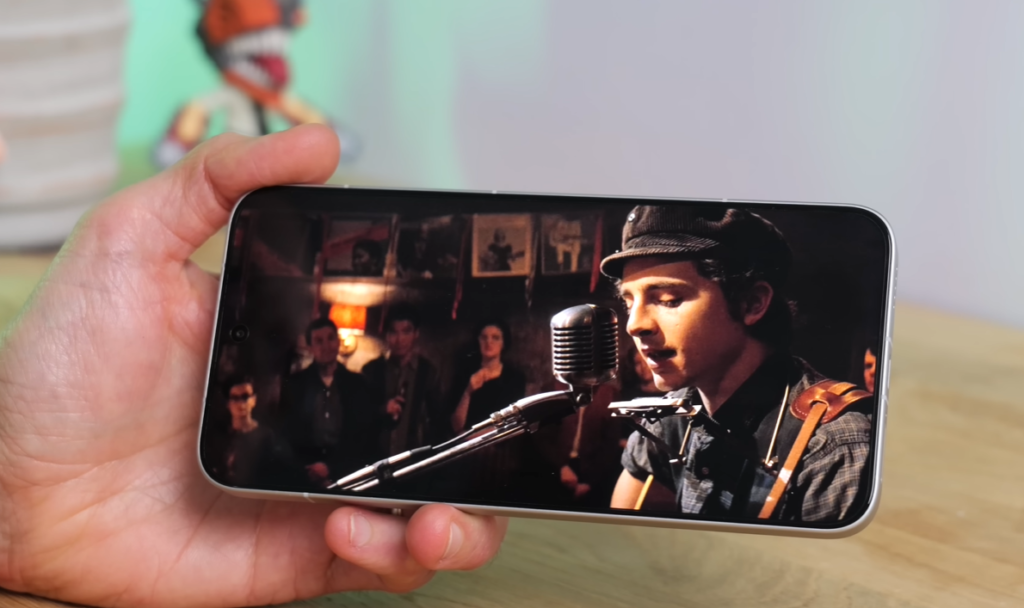
Visual Quality Assessment
Screen-to-Body Ratio
“The front end is practically filled with that 6.83-inch AMOLED display.”
Bezel evaluation: “Incredibly dinky” bezels with equal borders all around (“Oh, goal bezels as well. Love it.”).
The minimal bezels create an immersive viewing experience typically associated with flagship phones.
Resolution & Sharpness
“Keeps things crispy with that 1.5K resolution.”
While not full 4K, the 1.5K resolution at 6.83 inches delivers excellent pixel density for sharp text and detailed images.
Contrast & Color
AMOLED advantages on full display:
- “Crazy good contrast”
- “Nice deep inky blacks”
- “Crispy whites”
- “Full 12-bit color support” (claimed)
The AMOLED panel delivers the infinite contrast ratio and perfect blacks that LCD panels simply cannot match.
HDR Support: Premium Streaming
“You’ve got not only a bit of HDR10, but also full Dolby Vision support when you’re streaming Netflix or alternative online entertainment services.”
Why This Matters
Dolby Vision is the premium HDR standard:
- ✓ Dynamic metadata (adjusts per scene)
- ✓ Better highlights and shadow detail
- ✓ More accurate colors
- ✓ Supported by Netflix, Apple TV+, Disney+
Many phones offer HDR10; far fewer offer Dolby Vision. This is flagship territory.
Brightness: UK Sun Tested
“While you might not have any kind of fancy anti-reflective glass, thankfully the Poco X8 Pro Max’s display gets bright enough to comfortably counter any kind of fierce light shining off it.”
Real-world test: “It actually got quite sunny here in the UK this past weekend—for about 8 and a half minutes. So, thorough test in those conditions: no bother at all.”
The ability to remain legible in direct UK sunlight (rare though it may be) speaks to impressive peak brightness levels.
Refresh Rate: Smooth 120Hz
“The refresh rate maxes out at 120Hz.”
Benefits of 120Hz
- ✓ Buttery-smooth scrolling
- ✓ Fluid animations
- ✓ More responsive touch input
- ✓ Better gaming experience (compatible titles)
- ✓ Premium feel in daily use
Eye Comfort Features
“If you are sensitive to OLED flicker, you’ve got 3840Hz PWM dimming and all the usual eye comfort shenanigans too.”
Why High PWM Matters
Many OLED displays use 240Hz or 480Hz PWM dimming, which can cause eye strain and headaches for sensitive users. The X8 Pro Max’s 3840Hz PWM is exceptionally high, making flicker essentially imperceptible.
The Always-On Display Limitation
The complaint: “The always-on display isn’t actually an always-on display because it dims after just 10 seconds.”
Options available:
- Display for 10 seconds after tapping
- Display when someone looks at screen (proximity-based)
“There are worse problems to have in today’s world, but still slightly got on my tits.”
This is a minor annoyance rather than a dealbreaker, but it’s worth noting for those who rely on true always-on displays.
Display Verdict
Flagship-Level Screen
- ✓ 6.83″ AMOLED (huge, vibrant)
- ✓ 120Hz smoothness (premium feel)
- ✓ Dolby Vision support (rare at this price)
- ✓ 3840Hz PWM (eye-friendly)
- ✓ Excellent brightness (UK sun tested!)
- ✓ Minimal bezels (immersive)
Minor Limitations
- ○ Always-on display timeout
- ○ No anti-reflective coating
The Bottom Line
This is a flagship-quality display in a mid-range phone. For media consumption, gaming, and general use, it rivals displays on phones costing 2-3x more.
Audio: Stereo Speakers with Caveats
Speaker Configuration
“The Poco X8 Pro Max sports a dedicated stereo speaker setup. You’ve got one mounted on the bottom edge and one on the top edge—not just reusing the earpiece speaker.”
Comparison: Not a “fancy pants triple speaker setup like the Poco F8 Ultra,” but still proper stereo.
Volume: Hilariously Loud
“Somewhat hysterically, the volume hits 400% at its maximum levels. Physics go mad.”
Maximum volume assessment: “Certainly crazy loud when you do hit that maximum level, but they sound about as pleasant to listen to as a flock of seagulls being slowly backed over by a Nissan Micra.”
Audio Quality: Mixed Results
At Maximum (400%)
“The audio is frankly a bit of a muddled mess, especially if you’re listening to any music.”
At 100% Volume
“I would certainly suggest maxing it out at the actual 100% level. You actually get quite nicely balanced audio and it comes through reasonably clearly.”
Music listening: “I still wouldn’t use them to listen to music, unlike that Poco F8 Ultra which is actually probably just about good enough to get away with it.”
Audio Features
- ✓ Bluetooth 6 support (latest standard)
- ✓ Dolby Atmos (spatial audio)
- ✓ High-res audio support
Audio Verdict
Serviceable, Not Exceptional
- ✓ True stereo (not just earpiece)
- ✓ Plenty loud (at 100%, avoid 400%)
- ✓ Good Bluetooth/codec support
- ○ Don’t use for music (use headphones)
- ○ Fine for videos, calls, games
The speakers are adequate for most use cases but aren’t a highlight. Use Bluetooth headphones for serious music listening.
Performance: Flagship Chip, Mid-Range Price
The Chipset: World’s First Dimensity 9500S
“The Poco X8 Pro Max is the very first smartphone on this planet to come powered by MediaTek’s new Dimensity 9500S chipset.”
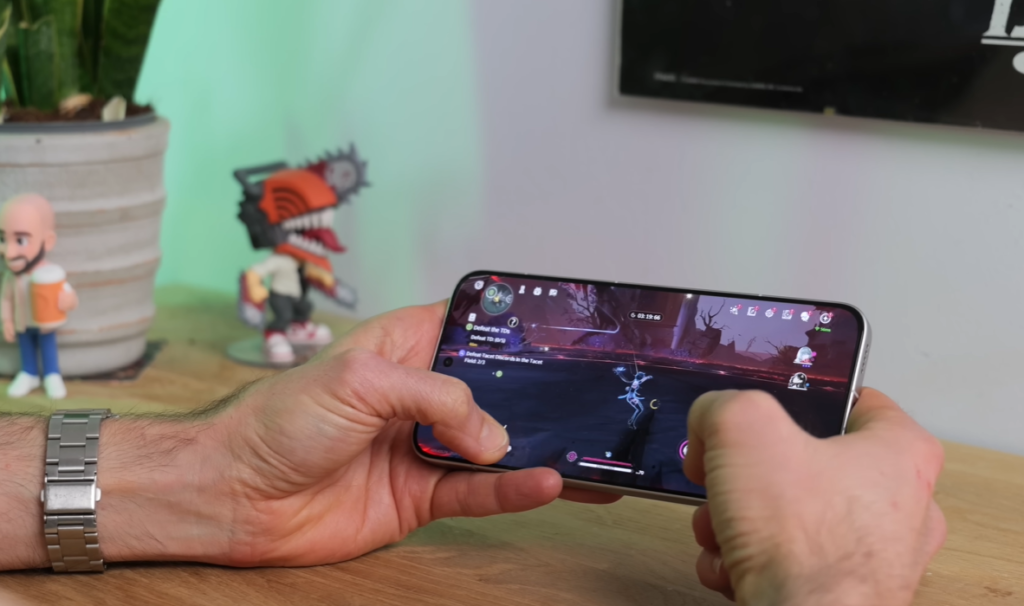
What is the Dimensity 9500S?
“This is a slightly less awesome version of the regular Dimensity 9500 flagship chip, but it’s still an upgrade over last year’s Dimensity 9400 Plus.”
Translation: It’s a tweaked version of MediaTek’s flagship chip, positioned between mid-range and flagship performance—perfect for this price point.
Supporting Specifications
- RAM: 12GB (tested configuration)
- GPU: Immortalis G925 (flagship-class graphics)
- Storage: 256GB base, 512GB optional
Real-World Performance
Daily Use
“Just day-to-day use: nice and smooth. Occasional wee little judders here and there in the animations, but I think that’s down to HyperOS rather than actual performance.”
The chipset itself is plenty powerful; any performance hiccups stem from software optimization, not hardware limitations.
Gaming Performance: Flagship-Level
Wuthering Waves: The Ultimate Test
“That Immortalis G925 GPU handles a wee bit of gaming. Even hardcore numbers like Wuthering Waves play with close to a perfect frame rate on the maxed-out visual settings for a full afternoon.”
Frame rate consistency: “The entire time I was gaming with maxed-out graphics settings, I saw only a couple of wee judders in that frame rate.”
Thermal Management
“Xiaomi’s liquid cool tech does its job. The phone was slightly warm to the touch after a good bit of gaming, but my palms never got sweaty and the performance never seemed to throttle.”
This is crucial for sustained gaming—the phone maintains performance without overheating or throttling, even during extended sessions.
Gaming Features: Dedicated Gaming Mode
“HyperOS comes stacked with a decent dedicated gaming mode with all kinds of useful tools.”
Gaming Tools Available
- Frame interpolation (supported titles)
- HDR upscaling (supported titles)
- Performance modes
- Network optimization
- Notification blocking
Limitation noted: “Some of those tools like frame interpolation and HDR upscaling only work for specific supported titles.”
Connectivity: Future-Proofed
“Bugger all issues with connectivity. You’ve even got full Wi-Fi 7 support, so it’s well and truly future-proofed on that front.”
Wi-Fi 7 Benefits
- ✓ Up to 46Gbps speeds (theoretical)
- ✓ Lower latency (better gaming)
- ✓ Multi-link operation (more stable)
- ✓ Future-proof for years
Performance Verdict
“Performance overall gets a massive thumbs up.”
Flagship-Class Capabilities
- ✓ Dimensity 9500S (world’s first phone)
- ✓ Maxed-out gaming performance (Wuthering Waves)
- ✓ Excellent thermal management
- ✓ Smooth daily use
- ✓ Wi-Fi 7 support
- ✓ Dedicated gaming mode
For $469, this performance level is remarkable. It matches or exceeds phones costing 2x more.
Battery Life: Weekend Phone Supreme
The Battery: 8,500mAh Silicon-Carbon Beast
“Thanks to the wonders of silicon-carbon tech, Poco’s managed to stuff an 8,500 milliamp capacity cell inside of this not particularly chunky frame.”
Context & Comparison
“That I believe is the second biggest capacity battery of any smartphone I’ve tested, coming just behind that Realme Power One with its 10,000mAh battery.”
Flagship comparison: “It’s even bigger than some flagship rivals like the Oppo FX9 Pro, the OnePlus 15, which weren’t exactly slouches in that area.”
Real-World Battery Performance
For Most Users
“Most people should be able to happily last a full weekend on a single charge of this bad boy.”
For Heavy Users
“Even the most demanding users will happily last the fullest, most ridiculous day on a single charge.”
For Gamers: The 6-Hour Test
“Even if you’re on a long trip and you just want to play Wuthering Waves nonstop—well, good news: a 100% charge will deliver just short of 6 hours of action. And that is with all the graphics settings maxed out on full performance mode.”
Assessment: “That’s one of the best results I’ve ever seen out of any smartphone.”
Silicon-Carbon Technology Explained
How It Enables 8,500mAh
Silicon-carbon battery technology offers:
- ✓ Higher energy density (more capacity, same space)
- ✓ Lighter weight (vs traditional lithium)
- ✓ Faster charging capability
- ✓ Better longevity (more charge cycles)
This is what allows Poco to pack 8,500mAh into a phone that’s “not particularly chunky.”
Charging: 100W Wired + 27W Reverse
100W Fast Charging
“When you do need to juice it back up again, well, good news there as well. You’ve got 100W wired charging, which is probably just as well or it’d take bloody ages to refill.”
Why 100W is necessary: An 8,500mAh battery with standard 25W charging would take 3+ hours to fill. 100W brings this down to reasonable time.
27W Reverse Charging
“You’ve also got 27W reverse charging support, so if you bung a cable in it, you basically use it as a portable power bank to keep your other tech junk charged up.”
Practical use cases:
- Charge friend’s dead phone
- Top up wireless earbuds
- Emergency power for other devices
- Travel without separate power bank
The Wireless Charging Omission
“Sadly, bugger all support for wireless charging, which to be fair is one of the very few areas where the Poco X8 Pro Max does skimp a wee bit compared with much more expensive flagship smartphones.”
The Trade-Off Assessment
Given the choice between:
- Option A: 5,000mAh + wireless charging
- Option B: 8,500mAh, no wireless charging
Most users would choose Option B (what Poco chose). The massive battery capacity more than compensates for wireless charging absence.
Battery Verdict
Industry-Leading Endurance
- ✓ 8,500mAh capacity (second-largest ever tested)
- ✓ Full weekend battery life (most users)
- ✓ 6 hours continuous gaming (maxed settings)
- ✓ 100W fast charging (necessary for capacity)
- ✓ 27W reverse charging (power bank function)
- ✓ Silicon-carbon tech (enables capacity without bulk)
- ○ No wireless charging (only omission)
The Bottom Line
This is battery life supremacy. No phone at any price offers significantly better battery performance. The weekend-phone capability alone is a game-changer.
Camera: Good Enough, Not Exceptional
Camera Hardware
Rear Camera Setup
- Primary: 50MP Light Fusion 600 sensor (1/1.95″ sensor size)
- Ultra-wide: 8MP (basic secondary)
- Telephoto: None (digital zoom only)
The limitation acknowledged: “This is one of the few areas that differentiates the Poco X8 Pro Max from considerably more expensive flagships.”
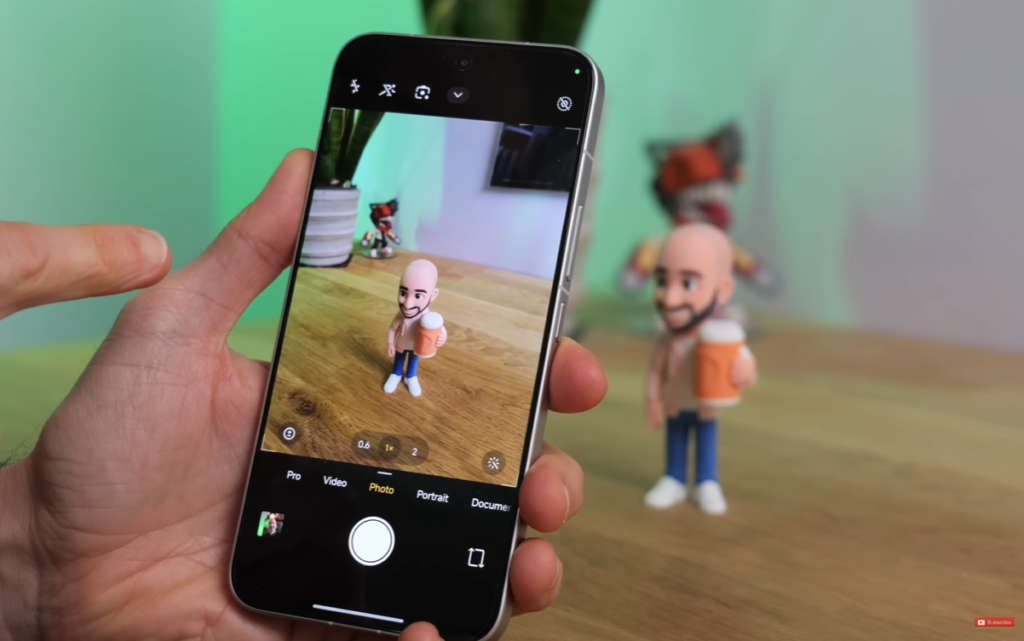
Front Camera
- Resolution: 20MP
- Video: 1080p @ 60fps max (no 4K)
Photo Quality Assessment
Main Camera: Surprisingly Capable
Sensor size reality: “Not one of the biggest around” at 1/1.95 inches.
Low-Light Performance
“I was actually surprised at just how well the Poco X8 Pro Max performed at times in that softer light, often still capturing quite rich tones and successfully subduing any noise.”
Conclusion: “Certainly seems to punch above its weight, especially considering it is quite a small sensor.”
Daylight Photography
“In stronger light and quite dodgy contrast, the Poco again performs pretty well.”
Color science: “Unlike some Apple and Samsung shaped rivals, this phone doesn’t just saturate every scene—offers quite natural tones and realistic looking shadows.”
Motion Handling
“When you are shooting living subjects, the Pro Max can usually deal with a bit of sudden motion as long as there’s plenty of light. Otherwise, yes, blur is pretty much inevitable.”
The Zoom Limitation
No Optical Telephoto
“There’s bugger all telephoto shooter on here sadly. So it’s digital cropping all the way.”
Digital Zoom Quality
- 2x zoom: Lossless digital zoom (acceptable quality)
- Up to 10x zoom: Possible but “photos will start to look rather grainy and crap”
The pain point: “The lack of a zoom lens is a bit of a pain at times, mostly when you’re trying to shoot a natural looking portrait pic of your kids or cats.”
Silver lining: “If you do punch in a bit digitally, you still get a reasonably sharp and detailed photo even in darker scenarios.”
Ultra-Wide Camera: Basic Quality
“Yeah, that 8 megapixel ultra-wide shooter—it’s there if you need it, but honestly, the drop in detail levels is pretty substantial and there’s no image stabilization, so you’ll have to keep your hands steady.”
Low-light assessment: “It’s a bit crap in low light.”
Camera Features
Pro Mode
“You’ve got all the usual camera modes including a dedicated pro mode where you can fiddle around with the likes of ISO levels, white balance, etc.”
Advanced options:
- Shoot at full 50MP resolution
- RAW image capture support
- Manual video controls
Video Recording
Rear camera: Up to 4K @ 30fps or 60fps
Video Features
- ✓ HDR10+ support
- ✓ Decent stabilization (“only a wee bit of judder when moving”)
- ✓ Respectable footage in ambient light
- ✓ Clear audio pickup (minimal wind distortion)
- ○ Digital zoom looks blocky
Selfie Camera Performance
20MP front camera:
- Photo quality: “Make sure you keep still, otherwise you’ll just be a blurry mess”
- Video: 1080p @ 60fps max (no 4K)
- Detail: “Actually aren’t too bad, even when lighting conditions aren’t fantastic”
- Use cases: “Perfectly fine for video chats, does the job for a vlog”
Camera Verdict
Realistic Assessment
- ✓ Main camera punches above weight (especially low-light)
- ✓ Natural color science (not oversaturated)
- ✓ 4K video with HDR10+ (good quality)
- ✓ Pro mode for enthusiasts
- ✓ RAW support
- ○ No telephoto (digital zoom only)
- ○ Basic ultra-wide (drop in quality)
- ○ Selfie camera limited to 1080p video
The Bottom Line
The camera system is the Poco X8 Pro Max’s weakest link compared to flagships, but it’s still competent for the price. This is a phone for people who prioritize performance, battery, and display over camera excellence.
If photography is your priority, spend more on a flagship. If you want a balanced phone with exceptional value, the camera is good enough.
Software: HyperOS 3 (Android 16)
Operating System
- Skin: HyperOS 3
- Base: Android 16
- Updates: Pre-launch (not yet revealed)
Software Update Expectations
“At the time I’m shooting this video, it’s pre-launch, so Poco hasn’t revealed exactly how many years of OS updates and security patching the Pro Max will get.”
Expected: “I’m certainly expecting at least 3 OS updates and hopefully they’ll improve on the 4 years of security patching previous generations received—more like 5 or 6 years.”
The Bloatware Problem
“As is pretty much standard for Xiaomi and Poco smartphones, it does come absolutely loaded with crapware.”
Pre-Installed Bloat Includes
- “Loads of random crappy games, including that absolute banger Tile Fun”
- AliExpress
- Booking.com
- “All this shenanigans”
The solution: “You just have to spend a wee bit of time when you first get your Poco X8 Pro Max just uninstalling all of that bollocks.”
Storage Saves You
“Fortunately, you get 256 gigs of storage minimum here, and you can double that up to 512 gigs for just $60 USD.”
Apple comparison: “About 50 quid probably here in Blighty, which is considerably more generous than the likes of Apple, who will charge you 200 quid to double up the storage on the bloody iPhone 17e.”
HyperOS 3 Assessment
“HyperOS [is] quite a divisive launcher. Certainly, it’s quite a hefty one, can be a little bit clunky at times.”
Positive evolution: “It’s a vast improvement on some of the MIUI shenanigans from back in the day, even if it is perhaps trying a little bit too hard to be iOS-ified.”
Positive Features
- ✓ Dedicated gaming mode
- ✓ Excellent customization options
- ✓ eSIM support (handy for travelers)
- ✓ Familiar to Color OS/Hyper OS users
Software Verdict
Functional, Not Perfect
- ✓ Latest Android 16
- ✓ HyperOS 3 (improved over MIUI)
- ✓ Good customization
- ✓ Generous storage options
- ✓ Affordable storage upgrades
- ○ Bloatware annoying (removable)
- ○ Can be clunky at times
- ○ Tries too hard to copy iOS
If you’re coming from pure Android (Pixel, Nothing), HyperOS will feel heavy. If you’re familiar with Chinese Android skins, it’s par for the course and actually improved.
Poco X8 Pro Max vs iPhone 17e: The $600 Embarrassment
The Comparison Nobody Asked For (But Needs)
“I’ll tell you what, I only just reviewed the iPhone 17e which for £600 just looks even more of a complete waste of money compared with this absolute bargain.”
Price Comparison
- Poco X8 Pro Max: $469 USD / £400 GBP
- iPhone 17e: ~$600 USD / £600 GBP
- Difference: $131+ USD / £200+ GBP more for iPhone
What the Poco Does Better
- ✓ Battery: 8,500mAh vs ~3,500mAh (2.4x larger)
- ✓ Display: 6.83″ AMOLED 120Hz Dolby Vision vs smaller LCD 60Hz
- ✓ Charging: 100W vs 20W (5x faster)
- ✓ Performance: Dimensity 9500S vs A18 (competitive or better)
- ✓ RGB lighting: Dynamic notification system vs nothing
- ✓ Fingerprint sensor: Ultrasonic vs none
- ✓ Storage upgrade cost: $60 to 512GB vs $200 for iPhone
- ✓ Water resistance: IP68/IP69 vs IP68
- ✓ Screen size: 6.83″ vs smaller
What the iPhone Does Better
- ✓ Camera system (telephoto available, better processing)
- ✓ Ecosystem integration (if you’re in Apple ecosystem)
- ✓ Software updates (longer guaranteed support)
- ✓ Wireless charging (MagSafe)
- ✓ Brand prestige (if that matters to you)
- ✓ Resale value
The Verdict
Unless you’re locked into Apple’s ecosystem or demand the absolute best camera, the Poco X8 Pro Max delivers far more value. Paying $131-200 more for the iPhone 17e is genuinely difficult to justify when comparing spec-for-spec.
Poco X8 Pro Max vs Nothing Phone 4A Duo: Value Kings Battle
The Competition
“Certainly a very strong rival to the Nothing Phone 4A Duo for best value for money.”
How They Compare
Poco X8 Pro Max Advantages
- ✓ Larger battery (8,500mAh vs smaller)
- ✓ Faster charging (100W vs slower)
- ✓ More powerful chip (Dimensity 9500S)
- ✓ Larger display (6.83″)
- ✓ RGB lighting (vs Glyph interface preference)
Nothing Phone 4A Duo Advantages
- ✓ Cleaner software (closer to stock Android)
- ✓ Unique Glyph interface (aesthetic preference)
- ✓ Lighter weight
- ✓ Less bloatware
- ✓ Wireless charging (possibly)
Which Should You Buy?
- Choose Poco X8 Pro Max if: Battery life, performance, and display size are priorities
- Choose Nothing Phone 4A Duo if: Software experience and design aesthetics matter more
Both are exceptional value. The choice comes down to priorities.
Who Should Buy the Poco X8 Pro Max?
Perfect For
Battery Anxiety Sufferers
✓ People who hate charging daily
✓ Heavy users needing weekend battery
✓ Travelers without constant charger access
✓ Mobile gamers playing for hours
Mobile Gamers
✓ Wuthering Waves, Genshin Impact players
✓ Those wanting maxed graphics settings
✓ Users who game for extended sessions
✓ People who appreciate 120Hz displays for gaming
Media Consumers
✓ Netflix/streaming enthusiasts (Dolby Vision!)
✓ YouTube binge-watchers
✓ People who want large, vibrant displays
✓ Users prioritizing screen quality
Value Seekers
✓ People refusing to pay flagship prices
✓ Those wanting flagship specs at mid-range cost
✓ Buyers who research and compare
✓ Users prioritizing specs over brand prestige
Power Users
✓ Heavy multitaskers
✓ People running demanding apps
✓ Users who need consistent performance
✓ Those who appreciate Wi-Fi 7 future-proofing
Not Ideal For
Photography Enthusiasts
✗ Users who need telephoto zoom
✗ Professional mobile photographers
✗ Those prioritizing camera above all else
✗ People who shoot a lot of video
Wireless Charging Devotees
✗ Users with wireless charging infrastructure
✗ Those who refuse wired charging
✗ People with MagSafe accessories
Compact Phone Lovers
✗ Users wanting small, light phones
✗ Those with small hands/pockets
✗ People who hate large phones
✗ Anyone bothered by 218g weight
iOS Ecosystem Members
✗ People deeply invested in Apple ecosystem
✗ Those with Mac, iPad, Apple Watch, AirPods
✗ Users who need iMessage/FaceTime
✗ Anyone locked into Apple services
Stock Android Purists
✗ Users who hate custom Android skins
✗ Those wanting Pixel-like software experience
✗ People allergic to bloatware (even removable)
✗ Minimal software modification fans
The Sweet Spot User
The ideal Poco X8 Pro Max buyer:
- Values performance and battery over brand prestige
- Wants flagship specs without flagship price
- Does heavy gaming or media consumption
- Hates charging anxiety
- Can live with good-enough camera (not exceptional)
- Doesn’t need wireless charging
- Is budget-conscious but spec-focused
- Researches purchases and compares value
This describes a massive segment of smartphone buyers who are tired of flagship price inflation.
Final Verdict: 9.5/10 – Ridiculously Good Value
Rating Breakdown
- Design & Build: 8.5/10 (premium feel, IP68/IP69, but heavy)
- Display: 9.5/10 (flagship-quality AMOLED, Dolby Vision, 120Hz)
- Performance: 9/10 (Dimensity 9500S excellent, minor HyperOS hiccups)
- Battery: 10/10 (8,500mAh weekend phone, 6hr gaming, 100W charging)
- Camera: 7/10 (good for price, no telephoto hurts)
- Audio: 7/10 (stereo speakers serviceable, not exceptional)
- Software: 7/10 (HyperOS improved, bloatware annoying)
- Value: 10/10 (unbeatable at $469, embarrasses flagships)
Overall: 9.5/10 – Ridiculously Good Value
What Makes It Special
The Flagship Killer
“In pretty much every department it more or less matches or in some cases even surpasses the most expensive flagship smartphones out there.”
This isn’t hyperbole. The Poco X8 Pro Max genuinely delivers flagship-level:
- Display (6.83″ AMOLED, Dolby Vision, 120Hz)
- Performance (Dimensity 9500S, maxed gaming)
- Battery (8,500mAh beats all flagships)
- Build quality (IP68/IP69, Gorilla Glass 7i)
- Features (Wi-Fi 7, ultrasonic fingerprint, RGB lighting)
The Price Disruption
At $469 USD / £400+ GBP, this phone costs:
- 53% less than $1,000 flagships
- 22% less than $600 “affordable” flagships (iPhone 17e)
- Yet delivers 90%+ of the experience
The iPhone 17e Embarrassment
“I only just reviewed the iPhone 17e which for £600 just looks even more of a complete waste of money compared with this absolute bargain.”
When a $469 phone makes a $600 phone look overpriced, something fundamental has shifted in the market.
What Holds It Back from Perfect
- No wireless charging (only vs flagships)
- No telephoto camera (digital zoom only)
- HyperOS bloatware (removable but annoying)
- Heavy at 218g (battery trade-off)
- Always-on display timeout (minor annoyance)
Honest assessment: “I slightly missed the wireless charging and it would have been nice to have a telephoto shooter, but again, for under £500 and under $500 in the US, just crazy good.”
The Two Missing Features Trade-Off
The Poco X8 Pro Max makes exactly two meaningful compromises vs $1,000 flagships:
- No wireless charging
- No telephoto camera
For these two omissions, you save $500+.
Is wireless charging and telephoto worth $500? For most buyers, absolutely not.
Should You Buy It?
Buy the Poco X8 Pro Max if:
- ✓ You want flagship specs without flagship price
- ✓ Battery life is a top-3 priority
- ✓ You do heavy gaming or media consumption
- ✓ You can live without wireless charging
- ✓ Camera is good-enough (not your #1 priority)
- ✓ You have $400-500 budget
- ✓ You research purchases and value specs
Skip it if:
- ✗ Photography is your top priority (get flagship camera phone)
- ✗ You absolutely need wireless charging
- ✗ You want smallest/lightest phone possible
- ✗ You’re locked in Apple ecosystem
- ✗ You hate custom Android skins
Consider alternatives if:
- ○ You want cleaner software (Nothing Phone 4A Duo)
- ○ You need better cameras (spend more on flagship)
- ○ You value wireless charging highly (add $100-200 budget)
The Recommendation
For the vast majority of smartphone buyers—those who want excellent performance, outstanding battery life, beautiful display, and don’t need the absolute best camera—the Poco X8 Pro Max is the phone to buy in 2026.
Competitive positioning: “Certainly a very strong rival to the Nothing Phone 4A Duo for best value for money.”
These are the two phones that should be on every budget-conscious, spec-focused buyer’s shortlist.
Final Thought
“Stupidly, ridiculously good value for money.”
The Poco X8 Pro Max proves that mid-range phones can beat flagships where it matters: everyday performance, battery endurance, display quality, and overall user experience.
The only reasons to spend more are:
- You need the absolute best cameras (flagship territory)
- You’re locked in a specific ecosystem (iPhone)
- You value brand prestige over specifications
For everyone else, the Poco X8 Pro Max delivers flagship performance at mid-range prices. This is the new normal for what mid-range phones should offer.
The future is here, and it costs $469.
Where to Buy
- Price: $469 USD starting / £400+ GBP
- Storage: 256GB (base) / 512GB (+$60 USD / ~£50 GBP)
- Colors: White, Black, Blue
- Availability: Global markets (check regional availability)


