Quick Summary
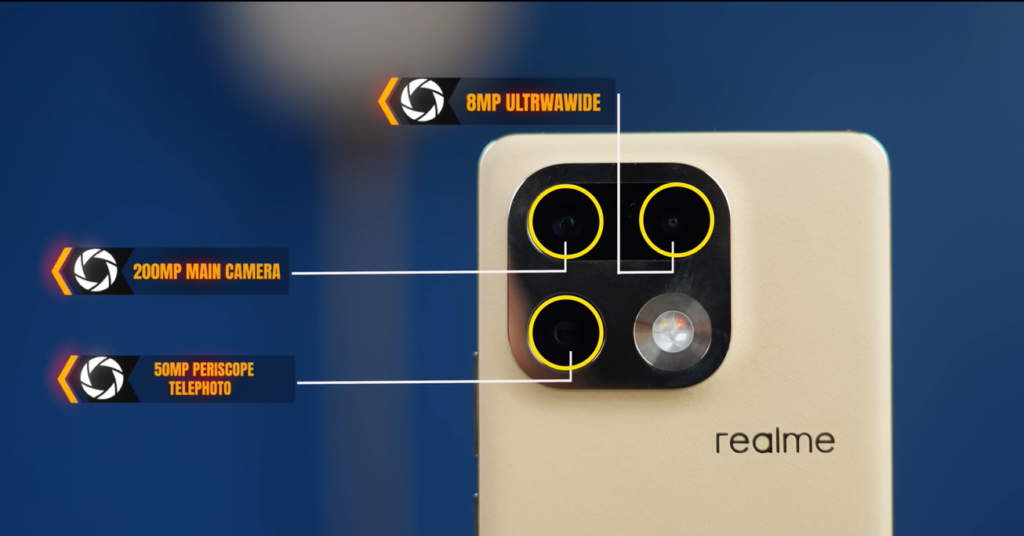
The Realme 16 Pro+ marks a significant shift in the brand’s strategy, moving from gaming-focused performance to camera-centric excellence. With a unique rotating camera module design, 200MP main sensor, 50MP telephoto with 3.5x optical zoom, and 80W fast charging, this phone delivers impressive photography capabilities. However, the Snapdragon 7 Gen 4 processor and 8MP ultrawide camera reveal where corners were cut to hit the price point.
Best for: Photography enthusiasts seeking flagship camera performance without flagship prices.
Introduction: A Bold New Direction
The Realme 16 Pro+ finally arrived, and I’ll be honest, I was genuinely excited about this phone. Why? Because Realme has done something nobody expected. They’ve literally rotated the camera module design in a way that feels fresh after years of smartphone sameness. It’s the kind of bold design choice that makes you stop and look twice.
After spending one week intensively testing this device, I can tell you this phone represents a fundamental shift in Realme’s approach. The brand that built its reputation on gaming performance with the GT series has pivoted hard toward camera excellence. This isn’t your typical performance-first Realme phone anymore.
Let me take you through everything I discovered during my week with the Realme 16 Pro+, from the exciting highs to the disappointing compromises.
Unboxing: First Impressions Matter
Opening the box immediately signals that Realme wants this phone to feel premium. The packaging color has changed slightly from previous generations, and inside you’ll find the phone wrapped in protective plastic alongside the usual suspects.

There’s a transparent case with curved edges that actually fits quite nicely, showing Realme is thinking about real-world use from day one. The 80W super-fast charger is included, which is increasingly rare as brands move toward excluding chargers. You get a USB Type-A to Type-C cable, not the newer C-to-C standard, and a simple SIM ejector tool.
But let’s talk about what really matters. The moment I pulled the phone from its packaging, I understood why Realme was so confident about the design. The vegan leather back texture feels genuinely premium in hand. It’s not the cheap plastic-y fake leather some brands use. This has a soft, almost luxurious feel that immediately elevates the experience.
The golden accents around the camera module give it what I can only describe as a sophisticated, almost vintage photographic equipment vibe. It smells like fresh manufacturing, that distinct new electronics scent that fades within days. The phone feels substantial without being heavy, and the curved display adds to the premium impression.
Turning it on for the first time, I knew this was going to be an interesting week of testing.
Design: The Standout Feature
The Realme 16 Pro+ design is genuinely different, and different is increasingly rare in the smartphone world where every device looks like a variation on the same theme.
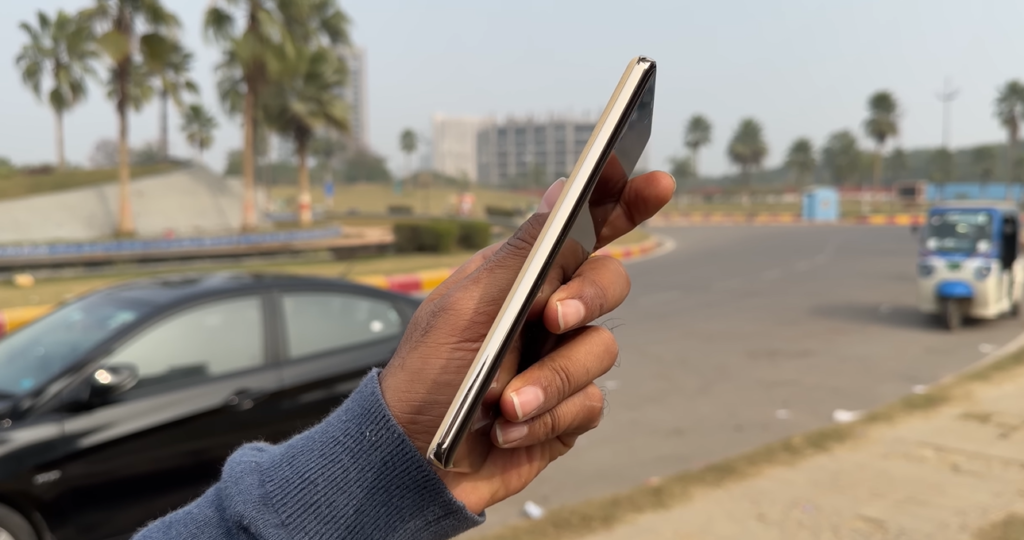
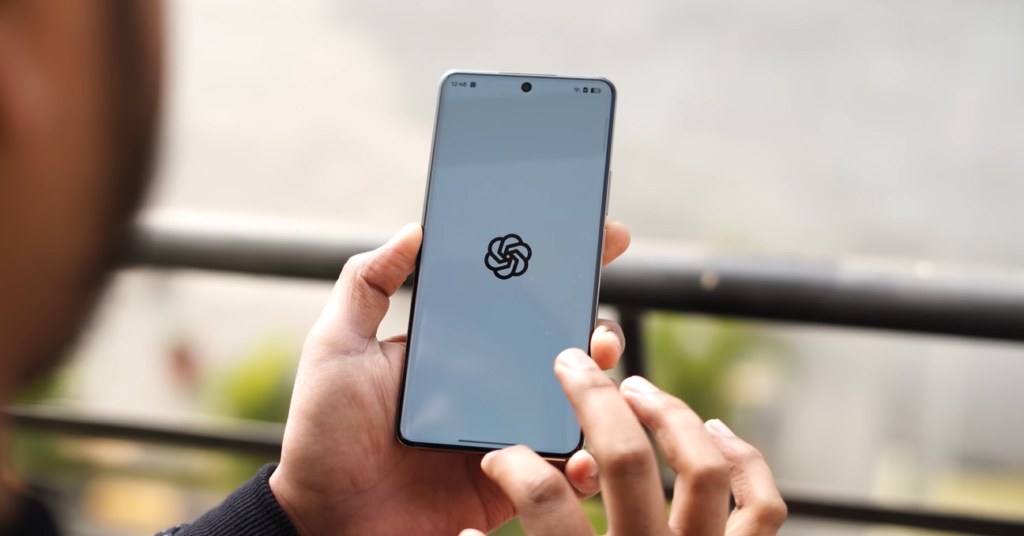
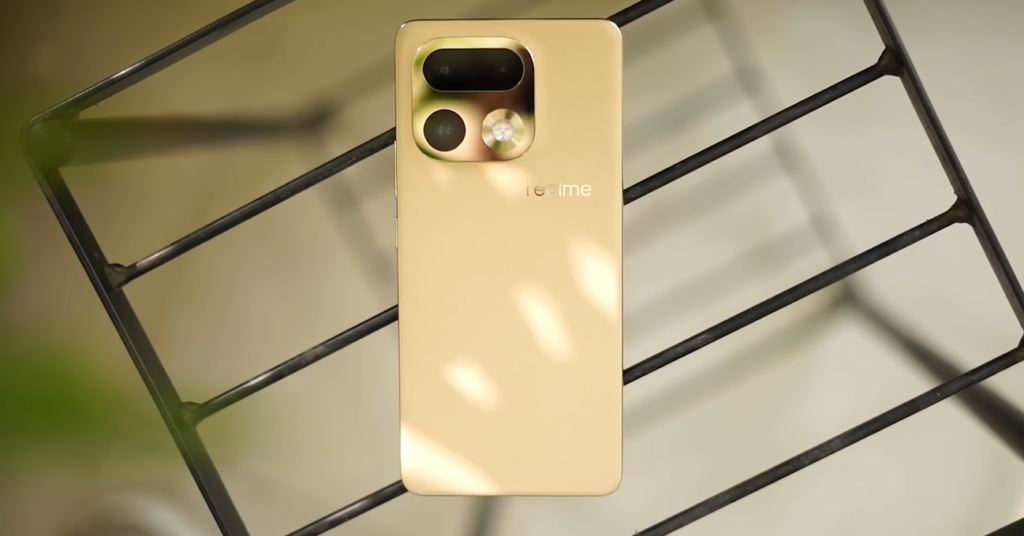
That rotated camera module isn’t just design for design’s sake. It gives the phone an unmistakable identity. You can spot this phone from across a room, which is more than you can say for most modern smartphones that blend in an indistinguishable mass of glass and metal.
The vegan leather back serves multiple purposes beyond aesthetics. It provides excellent grip, which means you’re less likely to drop this phone. It doesn’t show fingerprints like glass backs do, keeping the phone looking clean throughout the day. And crucially, it feels warm and organic rather than cold and clinical like glass.
The curved frame edges feel comfortable during extended holding periods, though this design choice is somewhat controversial. Some people love curves, others prefer flat edges. I found it comfortable, but your mileage may vary based on personal preference.
Build quality seems solid for the price point, though I’ll reserve final judgment on long-term durability until more time passes. Initial impressions are positive, with no creaking or flexing when applying reasonable pressure.
Display: Bright and Capable
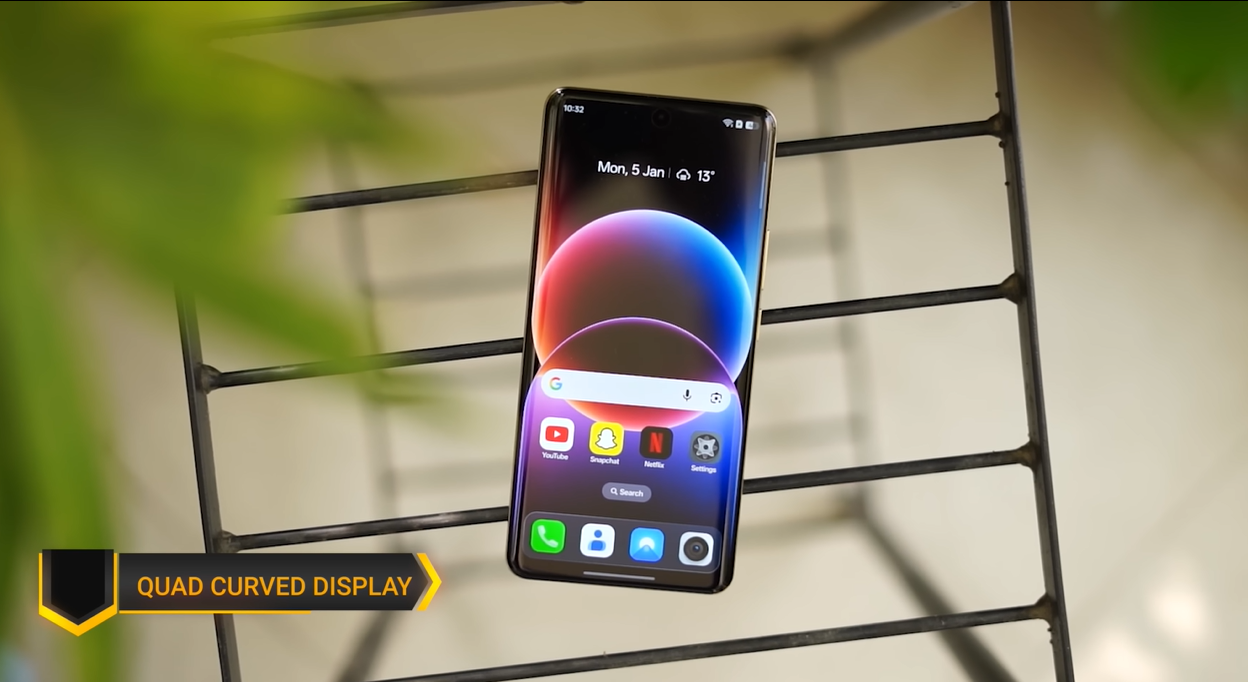
Realme has equipped the 16 Pro+ with a curved quad-display protected by Gorilla Glass 7i. This is the same display technology from last year’s model, which isn’t necessarily bad given it was already quite good.
In terms of pure specifications, the display performs well. Peak brightness is excellent, reaching levels that make outdoor visibility a non-issue. You get Dolby Atman L3 support, which enhances the viewing experience for compatible content. Colors are vibrant, brightness levels are appropriate, and I encountered no significant problems during daily use.
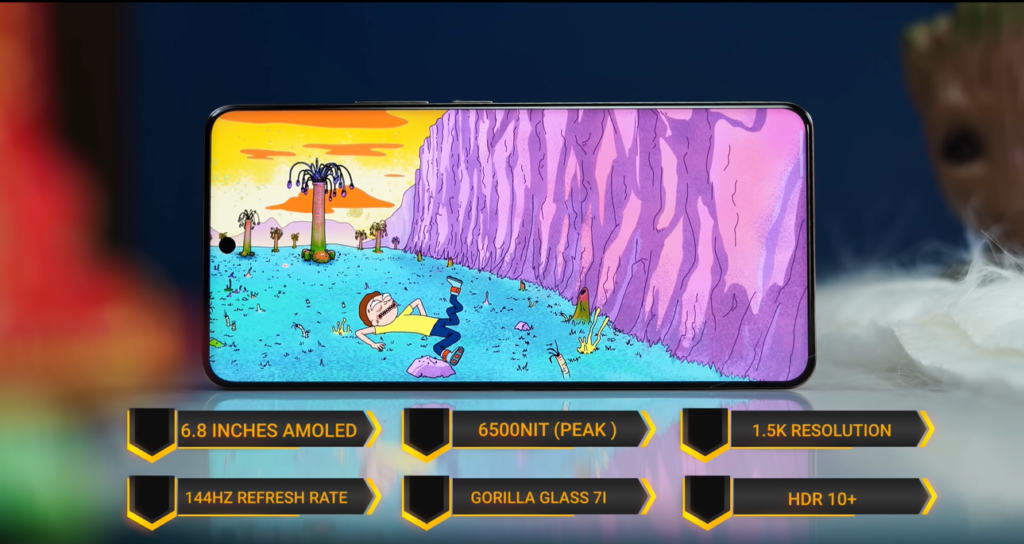
Realme includes two particularly clever display features that genuinely improve real-world usability. The first is extra brightness mode. When you’re outdoors with direct sunlight hitting the screen, you can activate this mode for an additional brightness boost beyond the standard automatic adjustment. The difference is noticeable and helpful when you desperately need to see something on your screen in harsh lighting.
The second feature addresses the opposite problem. The lowest around brightness setting helps when you’re using your phone in extremely dark conditions, like in bed at night. Standard minimum brightness levels on many phones are still too bright for true darkness, causing eye strain. This feature drops brightness even lower, which your eyes will appreciate during late-night use.
Overall, the display is more than adequate for the price point. It’s bright, colorful, responsive, and includes thoughtful software features that enhance usability.
Performance: The Strategic Compromise
Here’s where Realme’s strategic pivot becomes most apparent. The Realme 16 Pro+ uses the Snapdragon 7 Gen 4 processor, which isn’t the latest or most powerful chip available. This is a deliberate choice reflecting the brand’s shift from gaming performance to camera capability.
For day-to-day tasks like calling, messaging, social media browsing, and general app usage, the Snapdragon 7 Gen 4 handles everything smoothly. Basic operations don’t require massive CPU power, and the phone feels responsive and quick through standard workflows.
Animations are smooth, though not quite as instantaneous as what you’d experience on Oppo or OnePlus devices running the same basic code. There’s a slight lag compared to those faster implementations, but nothing that ruins the experience. Daily tasks flow nicely without frustration.
Gaming performance reveals the processor’s limitations. You can play games at up to 90fps, not the 120fps some competitors offer. During my extensive gaming sessions, I didn’t encounter frame drops or stuttering, which is positive. The phone handled sustained gaming reasonably well, though I can’t speak to extreme summer heat conditions since I tested during cooler weather.
The honest assessment is this: if you’re expecting high-end gaming performance, the Realme 16 Pro+ will disappoint. If you’re primarily interested in camera capability with adequate performance for normal use, the processor choice makes sense within the pricing strategy.
Battery Life: Solid but Not Spectacular
The Realme 16 Pro+ packs a 7000mAh battery, which has become fairly standard in this price segment. You can’t really call this super capacity anymore when most competitors offer similar or larger batteries.
Charging support is where things get more interesting. You get 80W fast charging with PD 55W support, which is genuinely fast. The included 80W charger will top up your battery quickly when you’re in a rush.
During my one week of complete testing with mixed usage patterns, I consistently achieved one and a half to two days of battery life. That’s respectable, though I believe it could be better with CPU optimization or future software updates improving efficiency.
The battery performance is adequate rather than exceptional. It’ll get you through a full day easily with moderate to heavy use, and light users might stretch to two days. Fast charging compensates for the merely adequate capacity, letting you quickly top up when needed.
Software Experience: Android 16 Out of the Box
The Realme 16 Pro+ ships with Android 16 out of the box, meaning it’s running Realme UI 7. You get a 3 plus 4 update commitment, which provides reasonable software support longevity.
The software experience feels slightly improved over previous Realme UI versions. Performance feels a bit more fluid, though I still occasionally notice moments where the device doesn’t feel quite as snappy as it could. Animations are faster than older versions, which improves the overall perception of speed.
You will encounter some pre-installed applications. There’s a block blast game and several other apps that aren’t essential, which you’ll need to uninstall if you want a cleaner experience. This bloatware situation existed before and continues in this version, which is mildly annoying but not unusual for the segment.
Realme has refined their AI feature set, removing features that weren’t particularly useful while keeping practical ones. The AI camera functionality, AI smart loop translation built into the system, and AI suggestions during typing are genuinely helpful for daily tasks. The AI write feature appears in text fields, offering writing assistance when composing messages or documents.
Overall, the software experience is good. It’s not exceptional, but it’s also not problematic. It gets out of your way and lets you use the phone without constant frustration.
Camera System: The Main Event
Let me be very clear from the start: I spent considerably more time testing the Realme 16 Pro+ camera system than any other aspect of the phone. This makes sense because the camera is clearly this phone’s primary focus and selling point.
Camera Processing Speed
Before diving into image quality, I need to address processing performance because I was genuinely surprised. Given the mid-range processor, I expected significant delays when capturing multiple photos rapidly. I intentionally stress-tested the camera by shooting 50 to 60 photos consecutively.
The processing speed was much faster than I anticipated. Realme has clearly optimized the image processing pipeline, allowing the phone to handle photo bursts without frustrating delays. This is crucial for real-world use when you’re capturing multiple shots of moving subjects or different compositions.
Main Camera: 200MP Excellence
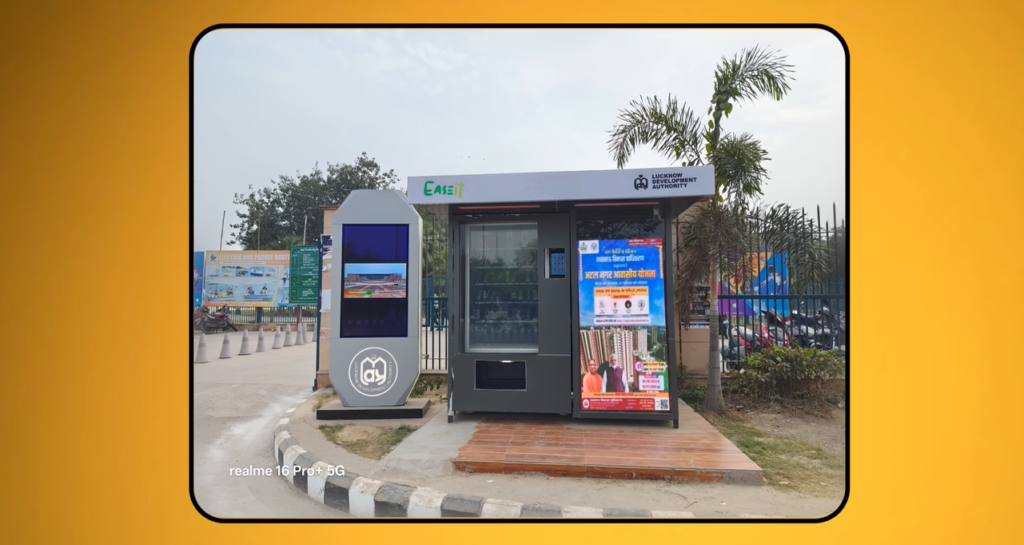
The headline feature is the 200-megapixel main sensor, and it genuinely delivers impressive results. Every photo I captured during the week-long testing period came out sharp with excellent detail retention.
The colors are slightly boosted, which I actually appreciate. Realme offers two modes: vibrant and natural. I primarily used vibrant mode because the boosted colors look better when sharing on social media. Natural mode photos can look a bit dull after uploading to platforms that compress images.
HDR performance occasionally felt like it missed the mark in challenging lighting situations, but these are software issues that updates should address. Overall, the main camera sensor performs excellently in both daylight and night conditions. Quality remains consistently high regardless of lighting.
Telephoto Camera: The Real Star
The 50-megapixel telephoto lens with 3.5x optical zoom is genuinely exceptional. This is where the Realme 16 Pro+ seriously competes with much more expensive devices.
I recently compared zoom performance against the Samsung Galaxy S25 Ultra and iPhone 16 Pro Max. In terms of pure zoom results, this significantly cheaper phone actually beats those expensive flagships in many scenarios. Realme uses aggressive AI processing that enhances zoomed images, producing surprisingly detailed shots even at 10x magnification.
Random zoom levels produce quality results, and pushing to 10x or beyond still delivers usable images. The zoom implementation is genuinely impressive for the price point.
Portrait Photography Excellence
Using the telephoto lens for portrait photography produces fantastic results. The portrait mode on this phone is genuinely excellent, particularly when shooting at the native 3.5x zoom level. You get beautiful depth-of-field effects that look like they came from a dedicated camera.
There are occasional edge detection issues where the phone cuts off hair or doesn’t perfectly separate subject from background. These are software quirks that updates should improve. Despite these minor issues, portrait quality is excellent in any lighting condition at any time of day.
Ultrawide Camera: The Weakness
Unfortunately, the 8-megapixel ultrawide camera is where Realme’s budget constraints become painfully obvious. If this phone truly aims to be camera-centric, the ultrawide sensor should have been at least 50 megapixels to match the other cameras.
Photos from the ultrawide lens look washed out, lack detail, and feel generally underwhelming compared to the other cameras. The sensor quality is clearly inferior, producing images that are just adequate for casual snaps but nothing impressive.
This feels like a missed opportunity. The phone would be a much more complete camera package with a better ultrawide sensor.
Front Camera: Major Improvement
The 50-megapixel selfie camera represents a major improvement over previous Realme phones. Selfie quality is genuinely excellent, with both normal and wide-angle modes producing sharp, detailed images. Portrait mode from the front camera is also quite good.
The front camera supports 4K 60fps video recording, which is impressive for a phone at this price. In my outdoor testing with the sun directly behind me, the dynamic range held up reasonably well. Colors are accurate, and detail levels are good even at 2x digital zoom.
For selfie enthusiasts and content creators who shoot themselves frequently, this front camera will not disappoint.
Video Capabilities
The Realme 16 Pro+ supports 4K 60fps video recording from both front and rear cameras. However, I encountered occasional lag and jitter when shooting 4K 60fps with the rear camera, likely due to the processor struggling with the high frame rate and processing demands.
Switching to 4K 30fps eliminates these issues entirely. Video quality at this frame rate is excellent, with good colors though slightly boosted. Stabilization works well, and you can switch between lenses during recording, including jumping to the 3.5x optical telephoto.
You can even zoom up to 18x while recording, and quality remains surprisingly good throughout the zoom range. For video work at 4K 30fps, this phone performs admirably. The phone doesn’t overheat during extended video recording sessions either, which is always a concern with heavy camera use.
Who Should Buy the Realme 16 Pro+?
After a week of intensive testing, I can clearly identify who will love this phone and who should look elsewhere.
The Realme 16 Pro+ is perfect for photography enthusiasts who want excellent camera performance without paying flagship prices. If camera quality is your absolute priority and you’re willing to accept adequate rather than exceptional performance in other areas, this phone delivers tremendous value.
Content creators who focus on photography and video will appreciate the versatile camera system, particularly that excellent telephoto lens. The 4K video capabilities and good stabilization make it viable for professional content creation on a budget.
The unique design will appeal to anyone tired of identical-looking smartphones. If you want something that stands out and makes a statement, the Realme 16 Pro+ definitely achieves that goal.
However, mobile gamers should look elsewhere. The Snapdragon 7 Gen 4 simply isn’t a gaming powerhouse, and alternatives exist at similar prices if performance is your priority. The Poco F6 or similar performance-focused devices would serve gamers better.
Power users who demand the absolute best performance across all areas should consider spending more money. If you need everything to be excellent without compromise, you’ll need to budget for the ₹60,000 to ₹70,000 range where phones offer more balanced specifications.
Final Verdict: A Camera Phone First, Smartphone Second
The Realme 16 Pro+ represents a clear strategic pivot for the brand. This isn’t the performance-focused Pro Plus of previous generations. This is unambiguously a camera-first device that happens to also be a capable smartphone.
In the current market, phones at this price point typically emphasize either performance or cameras. Realme has made their choice clear, positioning this device to directly compete with camera-focused offerings from Vivo and Oppo.
The camera system excluding the weak ultrawide is genuinely excellent. The main 200-megapixel sensor and 50-megapixel telephoto lens produce images that compete with phones costing twice as much. Video capabilities are strong, and the front camera is excellent for selfies and content creation.
The unique design genuinely stands out in a sea of sameness, offering real differentiation for buyers who want their phone to make a statement.
However, the compromises are real and meaningful. The processor is adequate but not exciting. The ultrawide camera is genuinely disappointing for a camera-focused device. Battery life is good but not exceptional. Some software quirks need addressing through updates.
The fundamental question is simple: what matters most to you? If camera quality tops your priority list and everything else just needs to be adequate, the Realme 16 Pro+ delivers exceptional value. You’re getting flagship-quality photography in the main and telephoto cameras at a mid-range price.
If you need a more balanced device where everything is very good, you’ll need to increase your budget considerably. But if you’re willing to accept the trade-offs in exchange for excellent camera performance, the Realme 16 Pro+ represents one of the best camera phones you can buy under ₹40,000.
Rating: 4 out of 5 stars
The Realme 16 Pro+ earns four stars for delivering on its camera-focused promise while making acceptable compromises elsewhere. It’s not perfect, but it knows exactly what it wants to be, and it succeeds at that specific goal.
What’s your take on camera-focused phones? Would you trade some performance for better photography? Share your thoughts in the comments below.