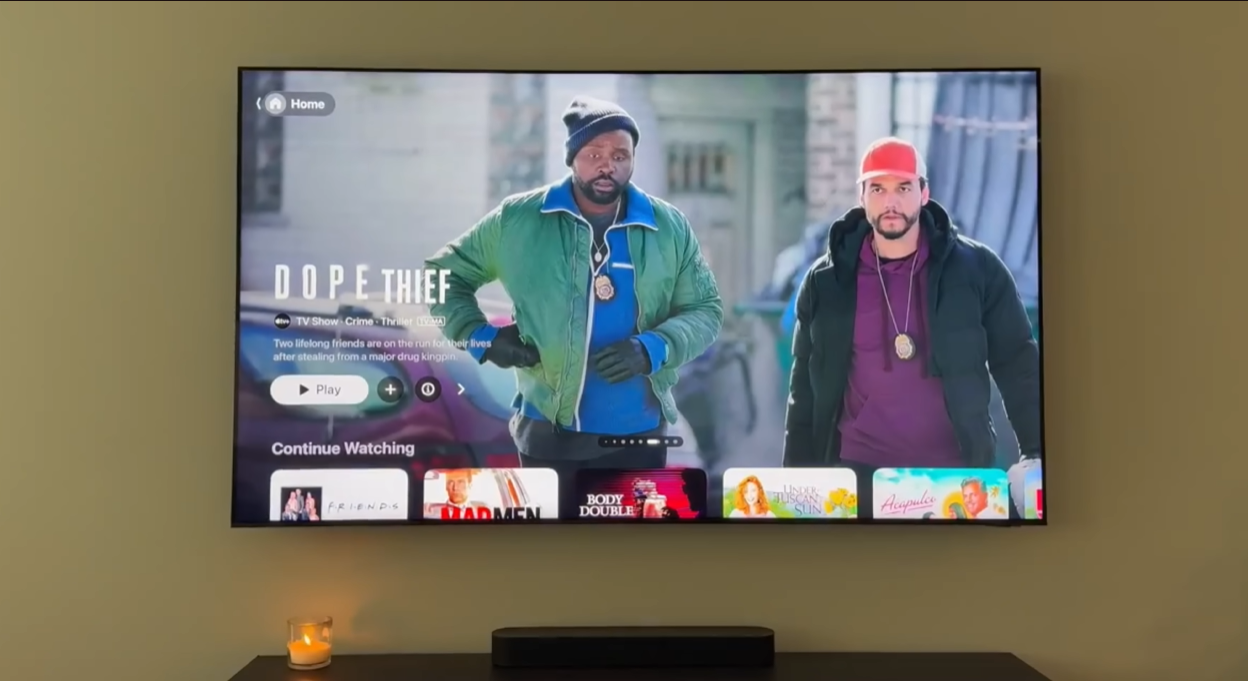
The Apple TV 4K remains one of the best streaming devices you can buy in 2026. It’s smooth, powerful, ad-free, and completely enhances your TV-watching experience—especially if you own other Apple products like an iPhone or iPad.
But here’s the thing: the current third-generation Apple TV 4K was last updated in 2022. That’s nearly four years without a hardware refresh—one of the longest gaps in Apple TV history.
Sure, we got some great upgrades with tvOS 26, which brought:
- An all-new liquid glass design
- Improved application experiences
- Karaoke functionality (Apple Music Sing)
- Enhanced continuity features
But software can only go so far. It’s time for upgraded hardware.
And according to multiple reliable sources—including code leaks, supply chain reports, and industry insiders—Apple is finally ready to deliver. The fourth-generation Apple TV 4K is expected to arrive in early 2026, featuring enhancements that will significantly expand its capabilities.
If you’re in the market for an Apple TV right now, HOLD UP. Here’s everything rumored for the new model, why it matters, and when you can expect to get your hands on one.
The Big Picture: Why This Upgrade Matters
Before we dive into specs, let’s understand what makes this upcoming refresh so significant.
The Current Limitations
The 2022 Apple TV 4K runs on an A15 Bionic chip with 4GB of RAM. While still capable for streaming and casual gaming, it’s being held back in crucial ways:
❌ No Apple Intelligence support (requires A17 Pro + 8GB RAM minimum)
❌ Limited AAA gaming capability (lacks hardware ray tracing)
❌ Older Wi-Fi standard (Wi-Fi 6, not Wi-Fi 7)
❌ Basic Siri (no LLM-powered contextual understanding)
❌ Aging video codecs (misses newer Dolby Vision 2.0 features)
What’s Changing in 2026
The fourth-generation Apple TV 4K is rumored to address every single limitation with hardware upgrades that position it as:
✅ The first Apple Intelligence-powered streaming device
✅ A legitimate gaming console capable of running AAA titles
✅ Your ultimate smart home hub with Thread, Matter, and Wi-Fi 7
✅ Future-proofed for the next 5+ years of Apple ecosystem evolution
Bottom line: This isn’t just a spec bump. It’s a complete reimagining of what the Apple TV can be.
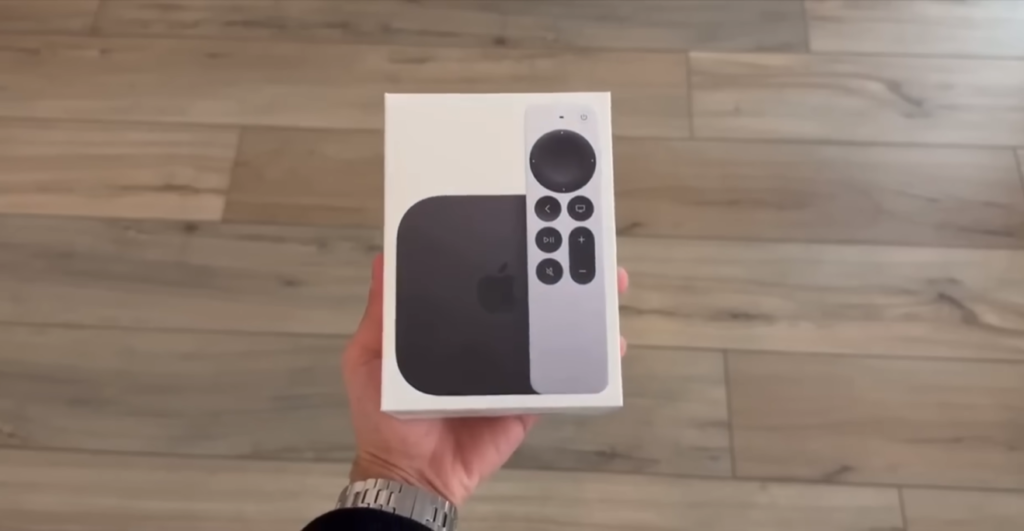
Upgrade #1: A17 Pro Chip — The Game Changer
What We Know
According to code leaks discovered in tvOS backend, Apple plans to equip the new Apple TV 4K with the A17 Pro chip—the same processor that debuted in the iPhone 15 Pro and iPhone 15 Pro Max in 2023.
Key Specifications:
- Architecture: 3nm process (vs. 5nm in A15)
- CPU: 6-core (2 performance + 4 efficiency)
- GPU: 6-core with hardware-accelerated ray tracing
- Neural Engine: 16-core, 2x faster than A15
- Memory bandwidth: Significantly improved over A15
Why This Is Huge
1. Performance Leap
The A17 Pro delivers approximately 30% faster multi-threaded CPU performance and up to 40% faster GPU performance compared to the current A15 Bionic.
Real-world impact:
- ✅ Faster app launching and switching
- ✅ Smoother interface navigation
- ✅ No lag when jumping between streaming apps
- ✅ Instant resume from sleep
- ✅ Better 4K/HDR video processing
2. Gaming Revolution
This is where things get exciting. The A17 Pro includes hardware-accelerated ray tracing—a feature previously limited to dedicated gaming consoles and high-end PCs.
What this enables:
- Console-quality AAA games running natively
- Games like Resident Evil Village, Death Stranding, and Assassin’s Creed Mirage
- 4K gaming at 60fps (potentially 120fps for select titles)
- Realistic lighting, reflections, and shadows
The Apple Arcade implication: With this power, Apple Arcade could finally attract AAA publishers who’ve avoided the platform due to limited hardware capabilities.
Controller support: tvOS 26 already added full PS5 DualSense and Xbox wireless controller support, setting the stage for serious gaming.
3. Doubles the RAM to 8GB
The A17 Pro’s power wouldn’t matter without sufficient memory. Apple is expected to double RAM from 4GB to 8GB in the new model.
Why 8GB matters:
- Required minimum for Apple Intelligence
- Better multitasking (keep apps in memory longer)
- Smoother 4K streaming with less buffering
- Future-proofing for increasingly demanding apps
Upgrade #2: Apple Intelligence — Your TV Gets Smart(er)
The Apple Intelligence Requirement
Apple Intelligence (Apple’s suite of AI features) requires two things:
- A17 Pro chip or newer (for processing power)
- 8GB RAM minimum (for handling LLM models)
The new Apple TV 4K will be the first streaming device in Apple’s lineup to support these features.
What Apple Intelligence Brings to Apple TV
Currently, the Apple Watch and Apple TV are the only Apple devices without Apple Intelligence support. That’s about to change.
1. LLM-Powered Siri (Coming in iOS 26.4)
The new Siri launching in iOS 26.4 (expected March/April 2026) will be radically different:
Key features:
- App intent for truly hands-free control
- Personal context knowledge (understands your viewing habits, preferences, family members)
- On-screen awareness (knows what you’re watching and can act on it)
- Natural conversation (no more robotic command structure)
Real-world example: Instead of saying “Siri, rewind 10 seconds”, you could say “What did she just say?” and Siri would:
- Understand you’re watching something
- Rewind to the last dialogue
- Display subtitles for that moment
- Resume playback automatically
2. Enhanced Dialogue with Context
Current Siri can already rewind and show you what actors said (Enhanced Dialogue feature). But with Apple Intelligence:
✅ Works across ALL apps (not just Apple TV+)—Netflix, YouTube, Disney+, etc.
✅ Understands follow-up questions (“Who’s that actor?” → “What else are they in?”)
✅ Provides contextual information (cast bios, filming locations, soundtrack details)
3. Smart Home Hub Revolution
Here’s where Apple Intelligence could transform daily life. Imagine this scenario:
Scenario: You’re watching a movie. Your video doorbell shows someone at the door.
Current experience:
- Pause movie manually
- Grab iPhone
- Unlock iPhone
- Open Home app or doorbell app
- Unlock door manually
With Apple Intelligence:
- Notification appears on-screen: “Your brother is at the front door” (facial recognition)
- You say to Siri Remote: “Unlock the door”
- Apple TV understands:
- You’re watching something (on-screen awareness)
- You want to unlock the front door (personal context)
- Your brother is a trusted family member (knowledge)
- Door unlocks automatically
- Movie resumes
This is game-changing for smart home control without interrupting your entertainment experience.
4. Content Discovery & Recommendations
Apple Intelligence could revolutionize how you find content:
Example queries:
- “Show me something funny like what we watched last night” → Siri remembers and suggests similar comedies
- “Find that show about the chef in Chicago” → Siri identifies “The Bear” without exact title
- “What should we watch tonight?” → Personalized recommendations based on who’s in the room (facial recognition via iPhone camera)
Upgrade #3: Dolby Vision 2.0 — Picture Quality Breakthrough
What Is Dolby Vision 2.0?
Dolby Vision 2.0 is the next evolution of HDR technology, leveraging AI to optimize picture quality dynamically based on your viewing environment and content type.
Why the timing is right: The A17 Pro’s Neural Engine provides the AI horsepower Dolby Vision 2.0 requires. Apple has historically added new video standards with hardware refreshes (Dolby Vision in 2017, Dolby Atmos in 2017, HDR10+ support, etc.).
Three AI-Powered Features
1. Precision Black
The problem: Dark scenes in movies/shows are often too dark—you literally can’t see what’s happening.
Dolby’s solution: AI analyzes the scene and intelligently brightens dark areas without blowing out highlights or compromising the director’s artistic vision.
Real-world example: Game of Thrones’ infamous “Battle of Winterfell” episode would actually be watchable without cranking brightness to maximum.
My take: This alone justifies the upgrade. I’ve watched countless shows where I had to pause and adjust TV settings because scenes were incomprehensibly dark. Precision Black solves this.
2. Light Sense
How it works: Advanced ambient light detection combines with reference lighting data from the content source to optimize picture quality for your specific room.
The Apple TV advantage: The current Apple TV already lets you use your iPhone to calibrate display settings to your room. Light Sense takes this further with real-time adjustments as room lighting changes throughout the day.
Use case:
- Morning: Bright sunlight streaming in → TV increases brightness, adjusts color temp
- Evening: Dim lamp lighting → TV reduces brightness, enhances contrast
- Night: Complete darkness → OLED-optimized picture profile
3. Sports & Gaming Optimization
Specific enhancements:
- White point adjustments for better visibility of white objects (baseballs, tennis balls, golf balls)
- Motion control to reduce blur during fast action
- Dynamic tone mapping for high-contrast sports (snow skiing, beach volleyball)
Why this matters for Apple TV: With Apple now the official streaming partner for Formula 1 in the US and expanding sports content, Dolby Vision 2.0’s sports optimization directly enhances their content strategy.
Upgrade #4: N1 Chip — Next-Gen Connectivity
What Is the N1 Chip?
Apple debuted its custom N1 wireless chip in the iPhone 17 lineup. It’s Apple’s first in-house design for Wi-Fi and Bluetooth, replacing Broadcom components.
Rumored for Apple TV: The N1 chip is expected to appear in the 2026 Apple TV 4K, bringing significant connectivity upgrades.
What N1 Enables
Wi-Fi 7 Support
Current Apple TV: Wi-Fi 6 (Wi-Fi 6E on higher storage model)
New Apple TV: Wi-Fi 7
Wi-Fi 7 benefits:
- Faster speeds: Up to 46 Gbps theoretical (vs. 9.6 Gbps for Wi-Fi 6)
- Lower latency: Critical for gaming and video calls
- 6GHz band access: Less congested, more reliable connections
- Multi-link operation: Simultaneous connection to multiple bands for redundancy
Real-world impact:
- ✅ Instant 4K/8K streaming without buffering
- ✅ Lag-free cloud gaming
- ✅ Smooth video calls via FaceTime/Zoom
- ✅ Faster app downloads and updates
Bluetooth 6 Support
The N1 chip is expected to include Bluetooth 6, which brings:
- Better range and reliability
- Lower power consumption
- Improved audio quality for AirPods/HomePods
- More simultaneous device connections
Thread Networking
Thread is a low-power mesh networking protocol for smart home devices.
Why it matters: With Apple positioning the Apple TV 4K as a smart home hub, built-in Thread support (currently only on higher-storage 2022 models) becomes essential for:
- Matter-compatible smart home devices
- More reliable device communication
- Faster response times for HomeKit accessories
Improved Continuity Across Apple Devices
The N1 chip’s enhanced performance and reliability directly improves continuity features:
- AirPlay: Smoother wireless streaming from iPhone/iPad/Mac
- Remote control: Using iPhone/iPad as Apple TV remote
- HomePod integration: Better audio syncing with HomePod speakers
- SharePlay: Lower-latency group watching experiences
Upgrade #5: Built-In Camera? (Rumor Status: Unclear)
The Rumor
For years, speculation has suggested Apple might add a built-in camera to the Apple TV for FaceTime and Zoom calls.
Latest status: This rumor has cooled significantly as 2025 ended without an announcement.
Where the Camera Likely Goes Instead
Most analysts now believe Apple is reserving the built-in camera for the “HomePad”—a rumored smart home display combining a HomePod with a 7-inch touchscreen (expected spring 2026).
What the Apple TV Gets Instead
Continuity Camera enhancement: Apple will likely double down on using your iPhone as a wireless webcam via Continuity Camera.
Possible additions:
- MagSafe TV mount included in box or sold separately
- Optimized Continuity Camera features in tvOS 26.4
- Auto-positioning guidance for iPhone camera placement
Why this makes sense: Your iPhone’s camera is already better than any webcam Apple would build into a TV box. Continuity Camera leverages existing hardware while keeping Apple TV costs down.
tvOS 26 FaceTime Hints
Evidence for video calling focus: tvOS 26 added several FaceTime-specific features including:
- Center Stage (follows you as you move)
- Portrait mode during calls
- Reactions (thumbs up, hearts, fireworks)
- SharePlay screen sharing
These features strongly suggest Apple is preparing for enhanced video calling experiences on Apple TV—whether via built-in camera or improved Continuity Camera.
When Can You Buy It? Release Date Predictions
The Official Status: TBA
Apple has not officially announced the fourth-generation Apple TV 4K. Everything discussed here is based on:
- Code leaks from tvOS
- Supply chain reports
- Industry analyst predictions
- Apple’s historical patterns
Why Not 2025?
Original expectation: Many believed Apple would release the new Apple TV in late 2025.
What happened: The year ended without any announcement or surprise product drop.
Likely reason: Apple is waiting for iOS 26.4 and the all-new Siri to be ready. Launching the first Apple Intelligence-capable Apple TV before the new Siri is ready would undercut the device’s main selling point.
Most Likely Timeline: Spring 2026
Expected announcement: March or April 2026
Why this timing makes sense:
1. iOS 26.4 Release
- Brings LLM-powered Siri with Apple Intelligence
- Expected March/April 2026
- Perfect timing to showcase Apple TV’s AI capabilities
2. Smart Home Product Push Apple is rumored to launch multiple smart home products in spring 2026:
- Apple TV 4K (4th gen)
- HomePad (HomePod with display)
- HomePod mini 2
- HomeKit security camera
- Smart doorbell
Unified marketing campaign: Launching all these products together creates a cohesive “Apple Home” ecosystem story.
3. Historical Patterns
- Apple TV 3rd gen: October 2022 (event)
- Apple TV HD: October 2015 (event)
- Apple TV 4K: September 2017 (event)
While fall events are common, spring product refreshes via press releases are equally typical for Apple (HomePod mini, AirPods, iPads, etc.).
How It Will Launch
Most likely: Press release + immediate pre-orders (no live event)
Possible: Mentioned briefly during an iPad/Mac event
Unlikely: Dedicated Apple TV event
Pricing: Will It Cost More?
Current Pricing (2022 Model)
- 64GB: $129
- 128GB: $149 (includes Thread, Ethernet)
2026 Pricing Predictions
Rumored starting price: $159 (potentially as low as sub-$100 in some reports, though this seems unlikely given upgraded specs)
Why the price might increase:
- ✅ A17 Pro chip (expensive component)
- ✅ Doubled RAM to 8GB
- ✅ N1 chip (custom Apple silicon)
- ✅ Enhanced connectivity (Wi-Fi 7, Bluetooth 6)
- ✅ Dolby Vision 2.0 licensing
Why the price might stay flat:
- ✅ Apple wants to compete with $50-$100 streaming sticks (Roku, Fire TV)
- ✅ Older Apple TV models have seen price drops over time
- ✅ Component costs decrease as manufacturing matures
- ✅ Smart home hub positioning needs mass-market pricing
My prediction:
- Base model (64GB): $149 (+$20 increase)
- High-end model (128GB): $179 (+$30 increase)
The base model likely loses Ethernet and Thread (moved to higher tier only), similar to current strategy.
Should You Buy the Current Model or Wait?
Buy the 2022 Model If…
✅ You need an Apple TV right now (current TV is broken, moving, etc.)
✅ You don’t care about gaming beyond Apple Arcade casual titles
✅ Apple Intelligence doesn’t matter to you (happy with current Siri)
✅ You’re on a tight budget (2022 model will see discounts as new one launches)
✅ You primarily use it for streaming only (Netflix, Disney+, YouTube)
Best deal strategy: Wait until the new model is announced, then buy the 2022 model at a discount (likely $99 for 64GB, $119 for 128GB).
Wait for the 2026 Model If…
✅ You care about future-proofing (want device to last 5+ years)
✅ Gaming interests you (want AAA console-quality games)
✅ You use Apple TV as a smart home hub (Apple Intelligence integration matters)
✅ You own multiple Apple devices (iPhone, iPad, Mac, HomePods) and value ecosystem integration
✅ You want the latest video/audio tech (Dolby Vision 2.0)
✅ Wi-Fi 7 is important (you have or plan to get a Wi-Fi 7 router)
Best move: Wait 3-4 months. If the new model doesn’t launch by April 2026, reassess.
Comparison: 2022 vs. 2026 Apple TV 4K
| Feature | 2022 Model (3rd Gen) | 2026 Model (4th Gen – Rumored) |
|---|---|---|
| Chip | A15 Bionic | A17 Pro |
| CPU Performance | Baseline | ~30% faster |
| GPU Performance | Baseline | ~40% faster, ray tracing |
| RAM | 4GB | 8GB |
| Apple Intelligence | ❌ Not supported | ✅ Fully supported |
| Siri | Current version | LLM-powered (iOS 26.4) |
| Wi-Fi | Wi-Fi 6 (6E on 128GB) | Wi-Fi 7 |
| Bluetooth | 5.0 | 6.0 |
| Thread | 128GB model only | All models (rumored) |
| Gaming | Casual Apple Arcade | AAA console-quality |
| Video | Dolby Vision, HDR10+ | Dolby Vision 2.0 |
| Price | $129 / $149 | ~$149 / $179 (est.) |
| Release Date | October 2022 | Spring 2026 (expected) |
Who Should Buy the 2026 Apple TV 4K?
Perfect For:
✅ Apple ecosystem users who own iPhone, iPad, Mac, AirPods, HomePods
✅ Smart home enthusiasts building HomeKit setups
✅ Gamers who want console-quality titles without buying a PlayStation/Xbox
✅ Early adopters excited about Apple Intelligence on the big screen
✅ Cord-cutters who rely on streaming as primary entertainment
✅ AV enthusiasts who want the best picture/sound quality
✅ Future-proofers who keep devices 5+ years
Skip It If:
❌ You’re happy with Roku/Fire TV and not in Apple ecosystem
❌ You only use TV for basic streaming (Netflix, YouTube)
❌ Gaming doesn’t interest you at all
❌ You’re very budget-conscious (Roku/Fire TV are $30-$100 cheaper)
❌ You don’t own any other Apple devices
No. Apple Intelligence requires the A17 Pro chip (or newer) and 8GB of RAM. The 2022 model has an A15 Bionic with 4GB RAM, which doesn’t meet the minimum requirements.
The Bigger Picture: Apple’s Smart Home Push
The 2026 Apple TV 4K doesn’t exist in isolation—it’s part of Apple’s comprehensive smart home strategy launching in spring 2026.
Rumored Spring 2026 Apple Home Products
1. HomePad (HomePod + 7″ Display)
- Smart home control center
- FaceTime/Zoom calling
- Apple Intelligence integration
- Estimated price: $249-$299
2. HomePod mini 2
- Faster processor
- Better sound quality
- New colors
- U2 ultra-wideband chip
- Estimated price: $99
3. HomeKit Security Camera
- Indoor/outdoor use
- Audio monitoring (fire alarms, glass breaking)
- Multiple sensors
- Tighter Apple ecosystem integration
- Estimated price: $149-$199
4. Smart Doorbell (Camera + Bell)
- Video doorbell with HomeKit Secure Video
- Facial recognition via iCloud
- Two-way audio
- Estimated price: $199-$249
5. Apple TV 4K (4th Gen)
- Acts as smart home hub for all the above
- Central control point
- Estimated price: $149-$179
The Unified Vision
All these products work together to create an Apple-controlled smart home:
- HomePad displays security camera feeds
- Apple TV acts as central HomeKit hub
- Doorbell recognizes family members via iCloud Photos
- Apple Intelligence ties everything together with natural language control
The pitch: “Hey Siri, I’m leaving” → Locks doors, arms security, adjusts thermostat, turns off lights—all automatically.
Final Thoughts: Worth the Wait
The Apple TV 4K has been the best streaming box you can buy for years—even with 2022 hardware. But it’s been held back by limitations that prevented it from reaching its full potential.
The 2026 model changes everything.
With the A17 Pro chip, Apple Intelligence, Dolby Vision 2.0, Wi-Fi 7, and gaming capabilities, this isn’t just an incremental upgrade—it’s a fundamental reimagining of what a streaming device can be.
My Recommendation
If you need an Apple TV today: Buy the 2022 model on sale (it’ll drop to $99-$119 once the new one is announced).
If you can wait 3-4 months: Wait for the 2026 model. The Apple Intelligence integration alone will be worth the extra $20-$30, and you’ll future-proof your setup for the next 5+ years.
If you’re a gamer or smart home enthusiast: Absolutely wait. The A17 Pro’s gaming capabilities and enhanced smart home integration are game-changers for those use cases.
The Spring 2026 Launch Makes Sense
Waiting for iOS 26.4 and the all-new Siri was the right call. Launching the first Apple Intelligence-capable Apple TV alongside the LLM-powered Siri creates a cohesive story and maximizes the wow factor.
Plus, bundling the Apple TV launch with the HomePad, HomePod mini 2, and HomeKit accessories creates a comprehensive smart home narrative that’s more compelling than isolated product drops.
What Do You Think?
Are you excited for the new Apple TV 4K? Will you upgrade from the 2022 model, or is this your first Apple TV purchase?
My take: I’ve been using the 2022 model as my primary streaming device and smart home hub, and I’m genuinely excited about this upgrade. Apple Intelligence integration with my existing HomeKit setup could be a genuine quality-of-life improvement.
The gaming aspect is a wild card—if Apple can convince AAA publishers to bring their titles to the platform, the Apple TV could become a legitimate PlayStation/Xbox alternative for casual gamers.
What features are you most excited about? Drop your thoughts in the comments below, and I’ll respond to every question!
Want more Apple TV content? Check out my other videos:
- Why Everyone Should Own an Apple TV (Even With a Smart TV)
- Best tvOS 26 Features You’re Not Using
- Apple TV vs. Roku vs. Fire TV: Ultimate Comparison
Subscribe to stay updated on the official Apple TV 4K announcement and my hands-on review when it launches!
Disclaimer: All information in this article is based on rumors, leaks, and industry analysis. Specs, features, pricing, and release dates are subject to change until Apple makes an official announcement. I am not affiliated with Apple Inc.
Last Updated: January 2026
Sources: tvOS code leaks, Bloomberg, MacRumors, 9to5Mac, supply chain reports