Rating: 9.5/10 ⭐⭐⭐⭐⭐
Tested: 75-inch model, December 2025 – January 2026 (3+ months)
Current Price: $1,000-$3,000 (40-60% off MSRP)
Best For: Home theater enthusiasts, gamers, families seeking flagship-level picture quality at mid-range pricing
Executive Summary
After three months of extensive testing with the TCL QM8K QD-Mini LED TV, I can confidently state this is one of the most impressive value propositions in the television market today. With current discounts reaching 60% off original pricing, the QM8K delivers picture quality and features that rival displays costing twice as much.
The standout features include genuine 5,000-nit peak brightness, up to 3,800 local dimming zones, 144Hz native refresh rate, comprehensive gaming features, and surprisingly competent built-in audio tuned by Bang & Olufsen. While it doesn’t quite reach OLED-level contrast in completely dark environments, the QM8K’s Mini-LED technology with Quantum Dot color produces images that satisfy even discerning viewers.
For buyers seeking exceptional value without compromising on performance, the TCL QM8K represents the sweet spot between budget and premium segments.
Current Pricing and Availability
TCL is currently offering substantial discounts across the entire QM8K lineup, making this last year’s flagship model exceptionally attractive:
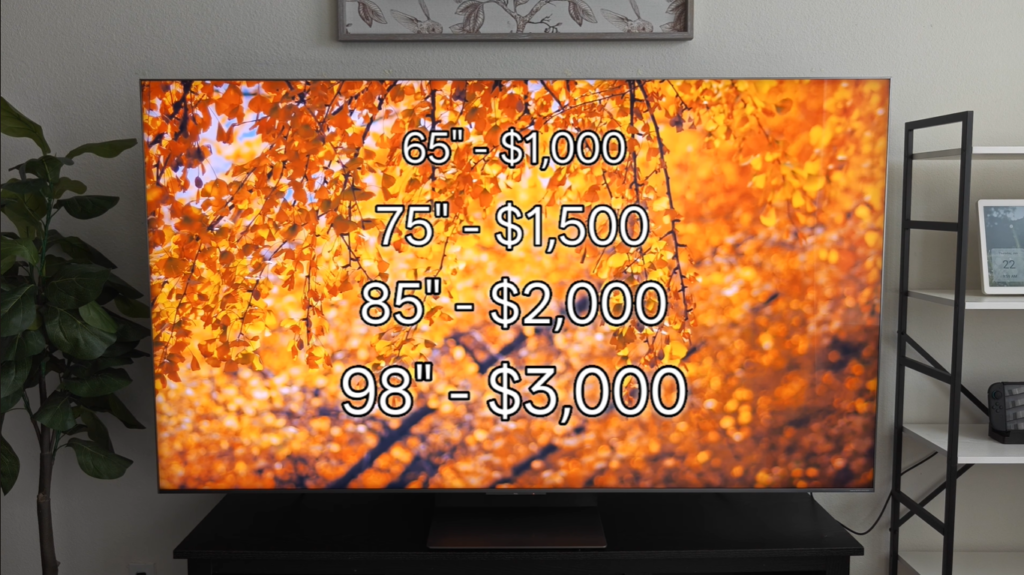
65-inch: $1,000 (60% off, originally $2,500)
75-inch: $1,500 (50% off, originally $3,000)
85-inch: $2,000 (42% off, originally $3,500)
98-inch: $3,000 (40% off, originally $5,000)
These aren’t minor promotional discounts but genuine price reductions that position the QM8K competitively against current mid-range offerings while delivering near-flagship performance.
Technical Specifications
Display Technology: Quantum Dot Mini-LED VA panel
Peak Brightness: 5,000 nits
Local Dimming Zones: Up to 3,800 (size-dependent)
Native Refresh Rate: 144Hz
Gaming Features: Gaming Accelerator 288, VRR, ALLM
HDR Support: Dolby Vision, Dolby Vision IQ, HDR10+
Audio: Dolby Atmos, Bang & Olufsen tuning, dual built-in subwoofers
Smart Platform: Google TV
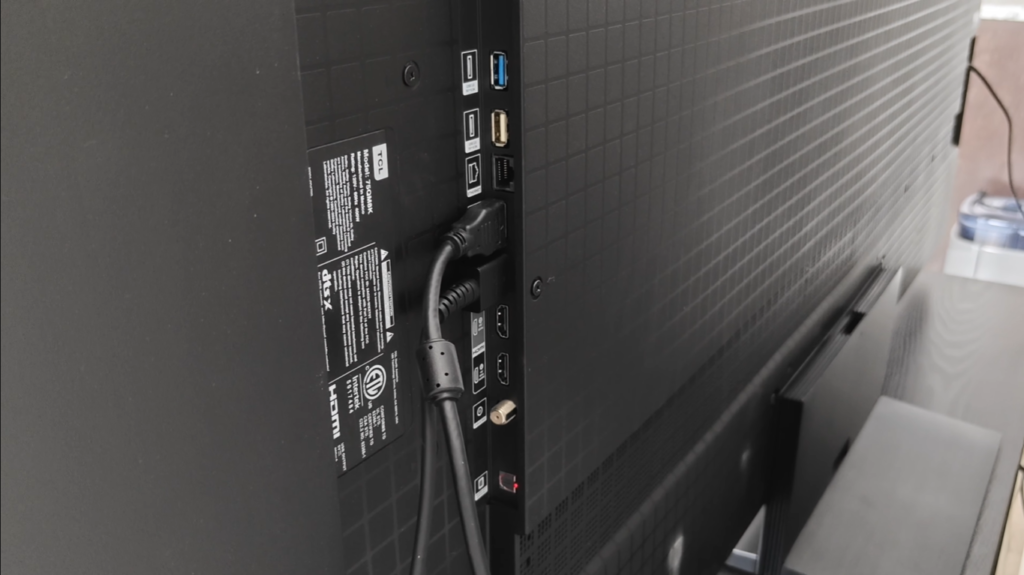
HDMI Ports: 2x HDMI 2.1 (4K@144Hz), 2x HDMI 2.0 (4K@60Hz, one with eARC)
USB Ports: 1x USB 3.0, 1x USB 2.0
Additional Connectivity: Ethernet, Optical audio, Cable/Antenna input
Design and Build Quality
Aesthetic and Construction
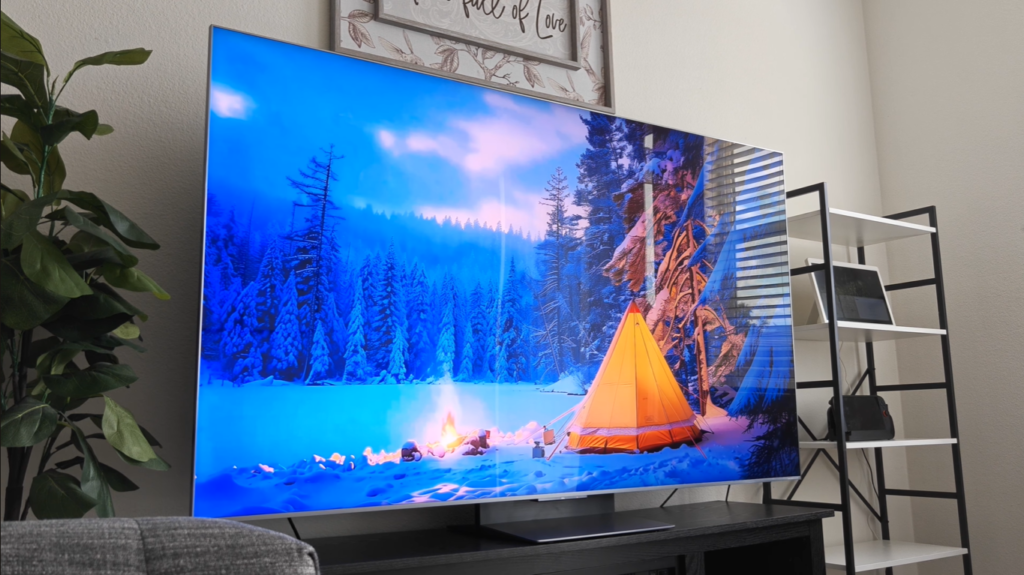
The QM8K presents a genuinely premium appearance that belies its mid-range pricing. TCL employed a brushed metal finish across the bezel and stand, creating visual coherence with high-end offerings from established manufacturers. The design language is understated rather than attention-seeking, allowing the display itself to remain the focal point.
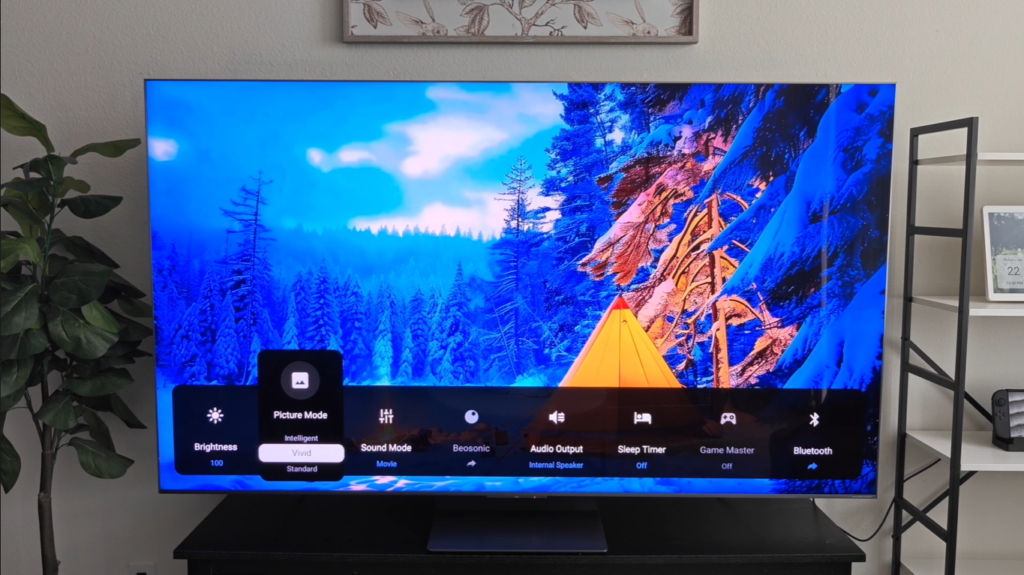
Stand Design: Practical Engineering
TCL’s decision to implement a single central mount stand proves remarkably practical. Unlike traditional dual-leg stands that require precise TV stand width matching, the central support allows placement on virtually any surface. This proved particularly valuable in my setup where the 75-inch panel exceeds the width of my media console. The stand provides stable support without requiring exact width matching or positioning adjustments.
Remote Control
The included remote maintains design consistency with the television, featuring a similar color palette and premium construction. Backlighting enables comfortable nighttime use without fumbling for buttons. The control layout includes standard functions plus dedicated streaming service buttons (Netflix, Prime Video, YouTube) and an integrated microphone for voice assistant functionality. The remote strikes an appropriate balance between simplicity and feature access.
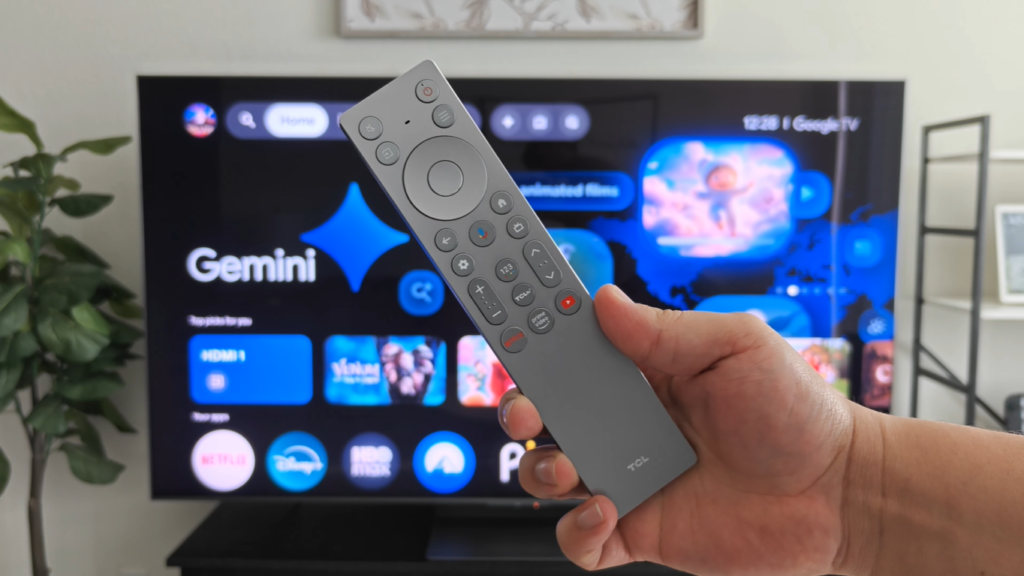
Port Configuration
Rear panel connectivity is comprehensive and thoughtfully arranged. The inclusion of two HDMI 2.1 ports supporting full 4K@144Hz addresses current and near-future gaming needs, while two additional HDMI 2.0 ports (one with eARC) accommodate legacy devices and audio equipment. USB 3.0 and 2.0 ports, Ethernet, optical audio, and antenna connectivity round out a complete connection suite.
Notably, TCL integrated actual subwoofer drivers into the rear panel, signaling serious attention to audio performance beyond typical television speakers.
Picture Quality: The Primary Strength
Overall Visual Performance
Picture quality represents the QM8K’s most compelling attribute and the primary reason for my enthusiastic recommendation. The combination of Mini-LED backlighting, Quantum Dot color technology, and substantial processing power produces images that consistently impress across varied content types.
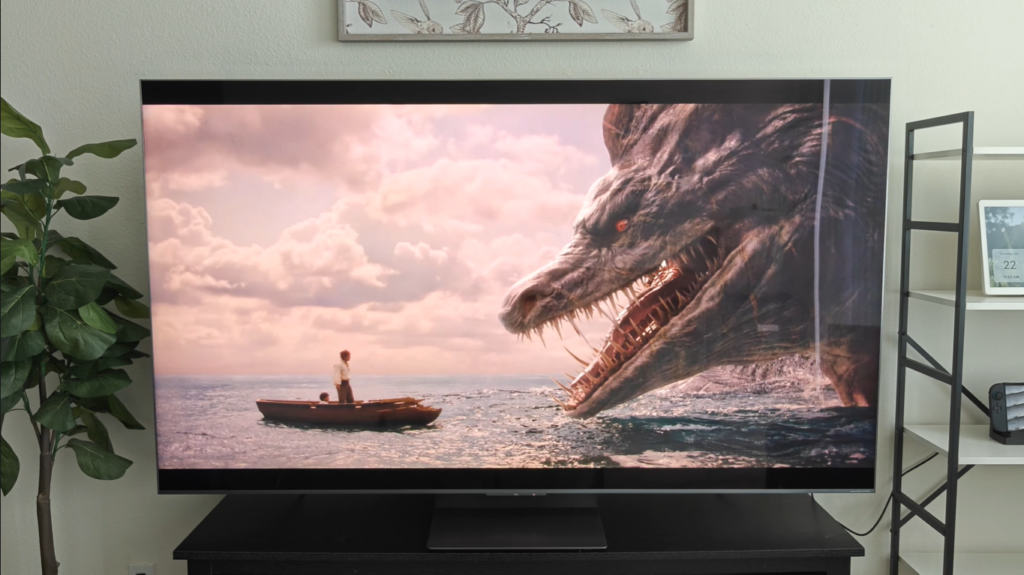
Brightness Performance
The specified 5,000-nit peak brightness isn’t marketing exaggeration. In HDR content with specular highlights, the QM8K achieves genuinely eye-searing brightness levels. During daytime viewing with ambient light, the television maintains excellent image visibility even with direct sunlight exposure. This extreme brightness capability proves particularly valuable for HDR content where peak highlights benefit from genuine luminance headroom.
For perspective, I frequently operate the display at 70-80% brightness in typical viewing conditions. Maximum brightness proves excessive for most content in controlled lighting environments. This overhead ensures consistent performance regardless of room conditions.
Color Reproduction
Quantum Dot technology delivers its promised color benefits. The QM8K produces vibrant, saturated colors without appearing artificial or oversaturated. Skin tones appear natural across varied lighting conditions, while colorful content like animated films or nature documentaries showcase the wide color gamut effectively.
The television offers multiple picture modes including standard presets and Dolby Vision variants (IQ, Bright, Dark). The “Intelligent” mode provides excellent out-of-box performance, though I recommend calibration-minded users explore the extensive manual adjustment options.
Contrast and Black Levels
Mini-LED backlighting with 3,800 dimming zones produces impressive contrast ratios. While not achieving OLED’s infinite contrast or perfect black levels, the QM8K delivers deep blacks with minimal blooming in most content. Fast-moving bright objects against dark backgrounds occasionally reveal slight haloing, but this occurs infrequently enough to avoid distraction during normal viewing.
Dark room performance is excellent, though OLED displays maintain an advantage in this specific scenario. For mixed lighting conditions—the reality for most users—the QM8K’s brightness capability and contrast performance prove more versatile.
Motion Handling
The 144Hz native refresh rate combined with TCL’s motion processing delivers smooth motion reproduction. Fast-paced sports content, action films, and gaming all benefit from clean motion without excessive blur or judder. Motion processing can be adjusted or disabled entirely for those preferring film’s native cadence.
Viewing Angles
As expected with VA panel technology, viewing angles represent a relative weakness compared to IPS or OLED alternatives. Center viewing position provides optimal picture quality with slight color shifting and contrast loss apparent at extreme angles. However, performance remains acceptable for typical living room layouts where viewers sit within 30-40 degrees of center.
For large gatherings or rooms with wide seating arrangements, the brightness headroom helps maintain visible image quality even at suboptimal viewing positions.
Reflection Handling
The screen coating manages reflections adequately though not exceptionally. In my testing environment with windows adjacent to the television, some reflections appear during daytime viewing from off-axis positions. The extreme brightness capability compensates effectively, maintaining image visibility even with competing reflections. For rooms with significant ambient light, the QM8K performs better than many competing displays.
Gaming Performance: Comprehensive Feature Set
Gaming Specifications
The QM8K targets gaming enthusiasts with specifications and features that rival dedicated gaming displays:
144Hz native refresh rate supports high-framerate gaming on current and upcoming consoles. Gaming Accelerator 288 mode enables up to 288Hz refresh at reduced 1080p resolution for competitive gaming scenarios. Two HDMI 2.1 ports provide full bandwidth for PS5, Xbox Series X, and high-end gaming PCs running 4K@120Hz content.
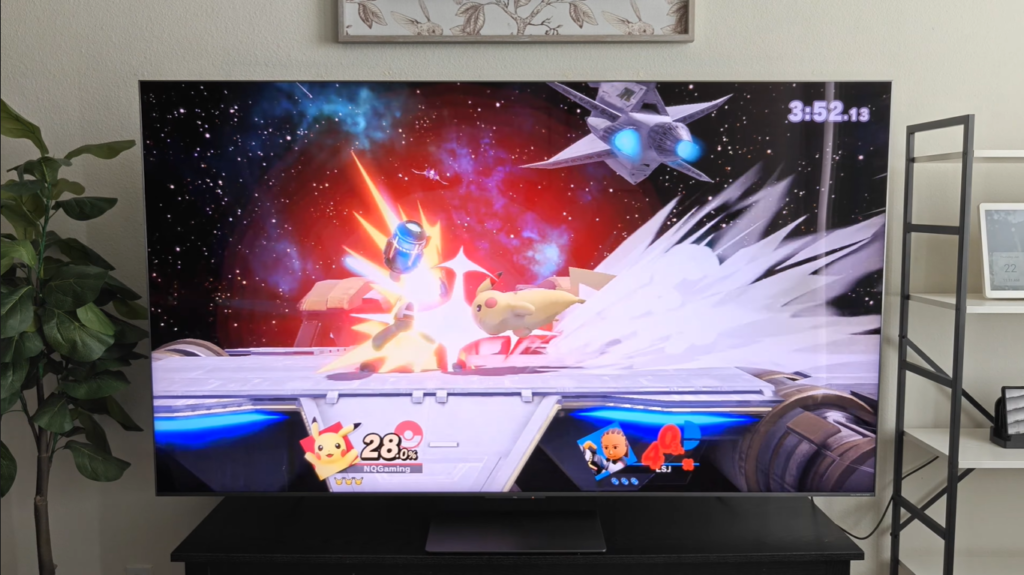
Variable Refresh Rate (VRR) and Auto Low Latency Mode (ALLM) work automatically when gaming input is detected, eliminating screen tearing and minimizing input lag without manual mode switching.
Real-World Gaming Experience
I conducted extensive gaming testing across multiple genres and platforms over the three-month testing period. Input latency is imperceptible during casual and moderately competitive gaming. For professional esports competitors, dedicated gaming monitors still offer marginal advantages, but for the vast majority of players, the QM8K’s response is excellent.
The large 75-inch screen size transforms gaming experiences in genres designed for immersion. Open-world titles, racing games, and party games particularly benefit from the expansive display. First-person shooters remain playable and enjoyable, though competitive players may prefer smaller displays for improved peripheral vision.
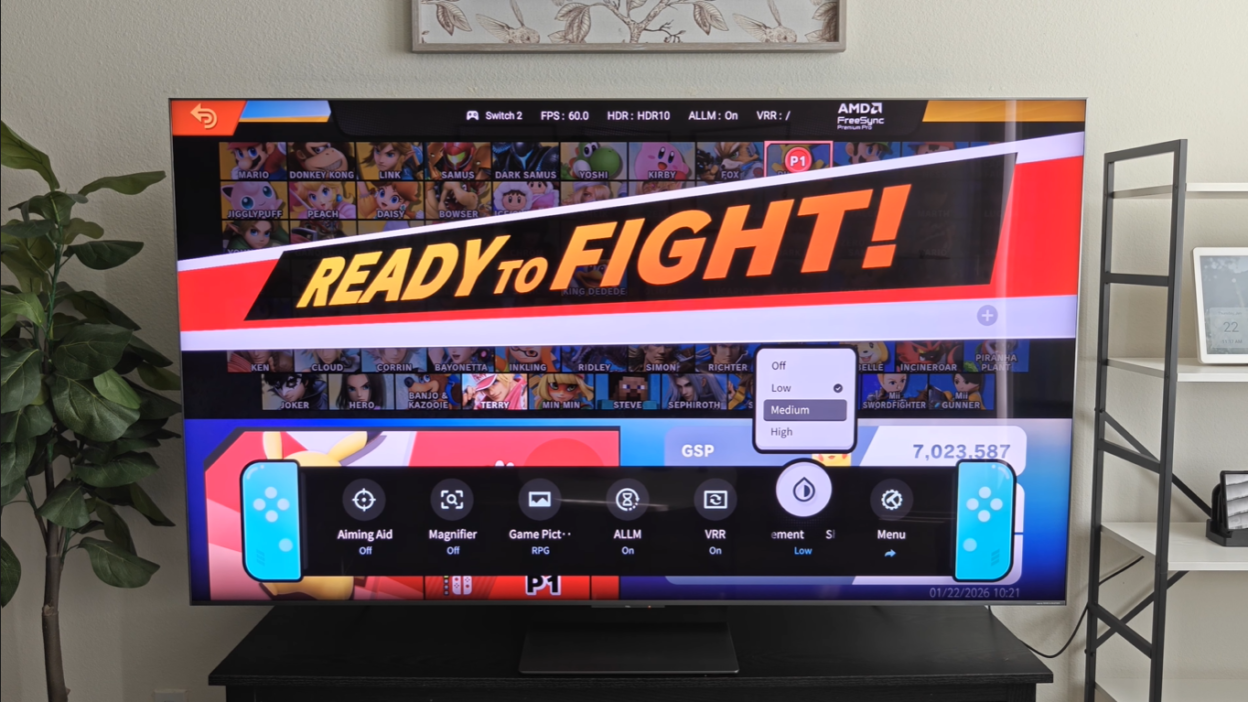
Gaming Bar Interface
TCL’s dedicated gaming overlay provides genuinely useful features beyond typical gaming modes:
The interface displays current frame rate, resolution, and input information. Aiming assistance for shooting games provides subtle crosshair overlays. A magnification tool enlarges specific screen regions for detail-focused gameplay. Shadow enhancement adjusts gamma curves to improve visibility in dark scenes without washing out the entire image.
Gaming-specific picture modes optimize for different game types (FPS, RPG, Sports, Racing). The interface adapts visually to connected consoles, displaying console-specific graphics—a minor but appreciated attention to detail.
These aren’t gimmicks. During testing, I regularly utilized shadow enhancement in darker games and appreciated the quick access to frame rate information.
Console Compatibility
Tested with multiple platforms including Nintendo Switch, the QM8K handles all input sources appropriately. The automatic low latency mode engages immediately when gaming input is detected, disengaging when switching back to video content. This seamless transition represents the ideal implementation—gaming optimization without manual intervention.
Smart TV Platform: Google TV Implementation
Interface and Performance
The QM8K runs Google TV, Google’s current smart television platform. The interface provides a content-forward approach, aggregating recommendations across installed streaming services rather than prioritizing individual apps.
Navigation performance is genuinely impressive. Interface responsiveness matches high-end smartphones with immediate reaction to input and smooth animation throughout. I experienced no stuttering, freezing, or lag during the entire testing period—a notable achievement given many smart TV platforms suffer performance degradation over time.
Feature Set
Google TV provides comprehensive streaming service access via the Play Store. Major services including Netflix, Disney+, HBO Max, Prime Video, YouTube, and others all function properly. The platform aggregates content from multiple services into unified watchlists and recommendations, reducing time spent searching across individual apps.
Live TV integration provides traditional broadcast programming with a comprehensive guide interface. Multiple user profiles enable personalized recommendations and watch history per family member.
Parental Controls
Google TV’s family controls prove robust and practical. Child accounts restrict content access based on ratings and allow parents to approve individual apps and services. Password protection prevents children from switching to unrestricted adult accounts. The implementation is straightforward and effective for families with young children.
Gemini AI Integration
TCL includes Google’s Gemini AI assistant integrated into the television interface. Functionality includes voice search, content recommendations, news briefings, and basic AI interactions. While not revolutionary, the integration works smoothly and provides convenient hands-free operation.
Settings and Customization
The settings menu provides extensive customization options for picture, audio, network, and system parameters. Picture settings include comprehensive adjustments for brightness, contrast, color temperature, gamma, white balance, and individual color management. Audio equalizer provides multi-band adjustment beyond simple bass and treble controls.
I particularly appreciate TCL’s decision to make professional-level adjustments accessible rather than hidden in service menus. Enthusiasts can fine-tune performance while casual users stick with excellent presets.
Audio Performance: Exceeding Expectations
Built-In Audio System
TCL partnered with Bang & Olufsen for audio tuning and included dual built-in subwoofers—unusual for television speakers. The result significantly exceeds typical television audio quality.
Sound Quality Assessment
The QM8K delivers genuinely good audio for integrated television speakers. Volume output proves adequate for typical viewing environments without distortion at higher levels. Tonal balance is neutral with clear dialogue, present midrange, and legitimate bass response from the integrated subwoofers.
I adjusted the equalizer to boost bass and treble slightly beyond default settings, which enhanced action content and gaming. The flexibility to customize sound signature proves valuable for matching personal preferences or room acoustics.
Dolby Atmos Support
The television supports Dolby Atmos audio passthrough via eARC to compatible soundbars or AV receivers. Built-in virtualization attempts to create spatial audio effects from the television’s speakers with limited but noticeable success. True Atmos requires dedicated hardware, but the television’s processing provides some spatial awareness.
Soundbar Recommendation
Despite quality built-in audio, I maintain that dedicated soundbar systems provide superior performance for serious viewing. The QM8K’s audio is excellent for television speakers but cannot match discrete multi-channel systems with dedicated subwoofers.
For buyers on strict budgets or those wanting simple all-in-one solutions, the QM8K’s integrated audio suffices. For home theater enthusiasts, budget $300-500 for a quality soundbar to maximize the experience.
Real-World Living: Three-Month Assessment
Daily Use Experience
The QM8K has served as my primary display since December, experiencing daily use across varied content types and viewing conditions. Reliability has been flawless with zero crashes, display artifacts, or technical issues requiring intervention.
Startup time is quick with the display ready for use within seconds of powering on. App launching happens nearly instantaneously without the multi-second delays common on lesser smart TV platforms. The experience feels responsive and refined throughout operation.
Content Consumption Patterns
Daily television viewing, weekend movie sessions, regular gaming, and YouTube content consumption all receive equal quality treatment. The television hasn’t revealed particular weaknesses with specific content types—HDR movies look exceptional, SDR television programming remains sharp and colorful, low-bitrate streaming services appear better than expected, and gaming performs excellently.
This versatility matters significantly. A display that excels with 4K Blu-rays but disappoints with cable television or streaming services limits practical utility. The QM8K handles all sources well.
Family Usage
Multiple family members ranging in age and technical sophistication all adapted quickly to the interface and controls. The Google TV platform’s intuitive design makes navigation accessible while offering depth for power users.
Google TV’s profile system keeps individual watch histories and recommendations separate, avoiding the frustration of algorithm contamination from other family members’ viewing habits.
Comparison to Competition
vs. LG C3 OLED (65-inch, ~$1,500)
OLED technology provides superior contrast and black levels with infinite contrast ratio and perfect blacks. Viewing angles are significantly better on OLED. However, the QM8K delivers considerably higher brightness for HDR content and maintains better image quality in bright rooms. Gaming features are comparable with similar input lag and VRR support.
Winner: LG C3 for dark room cinematic viewing, QM8K for mixed-use environments and bright rooms.
vs. Samsung QN90D QLED (65-inch, ~$2,000)
Samsung’s premium QLED offers similar Mini-LED technology with comparable brightness and contrast. Picture quality is highly similar with slight variations in color science preferences. Samsung’s interface differs significantly from Google TV—preference dependent. The QM8K provides better value at current pricing with similar performance.
Winner: QM8K for value, Samsung for brand preference or Tizen platform loyalty.
vs. Sony X90L (65-inch, ~$1,300)
Sony’s X90L uses full-array local dimming (fewer zones than QM8K’s Mini-LED). Picture quality favors the QM8K with better HDR brightness and deeper blacks. Sony offers superior motion processing and more natural color science out of box. Google TV is identical on both displays.
Winner: QM8K for picture quality and features, Sony for processing and brand reliability reputation.
vs. Budget Options (TCL 6-Series, Hisense U6/U7)
Lower-tier TCL models and Hisense alternatives cost $500-800 less than the discounted QM8K. Picture quality differences are noticeable with the QM8K offering substantially higher brightness, more dimming zones, and better overall performance. Gaming features are more comprehensive on the QM8K.
Winner: QM8K for those able to stretch budget, budget options for strict financial constraints.
Who Should Buy the TCL QM8K
Ideal Buyers
Home Theater Enthusiasts on Budget: The QM8K delivers near-flagship picture quality at mid-range pricing. With current discounts, this represents exceptional value for picture quality prioritization.
Gamers: The 144Hz display, VRR support, low latency, and comprehensive gaming features make this excellent for console and PC gaming without dedicated gaming monitor requirements.
Bright Room Users: The extreme brightness capability makes the QM8K ideal for living rooms with significant ambient light where OLED displays struggle.
Large Format Seekers: For buyers wanting 75-inch or larger displays, the QM8K provides excellent performance at pricing competitors cannot match.
Value-Conscious Buyers: Current discounts create exceptional value propositions across all sizes. Buyers wanting maximum performance per dollar should strongly consider the QM8K.
Less Ideal Buyers
OLED Purists: Viewers prioritizing perfect blacks and infinite contrast in completely dark environments will still prefer OLED technology despite higher costs.
Critical Audiophiles: While built-in audio exceeds typical television speakers, serious audio enthusiasts will require supplemental sound systems regardless of television choice.
Brand Loyalists: Buyers committed to Sony, Samsung, or LG ecosystems for specific features or brand preferences should stay within those ecosystems.
Latest Technology Requirements: Buyers insisting on current model year technology should wait for TCL’s 2026 lineup announcements, though current discounts may outweigh newest technology benefits.
Pros and Cons
Advantages
Exceptional Brightness: 5,000-nit peak enables excellent HDR performance and bright room viewing
Color Quality: Quantum Dot technology delivers wide color gamut with natural accuracy
Gaming Features: Comprehensive 144Hz, VRR, ALLM, dedicated gaming interface
Value Proposition: Current discounts create exceptional performance-per-dollar ratio
Build Quality: Premium appearance and construction exceed price point expectations
Smart Platform: Google TV provides excellent performance and comprehensive features
Audio Quality: Built-in sound significantly exceeds typical television speakers
Design Flexibility: Central stand design accommodates various furniture configurations
Limitations
Viewing Angles: VA panel technology shows color/contrast shift at extreme angles
Not True OLED Performance: Mini-LED approaches but doesn’t match OLED contrast in dark rooms
Previous Generation: Current 2026 TCL models will offer newer technology
Reflection Handling: Screen coating manages but doesn’t eliminate reflections
Occasional Blooming: Fast bright objects on dark backgrounds show slight haloing
Sound Ceiling: Built-in audio is good but can’t replace dedicated sound systems
Long-Term Ownership Considerations
Reliability and Warranty
TCL provides standard manufacturer warranty coverage. The brand’s reliability reputation has improved substantially in recent years as they’ve expanded market share. The QM8K represents TCL’s flagship technology from the previous generation, suggesting above-average build quality and component selection.
Software Updates
Google TV receives regular platform updates directly from Google, ensuring continued security and feature updates independent of TCL’s support timeline. This represents a significant advantage over proprietary platforms where manufacturer support timelines directly impact functionality.
Future-Proofing
The HDMI 2.1 implementation supports current and near-term gaming requirements. 144Hz refresh accommodates high-framerate content adoption. The display should remain capable for 5-7 years of typical use assuming no hardware failures.
Final Verdict
After three months of extensive testing, the TCL QM8K QD-Mini LED TV earns strong recommendation for buyers seeking exceptional value in the television market. With current discounts reaching 60% off original pricing, the QM8K delivers picture quality and features that rival displays costing significantly more.
The combination of genuine 5,000-nit brightness, Mini-LED backlighting with thousands of dimming zones, Quantum Dot color, 144Hz gaming capabilities, and surprisingly competent audio creates a compelling package. While not perfect—OLED still offers advantages in specific scenarios—the QM8K represents the sweet spot for buyers prioritizing value without sacrificing performance.
Final Rating: 9.5/10
Recommendation: Strong buy at current pricing. The discounted QM8K offers near-flagship performance at mid-range pricing, creating exceptional value for money. Buyers should act on current deals as these represent limited-time opportunities.
Disclosure: This review is based on personal purchase and three months of real-world testing. No compensation was provided by TCL for this review.

[…] want a TV that delivers that classic bright, punchy, daytime-dominant sports experience — the TCL QM8K is the […]