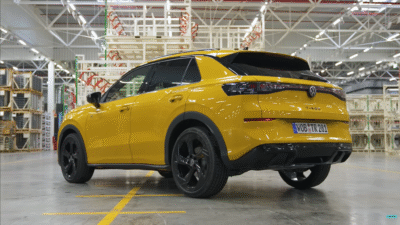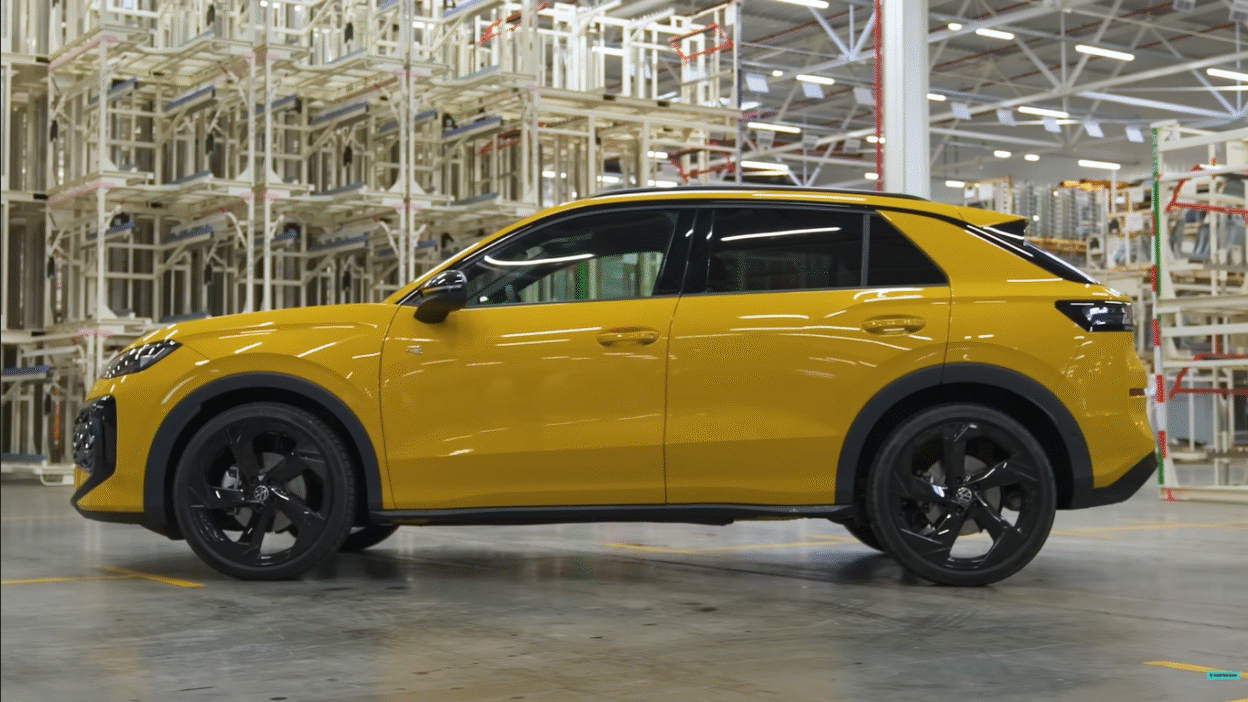
Price: From £30,000 | UK Launch: Early 2026 | Available: Volkswagen dealerships nationwide
TL;DR – Should You Buy the VW T-Roc?
YES, if you want:
- Premium build quality under £40K
- Tiguan tech in a smaller, cheaper package
- Best-in-class interior materials
- Autonomous parking that actually works
- Future-proof hybrid options
- 475L boot space (bigger than most rivals)
- All-wheel drive options (2.0L models)
- Clean, modern design
- Proven reliability platform
- Standard reversing camera + full safety kit
MAYBE NOT, if you need:
- Manual gearbox (DSG only)
- Ultra-sporty handling
- Bargain-basement pricing
Bottom Line: The VW T-Roc 2026 is one of the smartest compact SUV buys in its class. It’s not perfect, but it nails the fundamentals better than most rivals.
Introduction – Why the T-Roc Deserves Your Attention
Look, the compact SUV market is absolutely rammed. You’ve got the Ford Puma, Nissan Juke, Mazda CX-30, Kia Niro, Peugeot 2008… the list goes on.
So why should you care about the VW T-Roc 2026?
Because Volkswagen just fixed every single thing that was wrong with the original. The cheap interior? Gone. The cramped back seat? Sorted. The basic suspension? Upgraded to Tiguan-spec.
This isn’t just a facelift. It’s a complete reimagining of what a compact crossover should be.
I spent time testing the new T-Roc at VW’s plant in Portugal, and I’m genuinely impressed. Here are the 10 reasons why this car should be on your shortlist — and 3 honest reasons why it might not be right for you.
Let’s dive in.
Reason #1: Premium Interior That Finally Feels Like a VW
The original T-Roc’s biggest weakness? Cheap interior plastics that felt more Skoda than Volkswagen.
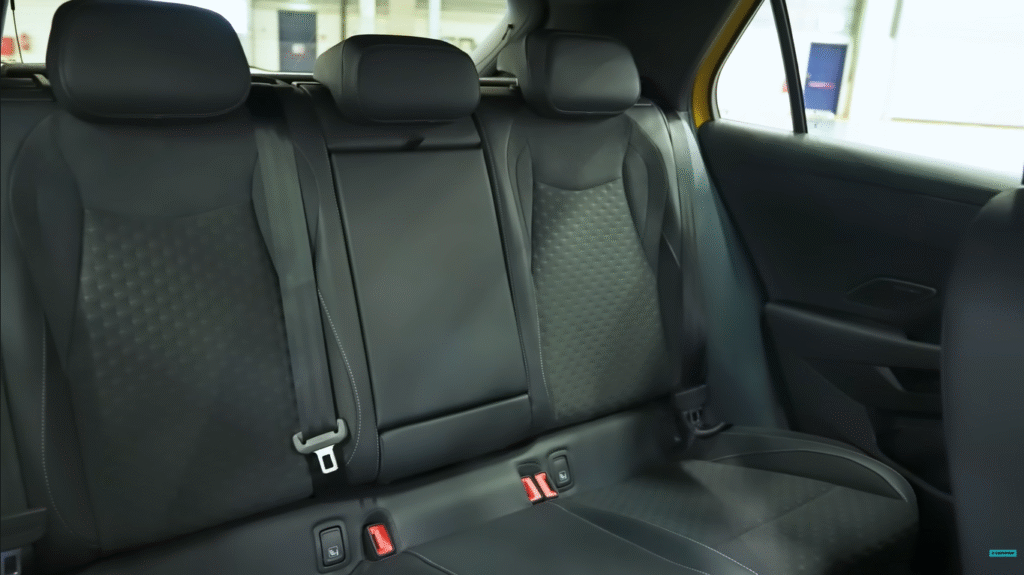
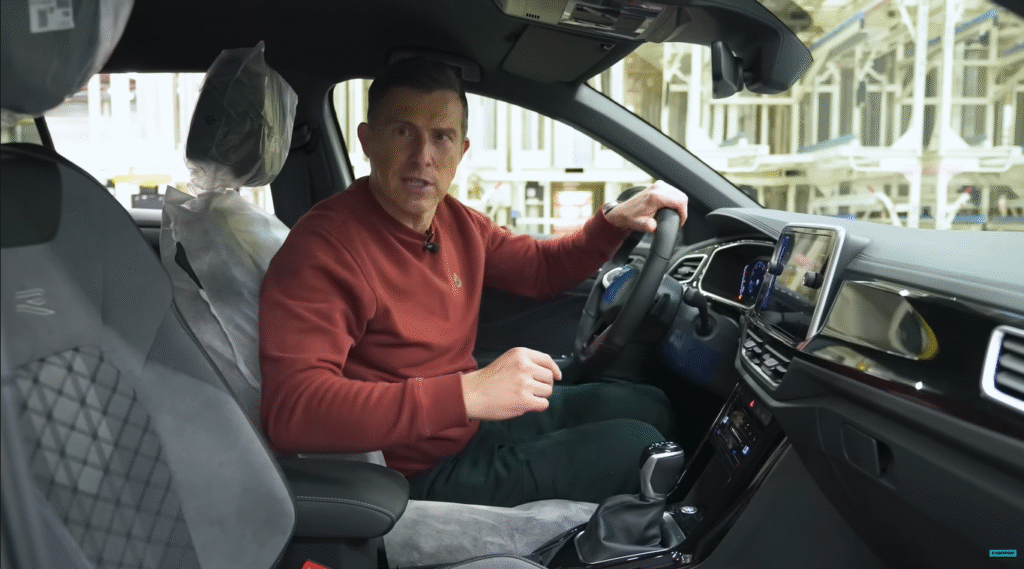
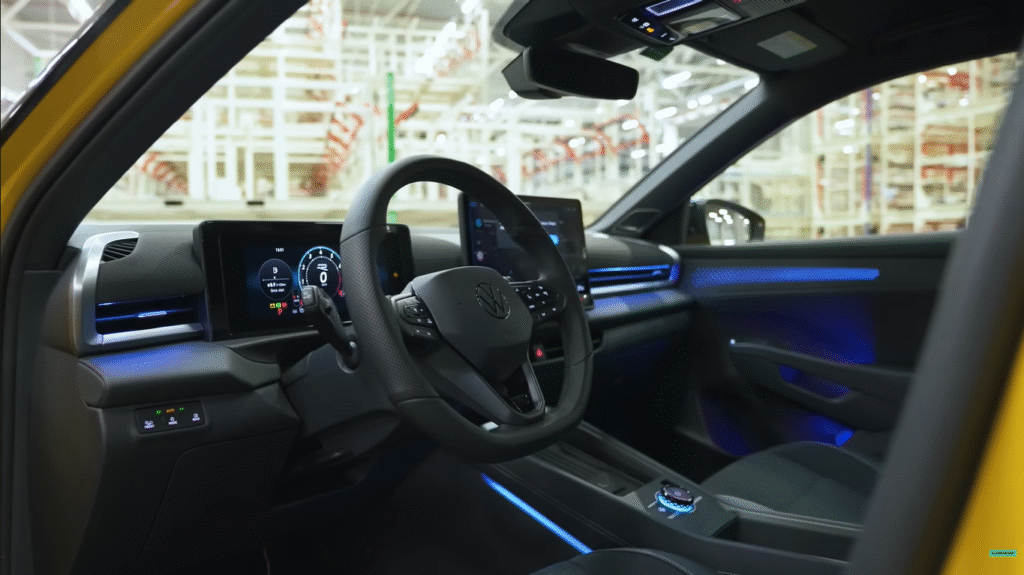
The 2026 model fixes this completely.
What You Get:
- Fabric-wrapped dashboard (a first for VW — yes, really)
- Soft-touch door tops (no more hollow plastic nonsense)
- 12.9-inch infotainment screen on R-Line (10.4″ on base models)
- Digital driver display with configurable views
- Heads-up display (optional)
- Aluminum pedals on R-Line
- Premium seat materials — mix of suede, cloth, and leatherette
The Result? Step inside the 2026 T-Roc and it feels like a £40,000 car, even in mid-spec Life trim. The materials are genuinely impressive, the build quality is solid, and the tech is modern without being overwhelming.
Compare this to a Nissan Juke or Peugeot 2008, and the T-Roc feels a full class above.
Verdict: If interior quality matters to you (and it should), the T-Roc is one of the best in its class.
Reason #2: Built on the Tiguan Platform (Not the Golf)
Here’s the big secret most people don’t know: the old T-Roc was based on the Golf. The new one is built on the Tiguan platform.
And that matters. A lot.
What This Means:
- 12cm longer overall (better proportions, more space)
- 3cm longer wheelbase (more rear legroom)
- Independent rear suspension on all models (the old car had a basic twist beam)
- Better ride quality — feels like a bigger, more expensive car
- Tiguan’s advanced tech — adaptive cruise, lane-change assist, matrix LED headlights
- Wider front track (borrowed from the Passat) — better handling
I parked the old and new T-Roc side-by-side. The difference is immediately obvious. The new car looks more substantial, feels more planted, and drives with more refinement.
Verdict: You’re getting Tiguan-level engineering at Golf prices. That’s a hell of a deal.
Reason #3: Autonomous Parking with Memory (Genuinely Useful)
Most cars have parking assist. Some let you control the car from your phone. The T-Roc 2026 goes further: it can record a parking maneuver and repeat it automatically.
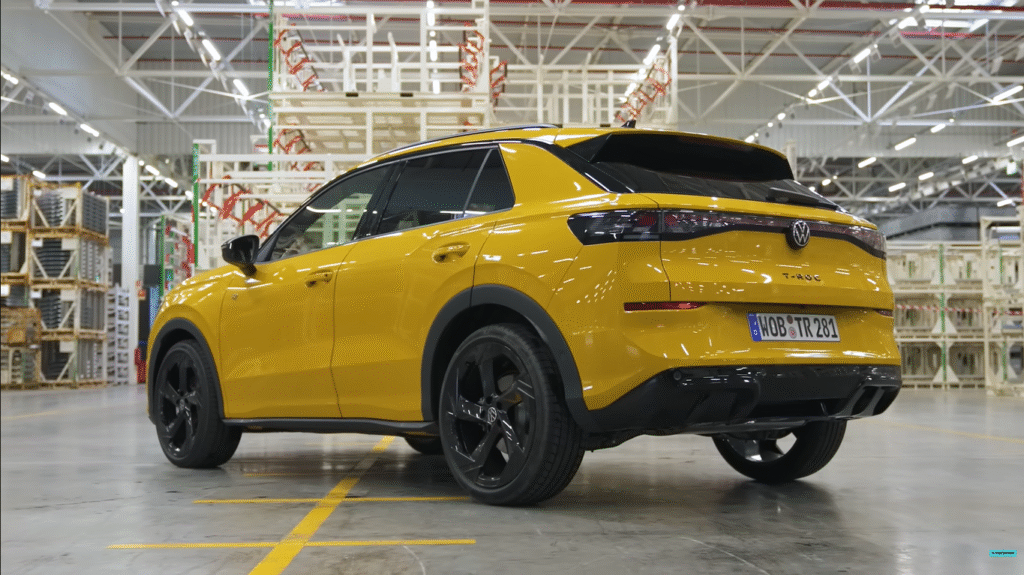
How It Works:
- Manually park your car in a tight spot (awkward driveway, narrow garage, tricky parallel space)
- The car records the exact route — steering angle, speed, distance
- Next time, tap your phone, step out, and the car does it for you
I tested this at VW’s plant. It worked flawlessly for:
- 180° turns to flip the car around
- Reversing through narrow gaps around pillars
- Parallel parking in tight spots
The only limit? The car needs 20cm clearance on either side of the wing mirrors. Reasonable.
Real-World Use Cases:
- Parallel parking in the same tight street spot every day
- Reversing into your driveway without hitting the bins
- Navigating underground car parks where you always scrape something
Verdict: This isn’t a gimmick. It’s genuinely useful tech that saves time and stress.
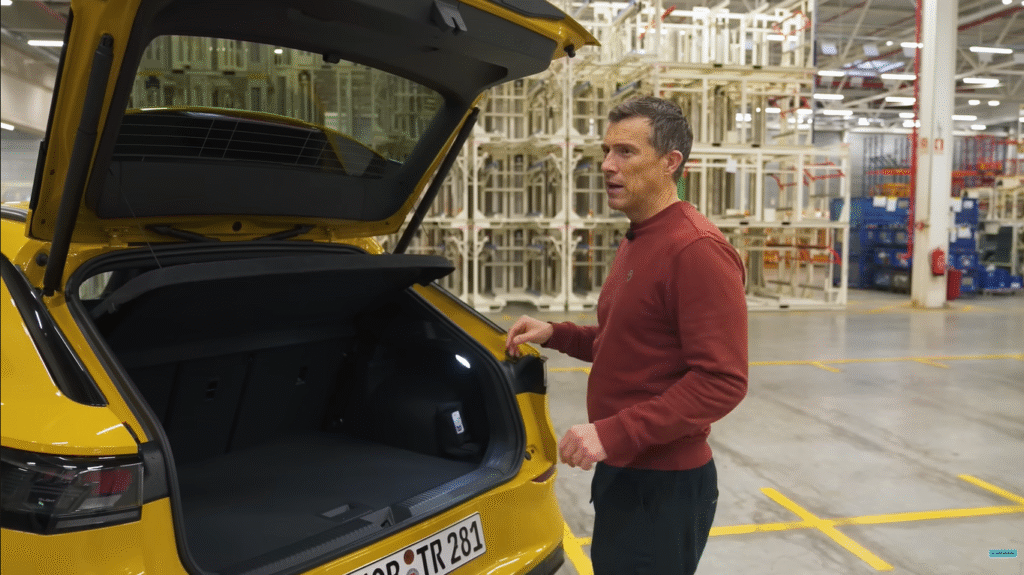
Reason #4: 475L Boot Space (Bigger Than Most Rivals)
The 2026 T-Roc has 475 liters of boot space — that’s 30L more than the old car.
How Does It Compare?
CarBoot SpaceVW T-Roc 2026475LFord Puma456LMazda CX-30430LNissan Juke422LPeugeot 2008434LKia Niro451L
The T-Roc beats nearly all its rivals. Only the Ford Puma comes close (thanks to its clever Megabox storage under the boot floor).
Practical Features:
- Adjustable boot floor — raise it to eliminate the load lip
- Through-loading armrest in the back seat
- Three-way folding rear seats with separate seat belts (they never snag)
- Flat load floor when seats are down
- Front passenger seat folds flat (Life trim only) for really long items
Verdict: If you need a practical family SUV for Ikea runs and holiday luggage, the T-Roc delivers.
Reason #5: Hybrid Powertrains Coming (Future-Proof Choice)
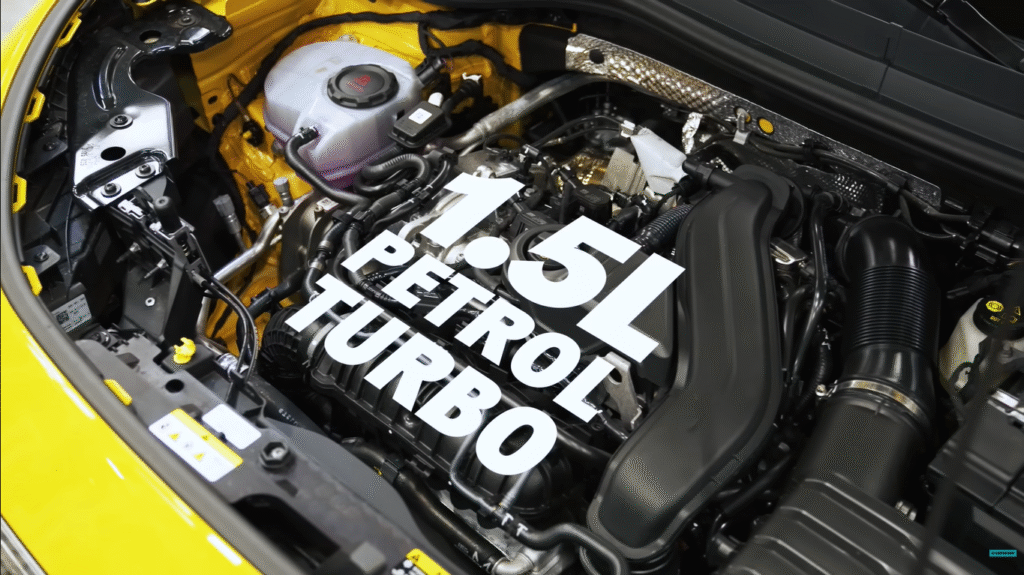
At launch, the T-Roc offers 1.5L mild-hybrid engines (116hp or 150hp). But later in 2026, VW is adding full self-charging hybrid versions with 140hp and 204hp.
Why This Matters:
- Better fuel economy for city driving (expect 55+ mpg)
- Lower running costs than pure petrol
- Smoother power delivery with electric motor assist
- No plug-in hassle — it charges itself like a Toyota Prius
This is the first time VW has ever done self-charging hybrids. They’re betting big on this tech as a bridge between petrol and full electric.
Verdict: If you want maximum efficiency without dealing with charging cables, wait for the hybrid versions. They’ll be worth it.
Reason #6: All-Wheel Drive Options (For Winter or Adventure)
The 1.5L T-Roc models are front-wheel drive. But if you need 4Motion all-wheel drive, VW has you covered:
AWD Models Coming in 2026:
- 2.0L petrol (204hp) — sporty, practical, all-weather capable
- T-Roc R (333hp) — the full hot hatch experience
Why You’d Want AWD:
- Better traction in snow, ice, or heavy rain
- Improved grip on muddy country lanes or gravel driveways
- Slightly better acceleration and cornering stability
- Peace of mind for family road trips
Verdict: If you live in Scotland, rural areas, or just want extra confidence in bad weather, the AWD versions are worth waiting for.
Reason #7: Adaptive Dampers Make It Ride Like a Luxury Car
The R-Line trim offers optional adaptive dampers that transform the driving experience.
Comfort Mode: Over bumps and potholes, the T-Roc feels like a much bigger, more expensive car. It’s cushy, planted, refined — genuinely impressive for a compact SUV.
Sport Mode: Noticeably firmer for twisty roads, but still surprisingly comfortable. The car stays flat in corners with excellent body control.
Do You Need Them? I tested both versions. The standard suspension is still good — better than most rivals. But the adaptive setup is noticeably more cushioning.
My Take: If you’re buying outright and can afford the extra £800-£1,000, get them. If you find a great lease deal without adaptive dampers, don’t worry about it.
Verdict: The ride quality is one of the T-Roc’s biggest strengths, especially with adaptive dampers.
Reason #8: Matrix LED IQ.Light Headlights (Best-in-Class)
The T-Roc 2026 offers Matrix LED IQ.Light headlights (standard on R-Line, optional on lower trims).
What They Do:
- Automatically adapt to oncoming traffic (no blinding other drivers)
- Light up road signs for easier reading
- Adjust beam pattern for corners and roundabouts
- Provide full-beam visibility without manually dipping
I drove the T-Roc at night on Portuguese backroads. The difference between standard LED and Matrix LED is huge. You see everything — road edges, pedestrians, cyclists — with clarity and confidence.
Verdict: If you do a lot of night driving, especially on country roads, the Matrix LEDs are worth every penny.
Reason #9: 7-Speed DSG Automatic on All Models (Smooth, Efficient)
Every T-Roc comes with a 7-speed DSG dual-clutch automatic gearbox. No manual option, but honestly? You won’t miss it.
Why DSG is Great:
- Smooth shifts once you’re moving
- Quick responses when overtaking or accelerating
- Better fuel economy than a traditional automatic
- Sport mode for more aggressive gear changes
The Only Downside? At very low speeds (car parks, stop-start traffic), the DSG can be slightly hesitant. It’s a minor quirk, not a dealbreaker.
Verdict: For 95% of driving situations — motorways, A-roads, town driving — the DSG is excellent.
Reason #10: Standard Safety Kit and 5-Star Euro NCAP Rating
The T-Roc 2026 comes loaded with safety tech as standard:
Driver Assistance:
- Adaptive cruise control with lane-keeping assist
- Automatic lane changes (just indicate and the car moves over)
- Exit warning system (prevents you opening doors into cyclists)
- Autonomous emergency braking
- Reversing camera (standard on all UK models)
- Front and rear parking sensors
- Blind-spot monitoring
Expected Rating: The old T-Roc scored 5 stars in Euro NCAP testing. The 2026 model should match or beat this, thanks to improved safety tech.
Verdict: If you’re buying a family SUV, peace of mind matters. The T-Roc delivers.
Bonus Reason: Hidden Easter Eggs Make It Fun
VW designers had fun with this car. Look closely and you’ll find:
- Tiny T-Roc concept sketch in the windshield trim
- Little swimmers in the wireless charging pad cooling lanes
- More hidden details throughout the cabin
It’s a small touch, but it shows VW put thought into making this car feel special.
Verdict: It’s the little things that make you smile every time you get in.
How Does the T-Roc Compare to Rivals?
FeatureVW T-Roc 2026Ford PumaMazda CX-30Nissan JukeStarting Price£30,000£27,000£28,000£24,000Boot Space475L456L430L422LHybrid OptionYes (2026)Yes (now)NoNoAWD OptionYes (2.0L)NoYesNoInterior QualityExcellentGoodExcellentAverageInfotainment12.9"12.8"8.8"12.3"Ride ComfortExcellentGoodVery GoodFirm
The Verdict:
- Best overall: VW T-Roc (quality, tech, space)
- Best value: Ford Puma (slightly cheaper, practical)
- Most fun to drive: Mazda CX-30 (sharper handling)
- Cheapest: Nissan Juke (but you get what you pay for)
Final Verdict – Should You Buy the VW T-Roc 2026?
Yes. Absolutely.
The VW T-Roc 2026 is one of the smartest compact SUV buys you can make. It’s not the cheapest, not the most exciting to drive, and not the most fuel-efficient (yet).
But it nails the fundamentals:
- Premium interior that feels like a more expensive car
- Tiguan-based platform with excellent ride quality
- Practical 475L boot that beats most rivals
- Advanced tech like memory parking and Matrix LED lights
- Future-proof hybrids coming in 2026
- AWD options for all-weather confidence
Who Should Buy It:
- Families who want space, comfort, and quality
- First-time SUV buyers stepping up from a Golf or Focus
- Anyone who values interior quality over badge snobbery
- Buyers who want modern tech without electric charging hassles
Who Should Skip It:
- Manual gearbox purists
- Bargain hunters on a tight budget
- Drivers who prioritize sporty handling over comfort
My Rating: 8.5/10
The VW T-Roc 2026 is an excellent compact SUV that does almost everything right. It’s not perfect, but it’s damn close.
Where to Buy the VW T-Roc 2026
UK Launch: Early 2026 (likely February/March)
Pre-Orders: Expected late 2025
Where to Check: Volkswagen dealerships, Carwow for best lease deals
Pro Tip: The old T-Roc is still available with decent discounts. If you’re buying in late 2025, you might snag a bargain on outgoing stock. But if you can wait until early 2026, the new model is worth it for the interior upgrade alone.
Thinking about buying the VW T-Roc 2026? What’s your biggest reason for considering it — or your biggest concern? Drop your thoughts in the comments below.