The Vivo X300 series has stirred up the photography world with bold claims about smartphone imaging capabilities. After the impressive X200 series last year, many wondered how much further smartphone photography could evolve. The X300 Pro attempts to answer that question by directly challenging DSLR territory with professional-grade camera hardware and an innovative Zeiss telephoto extender kit.
Revolutionary Camera Hardware
Triple Camera Setup That Means Business
The Vivo X300 Pro features a flagship-grade triple camera system designed to compete with professional equipment. The main camera sports a 50MP Sony LYT 828 sensor with an f/1.57 aperture and gimbal-grade stabilization, handling all 1X and 2X photography. This sensor delivers exceptional low-light performance and natural color reproduction that rivals traditional cameras.
The standout feature is the 200MP Zeiss APO telephoto lens with an f/2.67 aperture. This periscope telephoto camera activates at 3.5X zoom (85mm equivalent) and becomes the primary sensor for all portrait photography. With CIPA 5.5-level stabilization, it maintains sharpness even at extreme zoom levels. The system also includes a 50MP ultra-wide-angle lens with f/2.0 aperture and a 50MP front-facing camera, both delivering flagship-quality results.
The Game-Changer: Zeiss 2.35x Telephoto Extender Kit
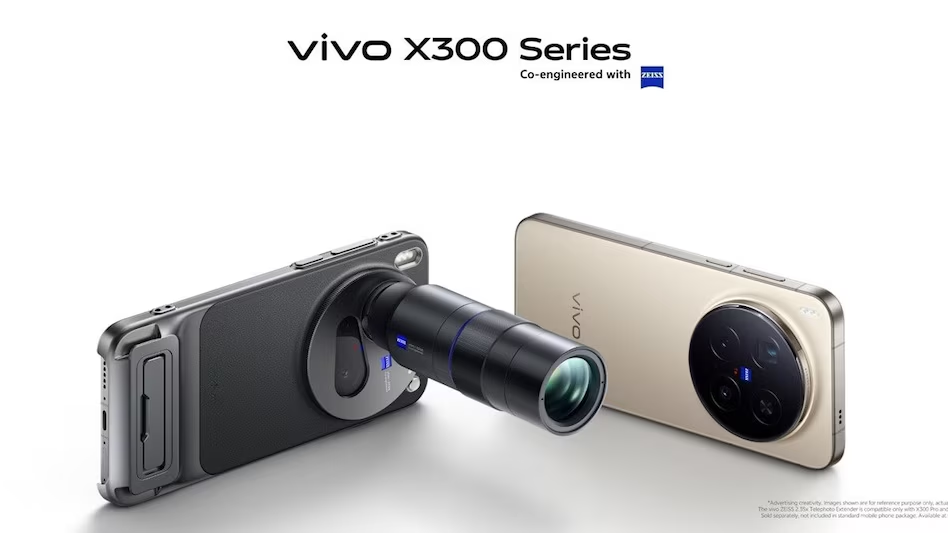
What truly sets the X300 Pro apart is its compatibility with the Zeiss 2.35x Telephoto Extender Kit, sold separately for Rs. 18,999. This professional-grade accessory attaches directly to the phone like a DSLR lens, complete with dot-matching alignment similar to Canon or Nikon systems. When mounted, it provides an impressive 8.5x optical zoom capability.
The extender features premium build quality with substantial weight, delivering a fixed focal length setup without digital zoom. It excels at capturing distant subjects with DSLR-like detail and natural background separation, making it ideal for wildlife photography, sports, and portrait work. Users can capture moon craters with stunning clarity and shoot professional-grade portraits from significant distances.
DSLR Comparison: Real-World Testing
Image Quality Face-Off
When compared side-by-side with a Sony A7C full-frame DSLR using a 50mm lens, the X300 Pro held its ground impressively. The DSLR was manually configured while the smartphone operated in auto mode, creating a fair real-world comparison.
The X300 Pro’s photos appear pre-edited with boosted colors that look appealing straight out of the camera. In contrast, DSLR RAW files require post-processing to achieve similar visual impact. For skin tones, the X300 Pro delivered natural, accurate reproduction without artificial smoothing. Detail capture rivals DSLR output, with individual hair strands and fabric textures clearly visible even after zooming.
Low-Light Performance
In challenging low-light conditions using only street lamps, the X300 Pro demonstrated exceptional capabilities. Both 50mm and 85mm portrait shots captured at night showed impressive detail retention and proper light balancing. The phone’s computational photography powered by the VS1 imaging chip processes night shots to deliver clean, bright images with minimal noise.
The flash photography results proved even more impressive, with the reviewer recommending flash use for optimal detail capture. The adaptive zoom flash adjusts brightness based on focal length, covering 24mm, 50mm, and 85mm effectively.
Video Recording Capabilities
The X300 Pro supports 4K 120fps video recording with Dolby Vision HDR and 10-bit Log video. When recording with the telephoto extender attached, the footage delivers a professional cinematic feel that’s difficult to distinguish from DSLR output. The gimbal-grade stabilization ensures smooth footage even during handheld recording.
Advanced Photography Features
Professional Software Capabilities
The phone includes specialized photography modes covering Portrait, Landscape, Night, Stage Photography, and Street Photography. Multiple photography styles are available including Vivid, Texture, and Black & White, with the monochrome mode delivering particularly cinematic results.
The Zeiss Mirotar Telephoto Style mode creates distinctive circular bokeh effects in the background, making subjects stand out dramatically. An AI Landscape Master mode transforms ordinary photos through various visual styles including Clear Sky, Evening Glow, Summer, Cyber, Snowy Town, Animation, and Winter.
Computational Photography Advantages
The V3+ chip handles dedicated camera processing, working alongside the Dimensity 9500 processor to deliver fast, high-quality image processing. This dual-processor approach allows the X300 Pro to capture and process multiple high-resolution photos and videos without lag.
Features like AI telephoto tracking maintain focus on distant moving subjects up to 20x zoom. The telephoto bird and flower photography mode uses advanced autofocus algorithms specifically optimized for nature photography.
Design and Build Quality
Premium Construction
Both the X300 and X300 Pro feature flat design elements with curved glass on the camera module, providing exceptional grip comfort. The coral velvet glass technique on the back panel adds to the premium feel. The X300 Pro measures 161.98 x 75.48 x 7.99mm and weighs 226 grams, featuring IP69 rating for dust and water resistance.
The camera-inspired cover case transforms the phone into something resembling professional camera equipment. It includes interchangeable rings in different finishes and a built-in stand for versatile shooting angles. When users attach the Zeiss extender, the setup genuinely looks and feels like professional photography gear.
Display Excellence
The X300 Pro sports a 6.78-inch LTPO AMOLED display with 1.5K resolution (2800 x 1260 pixels) and a 120Hz refresh rate. With a 94.85% screen-to-body ratio and minimal bezels, it provides an immersive viewing experience. Peak brightness reaches 4500 nits, ensuring excellent outdoor visibility.
Smart Eye Protection 3.0 reduces eye strain during extended use. Colors appear natural rather than oversaturated, with clean, sharp details perfect for content consumption on Netflix, Amazon Prime, or YouTube.
Performance and Software
Flagship-Grade Power
The MediaTek Dimensity 9500 processor delivers exceptional performance across all tasks. Combined with 16GB LPDDR5X RAM and 512GB UFS 4.1 storage, the phone handles intensive photography workflows without slowdowns.
Face unlock and fingerprint scanning operate with impressive speed. The haptic feedback throughout the system feels premium and responsive, enhancing the overall user experience.
OriginOS 6 Experience
The X300 Pro runs Android 16 with OriginOS 6, Vivo’s new global interface replacing FunTouch OS. This software brings smooth animations, a redesigned control center, and reactive Origin Island notifications.
The AI-powered global search learns user patterns to suggest relevant apps and content. Office Kit integration allows seamless connectivity between Vivo phones, laptops, and watches, while Tap & Share works with iPhones and MacBooks.
Vivo promises 5 years of major Android updates and 7 years of security updates, ensuring long-term device viability.
Battery and Charging
The X300 Pro packs a substantial 6510mAh silicon carbon battery that easily lasts a full day and a half with moderate use. The silicon carbon technology allows for high capacity while maintaining a slim 7.99mm profile.
Charging speeds include 90W wired fast charging and 40W wireless charging. The wireless charging capability at this speed is particularly impressive for a flagship device.
The Verdict: Smartphone vs DSLR
Where X300 Pro Excels
The Vivo X300 Pro challenges traditional photography boundaries in several key areas. Portability and convenience far surpass DSLR setups, while computational photography delivers instantly shareable, polished images without post-processing. The telephoto extender provides genuine optical quality enhancement rather than just digital zoom trickery.
For content creators focused on social media, travel photography, and video recording, the X300 Pro offers a compelling all-in-one solution. The 4K 120fps video capabilities with professional stabilization rival dedicated video cameras.
DSLR Advantages Remain
Professional cameras still maintain advantages in sensor size, lens ecosystem versatility, and ultimate image quality for large prints. DSLRs offer superior manual controls and RAW file flexibility for professional post-processing workflows.
However, the gap continues narrowing with each smartphone generation. The X300 Pro demonstrates that for many photography scenarios, especially those requiring portability and instant sharing, smartphones have reached professional-grade capabilities.
Pricing and Availability
The Vivo X300 Pro is priced at Rs. 1,09,999 for the 16GB + 512GB model. The Zeiss 2.35x Telephoto Extender Kit costs an additional Rs. 18,999. Available in Elite Black and Dune Gold colors, the phone launched on December 2, 2024, with sales starting December 10th through Vivo India eStore, Amazon, Flipkart, and offline retailers.
The standard X300 offers similar capabilities with a 200MP main camera and starts at Rs. 75,999, providing flagship photography in a more compact form factor.
Final Thoughts
The Vivo X300 Pro doesn’t completely replace DSLRs for professional photographers who need absolute image quality and extensive lens options. However, it proves that smartphones have evolved to a point where they can produce DSLR-comparable results in most everyday scenarios.
With the revolutionary Zeiss telephoto extender, professional-grade camera hardware, and sophisticated computational photography, the X300 Pro represents a significant milestone in mobile imaging technology. For photographers who value convenience, immediate sharing capabilities, and impressive image quality, this smartphone delivers an experience that genuinely competes with traditional camera equipment.
The question is no longer whether smartphones can replace DSLRs, but rather which tool best serves your specific photography needs. The Vivo X300 Pro makes a compelling argument that for many users, that tool is now a smartphone.