TL;DR — Quick Verdict
The sub-₹20,000 segment has gotten messy in 2026. Prices that used to get you a solid phone now barely cover a mid-range one, thanks to a global RAM and component shortage driven by the AI boom. Some “new” launches are actually downgrades from their predecessors. After going through the market properly, my pick for best all-rounder is the Realme P4 (slightly over budget, but worth stretching for). Best clean-software pick: Moto G57 Power. Best Samsung option: Galaxy M36/F36. And if you can still find it in stock, the CMF Phone 2 Pro is the smartest buy in this entire price bracket.
Why Is It So Hard to Find a Good Phone Under ₹20,000 Right Now?
Let’s address the elephant in the room first, because this completely changes how you should be shopping in 2026.
Phones that used to retail around ₹20,000 are now creeping toward ₹25,000–₹30,000. And it’s not just a price problem — some new phones launching at this price point are actually side-grades or downgrades compared to their own previous generation.
The root cause is a global RAM crisis. With everyone consuming and running AI tools heavily, memory chip demand has spiked hard, and smartphone manufacturers are absorbing that cost — or cutting corners to avoid passing it on to you.
It’s gotten serious enough that smartphone CEOs are publicly telling buyers: if you need a phone, buy now. Pricing is expected to climb further in the coming months — and not by small margins either. We’re talking jumps of ₹3,000–₹4,000, not gradual ₹500–₹1,000 increases.
Nothing’s sub-brand CMF made headlines by announcing they won’t be launching any new phone this year at all, citing the same pricing pressure. So if you were waiting for the CMF Phone 3 Pro — that wait just got indefinite.
Bottom line: if you’re planning to buy a phone in the next 2–3 months, don’t wait. Buy now.
This guide is not sponsored. Every recommendation here is based purely on what’s actually good value right now — categorized by what you actually need the phone for.
Best Overall Pick: Realme P4 (Stretch Your Budget by ₹1,000)
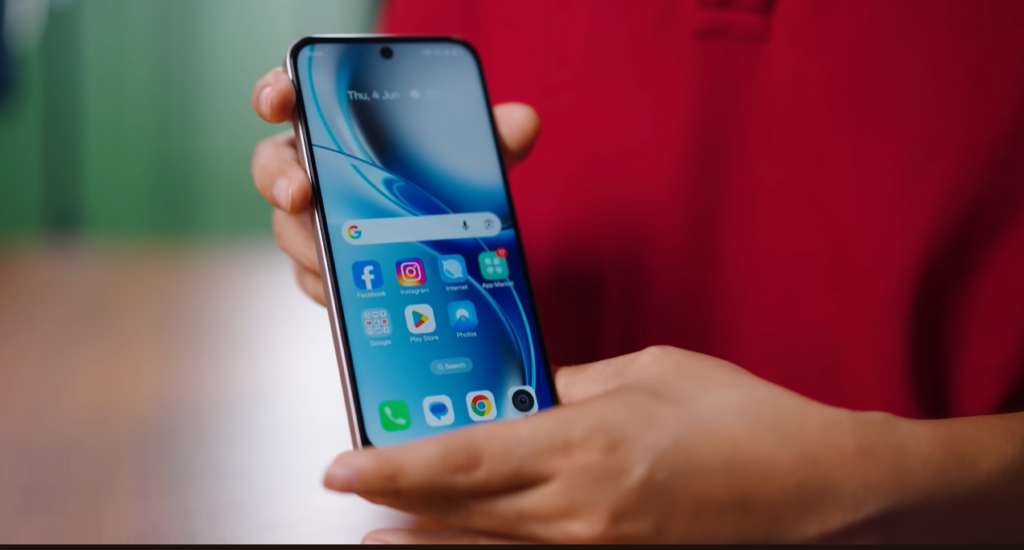
If I were spending my own money under ₹20,000 today, I’d actually push the budget slightly and go for the Realme P4.
It originally launched under ₹20,000 but has crept up to around ₹22,000. With bank offers and discounts, you can usually get it down to ₹20,500–₹21,000. That extra ₹1,000 is genuinely worth it — there’s no better phone at the ₹22,000 mark right now.
What makes it excellent:
The Dimensity 7400 chipset delivers a smooth, fast day-to-day experience, helped along by Realme UI running well on LPDDR4X RAM and UFS 3.1 storage. It pulls an AnTuTu score of roughly 7–8 lakh, which is genuinely impressive for this price bracket.
The display is the real standout — a 144Hz AMOLED panel. In 2026, most brands are cutting AMOLED out of this segment entirely and shipping IPS LCD instead. Getting AMOLED here is rare and valuable.
Camera-wise, you get a 50MP main sensor plus an ultrawide lens — something most competitors skip at this price. There’s also a 16MP front camera, a 7000mAh battery, and 80W fast charging. For the price, it’s one of the most uncompromised phones available.
One thing to do immediately after buying: Realme phones ship with several pre-installed apps and bloatware/games you don’t need. Uninstall them right away — the phone runs noticeably cleaner afterward.
Heads up on the Realme P4x: This is a cost-cut variant with the same chipset but a downgraded camera setup (no ultrawide, only an 8MP front camera), slower charging, and — critically — an LCD instead of AMOLED. Only consider this if your budget is extremely tight; otherwise, the standard P4 is the better buy.
Best Clean Software Pick: Moto G57 Power
If you want a phone with minimal bloatware and a battery that genuinely lasts, this is your pick.
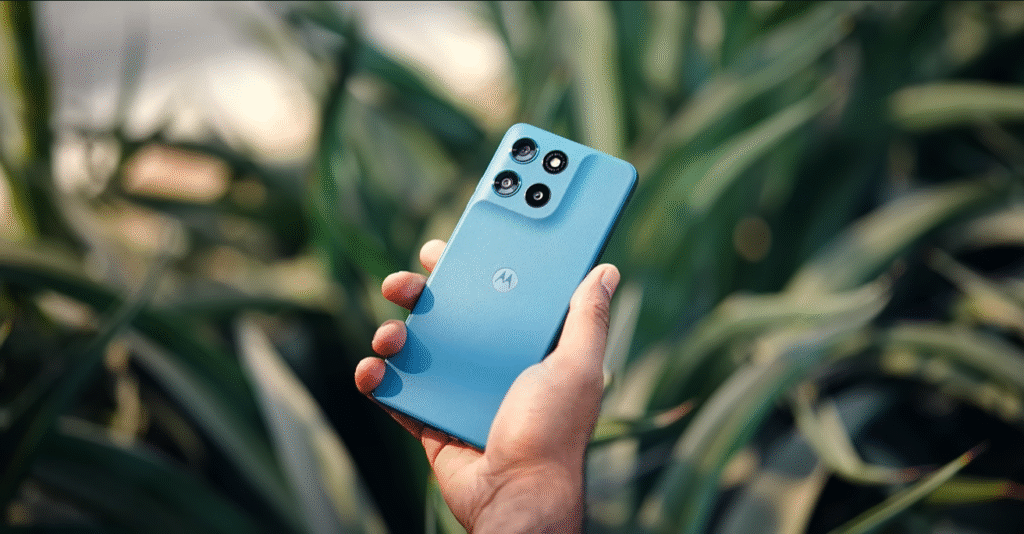
It runs on the Snapdragon 6s4 chipset, scoring around 5–6 lakh on AnTuTu — solid for everyday use. The display is a 120Hz LCD at 6.7 inches; it’s not AMOLED, but it’s a genuinely good-quality LCD panel, so you won’t feel shortchanged in daily use.
Camera setup includes a 50MP Sony LYT-600 sensor, an 8MP ultrawide, and an 8MP front camera. The battery is a 7000mAh cell with 33W charging.
Motorola’s biggest strength has always been near-stock, clean software — and that holds true here. Combined with the large battery, this is the phone to pick if smooth day-to-day usability matters more to you than flashy specs.
Originally priced around ₹15,000, it’s now sitting closer to ₹17,000 with offers — still solid value.
Best Unique Design Pick: Tecno Pova 7 Pro
If you want something that looks genuinely different from the typical slab-design phone flooding this segment, look at the Tecno Pova 7 Pro.
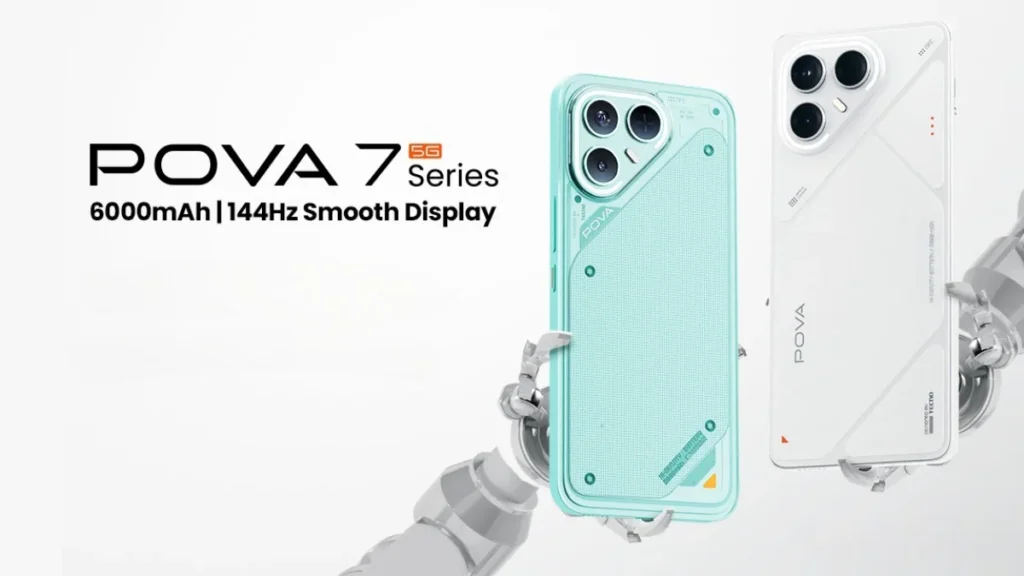
I know — Tecno isn’t a brand most people instinctively trust. But this one earns its spot. It runs the Dimensity 7300 Ultimate chipset, pulling 7.2–7.5 lakh on AnTuTu — a respectable, competitive score.
The display is a 1.5K resolution AMOLED panel at 144Hz refresh rate — genuinely excellent for this price range. RAM is LPDDR5 paired with UFS 2.2 storage, so day-to-day performance is decent, even if not class-leading.
Camera setup is a 64MP main sensor, 8MP ultrawide, and 13MP front camera — respectable, gets the job done without complaints. Battery is 6000mAh with 45W charging, and it even supports wireless charging — a rare inclusion at this price.
The design itself stands out with rear LED lighting accents, giving it a distinct look compared to everything else in this list. Pricing sits around ₹18,000–₹19,000, occasionally lower with offers.
Good for: Buyers who want something different-looking and don’t mind stepping outside the mainstream brand comfort zone.
Best “Safe Brand” Pick: Samsung Galaxy M36 / F36
If you (or your parents) only trust Samsung — and let’s be honest, a lot of households do — this is the pick.
The M36 and F36 are essentially the same device sold under different names for different retail channels. Pick whichever is cheaper or available to you.
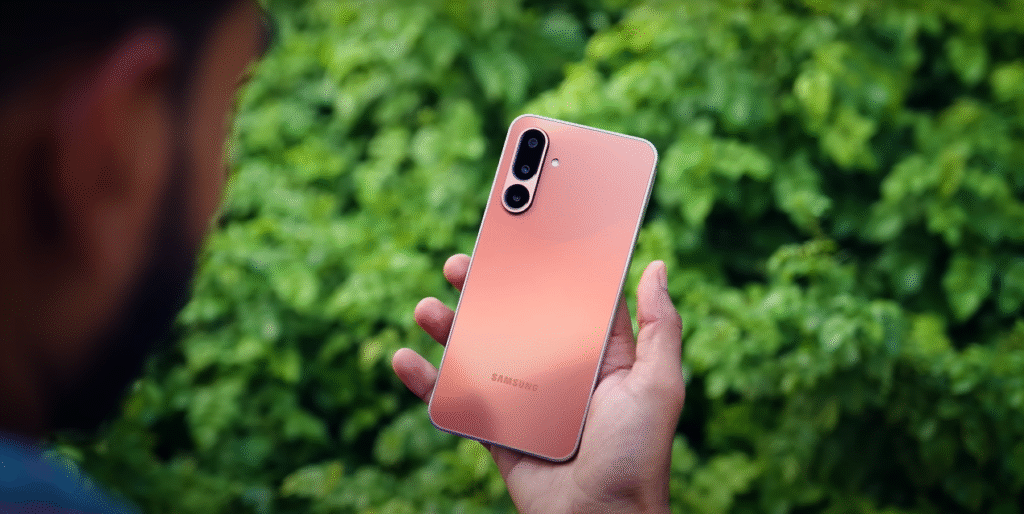
This phone’s price has actually come down recently, and with most other phones in this segment getting more expensive, the M36/F36 has become significantly more value-for-money by comparison.
It runs the Exynos 1380 chipset, scoring around 6 lakh on AnTuTu. The display is a Super AMOLED panel at 120Hz — proper Samsung display quality, no compromises there.
Camera setup is comprehensive: 50MP OIS-enabled main camera, 8MP ultrawide, 2MP macro, and 13MP front camera — one of the most complete camera setups in this entire list.
Yes, the Exynos 1380 isn’t the most exciting chipset on paper, but at this price, it delivers a genuinely good experience. And here’s the real selling point: 6 years of software and security updates — practically unheard of in this price bracket. If long-term software support and safety matter to you, nothing beats this phone right now.
Pricing has settled around ₹17,000–₹18,000, which is fantastic value given everything you’re getting.
Best Gaming Pick: Infinix GT30
Want something that looks and feels gaming-focused? The Infinix GT30 uses the same chipset as the Realme P4, pulling a similar 7.5 lakh AnTuTu score — translating to roughly 90fps in most games.

The display runs at 144Hz refresh rate with 1.5K resolution, and storage is UFS 2.2. Camera setup is more basic — a single rear camera and single front camera, though decent quality for what they are.
Honestly, my personal preference still leans toward the Realme P4, since its software experience is more polished. But if you specifically want a phone that looks and feels gaming-oriented, the GT30 is a legitimate pick and won’t disappoint.
Best Budget Pick for Parents/Basic Use: Poco M7 Pro (~₹15,000)
If your budget is strictly around ₹15,000 — say, you’re buying this for a parent or someone with basic usage needs — go with the Poco M7 Pro.
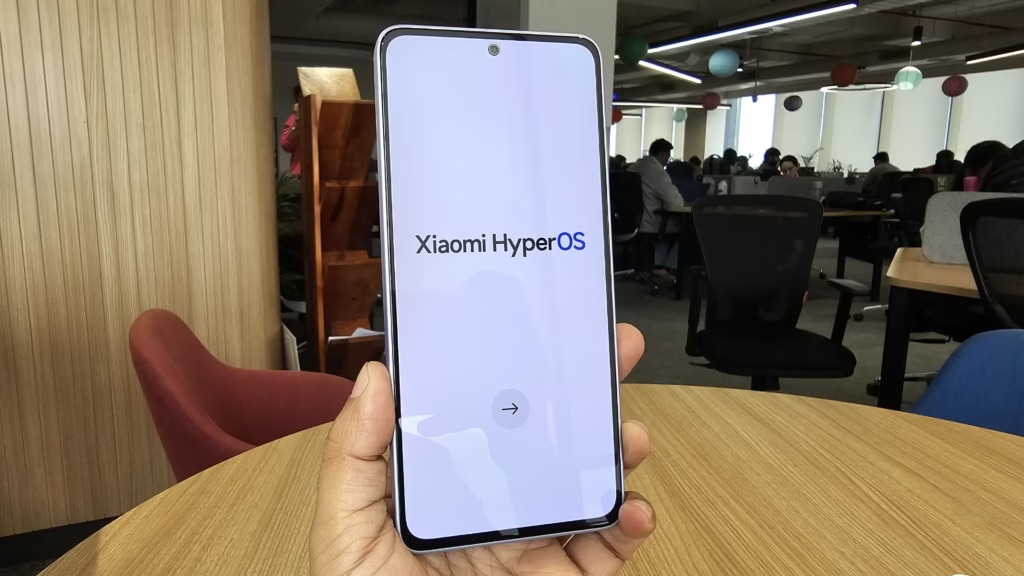
It runs the Snapdragon 6s3 chipset, scoring around 5 lakh on AnTuTu — not a powerful processor, but more than enough for calls, WhatsApp, browsing, and light usage. The display is a Full HD LCD panel at a 144Hz refresh rate. The camera is a 50MP main sensor with an 8MP front camera.
The standout feature is the 7000mAh battery — long-lasting and low-maintenance, exactly what you want in a phone for someone who doesn’t need heavy performance but does need reliability.
The One to Grab If You Find It in Stock: CMF Phone 2 Pro
If you can still find this phone in stock anywhere around ₹20,000 — buy it without thinking twice. As of now, nothing beats it at this price.
Here’s why: it runs the Dimensity 7300 Pro chipset (ignore the “Pro” naming convention — the performance backs it up), scoring around 7.5 lakh on AnTuTu. The display is a 6.7-inch, 120Hz AMOLED panel.
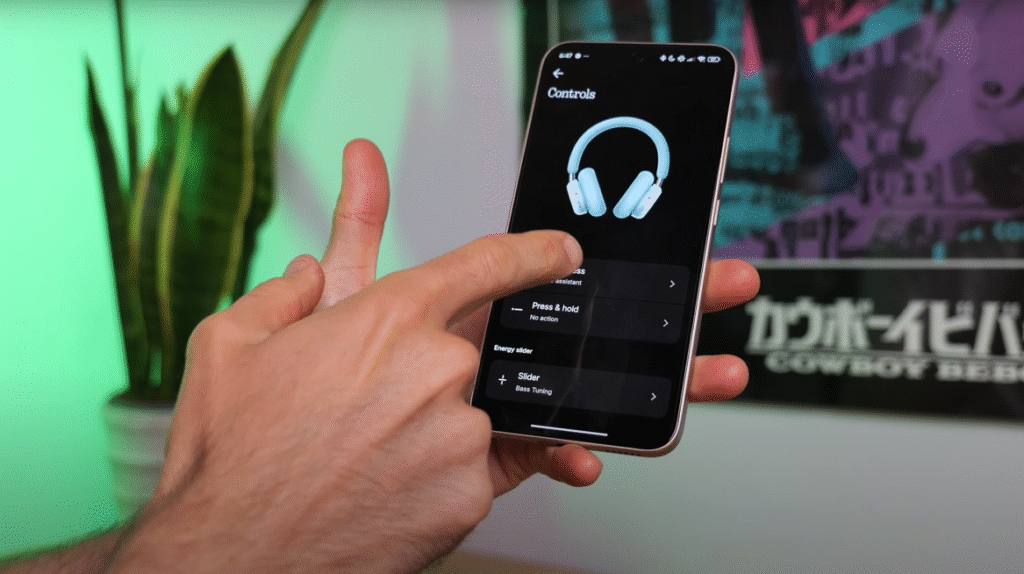
The software experience is genuinely one of the best in this entire price segment — easily top three among every phone covered in this guide, possibly the single best.
Camera setup is where it really shines: a 50MP main camera, a 50MP 2x telephoto camera, an 8MP ultrawide, and a 16MP front camera. A dedicated telephoto lens at this price point is essentially unheard of — most competitors don’t even offer an ultrawide, let alone telephoto plus ultrawide together.
The only catch: battery is 5000mAh, smaller than the 7000mAh cells common in this segment now. It’ll comfortably get you through a full day, but don’t expect the 1.5-day stamina some competitors offer.
If you can find this one in stock, it’s the smartest buy on this entire list.
Quick Comparison: Which Phone Should You Pick?
| Need | Best Pick | Why |
|---|---|---|
| All-round best phone | Realme P4 | AMOLED + ultrawide + fast charging, best balance overall |
| Clean software + battery | Moto G57 Power | Near-stock Android, reliable battery life |
| Unique design | Tecno Pova 7 Pro | AMOLED 1.5K display, LED design accents |
| Trusted brand / long support | Samsung M36 / F36 | 6 years of updates, Super AMOLED display |
| Gaming-focused | Infinix GT30 | Same chip as P4, gaming-style design |
| Strict ₹15,000 budget | Poco M7 Pro | Big 7000mAh battery, dependable basics |
| Best value if in stock | CMF Phone 2 Pro | Telephoto + ultrawide combo, top-tier software |
My Honest Final Take
If you’re buying a phone under ₹20,000 in 2026, understand this clearly: prices are rising, and waiting will likely cost you more, not less. The component shortage isn’t a short-term blip — it’s reshaping this entire price segment.
My personal recommendation remains the Realme P4 — even if it means stretching your budget by ₹1,000. It’s the most well-rounded phone in this list, with no major compromises anywhere. But if the budget is truly fixed at ₹20,000 and you spot a CMF Phone 2 Pro in stock, that becomes the smarter pick thanks to its camera setup and software polish.
Whatever you choose from this list, you’re not making a wrong call. Every phone here was selected after going hands-on with the actual market — not just spec sheets.
A global RAM and memory chip shortage — driven largely by surging AI infrastructure demand — has pushed component costs up sharply, forcing smartphone brands to either raise prices or cut specs to maintain price points.
The Realme P4 offers the best all-round experience, combining a 144Hz AMOLED display, dual rear cameras, and fast charging. If strictly staying under ₹20,000, the CMF Phone 2 Pro (where available) is the strongest pick.
Reviewed by Reo R — Tech & Auto Reviewer with 6+ years of hands-on experience. My PitShop delivers honest reviews with zero brand bias.
Disclosure: This guide reflects current market pricing and availability as of June 2026 and is not sponsored by any brand mentioned.