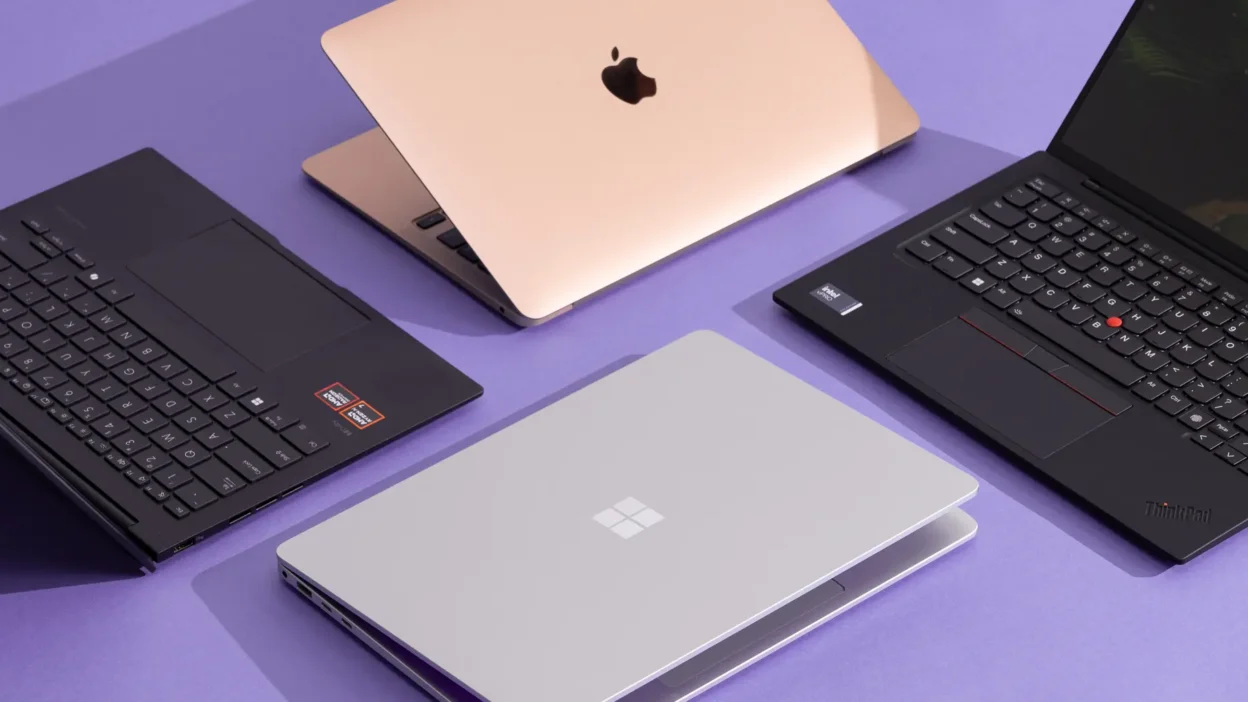
CES 2026 is officially in the books, and while this year felt less revolutionary and more evolutionary compared to previous years, there’s one massive game-changer that makes 2026 genuinely exciting for laptop buyers: Intel’s Panther Lake processors. These new Core Ultra Series 3 chips, built on Intel’s cutting-edge 18A process, promise to transform what thin-and-light laptops can do—finally delivering serious performance for intensive programming, video editing, and even gaming while staying cool, quiet, and energy-efficient.
After hands-on testing at CES 2026 and analyzing over 200+ laptop announcements, we’ve compiled the definitive top 10 laptops launching this year. Whether you’re a student, creator, programmer, gamer, or business professional, this guide will help you find the perfect machine.
🎯 QUICK TAKEAWAYS
The Big Story: Intel Panther Lake processors are the real deal
Best Overall: Lenovo Yoga Slim 7i Ultra
Best for Creators: Lenovo Yoga Pro 7i
Best Business Laptop: ASUS ExpertBook Ultra
Budget Winner: HP OmniBook Ultra
Gaming Champ: MSI Stealth 16 (redesigned)
Key Trends in 2026:
- Panther Lake CPUs deliver 60% more multi-threaded performance at same power
- Tandem OLED displays becoming mainstream (brighter, more efficient)
- Haptic trackpads replacing mechanical ones
- 12-core Xe3 integrated graphics rivaling dedicated GPUs
- Prices expected to rise (tariffs, component costs)
- AMD Strix Halo APUs finally in real laptops
What Makes 2026 Different From 2025?
Intel Panther Lake: The Revolution
This isn’t just another CPU refresh. Panther Lake represents Intel’s first client processors built on their revolutionary 18A manufacturing process—the most advanced semiconductor node developed and manufactured in the United States.
Key Improvements:
Performance Leap:
- 60% more multithreaded performance at the same power versus the previous generation
- Up to 16 CPU cores (4 P-cores + 8 E-cores + 4 LP E-cores)
- Theoretical max sustained power: 45W (vs 28W for Lunar Lake)
Graphics Power:
- Up to 12-core Xe3 integrated GPU (Arc graphics)
- 73% better gaming performance on average vs AMD’s HX 370 processor
- Performance approaching dedicated NVIDIA RTX 4060 in some configurations
AI Capabilities:
- Up to 180 total TOPS for AI workloads with 50 TOPS coming from the NPU and 120 TOPS from the Arc graphics
- 4.3x the LLM performance of AMD HX 370
- Multi-frame generation and XeSS 3 support
Battery Life:
- Up to 27 hours of battery life when streaming Netflix
- Same great efficiency as Lunar Lake despite more performance
What This Means for You:
Thin-and-light Ultrabooks can now handle tasks previously requiring bulky gaming laptops:
- 4K video editing in DaVinci Resolve
- Complex programming with multiple VMs running
- AAA gaming at medium-high settings
- Running local AI models
And they’ll do it while staying cool, quiet, and lasting all day on battery.
Why 2026 Feels Incremental (But Isn’t)
Yes, most laptops at CES were evolutionary updates rather than revolutionary redesigns. But that’s actually good news—manufacturers are refining already-great designs, fixing complaints from 2025, and incorporating Panther Lake’s capabilities. Think of it as the “polish year” where everything gets better without radical changes.
The Pricing Elephant in the Room
Expect laptop prices to increase in 2026 due to:
- Component cost increases
- Potential tariff impacts
- Premium features (tandem OLEDs, haptic trackpads) are becoming standard
Budget-conscious buyers should act quickly on well-priced models.
Top 10 Best Laptops of 2026
#10: ASUS ROG Zephyrus G14 & G16 (Improved)
Expected Price: $1,799 (G14) / $2,199 (G16)
Launch: Q1 2026
Best For: Gamers wanting portability + power
What’s New in 2026:
Last year’s Zephyrus models were excellent—the G16 was arguably the best all-around Windows laptop for people balancing performance and portability. But they had two glaring issues that ASUS has finally addressed.
Problem #1 Solved: Brightness The 2025 OLED panels weren’t as bright as competitors, making outdoor use challenging. The 2026 models feature significantly brighter screens competitive with the best in class.
Problem #2 Solved: GPU Power Limits Last year, higher-tier GPUs like the RTX 5080 weren’t fed full power, leaving performance on the table. ASUS has improved the cooling solution and, combined with more power-efficient Panther Lake CPUs, can now feed GPUs significantly more wattage—especially those higher-tier options.
Additional Improvements:
- G14 gets full-size SD card reader (finally competes with MacBook Pro 14)
- Stronger hinges (allegedly—we need to test to confirm)
- Intel Panther Lake processors across the lineup
The Caveat:
We need to test these thoroughly. Last year, Zephyrus laptops rarely hit their claimed max GPU wattage. ASUS says they’ve fixed this, but we’ll believe it when we measure it ourselves.
Who Should Buy:
- Gamers who travel frequently
- Content creators needing GPU power in portable form
- Anyone wanting the Zephyrus reputation with 2025’s flaws fixed
#9: HP OmniBook Ultra
Expected Price: $999-$1,299 (significantly undercutting competition)
Launch: Q1 2026
Best For: Budget-conscious buyers wanting a premium feel
Why It Ranks #9:
HP’s strategy is simple and effective: deliver 90% of what premium laptops offer for significantly less money. The redesigned OmniBook Ultra doesn’t have all the bells and whistles of higher-ranked laptops, but HP’s aggressive pricing makes it incredible value.
What You Get:
- Thin-and-light premium design
- Intel Panther Lake or Qualcomm Snapdragon X Elite processors
- Solid build quality (though not quite MacBook/Dell XPS level)
- All essential features for productivity
The Compromises:
- Chassis not as premium as competitors
- Keyboard feels slightly low-travel
- Missing some luxury touches (haptic trackpad, tandem OLED)
HP’s Pricing Magic:
Historically, HP undercuts similar laptops by $200-$400. If they follow this playbook in 2026, the OmniBook Ultra will offer extraordinary value when laptop prices generally rise.
Who Should Buy:
- Students on tight budgets
- Business users needing reliable productivity
- Anyone wanting “good enough” premium for much less
- First-time Ultrabook buyers
Who Should Skip:
- Power users needing the absolute best specs
- Those prioritizing premium materials over value
- Anyone wanting the flashiest features
#8: MSI Stealth 16 (Fully Redesigned)
Expected Price: $2,499-$2,799
Launch: Q1-Q2 2026
Best For: Gamers wanting thin-and-light with serious GPU power
The Market Gap:
With ASUS Zephyrus G16 becoming ridiculously expensive and Acer’s Predator Helios Neo 16 getting a surprising downgrade (RTX 5070 Ti → RTX 5070), there’s a vacuum for a thin-and-light gaming laptop with RTX 5070 Ti.
MSI’s redesigned Stealth 16 fills that gap brilliantly.
What’s Fixed:
Last Year’s Problems:
- Hot air exhausted onto your mouse hand
- Tiny, useless number pad taking valuable keyboard space
- Off-center keyboard (awkward typing position)
- Power cable on right side (interfered with mouse)
- Soldered RAM (no upgrades)
2026 Solutions:
- Hot air now exhausts out the back (genius!)
- Silly mini number pad removed
- Keyboard properly centered
- Power cable moved to left side
- Upgradeable memory! (huge win)
Specifications:
- NVIDIA RTX 5070 Ti fed 125W (not max 140W, but still very good)
- Intel Panther Lake processors
- Improved thermal management
Who Should Buy:
- Gamers who travel but need serious GPU power
- Content creators needing CUDA acceleration
- Anyone frustrated by last year’s Stealth design flaws
The Catch:
Who can afford to upgrade RAM in 2026? Memory prices are brutal. Still, it’s nice to have the option.
#7: ASUS TUF A14 with AMD Strix Halo
Expected Price: $1,299-$1,599
Launch: Q1 2026
Best For: Gamers/creators wanting incredible value APU performance
The Strix Halo Story:
People have been shouting from the rooftops: “Put AMD Strix Halo in an affordable laptop!” Finally, someone listened.
Strix Halo is AMD’s super-powerful APU (Accelerated Processing Unit) combining insane CPU performance with a powerful integrated GPU. The specific chip in the TUF A14 features a 40-core GPU with performance rivaling a dedicated NVIDIA RTX 4060 laptop GPU.
That’s significantly stronger than Intel’s Xe3 12-core GPU (which is already impressive).
The APU Advantage:
Since Strix Halo is an APU, it shares memory between CPU and GPU. You can give the GPU access to far more memory than a typical dedicated GPU—exactly what AI developers and content creators need for:
- Large language model inference
- Video editing with massive timelines
- 3D rendering with huge textures
- Running multiple AI models simultaneously
Why the TUF A14?:
The TUF A14 won our “Best 14-inch Gaming Laptop of 2025″—not because it’s super premium, but because it’s the most practical high-performance 14-inch laptop:
- Doesn’t get very warm under load
- Excellent battery life
- Durable build quality
- Reasonable pricing
This is the first time Strix Halo appears in a regular laptop we hope will be somewhat affordable (not a $3,000+ flagship).
Who Should Buy:
- Gamers on budgets wanting great 1080p performance
- AI developers need a shared memory architecture
- Content creators wanting GPU acceleration without a dedicated card costs
- Students needing power in portable form
#6: ASUS Zenbook Duo (Fully Redesigned)
Expected Price: $1,799-$1,999
Launch: Q1 2026
Best For: Software developers, students, multitaskers
The Concept Evolution:
Previous Zenbook Duo models were innovative but flawed—cool ideas that didn’t fully deliver. You couldn’t use screens side-by-side (only stacked), it was bulky, screens weren’t bright enough, and it felt more concept than polished product.
2026 changes everything.
What’s Fixed:
Size & Portability: Much more compact design. You can actually carry this daily without regretting life choices.
Book Mode: You can NOW use the screens side-by-side like opening a book. Not perfect, but MUCH better than previous years. This is the feature everyone wanted.
Display Quality:
- Brighter screens (finally usable outdoors)
- Smaller bezels (more screen-to-body ratio)
- Better color accuracy
Battery Life: Intel Panther Lake’s efficiency should dramatically improve battery life—a major concern with dual-screen laptops.
Why Developers & Students Love It:
For Software Developers:
- Code on one screen, documentation/terminal on the other
- No external monitor needed when traveling
- Debug while viewing logs simultaneously
- Multiple IDE windows without alt-tabbing
For Students:
- Research paper on one screen, note-taking on the other
- Lecture video while taking notes
- Textbook PDF alongside assignment work
Who Should Buy:
- Software developers who travel
- Students with heavy multitasking needs
- Anyone who’s always wished for dual screens on the go
- Content creators needing timeline + preview screens
Who Should Skip:
- Single-taskers who don’t utilize multiple windows
- Those prioritizing the lightest possible weight
- Battery life extremists
#5: Lenovo Yoga Pro 9i (16-inch)
Expected Price: $1,899-$2,299
Launch: Q1-Q2 2026
Best For: Programmers, creators, productivity powerhouses who occasionally game
The “So Close Yet So Far” Laptop of 2025:
Last year, the Yoga Pro 9i almost became the dominant 16-inch premium Windows laptop. It was nearly perfect for people wanting productivity power with gaming capability on the side. But it fell short in key areas.
What Was Wrong in 2025:
Problem #1: Trackpad Sucked Mechanical trackpad felt terrible despite the keyboard being incredibly comfortable. Inconsistent, mushy, disappointing.
Problem #2: Too Thick & Bulky Felt larger and heavier than necessary for its specs.
Problem #3: Inadequate Charger The charger wasn’t beefy enough—the battery actually drained slightly even while plugged in during intensive tasks. That’s unacceptable.
Problem #4: Bad Battery Life Yoga Pro 9i battery life has historically been pretty poor.
2026 Fixes ALL OF THIS:
Fix #1: Haptic Trackpad Replaced the terrible mechanical trackpad with a proper haptic one. Massive improvement.
Fix #2: Thinner & Lighter Redesigned chassis sheds unnecessary bulk while maintaining build quality.
Fix #3: Beefier Charger Lenovo confirms the charger now properly keeps up with power demands. No more draining while plugged in.
Fix #4: Better Battery Panther Lake efficiency + slightly larger battery = significantly improved battery life.
Why This Could Be THE Windows Laptop:
The Yoga Pro 9i was already good—these updates make it excellent. This should be the dominant Windows laptop for people wanting:
- Strong performance (programming, video editing, CAD)
- Premium experience (build quality, display, keyboard)
- Reasonable portability (16-inch but not too heavy)
- Gaming capability (not primary focus, but can handle it)
It’s positioned as the direct MacBook Pro 16 alternative for Windows users.
Who Should Buy:
- Programmers running VMs and compiling code
- Video editors working in 4K
- 3D designers needing screen real estate
- Anyone wanting “does everything well” in 16-inch form
- MacBook Pro users considering a switch to Windows
#4: Dell XPS 14 & 16 (Completely Redesigned)
Expected Price: $1,799 (XPS 14) / $2,199 (XPS 16)
Launch: Q1 2026
Best For: Luxury seekers wanting cutting-edge displays
The XPS is BACK:
Dell has completely redesigned the XPS lineup, addressing years of self-inflicted wounds while introducing genuinely innovative features.
What’s Impressive:
Space Optimization: Super premium and incredibly compact for their screen sizes. Dell optimized every millimeter.
Tandem OLED Displays: Stunning tandem displays offering:
- Higher brightness than standard OLEDs
- Better power efficiency
- Reduced burn-in risk
- Variable refresh rate down to 1Hz (battery life win)
Intel Panther Lake: Full lineup across all models with proper power delivery.
Port Selection: Charging-capable USB-C ports on BOTH sides. No more “wrong side” cable frustration.
Incredible Speakers: Easily as good as MacBook Pro speakers—genuinely impressive audio.
Dell Fixed Their Own Mistakes:
What Was Wrong:
- No physical function row (touch-sensitive keys were terrible)
- Invisible haptic trackpad with no markings (unusable nightmare)
What’s Fixed:
- Physical function row is BACK (thank goodness)
- Haptic trackpad now has clear, visible markings
Why It’s Only #4 (Despite Being Excellent):
Dell has done a lot right, but the laptop still needs one more iteration to be truly polished.
Remaining Issues:
#1: Impossible to Open At Dell’s own press event, their COO struggled to open one of these laptops. There’s no lip or indent for your finger—Dell’s form-over-function philosophy strikes again.
#2: Power Limits Panther Lake chips aren’t fed as much wattage as in competitors:
- XPS 14: Max 25W sustained
- XPS 16: Max 35W sustained
- Theoretical max: 45W sustained
This means performance won’t match laptops giving Panther Lake full power.
#3: Sharp Front Edge Slightly sharper than comfortable for wrist contact during typing.
#4: Tandem OLED Not Brightest While impressive, Dell’s tandem OLEDs aren’t as bright as other tandem OLED implementations.
The Verdict:
These are really nice laptops and a huge step forward for Dell. But they need one more design iteration to climb higher on our list. If you prioritize cutting-edge display technology and premium aesthetics, they’re worth considering. If you want the most polished overall experience, look at #1-3.
Who Should Buy:
- Display enthusiasts want tandem OLED
- Dell XPS loyalists are happy to see fixes
- Users prioritizing aesthetics and a premium feel
- Anyone wanting a variable refresh rate for battery life
🥉 #3: ASUS ExpertBook Ultra (Bronze Medal)
Expected Price: $1,699-$1,999
Launch: Q1 2026
Best For: Business professionals, anyone wanting an ultimate thin-and-light
The Sleeper Hit:
If you haven’t heard of the ExpertBook Ultra, you’re not alone. But this business laptop available to consumers ticks literally every box.
The Complete Package:
✅ Super thin and light
✅ Premium build quality (feels very expensive)
✅ Tandem OLED display
✅ Haptic trackpad
✅ Comfortable keyboard
✅ USB-C ports on both sides
✅ Top-tier Panther Lake processor (12-core Xe3 iGPU)
✅ 5-year warranty option (business-grade support)
What more could you want in a thin-and-light laptop?
Why Business Laptops Matter:
ASUS is doing what Lenovo has done with ThinkPads for years—making business laptops available to consumers. Business laptops often feature:
- Better build quality (designed for durability)
- Longer warranty options
- More conservative, professional designs
- Better support
Performance Expectations:
With the top-tier Panther Lake processor featuring the full 12-core Xe3 integrated GPU, expect this laptop to perform exceptionally well in:
- Programming and development
- Light video editing
- Photo editing
- Casual gaming (1080p medium-high settings)
- Running AI models locally
Who Should Buy:
- Business professionals wanting premium without “gamer” aesthetics
- Students needing reliable, long-lasting laptop
- Travelers prioritizing thin-and-light above all
- Anyone wanting a 5-year warranty peace of mind
- Professionals who appreciate understated elegance
Who Might Skip:
- Gamers want RGB and aggressive styling
- Those needing a dedicated GPU for heavy workloads
- Budget shoppers ($1,699 is premium pricing)
Our Take:
We’re rushing to get this one in for full review because it looks genuinely excellent. Subscribe and turn on notifications—our complete review is coming soon.
🥈 #2: Lenovo Yoga Pro 7i (Silver Medal)
Expected Price: $1,099-$1,399
Launch: Q1 2026
Best For: Students, creators, anyone wanting performance without bulk
The Sweet Spot Laptop:
Last year, one of the hottest-selling laptops (at least on our website) was the Legion 5i—a 15-inch gaming laptop with mid-tier dedicated GPU coming in around $1,000. It hit the perfect balance of screen size, performance, and portability.
The Yoga Pro 7i takes this concept to another level.
What Makes It Special:
More Compact Than Gaming Laptops: Smaller and lighter than the Legion 5i while maintaining excellent cooling.
Stunning 15.3-inch OLED Panel: Gorgeous display with:
- OLED deep blacks and vibrant colors
- Perfect for content creation
- Great for entertainment
- 15.3-inch size (sweet spot between 14″ and 16″)
Mid-Range Dedicated GPU: Includes proper discrete graphics (likely RTX 5050 or 5060) for:
- 1080p gaming at high settings
- Video editing acceleration
- 3D modeling
- Photo editing with GPU compute
Intel Panther Lake CPU: Latest processors ensuring excellent performance and battery life.
Excellent Port Selection: Including fast full-size SD card reader (photographers rejoice!).
Haptic Trackpad: The Lenovo Store configuration includes haptic trackpad. Note: Best Buy configuration may only have mechanical—choose wisely.
Why Students Love It:
This is probably the perfect student laptop:
- Portable enough for daily carrying
- Powerful enough for engineering software, video editing, gaming
- Screen large enough for productivity
- Doesn’t scream “gamer” in the library
- Reasonable pricing
Who Should Buy:
- Students needing more power than Ultrabook
- Content creators wanting portability + performance
- Gamers who don’t want bulky 16-inch machines
- Anyone wanting best performance-to-portability ratio
Why It’s #2 (Not #1):
Our video editor Sierra actually picked this as her #1 laptop of CES. I ranked it #2 because the #1 laptop has broader appeal across more user types. But if you specifically need that mid-range GPU, this IS your #1 choice.
🥇 #1: Lenovo Yoga Slim 7i Ultra (Gold Medal – BEST LAPTOP OF CES 2026)
Expected Price: $1,499-$1,699
Launch: January 27, 2026
Best For: Almost everyone—broadest appeal
Why It Won:
The Lenovo Yoga Slim 7i Ultra appeals to SO MANY PEOPLE with almost no downsides. It’s not the most powerful, not the lightest, not the cheapest—but it’s the best all-around package for the widest audience.
The Winning Formula:
Incredibly Thin & Light Yet Powerful:
- One of Intel’s most powerful Panther Lake processors (12-core Xe3 GPU)
- Unlike other manufacturers, Lenovo feeds it 40W sustained
- This is massive power for a laptop this size
- Can handle performance-intensive tasks AND gaming
Exceptional Build Quality: The soft-touch coating used throughout this laptop is chef’s kiss. Anyone who picks this up will immediately want to buy one. It feels premium in a way specs sheets can’t convey.
Stunning White Colorway: Looks absolutely gorgeous in white. Modern, clean, professional yet stylish.
Thoughtful Polish Everywhere:
This is what sets the Yoga Slim 7i Ultra apart—every detail is considered:
✅ Edges nicely curved for comfortable wrist contact
✅ Charging-capable USB-C on BOTH sides (no “wrong side”)
✅ Comfortable keyboard with good key travel (not low-travel)
✅ Easy to open thanks to proper lip design
✅ Bright OLED display
✅ Haptic trackpad
✅ Stays cool while gaming (surprisingly good thermals for 40W sustained)
The Minor Nits:
Honestly, these are pretty minor:
- No USB-A port (not a big deal for most in 2026)
- White keyboard backlight on white model blends in certain lighting (harder to read keys)
- FIFA Edition trackpad has tactile soccer pitch lines (feels weird to slide fingers over—skip this variant)
Performance Expectations:
With 40W sustained power delivery (vs 25-35W in Dell XPS), this laptop will genuinely fly:
- Programming with multiple Docker containers
- 4K video editing in Premiere/DaVinci
- 3D modeling in Blender
- Gaming at 1080p high settings
- Running local LLMs
- Heavy multitasking with 20+ browser tabs
The Naming Confusion:
This laptop is really a Yoga Slim 9, not a Slim 7. It’s significantly more premium than the regular Slim 7. But given how awful last year’s Yoga Slim 9 was, Lenovo avoided that name and added “Ultra” to the Slim 7 branding instead.
Expect pricing around $1,500-$1,700 (similar to previous Slim 9 pricing). That’s fair given how amazing this laptop is.
Who Should Buy:
- Students wanting one laptop for everything
- Professionals needing portable powerhouse
- Content creators not needing dedicated GPU
- Casual gamers wanting 1080p capability
- Anyone wanting “best overall” Windows Ultrabook
- People considering MacBook Air but preferring Windows
Who Might Choose Alternatives:
- Heavy gamers needing dedicated GPU (get Yoga Pro 7i instead)
- Those on tight budgets under $1,200 (get HP OmniBook Ultra)
- Anyone needing maximum battery life above all else
Our Verdict:
This is the laptop we’d recommend to most people asking “what laptop should I buy?” in 2026. It does everything well, looks beautiful, feels premium, and costs reasonably for what you get.
Lenovo nailed it.
Honorable Mentions
These didn’t make the top 10 but deserve recognition:
Lenovo LOQ (Redesigned & Lighter)
Lenovo’s budget gaming laptop got lighter and better. Pronunciation clarification: it’s “lock,” not “L-O-Q.”
Lenovo ThinkPad X1 Carbon Gen 15
Updated with Panther Lake, now includes more ports including SD card reader. Business laptop excellence continues.
Dell Alienware with OLED
Dell finally added OLED screens to high-end Alienware laptops, completing their gaming offering. Also working on a slim Alienware concept that looks better than Razer Blade 16 (early stage, no photos allowed).
AMD Configurations
Many laptops on this list will also offer AMD Ryzen AI configurations as alternatives to Intel Panther Lake.
Complete Buying Guide
Who Should Buy What?
Students on Budget ($800-$1,200): → HP OmniBook Ultra
Students Needing Power ($1,200-$1,600): → Lenovo Yoga Pro 7i or ASUS TUF A14 (Strix Halo)
Business Professionals ($1,500-$2,000): → ASUS ExpertBook Ultra or Lenovo Yoga Slim 7i Ultra
Content Creators (Video/Photo) ($1,400-$2,000): → Lenovo Yoga Pro 7i (with dedicated GPU)
Programmers/Developers ($1,500-$2,300): → Lenovo Yoga Slim 7i Ultra or Lenovo Yoga Pro 9i (16-inch for more screen)
Gamers on Budget ($1,300-$1,700): → ASUS TUF A14 with AMD Strix Halo
Gamers Wanting Thin-and-Light ($2,000-$3,000): → MSI Stealth 16 or ASUS Zephyrus G16
Software Developers Who Travel ($1,800-$2,200): → ASUS Zenbook Duo (dual screens)
Luxury Buyers Wanting Best Display ($1,800-$2,500): → Dell XPS 14 or XPS 16
MacBook Pro 16 Alternatives ($1,900-$2,500): → Lenovo Yoga Pro 9i
“Best All-Around for Most People” ($1,500-$1,700): → Lenovo Yoga Slim 7i Ultra 🏆
Where to Buy & Track Prices
Visit bestlaptops.deals (mentioned in source video) to:
- See updated top 10 lists for each laptop buyer type
- Combine use cases for custom recommendations
- Track prices across all major retailers
- Get notified of deals and price drops
- Read full in-depth reviews as they publish
Final Thoughts
2026 is shaping up to be an excellent year for laptop buyers despite feeling evolutionary rather than revolutionary. Intel Panther Lake processors are the real deal, finally delivering serious performance in thin-and-light form factors while maintaining excellent battery life.
The Lenovo Yoga Slim 7i Ultra earns our top spot for its combination of performance, build quality, thoughtful design, and broad appeal. But honestly, most laptops on this list are excellent choices—your specific needs should guide the decision.
Key Takeaway: If you’re buying a laptop in 2026, make sure it has Panther Lake (Intel Core Ultra Series 3) or AMD’s latest Strix processors. The gener