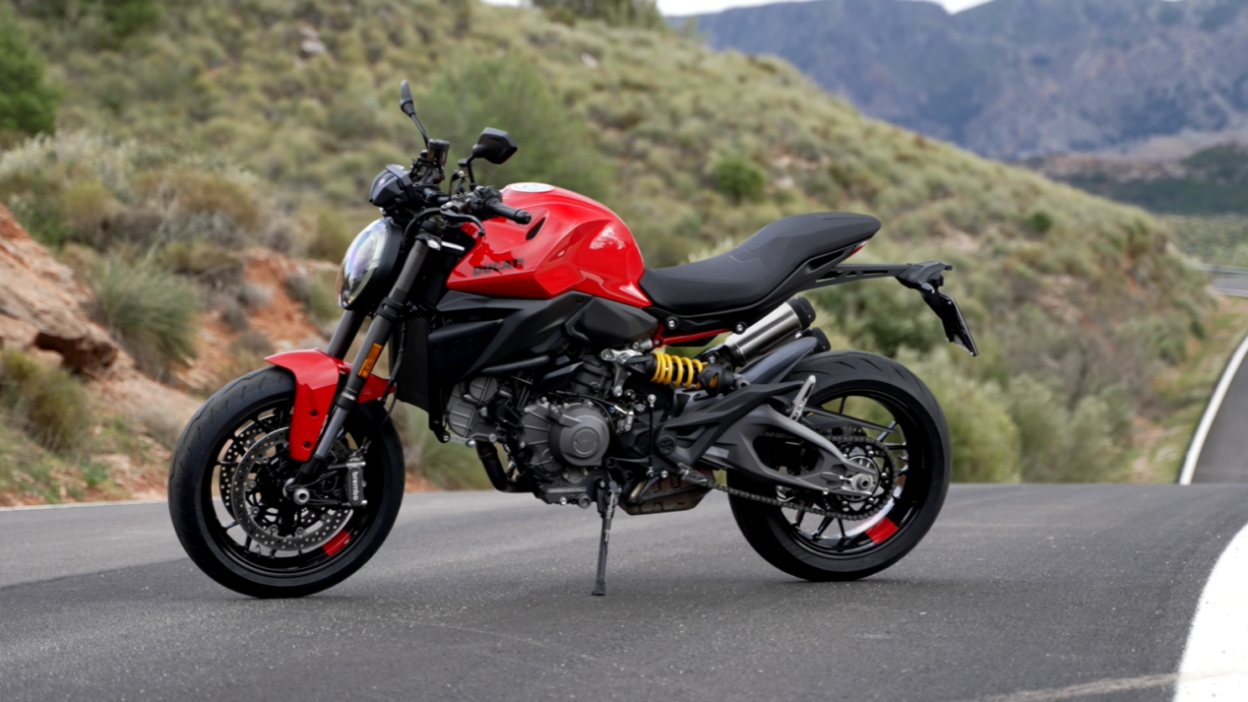
The Ducati Monster has earned its place in motorcycling history as arguably the most recognizable naked bike of all time. It’s a legend that has defined an entire segment for decades. But the 2026 Ducati Monster V2 you see today is fundamentally different from the Monsters that built this iconic reputation.
What’s Changed:
- ❌ No iconic trellis frame (replaced with aluminum monocoque)
- ❌ Different engine characteristics
- ✓ Lighter weight
- ✓ Sharper handling
- ✓ Loaded with modern technology
Some call this progress. Others call it sacrilege. The burning question remains: Is the 2026 Ducati Monster V2 a proper Monster with true Monster DNA, or is it just another naked bike clinging to an iconic name for relevance?
After two days riding through the roads of Málaga, Spain—in both glorious sunshine and biblical rain—here’s our honest, detailed answer.
Price & Availability
UK Pricing (2026)
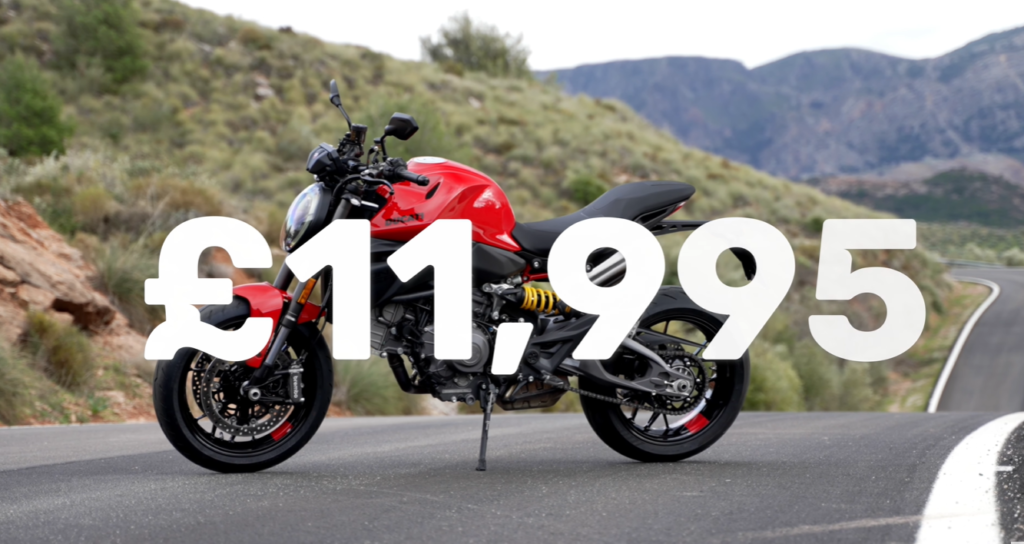
Standard Ducati Monster V2: £11,995 Monster Plus: £12,295 (includes belly pan and seat cowl)
Color Options:
- Ducati Red (standard)
- Iceberg White (+£200)
Finance Options
Hire Purchase: 4.9% APR available
Ducati Accelerate PCP Program:
- 50% deposit required
- No monthly installments for 2 years
- After 2 years: Part-exchange, keep and pay final payment, or return
- Return conditions apply
Expected Indian/International Pricing: Not yet announced, but expect competitive positioning against Triumph Street Triple RS, Yamaha MT-09, and KTM 890 Duke R.
Engine & Performance Specifications
Heart of the Beast
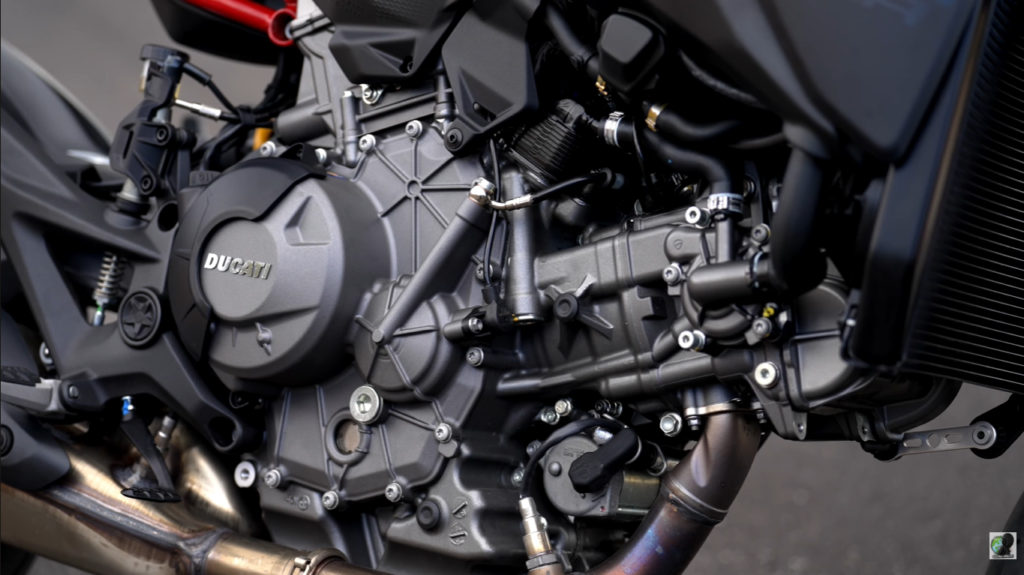
Engine Type: 890cc 90° V-twin (Ducati V2) Power Output: 111 horsepower at 9,000 RPM Torque: 91 Nm (67 lb-ft) at 7,250 RPM Transmission: 6-speed gearbox Quick Shifter: Ducati Quick Shift 2.0 (up and down, standard)
How It Compares to Panigale V2
This is essentially the same engine family as the Panigale V2, but detuned:
- Panigale V2: 120 hp
- Monster V2: 111 hp
- Power difference: 9 hp less (more street-focused tuning)
Torque Delivery
70% of torque available at 3,000 RPM 80% of torque available from 4,000-9,000 RPM
This means immediate, accessible power from low revs—perfect for street riding and making the bike feel larger than it actually is.
Real-World Riding Experience: Day 1 (Dry Conditions)
First Impressions: Sport Mode Engaged
Right from the start, the Monster V2 was set to Sport mode to experience all 111 ponies. Even for a middleweight naked bike, this machine delivers aggression in spades.
Immediate Characteristics:
- Barks and roars with an audible presence
- Urgent acceleration that eggs you on to be naughty
- Incredibly light at 175kg (wet weight, excluding fuel)
- Changes direction at the drop of a hat
- Royal howl when you crack the throttle open
Acceleration & Power Delivery
The Monster V2 feels quick and punchy, especially when kept low in the gears. It’s like a coil spring—compressed and ready to unleash energy at any moment.
In the reviewer’s words:
“Oh, that acceleration is quick and fast… It’s spritly. It’s zippy. It’s punchy. Oh, and it makes a royal howl.”
The Ducati Quick Shift 2.0 allows seamless up and down shifts without clutch or throttle input, making aggressive riding even more engaging.
Handling: Razor-Sharp Agility
Weight: 175kg wet (lightest liquid-cooled Monster ever) Handling Characteristics:
- Flicks through corners effortlessly
- Agile and responsive
- Predictable and confidence-inspiring
- Excellent weight distribution
The combination of low weight and responsive chassis makes the Monster V2 feel like an extension of your body. It flows through technical sections with grace and precision.
Braking: Brembo Excellence
Front: Twin 320mm discs with Brembo M4.32 radially-mounted calipers Rear: 245mm disc
Performance: Exceptional stopping power
- Strong initial bite
- Excellent modulation
- Confidence-inspiring feel
- Premium hardware that matches the bike’s performance
The reviewer noted: “The brakes are stoning. Very, very good hardware on this.”
Ergonomics & Comfort
Riding Position
Rider Height: 5’4″ (162cm) Inside Leg: 29″ (73.66cm)
Seat Height Options:
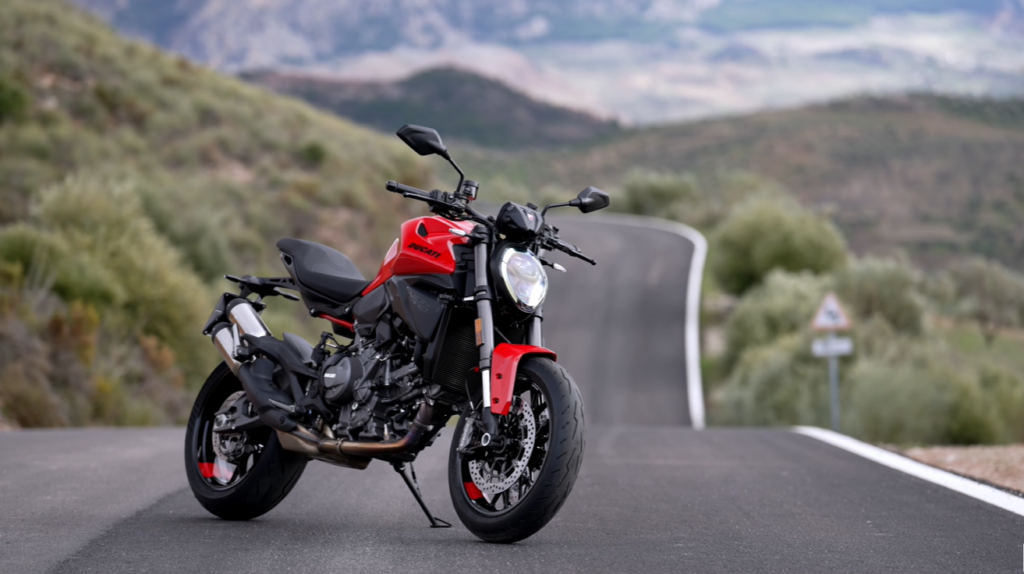
- Standard: 815mm
- Optional low seat: 795mm
- With lowering kit: 775mm
Verdict: Very accessible seat height, even for shorter riders. The reviewer had no issues reaching the ground comfortably.
Riding Position Characteristics:
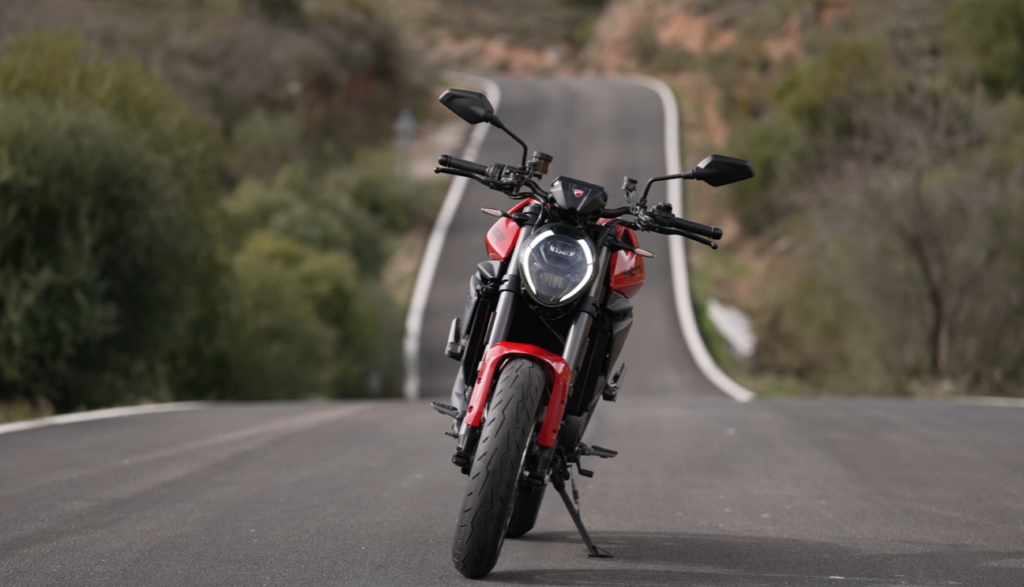
- Fairly neutral with a sporty lean
- Not super upright, but not aggressive forward lean
- Comfortable for extended riding
- Pegs positioned slightly higher (good for shorter riders—no calf stabbing when feet are down)
Daily Usability
Clutch: Not super light, but not heavy either—middle ground
- Heavier than expected but manageable
- Quick shifter reduces clutch use significantly
- Better than older Monsters (the 1200S had a notoriously heavy clutch)
Comfort Assessment:
- Town riding: Excellent in Road mode
- Highway cruising: Comfortable with optional cruise control
- Twisty roads: Engaging and confidence-inspiring
Suspension: Showa Components
Specification
Front: 43mm Showa upside-down fork (non-adjustable) Rear: Showa monoshock (preload adjustment only)
Performance
For the reviewer’s weight (approximately 50-55kg based on height), the suspension was absolutely perfect:
- Not too soft
- Not too hard
- Confidence-inspiring in corners
- Handled bumps and imperfections well
Important Consideration: Heavier riders may want adjustable suspension. Since there’s no Monster SP variant planned (Ducati has the Streetfighter for that), test ride before buying if you’re concerned about suspension setup.
Electronics & Technology
IMU-Based Systems
6-Axis IMU (Inertial Measurement Unit) enables:
- Cornering ABS: Optimized braking while leaned over
- Traction Control: 8 levels of intervention
- Wheelie Control: Keeps the front wheel grounded
- Engine Brake Control: Manages rear-wheel slip on downshifts
All electronics developed in-house by Ducati—not outsourced to Bosch or other suppliers.
Riding Modes
Four Riding Modes:
- Sport Mode
- Full 111 hp
- Minimal electronic intervention
- Aggressive throttle response
- For spirited riding
- Road Mode
- Medium power setting
- Balanced electronics
- Smooth throttle response
- Daily riding default
- Wet Mode
- 95 hp (reduced power)
- Maximum electronic intervention
- Smooth power delivery
- Tested extensively in Spanish rain
- Urban Mode (likely, though not explicitly mentioned)
Full Customization: Each mode is individually customizable. You can adjust:
- Power output
- Traction control level
- ABS intervention
- Wheelie control sensitivity
- Engine brake control
Display & Controls
Display: 5-inch color TFT Lighting: Full LED with DRLs (Daytime Running Lights)
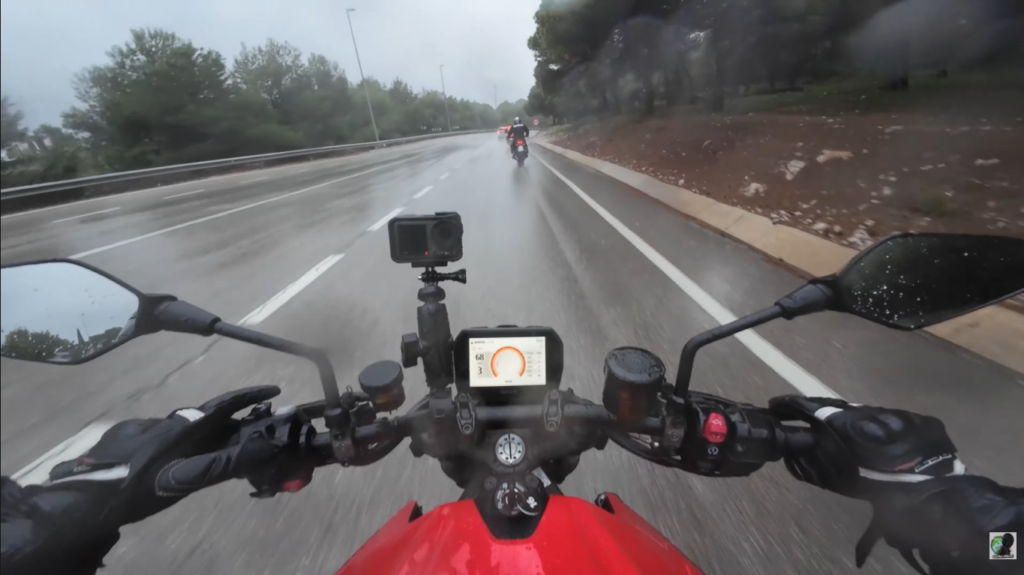
Switchgear Impressions: Initially overwhelming with buttons, but surprisingly intuitive once familiar. Mode changes require closing the throttle (safety feature).
Optional Extras
Cruise Control: Available as optional extra
- Great for motorway riding
- Simple and intuitive to use
Heated Grips: Available as optional extra
- Invaluable in cold/wet conditions
- Multiple heat settings
Weather Testing: Day 2 (Biblical Rain)
Wet Mode Performance
Day two brought torrential rain and tropical storm conditions—perfect for testing the electronics in challenging conditions.
Wet Mode Configuration:
- Power reduced to 95 hp
- Maximum traction control intervention
- Conservative ABS mapping
- Smooth throttle response
Real-World Wet Performance
Tires: Sport-oriented rubber (not ideal for rain) Conditions: Heavy rain, standing water, slippery roads
Performance Verdict:
“Rain mode is keeping me on straight and narrow… It’s helping me feel smooth. It’s helping me feel confident.”
Key Observations:
- Electronics worked seamlessly in the background
- No intrusive intervention felt
- Only noticeable over tarmac worms (raised road repairs)
- Confidence-inspiring even on inappropriate tires
- Smooth power delivery prevented rear-end slides
Riding Technique: Silky smooth inputs essential
- Predictable acceleration
- Gentle braking
- Progressive cornering
- Electronics support rider skill, don’t replace it
Engine Heat Management
Dry Conditions
Minimal engine heat felt during spirited riding in cooler Spanish temperatures. No leg discomfort from heat.
Urban/Slow Riding
Some warmth felt during night coastal cruise at slower speeds—actually welcome in cool conditions.
Comparison to Panigale V2: Significantly cooler than the Panigale V2, which is known for cooking riders’ legs.
Verdict: Well-managed heat for street riding. Not uncomfortable even in slower traffic.
Fuel Tank & Range
Fuel Capacity: 14 liters (1 liter less than Panigale V2)
Expected Range: Based on Panigale V2 touring experience (15L tank, 120hp):
- Normal riding: 150 miles (240km)
- Maximum range: 170 miles (270km) with mixed motorway/twisties
- Monster V2 estimate: Similar or slightly better (less power, similar capacity)
Real-world estimate: 140-170 miles per tank depending on riding style.
Build Quality & Durability
Frame & Construction
Frame: Aluminum monocoque (no traditional trellis frame) Frame Material: Metal/aluminum
Protection:
- IP Rating: Not specified, but well-sealed
- Gorilla Glass 7i: Display protection
- Fiberglass rear section: Durable and scratch-resistant
Maintenance
Valve Clearance Intervals: 45,000km (28,000 miles)
- Significantly extended vs. older Ducatis
- Reduced ownership costs
- Less frequent major services
Build Quality Impression: Feels solid and well-assembled. Ducati claims approximately 95% Italian-made components, with minimal outsourcing only for hard-to-source parts.
Sound & Character: The Monster’s Soul
Engine Note
The 890cc 90° V-twin produces a distinctive roar that’s unmistakably Ducati:
- Audible presence at all RPM ranges
- Royal howl when opening the throttle
- Mechanical symphony with quick shifter blipper
- Character that encourages spirited riding
In the rider’s words:
“It sounds great. You just wind on the throttle and it goes and it just eggs you on in a really naughty way.”
Character Assessment
Personality Traits:
- Raucous and rambunctious
- Fiercely fun
- Bad attitude (in the best way)
- Engaging and demanding rider input
- Keeps you on your toes
Comparison to Competitors: Unlike more mature bikes (Triumph Trident 800), the Monster doesn’t ride itself—it values rider input and makes you feel something with every twist of the throttle.
Monster V2 vs. Classic Monster DNA
What’s Lost
❌ Iconic trellis frame ❌ Raw, mechanical feel of older air-cooled models ❌ Heavy clutch and dry clutch rattle (actually a positive loss!) ❌ Difficult neutral finding (also improved!)
What’s Gained
✓ Modern electronics for safety and performance ✓ Lighter weight (175kg vs. 200kg+ on older models) ✓ Better ergonomics and accessibility ✓ Extended service intervals ✓ Improved reliability ✓ Weather protection (better sealing)
Does It Retain Monster DNA?
The Verdict: YES, but evolved.
While purists may mourn the loss of the trellis frame and raw mechanical character, the Monster V2 retains the essence of what made Monsters special:
Core Monster Traits Present:
- Aggressive, engaging character
- Encourages hooligan behavior
- Distinctive V-twin soundtrack
- Light, flickable handling
- “Bad attitude” personality
- Makes you feel something
Evolution, Not Revolution: The Monster V2 is a modern interpretation that trades some old-school charm for real-world usability, safety, and performance. It’s still very much a Monster—just one that’s grown up without losing its edge.
Ducati Monster V2 vs. Streetfighter V2
Both bikes share the Ducati V2 engine but serve different purposes:
Monster V2
- Price: £11,995 (more affordable)
- Power: 111 hp (streetfighter tuning)
- Suspension: Non-adjustable Showa
- Character: Heritage naked bike
- Target: Street riders wanting classic Monster appeal
Streetfighter V2
- Price: Higher (£14,000+ approx)
- Power: 120 hp (Panigale tuning)
- Suspension: Fully adjustable Öhlins (on S model)
- Character: Track-focused supernaked
- Target: Performance enthusiasts wanting more aggression
Why No Monster SP? Ducati confirmed no Monster SP variant is planned because the Streetfighter fills that higher-performance role. The Monster lineup ends at the Plus variant.
Comparisons to Other Naked Bikes
Triumph Trident 800
- Monster V2: More engaging, demands rider input, spicier character
- Trident 800: More mature, rides itself, smoother daily experience
Personal Riding Experience Note
The reviewer previously owned a 2002 Ducati 750S and sold Ducatis professionally in 2016 (first bike sold: Monster 796 Plus). She’s also ridden:
- Monster 1200S (heavy clutch, wild character)
- Monster 1100 Evo
- Father owned an S4R (dry clutch, mental)
- Recently rode Panigale V2S
Pros & Cons
PROS ✓
Performance:
- Lightweight at 175kg (lightest liquid-cooled Monster)
- Urgent, punchy acceleration
- Excellent power-to-weight ratio
- Smooth, accessible power delivery
Handling:
- Razor-sharp agility
- Confidence-inspiring in corners
- Predictable and stable
- Perfect weight distribution
Brakes:
- Brembo M4.32 radially-mounted calipers
- Exceptional stopping power
- Great feel and modulation
Electronics:
- Comprehensive rider aids (all in-house Ducati)
- Customizable riding modes
- Wet mode works brilliantly
- Non-intrusive intervention
Character:
- Distinctive V-twin roar
- Engaging and fun personality
- Bad attitude that encourages spirited riding
- Retains Monster DNA
Practicality:
- Accessible seat height (815mm standard, lower options available)
- Extended valve service intervals (45,000km)
- 100W charger included (likely)
- Optional cruise control and heated grips
- Ducati V2 reliability
Build Quality:
- Premium components throughout
- Gorilla Glass 7i protection
- ~95% Italian-made
- Feels solid and well-assembled
Value:
- Competitive pricing at £11,995
- Premium hardware (Brembo brakes)
- Full electronics suite
- Strong Ducati heritage
CONS ✗
Suspension:
- Non-adjustable front forks (heavier riders may struggle)
- Preload-only rear adjustment
- No Monster SP variant planned for upgraded suspension
Frame:
- No iconic trellis frame (subjective—purists will miss it)
- Aluminum monocoque less visually distinctive
Practicality:
- Smaller 14L fuel tank (150-mile range)
- Sport-oriented ergonomics not for everyone
- No adjustable windscreen (naked bike)
Engine Heat:
- Noticeable warmth in slow traffic/urban riding
- Better than Panigale V2, but still present
Electronics:
- Switchgear complex initially (learning curve)
- Mode changes require closing throttle
Power:
- 111hp less than Streetfighter V2 (120hp) and Panigale V2 (120hp)
- Some may want more top-end power
Missing Features:
- No trellis frame for purists
- No quickshifter on absolutely every throttle blip (minor complaint)
Who Should Buy the 2026 Ducati Monster V2?
Perfect For:
✅ Riders wanting true Monster character in a modern package ✅ Middleweight naked bike enthusiasts seeking agility over raw power ✅ Ducati fans who love V-twin character and Italian engineering ✅ Street riders who prioritize handling and engagement over straight-line speed ✅ Shorter riders seeking an accessible performance bike (815mm seat height) ✅ Riders upgrading from entry-level bikes to premium middleweight ✅ Enthusiasts who value character and soul in their motorcycles
Not Ideal For:
❌ Track day warriors (get the Streetfighter V2 instead) ❌ Trellis frame purists unwilling to accept modern evolution ❌ Heavier riders concerned about non-adjustable suspension ❌ Long-distance tourers (small fuel tank, sporty ergonomics) ❌ Power junkies wanting 150hp+ supernaked performance ❌ Budget buyers (premium price for premium product)
Final Verdict: A Modern Monster Worth Its Name
Rating: 9/10
The 2026 Ducati Monster V2 successfully walks the tightrope between heritage and modernity. Yes, it’s lost the trellis frame. Yes, it’s more refined than raw Monsters of the past. But it absolutely retains the soul that made the Monster legendary.
This is still a Monster—evolved, refined, and arguably better for it.
The Bottom Line
Does it have Monster DNA? Absolutely yes.
The V2 delivers:
- That distinctive V-twin character that eggs you on
- Light, flickable handling that makes you grin
- A bad attitude that encourages hooliganism
- Engagement that demands rider input
- Soul that makes you feel something
Is it just another naked bike trading on a famous name? Absolutely not.
This isn’t a generic bike with a Monster badge slapped on. It’s a purpose-built middleweight with distinct character, premium components, and genuine sporting intent.
Should You Buy One?
If you want a lightweight, engaging, characterful naked bike with Ducati heritage, premium components, and genuine sporting ability—the Monster V2 is absolutely worth your consideration at £11,995.
It’s not perfect (non-adjustable suspension, no trellis frame, smaller fuel tank), but it delivers where it matters: rider engagement, handling excellence, and that intangible Ducati magic.
The Monster V2 proves that progress doesn’t have to mean losing your soul. This Monster has just grown up.
While accessible with its 815mm seat height and manageable power, the 111hp and sporty character make it better suited for riders with some experience.
Monster V2: 111hp, £11,995, non-adjustable suspension, heritage focus. Streetfighter V2: 120hp, ~£14,000+, adjustable suspension (S model), track-focused. Choose Monster for street character, Streetfighter for track performance.
Summary: Evolution Done Right
The 2026 Ducati Monster V2 proves that evolution doesn’t mean losing your soul. While purists may mourn the trellis frame, the V2 delivers genuine Monster character in a modern, accessible, and genuinely sporting package.
It’s fiercely fun, raucously engaging, and distinctly Ducati—everything a Monster should be.
At £11,995, it’s a compelling middleweight naked that deserves consideration alongside the Triumph Street Triple RS, Yamaha MT-09, and KTM 890 Duke R.
But unlike those bikes, this one has a legend behind it—and it lives up to that legend