TL;DR
The Tata Sierra 1.5L naturally aspirated petrol offers the most affordable entry into the Sierra range at ₹11.49-17.99 lakh. While it delivers excellent ride quality, impressive refinement, and a premium cabin, the 106 bhp Atkinson-cycle engine struggles with performance, taking 17.34 seconds for 0-100 km/h (21+ seconds in automatic). Best suited for relaxed city driving and chauffeur-driven use, the NA petrol works adequately in traffic but feels underwhelming during overtaking.
The diesel or turbo petrol variants offer significantly better performance for those who can stretch their budget. Buy the NA petrol only if price is your primary concern and spirited driving isn’t a priority.
Tata Sierra 1.5 Petrol Review: The Most Affordable Sierra—But Should You Buy It?
The Tata Sierra has returned as one of India’s most distinctive SUVs, bringing back the iconic nameplate with modern engineering and retro-inspired design. While diesel remains the powertrain of choice for most buyers, the 1.5-liter naturally aspirated petrol variant attracts attention for one compelling reason: it’s the cheapest way into Sierra ownership.
Priced between ₹11.49 lakh and ₹17.99 lakh, this NA petrol variant undercuts other Sierra options significantly. But does aggressive pricing come with compromises you’ll regret? We spent quality time with both manual and automatic versions to answer the crucial question: should you buy the Sierra 1.5 petrol, or save up for the turbo petrol or diesel instead
Engine & Performance: The Atkinson Cycle Compromise
The New 1.5L NA Petrol Engine
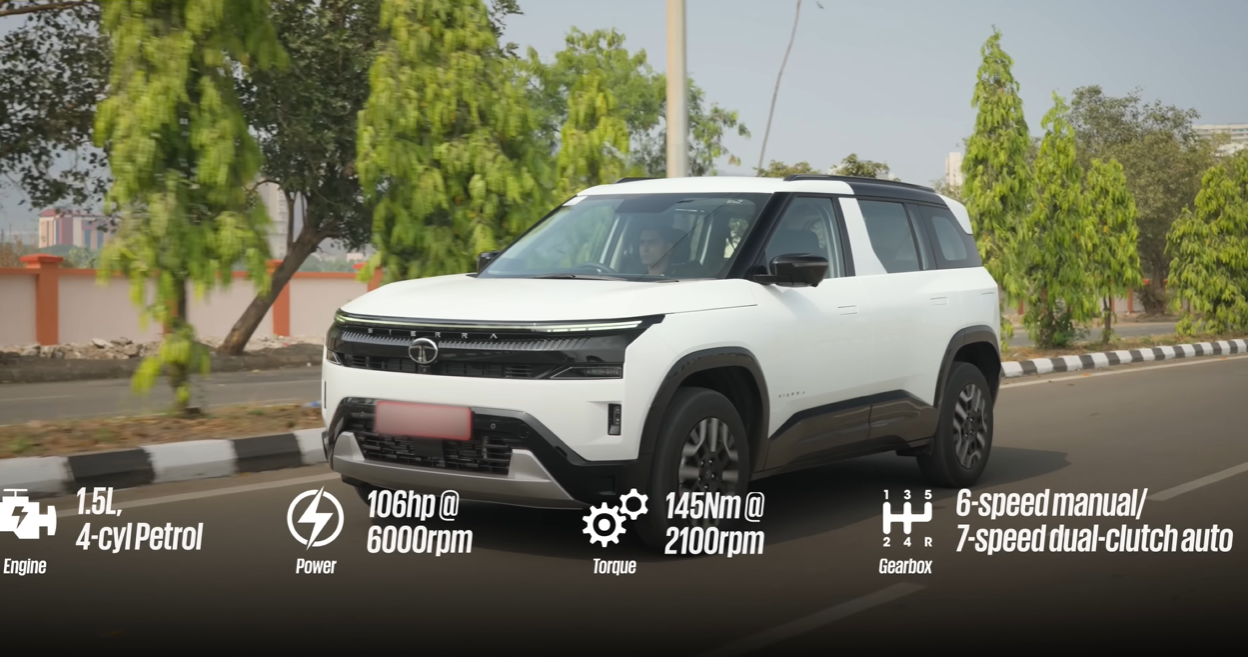
Tata debuts a new 1.5-liter naturally aspirated petrol engine on the Sierra, marking its first application in their lineup. The headline specifications read:
- Power: 106 bhp
- Torque: 145 Nm
- Peak Torque RPM: 2,100 rpm
- Engine Type: 4-cylinder Atkinson cycle
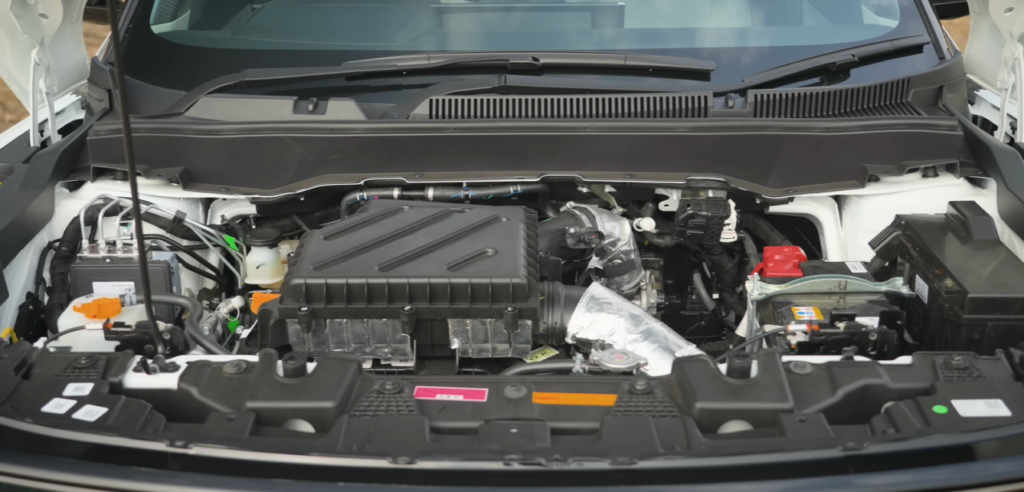
Why Atkinson Cycle? The Efficiency Trade-Off
Here’s where things get interesting—and where Tata made a controversial choice. This engine runs the Atkinson cycle rather than the standard Otto cycle found in most petrol engines.
What’s the difference?
Atkinson cycle engines prioritize fuel efficiency over outright power. They achieve better thermal efficiency by keeping the intake valve open longer, allowing some air-fuel mixture to escape back into the intake manifold. This reduces the effective compression stroke, improving economy but sacrificing power output.
The usual application: You’ll typically find Atkinson cycle engines in hybrid vehicles where electric motors compensate for the power deficit. Think Toyota Prius, Honda City e:HEV, or Maruti Grand Vitara strong hybrid.
The Sierra’s situation: It uses an Atkinson cycle engine without any hybrid assistance. You get the efficiency benefits but must live with the power compromise across the entire rev range.
Real-World Performance Numbers
The performance figures tell the story clearly:
Manual Transmission:
- 0-100 km/h: 17.34 seconds
- Character: Leisurely acceleration, struggles with quick overtakes
Automatic Transmission:
- 0-100 km/h: 21+ seconds
- Character: Even more lethargic, requires frequent paddle shifter use
For context: Most turbocharged rivals complete 0-100 km/h in 9-11 seconds. The Sierra 1.5 petrol takes nearly twice as long.
Where It Works (And Doesn’t)
City Driving – Acceptable:
- Max torque arrives at just 2,100 rpm
- Decent on-tap response for stop-and-go traffic
- Point A to point B commuting works fine
- Light clutch makes urban driving easy
Highway & Overtaking – Struggles:
- Flat power delivery above 2,500 rpm
- 1,400+ kg curb weight overwhelms the 106 bhp
- Slow speed buildup feels underwhelming
- Quick overtakes become a genuine struggle
The reality: This isn’t a car you’ll want to drive in a hurry. Plan your overtakes carefully, and accept that merging onto fast-moving highways requires patience.
The Refinement Silver Lining
Despite underwhelming performance, the engine impresses with refinement:
- Sound quality: Pleasant and refined even at higher RPMs
- NVH levels: Impressively low noise, vibration, and harshness
- Smoothness: One of the more refined naturally aspirated units available
If you prioritize a quiet, smooth driving experience over spirited performance, this engine delivers genuinely well.
Transmission: Smooth Manual, Sluggish Automatic
6-Speed Manual – The Better Choice
The six-speed manual gearbox stands out as one of the transmission’s highlights:
What Works:
- Smooth, slick shift action
- Positive engagement with clear gates
- Nice throw action that feels mechanical and satisfying
- Light clutch pedal reduces effort in traffic
- Makes the overall driving experience easier
Performance: Still slow at 17.34 seconds to 100 km/h, but you have more control over keeping the engine in its powerband.
Recommendation: If choosing the NA petrol, the manual makes more sense for both engagement and performance.
Dual-Clutch Automatic – Prioritizes Smoothness
The DCT automatic transmission focuses entirely on refinement:
Character:
- Tuned for smoothness above all else
- Step-free, seamless power delivery
- Very relaxed driving experience
- Includes paddle shifters for manual control
The Problem:
- Performance feels even more lackluster
- 21+ seconds to 100 km/h is genuinely slow
- You’ll use those paddle shifters frequently to maintain momentum
- ₹1.5 lakh premium over manual feels hard to justify given the performance penalty
Who it suits: Buyers wanting the smoothest possible city driving experience who never, ever want to shift gears themselves.
Auto Start-Stop System Issues
Both transmissions include an automatic engine start-stop system for fuel efficiency. Unfortunately, it behaves inconsistently:
- Sometimes fails to recognize driver inputs
- Doesn’t restart automatically when it should
- Creates frustrating moments in traffic
- The feature that should save fuel instead creates annoyance
Additionally, The MID (Multi-Information Display) fuel efficiency readout won’t display figures below 8 km/l, preventing accurate fuel economy tracking during heavy traffic or spirited driving.
Driving Experience: Comfort Over Performance
Ride Quality – Outstanding
The Sierra’s ride and handling balance represents a hallmark of modern Tata vehicles, and the 1.5 petrol variant excels here:
What Makes It Special:
- Frequency-selective damping absorbs impacts brilliantly
- 17-inch alloys with high-profile tires add crucial comfort
- Tall sidewalls gobble up rutted roads effortlessly
- Sharp edges get rounded off beautifully
- Simply outstanding bump absorption
The advantage: Even more comfortable than higher variants with larger wheels and lower-profile tires.
Real-world benefit: Indian road conditions with potholes, speed bumps, and broken surfaces become non-issues. Passengers remain comfortable even on challenging routes.
Handling & Stability
Despite the tall SUV proportions and considerable weight:
Body control: Impressive composure through corners
Stability: Feels reassuringly planted despite height
Cornering: Remains composed when pushed
Confidence: The Sierra doesn’t feel tippy or nervous
For an SUV this size: The handling balance genuinely impresses, making it feel more car-like than you’d expect.
Steering Feel
The steering suits the Sierra’s relaxed character:
Characteristics:
- Light effort makes maneuvering easy
- No real feedback or feel (typical for electric power steering)
- Perfect for city driving and parking
- Reduces fatigue in traffic
- 10.6-meter turning circle aids maneuverability
Urban usability: That tight turning circle makes the Sierra surprisingly manageable in everyday city driving despite its substantial size.
Design: Retro Meets Modern
Exterior Styling – Distinctive & Desirable
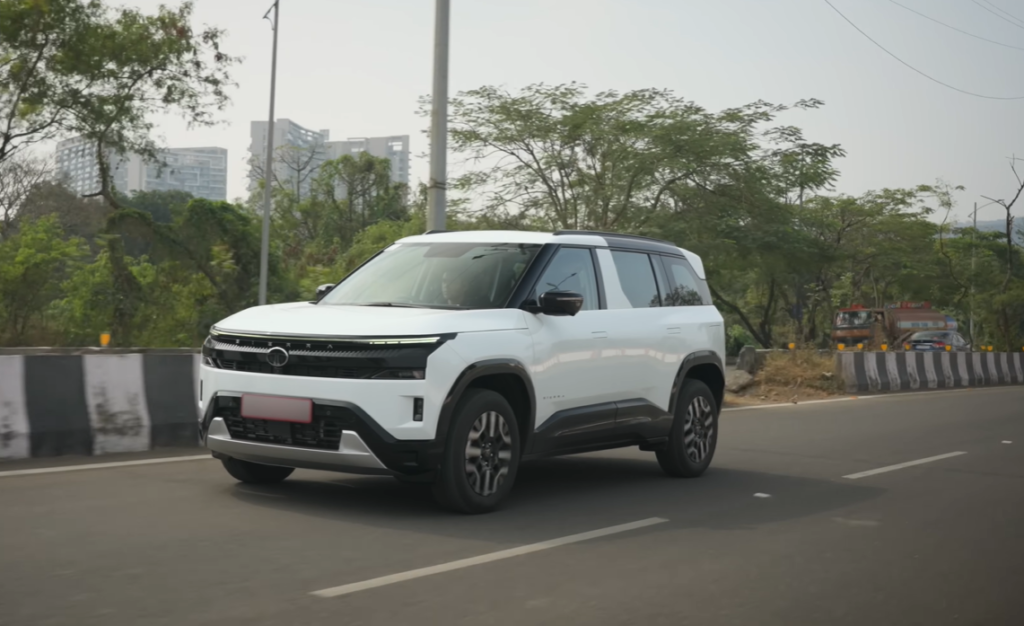
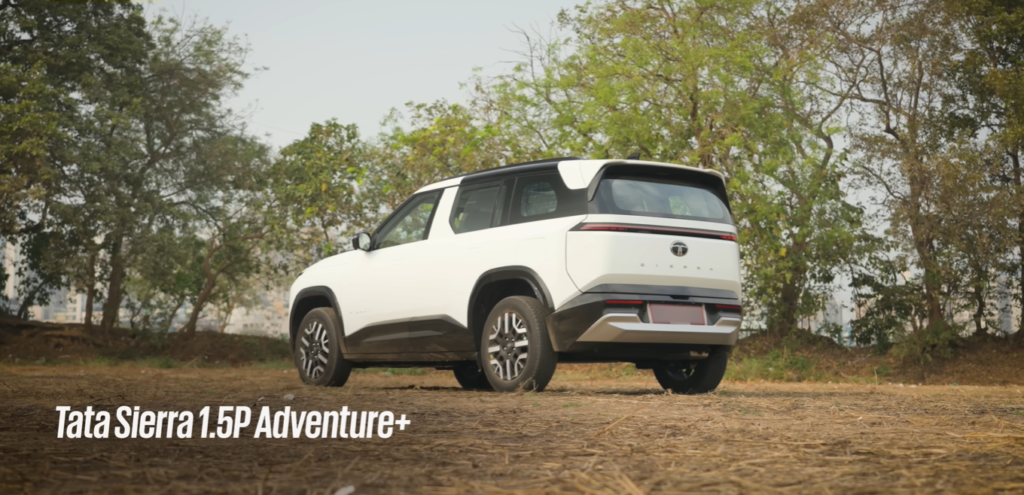
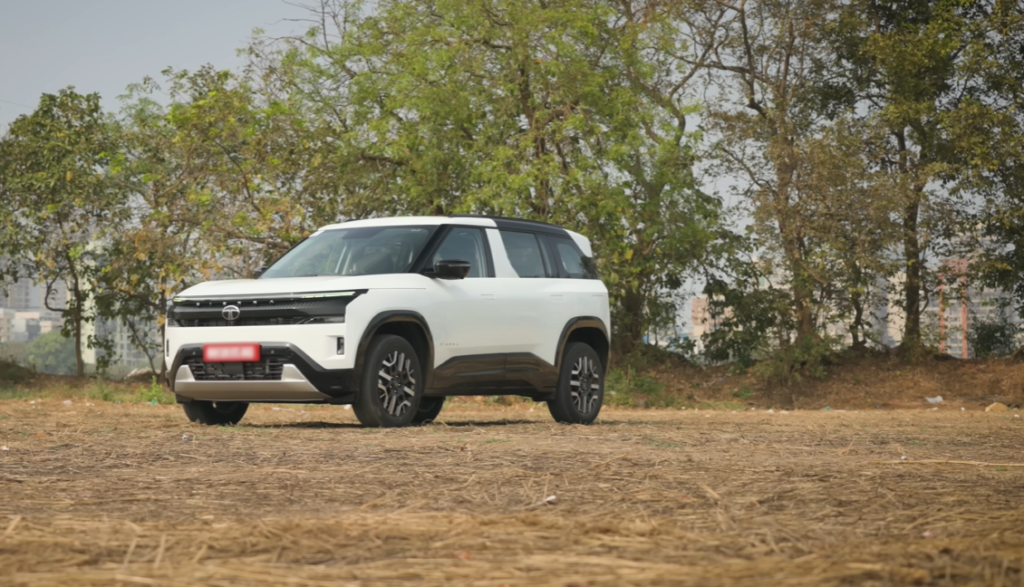
The Sierra looks genuinely special on Indian roads:
Retro Design Cues:
- Tall, commanding stance
- Flat bonnet with squared proportions
- Squared-out wheel arches
- Wraparound effect on rear glass
- Direct callbacks to the iconic 1990s Sierra
Modern Execution:
- Contemporary lighting elements
- Clean surfacing with strong character lines
- Substantial road presence
- Looks expensive and distinctive
The result: A design that stands out immediately while honoring its heritage without feeling dated.
The 17-Inch Wheel Consideration
This variant comes with 17-inch alloy wheels:
Advantages:
- High-profile tires deliver exceptional ride comfort
- Better bump absorption than larger wheels
- More cushioning over rough roads
Disadvantages:
- Don’t fill the wheel arches as well as larger wheels
- High ride height reveals unpleasant wheel well details
- Less visually aggressive than 18-inch or 19-inch options
Verdict: Choose comfort over looks, and these wheels make sense. If visual impact matters more, the larger-wheeled variants look better.
Tailgate Design
The Adventure Plus variant features a manual tailgate:
Benefits over powered versions:
- Higher boot opening height
- More friendly for taller adults
- No waiting for motorized operation
- One less electrical component to potentially fail
Trade-off: You manually lift and close it, but the higher opening actually proves more practical for loading.
Interior: Quality That Impresses
Cabin Design & Materials
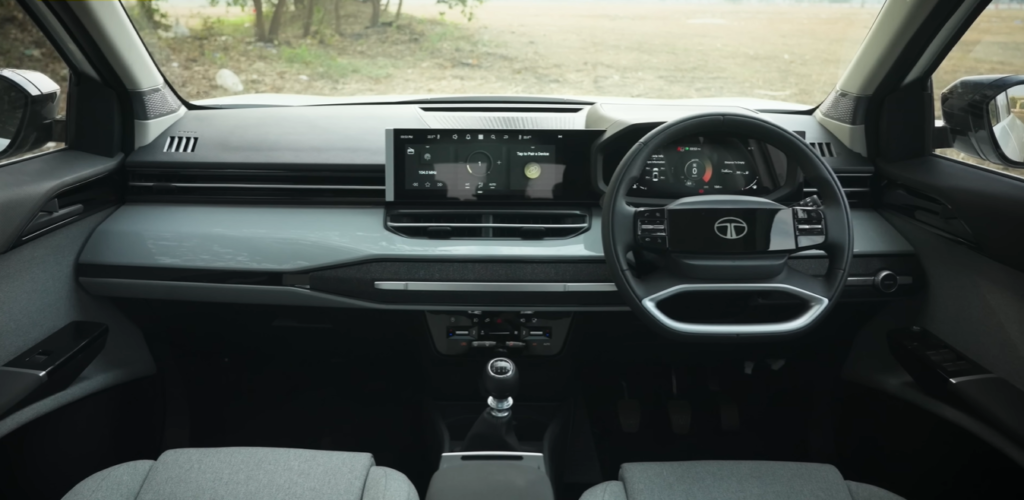
Step inside and the Sierra delivers a premium experience:
First Impressions:
- Huge step up in fit, finish, and material quality for Tata
- Gray color scheme with silver accents
- Quality textures throughout
- Premium feel that exceeds price expectations
Build quality: Solid assembly with no obvious cost-cutting in materials or construction.
Technology & Infotainment
Twin-Screen Setup
The Adventure Plus gets the more conventional twin-screen configuration:
12.3-Inch Touchscreen:
- Fantastic resolution and clarity
- Excellent touch sensitivity
- Simple, intuitive operation
- Wireless Android Auto and Apple CarPlay
- Genuinely impressive user experience
360-Degree Camera:
- Best-in-segment resolution
- Crystal-clear display
- Makes parking genuinely easy
- Actually useful in tight spaces
8-Speaker Audio System:
- Impressive sound quality
- Good bass response
- Clear mid-range and highs
- Delivers genuine audio experience
Practical Features
Phone Holder:
- Smart center placement
- Easily accessible
- Keeps phone visible for navigation
The problem: No wireless charging pad in this variant, and the base area is hard, smooth plastic—your phone slides around while driving.
Seating Comfort
Front Seats
Fabric seats in this variant:
- Comfortable for average-sized adults
- Good cushioning and support
- Adjustable thigh support enhances comfort
- Nice seating position
Missing: Ventilated seats (available in top Accomplished variant)
Rear Seats – Segment-Leading
The rear seats represent the Sierra’s standout feature:
Space:
- Best-in-class legroom among midsize SUVs
- Excellent thigh support
- High seating position
- Generous headroom
Comfort:
- Reclining backrest adds versatility
- Accommodates tall adults easily
- Three-across seating actually works
- Boss function for relaxed cruising
Verdict: If rear seat comfort matters (chauffeur-driven use, family trips), the Sierra leads its segment convincingly.
Practical Quirks
Automatic Version – Mandatory Seat Belt:
- No manual parking brake release
- Forces you to wear seat belt to move the car
- Annoying for quick parking lot maneuvers
Manual Version – Quick Release:
- Manual parking brake with quick release
- Easily move the car short distances
- Much more convenient for parking situations
Boot Space:
- 420 liters from floor to parcel shelf
- Well-shaped, boxy cargo area
- Practical loading height
- Adequate for most needs
Features & Variants
Adventure Plus Variant Equipment
Our test vehicle came in Adventure Plus spec (one below top variant):
Exterior Features:
- Auto headlamps
- 17-inch alloy wheels
- LED lighting elements
Interior Technology:
- 12.3-inch touchscreen infotainment
- Wireless Android Auto & Apple CarPlay
- 360-degree camera system
- 8-speaker audio system
- Cruise control
Comfort Features:
- Fabric upholstery
- Adjustable thigh support
- Reclining rear seats
- Boss function
- Manual air conditioning
What’s Missing:
- Wireless charging pad
- Ventilated seats
- Leatherette upholstery
- Head-up display
- Powered tailgate
Accomplished Variant Additions
Step up to the fully loaded Accomplished variant for:
- Leatherette upholstery
- Ventilated front seats
- Head-up display
- Additional premium features
Price premium: Significant jump to top variant—evaluate if these additions justify the cost for your usage.
Pricing: The Affordability Factor
Price Range
1.5L NA Petrol Manual: ₹11.49 – ₹17.99 lakh
1.5L NA Petrol Automatic: ₹1.5 lakh premium over corresponding manual
Key context: This represents the most accessible entry point into the entire Sierra range, undercutting diesel and turbo petrol variants by substantial margins.
Value Proposition Analysis
What You Get:
- Distinctive, desirable SUV design
- Premium interior quality
- Segment-leading rear seat space
- Outstanding ride quality
- Comprehensive features (in higher trims)
- Tata’s improving reliability reputation
What You Sacrifice:
- Meaningful performance
- Quick acceleration
- Effortless highway cruising
- Confident overtaking capability
The calculation: If your budget absolutely maxes out at ₹12-15 lakh and you must have the Sierra, the NA petrol makes sense. If you can stretch to ₹15-18 lakh, the turbo petrol or diesel deliver dramatically better experiences.
Cost of Ownership Considerations
Fuel Efficiency:
- Atkinson cycle should deliver decent economy
- Real-world figures depend heavily on driving style
- City efficiency likely better than highway (low power means frequent downshifts)
Maintenance:
- Naturally aspirated engine simpler than turbo
- Fewer components to potentially fail
- Lower service costs versus diesel
- Tata’s expanding service network
Resale Value:
- NA petrol variants typically depreciate faster
- Diesel and turbo petrol hold value better
- Limited demand for underpowered SUVs in used market
Final Verdict: Who Should Buy This?
Buy the Sierra 1.5 NA Petrol If:
✅ Budget is your primary constraint – You want a Sierra but can’t stretch to diesel/turbo pricing
✅ City-only driving – Your commute involves purely urban roads with minimal highway use
✅ Chauffeur-driven use – Rear seat comfort matters more than driving dynamics
✅ Relaxed driving style – You never drive in a hurry and don’t care about quick acceleration
✅ You prioritize comfort – The excellent ride quality matters more than performance
✅ Design is the priority – You want the Sierra’s distinctive looks regardless of powertrain
Skip It and Choose Turbo/Diesel If:
❌ You can stretch your budget – Even ₹1.5-2 lakh more buys better performance dramatically
❌ Highway driving is regular – The NA petrol struggles on open roads and overtaking
❌ You enjoy driving – The lackluster performance frustrates enthusiastic drivers
❌ Family road trips – Loaded with passengers and luggage, performance becomes painful
❌ Resale value matters – Diesel and turbo variants will hold value significantly better
The Honest Recommendation
The Tata Sierra 1.5 NA petrol exists primarily as an aggressive price point to lower the barrier to Sierra ownership. It succeeds at making the Sierra accessible but compromises performance significantly in the process.
For most buyers: Save up for the turbo petrol or diesel. The performance difference isn’t marginal—it’s transformative. The Sierra becomes a genuinely enjoyable vehicle rather than merely adequate.
For budget-constrained buyers: If the choice is between a well-equipped competitor with better performance or a base Sierra with this engine, seriously consider the competitor. The Sierra’s distinctive design and excellent rear seat space are genuine advantages, but daily performance frustrations add up quickly.
For chauffeur-driven urban use: This actually makes sense. The rear seat comfort excels, the ride quality impresses, and the refinement satisfies. If someone else drives and you rarely leave the city, the NA petrol’s weaknesses become less relevant.
Our Rating Breakdown
Design & Road Presence: ⭐⭐⭐⭐⭐ (5/5)
Genuinely distinctive and desirable
Interior Quality: ⭐⭐⭐⭐½ (4.5/5)
Impressive step up for Tata
Rear Seat Comfort: ⭐⭐⭐⭐⭐ (5/5)
Segment-leading space and comfort
Ride Quality: ⭐⭐⭐⭐⭐ (5/5)
Outstanding bump absorption
Performance: ⭐⭐ (2/5)
Genuinely underwhelming for the segment
Value for Money: ⭐⭐⭐ (3/5)
Decent if budget-constrained, poor if you can afford better
Overall Rating: ⭐⭐⭐½ (3.5/5)
Specifications at a Glance
| Specification | Details |
|---|---|
| Engine | 1.5L NA Petrol (Atkinson Cycle) |
| Power | 106 bhp |
| Torque | 145 Nm @ 2,100 rpm |
| Transmission | 6-speed Manual / DCT Auto |
| 0-100 km/h | 17.34s (Manual) / 21+s (Auto) |
| Drivetrain | Front-Wheel Drive |
| Fuel Tank | 50 liters |
| Boot Space | 420 liters |
| Wheelbase | 2,450 mm |
| Turning Radius | 10.6 meters |
| Wheel Size | 17-inch alloys |
| Price Range | ₹11.49 – ₹17.99 lakh |
The Tata Sierra 1.5 NA petrol engine produces 106 bhp and 145 Nm torque, which proves adequate for relaxed city driving with decent low-end response from 2,100 rpm. However, performance feels genuinely underwhelming for highway driving and overtaking, with 0-100 km/h taking 17.34 seconds in the manual and over 21 seconds in automatic.
Choose the 6-speed manual transmission over the DCT automatic. The manual offers better performance (17.34s vs 21+s to 100 km/h), more engaging driving experience, lighter clutch operation, and costs ₹1.5 lakh less.