Here’s a question nobody’s asking anymore: Why did we all abandon saloons (sedans) for SUVs?
Thirty years ago, the high street was full of Ford Mondeos, Vauxhall Vectras, and Alfa Romeo 156s. Practical, stylish family cars that did everything most families needed—without pretending to be off-roaders.
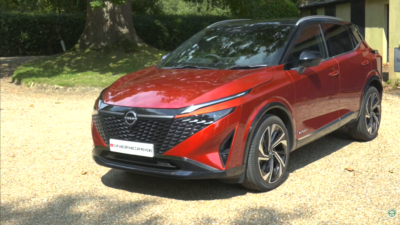
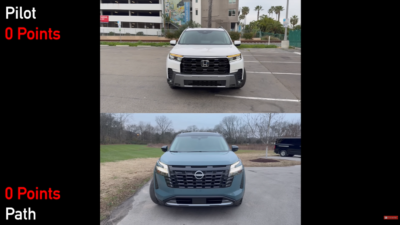
Fast-forward to 2026, and everyone’s driving bloated, brick-faced SUVs that guzzle fuel, handle like boats, and cost thousands more than equivalent saloons.
My dad put it best: “SUVs are a solution to a problem nobody has.”
He’s right. I grew up in the back of an Alfa Romeo 156 (which my family still owns), and despite having no folding rear seats and no massive tailgate, I can’t remember my parents ever wishing for more space.
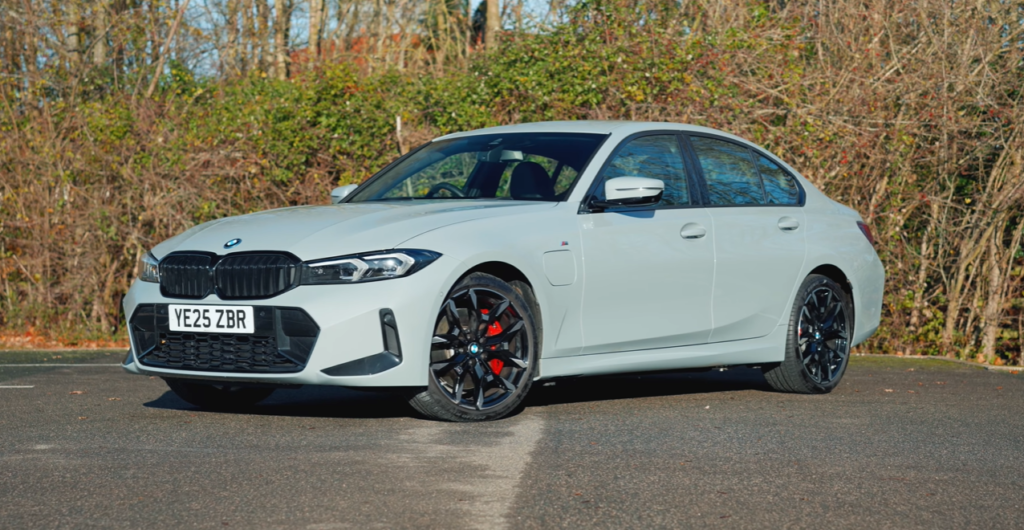
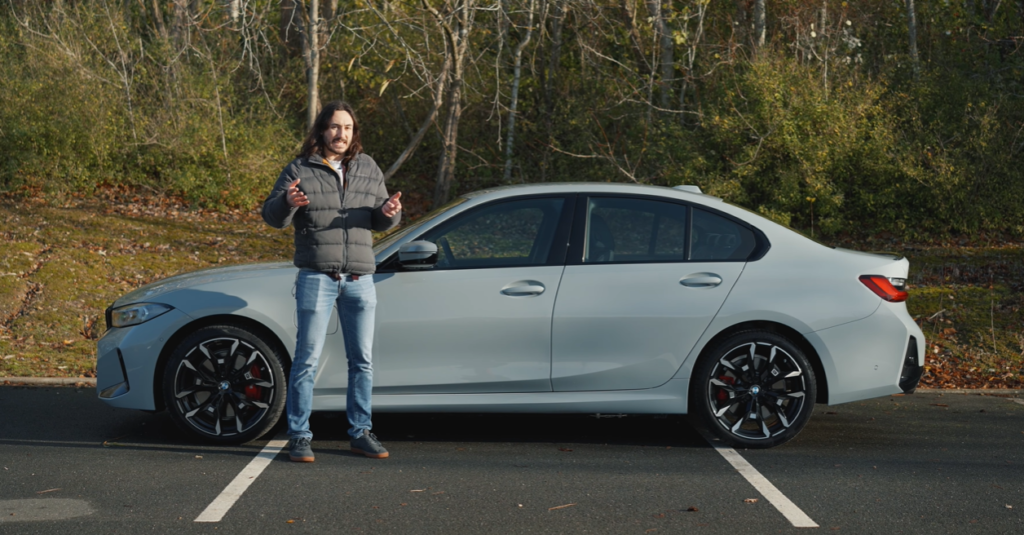
So when BMW offered me a 2026 BMW 330e plug-in hybrid as a long-term test car, I jumped at the chance to prove saloons are still the smarter choice for families—even compromised ones like the 330e, which trades boot space for a battery pack.
What I’m Testing:
- Model: 2026 BMW 330e M Sport (RWD)
- Price: $50,395 (as tested: ~$59,000 with options)
- Powertrain: 2.0L turbo + electric motor = 292 hp combined
- Electric Range: 30 miles (EPA estimate)
- Fuel Economy: 73 MPGe (Electric/Hybrid mode) | 27 mpg (Gas/Hybrid mode)
- Boot/Trunk: 13.2 cubic feet (vs 16.9 cu ft in standard 3 Series)
The Mission: Can a saloon with a compromised boot prove it’s more practical than an SUV?
Spoiler alert: Yes. And it’s not even close.
Space Showdown: BMW 330e vs Volkswagen Tiguan SUV
The Myth: “SUVs Are More Spacious”
Because SUVs are tall, they look more spacious. But here’s the dirty secret: most are built on platforms designed for shorter hatchbacks, so interior space is often identical to saloons.
To prove this, I grabbed a Volkswagen Tiguan—a completely average, run-of-the-mill family SUV in the same class as the 3 Series—and ran a comparison.
Rear Legroom Test
Test Setup:
- Set driver’s seat to my driving position (I’m 6 feet tall)
- Sit behind myself in the rear seat
- Measure knee-to-seatback distance
Results:
| Vehicle | Rear Legroom |
|---|---|
| VW Tiguan (SUV) | 4 inches |
| BMW 330e (Saloon) | Nearly 5 inches |
Translation: You get MORE legroom in the smaller, lighter, more aerodynamic, better-to-drive saloon.
Headroom:
Yes, the Tiguan offers 2-3 inches more headroom thanks to its taller roofline. But unless you’re regularly chauffeuring 6’4″ NBA players, that extra headroom is pointless.
For most adults, the 330e’s rear headroom is more than adequate.
Boot/Trunk Space Reality Check
Official Capacities:
- BMW 330e: 13.2 cubic feet
- Standard BMW 330i: 16.9 cubic feet
- VW Tiguan: 16.5 cubic feet
The 330e’s battery pack under the boot floor cuts cargo space by 3.7 cubic feet compared to the standard 3 Series. On paper, that sounds terrible.
But here’s the reality: For the stuff you actually carry, the 330e’s boot is more than big enough.
Real-World Test:
I packed two suitcases, a week’s worth of groceries, and gym bags into both vehicles.
Result: Everything fit just as well in the BMW as the Tiguan.
The Point:
Don’t buy an SUV just because you might need to haul a tall houseplant once every 3-5 years. For 99% of daily use, a saloon boot is perfectly adequate.
Want More Space?
BMW offers the 330e Touring (wagon) with 14.9 cubic feet of cargo space plus the ability to fold rear seats flat for even more room.
Driving Dynamics: Why the BMW 330e Destroys SUVs
This Is BMW’s Party Piece
Yes, you can buy more efficient, more spacious, and cheaper plug-in hybrids than the 330e.
But none of them can tear down a country lane with the same ease, confidence, and sheer joy.
And I say this as someone who’s historically been a BMW skeptic. Given the choice, I’ve always leaned toward Italian flair (Alfa Romeo) or Japanese precision (Mazda).
But after two months with the 330e, I’m officially drinking the BMW Kool-Aid.
Why BMW Still Cares About Driving Feel
BMW is probably the only attainable brand left that genuinely prioritizes driving dynamics. Here’s why the 330e feels so special:
1. The Steering
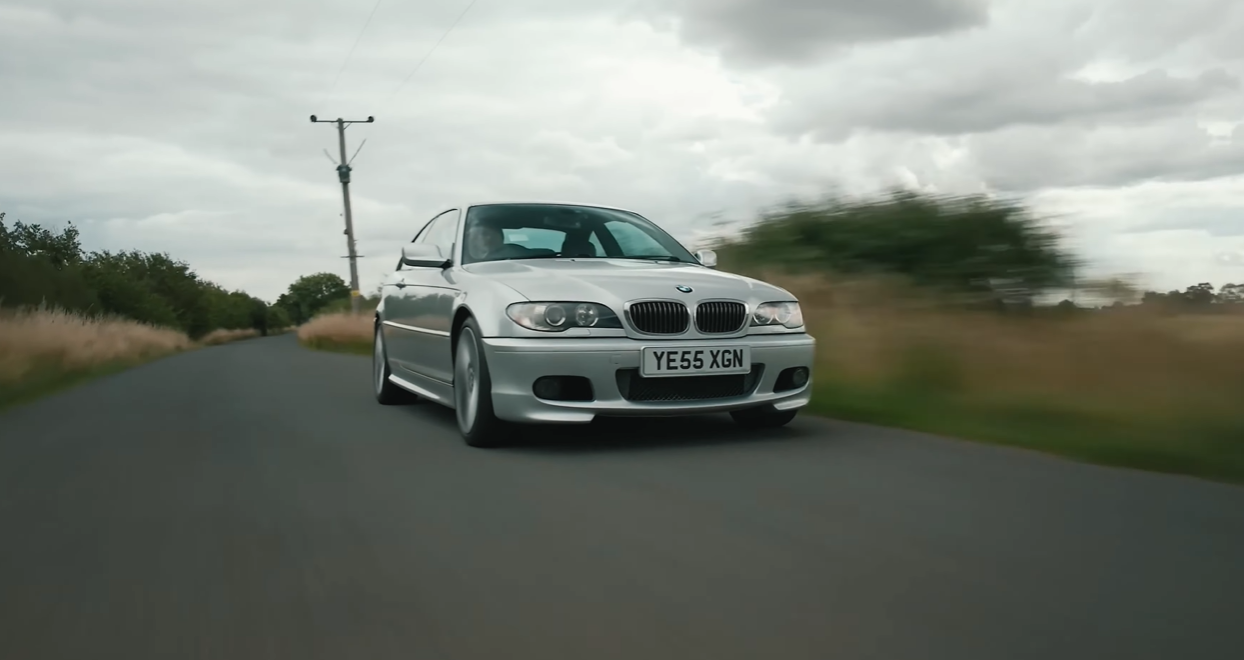
It’s not as communicative as the legendary E46-generation 3 Series (which I drove on the channel a few months ago), but it’s leagues ahead of anything else in the compact executive class.
- ❌ Not overly assisted (no video-game numbness)
- ✅ You can feel the road surface in your palms (rare in 2026!)
- ✅ Perfectly weighted (not too light, not too heavy)
2. The Chassis Layout
Engine at the front, drive to the rear, big duff northerner in the middle laughing every time the back end steps out on a greasy roundabout.
(Not that I’m condoning such yob behavior, of course.)
The point is: It’s balanced.
Because the front wheels only handle steering (not drive), the 330e is:
- ✅ More eager to change direction
- ✅ More willing to hold its line
- ✅ Way more fun than a front-wheel-drive rival
3. The M Sport Suspension
The optional M Sport suspension adapts to road conditions automatically, delivering:
- Comfort on long motorway cruises
- Razor-sharp body control on twisty B-roads
Verdict: If you enjoy driving—even a little bit—the 330e will make you grin like an idiot every single time you take the long way home.
The Hybrid System: Great on Paper, Flawed in Reality
292 HP Combined (But There’s a Catch)
Powertrain Specs:
- Engine: 2.0L turbocharged inline-4 (180 hp)
- Electric Motor: 83 kW (112 hp)
- Combined Output: 292 hp / 310 lb-ft torque
- Transmission: 8-speed automatic
- 0-60 mph: 5.6 seconds
- Top Speed: 130 mph (electronically limited)
Battery & Charging:
- Capacity: 12.0 kWh
- Electric Range: 30 miles (EPA estimate)
- Charging Time: 3.5 hours (Level 2 / 240V) | 11.5 hours (120V outlet)
The Problem: It’s Not Efficient Enough for Long Distances
I often fly from Gatwick for work, which is 150 miles from my house. Here’s what I’ve learned:
Real-World Range:
- Electric-only: ~30 miles (battery depletes fast on highways)
- After battery is drained: 35-40 mpg on gas alone
Fuel Tank Issue:
The 330e has a smaller 8-gallon fuel tank (vs 11 gallons in the standard 320i) to make room for the battery.
Real-World Range: ~300 miles total (battery + gas)
The Anxiety:
That last 10 miles to the airport at 1:00 AM, with most gas stations closed, is genuinely nerve-racking.
The Hybrid System Feels “Dense”
The 330e’s hybrid system is a bit… clunky. It tends to run on either electric or gas—rarely blending the two smoothly unless your foot is mashed into the carpet.
BYD’s Seal 6 manages seamless power blending, so why can’t BMW?
Regenerative Braking:
The brakes feel strange at the top of the pedal travel. You need to push through 2-3mm of dead zone before the friction pads engage. It’s fine once you get used to it, but it’s not confidence-inspiring.
Company Car Tax: The 330e’s Secret Weapon
Why Most 330e Buyers Lease, Not Buy
Here’s the real reason to buy a 330e: Massive company car tax savings.
UK Tax Comparison (Based on £50,270 Salary):
| Model | Benefit-in-Kind Rate | Annual Tax |
|---|---|---|
| BMW 320i | 35% | £3,000/year |
| BMW 330e (PHEV) | 12% | £950/year |
| BMW i4 (EV) | 3% | £400/year |
Translation: If you’re on a company car scheme and earning under £50,270, the 330e saves you £2,050/year compared to the 320i.
That’s £10,250 over 5 years—enough for a very nice holiday.
USA Federal Tax Credit:
In the U.S., the 330e qualifies for up to $7,500 in federal EV tax credits (subject to income limits and battery sourcing requirements—check with your accountant).
Interior Quality: Why BMW Beats Chinese Rivals
Premium Materials vs. Cheap Plastics
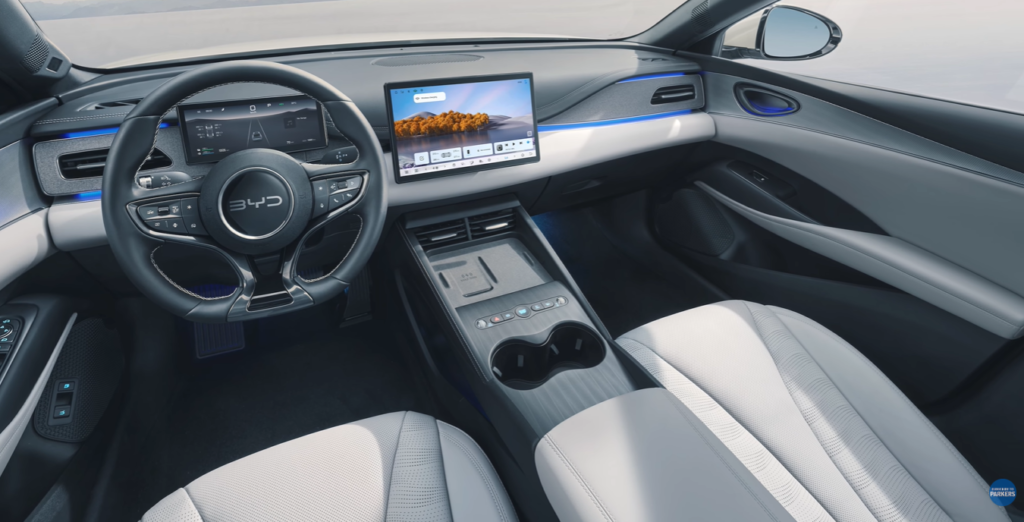
You can get Chinese PHEVs like the BYD Seal 6 (starting at $35,000) or MG 5 ($32,000) for thousands less than the 330e.
But there’s a reason BMW costs more: Interior quality.
BMW 330e Interior:
- ✅ Solid, expensive-feeling materials
- ✅ Sturdy build quality (no creaks or flexing)
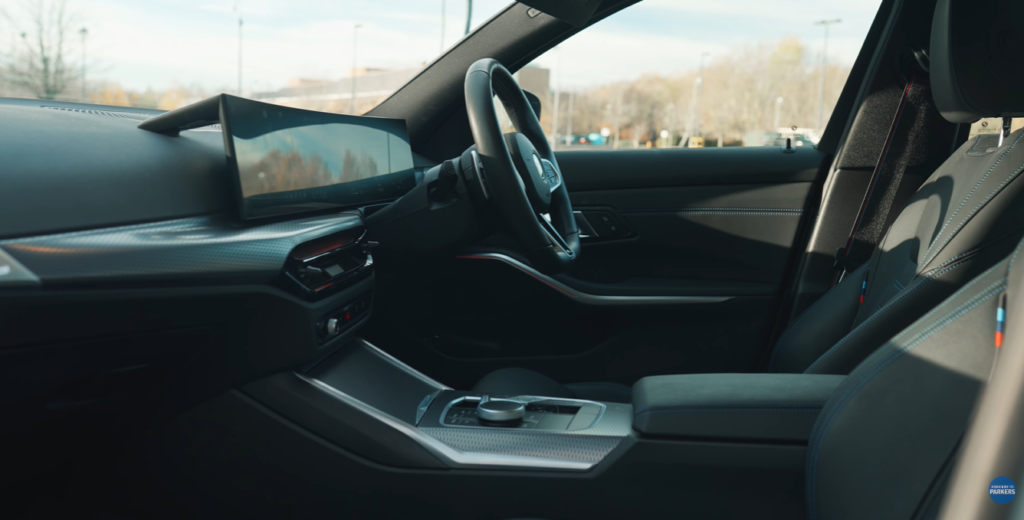
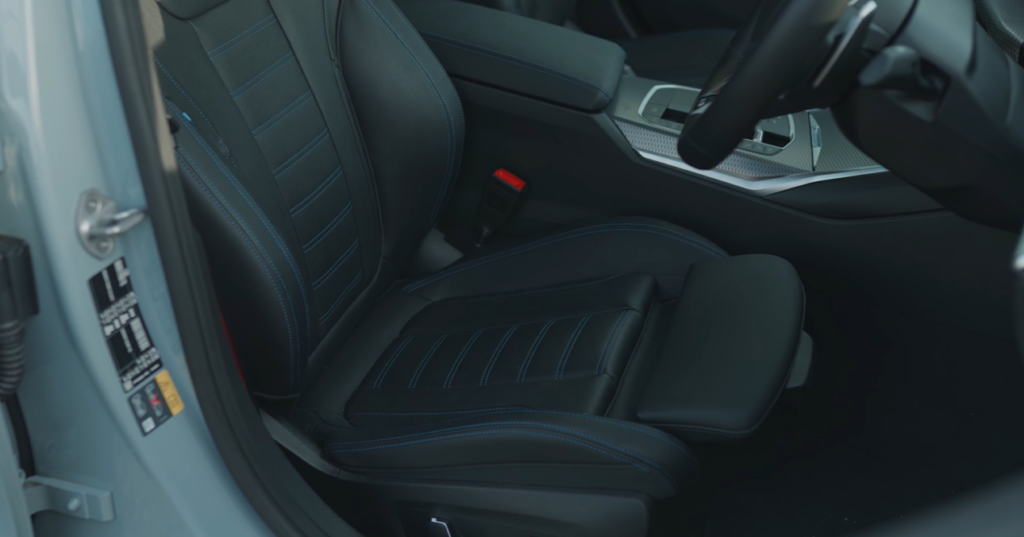
- ✅ Comfortable M Sport seats with adjustable side bolsters
- ✅ iDrive controller (physical dial for infotainment—no touchscreen fumbling!)
Chinese PHEVs:
- ❌ Flimsy, cheap plastics
- ❌ Rattles and squeaks
- ❌ Generic interiors
It’s like comparing a Casio watch to a Breitling. You notice the difference every single day.
The Infotainment System: Touchscreen Done Right
Yes, the 330e has a massive 14.9-inch touchscreen (which I normally hate—see my Renault Scenic review).
But BMW solved my biggest problem with modern cars:
The iDrive Controller.
This physical dial lets you highlight icons on the screen and click to select them—without taking your eyes off the road.
Why This Matters:
In an Audi or Mercedes, you’re forced to stab at frustratingly small touchscreen icons while driving. In the BMW, you just spin the dial and click. Simple. Safe. Brilliant.
The M Sport Seats: Worth the Upgrade
You need to step up to M Sport trim to get the sport seats, but they’re worth it:
- ✅ Tons of lumbar support
- ✅ Adjustable side bolsters (hug you during spirited driving)
- ✅ Heated and ventilated (optional)
My Only Complaint:
BMW’s current steering wheels are too chunky. I wish they’d slim them down. Even my 6-foot frame finds them cumbersome.
Pricing & Options: The BMW Tax Is REAL
Base Price vs. As-Tested Price
MSRP:
- BMW 330e (RWD): $50,395
- BMW 330e xDrive (AWD): $52,395
My Test Car (As Tested): ~$59,000
How Did It Get So Expensive?
BMW’s options list is dangerously addictive. Before you know it, you’ve ticked $9,000+ in extras:
- M Sport Package: $2,500
- Premium Package: $2,000
- Adaptive M Suspension: $1,500
- Harman Kardon Sound: $875
- Parking Assistance Plus: $700
- Wireless Charging: $500
- And so on…
Reality Check:
For $59,000, you could buy a base-spec BMW 5 Series (larger, more luxurious).
Better Value Alternatives
| Model | Starting Price | Electric Range | Cargo Space |
|---|---|---|---|
| BMW 330e | $50,395 | 30 miles | 13.2 cu ft |
| BYD Seal 6 (China) | ~$35,000 | 50+ miles | 17.3 cu ft |
| MG 5 (China) | ~$32,000 | 45 miles | 15.8 cu ft |
Why Pay More for BMW?
- ✅ Superior driving dynamics
- ✅ Premium build quality
- ✅ Better after-sales service
- ✅ Proven reliability (Chinese brands are still unproven long-term)
Are BMW 330e Reliable? (The Honest Truth)
RepairPal Reliability Rating: 2.5/5
According to RepairPal, the BMW 3 Series scores 2.5 out of 5 for reliability, ranking #55 out of 68 luxury midsize cars.
Translation: BMWs are more expensive to maintain than Japanese rivals (Lexus, Acura) but on par with Mercedes and Audi.
Common Issues:
- Coolant system failures
- Oil leaks (valve cover gaskets)
- Electrical gremlins (sensors, modules)
Warranty:
- 4 years / 50,000 miles (basic)
- 4 years / 50,000 miles (powertrain)
- 3 years / 36,000 miles (free scheduled maintenance)
Can You Drive a BMW 330e Without Charging?
Yes, But You’re Wasting Its Potential
One of the most common questions: “Can you drive a BMW 330e without charging it?”
Answer: Yes, it functions as a regular hybrid when the battery is depleted.
But here’s the problem:
Once the battery is dead, you’re lugging around 400+ pounds of battery weight for no reason. Fuel economy drops to 35-40 mpg (worse than a standard 320i’s 28/35 mpg city/highway).
Best Strategy:
- Charge nightly at home (Level 2 charger takes 3.5 hours)
- Use electric-only mode for commutes under 30 miles
- Let the gas engine handle long highway trips
Does the BMW 330e Qualify for a tax credit?
USA Federal Tax Credit (Up to $7,500)
The 330e may qualify for the federal EV tax credit, but eligibility depends on:
- Battery sourcing (must meet North American content requirements)
- Final assembly location (must be built in North America)
- Income limits ($150,000 for single filers, $300,000 for joint filers)
Reality Check:
Most BMW 3 Series PHEVs are assembled in Germany, so they likely don’t qualify for the full credit. Consult your accountant.
Final Verdict: Is the BMW 330e Worth Buying?
Rating: 4.1/5 Stars ⭐⭐⭐⭐
The BMW 330e is a brilliant company car that saves thousands in tax—but a questionable private purchase unless you’re obsessed with driving dynamics.
Strengths:
- 🏆 Best-in-class driving dynamics (steering, handling, balance)
- 💰 Massive company car tax savings (£2,050+/year vs 320i)
- 🎨 Premium interior quality (beats Chinese rivals)
- ⚡ 30-mile electric range (enough for most daily commutes)
- 🚗 More spacious than SUVs (despite being smaller)
- 🔧 iDrive controller (physical dial > touchscreen fumbling)
Weaknesses:
- 💸 Expensive ($59K as tested—$7K more than base 5 Series)
- 🔋 Hybrid system feels clunky (not as seamless as BYD or Toyota)
- ⛽ Poor long-distance efficiency (35-40 mpg on gas alone)
- 🛢️ Small fuel tank (300-mile real-world range causes anxiety)
- 📦 Compromised boot space (13.2 cu ft vs 16.9 in standard 3 Series)
- 🔧 Below-average reliability (2.5/5 RepairPal rating)
Who Should Buy the BMW 330e?
✅ Buy If:
- You get it as a company car (tax savings make it a no-brainer)
- You have a <30-mile daily commute (maximize electric-only driving)
- You value driving dynamics over efficiency
- You want a premium interior (not Chinese plastics)
- You prefer saloons over SUVs
- You have home charging (Level 2 charger essential)
❌ Skip If:
- You drive 150+ mile round trips daily (get a diesel or full EV)
- You need maximum cargo space (get the 330e Touring or an SUV)
- You’re buying outright (Chinese PHEVs offer better value)
- You want best-in-class reliability (get a Lexus ES 300h)
- You need seamless hybrid transitions (get a Toyota Camry Hybrid)
Reliability is average for the class (2.5/5 RepairPal rating). Expect higher maintenance costs than Japanese rivals, but similar to Mercedes and Audi.
Yes, it functions as a regular hybrid when the battery is depleted, but fuel economy drops to 35-40 mpg (worse than you’d expect for lugging 400 lbs of battery weight).
Final Thoughts: The BMW 330e proves saloons aren’t dead—they’re just smarter than SUVs. If you’re a company car driver who values driving dynamics and can charge at home, the 330e is a no-brainer at under £1,000/year in tax. But private buyers should think twice: Chinese PHEVs offer better value, and the 330e’s efficiency isn’t impressive enough to justify the premium.
Rating: 4.1/5 ⭐⭐⭐⭐
Do saloons still have a place in 2026? Or should we all just buy SUVs? Let me know in the comments!