ONE-LINE VERDICT
The Vivo T5 Pro is a good phone with a great battery — but five specific problems make it the wrong choice for a large group of buyers at this price. Know them before you spend ₹27,999.
IMPORTANT NOTE BEFORE YOU READ
This is not a hate piece. We reviewed the Vivo T5 Pro fully and gave it 4 out of 5. The battery life is genuinely outstanding — it lasted 10 hours and 36 minutes in our full drain test and beat a phone with a 10,000mAh battery. The IP68 plus IP69K water resistance is excellent. The 90W charging is fast. OriginOS 6 has features no other Android skin at this price offers.
But none of that matters if the phone is wrong for your specific use case. And for a significant number of buyers in the ₹27,000–₹30,000 segment, it is the wrong phone. Here is exactly why.
REASON 1 — THERE IS NO ULTRAWIDE CAMERA AND IT WILL BOTHER YOU EVERY SINGLE DAY
This is not a minor spec difference. This is a daily frustration that will follow you for the entire time you own this phone.
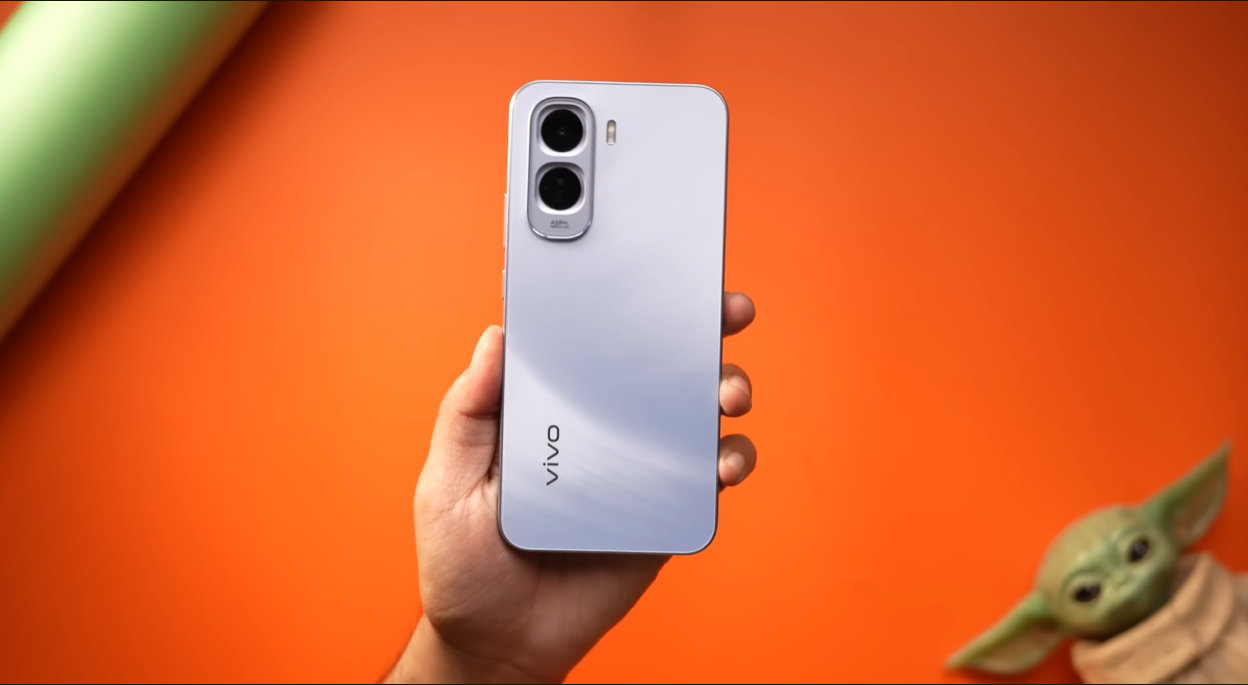
The Vivo T5 Pro has exactly one rear camera. One lens. No ultrawide. No telephoto. Just the main camera.
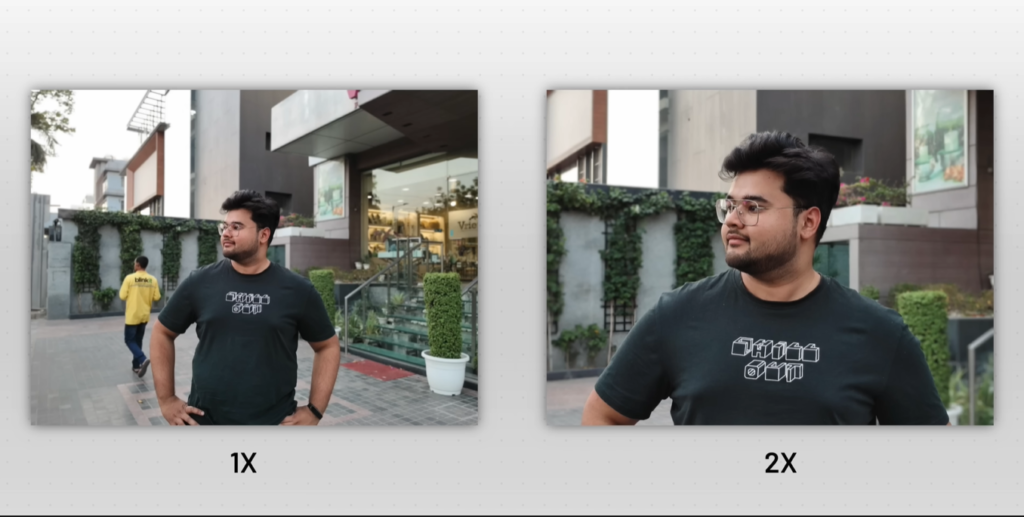
Here is what that means in practice. You are at a family dinner and want to get everyone in the frame — you cannot back up far enough to fit eight people at a table. You are visiting a monument or a building and want to capture the full structure — one shot cannot contain it. You are shooting the interior of a room — the main camera sees half of it. You are hiking and want to capture a wide valley or mountain range — the main camera crops out most of what made the scene worth photographing.
Every single one of these situations happens regularly in real life. Not occasionally. Regularly. And every single time, the Vivo T5 Pro will leave you frustrated because the shot you wanted is physically not possible with the hardware you have.
The competition at this price does not have this problem. Most phones at ₹27,000–₹30,000 in 2026 ship with a triple camera setup including an ultrawide as standard. The Realme 16 5G has one. The Samsung Galaxy A37 has one. The iQOO Z10 has one. Phones costing less than the T5 Pro have ultrawide cameras.
Vivo made a deliberate decision to omit the ultrawide from the T5 Pro. The reason is almost certainly engineering — fitting a 9020mAh battery inside a relatively slim chassis leaves limited space for additional camera hardware. That engineering trade-off was a decision that prioritised battery capacity over camera versatility, and it is a trade-off you pay for with every group photo, every landscape, and every interior shot you attempt.
If you shoot photos frequently and in varied situations, this limitation will genuinely reduce your enjoyment of this phone. Not occasionally. Every day.
WHO THIS AFFECTS MOST: Anyone who travels, attends events, shoots family moments, photographs food, captures architecture, or uses their phone camera for anything beyond a single subject directly in front of them.
WHO IT DOES NOT AFFECT: Buyers who primarily shoot portrait photos of single subjects, selfies, or close-up objects. If your photography habit is narrow, the main camera handles it well.
THE HONEST ALTERNATIVE: If the ultrawide matters to you — and for most people it should — look at phones in this bracket that include one. The iQOO Z10, Realme 16 5G, and Samsung Galaxy A56 all offer wider camera systems at comparable or lower prices.
REASON 2 — THE CHIPSET IS NOT 2026-COMPETITIVE AND YOU WILL FEEL IT
The Vivo T5 Pro runs the Snapdragon 7S Gen 4. This is an important number to understand in context.
The Snapdragon 7S Gen 4 is not a bad chipset. In everyday tasks — calls, messaging, social media, video streaming, casual gaming — it handles things without visible complaint. BGMI averaged 77 FPS in our testing, which is acceptable. The thermal management is excellent, keeping temperatures at a maximum of 35 degrees Celsius under sustained load.
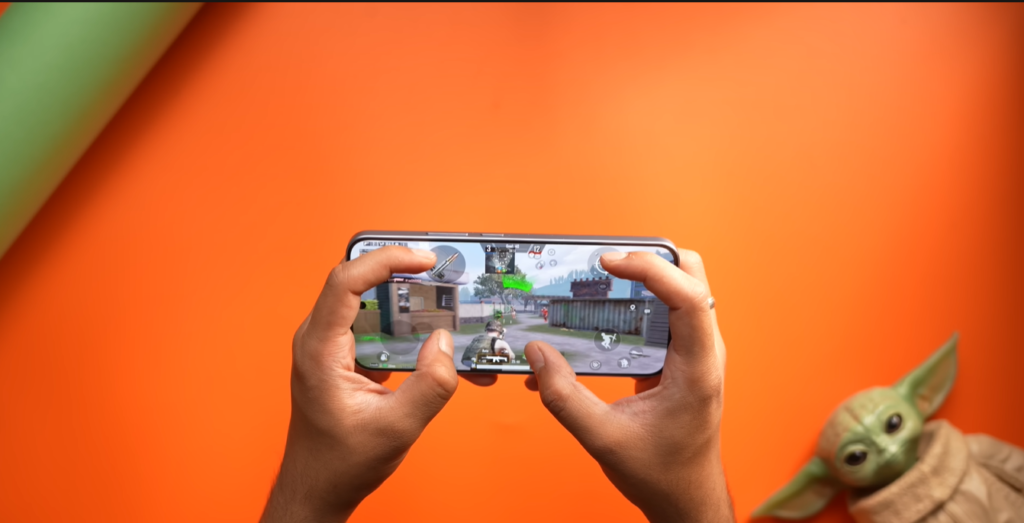
But here is what the spec sheet does not tell you clearly: the Snapdragon 7S Gen 4 sits in the lower tier of Qualcomm’s 2026 mid-range lineup. By the time the T5 Pro launched, competitors at the same price were offering chipsets that benchmark noticeably higher and handle demanding tasks with more headroom.
In day-to-day light use, you will not feel the difference. But in three specific scenarios, the chipset gap becomes noticeable:
Heavy 3D gaming at maximum settings: The T5 Pro cannot maintain stable high frame rates in graphically demanding open-world titles at top settings. You will need to reduce graphics quality to keep gameplay smooth. Phones at the same price with more powerful chipsets do not require this compromise.
Multitasking with heavy apps simultaneously: Running multiple demanding apps side by side — video editing and a game, or two streaming services at once — shows the processor’s ceiling faster than competitors. The phone does not crash. It just slows down more than it should at this price.
Long-term performance over two to three years: Chipsets age. Apps get heavier. As software demands increase over the lifespan of the phone, a chipset that is already at the lower end of competitive in 2026 will feel the pressure sooner than a phone that launched with a stronger processor. For a phone you plan to keep for three years, the chipset’s starting position matters.
The 3 years of OS update support means you will be using this phone through 2029. By the end of that support window, the Snapdragon 7S Gen 4 will be a four-year-old processor running modern apps. That is a real consideration.
WHO THIS AFFECTS MOST: Mobile gamers who play demanding 3D titles at high settings. Power users who run multiple heavy apps simultaneously. Anyone planning to keep this phone for three or more years and wanting it to feel capable throughout.
WHO IT DOES NOT AFFECT: Light to moderate users whose phone use consists primarily of calls, messaging, social media, streaming, and casual gaming. For this use case, the chipset is more than sufficient and the excellent battery life more than compensates.
THE HONEST ALTERNATIVE: If chipset performance is important to your use case, the iQOO Z10 and Poco X7 Pro offer stronger processors at comparable prices in the ₹27,000–₹32,000 bracket.
REASON 3 — ONLY 3 YEARS OF OS UPDATES IS A REAL PROBLEM IN 2026
Three years of major OS updates sounds reasonable until you compare it to what the competition now offers as standard.
Samsung gives six years of OS updates on the Galaxy A37, A56, and A57. Google gives seven years on the Pixel series. Even OnePlus has pushed to four years of OS support on recent mid-range releases. The industry standard for software longevity in 2026 has moved significantly, and Vivo’s commitment of three years of OS updates and five years of security patches puts the T5 Pro behind the curve.
Here is why this matters practically and not just theoretically.
The T5 Pro launches in 2026. Three years of OS updates means its last guaranteed major Android version upgrade arrives in 2029. By that point, Android will likely be on version 18 or 19. The T5 Pro will stop receiving new Android features in 2029 while competitors bought at the same price continue to receive updates into the early 2030s.
New Android versions are not just cosmetic changes. They bring security improvements, new privacy features, performance optimisations, and app compatibility updates. An app that requires Android 18 in 2029 will not run on a T5 Pro stuck on Android 19’s equivalent feature set. This is how perfectly working hardware becomes effectively obsolete — not because it stops functioning, but because it stops receiving the software it needs to stay compatible.
Five years of security patches is a partial consolation — your phone will not become a security liability after OS updates stop. But security patches without new OS features still leave you on an ageing platform.
For a phone at ₹27,999 that most buyers will want to use for three to four years, the gap between three years of OS support and six years of OS support is significant. You are essentially paying current market price for a phone that will be software-obsolete two years sooner than alternatives at the same price.
WHO THIS AFFECTS MOST: Anyone who plans to keep their phone for three or more years. Anyone who relies on their phone for banking, security-sensitive apps, or professional use where software currency matters. Anyone who wants to extract maximum value from a ₹28,000 purchase.
WHO IT DOES NOT AFFECT: Buyers who upgrade their phones every one to two years and will not reach the end of the support window before replacing the phone anyway.
THE HONEST ALTERNATIVE: Samsung Galaxy A57 offers six years of OS updates at a higher price but meaningfully better long-term value. Samsung Galaxy A56 at a lower price also carries six years of update support. If software longevity matters to you, Samsung’s commitment is genuinely difficult to match in this segment.
REASON 4 — NO HDR ON NETFLIX MEANS YOUR STREAMING EXPERIENCE IS COMPROMISED
The Vivo T5 Pro has a 6.83-inch AMOLED display. It has 144Hz refresh rate. It gets bright enough for outdoor use. By every measure, it sounds like a great screen for streaming content.
Then you open Netflix.
The T5 Pro does not support HDR on Netflix. This is a certification issue — Widevine L1 and Netflix HDR certification require specific hardware and software conditions that the T5 Pro either does not meet or that Vivo has not pursued certification for. Whatever the technical reason, the result is the same: when you stream Netflix on the T5 Pro, you are watching in standard dynamic range rather than HDR, even on content that Netflix has produced or licensed in HDR format.
What does that actually mean for the viewing experience? HDR content on Netflix is produced with a wider range of brightness and colour than standard content. Highlights are brighter. Shadows have more detail. Colours are more saturated and accurate. On a phone with a capable AMOLED display, HDR content looks noticeably better than SDR content — deeper blacks, brighter highlights, and a more cinematic overall image.
On the T5 Pro, you get HDR on YouTube and HDR10+ for offline videos. So the hardware is capable of displaying HDR content. Netflix specifically is the gap. And Netflix is the streaming service that a very large proportion of Indian smartphone users use daily.
This is a frustrating limitation on a phone that markets itself partly on its display quality and is explicitly sold as a content consumption device. A 144Hz AMOLED screen deserves Netflix HDR certification. The T5 Pro does not have it.
WHO THIS AFFECTS MOST: Netflix subscribers who regularly watch movies and series and care about picture quality. Anyone who considers their phone their primary entertainment screen. Buyers who are specifically choosing a phone for its display quality for streaming.
WHO IT DOES NOT AFFECT: Users who primarily stream on YouTube, where HDR is supported. Users who primarily watch offline downloaded content, where HDR10+ is supported. Users who do not notice or care about the difference between SDR and HDR streaming quality.
THE HONEST ALTERNATIVE: At this price, several competitors offer full Netflix HDR certification with AMOLED displays. If streaming quality is a priority, verify Netflix HDR certification before purchasing any phone in this segment.
REASON 5 — THE POLYCARBONATE BUILD DOES NOT MATCH THE PRICE PERCEPTION
At ₹27,999, a buyer has a reasonable expectation of at least some premium material presence. The Vivo T5 Pro delivers neither a metal frame nor a glass back — both the frame and the back panel are polycarbonate plastic throughout.
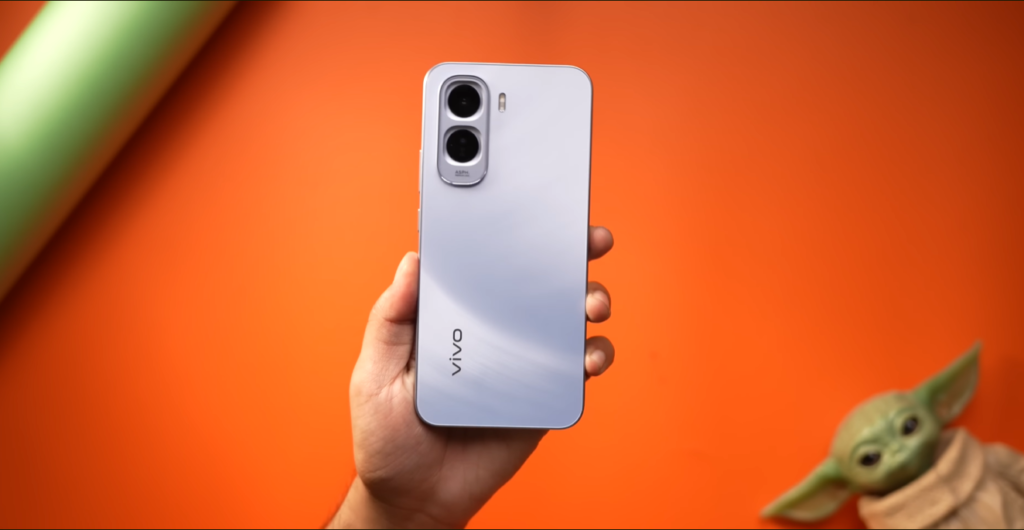
This is not a manufacturing corner-cut made out of laziness or greed. As explained in our full review, polycarbonate is the engineering reason the T5 Pro weighs only 215 grams despite carrying a 9020mAh battery. Metal or glass construction at this battery size would push the weight well above 220–230 grams, which would make the phone noticeably heavier and less comfortable for extended use. The material choice is a consequence of the battery-first design philosophy.
But understanding the reason does not make the experience feel premium. In the hand, the T5 Pro feels like a ₹20,000 phone in terms of material quality. Competitors at this price increasingly ship with metal frames. The Vivo T5 Pro does not.
The glossy polycarbonate back has a second problem beyond the material perception: it is a fingerprint magnet. The shiny finish that looks attractive in product photos and on a clean shelf accumulates smudges, oils, and fingerprints from normal daily handling at a rate that is genuinely irritating. Without a case, the back of the T5 Pro will look dirty within hours of regular use. With a case, the phone becomes thicker and heavier, reducing the advantage of the polycarbonate weight saving.
The front of the phone presents well — thin bezels, a clean AMOLED panel, and a premium-feeling display experience. It is specifically when you flip the phone over or grip the frame that the material quality gap becomes apparent.
For buyers who care about how their phone feels as a physical object — not just how it performs as a computing device — the all-polycarbonate build at nearly ₹28,000 is a real compromise that competitors at this price have moved beyond.
WHO THIS AFFECTS MOST: Buyers who use their phone without a case and care about how it feels in hand. Anyone for whom premium material quality is part of the value equation at this price. Buyers who have used metal-frame phones and find the difference noticeable.
WHO IT DOES NOT AFFECT: Buyers who always use a case — the underlying material becomes irrelevant. Anyone who prioritises light weight over premium feel. Buyers who value the engineering reasoning behind the material choice.
THE HONEST ALTERNATIVE: The Samsung Galaxy A57 at a higher price offers a metal frame and a significantly more premium in-hand feel. Within this exact price bracket, the iQOO Z10 offers a more premium construction alongside comparable performance.
THE COMPLETE PICTURE — WHAT THE T5 PRO GETS RIGHT
This is a reasons-to-avoid article, not a dismissal of the phone. The Vivo T5 Pro has genuine, significant strengths that make it the right phone for specific buyers:
The 9020mAh silicon carbon battery that lasted 10 hours 36 minutes in our full drain test is the best battery result we have seen at this price. Full stop.
The 90W charging means a phone with a massive battery does not require overnight charging anxiety — one hour to full is fast and practical.
The IP68 plus IP69K dual water resistance rating is above class at this price.
The Blank Data Authorization privacy feature in OriginOS 6 is the most useful privacy tool available on any Android skin in this price range.
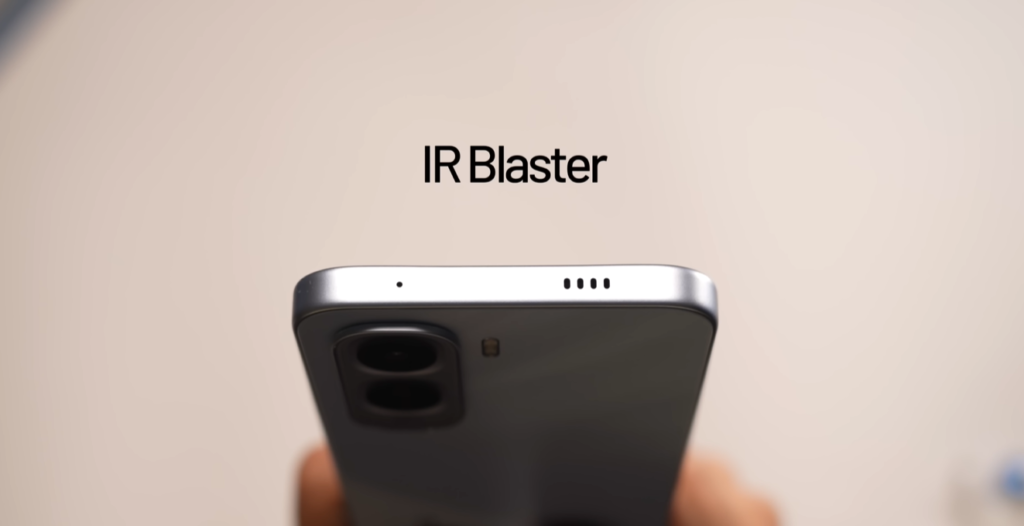
The IR blaster, reverse wired charging, and the ability to stand upright on a flat surface are small practical features that accumulate into real daily value.
The 144Hz AMOLED display with thin bezels looks excellent.
If these strengths align with what you actually need from a phone, the T5 Pro is a genuinely strong buy. If the five reasons above describe your daily use case, buy something else.
WHO SHOULD LOOK ELSEWHERE — QUICK SUMMARY
You shoot photos in varied situations regularly — the missing ultrawide will frustrate you daily.
You play demanding 3D games at maximum settings — the chipset will not keep pace with competitors.
You plan to keep this phone for four or more years — three years of OS updates is below the current competition standard.
Netflix HDR matters to your streaming experience — the T5 Pro is not certified.
You care how your phone feels as a physical object and do not always use a case — the all-polycarbonate build at this price is a compromise.
If none of these apply to you, go read our full Vivo T5 Pro review. The 9020mAh battery, 90W charging, and IP68 plus IP69K water resistance make a very strong case for this phone for the right buyer.
QUICK COMPARISON — T5 PRO VS ALTERNATIVES
Vivo T5 Pro strengths: Battery life, charging speed, water resistance, privacy software, IR blaster Vivo T5 Pro weaknesses: Single camera, chipset, OS support years, no Netflix HDR, polycarbonate build
iQOO Z10 strengths: Stronger chipset, better camera system, metal build elements iQOO Z10 weaknesses: Smaller battery than T5 Pro
Realme 16 5G strengths: Triple camera with ultrawide, competitive chipset, selfie mirror feature Realme 16 5G weaknesses: Smaller battery capacity
Samsung Galaxy A56 strengths: Six years OS updates, strong software support, reputable brand trust. Samsung Galaxy A56 weaknesses: Higher price, older hardware generation
FINAL WORD
The Vivo T5 Pro is not a phone to avoid for everyone. It is a phone to avoid for specific buyers who will hit its limitations daily.
No ultrawide camera. A chipset that is below the 2026 mid-range ceiling. Three years of OS support when the competition gives six. No Netflix HDR certification. Polycarbonate build at nearly ₹28,000.
These are not small footnotes. For a meaningful segment of buyers in this price range, one or more of these limitations directly affects their daily experience. This article exists so you know which side of that line you are on before you spend your money.
If the battery is the thing you need most — and for many buyers it genuinely is — the T5 Pro remains one of the best answers at this price. If anything else on this list matters to you, there are better options available. Shop accordingly.
Reviewed by Reo R | My PitShop
6+ years hands-on tech and automotive reviewing experience Zero brand bias — honest verdicts, every time Category: Mobile Review | Read time: 7 min | Last updated: April 2026