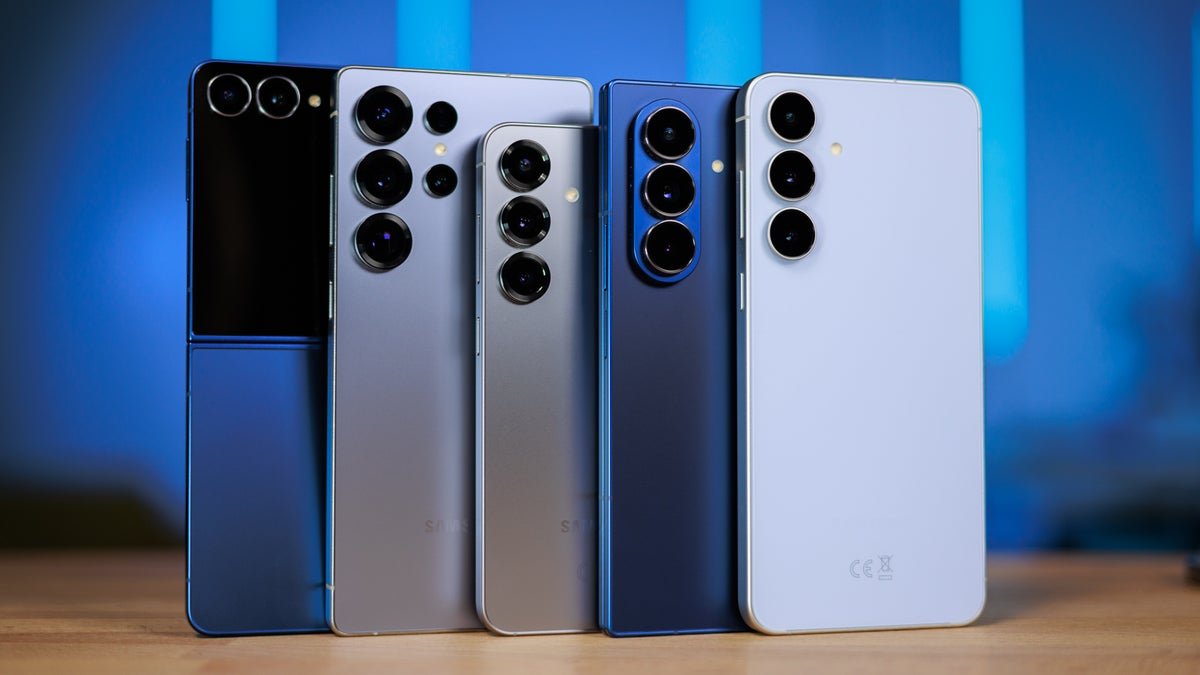
ONE-LINE VERDICT FOR EACH PHONE (THE SHORT VERSION FIRST)
- Galaxy S26 Ultra — The best Samsung phone money can buy. Buy it if you can stretch the budget.
- Galaxy S26 Plus — Overpriced for what it delivers. Wait for a deal or jump to the Ultra.
- Galaxy S26 — Compact but compromised. Battery life will frustrate demanding users.
- Galaxy Z Fold 7 — The best foldable Samsung has ever made. Battery life is still the weakness.
- Galaxy Z Flip 7 — The most pocketable Samsung. Excellent for light users, frustrating for heavy ones.
- Galaxy A57 — The sweet spot of Samsung’s 2026 mid-range lineup.
- Galaxy A37 — Decent phone, badly priced.
- The A56 beats it for less.
- S25 Ultra / S24 / S23 Series Refurbs — Genuinely underrated value plays with years of support remaining.
WHO THIS GUIDE IS FOR
If you are trying to figure out which Samsung phone to buy in 2026 without reading eight separate reviews, this is it. We have tested all of these phones and we will tell you exactly who each one is for, who it is not for, and where Samsung made decisions that do not serve the buyer.
THE INFORMATION MOST SAMSUNG ROUNDUPS MISS
Most best-of lists rank Samsung phones by price from highest to lowest and call it a guide. Here is what those guides skip:
The S26 Plus is not a sensible purchase at its current price. The S26 base model has battery problems that will frustrate any user who games or shoots video. The A37 is more expensive than the A56, which is a better phone. The Z Fold 7’s 25W charging is genuinely painful for a phone this expensive. And last year’s S25 Ultra on refurb may be the smartest Samsung purchase of 2026 for anyone who does not need the privacy display.
None of that is in the spec sheets. All of it matters for your decision.
SAMSUNG GALAXY S26 ULTRA — THE BEST SAMSUNG PHONE IN 2026
Starting price: £1,279 / ~$1,299
Who it is for: Power users, content creators, anyone who wants the absolute best Samsung can produce and has the budget to back it up.
Who should skip it: Anyone who finds a 6.9-inch phone impractical for one-handed use, or anyone whose budget makes this a financial stretch rather than a comfortable choice.
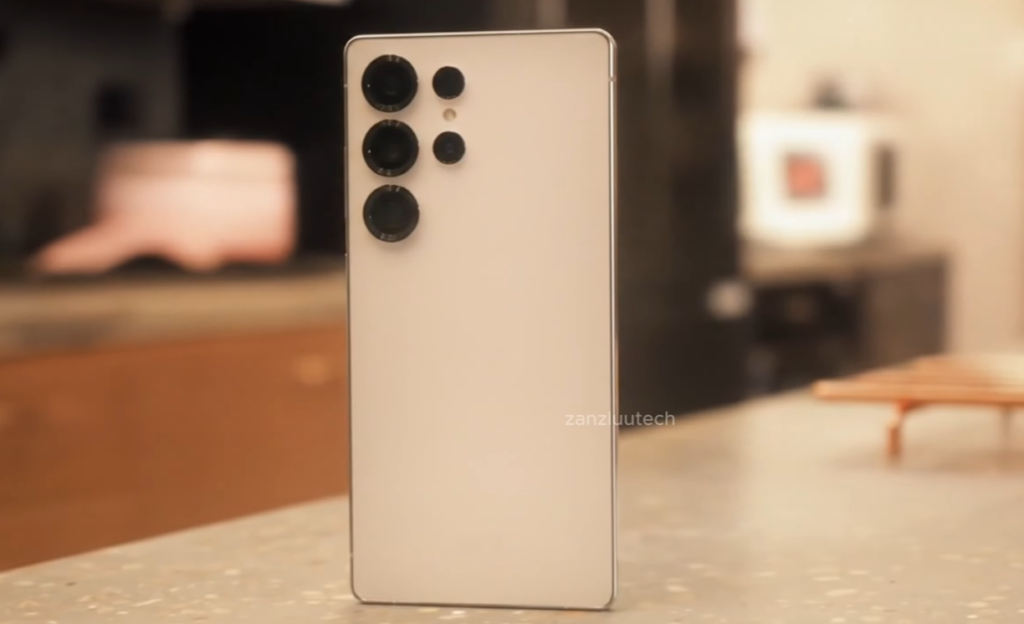
The Galaxy S26 Ultra is a 6.9-inch Dynamic AMOLED flagship powered by the Snapdragon 8 Elite 4 Galaxy chipset across all regions — meaning no Exynos compromise anywhere in the world, which is significant and worth noting explicitly. Performance is as smooth as you would expect from the fastest mobile chip available, including in graphically demanding games where the S26 Ultra handles prolonged sessions with only slight warmth rather than genuine heat.
Design is familiar — rounded corners are slightly more pronounced than the S25 Ultra but the basic shape is unchanged. The S Pen stylus is still here. If you are upgrading from an S24 Ultra or earlier, the form factor will feel immediately familiar.
THE FEATURE THAT ACTUALLY CHANGES HOW YOU USE THE PHONE
The single most interesting new feature on any Samsung phone in 2026 is the S26 Ultra’s privacy display. It works by deactivating specific pixels to narrow the viewing angle so dramatically that only someone looking directly at the screen can see what is on it. Anyone glancing from the side sees nothing but darkness.
In testing, the effect is genuinely impressive and gives the screen a distinctive textured finish when active that looks more intentional than intrusive. The honest caveat: it is not perfect. Someone looking directly over your shoulder at close range can still make out what is on screen. For shoulder surfers on a train or in a coffee shop it works well. For someone standing right behind you, less so. It is a genuinely novel piece of display technology, not a gimmick, but its limitations are worth knowing before they become your expectation.
CALL SCREENING — THE BEST NEW SOFTWARE FEATURE
The best software addition to the S26 Ultra is call screening, implemented exactly as Google has done on Pixel phones. When an unknown or suspected spam number calls, the phone automatically intercepts it, asks the caller to state their reason for calling, transcribes that response to text on your screen, and lets you decide whether to answer or dismiss. In practice this is remarkably useful and eliminates the daily irritation of answering unknown numbers.
Other new AI features are more mixed. Now Nudge, which is designed to provide contextual suggestions and reminders, has not yet proven particularly useful in real-world use and feels like a feature that needs software updates to reach its potential.
CAMERA — EXCELLENT BUT NOT UNCHALLENGED
The main camera uses the same 200MP sensor as the S25 Ultra, now paired with a larger f/1.4 aperture lens that allows more light in. Night photography is noticeably improved over last year — detail is strong, noise is more controlled than the S25 Ultra, and highlight retention is good.
The full camera system: 200MP main (f/1.4), 10MP telephoto at 3x optical, 50MP periscope telephoto at 5x optical, 50MP ultrawide, 12MP selfie with upgraded processing and a slightly wider field of view than last year.
Where the S26 Ultra falls behind some rivals: active subjects. Any fast-moving subject — a running child, a pet mid-leap, a sports moment — tends to produce blur or softness even in good light. This is a consistent Samsung processing decision rather than a hardware limitation, and it puts the S26 Ultra behind Vivo and Xiaomi flagships for action photography specifically.
Selfie processing is accurate and flattering in a bright, lifted-highlights style that enhances features and suits younger users. In lower light, grain appears. Video goes up to 8K at 30fps or 4K at 30/60fps. The upgraded Video Boost feature delivers cleaner, crisper footage than the S25 Ultra with better noise handling. The new Horizontal Lock feature keeps footage level during movement — genuinely useful for action-style shooting.
Battery life is solid for demanding users through a full day. Heavy video shooting or sustained gaming (approximately 3 hours of continuous demanding play) will drain it faster. For most use cases the S26 Ultra will last comfortably from morning to evening.
VERDICT: If you can afford it and want the best Samsung has to offer, the S26 Ultra is the right answer. The privacy display is genuinely innovative, the chipset is unconstrained, and the camera system — despite its action photography weakness — is excellent across most scenarios.
RATING: 4.5 / 5
SAMSUNG GALAXY S26 PLUS — THE ONE TO SKIP
Starting price: ~£999 / ~$1,099
The S26 Plus exists in an uncomfortable place in Samsung’s 2026 lineup and it is hard to recommend at full price.
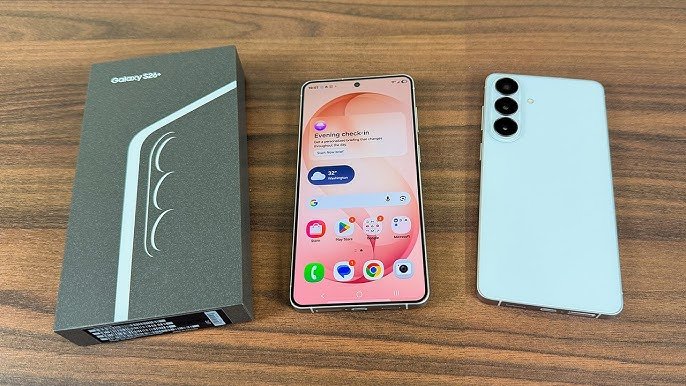
Here is the core problem laid out simply. In the UK and several other markets, the S26 Plus ships with an Exynos chipset rather than the Snapdragon 8 Elite found in the Ultra and in the S26 Plus sold in the United States. That chipset difference creates a meaningful performance and battery life gap. The privacy display that makes the Ultra stand out is absent entirely. The S Pen stylus is gone. The camera system is recycled directly from the S25 series rather than receiving the aperture upgrade the Ultra got — meaning the cameras are adequate but not flagship quality in 2026, particularly struggling with action shots and performing weakly in softer light with the telephoto.
Battery life is the most disappointing aspect. With any kind of camera use or gaming, the S26 Plus struggles to last a full day. The 45W charging keeps pace with the Ultra in charging speed at least, but slower charging than that would compound the battery problem further.
At its current asking price, the S26 Plus does not deliver flagship-level performance, does not have the Ultra’s headline feature, uses last year’s camera hardware, and runs a weaker chipset in many markets. The gap to the Ultra in price is smaller than the gap in experience.
VERDICT: Wait for a significant discount or spend the extra to get the Ultra. At full price the S26 Plus is one of the weakest value propositions in Samsung’s current lineup.
RATING: 3 / 5
SAMSUNG GALAXY S26 — COMPACT FLAGSHIP WITH REAL COMPROMISES
Starting price: ~£799 / ~$899
The Galaxy S26 is Samsung’s compact flagship option at 6.3 inches — a legitimately welcome size for users who find the Ultra and Plus impractical. The Dynamic AMOLED display has been scaled back to Full HD Plus resolution from the Quad HD Plus of the Plus and Ultra, but at 6.3 inches the pixel density remains genuinely crisp and the difference is not visible in normal use.
The chipset situation mirrors the S26 Plus in affected markets — Exynos in some regions, Snapdragon in others. The camera system is again recycled from last year’s S25 series. Perfectly fine for everyday photography. Not flagship quality in 2026. Action shots and moving subjects remain the weak point shared across the S26 family below the Ultra level.
The battery is the most significant weakness. The lower-capacity battery combined with no charging speed improvement means demanding users — gamers, video shooters, heavy social media users — will struggle to reach end of day without intervention. Light to moderate users will be fine. If you use your phone intensively, this phone will not satisfy you.
VERDICT: Genuinely appealing for users who prioritise size and one-handed usability above all else. Not recommended for anyone who uses their phone heavily. The battery limitation is a real daily problem, not a marginal concern.
RATING: 3.5 / 5
THE REFURB RECOMMENDATION MOST GUIDES SKIP
Before moving to the foldables, this is worth saying clearly: Samsung’s S25 Ultra, S24, and S23 series remain excellent phones in 2026, and they can be found on refurb marketplaces at significantly lower prices with multiple years of software support remaining.
Samsung’s 7-year OS update and security patching commitment means an S23 bought refurb in 2026 still has real software longevity ahead of it. The technology has not advanced dramatically enough over three generations to make these phones feel obsolete. The one thing you are giving up versus the S26 Ultra is the privacy display — which is genuinely interesting but not a daily essential for most people.
For anyone who wants flagship Samsung quality without a flagship price, a high-condition S25 Ultra or S24 Ultra refurb is worth serious consideration before committing to a new S26.
SAMSUNG GALAXY Z FOLD 7 — THE BEST FOLDABLE SAMSUNG HAS MADE
Starting price: ~£1,799 / ~$1,899
The Galaxy Z Fold 7 is the most significant generational improvement in the Fold lineup in several years. Samsung has achieved something genuinely difficult: making the phone considerably slimmer and lighter than the Z Fold 6 while simultaneously fitting a larger internal screen.
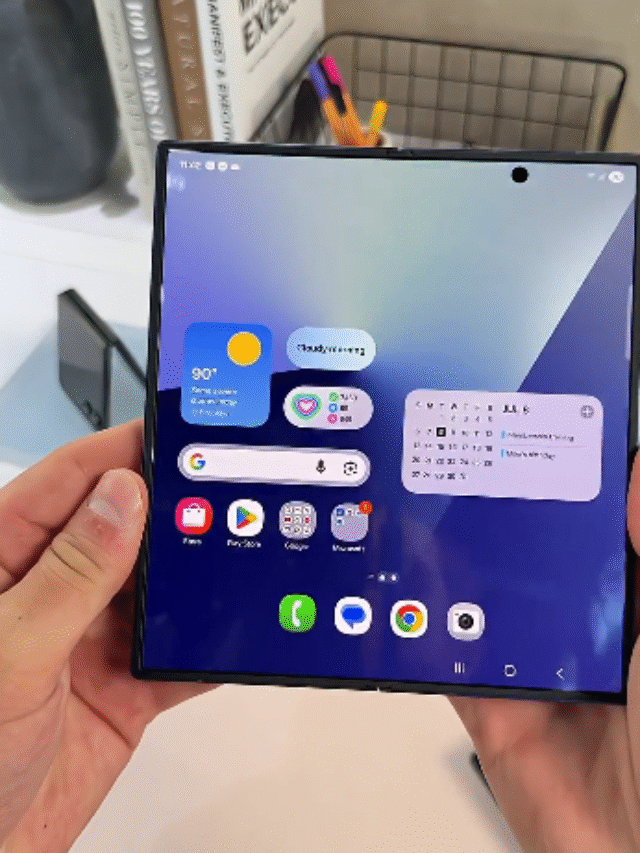
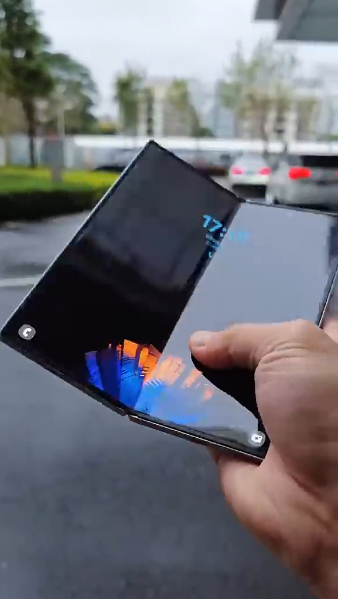

The numbers tell the story. When folded, the Z Fold 7 measures under 9mm — slimmer than many conventional smartphones. When unfolded, it is just 4.2mm. Weight has dropped to 215g, bringing it closer to Chinese foldable rivals that have long had a weight advantage over Samsung. These are not marginal improvements. Holding the Z Fold 7 for the first time after the Z Fold 6 is a noticeably different experience.
THE COVER SCREEN PROBLEM — FINALLY FIXED
One of the most meaningful improvements is something that sounds minor but dramatically changes daily usability: the cover screen is finally properly wide.
Previous Z Fold generations had a narrow cover screen with an awkward aspect ratio that made typing feel cramped and uncomfortable. The Z Fold 7’s 6.5-inch cover screen adopts a 21:9 aspect ratio — the same proportions used by normal full-sized smartphones. Typing on the cover screen is no longer a compromise. Web browsing works properly. Media consumption at this size is genuinely pleasant. The cover screen has gone from a usable-but-frustrating secondary feature to a fully functional phone screen in its own right.
The 8-inch internal display has grown slightly again from the previous generation, still Dynamic AMOLED 2X, still with the obligatory crease running down the middle. The crease is generally unnoticeable in apps with light backgrounds and only becomes visible in dark mode. It is a persistent foldable reality that Samsung has not yet eliminated, but it is less intrusive than it was.
BUILD AND PROTECTION
Gorilla Glass Victus 2 on the exterior. Gorilla Glass Ceramic 2 on the internal screen — shock-resistant but not anti-reflective, meaning the internal display catches light. IP48 rated for full water resistance. The frosted back resists fingerprints and smudges. The hinge is solid, squeak-free, and adds to the premium feel of a phone that costs nearly two thousand pounds.
The Z Fold 7 no longer supports S Pen input, which is a genuine loss for users who came from S Pen-equipped Folds. A basic capacitive stylus works, but it is not the same experience.
PERFORMANCE
Snapdragon 8 Elite 4 Galaxy — the same chip that powers the S26 Ultra, fine-tuned by Samsung and Qualcomm. Multitasking across multiple apps on the large internal screen is smooth. Gaming on demanding titles at maximum settings remains fluid even after over an hour of play, with only slight warmth around the camera area and no performance throttling.
THE BATTERY PROBLEM — STILL NOT SOLVED
Here is where the Z Fold 7’s biggest weakness lives. Samsung did not upgrade the battery capacity despite making the phone slimmer and the screen larger. The result is predictable: battery life under heavy use is strained.
Using the main internal screen for comic reading and Spotify streaming simultaneously delivers roughly 6 hours before the battery dies. Demanding games at high graphics settings give around 3 to 3.5 hours. Even with more moderate mixed use, most active users will find themselves in power saving mode by evening.
The charging situation compounds this: the Z Fold 7 maxes out at 25W wired charging. For a phone at this price point, 25W is genuinely difficult to accept in 2026. A full charge from empty takes close to 90 minutes. If you run the battery low during a busy day, topping up before going out requires planning your evening around a charging cable.
CAMERAS
200MP main sensor pulled directly from the S25 Ultra. 12MP ultrawide. 10MP telephoto at 3x optical. The same Samsung processing signature applies — vivid, bright, slightly boosted colours that look excellent on screen but can appear processed compared to Vivo and Xiaomi rivals that prioritise natural rendering. Action shots perform well in good light. Indoor low-light shots can be soft with shallow depth of field. Nighttime performance is solid without being exceptional.
The practical foldable camera advantage: you can use the rear camera system to take selfies using the cover screen as a viewfinder — a genuinely superior setup for portrait and group selfies compared to front-facing cameras on conventional phones.
VERDICT: The best Samsung foldable ever made and a genuine leap forward in the form factor. The cover screen improvement alone makes it significantly more usable as a daily driver than previous Folds. The battery capacity and 25W charging ceiling are real weaknesses that Samsung needs to address in the next generation. Buy it if you want the most capable large-screen phone available and you understand the battery trade-offs going in.
RATING: 4 / 5
SAMSUNG GALAXY Z FLIP 7 — THE PHONE THAT FITS EVERYWHERE
Starting price: ~£1,099 / ~$1,149
The Galaxy Z Flip 7 is a different kind of Samsung phone. It is not trying to be the most powerful or the most feature-loaded. It is trying to be the most pocketable, the most style-conscious, and the most enjoyable to use for the way most people actually use their phones day to day.
On that mission, it largely succeeds.
When folded, the Z Flip 7 slips into any pocket — including genuinely small ones — in a way that no other Samsung phone can match. The build quality has held up in testing without a single scratch or scuff despite regular pocket storage alongside other items. The armour aluminium frame and Gorilla Glass Victus 2 front and back feel premium and reassuringly solid. The hinge is tight and squeak-free.
THE COVER SCREEN — MORE USEFUL THAN EVER
The 4.1-inch cover screen with 120Hz refresh is the Z Flip 7’s daily interface for light use. Notifications, media controls, quick replies, and app access are all genuinely functional from the cover screen without opening the phone. The expanded size and improved software make this the most usable Flip cover screen Samsung has produced.
Tent mode — propping the partially folded phone on a surface — works well for desk use, video watching, and content creation. Full Gemini Live support on the cover screen is available.
In practice, most users open the Z Flip 7 mainly to write longer messages, watch video content, or handle anything that genuinely benefits from the 6.9-inch internal Dynamic AMOLED 2X display. For shorter interactions — checking notifications, quick replies, media playback — the cover screen handles it without the phone needing to open.
PERFORMANCE — NEW CHIPSET, SOME GAMING LIMITATIONS
The Z Flip 7 is the first smartphone to use Samsung’s new 3nm Exynos 2500 chipset, backed by 12GB of RAM. Everyday performance is smooth with occasional minor stuttering in menus that is characteristic of One UI rather than a hardware limitation.
Gaming is where the Exynos 2500 shows its ceiling. Casual titles and mid-range games run fine. More demanding open-world games struggle to maintain stable frame rates even on reduced settings. If gaming is a significant part of your phone use, the Z Flip 7 is not the optimal choice — the Motorola Razr 60 Ultra outperforms it in this specific area.
BATTERY — THE HONEST WARNING
The Z Flip 7 has a 4,300mAh battery — small by 2026 mid-range standards. For moderate users with around 5 to 6 hours of mixed screen-on time — messaging, browsing, streaming, camera, background music — the phone typically reaches end of day in single digits but without dying. For active users who game, shoot heavily, or stream continuously, battery anxiety by late afternoon is realistic.
The charging situation is a genuine problem: 25W maximum wired charging, the same ceiling as the Z Fold 7 despite the Z Flip 7 costing considerably less. At 25W, a full charge takes close to 90 minutes. There is no wireless charging. For a phone at this price, that is hard to justify.
CAMERAS — SIMPLE AND FUNCTIONAL
Two cameras: 50MP main and 12MP ultrawide. No telephoto. The setup is straightforward to use. Photo quality is good for casual and social photography in reasonable light. The foldable advantage applies here too — using the rear cameras for selfies via the cover screen delivers better quality than a conventional front-facing camera.
4K at 60fps is available with HDR in landscape orientation. Selfie video goes up to 4K at 30fps. Audio capture is clean, with minimal wind feedback in mild conditions.
VERDICT: The Z Flip 7 is the right phone for users who prioritise portability, style, and the experience of a genuinely compact device that does not compromise on screen quality when needed. Its battery and charging limitations are real and consistent with every Flip generation. If you live a moderate-intensity phone life, the Z Flip 7 is a joy to own. If you are a heavy user, it will frustrate you by mid-afternoon.
RATING: 4 / 5
GALAXY Z FLIP 7 FAN EDITION — SKIP UNLESS HEAVILY DISCOUNTED
The Fan Edition is a cheaper alternative to the Z Flip 7 with a smaller cover screen reminiscent of earlier Flip generations, a smaller battery, weaker performance, and fewer features. It captures the flip form factor at a lower entry price. Unless you find it with a substantial discount, the regular Z Flip 7 is worth the price difference. The compromises are too numerous to recommend the Fan Edition at near-standard pricing.
SAMSUNG GALAXY A57 — THE MID-RANGE SWEET SPOT
Starting price: ~£500 / ~₹42,000
The Galaxy A57 is the mid-range Samsung to buy in 2026. It is the thinnest A-series phone Samsung has made, carrying a near-premium physical presence without the premium price tag.
The design is genuinely impressive for the price — slim enough that the S25 Edge comparison made side by side shows only a modest thickness difference. Metal frame. Gorilla Glass Victus Plus front and back. IP68 water resistance — fully submersible, not just splash-resistant. Bezels have slimmed down slightly versus the A56, though they remain asymmetrical. The glossy back attracts fingerprints more than you would want.
DISPLAY — EXACTLY WHAT YOU NEED
The 6.7-inch Super AMOLED Plus at Full HD Plus resolution is an excellent screen. Not the sharpest mid-range panel available in 2026 — the Poco X8 Pro Max offers a 1.5K screen at a comparable price — but bright, contrasty, vivid, and comfortable for all-day use. The minimum brightness could stand to go lower for comfortable late-night reading. The stereo speakers are loud and clear with a minor imbalance between the bottom and top units — the bottom fires louder and richer.
PERFORMANCE — NEW CHIP, REAL IMPROVEMENT
The Exynos 1680 is a genuine step forward from the Exynos 1480 in the A37. Everyday use is smooth, apps load without hesitation, and casual to mid-range gaming is handled without issues. The 13% larger vapour chamber versus the A56 does a real job — over an hour of demanding gaming in testing kept the A57 merely warm rather than hot, with no performance throttling.
The limitation is demanding open-world games at high settings, where the A57 cannot sustain a stable 60fps. On medium settings it is perfectly playable. If you are a serious mobile gamer, the Poco X8 Pro Max at a similar price offers stronger GPU performance.
BATTERY — GENUINELY IMPRESSIVE FOR THE CHASSIS
A 5,000mAh battery inside what is essentially a slim metal chassis is a real achievement. In testing — including gaming sessions, video streaming, messaging, calls, and camera use across a full day — the A57 consistently reached evening without dying. It is not a carefree experience; power saver mode activates by late evening under heavy use. But it does not die on you mid-day, which is the real test.
Charging is 45W wired — same as the S26 Plus and A37. Full charge in just over an hour. No wireless charging.
SOFTWARE AND SUPPORT
One UI 8.5 out of the box. Six years of OS updates and security patching. All the standard Samsung AI camera features including Best Face and Auto Trim. Missing from the A57 versus the S26 series: the Cool Screen feature and notification summarisation. Neither is a dealbreaker, but the Cool Screen omission is a notable step down from what is available on Samsung’s flagships.
256GB storage as standard — this is important. The A37 ships with 128GB as standard, which fills up faster than you expect with apps, photos, and video. The A57 getting 256GB standard removes a common annoyance.
Wi-Fi 6E support is present, though testing revealed noticeably slower Wi-Fi speeds than expected on the A57 — worth monitoring if Wi-Fi performance is a priority for your use.
CAMERAS — RECYCLED HARDWARE, IMPROVED PROCESSING
Here is the A57’s honesty check: the camera hardware is lifted directly from the Galaxy A56 without change. 50MP main camera. 12MP ultrawide. 5MP macro. No telephoto. What has changed is the image processing, which the new Exynos 1680 handles with improved HDR and better shadow detail than the A56.
Daylight photos are good — colours are vivid without being artificial, detail is solid, HDR preserves highlights and shadows better than the A56 managed. Low-light shots pull in respectable detail with reasonably rich tones.
The shared weakness with the S26 series: moving subjects. Action shots are inconsistent — sometimes sharp, sometimes blurred, even in decent lighting. It is unpredictable enough to be frustrating if you regularly photograph active children, pets, or sports.
Video is solid for the class — 4K at 30fps from the main camera with good stabilisation and acceptable noise levels. No HDR video. The 12MP selfie camera shoots 4K at 30fps — perfectly functional for vlogging and video calls.
VERDICT: The Galaxy A57 is the Samsung mid-range phone to buy in 2026 if you want a slim, well-built phone with long software support, a reliable all-day battery, and competent cameras. It is not the fastest mid-range chip available at this price and the camera hardware is carried over from last year, but the package is cohesive and the 256GB standard storage plus six years of updates make it a sensible long-term purchase.
RATING: 4 / 5
SAMSUNG GALAXY A37 — DECENT PHONE, WRONG PRICE
Starting price: ~£320 / ~₹28,000
The Galaxy A37 deserves a direct assessment because its market positioning is genuinely confusing for buyers.
It is a 6.7-inch phone with Gorilla Glass Victus Plus, IP68 water resistance, a 6.7-inch OLED display, and six years of OS updates — all genuinely good features. The main camera has received an upgraded sensor versus the A36.
The problem is the Exynos 1480 chipset, which is recycled from the Galaxy A55 — a phone launched in 2023. In 2026, this chip creates visible sluggishness in daily use — app loading hesitation, multitasking slowdowns, and a general sense that the phone is working harder than it should.
The more serious problem: the A37 ships with 128GB of storage as standard. At its price point, 128GB fills up quickly with apps, photos, and video. Upgrading to 256GB at point of purchase adds to the cost, and at that point the price gap to more capable options narrows significantly.
The honest recommendation: if you see the Galaxy A56 or A36 at a discounted price, buy one of those instead. They remain capable phones with years of support ahead of them. If you specifically need IP68 water resistance at the A37’s price and the A56 is not available, the A37 is acceptable. But it is not the best use of your money in Samsung’s current lineup.
VERDICT: Solid build, good display, improved camera, genuinely problematic chipset and pricing. Shop around before committing.
RATING: 3.5 / 5
SAMSUNG PHONES TO AVOID IN 2026 — CLEAR GUIDANCE
Galaxy S25 Edge: Released last year as Samsung’s ultra-thin flagship experiment. The trade-offs were not worth it — subpar camera performance and poor battery life in exchange for extreme thinness. Unless you specifically want a very thin phone as its primary feature and are willing to accept real compromises everywhere else, look elsewhere.
Galaxy Z Flip 7 Fan Edition (at full price): Smaller cover screen, smaller battery, weaker performance, fewer features. Only worth considering with a significant discount compared to the regular Z Flip 7.
Galaxy S26 Plus (at full price): As detailed above — overpriced for what it delivers versus the Ultra and without the features that justify the price.
THE COMPLETE RANKED LIST — BEST SAMSUNG PHONES 2026
- Samsung Galaxy S26 Ultra — Best overall Samsung phone. Privacy display, best chipset, best cameras.
- Samsung Galaxy Z Fold 7 — Best foldable. Biggest improvement in the Fold lineup in years.
- Samsung Galaxy Z Flip 7 — Best compact phone. Genuinely pocketable, great cover screen, manage battery expectations.
- Samsung Galaxy A57 — Best mid-range Samsung. 256GB standard, 6-year support, slim design.
- Samsung Galaxy S26 (base) — Best compact flagship option but with real battery limitations.
- Older Galaxy Refurbs (S25 Ultra / S24 / S23) — Best value play for most buyers. Years of support, excellent hardware, fraction of current flagship prices.
- Samsung Galaxy A37 — Acceptable, not optimal. Better alternatives exist.
- Samsung Galaxy S26 Plus — Hard to justify at full price.
- Samsung Galaxy S25 Edge — Avoid.
QUICK COMPARISON TABLE
- Galaxy S26 Ultra: £1,279 / Snapdragon 8 Elite / 200MP main / Privacy display / Best-in-class
- Galaxy Z Fold 7: £1,799 / Snapdragon 8 Elite / 200MP main / 8-inch internal screen / Battery weakness
- Galaxy Z Flip 7: £1,099 / Exynos 2500 / 50MP main / Most pocketable / Battery and charging limits
- Galaxy A57: £500 / Exynos 1680 / 50MP main / Best mid-range / Recycled camera hardware
- Galaxy S26: £799 / Exynos or Snapdragon / 50MP main / Compact / Battery limitations
- Galaxy A37: £320 / Exynos 1480 / 50MP main / Budget / Old chipset, 128GB standard
The Galaxy S26 Ultra is the best Samsung phone in 2026 for users who can afford it. The privacy display, Snapdragon 8 Elite chipset across all regions, upgraded camera aperture, and call screening make it the most complete package Samsung has produced.
FINAL SUMMARY
Samsung’s 2026 lineup is strong at the top and middle, messy in the middle-premium segment. The S26 Ultra is genuinely excellent and worth every penny of its asking price if your budget allows. The Z Fold 7 is the best foldable in Samsung’s history. The Z Flip 7 nails its brief for the right user. The A57 is the mid-range buy to make.
The S26 Plus is hard to justify. The S26 base is limited for demanding users. The A37 is positioned awkwardly and outclassed by Samsung’s own recent history.
And for anyone who wants Samsung flagship quality without flagship pricing, the S25 Ultra on refurb with years of software support ahead of it may be the smartest Samsung purchase available in 2026.
Buy for the long term. Buy for what you actually need. And do not pay full price for the S26 Plus.
Reviewed by Reo R | My PitShop 6+ years hands-on tech and automotive reviewing experience Zero brand bias — every phone tested, every verdict earned Category: Mobile Review | Read time: 12 min | Last updated: April 2026