Spec sheets are liars. Or at least, they are increasingly useless for making a buying decision in 2026.
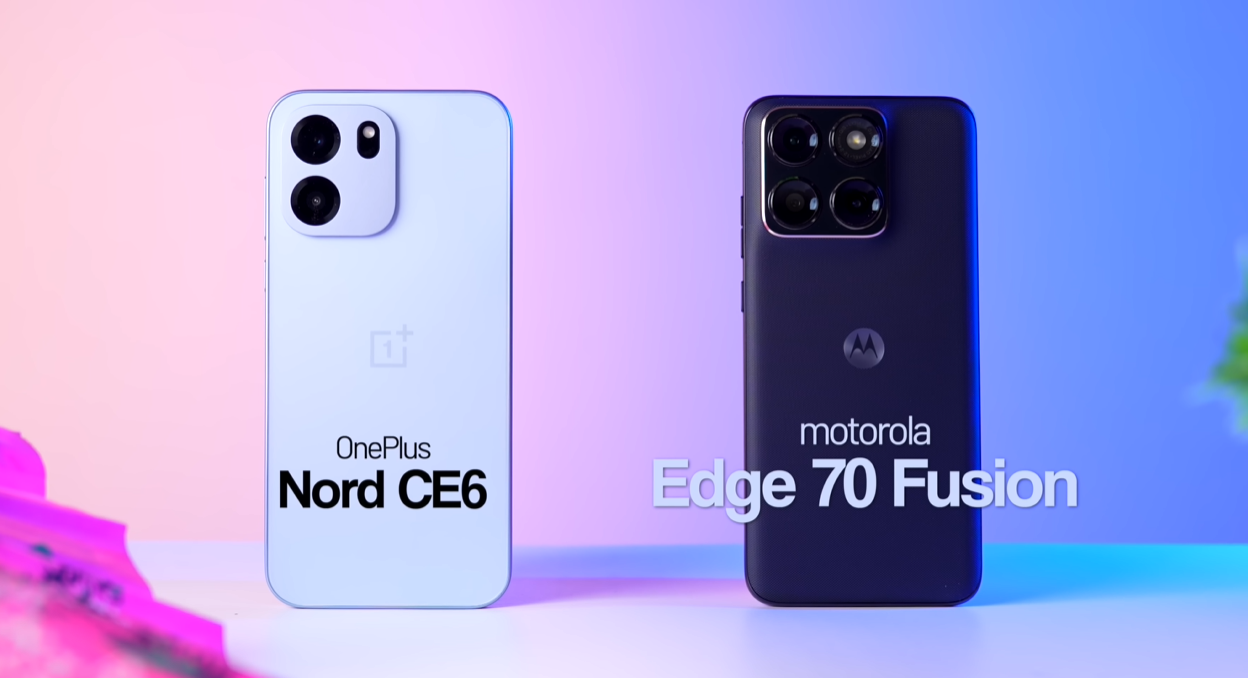
Both the Motorola Edge 70 Fusion and the OnePlus Nord C6 sit under ₹30,000. Both come with 144Hz displays, big batteries, AI features, IP ratings, and 50MP main cameras. On paper, they look virtually identical. Consequently, if you are trying to choose between them based purely on specifications, you will end up more confused than when you started.
However, the moment you actually pick up both phones and start using them — gaming, clicking pictures, scrolling through apps, watching content — real differences emerge quickly. One phone feels better for gaming. One delivers noticeably better cameras. One has more polished software. One lasts longer.
This is the complete, hands-on comparison of both phones across every category that actually matters. By the end, you will know exactly which one is right for you.
Pricing
| Variant | Price |
|---|---|
| Motorola Edge 70 Fusion (Starting) | ₹26,999 |
| OnePlus Nord C6 (Starting) | ₹31,999 |
The pricing difference is immediately significant. The Edge 70 Fusion starts approximately ₹5,000 cheaper than the Nord C6 after OnePlus’s recent price increase. This gap plays a meaningful role in the final verdict.
Design: Different Personalities, Equal Build Quality
Motorola Edge 70 Fusion
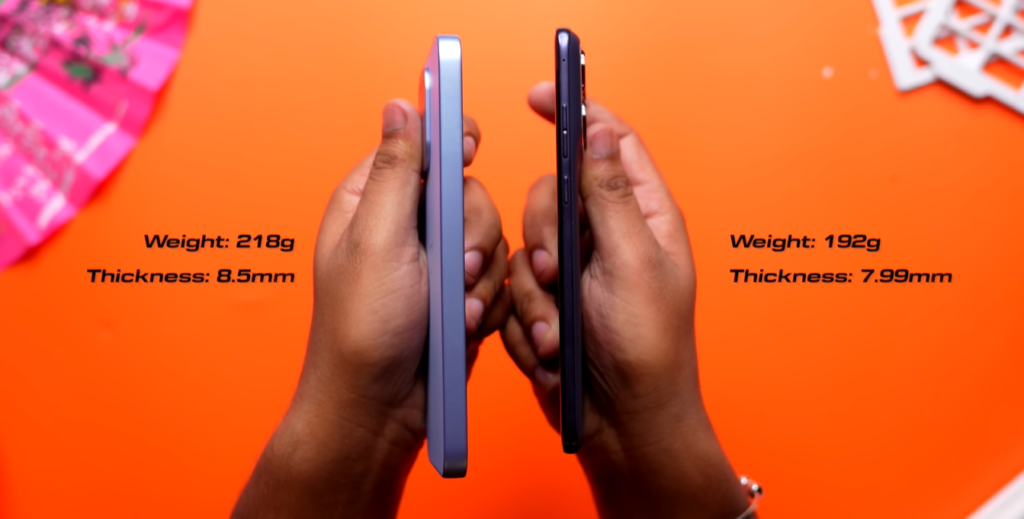
The Edge 70 Fusion immediately stands out with its jeans-inspired textured finish — a distinctive, tactile design that feels genuinely unique in this price bracket. The rounded corners further enhance the slim feeling of the phone, making it feel lighter and thinner in the hand than its actual dimensions suggest. The camera module features a golden accent lining that adds a premium, classy visual touch.
OnePlus Nord C6
The Nord C6 takes a more minimal, restrained approach. A flat frame gives it a slightly boxier feel compared to the Fusion’s rounded profile. The camera module design is simple and standard — functional rather than distinctive. In terms of pure visual personality, the Nord C6 is the more understated of the two.
Build Quality — Both Pass
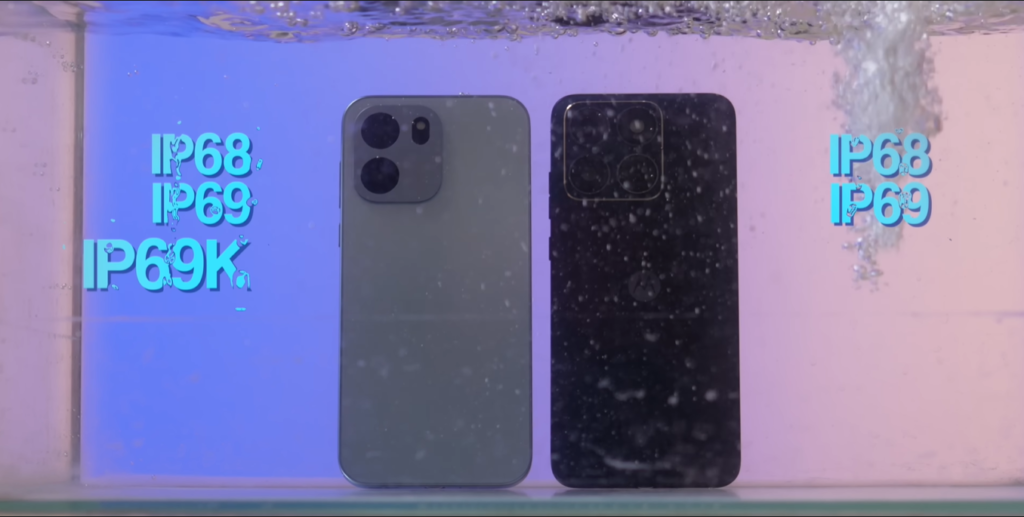
Both phones use polycarbonate frames, and both carry military-grade durability certification. In real-world testing, both survived accidental drops without dents or significant damage. Both phones also carry impressive water and dust resistance:
- Motorola Edge 70 Fusion: IP68 + IP69
- OnePlus Nord C6: IP68 + IP69 + IP69K
The additional IP69K rating on the Nord C6 means it can handle high-pressure, high-temperature water jets — a specification above the standard IP69 rating. However, both phones handle everyday water exposure — rain, splashes, accidental drops near water — without any concern. Importantly, water damage is not covered under warranty for either device, regardless of IP rating.
Design Winner: Motorola Edge 70 Fusion — the jeans-inspired texture and golden camera accents give it a more distinctive, premium-feeling aesthetic. The Nord C6 is more minimal but also more generic at this price point.
Display: Similar Specs, Surprising Differences
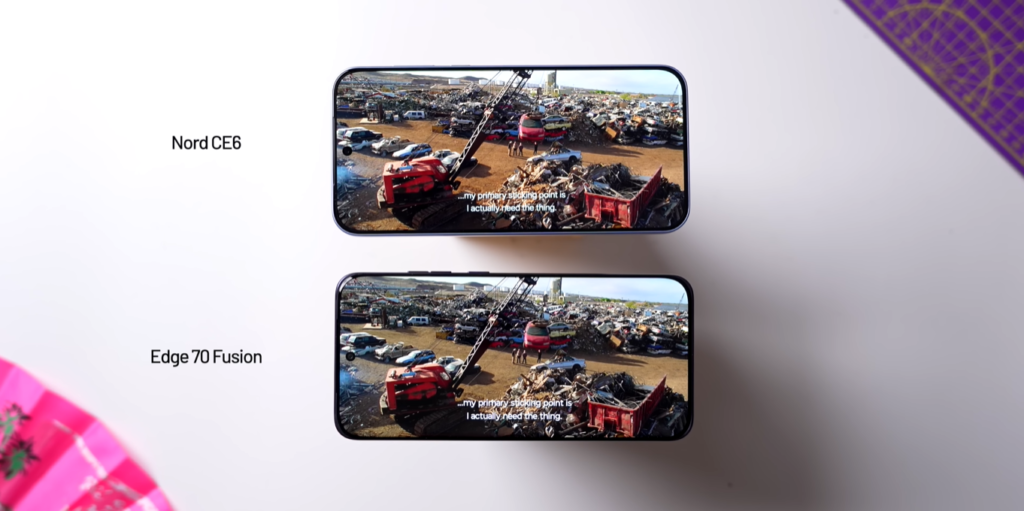
Both phones feature AMOLED displays with 144Hz refresh rates and similar resolution specifications. However, several meaningful differences emerge in real-world use.
Key Display Differences
Curve vs Flat: The Edge 70 Fusion features a quad-curved display — all four edges curve gently into the frame. The Nord C6 has a flatter panel. The curved display contributes to the Fusion feeling slimmer and more premium in the hand.
Glass Protection:
- Edge 70 Fusion: Corning Gorilla Glass 7i — industry-standard, well-documented protection
- Nord C6: OnePlus Crystal Guard — OnePlus claims equivalent strength to Gorilla Glass 7i, but no independent verification currently exists
Refresh Rate Reality: Both phones support 144Hz — but only in specific games. In standard usage, both displays operate at 120Hz. The 144Hz specification is a gaming-specific feature rather than a system-wide capability.
Pantone Validation: The Edge 70 Fusion’s display is Pantone validated, meaning colour accuracy is independently certified. In direct comparison, the Fusion’s colours appear more natural and accurate. The Nord C6’s display shows a slightly warm, yellowish tint compared to the Fusion’s more neutral reproduction.
HDR Content — Counterintuitive Result: The Nord C6 supports HDR on Netflix — the Edge 70 Fusion does not. Logically, therefore, the Nord C6 should look noticeably better for HDR content. However, in direct side-by-side testing — after clearing cache, uninstalling, and reinstalling Netflix on the Nord C6 — the Edge 70 Fusion consistently appeared brighter and more visually impactful for the same HDR content.
This is a genuine and somewhat puzzling finding. Despite lacking HDR certification, the Fusion’s Pantone-validated panel delivers a more satisfying viewing experience for streaming content in real-world testing.
Outdoor Visibility: Both displays remain comfortably usable outdoors — booking cabs, reading articles, and navigating in direct sunlight are all achievable on both devices.
Display Winner: Motorola Edge 70 Fusion — Pantone-validated colour accuracy, a brighter real-world appearance even for HDR content, and the premium feel of the quad-curved panel give it a clear edge.
Performance: Nearly Identical — With One Gaming Difference
Processor and RAM
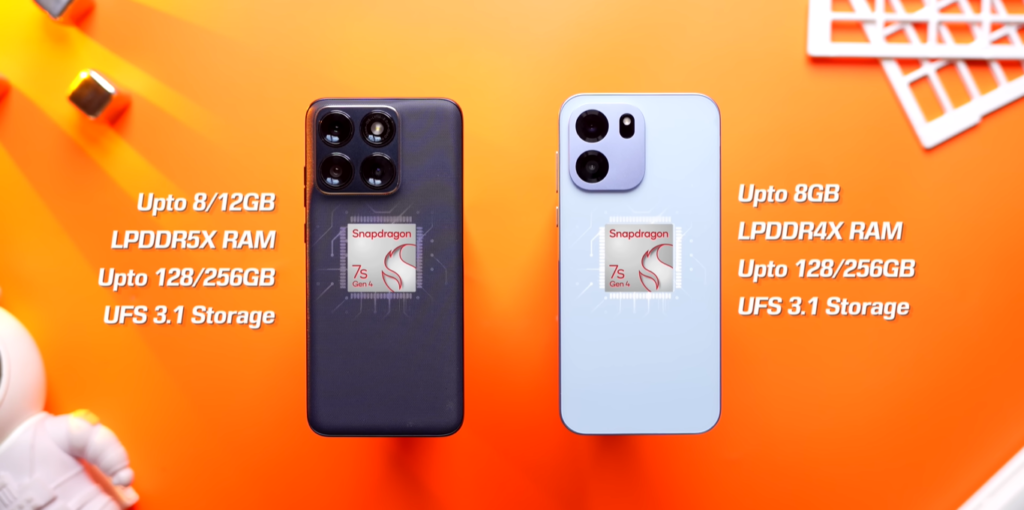
Both phones run on the same processor with the same storage type — making them theoretically identical for performance. However, one RAM specification difference is worth understanding.
- Edge 70 Fusion: LPDDR5X RAM (confirmed by Motorola)
- Nord C6: Likely LPDDR4X RAM (OnePlus has not officially confirmed RAM type)
LPDDR5X RAM is faster and more efficient than LPDDR4X. In app-opening tests, the Edge 70 Fusion loaded apps slightly faster than the Nord C6 — a real but marginal difference in everyday use.
Benchmark Scores
AnTuTu benchmark results for both phones came in at approximately 11 lakh — essentially identical overall scores. CPU throttling tests showed green graphs on both devices, indicating consistent sustained performance without significant thermal throttling.
Daily Multitasking
Both phones handled demanding multitasking scenarios smoothly — simultaneously running BGMI, scrolling Flipkart and Amazon, and watching YouTube videos without hesitation or frame drops.
Gaming — BGMI Head-to-Head
This is where a meaningful performance gap emerges.
| Metric | OnePlus Nord C6 | Motorola Edge 70 Fusion |
|---|---|---|
| Maximum FPS Support | 90 FPS | 120 FPS |
| Average FPS (30 min gameplay) | 80 FPS | 95 FPS |
| Temperature After 30 Minutes | 34°C | 33°C |
The Edge 70 Fusion supports 120FPS in BGMI versus the Nord C6’s 90FPS ceiling. In real gameplay testing, the Fusion delivered an average of 95FPS against the Nord C6’s 80FPS — a 15-frame difference that is perceptible during fast-paced gameplay. Notably, the Fusion also ran slightly cooler despite the higher frame rate. Both phones include dedicated vapour cooling chambers, preventing either device from becoming uncomfortably hot during extended sessions.
Performance Winner: Motorola Edge 70 Fusion — marginally faster app loading, higher BGMI frame rate ceiling, and slightly better sustained gaming performance despite near-identical benchmark scores.
Software: OxygenOS vs Hello UI
OnePlus Nord C6 — OxygenOS 16 (Android 16)
OxygenOS 16 is one of the most polished Android experiences available at any price point. Several specific strengths stand out:
Visual Polish: Small details throughout the interface — including a brightness wheel in the control centre that physically rotates when adjusted — demonstrate the level of attention paid to animations and micro-interactions. Everything feels fluid and premium.
Customisation: The Flux theme system allows genuinely impressive lock screen personalisation. Spending time with the customisation tools results in setups that look noticeably more sophisticated than competing Android skins.
Productivity Features:
- App expansion with direct widget embedding — for example, adding YouTube search and subscriptions directly to the app icon
- O+ Connect ecosystem for seamless file sharing and cross-platform device connectivity
Software Update Commitment:
- 2 years of OS updates
- 4 years of security updates
Motorola Edge 70 Fusion — Hello UI (Android 16)
Hello UI has improved significantly and delivers a clean, functional experience. However, it lacks the animation depth and visual fluidity of OxygenOS.
Moto AI Features — Genuinely Useful:
- Update Me: Automatically summarises notification clusters, highlighting genuinely important alerts while filtering marketing noise — a practical solution to notification overload
- Audio Transcription: Record a quick voice note and Moto AI automatically transcribes and summarises it
- Smart App Drawer Search: Search for settings, files, apps, or web results directly from the app drawer — finding dark mode, for example, takes one search rather than navigating through settings menus
Ecosystem: Smart Connect app enables file sharing, universal clipboard, and phone-to-laptop connectivity.
Software Update Commitment:
- 3 years of OS updates
- 5 years of security updates
The Fusion’s software update commitment is meaningfully better than the Nord C6’s — an important consideration for long-term ownership. However, OxygenOS’s execution quality and feature depth currently lead Hello UI in everyday use.
One constructive note: Hello UI’s animation system lags behind competing Android skins. As other manufacturers embrace fluid transition animations as standard, Motorola’s UI feels slightly dated in comparison. This is an area where a software update could make a meaningful difference to the perceived quality of the experience.
Software Winner: OnePlus Nord C6 (OxygenOS) for current polish and features. However, Motorola Edge 70 Fusion wins on long-term update commitment — 3 years OS and 5 years security versus 2 years OS and 4 years security.
Camera: The Clearest Category Winner
This is the most decisive category in the entire comparison — and the gap is meaningful.
Camera Setup
| Feature | Motorola Edge 70 Fusion | OnePlus Nord C6 |
|---|---|---|
| Main Camera | 50MP | 50MP |
| Ultra Wide | Yes | No |
| Secondary Camera | Genuine dual setup | Single camera (fake dual appearance) |
| Front Camera | 32MP | 32MP |
| 4K Recording | Yes (main + ultra wide) | Yes (main only) |
| Horizon Lock | Yes | No |
The Nord C6 appears to have dual cameras from the outside but is in fact a single camera setup. The Edge 70 Fusion offers a genuine dual camera system with an ultra wide lens.

Daylight Photography
In straightforward point-and-click photography, both phones produce good results with punchy colours and adequate facial detail. However, the Nord C6 occasionally produces darker exposures in certain scenarios. Additionally, the Edge 70 Fusion’s Pantone-validated colour processing delivers more natural, accurate colour reproduction compared to the Nord C6’s tendency toward colour boosting.
Low Light and Indoor Photography
In challenging indoor and low light conditions, the difference becomes clearer. The Nord C6 tends to boost colours aggressively in low light — producing saturated but less accurate results. The Edge 70 Fusion captures more natural-looking photos in the same conditions, preserving scene accuracy rather than applying heavy processing.
Portrait Photography
The Edge 70 Fusion delivers noticeably superior portrait results:
- Multiple focal length options versus the Nord C6’s 1x and 2x only
- Significantly better edge detection — in a glasses test, the Fusion correctly identified and preserved the spectacle frames while the Nord C6 blurred them along with the background
- More consistent subject separation across different portrait scenarios
Ultra Wide
Only the Edge 70 Fusion has an ultra wide camera — giving it an entire camera mode unavailable on the Nord C6. Ultra wide shots from the Fusion produce good results with reasonable detail and controlled distortion.
Selfie Camera
Both phones feature 32MP front cameras, but quality differs meaningfully. The Nord C6 applies aggressive skin smoothing and brightening to selfies — producing an overly processed, artificially white appearance. The Edge 70 Fusion captures more natural-looking selfies with more accurate skin tone reproduction.
Video
Both phones record 4K at 30fps from the main camera. Additionally, the Edge 70 Fusion supports 4K recording from the ultra wide camera. Video stability is noticeably better on the Fusion — the Nord C6 shows occasional jitter during handheld recording. The Edge 70 Fusion’s Horizon Lock feature maintains a level horizon during movement — a feature Motorola has offered for some time but which has recently gained mainstream attention.
Camera Winner: Motorola Edge 70 Fusion — comprehensively. Real dual camera setup, genuine ultra wide lens, better portrait edge detection, more natural colours, superior selfies, better video stability, and Horizon Lock. The Nord C6 is not a bad camera phone, but the Fusion is clearly better in almost every scenario.
Battery Life and Charging
Battery Capacity
The Nord C6 has a larger battery capacity on paper. However, OnePlus has not disclosed the battery chemistry used. Motorola specifically states the Edge 70 Fusion uses a silicon carbon battery — a newer chemistry that delivers better energy density, faster charging compatibility, and improved longevity compared to conventional lithium polymer batteries.
Real-World Battery Life
Both phones lasted a full day of real-world use — gaming, photography, video watching, and general usage — on a single charge. However, by end of day, the Nord C6 consistently showed slightly more remaining charge, lasting marginally longer than the Fusion on equivalent use.
Charging Speeds
| Feature | Motorola Edge 70 Fusion | OnePlus Nord C6 |
|---|---|---|
| Fast Charging | 68W | 80W |
| Reverse Wired Charging | 6W | Claimed 27W (actual 10-11W) |
The Nord C6 claims 80W fast charging versus the Fusion’s 68W — a meaningful specification advantage. However, the Nord C6’s claimed 27W reverse wired charging proved inaccurate in testing — actual measured output was 10 to 11W rather than the stated figure. The Fusion’s 6W reverse charging is slower, but at least the specification accurately reflects real performance.
Battery Winner: OnePlus Nord C6 — slightly better end-of-day battery backup and faster main charging. However, the Nord C6’s misleading reverse charging claim is worth noting.
Complete Head-to-Head Summary
| Category | Motorola Edge 70 Fusion | OnePlus Nord C6 | Winner |
|---|---|---|---|
| Design | Jeans texture, golden accents, premium feel | Minimal, flat, standard | Edge 70 Fusion |
| Display | Pantone validated, brighter real-world, curved | HDR certified, slightly yellow tint | Edge 70 Fusion |
| Performance | 120FPS BGMI, slightly faster app loading | 90FPS BGMI, slightly slower | Edge 70 Fusion |
| Software | Hello UI, strong AI features, 3yr OS updates | OxygenOS, more polished, 2yr OS updates | Tie (polish vs longevity) |
| Camera | Real dual camera, ultra wide, Horizon Lock | Single camera, no ultra wide | Edge 70 Fusion |
| Battery Life | Good — full day | Slightly longer backup | Nord C6 |
| Fast Charging | 68W | 80W | Nord C6 |
| Price | ₹26,999 | ₹31,999 | Edge 70 Fusion |
Who Should Buy Which Phone?
Buy the Motorola Edge 70 Fusion if:
- Camera quality is your top priority — it wins this category comprehensively
- You want a more premium-looking, distinctive design
- Gaming performance matters — 120FPS support versus 90FPS on the Nord C6
- You want better long-term software support — 3 years OS and 5 years security
- You want to save ₹5,000 compared to the Nord C6
- You shoot video frequently — Horizon Lock and ultra wide 4K recording are genuine advantages
Buy the OnePlus Nord C6 if:
- Battery life and all-day endurance are your primary concern
- You want the most polished, fluid Android software experience — OxygenOS is genuinely excellent
- You are a heavy 5G data user who needs maximum battery backup throughout the day
- You prefer a minimal, clean aesthetic over a textured distinctive design
- You value a slightly faster charging speed
Final Verdict
The Motorola Edge 70 Fusion and OnePlus Nord C6 appear nearly identical on paper. However, in real-world use, the comparison reveals a clear pattern.
The Nord C6 is a genuine all-rounder. It delivers solid performance, very good battery life, excellent software, and reliable everyday capability. It does everything well without excelling dramatically in any single area. For a buyer who wants a dependable, well-rounded phone, it earns its recommendation.
However, the Edge 70 Fusion wins more individual categories — design, display, gaming performance, camera, and price. Furthermore, it costs ₹5,000 less than the Nord C6 after the recent price increase.
The camera gap in particular is decisive. The Fusion offers a genuine dual camera system with ultra wide lens, better portrait performance, more accurate colours, and Horizon Lock video stabilisation. The Nord C6 effectively has a single camera despite appearances suggesting otherwise.
At ₹26,999 versus ₹31,999, the Edge 70 Fusion delivers more value, better cameras, and stronger gaming performance. Unless OxygenOS software experience or maximum battery backup is specifically your priority, the Motorola Edge 70 Fusion is the more compelling overall purchase under ₹30,000.
Overall Ratings
| Category | Motorola Edge 70 Fusion | OnePlus Nord C6 |
|---|---|---|
| Design | 9.0 / 10 | 7.5 / 10 |
| Display | 8.5 / 10 | 8.0 / 10 |
| Performance | 8.5 / 10 | 8.0 / 10 |
| Software | 8.0 / 10 | 9.0 / 10 |
| Camera | 9.0 / 10 | 7.0 / 10 |
| Battery | 8.0 / 10 | 8.5 / 10 |
| Value for Money | 9.5 / 10 | 7.5 / 10 |
| Overall | 8.8 / 10 | 7.9 / 10 |
Which phone would you choose between the Motorola Edge 70 Fusion and the OnePlus Nord C6? Drop your pick in the comments below and tell us why. If this comparison helped you decide, share it with someone who is still confused about which phone to buy under ₹30,000.