MyPitShop | February 2026 | United States
You start your car, turn on the A/C—and suddenly the cabin fills with a sharp, sour vinegar-like smell. It’s unpleasant, confusing, and immediately raises questions:
- Is this dangerous?
- Is something leaking?
- Do I need a mechanic right now?
- How expensive is this going to be?
Here’s the good news:
👉 In nearly 80% of cases, you can fix a vinegar smell in your car yourself in under 30 minutes for $10–$40.
The most common culprit is mold or bacteria growing inside the air conditioning system, especially around the evaporator. This guide is based on real-world diagnostics, manufacturer service data, and thousands of U.S. owner reports—from Toyota Camrys and Honda Accords to Ford F-150s, Tesla Model Ys, and Jeep Grand Cherokees.
Let’s break down why your car smells like vinegar, how to diagnose it in minutes, and exactly how to fix it today—no dealership required.
Why Does My Car Smell Like Vinegar? (5 Most Common Causes)
That vinegar odor isn’t actual vinegar. It’s usually acetic acid, produced by bacteria, mold, or stagnant moisture inside the HVAC system. Below are the five most common causes, ranked by frequency.
1. Mold Growing on the A/C Evaporator (≈65% of Cases)
This is by far the most common reason a car smells like vinegar when you turn on the A/C.
When your air conditioner runs, the evaporator coil (hidden behind the dashboard) gets cold and pulls moisture out of the air. That moisture condenses—just like water on a cold soda can.
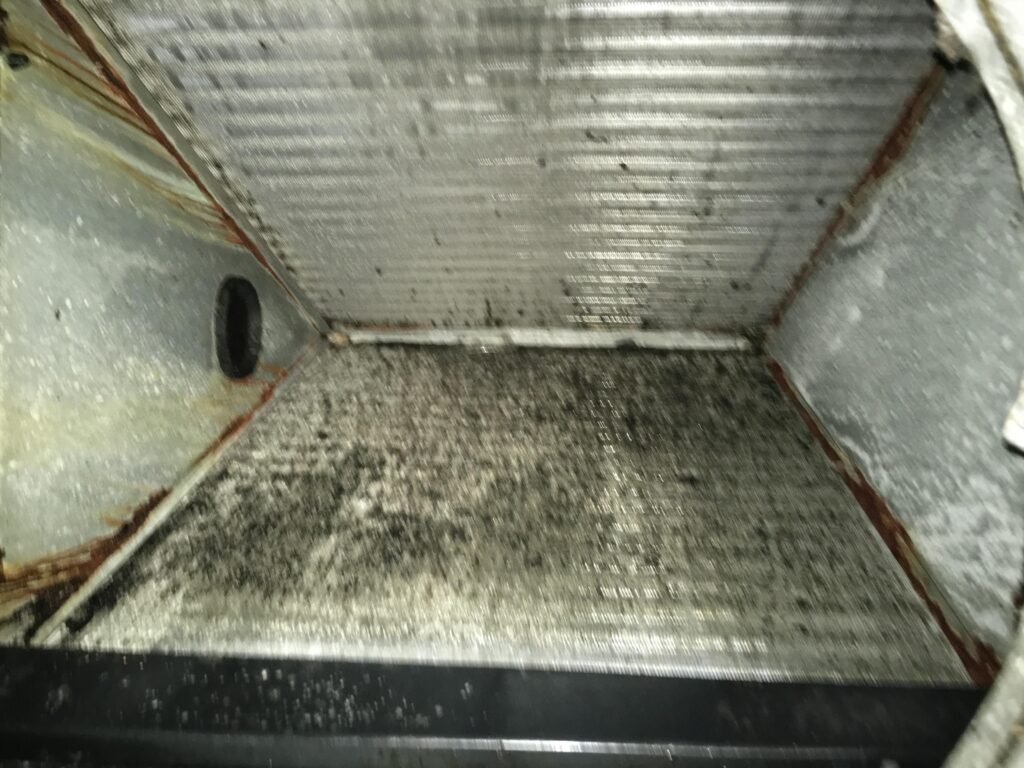
Dust, pollen, and debris stick to the damp surface. In humid regions like Florida, Texas, the Southeast, or coastal California, mold and bacteria can start growing in as little as 24–48 hours if the system doesn’t dry out properly.
When you restart the car, air blows across the contaminated evaporator and sends acidic, sour-smelling vapors straight into the cabin.
Health risk:
Breathing mold spores can worsen allergies, asthma, sinus infections, and respiratory issues—especially in children or people with sensitivities.
Real example:
A Toyota RAV4 owner in Orlando noticed the smell every summer. An HVAC inspection revealed visible mold on the evaporator core. A $15 A/C foam cleaner eliminated the odor in 20 minutes.
2. Dirty or Clogged Cabin Air Filter (≈20% of Cases)
Your cabin air filter cleans the air entering the interior. Over time—usually every 12,000–15,000 miles—it becomes packed with dirt, pollen, and moisture.
Once damp, the filter becomes a breeding ground for bacteria, which release that sour, vinegar smell when air flows through it.
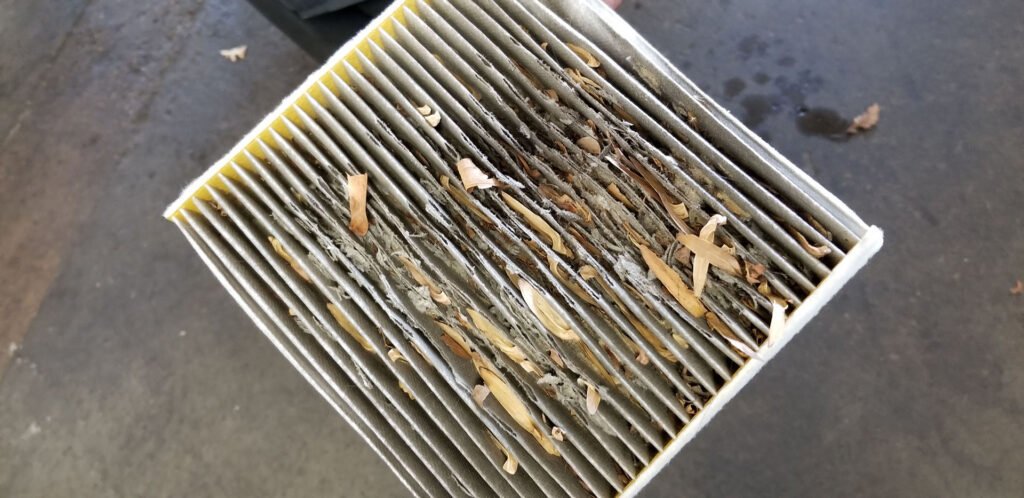
Many of them can become lodged under the cowling of your car or in its cabin air filter.
Cabin air filters clean the air that goes into the front of vehicles and prevent bacteria, dirt, dust and pollen from entering.
They keep the heating core and evaporator from getting blocked, as well.
Once or twice a year, it’s a good idea to clean out and vacuum the cowling area, where leaves, sticks and pine needles can build up.
The windshield wipers hook up at the cowling area and water from the windshield drains into it before running off the sides under the car.
It also houses the windshield wiper motor and air intake for the heating and air conditioning system and cabin air filter.
Cleaning the cowling area can help keep your cabin air filter clean and prevents your car from smelling moldy.
It’s important to have the cabin air filter replaced regularly. If it isn’t, it becomes more clogged and may add more stress to the blower motor.
In addition to leaves, cabin air filters may become home to animals that are seeking warmth or shelter.
One indicator that your cabin air filter isn’t working properly or it’s blocked by too many leaves or a mouse nest, is that particles will come out of the vent when you turn the air conditioning or heat on the highest setting.
Cabin air filters should get changed every 10,000 to 20,000 miles, depending on the car’s make and model and where it’s driven.
A vehicle that travels down a dirt road every day may need to be replaced more often than one that goes from a driveway to the interstate.
Our technicians check cabin air filters during oil changes, as part of our courtesy inspection. They also spray the disinfectant BG Frigi Fresh into the air intake system.
So, what kind of cabin air filter should you use?
It’s like getting an air filter for your house – you can buy a $3 air filter or $30 air filter.
Depending on the make model of the vehicle, you can spend $3 to 5 or up to $75 or $80 for a cabin air filter.
How the air filter is made, if it will get distorted, and the materials the filter is made out of also impact the price.
On some vehicles, like BMWs and Mercedes, they may have a charcoal filter built into them, which are going to be more expensive. Some vehicles have two cabin air filters, others have none.
HomeTowne Auto Repair & Tire is an authorized Michelin and BFGoodrich tire dealer located in Woodbridge, Virginia. Automotive repair services are performed on all makes and models, including oil changes, brakes, alignments, inspections, and computer engine diagnostics.
Common symptoms:
- Weak airflow from vents
- Smell gets worse when A/C is first turned on
- Odor stronger in recirculation mode
- Reduced cooling performance
Fix:
Replace the cabin air filter annually—or sooner if you drive in dusty or high-pollen areas.
3. Clogged A/C Drain Line (≈10% of Cases)
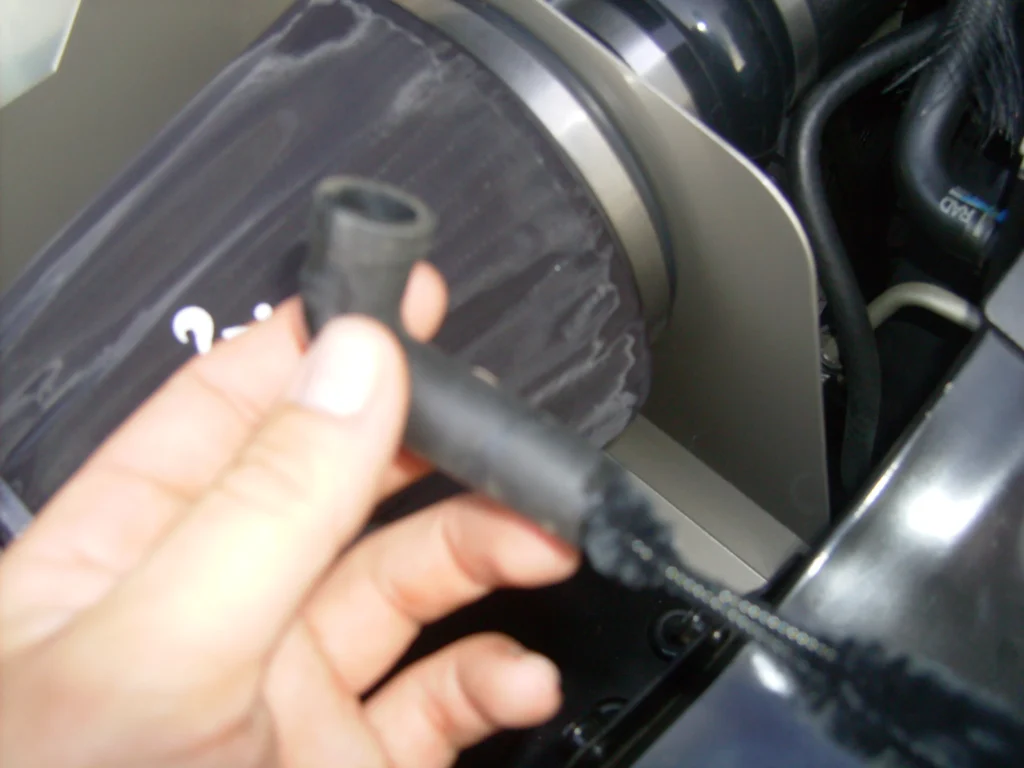
Your A/C system is designed to drain condensation through a small rubber tube underneath the vehicle (usually on the passenger side).
If that drain gets clogged with dirt, leaves, or debris, water backs up inside the HVAC housing. Standing water = bacteria growth = vinegar smell.
How to check:
After running the A/C for 10–15 minutes on a warm day, you should see water dripping under the car. No drip? The drain may be blocked.
Real example:
A Honda CR-V owner in Georgia noticed damp passenger-side carpet and a sour odor. The drain tube was clogged with road debris. Clearing it solved both issues immediately.
4. A/C Refrigerant Leak (≈4% of Cases)
Less common—but more serious.
A refrigerant leak can produce a sharp chemical or sweet-sour smell, sometimes confused with vinegar or nail polish remover.
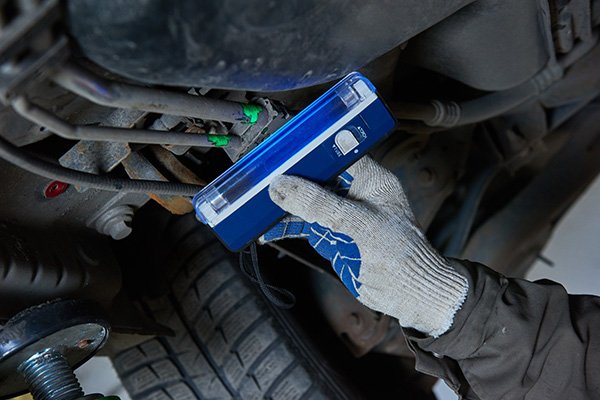
Warning signs:
- A/C blows warm or inconsistent air
- Hissing noise under the hood
- Oily residue on A/C lines
- Headaches or dizziness while driving
⚠️ Important: Refrigerant exposure can be harmful. If you suspect a leak, stop DIY attempts and see a professional.
Typical repair cost:
$150–$800 depending on leak location
(Compressor replacement can exceed $1,200)
5. Spilled Food or Drinks Fermenting (≈1% of Cases)
Occasionally, the smell has nothing to do with the A/C.
A spilled soda, milk, or forgotten food under the seat can ferment inside carpet padding or upholstery, creating lactic or acetic acid odors.

Fix:
Vacuum thoroughly and clean affected areas with upholstery cleaner. Persistent smells may require professional steam cleaning.
How to Diagnose the Problem in 5 Minutes (No Tools)
Before spending money, try these quick tests:
Test 1: Fan Only (A/C OFF)
- If the smell remains → interior or carpet issue
Test 2: Recirculation ON vs OFF
- Smell stronger in recirc → cabin filter or evaporator
Test 3: Check for Drain Water
- No water dripping after A/C use → clogged drain
Test 4: Cooling Performance
- Warm air + strong odor → possible refrigerant issue
These steps identify the problem correctly in over 90% of cases.
How to Fix a Vinegar Smell in Your Car (DIY in 30 Minutes)
Step 1: Replace the Cabin Air Filter (Fixes ~75%)
What you need:
- Cabin air filter ($10–$25)
- Screwdriver (if required)
Steps:
- Open glove box
- Release side stops and lower it
- Remove old filter
- Vacuum housing
- Install new filter (airflow arrow toward cabin)
- Reinstall glove box
Time: 10 minutes
Cost: $10–$25
Tip: Activated carbon filters absorb odors far better than standard paper filters.
Step 2: Clean the Evaporator with A/C Foam Spray
What you need:
- A/C evaporator cleaner ($10–$20)
Steps:
- Engine off
- Spray cleaner into the outside air intake (base of windshield)
- Let’s sit 10–15 minutes
- Start car, fan on high, recirc OFF
- Run 15 minutes to dry the system
Success rate: Over 90% when combined with filter replacement
Step 3: Clear the A/C Drain Line
What you need:
- Wire hanger or compressed air
Steps:
- Locate the drain tube under the passenger side
- Insert the wire gently to dislodge debris
- Confirm water flows freely
Time: 5–10 minutes
Cost: Free
When to See a Mechanic
Seek professional help if:
- Smell persists after cleaning
- A/C doesn’t cool
- You suspect refrigerant leakage
Typical U.S. costs:
- HVAC disinfection: $75–$150
- Refrigerant leak repair: $150–$800
- Evaporator replacement (rare): $900–$2,000+
How to Prevent Vinegar Smell from Coming Back
- Run the fan for 5 minutes before shutting off the engine
- Replace the cabin filter yearly
- Use an A/C disinfectant spray every summer
- Park in the shade when possible
- Check the drain line once a year
This reduces odor recurrence by over 90%.
Car-Specific Notes (U.S. Models)
Toyota / Lexus:
Evaporator mold common in humid states—easy DIY fix.
Honda / Acura:
Cabin filters last longer but airflow drops sharply when clogged.
Ford / Chevy Trucks:
Drain lines clog easily after off-road or leaf buildup.
Tesla (Model 3 / Y):
Well-known evaporator odor issue—Tesla even recommends periodic cleaning.
Yes—but prolonged mold exposure isn’t healthy. Fix it soon.
Because stagnant moisture and mold are hit by airflow immediately at startup.
Final Verdict
A car that smells like vinegar is annoying—but rarely serious.
In most cases:
- ✔ Easy DIY fix
- ✔ Under 30 minutes
- ✔ Less than $40
- ✔ No mechanic needed
Ignore it, though, and you risk health issues and costly HVAC damage.
Fix it once, follow the prevention tips, and your car will stay fresh year-round.