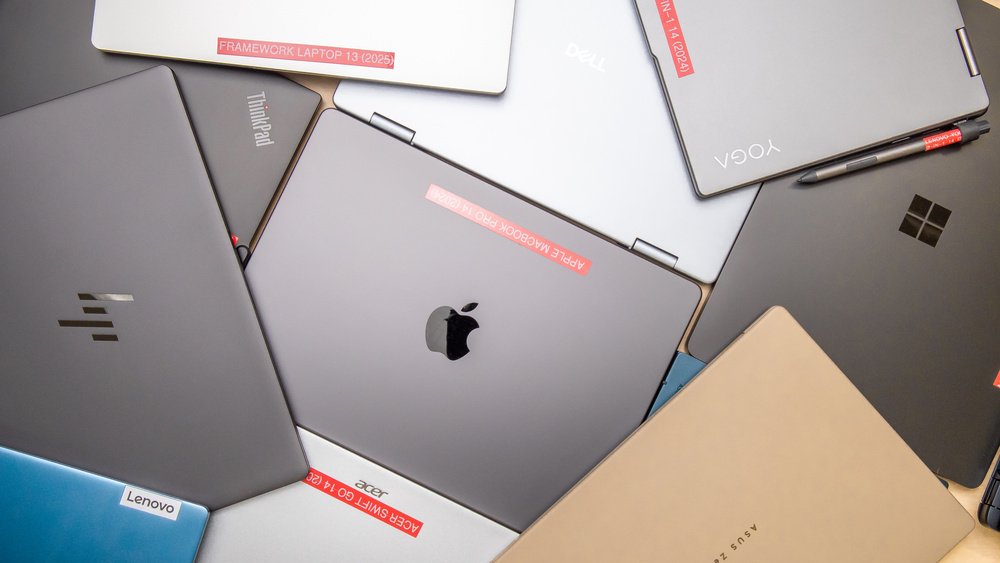
Quick Verdict: Based on a scoring system across five categories — innovation, design, build quality, customer support, and value for money — Apple, Lenovo, Microsoft, Asus, and HP land at the top of the rankings, while Gigabyte, MSI, and LG trail behind. But “best” depends heavily on what you actually need: gaming performance, repairability, business support, or pure value. Below is the full breakdown, plus what these rankings mean if you’re buying in India.
How Are Laptop Brands Actually Ranked?
Rather than a single “best brand” label, a fair ranking needs to score manufacturers across the factors that actually affect ownership experience:
- Innovation — how much a brand pushes new hardware, form factors, or features
- Design — how the laptop looks and feels
- Quality — build materials, keyboard/trackpad feel, thermal performance
- Support — how a brand handles repairs and customer service
- Value — what you get for the price you pay
Each brand is scored out of 5 in each category, for a maximum possible total of 25. Here’s how the major brands stack up, from lowest to highest.
Laptop Brand Rankings: Full Scorecard
| Brand | Innovation | Design | Quality | Support | Value | Total |
|---|---|---|---|---|---|---|
| Gigabyte | 2 | 1 | 2 | 1 | 3 | 9 |
| MSI | 3 | 2 | 2 | 1 | 3 | 11 |
| LG | 2 | 2 | 3 | 1 | 3 | 11 |
| Acer | 3 | 2 | 3 | 1 | 4 | 13 |
| Razer | 4 | 5 | 4 | 1 | 1 | 15 |
| Dell | 2 | 5 | 3 | 4 | 2 | 16 |
| Samsung | 3 | 4 | 3 | 2 | 4 | 16 |
| Framework | 5 | 1 | 2 | 5 | 3 | 16 |
| HP | 2 | 2 | 4 | 4 | 5 | 17 |
| Asus | 4 | 3 | 4 | 1 | 5 | 17 |
| Microsoft | 3 | 5 | 5 | 2 | 3 | 17 |
| Lenovo | 4 | 3 | 4 | 4 | 3 | 18 |
| Apple | 4 | 4 | 5 | 3 | 3 | 19 |
(Scores based on aggregate testing across 300+ laptop reviews from a single review outlet — treat this as a general trend, not a guarantee for every individual unit.)
Bottom Tier: Gigabyte, MSI, and LG
Gigabyte (Score: 9) sits at the bottom largely because its lineup feels generic — few standout designs, average build quality, and notably weak after-sales support where units typically have to be shipped off for repair with little communication in between. Value is the one bright spot, though even that isn’t exceptional compared to competitors.
MSI (Score: 11) moves quickly on hardware releases — its Titan series has featured upgradeable RAM, which is increasingly rare — but that innovation doesn’t translate to consistent build quality. Thermal issues are a recurring theme, with some Prestige-series chassis running notably hot, and several models have been flagged for awkward keyboard layouts where arrow keys sit too close to page up/down keys. Support mirrors Gigabyte’s — a mail-in-and-hope process.
LG (Score: 11) built its reputation on the ultra-light Gram lineup, but the innovation edge that once defined those laptops has largely been matched or exceeded by competitors offering similar weight with sturdier builds. Pricing remains reasonably competitive, which keeps LG from ranking even lower.
Mid Tier: Acer, Razer, Dell, Samsung, and Framework
Acer (Score: 13) is a genuinely split brand: its Predator gaming line punches well above its price point, with models earning top marks in dedicated gaming laptop comparisons. The consumer range, however, is comparatively weak, which drags the overall brand score down.
Razer (Score: 15) builds some of the most premium-feeling hardware on this list — compact chassis, high-end components, and thoughtful touches like upgradeable memory on smaller models. Where it falls apart is support and value: customer service experiences have been inconsistent, and Razer laptops rarely see meaningful discounts, keeping the ownership cost high relative to what’s delivered.
Dell (Score: 16) was once the default choice for Windows laptops but has slipped due to design decisions that sometimes worsen usability despite looking innovative on paper (like haptic function rows). Its XPS and Alienware lines still look excellent, and business-tier support is genuinely strong — a real differentiator against budget brands — but pricing rarely reflects real market value outside of sales events.
Samsung (Score: 16) ships thin, good-looking laptops with strong displays and fast hardware refresh cycles, but keyboards and trackpads — especially on larger Galaxy Book models — have been a consistent weak point. Frequent discounting helps its overall value score.
Framework (Score: 16) stands out as the most genuinely innovative brand here, being effectively the only major manufacturer offering fully modular, user-repairable laptops with swappable ports. Design is plain and thermal management on single-fan 13-inch models isn’t ideal, but support is best-in-class — most issues can be self-resolved using official repair guides rather than requiring a mail-in repair.
Upper-Mid Tier: HP, Asus, and Microsoft
HP (Score: 17) wins almost entirely on value — models like the OmniBook Ultra regularly compete with laptops priced hundreds of dollars higher. Innovation and design are largely unremarkable, but build quality at HP’s price points is genuinely strong, and support is on par with Dell and Lenovo.
Asus (Score: 17) moves fast on new silicon, frequently among the first brands to ship new AMD or Intel platforms. The ROG Zephyrus and Strix lines in particular offer strong quality for the price. The major weak point is support — Asus has faced public scrutiny over damage-related repair billing disputes, which is worth researching before buying if after-sales service matters to you.
Microsoft (Score: 17) Surface laptops are arguably the most refined hardware on this list in terms of build quality — trackpads, keyboards, and displays are consistently premium. Innovation is moderate (Arm-based Snapdragon models are a notable bet), and value is reasonable in the consumer Snapdragon lineup, though preferred Intel configurations are often gated behind pricier business channels.
Top Tier: Lenovo and Apple
Lenovo (Score: 18) earns high marks for genuinely creative form factors — expanding screens, under-display webcams, foldable displays — even when execution is inconsistent. ThinkPads in particular deliver excellent keyboards and reliable build quality, and support is consistently strong. Its higher-end laptops carry steep non-sale pricing, so shopping during sale periods matters more with Lenovo than most brands.
Apple (Score: 19) takes the top spot, driven almost entirely by its custom M-series silicon, which remains ahead of competing Arm and x86 chips in efficiency and performance-per-watt. Build quality, trackpads, speakers, and port quality are considered best-in-class. The trade-off is storage value at entry price points and support that still requires mail-in service for serious repairs.
What This Means If You’re Buying in India
A few practical adjustments matter for Indian buyers evaluating this ranking:
- Apple’s value gap widens here. MacBooks carry a steeper India price premium than in the US, and authorized service center availability is concentrated in metro cities — factor in travel time for repairs outside major hubs.
- HP and Lenovo’s support advantage is especially valuable in India, where on-site/doorstep repair options (common with their business-tier plans) can save significant turnaround time compared to brands requiring courier-based mail-in service.
- Asus and Acer’s gaming lines have stronger price-to-performance in India than this global ranking might suggest, given aggressive local pricing on models like the TUF and Predator series during festive sales (Flipkart/Amazon Big Billion Days-type events).
- Framework and Razer have limited or no official India presence, so factor in import costs, warranty complications, and service availability before considering either.
- MSI and Gigabyte gaming laptops remain popular in India specifically for value-per-rupee in the sub-₹80,000 segment, even though this global ranking scores them low overall — the calculus shifts somewhat at Indian price points versus US/global pricing.
Apple ranks highest overall, driven by its M-series chip performance and premium build quality, followed closely by Lenovo, Microsoft, Asus, and HP.
HP and Asus scored highest for value, offering strong specs and build quality relative to their price, especially during sale periods.
Which laptop brand has treated you best — or worst? Share your own ownership experience in the comments below.

