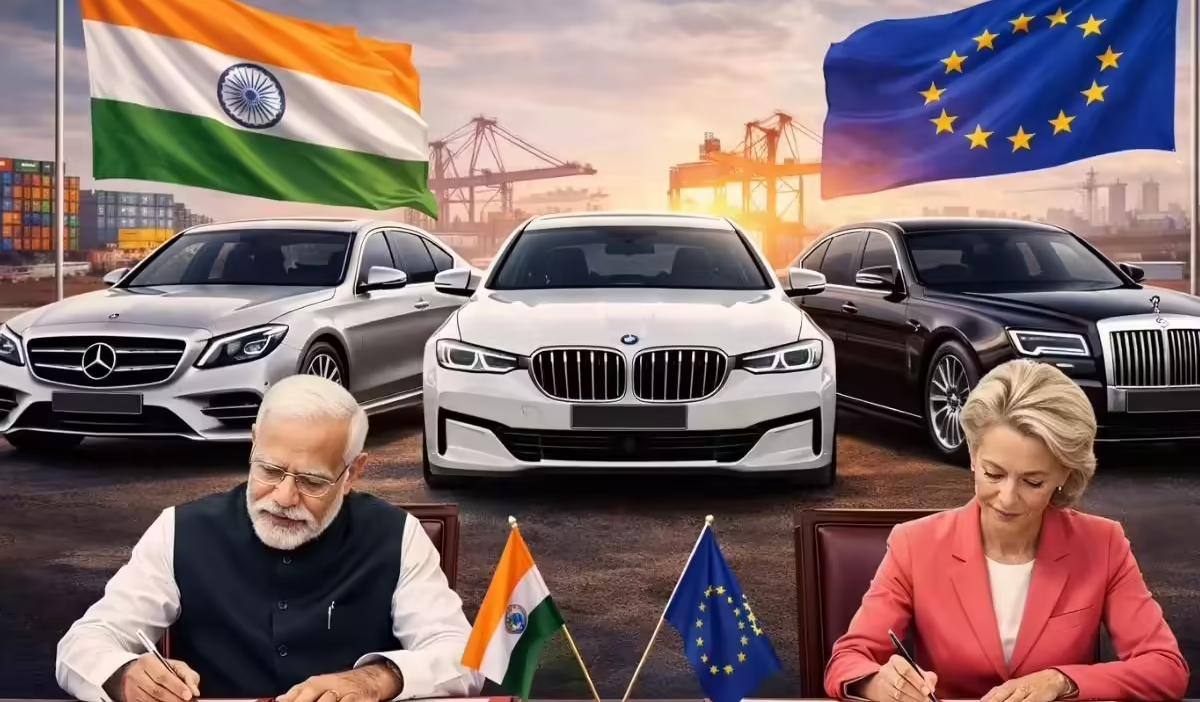
The India-EU Free Trade Agreement (FTA) is set to revolutionize the luxury car market in India. If you’ve been dreaming of owning a European luxury vehicle but found the prices prohibitive, this is your moment. Import tariffs on European cars are expected to drop dramatically from approximately 110% to as low as 10%, making premium vehicles significantly more affordable.
Here’s everything you need to know about the top 10 European cars that will become accessible to Indian buyers, along with exact price reductions and what makes each model worth considering.
Understanding the India-EU FTA Impact on Car Prices
Before we dive into specific models, let’s understand the magnitude of this change:
Current Scenario:
- Import duties on European cars: Approximately 110%
- Annual luxury car sales in India: Around 50,000 units
- Total European car imports: About 45,000 units annually
Post-FTA Scenario:
- Initial tariff reduction: From 110% to approximately 40%
- Gradual reduction over years: Eventually down to 10% in some cases
- Expected price drops: 30% to 60% depending on the model
Important Note: Electric vehicles (EVs) are largely excluded from these tariff cuts initially, as the government aims to protect domestic EV manufacturing. The benefits primarily apply to conventional luxury and ultra-luxury vehicles.
Top 10 Cars to Buy After India-EU FTA
1. BMW 3 Series Long Wheelbase (LWB)
Why It Tops the List: The BMW 3 Series is one of India’s most popular luxury sedans, combining performance, comfort, and brand prestige in a relatively accessible package.
Current Price: ₹60.45 lakhs
Post-FTA Price: ₹31 lakhs (at 10% tariff)
Savings: ₹29.45 lakhs (48.7% reduction)
What You Get:
- Turbocharged 4-cylinder or 6-cylinder engine options
- Luxurious extended wheelbase for rear passenger comfort
- Advanced driver assistance systems
- Premium interiors with digital cockpit
- Excellent blend of sportiness and luxury
Who Should Buy: Young professionals, business executives, and first-time luxury car buyers looking for a prestigious sedan that doesn’t compromise on driving dynamics.
Market Impact: BMW sells over 18,000 units annually in India, and the 3 Series is their bestseller. This price reduction could potentially double their sales volume.
2. BMW X1
Why It’s Compelling: The X1 represents BMW’s entry into the compact luxury SUV segment, perfect for Indian buyers who prefer higher seating positions and versatile practicality.
Current Price: ₹50.60 lakhs
Post-FTA Price: ₹33 lakhs (approximately)
Savings: ₹17.60 lakhs (34.8% reduction)
What You Get:
- Compact SUV with spacious interiors
- BMW’s signature driving dynamics
- Advanced safety features
- Panoramic sunroof and premium amenities
- Excellent fuel efficiency for the segment
Who Should Buy: Families seeking a luxury SUV, urban professionals who need practicality without compromising on brand value, and buyers upgrading from premium mass-market SUVs.
3. BMW 2 Series Gran Coupe
Why It Stands Out: The 2 Series Gran Coupe offers BMW’s sporty DNA at the most accessible price point in their lineup, making it perfect for younger buyers.
Current Price: ₹45.30 lakhs
Post-FTA Price: ₹31 lakhs (approximately)
Savings: ₹14.30 lakhs (31.6% reduction)
What You Get:
- Sleek coupe-like sedan design
- Sporty handling characteristics
- Modern technology and connectivity
- Compact dimensions ideal for city driving
- BMW badge at the lowest entry point
Who Should Buy: Young entrepreneurs, tech professionals, and style-conscious buyers who want BMW performance without the larger footprint or price tag.
4. Mercedes-Benz A-Class Limousine
Why It’s a Game-Changer: As Mercedes-Benz’s entry-level sedan, the A-Class Limousine brings three-pointed star prestige to a broader audience, especially with FTA pricing.
Current Price: ₹44.46 lakhs (starting price)
Post-FTA Price: Approximately ₹23-25 lakhs (estimated with 10% tariff)
Savings: ₹20-22 lakhs (approximately 45% reduction)
What You Get:
- Mercedes-Benz luxury and build quality
- MBUX infotainment system with AI features
- Elegant sedan design
- Comfortable ride quality
- Strong brand recognition
Who Should Buy: First-time luxury buyers, professionals seeking prestige, and those who prioritize brand heritage and comfort over sportiness.
Market Significance: Mercedes-Benz sells around 50,000 luxury cars annually in India and offers 35 models. The A-Class at under ₹25 lakhs could become their volume driver.
5. Porsche Taycan
Why It’s Revolutionary: The Taycan is Porsche’s electric sports sedan, and while EVs face tariff exclusions initially, later-stage FTA benefits could make this dream car accessible.
Current Price: ₹89.65 lakhs
Potential Future Price: ₹47 lakhs (if EV tariff reductions apply)
Potential Savings: ₹42.65 lakhs (47.6% reduction)
What You Get:
- Pure electric performance with Porsche DNA
- 0-100 km/h in under 3 seconds (Performance models)
- Long-range battery options
- Luxury interior with sustainable materials
- Porsche’s legendary engineering
Who Should Buy: Tech enthusiasts, environmentally conscious luxury buyers, and performance car lovers ready to embrace electric mobility.
Important Caveat: Since EVs are initially excluded from tariff cuts, this pricing may only materialize in later FTA phases. However, it remains worth watching.
6. Volkswagen Tiguan R-Line
Why It’s Practical: The Tiguan combines German engineering with practical SUV versatility, imported as a completely built unit (CBU) from Germany.
Current Price: ₹45.73 lakhs
Post-FTA Price: ₹23-26 lakhs (estimated)
Savings: ₹20-23 lakhs (approximately 45% reduction)
What You Get:
- Spacious 7-seater configuration options
- Turbocharged engine with excellent performance
- Advanced safety suite
- Premium interiors with digital cockpit
- All-wheel drive capability
Who Should Buy: Families needing space and safety, buyers seeking German engineering at accessible prices, and those who prefer understated luxury over flashy badges.
7. Ferrari Roma
Why It’s the Accessible Dream: The Roma represents Ferrari’s most elegant grand tourer, and FTA pricing could make it India’s most “affordable” Ferrari ever.
Current Price: ₹3.56 crores
Post-FTA Price: ₹2.37 crores
Savings: ₹1.19 crores (33.4% reduction)
What You Get:
- V8 twin-turbo engine with 620 HP
- Stunning Italian design
- Grand touring comfort
- Advanced aerodynamics
- Ferrari’s legendary performance heritage
Who Should Buy: Ultra-high-net-worth individuals, automotive enthusiasts with deep pockets, and collectors seeking an entry into Ferrari ownership.
Market Context: Ferrari sells just six models in India. The Roma’s price reduction could significantly boost their appeal among successful entrepreneurs and business owners.
8. Mercedes-AMG G-Class
Why It’s Iconic: The G-Class is a status symbol like no other, combining rugged off-road capability with extreme luxury.
Current Price: ₹3.85 crores
Post-FTA Price: ₹1.52 crores
Savings: ₹2.33 crores (60.5% reduction)
What You Get:
- Military-grade off-road capabilities
- Hand-built AMG V8 engine
- Unmistakable boxy design
- Ultimate luxury interiors
- Unmatched road presence
Who Should Buy: Business tycoons, celebrities, luxury SUV enthusiasts, and buyers who want the ultimate statement vehicle.
Status Symbol Value: The G-Class price reduction from ₹3.85 crores to ₹1.52 crores makes it competitive with lower-tier luxury SUVs while maintaining its iconic appeal.
9. Porsche 911
Why It’s the Enthusiast’s Dream: The 911 is arguably the world’s most recognized sports car, and this pricing makes it significantly more accessible to Indian enthusiasts.
Current Price Range: ₹2.31 crores to ₹4.39 crores
Post-FTA Price: Starting at ₹2.67 crores (base models)
Savings: Varies by model, significant on higher trims
What You Get:
- Rear-engine layout with perfect weight distribution
- Multiple engine options from turbocharged to GT3 variants
- Daily drivable supercar performance
- Timeless design evolution
- Strong resale value
Who Should Buy: Driving enthusiasts, weekend racers, collectors, and those who appreciate automotive engineering excellence.
Sales Data: Porsche sold 156 units of the 911 and 718 combined in 2024, registering a 95% year-on-year increase. Lower prices could accelerate this growth.
10. Škoda Octavia vRS
Why It’s the Smart Choice: The Octavia vRS delivers genuine performance in a practical sedan package at prices that compete with premium mass-market cars.
Current Price: ₹50 lakhs
Post-FTA Price: Approximately ₹26-28 lakhs (estimated)
Savings: ₹22-24 lakhs (approximately 45% reduction)
What You Get:
- 2.0-liter turbocharged engine with 245 HP
- Sport suspension and performance upgrades
- Practical sedan space and versatility
- Understated yet sophisticated design
- Excellent value proposition
Who Should Buy: Performance enthusiasts on a budget, buyers seeking practicality with sportiness, and those who appreciate sleeper car dynamics.
Market Position: Škoda sells about 44,866 units annually in India. The vRS at under ₹30 lakhs could attract buyers from performance variants of mass-market brands.
Honorable Mentions: Other Cars to Watch
Mercedes-Benz Maybach S 680
- Current Price: ₹4.35 crores
- Post-FTA Price: ₹2.28 crores
- Savings: ₹2.07 crores
- Why: Ultimate luxury sedan, compete with Bentley and Rolls-Royce
Ferrari 296 GTB
- Current Price: ₹5.11 crores
- Post-FTA Price: ₹3.41 crores
- Savings: ₹1.70 crores
- Why: Hybrid supercar technology, everyday usability
Ferrari Purosangue SUV
- Current Price: ₹9.93 crores
- Post-FTA Price: ₹5.19 crores
- Savings: ₹4.74 crores
- Why: World’s first Ferrari SUV, ultimate exclusivity
Mercedes-AMG GT
- Current Price: ₹3.34 crores
- Post-FTA Price: ₹1.60 crores
- Savings: ₹1.74 crores
- Why: Pure sports car performance, stunning design
Volkswagen Golf GTI
- Current Price: ₹50.91 lakhs
- Post-FTA Price: ₹26 lakhs (approximately)
- Savings: ₹24.91 lakhs
- Why: Hot hatch legend, fun-to-drive factor
What Won’t Change Much: Locally Assembled Models
Important Distinction: Not all European cars will see dramatic price reductions. Many entry-level and mid-range models from European brands are already assembled in India and don’t pay the import duties being cut.
Models Assembled in India (Minimal Price Impact):
Volkswagen:
- Taigun (assembled in Pune)
- Virtus (assembled in Pune)
- Limited impact from FTA
Škoda:
- Kushaq (made in India at Chakan, Pune)
- Slavia (made in India)
- Minimal price changes expected
Renault:
- Kiger (Chennai plant)
- Triber (Chennai plant)
- Duster (Chennai plant)
- Already competitive pricing
Why This Matters: These brands compete directly with Maruti Suzuki, Hyundai, and Tata Motors. Since they’re locally assembled, they already avoid import duties, so FTA won’t provide price advantages here.
Market Impact Analysis: Winners and Losers
Winners
1. Luxury Car Buyers
- Immediate savings of 30-60% on premium vehicles
- Access to models previously out of reach
- Better value proposition overall
2. European Car Manufacturers
- BMW, Mercedes-Benz, Audi could see 2-3x sales growth
- Porsche and Ferrari might expand their Indian customer base
- Increased market share in India’s growing economy
3. Premium Car Segment
- Growth from 50,000 to potentially 100,000+ units annually
- More choices for consumers
- Increased competition benefiting buyers
Losers
1. Secondhand Luxury Car Market
- Currently sells 80,000 used luxury vehicles annually (more than new luxury cars)
- New cars becoming cheaper reduces appeal of pre-owned
- Depreciation on existing luxury cars could accelerate
- Dealers and resellers may face margin pressure
2. Domestic Luxury Car Assemblers
- Local assembly loses cost advantage
- May need to compete on service and customization
- Potential job impacts in assembly plants
3. Japanese and Korean Luxury Brands
- Lexus, Infiniti, Genesis don’t benefit from EU FTA
- May struggle to compete on pricing
- Could lose market share to European rivals
Timeline: When to Expect These Prices
Phase 1 (Initial Implementation)
- Tariff reduction from 110% to approximately 40%
- Immediate price drops of 15-25%
- Expected within 6-12 months of FTA ratification
Phase 2 (Gradual Reduction)
- Further tariff cuts to 20-25%
- Additional 10-20% price reductions
- Timeline: 2-4 years post-FTA
Phase 3 (Final Stage)
- Tariffs potentially as low as 10% on some models
- Maximum price benefits realized
- Timeline: 5-7 years post-FTA
EV Tariff Timeline: Electric vehicles remain excluded initially, with potential inclusion in Phase 2 or 3 depending on domestic EV industry maturity.
Financial Planning: Should You Wait or Buy Now?
Reasons to Wait
If FTA implementation is imminent:
- Savings of ₹15-45 lakhs on luxury cars
- Better specifications at same price points
- More model choices as imports increase
Current market timing:
- Dealers may offer pre-FTA clearance discounts
- Watch for official FTA announcement dates
- Monitor manufacturer pricing strategies
Reasons to Buy Now
If you need the car immediately:
- Current inventory has negotiation room
- Extended warranties and service packages available
- Avoid potential initial quality issues with new import batches
For certain segments:
- Locally assembled cars won’t see major price changes
- Limited edition or discontinued models may appreciate
- Ultra-luxury cars with low volumes might not see full benefits immediately
Smart Buying Strategy Post-FTA
1. Do Your Research
- Compare pre-FTA and post-FTA pricing announcements
- Check if your desired model qualifies for tariff reduction
- Verify whether it’s imported (CBU) or locally assembled (CKD/SKD)
2. Negotiate Intelligently
- Use FTA pricing as leverage even before official implementation
- Ask dealers about pre-booking offers for post-FTA delivery
- Negotiate on accessories and extended warranties
3. Consider Total Cost of Ownership
- Lower purchase price doesn’t mean lower maintenance costs
- Parts and service costs remain premium
- Insurance premiums based on IDV (Insured Declared Value)
4. Evaluate Financing Options
- Lower car prices mean lower loan amounts
- Better EMI options with reduced principal
- More room for customization and accessories
5. Think Long-Term Value
- Resale values will adjust to new price reality
- Popular models will maintain better residual values
- Limited edition variants may hold value better
Impact on Different Buyer Segments
First-Time Luxury Buyers (Budget: ₹30-50 lakhs)
Best Options:
- BMW 2 Series Gran Coupe (₹31 lakhs post-FTA)
- BMW 3 Series LWB (₹31 lakhs post-FTA)
- Mercedes A-Class Limousine (₹23-25 lakhs post-FTA)
- BMW X1 (₹33 lakhs post-FTA)
Why These Work: Accessible pricing, strong brand value, lower running costs compared to ultra-luxury, good resale potential.
Performance Enthusiasts (Budget: ₹40-80 lakhs)
Best Options:
- Volkswagen Golf GTI (₹26 lakhs post-FTA)
- Škoda Octavia vRS (₹26-28 lakhs post-FTA)
- Porsche Taycan (₹47 lakhs if EV benefits apply later)
Why These Work: Genuine performance credentials, practical daily usability, enthusiast community support, track-capable.
Established Professionals (Budget: ₹80 lakhs – ₹2 crores)
Best Options:
- Porsche Taycan (₹89 lakhs currently, lower if tariffs apply)
- Mercedes-AMG GT (₹1.60 crores post-FTA)
- Porsche 911 (₹2.67 crores post-FTA)
Why These Work: Strong performance, prestige value, excellent build quality, limited depreciation on icons like 911.
Ultra-High Net Worth (Budget: ₹2+ crores)
Best Options:
- Ferrari Roma (₹2.37 crores post-FTA)
- Mercedes-Benz Maybach S 680 (₹2.28 crores post-FTA)
- Mercedes-AMG G-Class (₹1.52 crores post-FTA)
- Ferrari 296 GTB (₹3.41 crores post-FTA)
Why These Work: Ultimate exclusivity, status symbol value, handcrafted quality, collector potential.
Regional Market Dynamics
Metro Cities (Delhi, Mumbai, Bangalore)
- Highest luxury car penetration
- Expected to see 60-70% of total FTA-benefit sales
- BMW already sees strong presence in these markets
- Infrastructure supports high-performance vehicles
Tier-1 Cities (Pune, Hyderabad, Chennai)
- Growing luxury market (20-25% of sales)
- Rising affluence creates demand
- Improved road infrastructure supports luxury cars
- Local assembly plants may influence availability
Tier-2 and Emerging Markets
- Limited impact initially (10-15% of sales)
- Service network availability concerns
- Road conditions may not suit ultra-luxury
- Price-conscious buyers prefer mass-premium brands
Conclusion: The New Era of Luxury Car Ownership in India
The India-EU Free Trade Agreement represents a watershed moment for luxury car buyers in India. With tariff reductions from 110% to potentially 10%, European cars that were once reserved for the ultra-wealthy become accessible to successful professionals and entrepreneurs.
Key Takeaways:
- Massive Savings: Expect 30-60% price reductions on imported European luxury cars
- Best Value: BMW 3 Series, X1, and Mercedes A-Class offer premium experience at ₹25-35 lakh price points
- Dream Cars: Ferrari, Porsche 911, and Mercedes-AMG models become significantly more attainable
- Smart Timing: Wait for official FTA implementation for maximum savings
- Market Evolution: Secondhand luxury market will adjust; new cars become more attractive
Final Recommendation:
If you’re in the market for a luxury European car, monitoring FTA developments closely will be crucial. For most buyers, waiting for official implementation and initial price announcements will offer the best value. However, if you need a car immediately, negotiate aggressively using potential FTA pricing as leverage.
The next few years will democratize luxury car ownership in India like never before. Whether you’re a first-time luxury buyer eyeing a BMW 3 Series at ₹31 lakhs or a collector considering a Ferrari Roma at ₹2.37 crores, the India-EU FTA creates opportunities that were unimaginable just months ago.
Start researching your dream European car today—it’s about to become a lot more affordable.