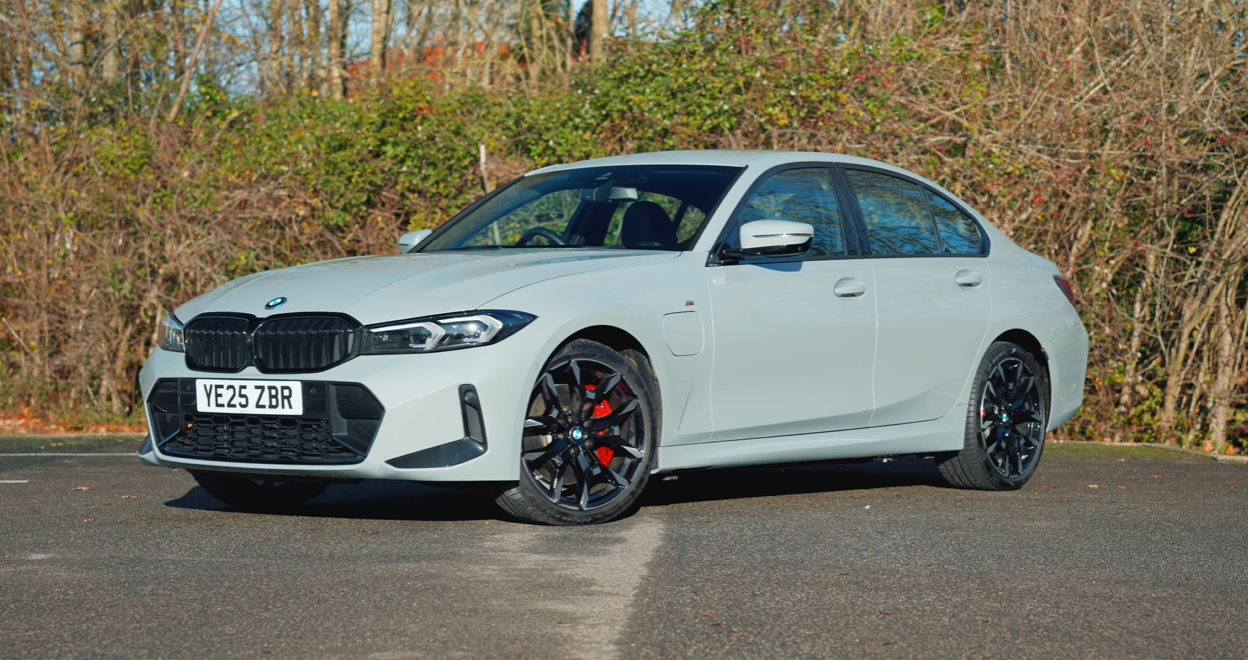
The BMW 330e plug-in hybrid sits in an interesting spot: too expensive to be a budget choice, but too efficient to ignore if you’re a company car driver or eco-conscious enthusiast.
After spending months with the 330e as a daily driver (including 150-mile work commutes, grocery runs, and spirited backroad drives), I’ve identified exactly who should buy this car—and who should keep looking.
Quick Stats:
- Price: $50,395 (RWD) | $52,395 (xDrive AWD)
- Powertrain: 2.0L turbo + electric motor = 292 hp combined
- Electric Range: 30 miles (EPA)
- Fuel Economy: 73 MPGe (hybrid) | 27 mpg (gas-only)
- 0-60 mph: 5.6 seconds
Let’s dive into the 10 biggest reasons to buy the BMW 330e—and the 3 reasons you might want to reconsider.
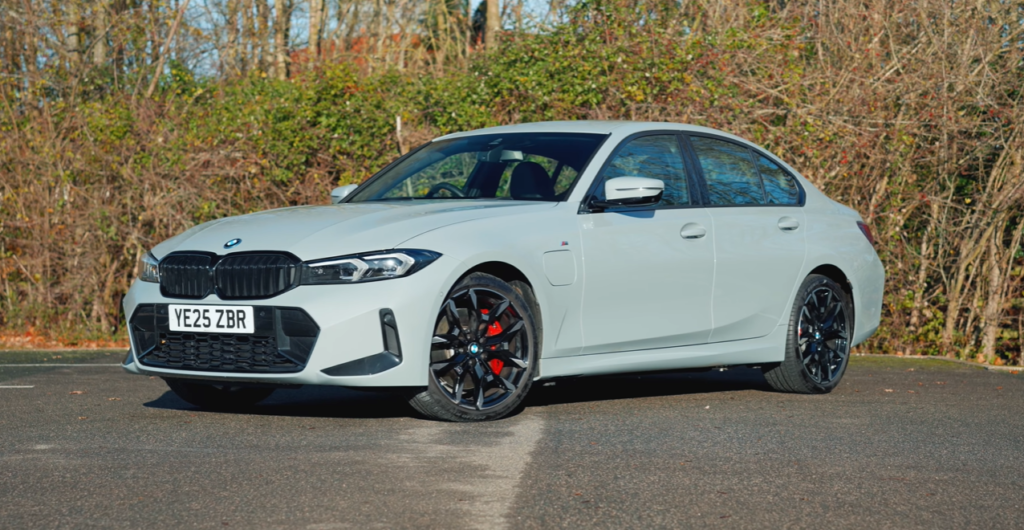
Reason #1: Massive Company Car Tax Savings (Save $2,000+ Annually)
This Is The #1 Reason Most People Buy the 330e
If you’re leasing through a company car scheme (common in the UK, EU, and some US companies), the 330e’s plug-in hybrid status unlocks absurd tax savings.
UK Company Car Tax Comparison (£50,270 Salary):
| Model | Benefit-in-Kind Rate | Annual Tax | 5-Year Total |
|---|---|---|---|
| BMW 320i (Gas) | 35% | £3,000/year | £15,000 |
| BMW 330e (PHEV) | 12% | £950/year | £4,750 |
| BMW i4 (EV) | 3% | £400/year | £2,000 |
Savings: The 330e saves you £2,050 annually (or $2,600 USD) compared to the 320i gas model.
Over 5 years, that’s £10,250 ($13,000 USD) in your pocket—enough for a luxury vacation, home renovation, or a down payment on your next car.
USA Tax Benefits:
In the U.S., the 330e may qualify for up to $7,500 in federal EV tax credits (subject to income limits and battery sourcing requirements—consult your accountant).
Verdict: If you’re on a company car scheme and can charge at home, the 330e is a financial no-brainer.
Reason #2: 292 HP Performance (Faster Than the Standard 330i)
Electric Motor + Turbo = Instant Power
The 330e isn’t just efficient—it’s genuinely quick.
Powertrain Specs:
- Engine: 2.0L turbocharged inline-4 (180 hp)
- Electric Motor: 83 kW (112 hp)
- Combined Output: 292 hp / 310 lb-ft torque
- 0-60 mph: 5.6 seconds (vs 5.8 seconds for the 330i)
- Top Speed: 130 mph (electronically limited)
Real-World Experience:
The electric motor provides instant torque from a standstill, eliminating turbo lag entirely. Merging onto highways, overtaking slow traffic, and launching from stoplights feels effortlessly brisk.
Sport Mode:
Toggle into Sport Mode, and the 330e holds gears longer, sharpens throttle response, and keeps the engine in the power band. It’s not a BMW M3, but it’s more than quick enough for daily driving thrills.
Verdict: You get more power than a 330i for about the same price (before tax incentives)—and you can drive on electric power for short trips.
Reason #3: 30-Mile Electric Range (Perfect for Daily Commutes)
Drive Gas-Free 90% of the Time (If You Charge Nightly)
The 330e’s 12.0 kWh battery delivers an EPA-estimated 30 miles of pure electric range.
Who Benefits Most:
If your daily commute is under 25 miles round-trip, you can drive entirely on electricity Monday through Friday—never using a drop of gas.
Real-World Electric Range:
- City driving: 30-32 miles (ideal conditions)
- Highway driving (70+ mph): 20-25 miles (aerodynamic drag hurts efficiency)
- Cold weather: 22-27 miles (heating drains the battery)
My Experience:
My daily commute is 22 miles round-trip. By charging overnight (Level 2 charger takes 3.5 hours), I drove 5 days a week without using gas.
Charging Costs:
Assuming $0.14/kWh (US average), a full charge costs:
- 12 kWh × $0.14 = $1.68 per charge
- Daily commute cost: $0.34/day (vs $4-5 in gas)
Savings: That’s $85-100/month saved on fuel if you commute daily.
Verdict: If you have home charging and a short commute, the 330e is absurdly cheap to run.
Reason #4: Best-in-Class Driving Dynamics (BMW Still Cares About Fun)
Rear-Wheel Drive + Perfect Weight Balance = Driver’s Car
BMW is the last attainable brand that genuinely prioritizes driving feel over gimmicks.
Why the 330e Handles So Well:
1. Rear-Wheel Drive (RWD) Layout
Unlike front-wheel-drive rivals (Honda Accord Hybrid, Toyota Camry Hybrid), the 330e sends power to the rear wheels. This means:
- ✅ Front wheels focus only on steering (sharper turn-in)
- ✅ Better weight distribution (50/50 front/rear)
- ✅ More predictable handling (the car “rotates” naturally through corners)
2. Perfectly Weighted Steering
The 330e’s electric power steering strikes a rare balance:
- ❌ Not overly assisted (no video-game numbness)
- ✅ You can feel the road surface through your palms
- ✅ Weighted perfectly (not too light, not too heavy)
3. Adaptive M Suspension (Optional)
The M Sport Package ($2,500) adds adaptive dampers that:
- Soften for highway cruising
- Stiffen for aggressive cornering
Real-World Experience:
I drove the 330e on twisty backroads, and it embarrassed crossover SUVs costing twice as much. The chassis feels balanced, predictable, and eager to change direction.
Verdict: If you enjoy driving—even a little bit—the 330e will make you grin every time you take the long way home.
Reason #5: More Spacious Than SUVs (Despite Being Smaller)
Saloons Offer Better Rear Legroom Than Most Crossovers
Here’s a dirty secret: SUVs aren’t actually more spacious inside.
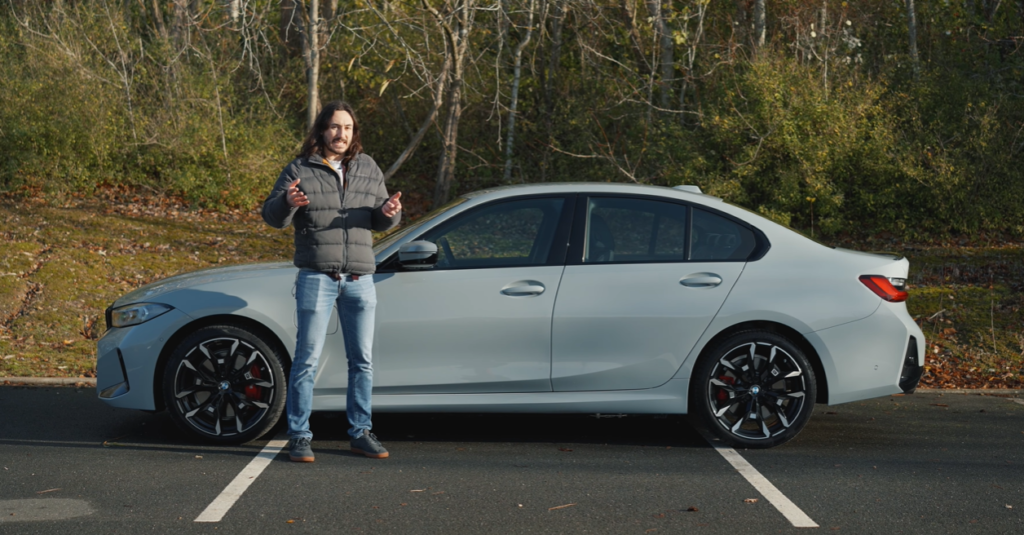
I tested the 330e against a Volkswagen Tiguan (a completely average family SUV in the same class). Results:
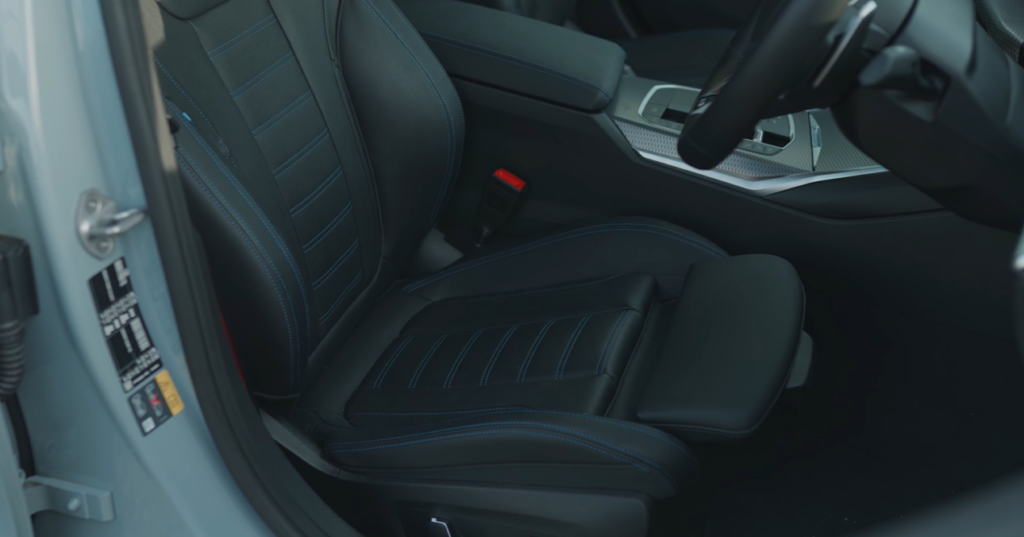
Rear Legroom Test:
| Vehicle | Rear Legroom (Behind 6′ Driver) |
|---|---|
| VW Tiguan (SUV) | 4 inches |
| BMW 330e (Saloon) | Nearly 5 inches |
Translation: You get MORE legroom in the smaller, lighter, more aerodynamic, better-to-drive saloon.
Headroom:
Yes, the Tiguan offers 2-3 inches more headroom. But unless you’re regularly chauffeuring 6’4″ passengers, the 330e’s rear headroom is perfectly adequate for adults.
Boot/Trunk Space:
- BMW 330e: 13.2 cubic feet
- VW Tiguan: 16.5 cubic feet
The 330e’s battery pack cuts cargo space, but for weekly groceries, gym bags, and luggage, it’s more than enough.
Verdict: Don’t fall for the SUV marketing. The 330e is just as practical for 90% of families—and way more fun to drive.
Reason #6: Premium Interior Quality (Feels Like a $70K Car)
BMW’s Cabin Destroys Chinese PHEV Rivals
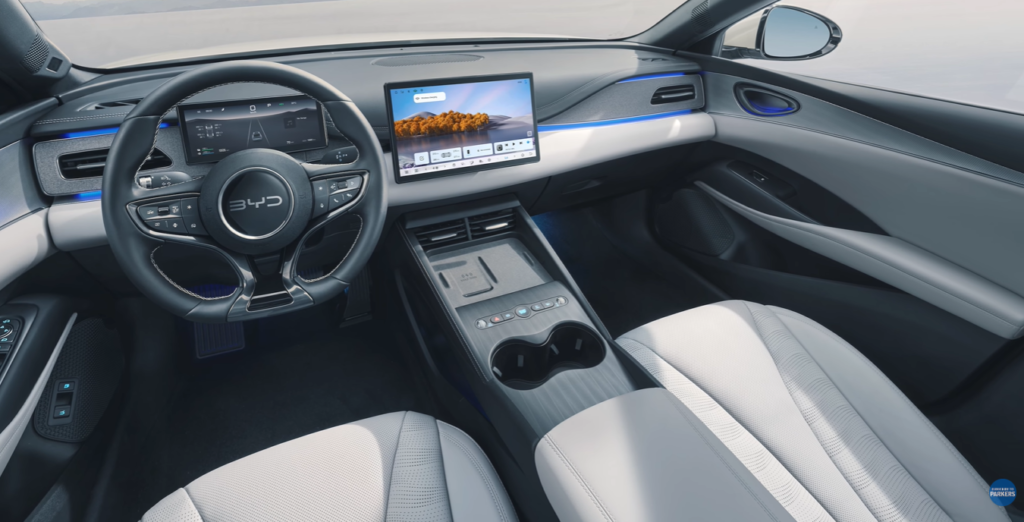
Yes, you can buy cheaper PHEVs like the BYD Seal 6 ($35,000) or MG 5 ($32,000).
But there’s a reason BMW costs more: Interior quality.
What Makes the 330e’s Cabin Special:
1. Solid, Expensive-Feeling Materials
- Soft-touch dashboard
- Real aluminum trim (not fake plastic chrome)
- Premium leather seats (M Sport package)
2. M Sport Seats with Adjustable Bolsters
- Excellent lumbar support
- Side bolsters hug you during spirited driving
- Heated and ventilated (optional)
3. iDrive Controller (Physical Dial!)
This is huge. Most modern cars force you to stab at touchscreen icons while driving (dangerous and frustrating).
BMW’s iDrive dial lets you:
- Highlight icons on the screen
- Click to select (no fumbling)
- Keep your eyes on the road
4. 14.9-inch Touchscreen (When You Need It)
The massive screen is crisp, responsive, and packed with features—but you’re not forced to use it thanks to the iDrive dial.
Comparison:
Chinese PHEVs feel flimsy and cheap by comparison. Plastics creak, buttons feel hollow, and the overall vibe screams “budget rental car.”
The 330e feels like a Breitling watch compared to their Casio build quality.
Verdict: If you spend 2+ hours a day in your car, the 330e’s premium cabin is worth every penny.
Reason #7: Minimal Depreciation (BMWs Hold Value Better Than Rivals)
Resale Value Protection
Plug-in hybrids typically depreciate faster than gas or full-electric cars, but BMW 3 Series models hold value better than most competitors.
5-Year Depreciation Estimates:
| Model | Starting Price | 5-Year Resale Value | Depreciation |
|---|---|---|---|
| BMW 330e | $50,395 | ~$25,000 | 50% |
| Mercedes C300e | $52,000 | ~$23,000 | 55% |
| Audi A4 TFSI e | $48,000 | ~$20,000 | 58% |
Why BMW Depreciates Slower:
- Brand prestige (still desirable on the used market)
- Strong aftermarket demand (enthusiasts love 3 Series)
- Better build quality (fewer reliability issues than Audi)
Certified Pre-Owned (CPO) Program:
BMW’s CPO program adds:
- Extended warranty
- Roadside assistance
- Rigorous 360-point inspection
Verdict: The 330e retains 50% of its value after 5 years—better than most PHEVs.
Reason #8: 4-Year Warranty + Free Scheduled Maintenance
BMW Covers Oil Changes, Filters, and Brake Fluid
BMW includes 3 years / 36,000 miles of free scheduled maintenance:
- Oil changes
- Engine air filters
- Cabin air filters
- Brake fluid
- Vehicle inspections
Warranty Coverage:
- 4 years / 50,000 miles (basic)
- 4 years / 50,000 miles (powertrain)
- 8 years / 100,000 miles (hybrid battery)
Cost Savings:
BMW dealership maintenance costs $150-250 per service. Over 3 years, that’s $900-1,500 saved.
Verdict: Free maintenance sweetens the deal for new buyers.
Reason #9: Future-Proof Technology (Apple CarPlay, OTA Updates)
BMW Stays Current with Software Updates
The 330e includes:
- Wireless Apple CarPlay & Android Auto
- Over-the-Air (OTA) software updates (new features without dealership visits)
- BMW ConnectedDrive (remote start, vehicle monitoring via app)
- Digital Key Plus (unlock with your iPhone or Android phone)
Advanced Driver Assistance (Optional):
- Adaptive cruise control with stop-and-go
- Lane-keeping assist
- Blind-spot monitoring
- 360-degree camera
- Parking assistance
Verdict: The 330e feels modern and tech-forward without being gimmicky.
Reason #10: It’s Still a BMW 3 Series (Timeless Icon)
The 3 Series Has Been the Benchmark for 50 Years
Since 1975, the BMW 3 Series has been the gold standard for compact executive sedans.
What That Means:
- Proven platform (decades of refinement)
- Massive aftermarket support (tuning, mods, repairs)
- Global service network (find BMW dealers everywhere)
- Enthusiast community (forums, clubs, events)
Emotional Appeal:
Owning a 3 Series still carries prestige. It’s understated luxury—not flashy like a Mercedes, not sterile like an Audi, but sophisticated and driver-focused.
Verdict: The 3 Series nameplate still means something in 2026—and the 330e upholds that legacy.
3 Reasons to SKIP the BMW 330e
It’s Not Perfect—Here’s When to Walk Away
❌ Reason 1: You Drive Long Distances Daily (150+ Miles)
The 330e’s 8-gallon fuel tank (vs 11 gallons in the 330i) limits range to ~300 miles total.
If you frequently drive 150+ mile round trips, you’ll be stopping for gas constantly—and the hybrid system only delivers 35-40 mpg once the battery is depleted (worse than a diesel).
Better Alternative: BMW 330d (diesel) or a full EV like the BMW i4.
❌ Reason 2: You Can’t Charge at Home
Without home charging, the 330e is pointless.
Public charging is:
- Expensive ($0.30-0.50/kWh vs $0.14/kWh at home)
- Inconvenient (waiting 3.5 hours at a charging station)
- Impractical (you’ll just use gas instead)
Better Alternative: Standard 330i or a full hybrid (Toyota Camry Hybrid, Honda Accord Hybrid).
❌ Reason 3: You’re Buying Outright (Not Leasing)
At $50,395 MSRP (or $59K as-tested with options), the 330e is expensive compared to rivals:
- BYD Seal 6 PHEV: $35,000 (better value, longer electric range)
- Lexus ES 300h: $42,000 (better reliability, cheaper maintenance)
Better Alternative: Lease the 330e or buy a Chinese PHEV for better value.
Final Verdict: Should You Buy the BMW 330e?
Rating: 4.2/5 Stars ⭐⭐⭐⭐
The BMW 330e is a brilliant company car that saves thousands annually—but a questionable private purchase unless you prioritize driving dynamics over value.
Buy If:
- ✅ You get it as a company car (£2,050+/year tax savings)
- ✅ You have home charging (Level 2 charger essential)
- ✅ Your daily commute is under 30 miles
- ✅ You value driving dynamics over efficiency
- ✅ You want a premium interior (not Chinese plastics)
Skip If:
- ❌ You drive 150+ miles daily (get a diesel or full EV)
- ❌ You can’t charge at home (get a full hybrid)
- ❌ You’re buying outright (Chinese PHEVs offer better value)
Final Thought: The BMW 330e proves that saloons aren’t dead—they’re just smarter than SUVs. If you’re a company car driver who can charge at home, the 330e is a no-brainer. But private buyers should think twice before spending $50K+.
Are you considering a BMW 330e? Which reason matters most to you? Let me know in the comments!


