By MyPitShop | April 2026 | Car Review | 12 min read
The Denza Z9 GT is one of the most talked-about cars of 2026 — 1,140hp, a 9-minute charge time, crab walk parking, and a cabin that embarrasses most European rivals on features. On paper, it sounds like the obvious buy. But we drove it, lived with it, and dug into the real-world ownership picture. And there are five very serious reasons you should think twice before signing a cheque for £100,000.
Reason 1: You Are Paying 3× the China Price — and Tariffs Don’t Explain the Gap
This is the single most important fact about the Denza Z9 GT that most reviews mention briefly and move past.
In China, the Z9 GT starts at approximately £39,000 (269,800 yuan). In Germany and France, orders are open at €115,000 — roughly £100,000. In the UK, the estimate is the same. That is two and a half times the Chinese price for the exact same car.
EU tariffs on Chinese-built EVs add approximately 27%, plus standard import duties — which accounts for roughly £10,000–£15,000 of additional cost. That still leaves a £46,000–£51,000 unexplained gap between what Chinese buyers pay and what European buyers are asked to pay.
Denza is deliberately pricing at parity with the Porsche Panamera (€116,400 in Germany) — a car with decades of brand heritage, a global dealer network, proven residual values, and established European road calibration. The Z9 GT has none of those things yet.
The residual value problem nobody is talking about: residual values for brand-new Chinese premium brands in Europe are completely unknown. Nobody knows what a 3-year-old Denza Z9 GT is worth on the used market. If it follows the pattern of other new market entrants — Genesis, Infiniti, early Lexus — expect significant initial depreciation. On a £100,000 car, a 40% three-year depreciation means losing £40,000. Porsche Panamera resale curves are predictable and significantly better.
What £100,000 buys you instead: BMW M5 Touring, Porsche Taycan Sport Turismo, Mercedes-AMG GT 4-Door Coupé — all with brand recognition, established UK dealer networks, and known residual values.
Reason 2: The 9-Minute Charging Is Real — But the Chargers Are Not (Yet)
The Denza Z9 GT’s 9-minute 10–97% charge is the most impressive EV charging achievement in any production car right now. We watched it happen. It is real — BYD’s second-generation Blade Battery paired with a megawatt-capable charging buffer that stores energy between vehicles and releases it at speeds the grid alone could never deliver.
But here is the problem: the entire value of fast charging depends on access to fast chargers. And right now, those chargers do not exist in meaningful numbers.
Denza plans to install 3,000 Flash Chargers across Europe within 12 months, including 300 in the UK. That is the plan. As of today, the network is in its infancy. If you buy a Z9 GT now, you are paying £100,000 for a car whose headline feature — its single biggest technical achievement — you cannot fully use for the foreseeable future.
In the meantime, the Z9 GT uses standard DC charging at up to 1,500kW capable architecture, but only at compatible chargers. At a standard 150kW public charger — which is what most of the UK network currently offers — the charge time is considerably longer than 9 minutes. The car’s 372-mile WLTP range is solid but not class-leading. The BMW i5 M60 delivers approximately 500 miles from a smaller battery.
The honest question: are you buying the car, or are you buying the promise of what the car will become when the infrastructure arrives? Those are very different purchases.
Reason 3: The Design Does Not Feel Like a £100,000 Car — Yet
This is the most subjective point on this list, but it is one that every reviewer who has driven the Z9 GT has raised independently, and subjective reactions to design are exactly what matter at this price point.
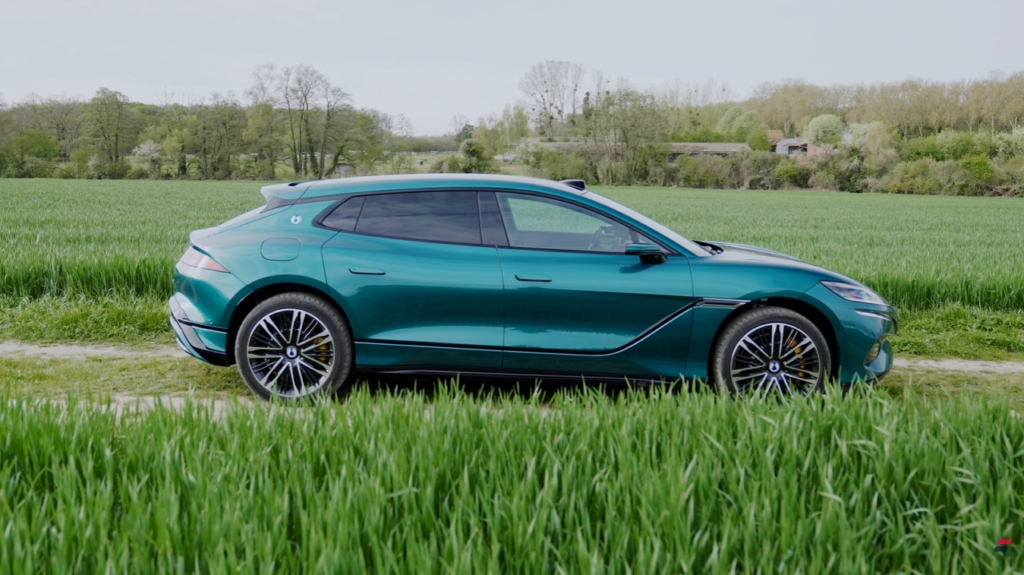
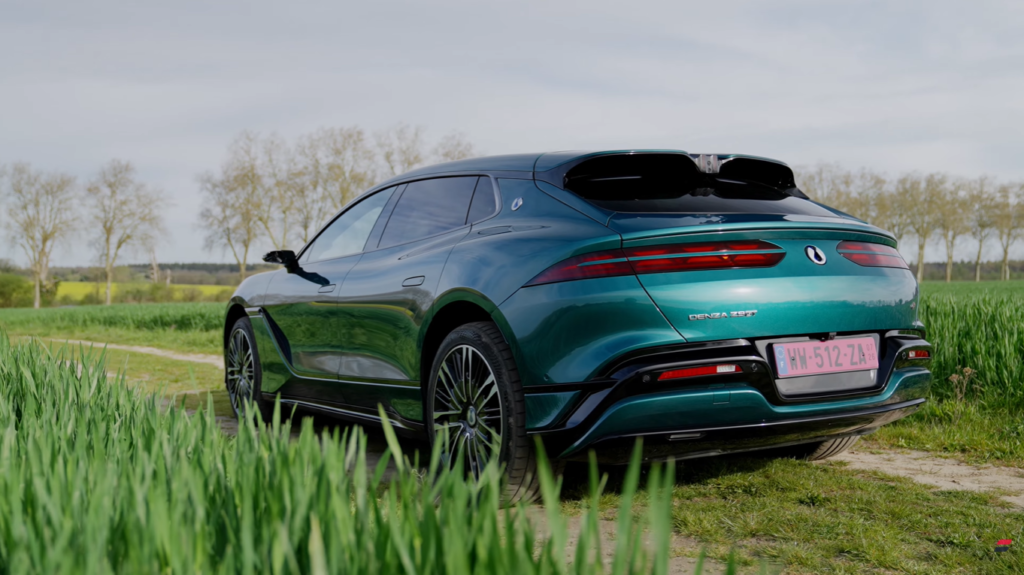
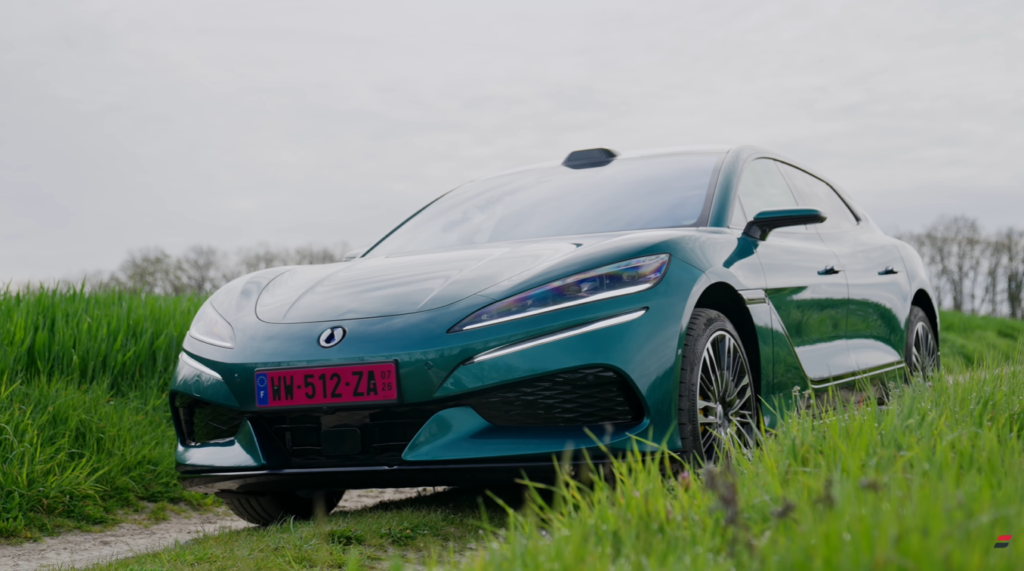
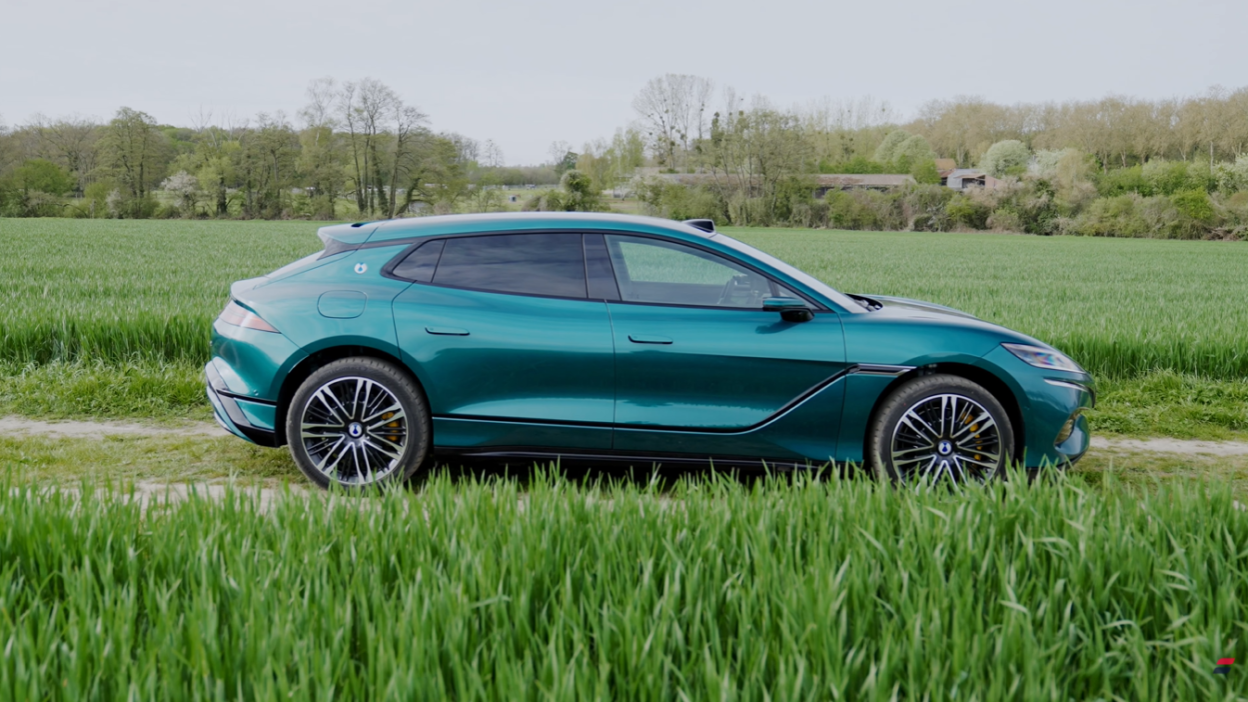
The Denza Z9 GT was designed by Wolfgang Egger, whose CV includes the Alfa Romeo 8C Competizione — one of the most beautiful cars of the 21st century. The Z9 GT is not that. It is a large, low-slung shooting brake with split LED headlights, a flowing silk-inspired waistline (Denza’s description), and a rear spoiler that signals intent. The proportions are clean. The details are distinctive.
But at £100,000, a car needs to make people stop in the street. It needs to make you excited to walk out to your driveway in the morning. It needs to justify the price on an emotional level before the engine even starts.
The Z9 GT makes people wonder what it is first. That is not the same thing as making people want it immediately. The BMW M5 Touring, Porsche Panamera Sport Turismo, and Mercedes-AMG GT 4-Door all generate that instant emotional pull. The Denza does not — at least not yet, not for most buyers.
The camera mirror problem adds to this: the Z9 GT replaces traditional door mirrors with camera screens mounted inside the car. It is technically legal in Europe. But it means looking down and inward to check surroundings rather than glancing outward naturally. It takes days to adapt. At £100,000, this should be a choice, not a default.
Reason 4: The Brakes and Suspension Are Unresolved for UK Roads
This is the most concrete and immediate concern for anyone considering an early purchase.
Every journalist who drove the Denza Z9 GT at European press events — including our own test drive in France — flagged the same two dynamics issues.
The brake pedal: it has a two-stage feel. Initial pedal travel builds resistance slowly before the main braking force engages sharply further into the stroke. For a 2.9-tonne car capable of 168mph, this inconsistent pedal feel undermines confidence significantly. Even after an hour of driving, modulating the brakes smoothly for everyday situations — roundabouts, junctions, following distance adjustments — remained difficult. This is not a minor calibration issue. It is a fundamental safety-adjacent concern in a car with this performance capability.
The suspension: the test car used Chinese-market calibration — softer, more compliant, tuned for Chinese road surfaces and driver preferences. On smooth French roads it was acceptable. On rough UK roads — broken bitumen, pot-holed A-roads, aggressive motorway surface changes — this calibration would be inadequate. European premium buyers expect a more resolved, controlled ride than Chinese-market settings deliver.
Denza has confirmed that European production cars will receive retuned suspension and revised brake pedal calibration. That is the right commitment. But it means the cars journalists tested are not the cars UK buyers will receive — and until European-spec production cars are independently tested on UK roads, no honest review can give the Z9 GT a definitive dynamics verdict.
Our recommendation: do not buy the first wave of UK deliveries. Wait for independent long-term road tests of confirmed European-specification production cars before committing £100,000 based on pre-production French road impressions.
Reason 5: 2.9 Tonnes Is a Real Problem — Not Just a Spec Sheet Number
The Denza Z9 GT weighs 2.9 tonnes. That is approximately half a tonne more than the Porsche Taycan Turbo S (2.2 tonnes) and the Tesla Model S Plaid (2.1 tonnes). It is heavier than a Range Rover Sport. It is approaching the weight of a full-size Range Rover.
This weight affects four things that matter in daily driving:
Performance: the 0–62mph time of 2.7 seconds is genuinely impressive but trails both the Porsche Taycan Turbo S (2.4s) and Tesla Model S Plaid (2.1s). For a car with 1,140hp, finishing third in the 0–62 comparison against its two most obvious rivals is a consequence of carrying an extra 500–800kg everywhere.
Efficiency: the Z9 GT achieves approximately 3.0mi/kWh in real-world driving — matching Denza’s official claim but trailing European rivals that achieve better efficiency with less power. A 122kWh battery delivering 372 miles WLTP is not a class-leading efficiency story. Physics cannot be negotiated with — more mass requires more energy.
Tyre wear: the crab walk and pencil compass turn party tricks generate significant lateral scrubbing forces on the tyres. On a 2.9-tonne car riding on 20-inch fitment, tyre replacement costs are considerable. If you use these features regularly, factor in accelerated wear costs as part of the total ownership cost.
Dynamics: the car’s body roll management is impressive given the weight, but 2.9 tonnes is always present. In tight corners, on rough road sections, during sudden direction changes — you feel the mass. The Porsche Panamera, BMW M5, and Mercedes-AMG GT 4-Door all feel more agile and more connected to the road at comparable or lower speeds, despite their own considerable weights.
Still Worth Considering? Here Is Who Should Buy It
Despite these five reasons, the Denza Z9 GT is not a bad car. If any of the following describes you, it may still make sense:
Buy it if the 9-minute Flash Charging genuinely solves a real problem in your life and Denza’s UK network reaches your area within 6 months.
Buy it if you want the most technologically advanced premium cabin available under £110,000 — the rear seat experience, Devialet audio, and feature density are class-leading.
Buy it if you do primarily urban and suburban driving where the weight penalty is less apparent and the turning circle advantage of rear-wheel steering is a daily benefit.
Buy it if you are a technology-first buyer who makes decisions with your head rather than your heart, and the engineering achievement of this car genuinely excites you more than the badge on the boot.
Wait if you are on the fence — let the first 6 months of UK deliveries produce independent long-term owner reviews, then decide.
What to Buy Instead at £100,000
Porsche Taycan Sport Turismo Turbo S — better dynamics, better pedal feel, established UK network, known residuals. Costs more but the ownership experience is proven.
BMW M5 Touring — 601hp, 500+ miles real-world range, better efficiency, brilliant chassis. Less dramatic than the Denza but more rewarding to drive every day.
Mercedes-AMG GT 4-Door — the emotional design the Denza lacks, strong performance, genuine GT character, and a dealer network on every high street.
Tesla Model S Plaid — faster 0–62, Supercharger network that actually exists, better efficiency, lower price. Less premium inside but more usable every day.
MyPitShop Verdict
The Denza Z9 GT is technically extraordinary. The charging speed is historic. The performance is savage. The interior is genuinely premium. If Denza gets the European dynamics right, builds the Flash Charger network it is promising, and proves its residual value story over 24 months — this car becomes very difficult to argue against.
But right now, in April 2026, you are being asked to pay £100,000 for a promise. The charging network is not built. The European suspension tune is not confirmed. The residual values are unknown. And the design has not yet generated the emotional pull that justifies the price in the way its German rivals do effortlessly.
Buy with your head. The head argument says: wait 12 months, let the network arrive, let independent UK road tests confirm the dynamics, and let the first wave of owners report back. Then decide.
That is the smartest £100,000 you can spend.