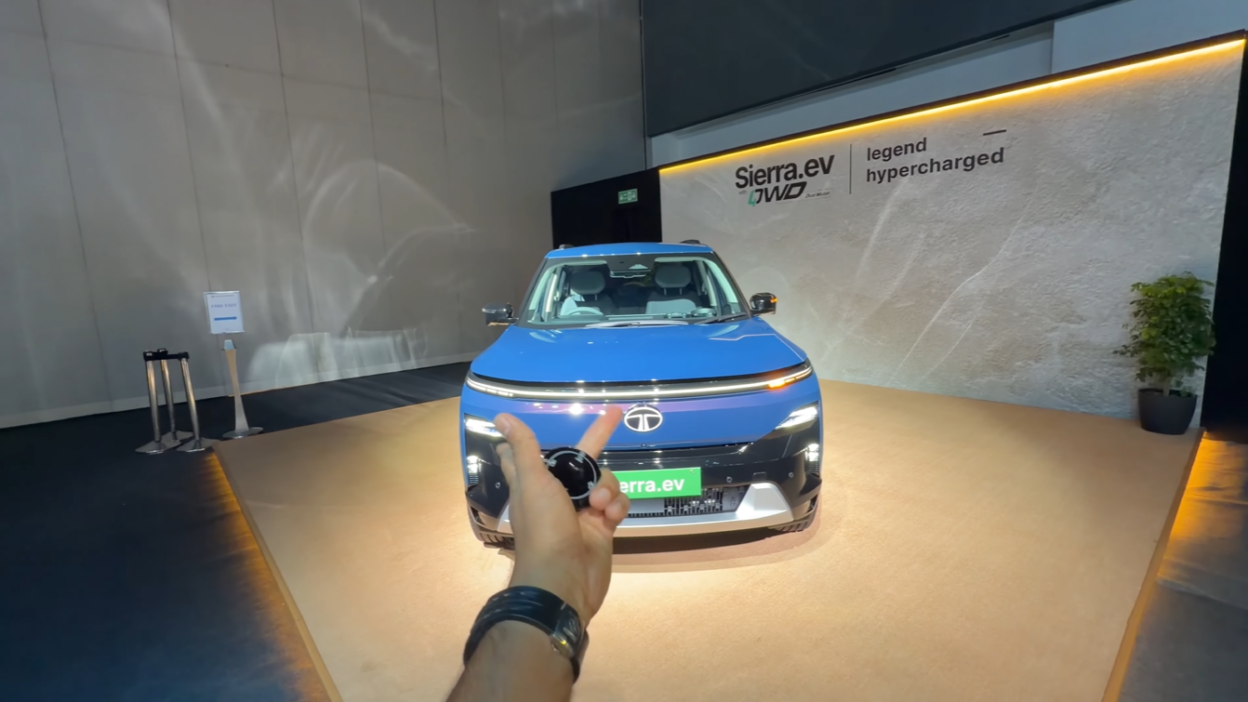
TL;DR – Quick Takeaway
✅ Fastest Indian car: 0-100 km/h in just 5.8 seconds (matches BMW 330Li)
✅ Only quad wheel drive EV in its segment
✅ Feature-loaded: Triple screens, HUD, 540° camera, gaming controller, Dolby Atmos
✅ Fast charging: 20-80% in just 27 minutes
✅ Real-world range: ~500 km on 75 kWh battery
⚠️ The Catch: Priced at ₹20-28 lakh — significantly more expensive than the petrol/diesel Sierra
🎯 Best For: Buyers wanting the fastest, most feature-rich Indian EV SUV money can buy
Introduction: India’s Most Exciting Electric SUV Has Arrived
The Tata Sierra EV isn’t just another electric vehicle slapped with a new badge and a wall socket. It’s a genuine statement of intent from Tata Motors — a car that can be genuinely called the fastest-accelerating Indian car currently on sale, combining blistering performance with a feature list that would make European luxury brands take note.
Yes, it’s expensive. Yes, there are a few quirks. But if you’re in the market for a premium electric SUV that genuinely excites, the Sierra EV makes a compelling case. Here are the top 10 reasons why this car deserves serious consideration.
Reason #1: It’s the Fastest Accelerating Indian Car — Period
Let’s start with the headline number: 0 to 100 km/h in just 5.8 seconds.
To put that in perspective, that’s as quick as a BMW 330Li — a car powered by BMW’s legendary B48 turbocharged engine. Except the Sierra EV has no engine at all. The speed comes from pure electric torque, delivered instantly with no waiting for revs to build.
How does it achieve this?
The magic lies in the quad wheel drive, dual motor setup available with the 75 kWh battery. Here’s how it works:
- Base configuration (63 kWh): Rear motor only producing 238 PS — a powerful rear-wheel drive setup
- Upgraded configuration (75 kWh): Adds a 140 PS front motor, resulting in nearly 350 PS combined and a massive 504 Nm of torque
The boost mode — available when battery is above 50% — unleashes the full performance potential. The result is acceleration that genuinely pins you to your seat and puts a grin on your face every single time.
If raw, instant performance matters to you, nothing else on Indian roads at this price point comes close.
Reason #2: India’s Only Quad Wheel Drive EV in the Segment
This is genuinely historic: the Tata Sierra EV is the only quad wheel drive (QWD) electric vehicle in its segment in India.
While competitors like the Mahindra XUV series don’t offer AWD in this category, the Sierra EV’s dual-motor setup puts power to all four wheels simultaneously. And this isn’t just a marketing feature — it has real practical benefits.
Terrain modes available with QWD:
- Normal (everyday driving)
- Rock Crawl (serious off-road capability)
- Custom (personalize your setup)
The ambient lighting inside even changes colour when you switch terrain modes — a small but genuinely cool touch that adds to the drama of using these systems.
For anyone who takes their SUV off the beaten path, or simply wants maximum traction in wet and slippery conditions, the Sierra EV’s QWD system is in a class of its own in this price bracket.
Reason #3: Fast Charging That’s Actually Fast
Range anxiety is the elephant in the room with any EV conversation. Tata has addressed the charging side of the equation impressively.
Charging Specifications:
- DC Fast Charging: 120 kW maximum
- 0 to 80% charge time: Just 27 minutes
- AC Charging: 7.2 kW onboard charger (optional upgrade from standard 3.3 kW)
- In-car payment: You can pay for public charging directly through the infotainment screen
Twenty-seven minutes from 20% to 80% is genuinely competitive by global standards, let alone Indian market standards. A quick coffee break or lunch stop is all you need to add significant range.
The ability to pay for charging from the car’s own screen — a feature first seen on the Creta EV — is also a nice convenience touch that reduces friction on long journeys.
Reason #4: Real-World Range of Around 500 km
The Sierra EV’s 75 kWh battery promises approximately 500 km of real-world range — and the on-board calculations back this up.
During the review, with the battery at 38% state of charge, the car was showing 177 km of remaining range. Do the math and you’re looking at approximately 466-480 km on a full charge — genuinely close to 500 km in real-world conditions.
Battery options at a glance:
| Battery | Drive System | Range Estimate |
|---|---|---|
| 63 kWh | Rear-Wheel Drive | ~400 km |
| 75 kWh | Rear-Wheel Drive / Quad Wheel Drive | ~500 km |
For most buyers, 500 km of real-world range effectively eliminates range anxiety for everyday use. Weekend trips to nearby hill stations? No problem. Long highway drives with fast-charging stops? Absolutely manageable.
Reason #5: India’s Most Feature-Loaded SUV Interior
The Sierra EV’s interior is where Tata has clearly gone all-in. Calling it feature-loaded is an understatement.
Three Screens + Head-Up Display
- 12.3-inch infotainment screen (driver-facing)
- 12.3-inch co-passenger screen
- 10.25-inch third screen
- Head-Up Display (HUD) — yes, on top of all three screens
That’s more screens than most cars at twice the price.
540° Camera System
Forget 360° parking cameras — the Sierra EV goes further with a 540° camera system that Tata calls a “540-degree view.” It includes:
- Standard surround view
- Under-body view capability
- Full 3D display view
This makes tight parking and off-road navigation genuinely easier, showing what’s happening not just around the car but beneath it.
JBL 12-Speaker Sound System
A premium JBL audio system with 12 speakers — including a soundbar integrated into the dashboard — ensures the listening experience matches the visual spectacle of the interior.
Also worth noting:
- Dolby Atmos via Apple CarPlay — an industry first for this class
- Mood lighting that changes with drive modes
- Auto-dimming mirrors
- NFC key for tap-to-unlock
- Self-parking capability (auto park)
- Wireless charging pad
- 65W fast charging (USB)
Reason #6: Play Console Games Inside Your Car
This might sound gimmicky until you’re stuck at a charging station for 27 minutes and your co-passengers are restless.
The Tata Sierra EV supports console gaming directly on the infotainment screen, complete with an optional Xbox-style controller. You can also use your smartphone as a gaming controller — a feature BMW has introduced at significantly higher price points.
It’s genuinely fun, surprisingly polished, and represents the direction cars are heading as they evolve into rolling gadgets. Whether you’ll use it every day or just occasionally, it’s a feature you’ll be happy to show off.
Reason #7: Practical Storage Solutions (Frunk Included)
The Sierra EV is a proper electric car in the way it thinks about storage — including the frunk (front trunk) made possible by the absence of a traditional engine.
Storage breakdown:
| Configuration | Frunk Capacity |
|---|---|
| Quad Wheel Drive (75 kWh) | 35 litres |
| Rear Wheel Drive (63 kWh) | 55 litres (no front motor, more space) |
Boot space: ~450 litres — identical to the petrol Sierra, which is impressive packaging work.
The rear interior also benefits from the Sierra EV having the longest wheelbase in its segment, translating into genuinely impressive rear seat space. Legroom, knee room, and foot room are all generous, with reclinable rear seats making long journeys comfortable. The huge door pockets — large enough for water bottles plus more — and a dedicated umbrella holder are practical touches that show real-world thinking.
Reason #8: Advanced Safety and Driver Assistance
The Sierra EV is equipped with a comprehensive suite of active safety and driver assistance systems:
Active Safety Features:
- Autonomous Emergency Braking (AEB)
- Blind Spot Monitoring
- Lane Keep Assist
- Adaptive Cruise Control (with stop-and-go)
- Auto Park (the car parks itself)
- Rain-sensing wipers
- Front radar for collision detection
Six parking sensors at the front alone — combined with the 540° camera system — make the Sierra EV genuinely easy to park despite its size.
The auto park feature deserves special mention: the car can independently steer itself into a parking spot while you manage the throttle and brakes. In tight urban parking situations, this is genuinely useful rather than just a showpiece.
Reason #9: Premium Technology That Rivals Cars Costing Far More
Let’s take stock of the technology in the Sierra EV and compare it to what you’d find in European cars at similar (or higher) prices:
Dolby Atmos via Apple CarPlay? — A first for this segment, period.
Three screens + HUD? — Typically reserved for Mercedes, BMW, and Audi flagships.
540° underbody camera? — A feature associated with Land Rover’s Terrain Response system.
NFC tap-to-unlock key? — Still rare even in premium cars.
In-car gaming with a controller? — BMW charges you significantly more for this.
Ambient lighting that changes with drive modes — Seen in Mercedes AMG variants at double the price.
The Sierra EV packs all of this into a car that starts at ₹19.92 lakh on-road (Mumbai). The technology-to-price ratio here is genuinely remarkable, even if the top variants push toward ₹28 lakh.
Reason #10: The Only Car That Combines Classic Sierra Design with Future-Ready Technology
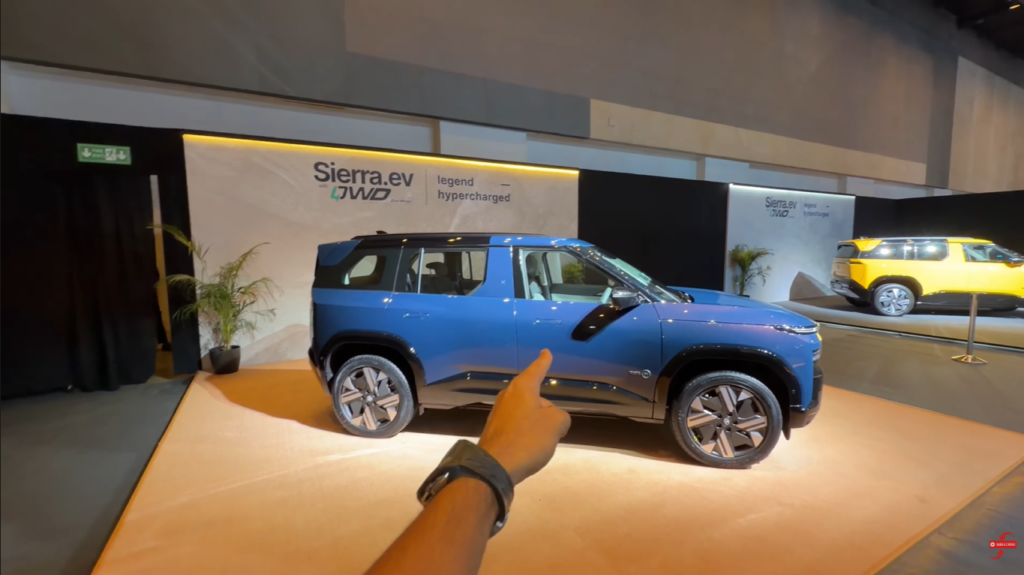
There’s an emotional reason to buy the Tata Sierra EV that’s harder to quantify but impossible to ignore: it revives one of India’s most iconic car names while being one of the most modern vehicles on Indian roads.
The Sierra name carries nostalgia for an entire generation of Indian car enthusiasts. Tata has wrapped that legacy around:
- Dynamic sweep LED indicators
- 19-inch alloy wheels
- Revised aerodynamic bumper design
- Clean EV-specific white Tata logo
- Green licence plate that identifies it as India’s cleanest SUV
In a market where most EVs look either aggressively futuristic or boringly conservative, the Sierra EV strikes a balance — familiar enough to feel approachable, modern enough to turn heads.
The yellow colour variant is especially striking — bold, confident, and unlike anything else in the Indian SUV market.
The Honest Downsides: Things to Know Before Buying
A fair review acknowledges the limitations, and the Sierra EV has a few:
1. Pricing is aggressive — perhaps too aggressive ₹28 lakh for the top variant enters Harrier EV territory, which is a significantly larger car. Tata could have been more competitive here.
2. No spare wheel At this price point — especially as an Indian brand fully aware of Indian road conditions — the absence of a spare wheel (only a puncture repair kit) is genuinely disappointing. This needs to be addressed.
3. Too many touch controls The fingerprint-attracting touch surfaces throughout the cabin are difficult to use while driving. Physical buttons should handle critical functions — a complaint Tata keeps receiving but hasn’t fully addressed.
4. Single sunroof/sunblind switch Operating both the sunroof and sunblind with a single switch is inconvenient. Land Rover (which Tata owns) uses two separate switches — there’s no excuse for this being an issue here.
5. Boost Mode requires 50%+ battery You need at least 50% state of charge to use Boost Mode. Plan your drives accordingly if performance matters.
6. Charging infrastructure remains patchy This isn’t a Sierra EV-specific issue, but finding a compatible fast charger can still be challenging in smaller cities and towns.
Pricing Overview
| Variant | Expected Price |
|---|---|
| Base (63 kWh, RWD) | ₹19.92 lakh (on-road, Mumbai) |
| Mid Variants | ₹22-25 lakh |
| Top (75 kWh, QWD) | ~₹28 lakh |
Tata Sierra EV vs Key Competitors
| Feature | Tata Sierra EV | Harrier EV | Mahindra BE 6 |
|---|---|---|---|
| Quad Wheel Drive | ✅ Yes | ✅ Yes | ❌ No |
| 0-100 km/h | 5.8 sec | ~6.0 sec | ~6.7 sec |
| Real-world Range | ~500 km | ~480 km | ~500 km |
| Gaming Console | ✅ Yes | ❌ No | ❌ No |
| In-car Charging Payment | ✅ Yes | ❌ No | ❌ No |
| Spare Wheel | ❌ No | ❌ No | ❌ No |
| Price Range | ₹20-28 lakh | ₹22-28 lakh | ₹18-26 lakh |
Final Verdict: Should You Buy the Tata Sierra EV?
Buy It If You:
✅ Want the fastest-accelerating Indian car available today
✅ Need quad wheel drive capability in an electric SUV
✅ Value cutting-edge technology and premium features
✅ Primarily charge at home or near reliable DC fast chargers
✅ Appreciate the Sierra name and want to own a piece of Indian automotive history
✅ Want Dolby Atmos, gaming, 540° cameras, and three screens in one car
Think Twice If You:
❌ Frequently drive in areas with poor charging infrastructure
❌ Need a spare wheel (this doesn’t have one)
❌ Want a larger interior space (Harrier EV is bigger for similar money)
❌ Are price-sensitive — the EV premium over petrol is substantial
The Bottom Line
The Tata Sierra EV is very impressive and very expensive — and both those statements are entirely accurate. It pushes technology and performance benchmarks that no Indian brand has touched before. The quad wheel drive setup, blistering acceleration, 500 km real-world range, and genuinely jaw-dropping feature list make it one of the most exciting cars Tata has ever built.
The pricing, spare wheel omission, and touch-control overdependence are real issues that Tata needs to address. But if the budget is there and you want the most technologically advanced Indian EV SUV money can buy in 2026, the Sierra EV makes a genuinely strong case.
Rating: 8.5/10
Very fast. Very loaded. Just a touch too expensive.
5.8 seconds in the top quad wheel drive variant — making it the fastest-accelerating Indian car currently on sale.
Approximately 500 km on the 75 kWh battery pack in real-world conditions, based on on-board range calculations during testing.
Using a 120 kW DC fast charger, it charges from 20% to 80% in approximately 27 minutes.
Have you driven or experienced the Tata Sierra EV? Share your thoughts in the comments below. Subscribe for more in-depth EV reviews from the Indian market.


