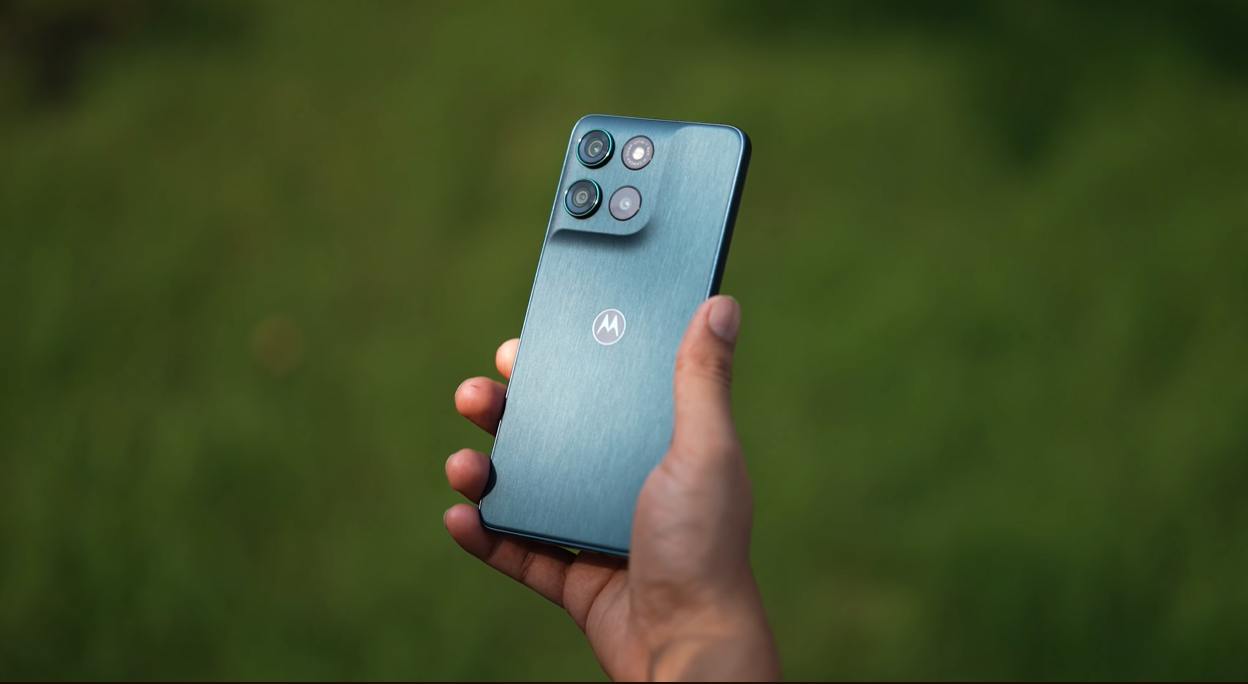
Quick Verdict: The Moto G Max 5G leans hard into “more for less” — a 50MP Sony LYT-600 main sensor (genuinely rare below ₹40,000), UFS 3.1 storage instead of the usual UFS 2.x seen at this price, a 7,000mAh silicon-carbon battery, and a surprise 3.5mm headphone jack. The display is Full HD+ LCD rather than AMOLED, and performance from the Snapdragon 6s Gen 4 is balanced rather than flagship-tier — but across every benchmark run in testing, it held up smoothly with zero throttling concerns. Official pricing: ₹27,999, effectively ₹26,999 with an instant bank discount.
Note: This hands-on unit was provided by Motorola as part of a media collaboration ahead of launch.
Important: Don’t Confuse This With the Global “Moto G Max”
Before anything else, a genuine clarification worth making since it’s easy to get wrong searching around this phone: Motorola sells two different phones under very similar names.
- The India-market “Moto G Max 5G” (covered in this review) — Snapdragon 6s Gen 4, 6.72-inch Full HD+ LCD display, 50MP Sony LYT-600 main camera, 7,000mAh battery, UFS 3.1 storage, launching in India August 14, 2026.
- The global “Moto G Max 5G” sold in Brazil and parts of Europe/GCC — a genuinely different device with a MediaTek Dimensity 6400 chipset, a 6.8-inch 1.5K AMOLED display at up to 5,000 nits, and a 200MP OIS main camera, priced closer to ₹44,000–47,000 in those markets.
Same name, meaningfully different phones. If you’re comparing specs found online, double-check which “Moto G Max” you’re actually looking at — this review covers only the India-specific Snapdragon 6s Gen 4 variant.
Moto G Max 5G: Official India Pricing
| Variant | Price |
|---|---|
| 6GB + 128GB | ₹27,999 (₹26,999 effective with ₹1,000 instant bank discount) |
| 4GB + 128GB | To be announced, launching later |
The phone launches in India on August 14, 2026, sold via Flipkart, Motorola’s official website, and offline retail stores.
Design and Build
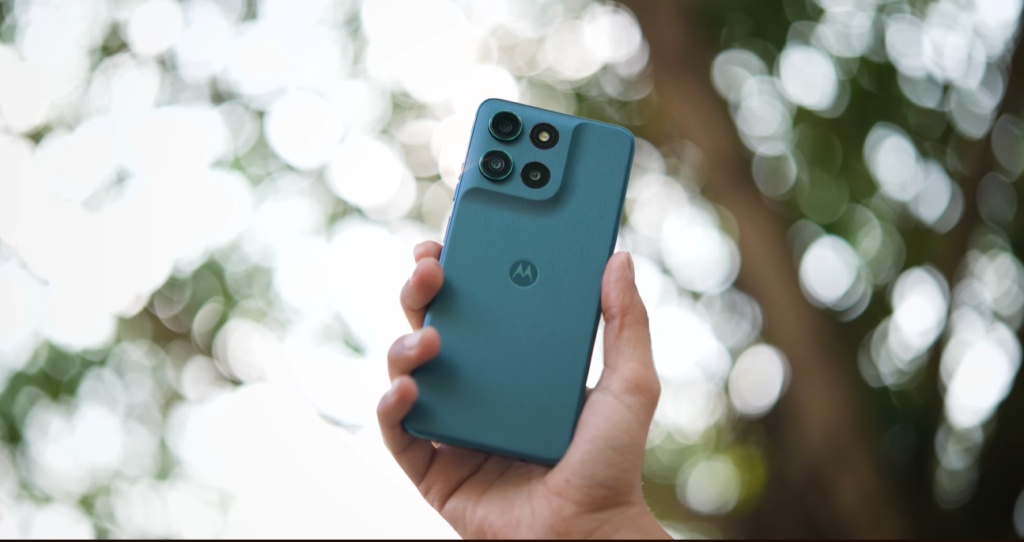
The G Max 5G carries Motorola’s familiar design language — a polycarbonate back with a genuinely premium-feeling “luxury satin” finish, available in three Pantone-curated colors, topped with the signature Motorola logo dimple. In hand, the phone feels slightly elongated but not unusually thick or thin.
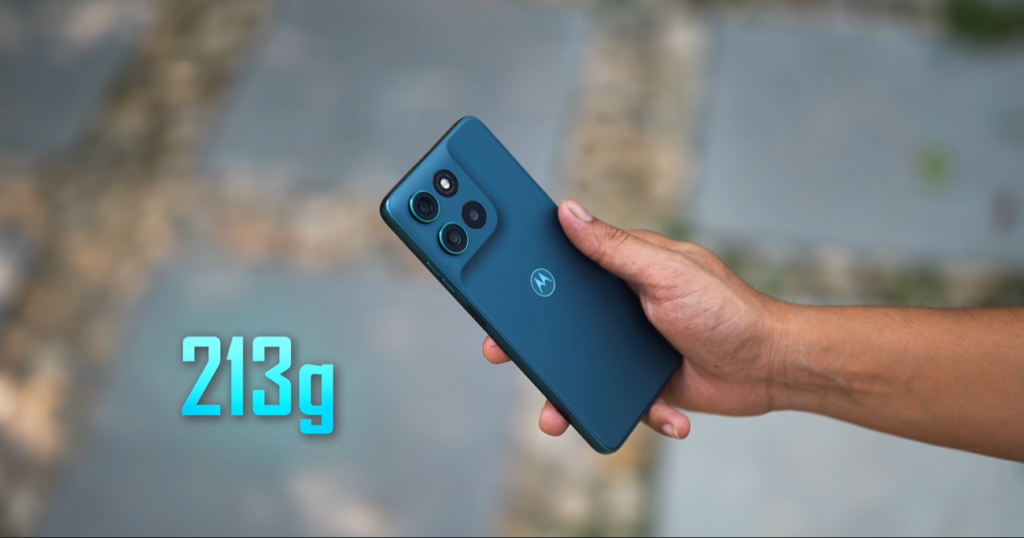
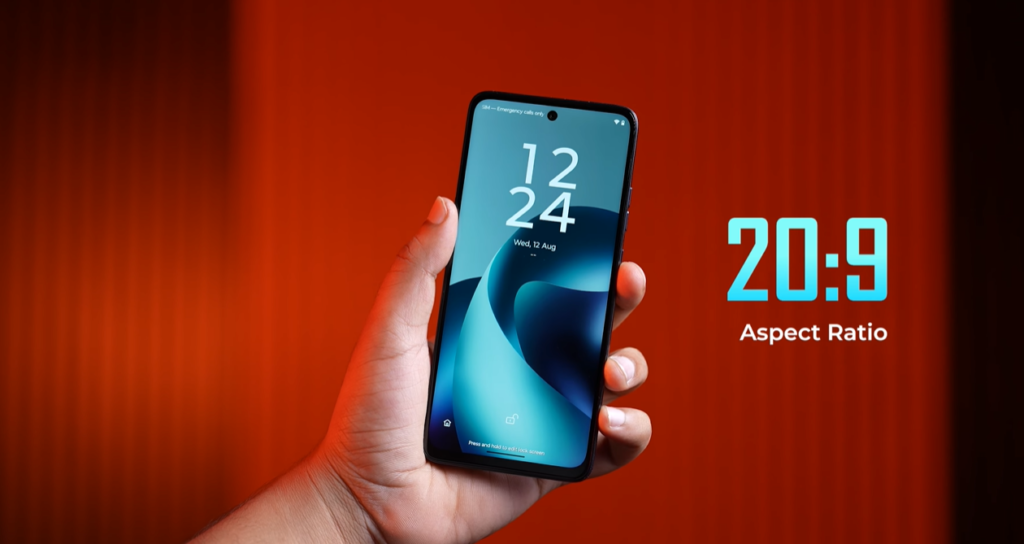
Weight test result: Officially rated at 213g; the live scale test in testing showed 210g — close enough to the spec sheet, with the phone’s heft attributed to its large battery.
It carries an IP64 rating (splash resistant, not submersible) and military-grade (MIL-STD-810H-style) durability certification.
Display: Full HD+ LCD, Not AMOLED — But Still Above Segment Norms
The 6.72-inch display uses a Full HD+ LCD panel at 120Hz, with a 20:9 aspect ratio that makes the screen feel noticeably tall. It’s not AMOLED, and colors lean slightly boosted/punchy thanks to a built-in Display Color Boost setting rather than true deep-black OLED contrast.
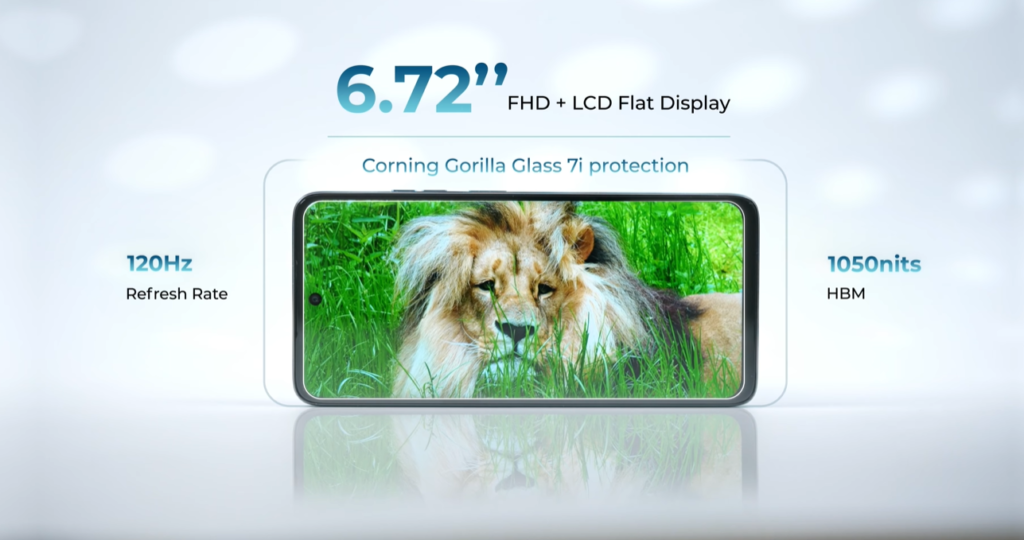
That said, this is framed as a genuine positive relative to competitors: at this exact price point, most newly launched rivals ship with HD+ resolution panels rather than full Full HD+, making Motorola’s choice here a meaningful step up even without AMOLED.
Display specs and test results:
- Gorilla Glass 7i protection
- Water Touch 2.0 support (touchscreen remains responsive with wet fingers)
- Peak brightness: 1,550 nits (HBM) — confirmed bright and clearly legible in outdoor full-brightness testing
- Video playback tested at up to 1440p on YouTube (not HDR certified)
Physical Layout and Audio
- Right edge: side-mounted fingerprint scanner, volume buttons
- Top edge: noise cancellation mic, Dolby Atmos branding
- Left edge: dual SIM tray (no microSD expansion slot)
- Bottom edge: a genuine surprise — a 3.5mm headphone jack, alongside the microphone, USB-C port, and speaker
The side-mounted fingerprint scanner was tested directly and worked reliably. Face unlock is also supported. Haptic feedback while typing uses a notably strong vibration motor, consistent with Motorola’s typical haptic tuning.
Speaker test: Tested at full volume — confirmed as a genuinely loud, Dolby Atmos-certified stereo speaker setup with a solid overall sound experience for the price segment.
Camera: The Real Highlight
This is where the Moto G Max 5G differentiates itself most clearly. The rear setup includes:
- 50MP main camera with a Sony LYT-600 sensor (no OIS)
- 8MP ultra-wide camera
- A third 2-in-1 light sensor
- 32MP front camera
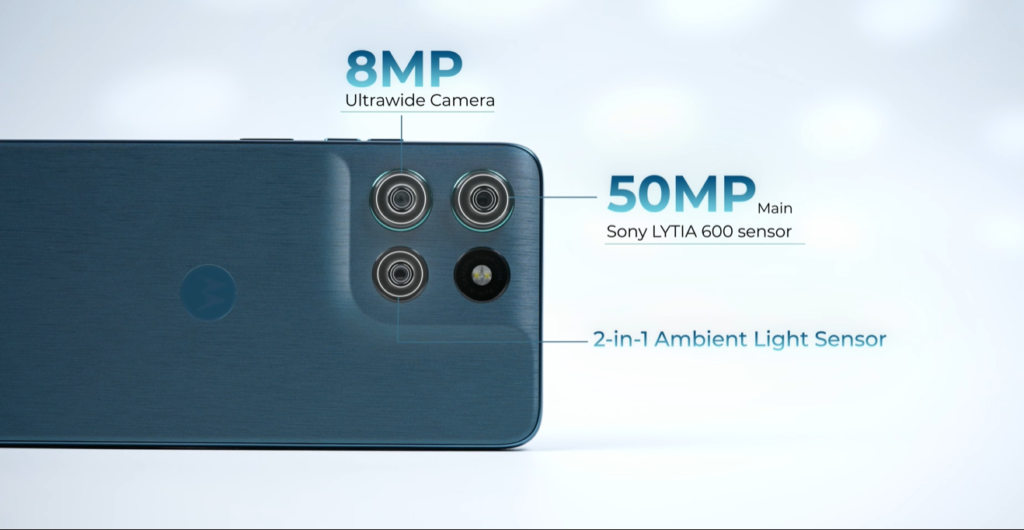

The genuinely notable claim here, worth double-checking against the market yourself: neither this reviewer nor most competing phones launched around the ₹30,000–₹40,000 range at the time were using a Sony sensor at all — making its inclusion here a real differentiator, not just marketing language.
Camera test results:
- Color accuracy test: Zoomed inspection showed reds rendered slightly toward orange, and blues shifted toward sky blue — a mild but noticeable color accuracy deviation, with black tones reproduced accurately.
- Portrait mode test: Described as performing notably better than expected — sharp detail on zoom-in, solid edge detection around hair and complex outlines, and good (if slightly contrasty) skin tone reproduction.
- Selfie quality: Rated as high quality in testing.
- HDR handling: Balanced, with good control over highlights and shadows.
- Video recording: Supports up to 2K at 30fps on both rear and front cameras — no 4K support on either.
Performance: Full Benchmark Results
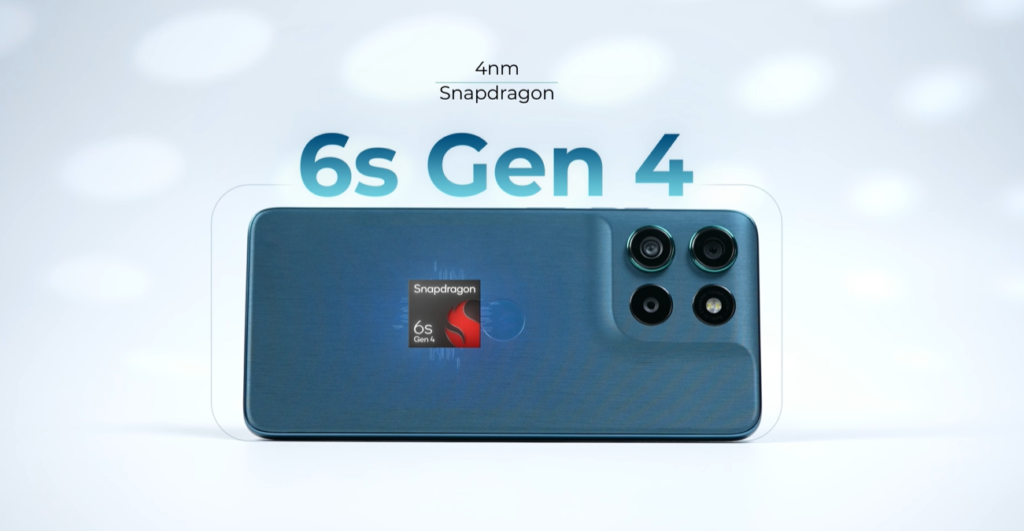
The Moto G Max 5G runs Qualcomm’s Snapdragon 6s Gen 4 chipset (4nm, clocked at 2.4GHz) — described as a deliberately balanced platform rather than a performance-first one, backed up directly by benchmark data:
| Test | Result |
|---|---|
| AnTuTu score | 700,000+ |
| CPU throttle test | 73% (graph showed stable performance under sustained load) |
| Wild Life Extreme stress test (stability score) | 99.5% |
| BGMI (PUBG Mobile) frame rate | Smooth 60fps gameplay, no lag or frame drops observed |
| Graphics settings tested | HDR Extreme (graphics) / Extreme (frame rate) — both ran smoothly |
Gyroscope functionality was also specifically tested and confirmed present and working (relevant for competitive mobile gaming that relies on gyro-based aiming).
RAM and storage: 6GB RAM / 128GB storage at launch (a 4GB/128GB variant is planned for a later release), using LPDDR5X RAM and, notably, UFS 3.1 storage — a genuine step up from the UFS 2.x storage many competitors still ship at this price point, directly improving app load times and file transfer speeds.
Battery and Charging
A 7,000mAh silicon-carbon battery anchors the package, paired with 30W “Turbo Charging.” Given the battery capacity and the balanced (not power-hungry) chipset, all-day battery life shouldn’t be a concern for typical use.
Software and Connectivity
The phone ships with Android 16 and Motorola’s near-stock Hello UI, with a genuinely meaningful improvement over previous G-series phones: 2 years of OS updates and 3 years of security updates, up from just 1 year of OS updates on earlier G-series models. Bloatware is minimal, with ThinkShield and Moto Secure providing built-in security protections.
Connectivity includes 11 5G bands, Bluetooth 5.1, dual-band Wi-Fi, and USB 2.0. NFC is not included.
AI features on board include Circle to Search, Live Gemini integration, AI Photo Enhancement (improving blurry or low-quality shots), Magic Eraser (removing unwanted objects from photos), Photo Unblur, Reimagine, and Auto Frame — a fairly comprehensive Google AI feature set for a phone in this segment.
Moto G Max 5G: Complete Test Summary
For anyone wanting the full results at a glance:
| Test category | Result |
|---|---|
| Weight (claimed vs measured) | 213g claimed / 210g measured |
| Display peak brightness | 1,550 nits (HBM) |
| Fingerprint scanner reliability | Reliable, fast unlock |
| Speaker volume/quality test | Loud, Dolby Atmos certified, positive experience |
| Camera color accuracy | Mild red→orange and blue→sky-blue shift on zoom |
| Portrait mode quality | Better than expected — sharp, good edge detection |
| AnTuTu benchmark | 700,000+ |
| CPU throttle test | 73% stability under load, no major throttling |
| Wild Life Extreme stress test | 99.5% stability |
| BGMI real-world gameplay | Smooth 60fps, no observed lag |
| Gyroscope | Present and functional |
| Storage type | UFS 3.1 (uncommon at this price) |
Who Should Buy the Moto G Max 5G?
If you want the strongest possible camera hardware and storage speed at this exact price point — without needing AMOLED or flagship-tier gaming performance — the Moto G Max 5G’s combination of a genuine Sony sensor, UFS 3.1 storage, a large 7,000mAh battery, and an unexpected headphone jack makes it a standout “complete package” phone for its segment. It’s not built for hardcore gaming, but casual and even moderately demanding titles like BGMI run smoothly based on testing.
Given how many competing phones at similar prices compromise on at least one major spec — display resolution, camera sensor quality, or storage speed — Motorola’s approach here is to minimize those trade-offs rather than eliminate them; you’re still getting an LCD panel and a chipset that won’t win benchmark wars, but everything else is priced-in more generously than typical for this segment.
FAQ
₹27,999 for the 6GB+128GB variant, with a ₹1,000 instant bank discount bringing the effective price to ₹26,999. It launches in India on August 14, 2026.
No. Despite the similar name, the India variant uses a Snapdragon 6s Gen 4 chipset with an LCD display and a 50MP Sony LYT-600 camera, while the global Brazil/Europe version uses a MediaTek Dimensity 6400 chipset with a 1.5K AMOLED display and a 200MP main camera.
Yes — a 3.5mm headphone jack is included, which is increasingly rare at this price point.
Testing showed smooth 60fps BGMI gameplay at HDR Extreme graphics with no observed lag, backed by a 99.5% Wild Life Extreme stability score and no significant CPU throttling under sustained load.
Are you considering the Moto G Max 5G, or does the Sony sensor and UFS 3.1 combo make it a clear pick over rivals in this price range for you? Let us know in the comments below.