Quick Verdict: The Galaxy Z Fold 8 feels genuinely new — thinner, more squared-off, and easier to use one-handed than any previous Samsung foldable. After a full week of daily use, most of that first impression holds up. But living with it also surfaces real trade-offs: broken app support on the unusual aspect ratio, no telephoto camera, a lopsided speaker setup, and a price that’s hard to justify on paper. It’s a phone for people who want something that feels different, not necessarily the smartest purchase on spec sheet alone.
First Impressions vs a Week of Daily Use
There’s a real gap between how a phone feels on day one and how it feels after a week of actually living with it — installing every app you use, running the battery down a few times, and bumping into its quirks under normal daily pressure. This review is based on that second phase: after the initial excitement wore off, what’s actually true about the Galaxy Z Fold 8?
The short answer: it’s still a phone worth liking. But “liking” and “flawless” are different things, and the Fold 8 has some real rough edges once the honeymoon period ends.
Design: Genuinely a New Shape, Not Just a Refinement
Samsung has used a similar squat, wide aspect ratio before in concept, but the execution here is different — thinner, more squared-off, and just better resolved than earlier attempts at this form factor.
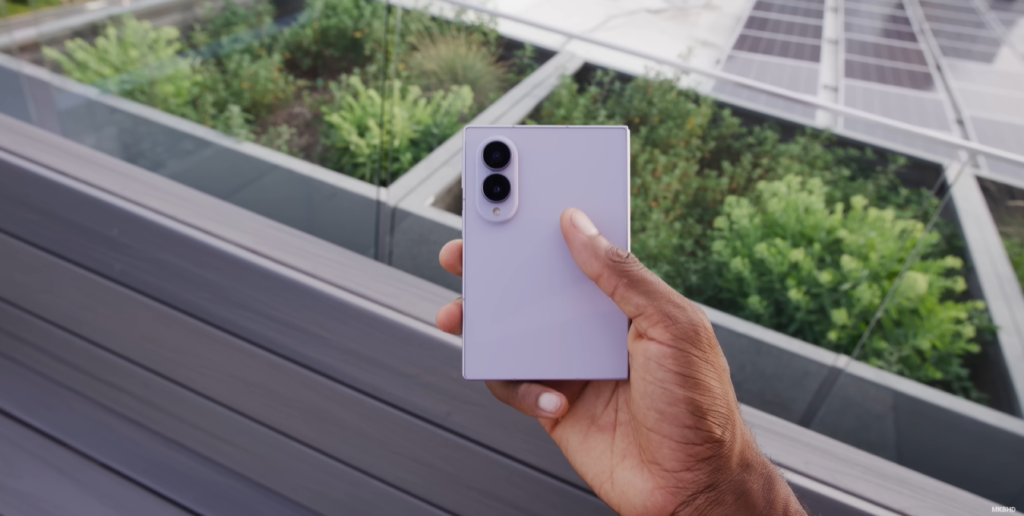
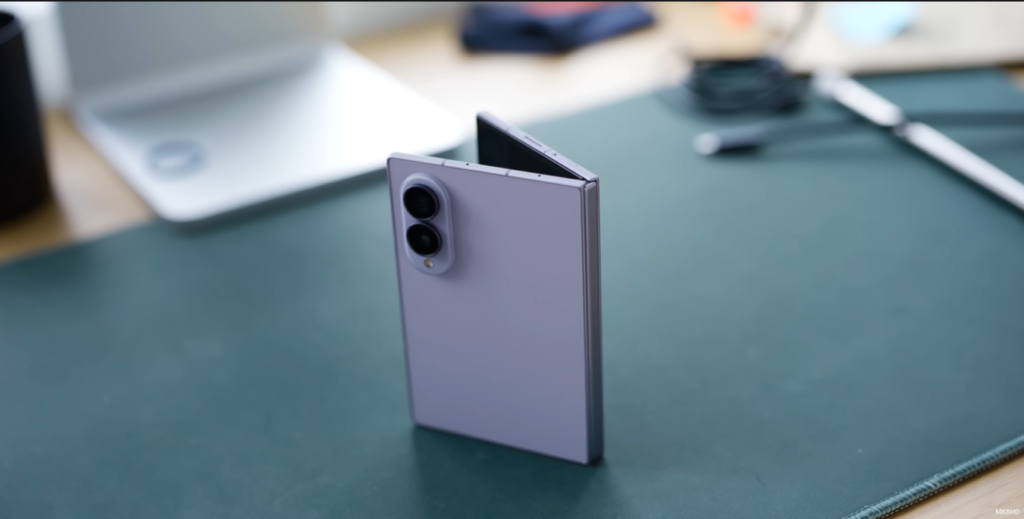
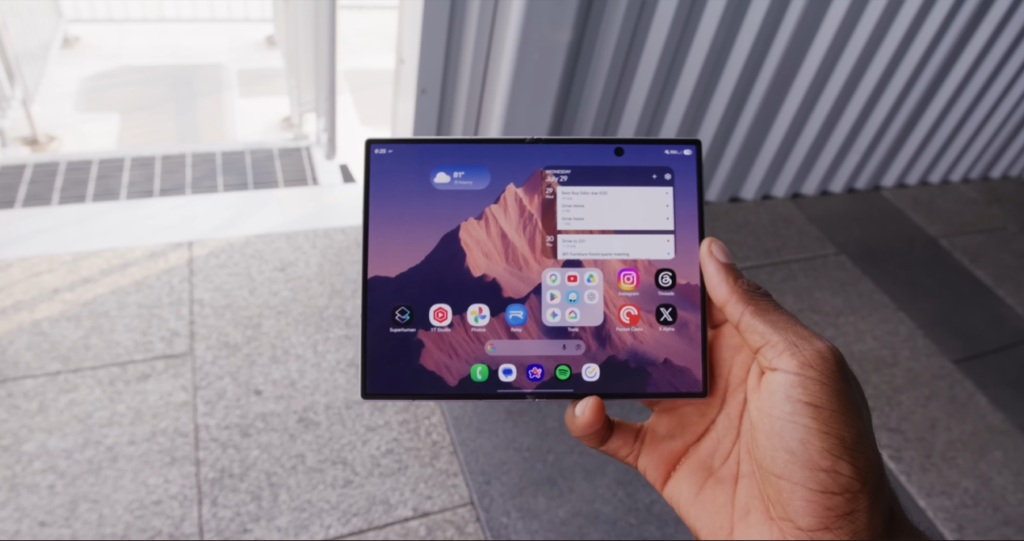
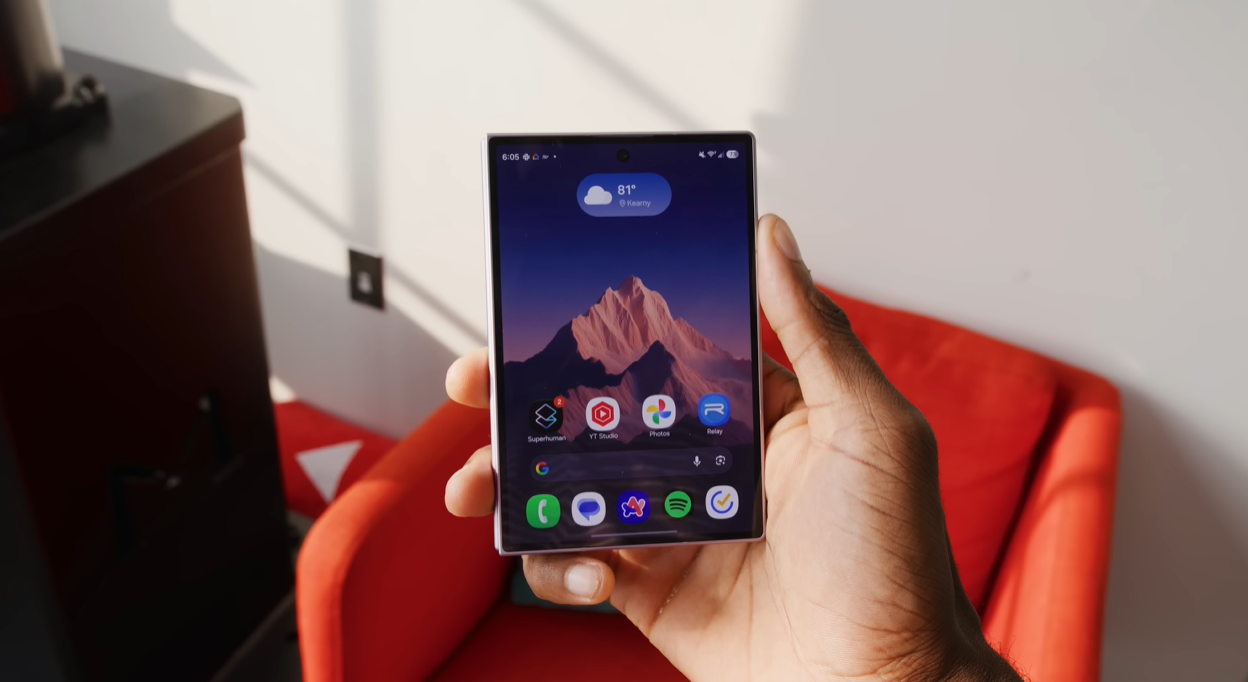
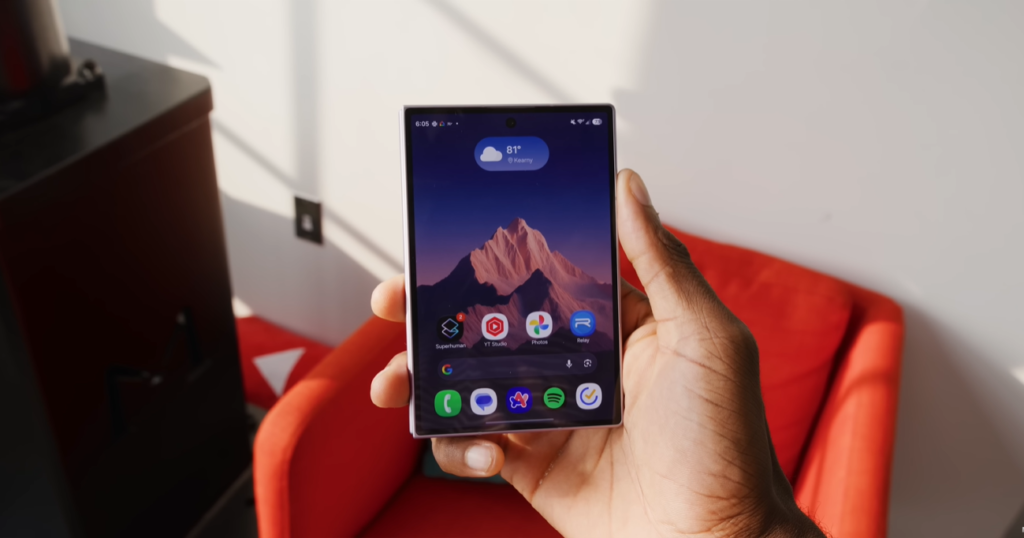
The cover display is a 5.5-inch, slightly rectangular AMOLED panel with even bezels on all sides, and it’s genuinely bright and sharp — Samsung’s usual display strength. Because the phone is squared off rather than tapered, opening and closing it feels closer to flipping open a small notebook.
One of the standout usability wins: your thumb naturally lands on the power button (which doubles as the fingerprint sensor) when holding the phone normally, and nearly the entire cover screen is reachable one-handed — a rarity on modern phones regardless of hand size. The camera app UI reflects this too, with every control repositioned to the right-hand side so the whole shooting experience is reachable with one hand, and the viewfinder itself is framed to match a standard photo aspect ratio rather than wasting screen space with padding.
The slightly cramped aspect ratio for vertical scrolling and doomscrolling is arguably a feature in disguise — it nudges you toward shorter sessions on the cover screen and toward opening the phone for anything more involved.
The Inside Display: A Genuinely Nice 4:3 Canvas
Unfolded, the Z Fold 8 becomes a close-to-perfect 4:3 rectangle — still compact, still notebook-like, and genuinely pleasant to hold for extended periods. The internal panel is another high-refresh-rate AMOLED, now with an anti-reflective coating, paired with Samsung’s new Titanium Flex Hinge, which noticeably reduces (though doesn’t fully eliminate) the visible crease down the middle.
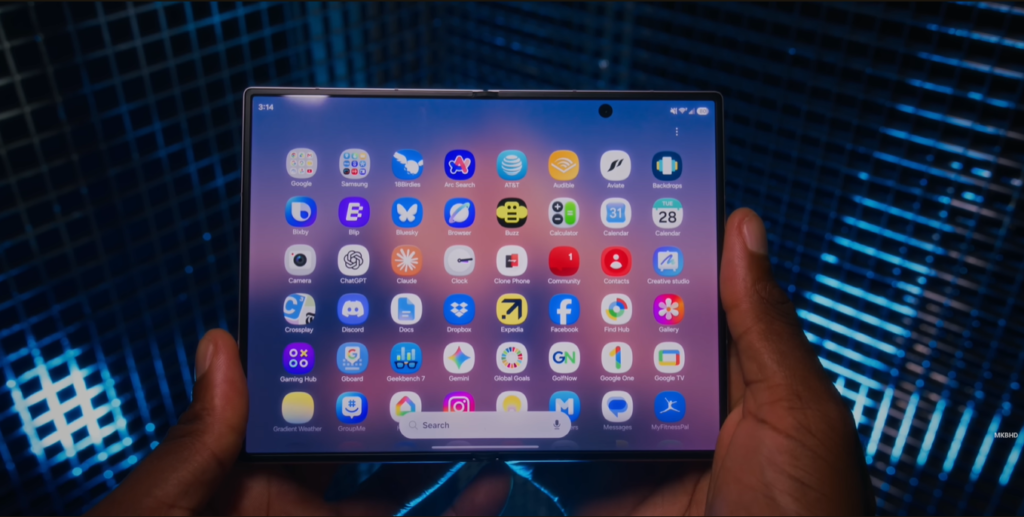
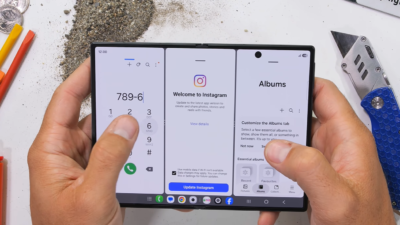
It’s wide enough to comfortably run two apps side by side for genuine productivity use, and works just as well turned sideways for reading a single app in a tall, book-like layout.
One counterintuitive discovery: despite being a 4:3 panel, this display actually plays widescreen video larger than Samsung’s taller Ultra model, since 4:3 is proportionally closer to widescreen than a fully square display would be. Older or naturally 4:3 video content also looks excellent on it.
Under the Hood: What’s Actually New
- Chipset: Snapdragon 8 Elite for Galaxy
- Battery: 4,800mAh, now including some silicon-carbon battery technology (though not as aggressively applied as competitors like Oppo, Vivo, or Xiaomi)
- Charging: 45W wired — the fastest charging speed on any Samsung foldable to date
- Real-world battery life: Consistently lasted a full day even with heavy use of the larger internal display
On paper, this is where the Z Fold 8 looks like Samsung finally nailed the formula. And for the first few days, it genuinely feels that way.
Where the Cracks Start to Show
This is the part that only becomes obvious after real, sustained use — not a quick hands-on demo.
App compatibility isn’t guaranteed. Not every app handles this unusual aspect ratio gracefully. Sometimes it’s just cosmetic — awkward black bars or extra blank space. But in some cases, it’s a functional dealbreaker: certain apps have UI elements that become genuinely unreachable because neither the cover screen nor the unfolded screen matches the aspect ratio the app expects. This isn’t a hypothetical edge case — it’s something you’re likely to run into with at least one app in regular use, and the severity will vary depending on which apps matter most to you.
No Flex Mode. The upgraded spring-loaded hinge makes opening and closing the phone more satisfying, but it also means there’s no software-supported halfway-open position like Samsung’s taller Ultra model offers. You can physically prop it halfway open, but there’s no dedicated software mode built around that posture.
Speaker placement gets awkward when unfolded. Closed, the phone sounds properly stereo, with speakers positioned at the top and bottom. But once opened, both speakers end up on the same (left) side, resulting in noticeably lopsided audio — particularly obvious when watching full-screen video.
Wireless charging alignment is inconsistent. Chargers that rely on the phone standing upright to align — including many in-car mounts — often don’t work reliably. There are also no built-in magnets, so MagSafe-style accessories many users rely on daily won’t work without an additional magnetic case. Without a case at all, the phone also tends to rock on flat surfaces due to its shape.
Fewer cameras than a standard flagship. Being thinner and lighter came at a direct cost: there’s a 50MP main sensor and a 50MP ultra-wide, but no telephoto lens at all. The cameras aren’t bad, but they’re a clear step below what you’d expect from a flagship slab phone at this price — photos are generally fine rather than excellent, without standout sharpness, color science, or low-light performance. That’s a harder pill to swallow specifically because of how expensive this phone is.
Software: One UI 9 on Android 17
Running Android 17 with One UI 9 brings a handful of smaller refinements that don’t get much attention next to the novelty of the new shape — a responsive lock screen clock that shifts position based on the wallpaper, thicker and easier-to-hit volume/brightness sliders in Quick Settings, and the ability to run completely separate home screen layouts on the cover and inner displays instead of forcing them to mirror each other.
None of these are individually game-changing, but together they make the day-to-day software experience feel more considered than a simple stretched-Android skin.
Galaxy Z Fold 8: Real Pricing in India
Samsung officially launched the Galaxy Z Fold 8 lineup in India on July 22, 2026, alongside the Z Fold 8 Ultra and Z Flip 8. Here’s what it actually costs:
| Variant | Price (India) |
|---|---|
| 12GB + 256GB | ₹1,79,999 |
| 12GB + 512GB | ₹1,99,999 |
| 16GB + 1TB | ₹2,39,999 |
This pricing runs roughly ₹15,000–₹25,000 higher than the equivalent Z Fold 7 configurations from the previous generation, positioning the Z Fold 8 firmly in ultra-premium territory even by foldable standards. Samsung has typically offered launch benefits — upgrade bonuses and bank cashback — around this price point, along with no-cost EMI options, so it’s worth checking current offers through Samsung’s official store or authorized retailers rather than paying the flat MRP outright.
Is the Galaxy Z Fold 8 Worth It?
Judged purely on paper — a smaller cover screen and inner screen than the Ultra model, a smaller battery, weaker cameras, and the same core chipset found across the rest of Samsung’s flagship lineup — the value case isn’t especially strong for the asking price.
But that’s not really the point of this phone. It’s being positioned as the more casual, approachable option in Samsung’s foldable lineup (with the Ultra model starting even higher), and its actual appeal isn’t spec-sheet superiority — it’s that using it genuinely feels different from a normal smartphone in ways that are hard to fully appreciate until you’ve held one for a week.
If you have the budget and want something that feels new rather than just incrementally better, the Z Fold 8 delivers that. If you’re comparing it purely against a traditional flagship slab phone on cameras, battery capacity, or price-to-spec value, it’s a much harder sell.
FAQ
No. It ships with only a 50MP main sensor and a 50MP ultra-wide lens — no telephoto lens is included, unlike Samsung’s Z Fold 8 Ultra model.
The Galaxy Z Fold 8 starts at ₹1,79,999 for the 12GB+256GB variant in India, going up to ₹2,39,999 for the top 16GB+1TB configuration, following its official India launch on July 22, 2026.
Wireless charging works, but alignment can be inconsistent with chargers that require the phone to stand upright, including many in-car mounts, and there are no built-in magnets for MagSafe-style accessories.
Have you been using the Galaxy Z Fold 8 as your daily driver? Share what’s surprised you — good or bad — in the comments below.