By Reo R | My PitShop | Mobile Review | 10 min read | June 2026
Meta Description: iQOO Z11 5G review with real benchmark scores, BGMI gaming FPS data, camera test results, and honest verdict. Is this the best all-round phone under ₹35,000 in 2026?
Slug: iqoo-z11-5g-review
Category: Mobile Review | Read Time: 10 min | Last Updated: June 2026
One-Line Verdict
The iQOO Z11 is one of the most complete phones available under ₹35,000 in 2026. No single feature is the best in class — but no major compromise exists either. A Sony IMX882 sensor with OIS, a 1.5K curved AMOLED at 144Hz, a 7050mAh battery, and student-focused AI features combine into a package that is genuinely hard to beat at this price.
Rating: 4 / 5 ⭐⭐⭐⭐
Quick Specs — At a Glance
| Feature | Specification |
|---|---|
| Display | 6.83-inch 1.5K Quad-Curved AMOLED, 144Hz |
| Peak Brightness | 2000 nits |
| Chipset | MediaTek Dimensity 7500 Turbo, 4nm |
| RAM | 6GB or 12GB (LPDDR4X) |
| Storage | 128GB or 256GB (UFS 3.1) |
| Main Camera | 50MP Sony IMX882 with OIS |
| Ultrawide Camera | 8MP |
| Front Camera | 32MP |
| Video | 4K 30fps rear and front |
| Battery | 7050mAh |
| Charging | 44W fast charging |
| Software | OriginOS 6 on Android 16 |
| OS Updates | 3 years Android + 5 years security |
| 5G Bands | 12 bands |
| Wi-Fi | Wi-Fi 6, dual-band |
| Bluetooth | 5.4 |
| NFC | No |
| USB | Type-C, USB 2.0 |
| Water Resistance | IP68 + IP69K + Military Grade |
| Thickness | 7.99mm |
| Weight | 199 grams |
| Colours | Blue, Aurora Green |
| Starting Price | ₹31,499 (6GB + 128GB) |
Who Should Read This
This review is written for three specific buyers.
First, college students and young professionals under ₹35,000 who want a well-rounded phone without sacrificing any single major feature. Second, anyone comparing the iQOO Z11 against the Realme P4R, Vivo T5 Pro, or Samsung Galaxy A57 who wants real data rather than spec sheet summaries. Third, buyers who have been waiting for a phone with OIS camera capability without spending ₹40,000 or more.
The Context That Matters in 2026
Smartphone prices are rising across every category in 2026. AI chip demand has created component shortages. RAM prices have increased. Those costs flow directly into retail prices. Most phones launching under ₹35,000 today carry at least one significant compromise.
Better camera means weaker chipset. Bigger battery means lower display resolution. Premium display means basic camera hardware. The iQOO Z11 at ₹31,499 attempts to avoid that trade-off entirely. After testing it across gaming, camera, battery, benchmarks, and daily use — here is whether that claim holds up.
The One Thing That Makes the iQOO Z11 Stand Out
Before going into any individual section, this context is essential.
Under ₹40,000 in India in 2026, finding a phone with both a Sony IMX sensor and OIS together is genuinely rare. Most phones at this price offer one or the other. A Sony sensor without OIS. OIS without a Sony sensor. Many offer neither.
The iQOO Z11 has both the Sony IMX882 sensor and Optical Image Stabilisation at ₹31,499. That combination at this price is the single most impactful hardware decision iQOO made on this phone. It directly affects photo and video quality in ways that show up in daily use — not just on spec sheets.
Design and Build — Slim, Light, and Genuinely Premium
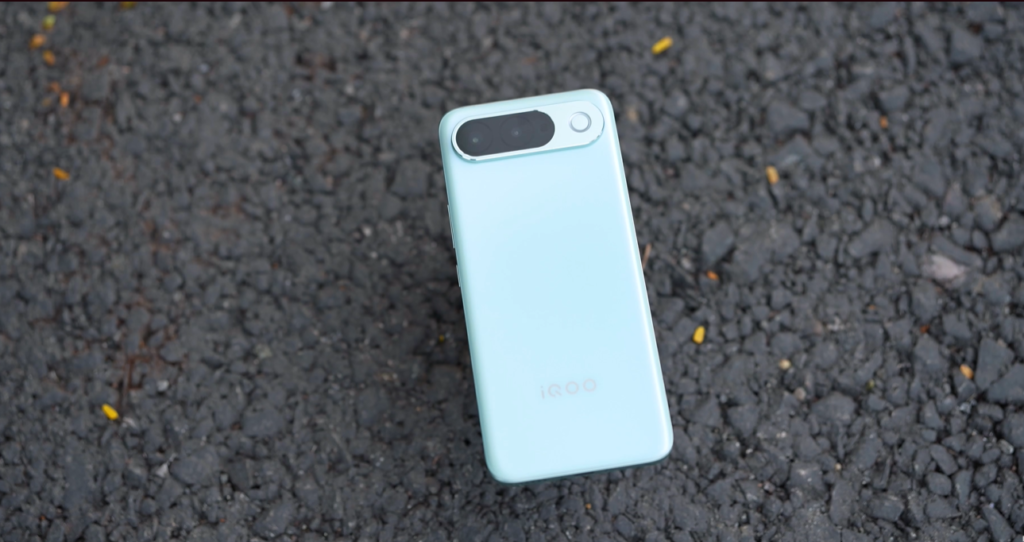
The iQOO Z11 makes an immediate first impression. At 7.99mm thickness and 199 grams, it is one of the slimmest and lightest phones in its price segment. Holding it for the first time feels noticeably premium.
The Skyline Camera Design
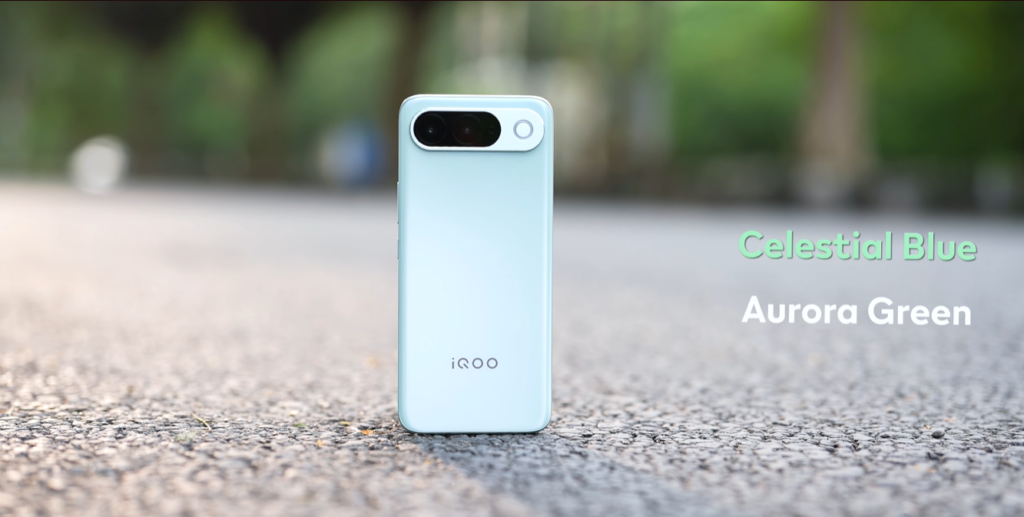
iQOO calls the rear camera layout the Skyline Camera Design. The camera module itself is metal — a meaningful material upgrade over polycarbonate-only construction common at this price. The frame is polycarbonate with a matte finish that mimics the feel of glass. Most users will not identify it as plastic on first touch.
The rear panel resists fingerprints well. Daily handling does not leave the phone looking constantly smudged — a practical advantage over glossy-finish alternatives.
Colour Options
Two colours are available — Blue and Aurora Green. Both are clean, restrained options that avoid the over-the-top gradient finishes common in this segment. The design is minimalist and classic rather than flashy, which suits students and young professionals who want something that looks mature.
Water and Durability Certifications
IP68 and IP69K certifications are both present simultaneously. IP68 covers full submersion. IP69K covers high-pressure water jets. Military-grade durability certification is also included, covering drops, dust, temperature extremes, and pressure testing. At ₹31,499, this level of certification is well above the segment standard.
Display — The Strongest Screen in Its Price Segment
The iQOO Z11’s display is the most immediately impactful feature for daily use. It is better than almost anything available at this price in 2026.
The 1.5K Resolution Difference
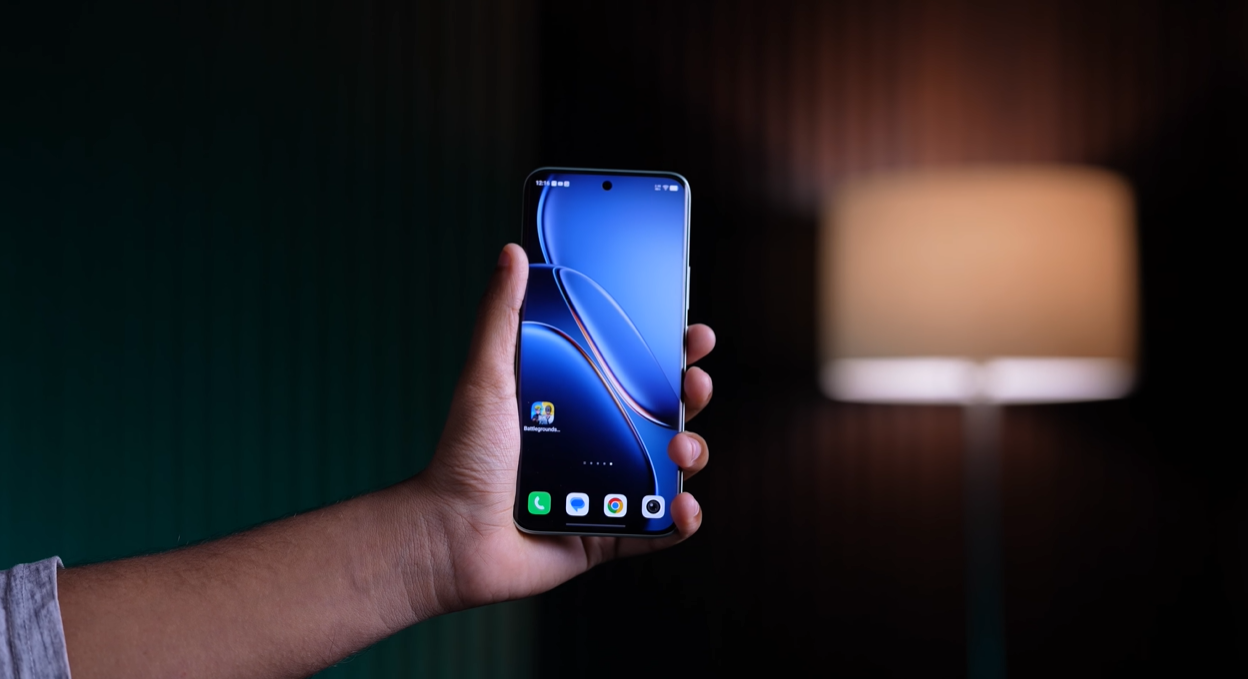
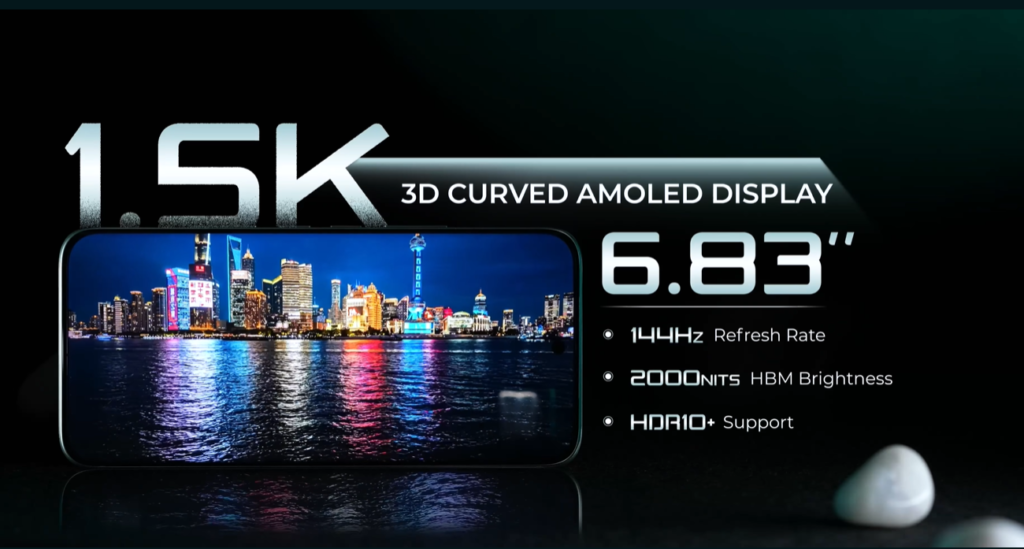
The resolution is 1.5K — sitting above Full HD+ but below Quad HD+. At 6.83 inches, this produces a noticeably sharper image than Full HD+ panels at the same size. Text is crisp. Fine detail in photos looks accurate. The difference between 1.5K and Full HD+ is visible side by side.
The Curved Display — What It Actually Does
The Quad-Curved display curves on all four sides. Visually, the curved edges reduce the apparent bezel size and create a more immersive viewing experience. The slim bezels at top, bottom, and sides create a screen-to-body ratio that makes the phone feel larger than its dimensions suggest.
Curved AMOLED displays at ₹31,499 are rare. Most curved panels appear on phones costing ₹45,000 and above.
Display Performance Numbers
| Metric | Result |
|---|---|
| Refresh Rate | 144Hz |
| Peak Brightness | 2000 nits |
| HDR Support | Yes — YouTube 2160p + Netflix HDR |
| Screen Protection | Schott protection |
| Anti-Fatigue Feature | Yes — automatic brightness adjustment |
| Biometric Options | In-display fingerprint + face unlock |
The 2000 nit peak brightness was tested both indoors and outdoors. The display is genuinely bright enough for comfortable reading in direct sunlight — a real-world test that many displays in this price range fail.
The anti-fatigue brightness adjustment reduces eye strain during extended study sessions. This is marketed specifically at students who use their phones for online lectures — a thoughtful inclusion for the target audience.
AI Features — Specifically Designed for Students
This is the area where the iQOO Z11 is most differentiated from other phones in its price range. These features are genuinely useful rather than gimmicky.
Real-Time Transcription
The phone transcribes spoken audio to text in real time. For students attending online lectures or physical classes, this means automatic note-taking without needing a separate app. Speak into the phone or play audio — the words appear as text simultaneously.
Real-Time Translation
Spoken language converts to another language simultaneously. A lecture in English translates to Hindi in real time. For students studying in English while thinking in Hindi — or any other language combination — this is a genuinely useful daily feature.
Automatic Summarisation
Extended conversations, lectures, or meetings are automatically summarised. Key points are extracted and saved to notes without manual effort. For a student attending a one-hour lecture, the phone produces a structured summary of important points — automating a significant portion of the note-taking process.
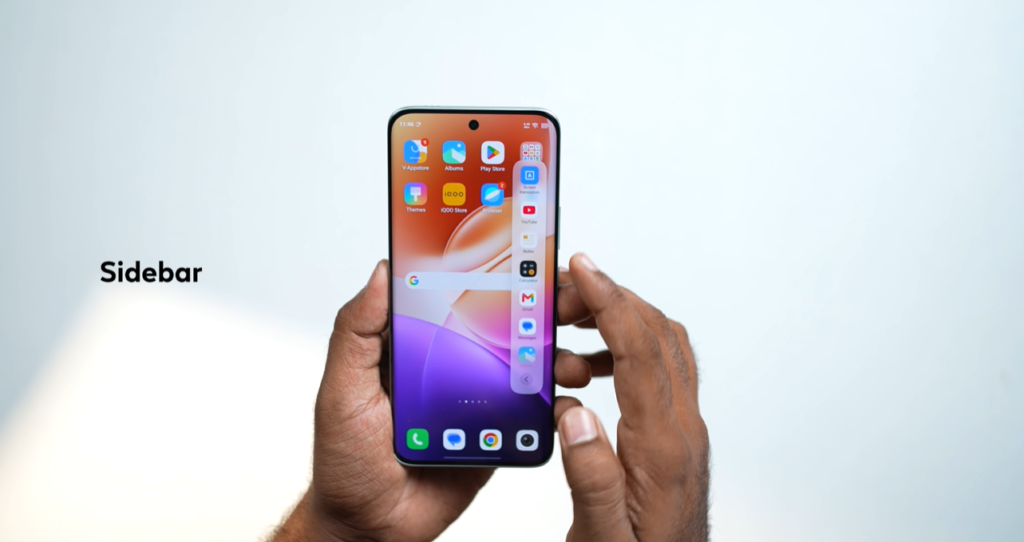
AI Sidebar
A dedicated AI sidebar provides quick access to all AI features without opening separate apps. Available tools include:
- AI Caption
- AI Transcript Assist
- AI Creation
- AI Super Document
Teleprompter in Video Mode
A built-in teleprompter appears inside the video recording interface. Content creators who script their videos can record while reading their script on screen simultaneously. This directly serves students who create presentations or social content.
Camera System — The Strongest Hardware Argument at This Price
Sony IMX882 Sensor With OIS — Why It Matters
50 megapixels. Sony IMX882 sensor. Optical Image Stabilisation.
Each element matters individually. Together they create a camera system that is meaningfully better than the standard CMOS sensors without OIS dominating this price bracket.
The Sony IMX882 is a larger sensor than the generic 50MP sensors used by most competing phones. Larger sensors capture more light per pixel — directly improving low-light performance. Sony’s colour science tends toward natural, accurate colour rendering rather than the oversaturated processing common in mid-range phones.
OIS compensates for hand movement during shooting. This matters most in two scenarios:
- Low light: Longer shutter speeds require OIS to prevent hand-movement blur
- Video recording: OIS creates smoother footage compared to digital stabilisation alone
Daylight Camera Performance
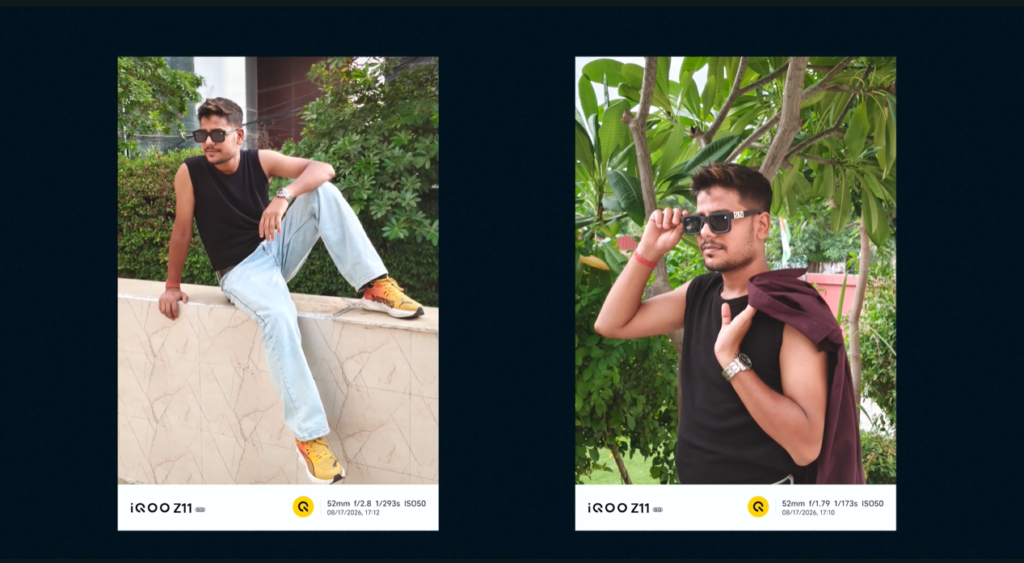
In normal mode, outdoor daylight photos are slightly contrasty and occasionally slightly underexposed — a processing preference rather than a hardware limitation. In portrait mode at 1.5x and 2x, results improve significantly.
Skin tones are natural and accurate. Edge detection is clean. Background depth is well-rendered. The Sony sensor’s colour accuracy shows in portrait results — faces look like people rather than processed approximations.
Portrait mode offers three zoom options: 1x, 1.5x, and 2x. The 1.5x option is the sweet spot — tight enough to flatter facial features while capturing sufficient background context.
Low-Light and Indoor Performance
Indoor performance in varied lighting conditions is where the Sony IMX882 and OIS combination shows its greatest advantage. At 1.5x and 2x in portrait mode indoors, colours are rich, detail is preserved, and OIS prevents the blur that affects non-stabilised cameras at longer shutter speeds.
Ultrawide Camera — Honest Assessment
The 8MP ultrawide is the camera’s weakest point. Detail is softer than the main camera and HDR performance from the ultrawide could be better. This is a genuine limitation worth noting.
However, contextual honesty matters. At ₹31,499 in 2026, telephoto cameras are essentially non-existent in this segment. An 8MP ultrawide at this price is the realistic expectation — not a surprise weakness specific to the iQOO Z11.
Selfie Camera
The 32MP front camera is a genuine strength. Selfie quality is high — sharp, natural skin tones, accurate colour. For students and content creators who use the front camera extensively, 32MP at 4K 30fps is a meaningfully useful specification.
Video Recording
4K 30fps video is available from both rear and front cameras. Stabilisation is effective — OIS combined with electronic stabilisation creates smooth handheld footage. Audio capture is acceptable for casual content creation.
Camera Modes Available
- Snapshot Mode
- Night Mode
- Portrait Mode (1x, 1.5x, 2x)
- Normal Photo Mode
- Pro Mode
- Film Mode
- Slow Motion
- Dual View Video
- Time Lapse
- Built-in Teleprompter (video mode)
Performance — Balanced and Reliable
MediaTek Dimensity 7500 Turbo Chipset
The 4nm MediaTek Dimensity 7500 Turbo is neither the fastest chipset in its price segment nor the slowest. It occupies a balanced middle position — capable of handling all daily tasks smoothly while gaming competently at 60fps.
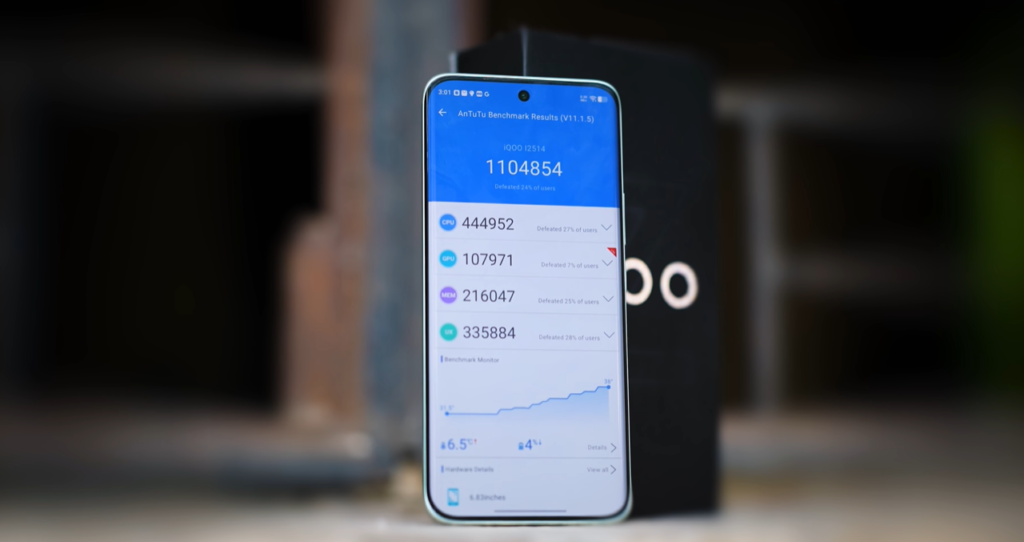
Real Benchmark Results
| Test | Result |
|---|---|
| AnTuTu Score | 1,100,000+ |
| CPU Throttle Test | Fully green — no throttling |
| Wild Life Extreme Stability | 99.4% |
| BGMI Max FPS | 60 |
| BGMI Average FPS | 58.7 |
| BGMI FPS Efficiency | 97.8% |
| Max Gaming Temperature | 36.7°C |
An average of 58.7fps from a maximum 60fps is a 97.8% efficiency rate. The phone runs BGMI at near-maximum frame rate consistently. Combined with a maximum temperature of 36.7°C, thermal management is genuinely strong.
Advanced Vapour Chamber Cooling
An advanced vapour chamber cooling system is present — the first time this appears in the iQOO Z-series according to iQOO. The gaming temperature results support the claim. 36.7°C under sustained gaming is a well-controlled thermal result.
RAM and Storage
| Variant | RAM | Storage | Type |
|---|---|---|---|
| Base | 6GB LPDDR4X | 128GB UFS 3.1 | — |
| Higher | 12GB LPDDR4X | 256GB UFS 3.1 | — |
UFS 3.1 is approximately 70% faster in sequential read speeds than UFS 2.2. App loading is faster. File transfers are faster. System responsiveness is higher. The Realme P4R reviewed earlier uses UFS 2.2 — this is a real, measurable advantage for the iQOO Z11.
No microSD card slot is available. Storage is not expandable.
Battery and Charging
Battery Capacity — 7050mAh
The 7050mAh battery is large without being the category record at this price. For context:
| Phone | Battery |
|---|---|
| Vivo T5 Pro | 9020mAh |
| Realme P4R | 8000mAh |
| iQOO Z11 | 7050mAh |
| Segment Standard | 5000mAh |
The iQOO Z11’s 7050mAh is still 41% larger than the 5000mAh batteries most competing phones carry. For a college student’s full day — online lectures, social media, content streaming, messaging, occasional gaming — 7050mAh provides reliable all-day battery life with charge remaining at night.
44W Fast Charging
44W charging fills the 7050mAh battery in approximately 75–90 minutes. Practical for overnight charging and capable of a meaningful top-up in a short break between classes.
Software — OriginOS 6 on Android 16
OriginOS 6 based on Android 16 is the software platform. The interface is smooth and well-optimised. AI features are deeply integrated rather than surface-level additions.
Shake and Share
A physical shake gesture instantly shares photos or videos with nearby contacts. For students sharing lecture notes, event photos, or content between friends, this eliminates the steps of opening a sharing app and selecting recipients.
Pre-Installed Apps
Some pre-installed third-party apps are present and can be uninstalled through app settings. Netflix comes pre-installed — ready to use without a separate download.
Software Support
| Update Type | Duration |
|---|---|
| Android OS Updates | 3 years |
| Security Patches | 5 years |
3 years of OS updates means a student starting college in 2026 receives updates through their entire three-year degree. Security patches extend until 2031.
Connectivity
What Is Present
| Feature | Specification |
|---|---|
| 5G Bands | 12 bands |
| Wi-Fi | Wi-Fi 6, dual-band |
| Bluetooth | 5.4 |
| SIM | Dual SIM |
| Charging Port | Type-C |
| USB Standard | USB 2.0 |
The Notable Absence — NFC
NFC is not present. Contactless tap-to-pay via Google Pay NFC is not possible. Standard UPI QR code payments work normally. For the majority of Indian buyers who use QR-based UPI, this is not a daily limitation. For buyers who specifically need NFC tap-to-pay, this is a genuine gap.
Pros and Cons
Pros
- Sony IMX882 50MP sensor with OIS — rare combination under ₹35,000 in 2026
- 1.5K Quad-Curved AMOLED at 144Hz — best display in segment at this price
- 2000 nits peak brightness — genuinely visible in direct sunlight
- HDR certified for YouTube and Netflix
- Anti-fatigue brightness adjustment for extended screen use
- 7050mAh battery — 41% larger than the segment standard 5000mAh
- AnTuTu score of 1.1 million — strong for the price
- CPU throttle test fully green — no sustained performance drop
- Wild Life Extreme stress test 99.4% stability
- BGMI average 58.7fps out of 60fps — 97.8% efficiency
- Maximum gaming temperature 36.7°C — excellent thermal management
- Advanced vapour chamber cooling — first in Z-series
- UFS 3.1 storage — approximately 70% faster than UFS 2.2 alternatives
- IP68 + IP69K + Military Grade certification
- 7.99mm slim and 199g — premium in-hand feel
- 32MP front camera with 4K 30fps — strong for content creators
- Real-time AI transcription — automatic lecture note-taking
- Real-time AI translation — live language conversion
- AI summarisation with automatic notes saving
- Built-in teleprompter in video mode
- 3 years Android + 5 years security updates
- 12 5G bands — wide network compatibility
- Shake and Share for instant file sharing
- Metal camera module — premium material detail
Cons
- No NFC — contactless tap-to-pay not supported
- USB 2.0 — slow wired file transfers
- No microSD card expansion
- 8MP ultrawide is the weakest camera element — soft detail, average HDR
- No telephoto lens — digital zoom only
- Curved display has no anti-reflective coating
- 44W charging is functional but not class-leading in 2026
- Pre-installed third-party apps require manual removal
Who Should Buy the iQOO Z11
Buy It If
- You want the best balanced phone under ₹35,000 in 2026
- Sony OIS camera quality matters for photos and video
- You are a student who will use real-time AI transcription and translation daily
- A premium 1.5K curved AMOLED display is important to you
- You want IP68 + IP69K + Military Grade protection
- You create content and want 4K front camera with a teleprompter
Skip It If
- NFC tap-to-pay is essential for your daily payments
- You need the absolute largest battery — consider Vivo T5 Pro or Realme P4R
- Expandable storage is non-negotiable
- Fast charging above 44W is a priority
- You need a telephoto zoom camera
Segment Comparison
iQOO Z11 vs Realme P4R (₹16,999)
The Realme P4R costs nearly half the price. It carries a larger 8000mAh battery and IPS LCD. The Z11 wins on display quality (1.5K AMOLED vs HD+ LCD), camera hardware (Sony IMX882 + OIS vs basic 50MP), chipset performance, and UFS 3.1 storage. The P4R wins on battery size and price. These are different phones for different budgets.
iQOO Z11 vs Vivo T5 Pro (₹27,999)
The T5 Pro wins on battery capacity (9020mAh vs 7050mAh) and costs less. The iQOO Z11 wins on display quality, camera hardware (Sony IMX882 + OIS), chipset performance (Dimensity 7500 Turbo vs lower-tier chip), UFS 3.1 storage, and the student AI feature set. Both have IP68 + IP69K certification. Choose T5 Pro for maximum battery. Choose iQOO Z11 for camera, display, and performance.
iQOO Z11 vs Samsung Galaxy A57 (₹42,000+)
The Samsung Galaxy A57 costs significantly more and offers 6 years of OS updates vs the Z11’s 3 years. The iQOO Z11 counters with a better camera sensor (Sony IMX882 + OIS vs Samsung’s sensor), a higher resolution curved AMOLED, larger battery, and a substantially lower price. For software longevity, Samsung wins. For hardware quality at the price, the Z11 wins.
iQOO Z11 vs OnePlus Nord CE 4 (similar price)
The Nord CE 4 offers faster charging and OxygenOS. The iQOO Z11 counters with a larger battery, Sony sensor with OIS, higher resolution display, and the student AI feature set. Choose Nord CE 4 if charging speed is the priority. Choose iQOO Z11 if camera quality and display resolution matter more.
Real-World Ownership Questions Answered
Will the iQOO Z11 handle a full college day without charging?
Yes, reliably. The 7050mAh battery covers a standard student day — morning commute, online lectures, note-taking, social media, music streaming, messaging, and light evening use — without needing a mid-day charge. Heavy gaming for 2–3 hours will accelerate drain but the battery will still comfortably reach evening.
Does OIS make a noticeable difference?
Yes — specifically in two areas. Low-light photos show less blur from hand movement compared to non-OIS cameras. Video footage is smoother during handheld recording. The difference is most visible when comparing handheld video from the iQOO Z11 against digital stabilisation-only footage from a competing phone in the same lighting conditions.
Is the curved display a problem for daily use?
The curved display is primarily a visual design choice rather than a functional one. It does not cause accidental touch inputs in daily use. Tempered glass protectors for curved displays are available but may be slightly harder to find than flat-glass alternatives.
Is 3 years of Android updates enough for a student?
For a student starting college in 2026 on a three-year course, the iQOO Z11 receives OS updates through their entire degree. Security patches extend for 5 years — until 2031. The phone remains secure and functional well past the OS update window.
Is the iQOO Z11 good for content creation?
For a student creating content, the Z11 is genuinely capable. 32MP front camera at 4K 30fps is strong for selfie video. The built-in teleprompter removes the need for a separate app. OIS improves video stability. AI features assist with captioning and transcription. At ₹31,499, this combination for content creation is competitive with phones costing ₹10,000 more.
Frequently Asked Questions
Yes, for the right buyer. The iQOO Z11 is one of the most balanced phones available under ₹35,000 in 2026. No single feature is compromised so severely that it becomes a dealbreaker. The Sony IMX882 sensor with OIS is genuinely rare at this price. The 1.5K curved AMOLED at 144Hz with 2000 nits and HDR certification is better than most alternatives in the segment. The student AI features add real daily utility beyond what competitors offer.
The 7050mAh battery provides reliable all-day performance for a standard student or professional day. It is not the largest battery in this price segment — the Vivo T5 Pro’s 9020mAh and Realme P4R’s 8000mAh are both larger. For most daily use cases, 7050mAh is more than sufficient.
Does the iQOO Z11 have NFC?
No. NFC is not present. Standard UPI QR code payments work normally. Contactless NFC tap-to-pay is not supported.
What chipset does the iQOO Z11 use?
The MediaTek Dimensity 7500 Turbo built on a 4nm process. AnTuTu score of 1.1 million. Wild Life Extreme stability of 99.4%. CPU throttle test fully green. BGMI average FPS of 58.7 at a maximum gaming temperature of 36.7°C.
Is the iQOO Z11 camera good?
The main camera with Sony IMX882 sensor and OIS is genuinely good for the price — especially for portraits and low-light photography. The ultrawide at 8MP is the weak point with softer detail than the main camera. There is no telephoto lens. Video quality at 4K 30fps from both front and rear cameras is strong.
What is UFS 3.1 and why does it matter?
UFS 3.1 is a storage standard approximately 70% faster in sequential read speeds than UFS 2.2, which many competing phones use at this price to reduce costs. Faster storage means faster app loading, faster file access, and generally more responsive system performance. The iQOO Z11’s use of UFS 3.1 is a meaningful hardware advantage over UFS 2.2 competitors.
How does the iQOO Z11 compare to the Vivo T5 Pro?
The Vivo T5 Pro wins on battery capacity (9020mAh vs 7050mAh) and costs less at ₹27,999. The iQOO Z11 wins on display quality (1.5K AMOLED curved), camera hardware (Sony IMX882 + OIS), chipset performance, UFS 3.1 storage, and the student AI feature set. Both carry IP68 + IP69K certification. Choose T5 Pro for maximum battery. Choose iQOO Z11 for camera, display, and performance.
Final Verdict
The iQOO Z11 5G earns its position as one of the most complete phones under ₹35,000 in 2026 by avoiding the major trade-off that defines every competitor in this segment.
The Sony IMX882 with OIS is genuinely rare at ₹31,499. The 1.5K Quad-Curved AMOLED at 144Hz with 2000 nits peak brightness and HDR certification is the best display available at this price. The Dimensity 7500 Turbo delivers 58.7fps average in BGMI at 36.7°C maximum temperature. UFS 3.1 storage is faster than almost every competitor in this bracket. The student AI features — real-time transcription, translation, summarisation, and built-in teleprompter — add genuine daily value for the target audience.
The honest limitations are real but minor. The 8MP ultrawide underperforms the main camera significantly. NFC is absent. USB 2.0 limits wired transfer speeds. 44W charging is functional but not the fastest available in 2026 at this price.
For a college student, young professional, or anyone who wants the best balanced package under ₹35,000 without accepting a major compromise in any single category — the iQOO Z11 is the answer in 2026.
Rating: 4 / 5 ⭐⭐⭐⭐
Best For: College students, content creators, and young professionals who want Sony OIS camera quality, premium AMOLED display, and all-day battery in one phone under ₹35,000.
Not Ideal For: Buyers who need NFC, maximum battery life seekers (consider Vivo T5 Pro or Realme P4R), or buyers who need expandable storage.
Price: ₹31,499 starting (6GB + 128GB)
Reviewed by Reo R | My PitShop 6+ years hands-on tech and automotive reviewing experience Zero brand bias — honest verdicts, every time Category: Mobile Review | Read time: 10 min | Last updated: June 2026