TL;DR – Quick Answer:
Hisense makes good budget-to-midrange TVs with excellent picture quality and features for the price. The U8 and U7 series compete with TVs costing $500-$1,000 more. However, reliability is hit-or-miss (20% failure rate within 5 years per Consumer Reports), and customer service is notoriously problematic. Best for: bargain hunters willing to buy extended warranties. Skip if: you prioritize reliability and hassle-free support.
The Bottom Line: Hisense delivers exceptional value when units work properly, but inconsistent quality control and poor warranty support create risk. Buy from retailers with strong return policies (Costco, Best Buy) and always get extended coverage.
You’ve seen Hisense TVs everywhere lately.
They’re in Best Buy and Walmart, featured in holiday deals, and reviewed positively by tech sites. The prices seem unbelievable—premium features at budget costs. But you’re wondering: is Hisense actually good, or too good to be true?
As a brand that’s rapidly grown from obscurity to become America’s #2 TV seller, Hisense deserves honest analysis beyond marketing claims and cherry-picked reviews.
Let’s examine the complete picture: performance, reliability, customer service, and whether Hisense represents smart value or risky gamble in 2025.
The Hisense Story: From Unknown to Major Player
Who Actually Makes Hisense TVs?
Hisense is a Chinese electronics manufacturer founded in 1969. They’re not some fly-by-night operation—they’re a legitimate multinational corporation with decades of manufacturing experience.
The company ranks as the world’s #2 TV brand by volume and America’s fastest-growing TV manufacturer among top-tier brands. They’ve achieved this growth through aggressive pricing and rapid technology adoption.
The Business Strategy
Hisense undercuts established brands (Samsung, LG, Sony) by 30-50% while matching or exceeding their features. A $1,200 Hisense delivers specs you’d expect from a $2,000 Samsung or Sony.
This isn’t magic—it’s calculated business strategy. Lower profit margins, efficient Chinese manufacturing, and smaller marketing budgets allow Hisense to pass savings to consumers.
Picture Quality: Where Hisense Actually Excels
The High-End Models Are Genuinely Impressive
Hisense U8QG Series (Flagship):
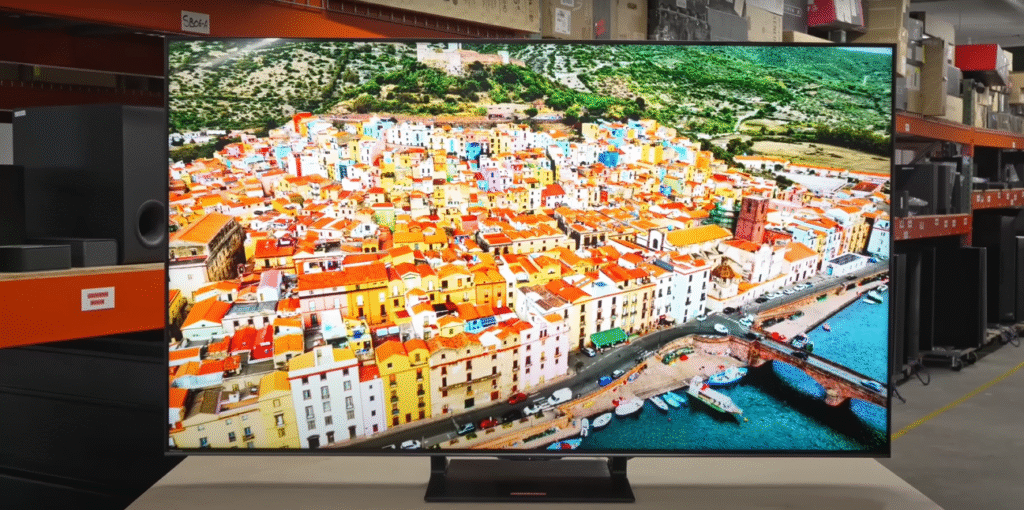
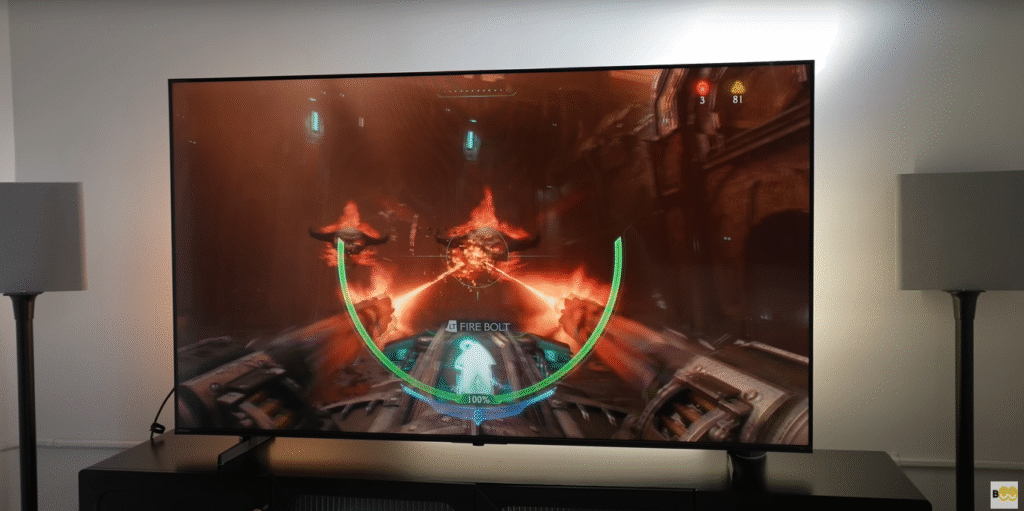
This is where Hisense proves it can compete with premium brands. RTINGS rates it as one of the best Hisense TVs tested, packed with modern features for movie fans and gamers.
The U8 series uses Mini-LED backlighting with over 1,000 local dimming zones, quantum dot color technology, and peak brightness exceeding 2,000 nits in some models. These specs rival or beat Sony and Samsung TVs, costing significantly more.
Real Performance Data:
The 85-inch Hisense UX achieved nearly 2,500 nits peak brightness in testing—among the brightest TVs RTINGS has ever measured. That’s brighter than most $3,000+ flagship models from established brands.
The U8K series delivers excellent overall picture quality with top-notch HDR performance, especially considering the $800-$2,700 price range across sizes.
Mid-Range Models Punch Above Weight
U7 Series:
Enhanced with Mini-LED Pro technology reaching up to 3,000 nits peak brightness. Features QLED color displaying over a billion vibrant shades, 165Hz Game Mode Ultra for smooth gaming, and comprehensive HDR support.
Many owners report the U7 equals or exceeds Sony TVs at much better prices. The picture quality holds up against brands charging thousands more.
U6 Series:
The U6K offers QLED color with quantum dot technology, 500+ nits brightness, 120Hz support with VRR, and mini-LED backlighting starting around $400-$500 for 55-inch models.
This represents exceptional value—features that cost $1,000+ from Samsung or Sony for half the price.
What Makes Hisense Picture Quality Competitive?
Quantum Dot Technology: All ULED models use quantum dots for wider color gamut and better color accuracy than standard LED TVs.
Mini-LED Backlighting: Even mid-range Hisense models include mini-LED technology that premium brands reserve for top-tier sets. This provides superior contrast and local dimming performance.
High Brightness: Hisense doesn’t compromise on brightness. Even budget models deliver 400+ nits, with premium models exceeding 2,000 nits for excellent HDR performance and bright room viewing.
Proper HDR Implementation: Support for Dolby Vision, HDR10+, and HLG ensures compatibility with all major HDR formats.
The Gaming Experience: Surprisingly Strong
Modern Gaming Features
Hisense didn’t skip gaming capabilities. Many models include:
120Hz/144Hz/165Hz refresh rates depending on model
Variable Refresh Rate (VRR) support
Auto Low Latency Mode (ALLM)
HDMI 2.1 bandwidth for next-gen consoles
Game Mode Plus with specialized picture modes
Low input lag (under 15ms on most models)
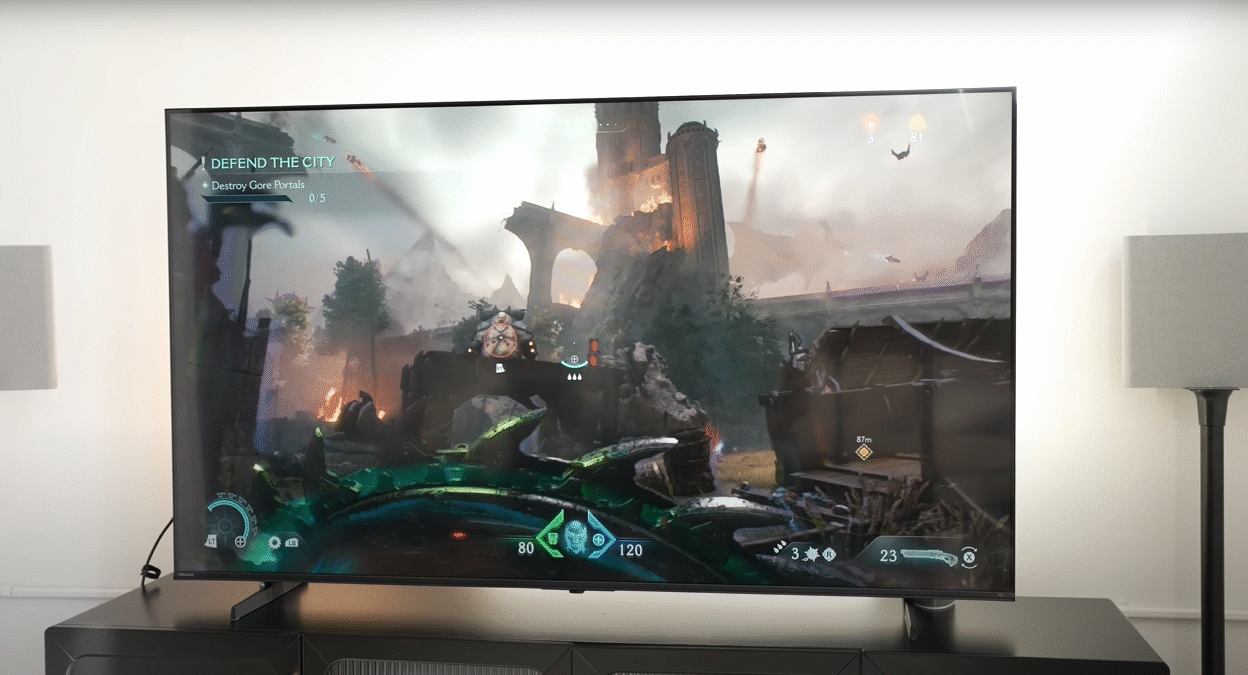
The E7K Pro is specifically built for gamers with 120Hz refresh rate, built-in subwoofer, and comprehensive gaming features at mid-market pricing.

Console Compatibility
PS5 and Xbox Series X owners can utilize:
- 4K gaming at 120fps
- VRR for tear-free gaming
- Quick Frame Transport (QFT)
- Variable Refresh Rate (VRR)
Many Hisense models support features typically found only in premium gaming TVs costing $1,500+.
The Reliability Problem: The Elephant in the Room
This is where Hisense’s value proposition becomes complicated.
Consumer Reports Data: The 20% Problem
Consumer Reports estimates that 20 percent of Hisense TVs will experience problems within the first five years, earning a “Fair” reliability rating. By comparison, Sony TVs have an 11 percent failure rate with a “Very Good” rating.
That’s nearly double Sony’s failure rate. One in five Hisense TVs develops issues within five years—significantly worse than established premium brands.
This reliability concern led Consumer Reports to remove their “recommended” designation from several Hisense models despite strong performance scores.
Real Owner Experiences: Mixed Results
The Good:
Many owners report 6+ years of flawless operation. Forum users mention sets purchased in 2015-2018 still working perfectly, some even buying additional Hisense TVs based on positive experiences.
Best Buy reviews include comments like “Great quality tv for streaming movies” and “If you are a user of Sony TVs, you should find the Hisense an equal or better TV at a much better price.”
The Bad:
Recent ConsumerAffairs reviews include complaints about TVs failing within 3-5 months, backlight issues, and speakers not working, with Hisense claiming defects are “normal” and refusing warranty service.
Common failure modes include:
- Backlight failures (most common)
- Screen going black while sound continues
- Vertical lines appearing on display
- Software update failures bricking the TV
- Wi-Fi connectivity issues
- Sound system malfunctions
The Warranty Lottery
Some users experience smooth warranty service with quick replacements. Others face months-long repair processes with multiple service calls and no resolution.
BBB complaints reveal issues including service partners refusing to dismount wall-mounted TVs for repair, effectively denying warranty service for wall-mounted installations, and weeks-long delays finding authorized repair technicians.
Quality Control Issues
The reliability problems stem from inconsistent quality control. You might get a perfect TV that lasts a decade, or you might get a lemon that fails within months.
This variability creates a lottery situation where price savings gamble against potential hassles.
Customer Service: The Biggest Weakness
If reliability is Hisense’s Achilles’ heel, customer service is the arrow that hits it.
The Customer Service Reality
Trustpilot reviews describe customer service as “very bad,” with complaints about TVs failing within months, difficulty reaching support, repair delays lasting weeks, and eventual refunds after purchasing replacement TVs from other brands.
Common customer service problems:
Slow Response Times: Days or weeks waiting for replies to warranty claims.
Difficulty Reaching Support: Phone lines with long hold times, unanswered emails, online forms that receive no response.
Repair Delays: Weeks or months waiting for authorized service technicians, parts availability issues, multiple visits required.
Warranty Denials: Claims denied for reasons including “accidental damage” for internal failures, cosmetic issues blamed on user, and strict interpretation of warranty terms.
Wall-Mount Problems: Service partners refusing to handle wall-mounted TVs, requiring customers to pay $500+ for professional dismounting/remounting for warranty repair.
The Extended Warranty Catch-22
Hisense offers extended warranties, but even those don’t guarantee smooth service. Multiple reports describe extended warranty claims being denied or dragged out for months despite valid coverage.
The warranty process itself becomes the problem—not coverage terms, but actual execution of repairs and replacements.
Warranty Terms: What’s Actually Covered
Standard Coverage:
- 1 year parts and labor (TVs under 50″)
- 2 years parts and labor (TVs 50″+)
- 2 years parts and labor (Laser TVs)
What’s NOT Covered:
- Screen cracks (even if spontaneous)
- Burn-in
- Dead pixels (depending on quantity/location)
- Issues caused by “signal reception problems.”
- Damage during shipping for repair
- Wall-mounting costs for service
- Software issues in some cases
The warranty looks decent on paper but execution determines actual value.
Smart Features: Google TV and VIDAA Platforms
Google TV (Most Models)
Most Hisense TVs run Google TV, providing:
Comprehensive app support: All major streaming services
Google Assistant: Voice control built in
Chromecast: Easy casting from phones/tablets
Personalized recommendations: AI-curated content suggestions
Universal search: Find content across all apps
Google TV represents mature, well-supported smart functionality that works reliably and receives regular updates.
VIDAA U (Some Budget Models)
Hisense’s proprietary VIDAA U platform appears on some models. It’s functional but less polished than Google TV, with:
- Fewer app options
- Less intuitive interface
- Slower performance on budget hardware
- More limited voice control
If choosing between Google TV and VIDAA U, Google TV is significantly better.
Smart Feature Performance
Most owners report smart features work well. The platforms are responsive, apps load quickly, and voice control functions reliably on Google TV models.
Software updates arrive regularly, though update failures occasionally brick TVs (requiring factory resets or service calls).
Value Proposition: When Hisense Makes Sense
The Numbers That Matter
Example Comparison (65-inch 4K QLED with Mini-LED):
Hisense U7K: $600-$650
- 700+ nits brightness
- 144Hz refresh rate
- Mini-LED with local dimming
- QLED quantum dot color
- Comprehensive gaming features
Samsung QN90C: $1,400-$1,600
- Similar specs
- Better reliability
- Superior support
- $800+ more expensive
Sony X90L: $1,200-$1,400
- Comparable performance
- Better motion handling
- Excellent support
- $600-$800 premium
The value gap is undeniable. Hisense delivers 80-90% of premium brand performance at 40-50% of the cost.
Where Savings Make Sense
Best Hisense Scenarios:
✅ Secondary TVs: Guest rooms, bedrooms, basements where failure is inconvenient but not critical
✅ Budget Limitations: Need 65″+ screen but can’t afford $1,500+ premium brands
✅ Warranty Access: Buying from Costco (excellent return policy) or with strong extended warranty
✅ Feature Prioritization: Gamers needing 120Hz/VRR who can’t afford premium options
✅ Short-Term Use: Renters, temporary living situations, college dorm rooms
✅ Risk Tolerance: Comfortable dealing with potential warranty issues to save $500-$1,000
When Premium Brands Make Sense
Skip Hisense If:
❌ Primary Family TV: Main living room TV getting daily multi-person use
❌ Reliability Priority: Can’t tolerate potential failures and warranty hassles
❌ Wall-Mounted Installation: Service complications for wall-mounted repairs
❌ Limited Patience: Don’t want to deal with potential customer service struggles
❌ Long-Term Investment: Planning to keep TV 10+ years
❌ No Extended Warranty Access: Buying without strong warranty/return protections
How Hisense Compares to Competitors
vs. Samsung
Samsung Advantages:
- Better reliability (lower failure rates)
- Superior customer service and warranty support
- More polished software (Tizen)
- Better motion handling
- Stronger brand reputation
Hisense Advantages:
- 40-50% lower prices for similar specs
- Often brighter panels
- More aggressive feature adoption (Mini-LED across more models)
- Better value per dollar
Verdict: Samsung for reliability and support, Hisense for features per dollar.
vs. LG
LG Advantages:
- OLED technology (perfect blacks, infinite contrast)
- Better viewing angles
- Superior gaming features (G-Sync, FreeSync)
- WebOS is excellent
- Strong reliability
Hisense Advantages:
- Much lower prices
- Brighter for HDR content
- No burn-in risk
- Better budget options
Verdict: LG for premium OLED experience, Hisense for budget-conscious buyers.
vs. Sony
Sony Advantages:
- Best motion processing (Motionflow XR)
- Superior upscaling
- Excellent out-of-box accuracy
- Outstanding reliability (11% failure rate)
- Premium build quality
Hisense Advantages:
- $600-$1,000 lower prices
- Similar peak brightness
- Comparable gaming features
- Better value proposition
Verdict: Sony for best picture processing and reliability, Hisense for value.
vs. TCL
TCL Advantages:
- Roku TV platform (simpler, more reliable)
- Slightly better reliability track record
- More established U.S. presence
- Better warranty execution
Hisense Advantages:
- Often brighter panels
- More aggressive Mini-LED adoption
- Google TV (more features than Roku)
- Slightly lower prices typically
Verdict: Very comparable—TCL edges ahead on reliability/support, Hisense on picture specs.
The Smart Buying Strategy for Hisense
If you decide Hisense offers the right value proposition, follow these rules to minimize risk:
Rule #1: Buy From the Right Retailers
Best: Costco (90-day return, excellent support, free 2-year warranty, hassle-free returns)
Good: Best Buy (extended warranty options, Geek Squad support, reasonable return policy)
Acceptable: Amazon (easy returns, extended warranty available, but less hands-on support)
Avoid: Walmart, discount retailers (30-day returns only, limited support options)
Rule #2: Always Get Extended Warranty
The extended warranty isn’t optional—it’s essential insurance against the 20% failure rate.
Best Options:
- Costco Allstate plan (covers everything, no deductible, great service)
- Best Buy Geek Squad (comprehensive, in-store support)
- Square Trade (good coverage, reasonable pricing)
Budget $100-$200 for 5-year coverage on a $500-$800 TV. It’s worth it.
Rule #3: Test Immediately and Thoroughly
Don’t wait to discover problems. Within the first 30 days:
- Test all HDMI ports
- Check for dead pixels
- Verify Wi-Fi connectivity
- Test all smart apps
- Check for backlight uniformity
- Verify remote functions properly
- Test gaming features if applicable
Early problems are much easier to resolve through retailer returns than manufacturer warranties.
Rule #4: Register Your Product
Register your TV with Hisense immediately after purchase. This:
- Activates your warranty
- Creates a service record
- Speeds up future warranty claims
- Ensures you receive safety notices
Rule #5: Keep ALL Documentation
Save forever:
- Original purchase receipt
- Box and packaging (at least first 30 days)
- Warranty documents
- Registration confirmation
- Any service records
Lost documentation can void warranties or complicate claims significantly.
Rule #6: Document Everything
If problems develop:
- Take photos/videos of issues
- Document all support contacts (dates, times, names)
- Save all emails and messages
- Note case numbers
- Record promises made
This documentation becomes critical if you need to escalate warranty claims or pursue returns.
Most Hisense TVs last 7-10 years when they don’t develop defects. However, 20% experience problems within 5 years.
The Verdict: Is Hisense a Good TV?
After analyzing performance data, reliability statistics, owner experiences, and warranty realities, here’s the honest answer:
When Hisense Is Good
Hisense delivers exceptional picture quality and features for the price. The U7 and U8 series compete with TVs costing $1,000+ more in brightness, color, gaming features, and HDR performance.
If you get a good unit, you’ll wonder why anyone pays premium prices for similar specs. The value is genuinely outstanding when everything works properly.
The Reliability Gamble
But “if you get a good unit” is the critical qualifier. With 20% developing problems within five years, one in five buyers will experience the frustration of failures, warranty claims, repair delays, and customer service struggles.
That’s significantly worse odds than premium brands offering 89-90% reliability over the same period.
The Math of Value
Scenario 1 (80% probability): Your Hisense works perfectly. You saved $800 on a 65-inch TV with premium features. Excellent outcome.
Scenario 2 (20% probability): Your Hisense fails. You spend hours on customer service, wait weeks for repair/replacement, potentially pay for extended warranty claims or out-of-pocket fixes. The $800 savings partially or completely evaporates through hassle costs and opportunity costs.
Is an 80% chance of saving $800 worth a 20% chance of significant frustration? That’s the fundamental Hisense value proposition.
The Final Recommendation
Buy Hisense if:
- You have strong extended warranty or return protection
- It’s not your primary household TV
- You’re comfortable with 1-in-5 failure odds
- Saving $500-$1,000 genuinely matters
- You can handle potential customer service hassles
Skip Hisense if:
- It’s your main family TV getting heavy daily use
- You prioritize reliability and hassle-free ownership
- You can’t afford extended warranty coverage
- Customer service problems cause major stress
- You plan to keep the TV 10+ years
Hisense represents a calculated gamble: exceptional value if you win the reliability lottery, significant frustration if you don’t.
Choose based on your risk tolerance, budget constraints, and ability to handle potential problems.