TL;DR — Quick Verdict
The Oppo Reno 16 Pro has shrunk down compared to previous generations, and that’s genuinely a good thing — it’s compact, lightweight, and still premium-feeling, without sacrificing battery life or performance to get there. Used as a full-time phone for over a week, including a full trip abroad, it delivered all-day battery on heavy usage days, smooth performance for everyday tasks and gaming, and a genuinely capable camera setup for an upper mid-ranger. The only real miss: no wireless charging at this price tier. Everything else is close to excellent.
First Impressions: A Welcome Shrink
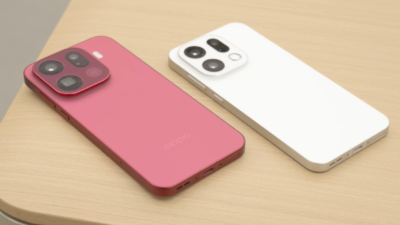
Oppo’s Reno series has always been built with a younger audience in mind — sleek, trend-forward, and tuned for social-first usage. The Reno 16 Pro continues that tradition, but the most immediately noticeable change is size: this phone has shrunk considerably compared to previous Reno generations.
It now sits in similar territory to phones like the Xiaomi 17 and Vivo X300 — a compact 6.32-inch display surrounded by slim, symmetrical bezels, with flat edges and minimal curves. Weighing under 200g, it’s genuinely lightweight for a modern flagship-adjacent device.
This shrinking trend deserves a mention on its own. After years of phones growing larger generation after generation, it’s refreshing to see brands pull back toward more hand-friendly proportions — and the Reno 16 Pro still manages to feel premium despite the smaller footprint, thanks to metal sides and a striking design.
Design: A 3D Pop Planet Back That’s More About the Unboxing Moment
The standout design element here is the back panel — matte glass finished in what Oppo calls a “3D pop planet” design. It’s a swirling, space-inspired pattern that creates a genuine 3D depth effect when viewed and light hits it at certain angles.
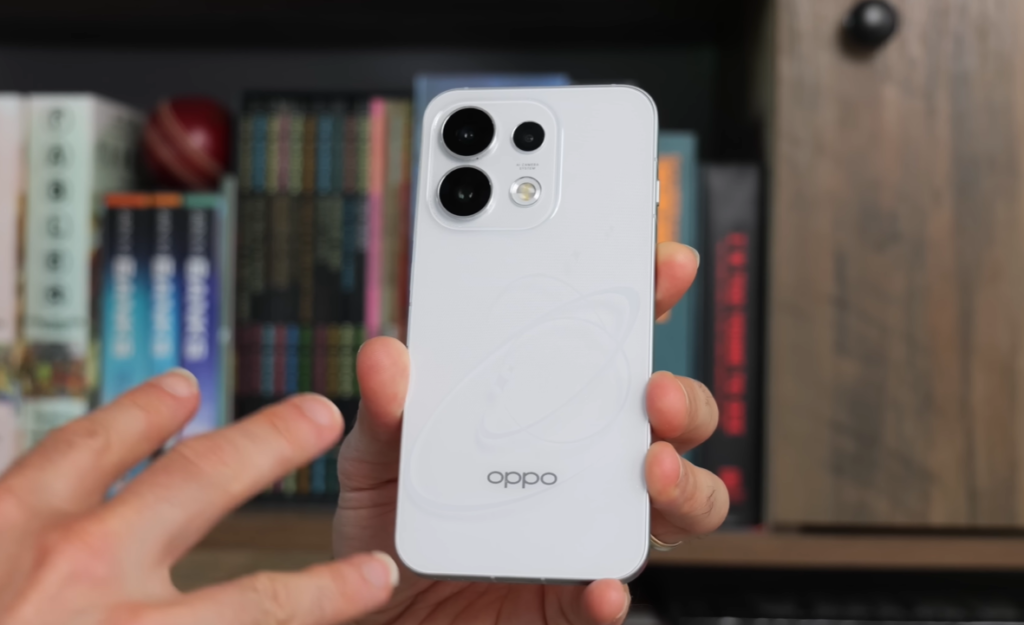
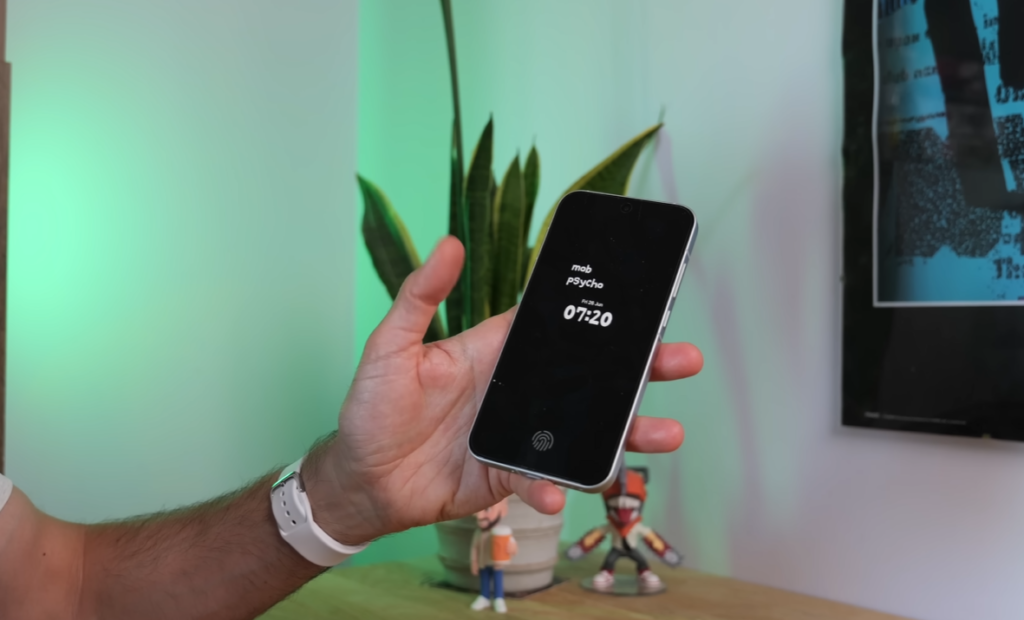
It’s a striking detail the first time you pull the phone out of the box — but realistically, once it’s in a case or being held normally, almost nobody else will notice it. Still, in a market where most phones increasingly look identical, any attempt at distinctiveness is welcome.
The review unit here is the white colorway, though it’s also available in a black finish for those who prefer something more understated.
Durability-wise, the phone held up well through a week of real use — tossed into shorts pockets alongside camera gear with zero scratches or scuffs, helped along by a pre-installed screen protector. It carries an IP68, IP69, and IP69K rating, meaning it can handle temporary submersion and high-pressure water spraying without issue.
Unlocking and Security
The Reno 16 Pro uses a standard optical in-display fingerprint sensor with 2D print reading. It’s quick and reliable — only struggling when hands are extremely wet (regular sweat or sunscreen-greased hands didn’t cause issues). Face unlock is also available, slightly less secure but fast, and it handled recognition even while wearing sunglasses, just with a marginally longer confirmation delay.
Software: Color OS 16 — Smooth, Customizable, But Comes With Baggage
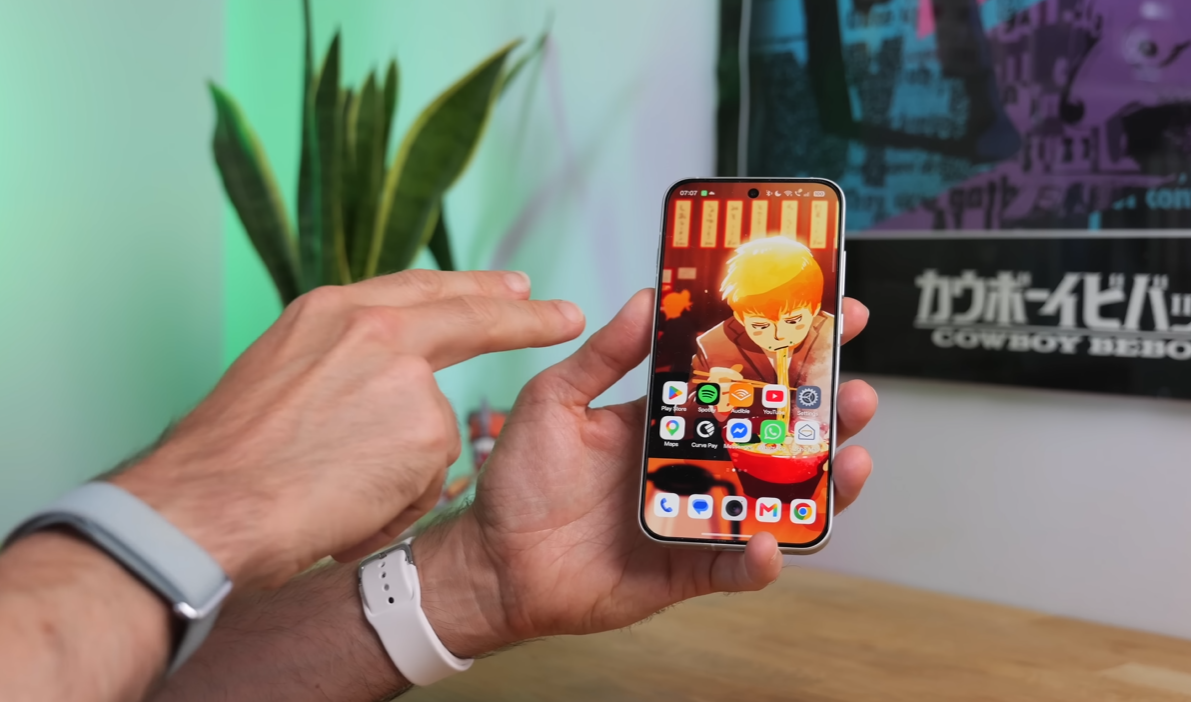
Running on Android with Color OS 16 on top, the software experience here remains genuinely one of the better manufacturer skins on the market. It’s smooth, intuitive, and offers excellent customization — multiple themes, extensive personalization options, and fluid animations throughout the interface.
Software support: Oppo is guaranteeing 5 OS updates and 6 years of security patching. That’s solid, though it falls short of Google and Samsung’s 7-year commitments — still nothing to complain about at this price point.
The downside: there’s a noticeable amount of pre-installed bloatware — AliExpress, Amazon shortcuts, and similar third-party app clutter. Thankfully, most of it can be removed in just a couple of taps.
Storage: The review unit came with 256GB, which filled up quickly during testing — mostly due to downloaded shows for offline viewing and extensive 4K video recording. A 512GB option is available for heavier users, and microSD card expansion is also supported via a dual-SIM tray, alongside standard eSIM compatibility.
Minor software hiccups: A couple of small bugs surfaced during the test period — notably a Do Not Disturb toggle that occasionally let notifications through despite being enabled. Toggling it off and back on resolved the issue each time.
AI Features: A Dedicated Key and “Mind Space”
There’s a dedicated AI key on the left edge of the phone. Tapping it captures everything on your current screen and feeds it into a feature called “Mind Space” — essentially a smart memory/reminder system. It extracts information from the screenshot and lets you create reminders or search back through saved content later, without manually digging through a screenshot folder.
Other AI features include spending tracking and built-in translation — the latter proved genuinely useful during international travel, even in destinations where English is widely spoken.
Display: Compact, Sharp, and Genuinely Vivid
The front of the Reno 16 Pro houses a 6.32-inch AMOLED display at 1.5K resolution. Despite being more compact than previous Reno generations, it remained perfectly enjoyable for extended streaming sessions — including full-length matches and shows — with crisp detail throughout.
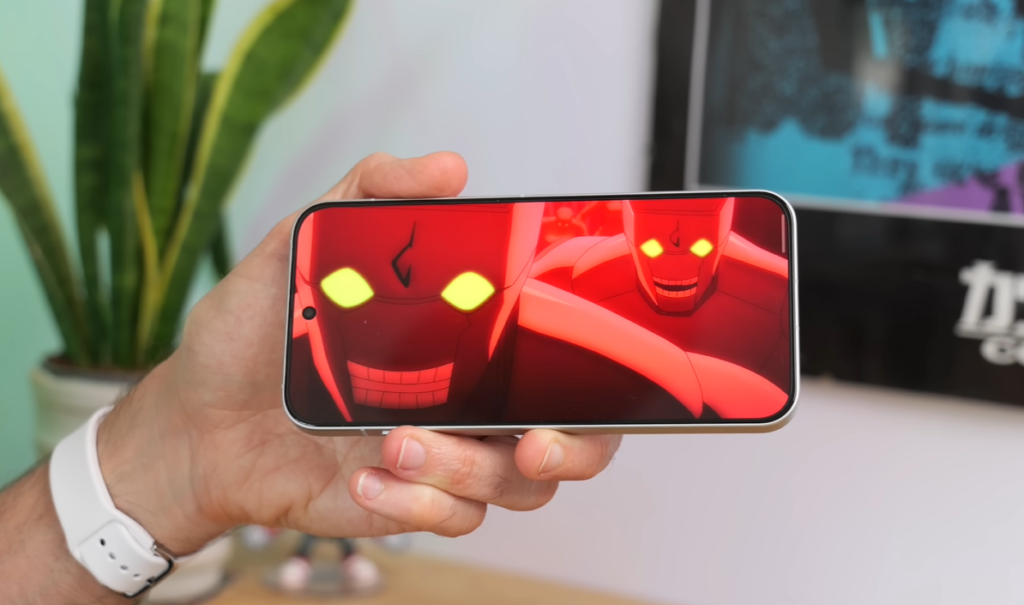
HDR10+ is supported in compatible apps, delivering strong contrast and excellent wide viewing angles. The “vivid” color mode adds a noticeable boost to color saturation, making images pop a bit more for those who prefer punchier visuals.
Brightness performance is genuinely impressive — comfortable dimming for low-light viewing with blue light filtering, and strong enough output to remain fully visible in direct outdoor sunlight, even before maxing out brightness levels.
Refresh rate runs at a smooth 120Hz standard, boostable to 144Hz in supported games. For anyone sensitive to OLED flicker, the display includes 3840Hz PWM dimming, which should help minimize eye strain during extended use.
Audio
The stereo speaker setup uses the earpiece as the top channel and a bottom-mounted speaker as the primary driver. Balance between the two is respectable, with decent clarity at higher volumes and genuinely loud maximum output — though bass response could use more depth and punch.
Bluetooth performance was largely flawless throughout testing, with only occasional minor stutters when streaming to earbuds in dense, signal-congested urban areas.
Performance: Smooth Daily Use, Capable Gaming
Powering the Reno 16 Pro is MediaTek’s Dimensity 8550 chipset, paired with 12GB of RAM. For everyday tasks — app switching, multitasking, general use — performance is excellent. Apps load quickly and the overall experience feels fluid throughout.
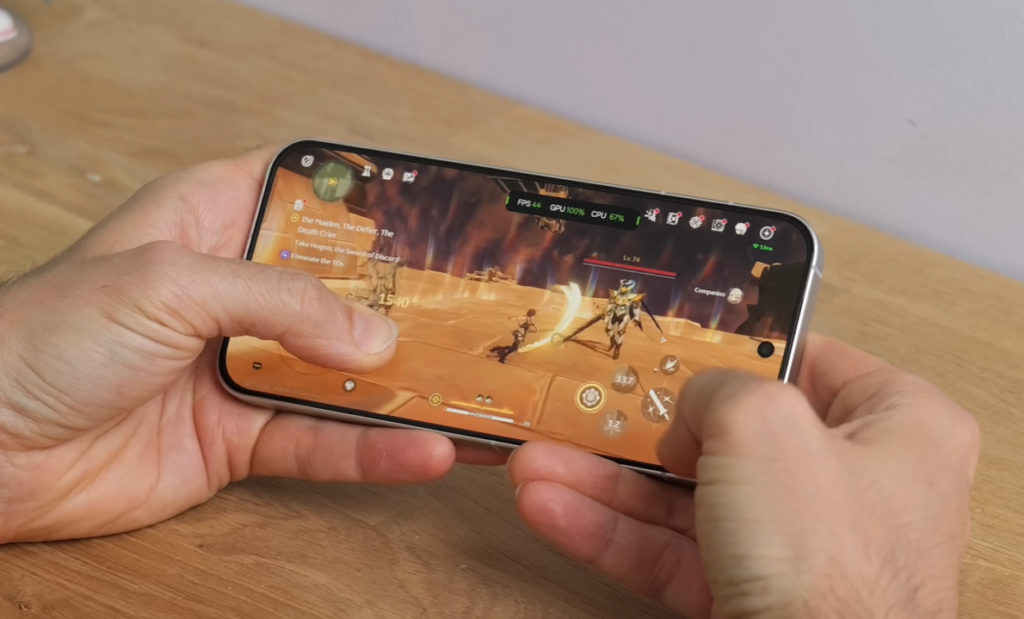
Gaming performance benefits from Oppo’s HyperBoost technology, which deprioritizes background tasks to free up resources during gaming sessions. With Ultra Gaming Mode enabled, the phone handled demanding titles at maximum graphics settings without issue — though frame rates hovered in the 40s to low 50s range rather than a locked 60fps. Still smooth and entirely playable, just not quite at the very top tier of gaming performance.
A built-in vapor chamber helps manage heat during extended gaming sessions — the phone does get warm to the touch on the back, but that heat is effectively dissipated without impacting performance. The only thermal limitation encountered during testing was triggered by extended back-to-back 4K video recording, which caused brief screen dimming as a heat-management measure. Recording was never interrupted, and the phone never required a restart — notable given testing occurred in temperatures around 30°C.
Gaming mode includes a dedicated interface accessible via a swipe gesture, offering both a performance-focused “pro gamer” mode and a power-saving alternative, alongside tools for screen recording and other in-game utilities.
Battery Life: The Real Standout Feature
Despite the smaller chassis, Oppo hasn’t compromised on battery capacity — the Reno 16 Pro packs a substantial 6,700mAh cell.
This translated into genuinely stress-free usage during an international trip: even with 6–7 hours of screen-on time per day, heavy camera use including 4K video recording, and constant navigation, the phone consistently ended most days with at least 20% battery remaining.
The only time battery dropped into power-saver territory was on an unusually demanding return-travel day — combining typical camera and navigation use with extended Android Auto usage during a drive, plus a full match streamed at home afterward. Even after roughly 20 hours of continuous mixed use, some battery remained.
Gaming endurance: Even under worst-case conditions — maximum volume, peak screen brightness, and Ultra Performance Mode enabled — the Reno 16 Pro delivered over 5 hours of continuous gaming, closer to 5.5 hours in testing.
Charging: 80W wired fast charging delivers a significant top-up in just 10 minutes.
The one disappointment: no wireless charging support — a feature that feels increasingly expected at this upper mid-range price tier, and its absence here stands out as the phone’s most notable shortcoming.
Camera: Strong All-Rounder Without Pro-Level Complexity
Unlike Oppo’s flagship line, there’s no Hasselblad branding or tuning here. The camera app remains comprehensive, however, with multiple shooting modes including various filters for different visual styles, plus manual control over color temperature and brightness — though it stops short of offering a full dedicated Pro mode, in keeping with the phone’s youth-focused positioning. A high-resolution mode allows shooting at the full 200 megapixels when needed.


Main Camera (200MP)
In regular photo mode, results were consistently pleasing. True to Oppo’s typical processing style, images maintain close-to-natural contrast rather than the artificially boosted shadows seen on some Apple and Samsung devices. In softer lighting conditions, occasional noise appeared in shots, though nothing severe.
Color reproduction remained strong even in darker conditions, with bright and vibrant subjects standing out nicely. The camera also proved particularly reliable for capturing moving subjects — pets, wildlife, or kids — generally producing blur-free shots even in less-than-ideal lighting.
Portrait mode was the one inconsistent area — edge detection occasionally missed the mark, producing slightly smudgy results around subject outlines.
Telephoto (50MP, 3.5x Optical Zoom)
A genuinely useful addition for wildlife shots and travel photography, allowing closer framing without disturbing the subject. Tone and contrast remained consistent when switching from the main sensor — a detail that matters more than people realize, since inconsistent color science between lenses is a common complaint on competing phones.
At night, the telephoto sensor (being smaller) produced noticeably softer results, though grain remained well-controlled even in those conditions.
Ultrawide (50MP)
Useful for capturing larger scenes — landscapes, group shots, or expansive travel photography — and performed reliably throughout testing.
Video
The Reno 16 Pro records up to 4K at 60fps with HDR enabled, producing consistently bright, colorful footage. Switching between the main and telephoto sensors mid-recording can feel slightly jarring, though footage quality using the zoom lens remains strong.
One feature worth specifically highlighting: auto horizon correction, capable of correcting up to 5 degrees of tilt during recording. This significantly stabilizes shaky handheld footage — genuinely useful for casual vloggers or anyone shooting while walking (or after a few drinks, for that matter).
Audio capture during video held up well even in windy conditions, with voices remaining clear and distortion kept to a minimum.
AI camera features include creative tools like AI remix collages, letting users combine video backgrounds with sticker-style overlays from other clips for social content creation.
Front Camera (50MP)
A strong selfie and vlogging camera, supporting 4K recording at 60fps with a wide-angle option for fitting more people into frame — well-suited to group content and casual vlogging.
Who Should Buy the Oppo Reno 16 Pro?
This is a strong fit if you: want a genuinely compact, lightweight phone without sacrificing battery life or performance, value all-day battery even under heavy travel or gaming use, want a versatile camera setup (main + telephoto + ultrawide) without needing full manual pro controls, and appreciate a deeply customizable, smooth software experience.
Consider alternatives if you: specifically need wireless charging at this price point, want best-in-class portrait photography with consistently sharp edge detection, or prefer a larger display for media consumption and gaming.
Final Verdict
The Oppo Reno 16 Pro is a genuinely impressive upper mid-range phone, and the size reduction compared to previous Reno generations is a welcome change rather than a compromise. Battery life remains excellent despite the smaller chassis, gaming performance holds up well even on demanding titles, and the camera system — while not flagship-grade — delivers consistently pleasing results for a phone in this category.
The only real complaint is the absence of wireless charging, which feels like a notable omission at this price tier. Beyond that, this is a well-rounded, dependable phone that’s easy to recommend — whether you’re the youth-focused target audience or, frankly, anyone who wants a compact, capable daily driver.
Worth also considering at this price point: the Honor 600 Pro and Xiaomi 17T cover similar territory, while the Poco X8 Pro Max is worth a look if you don’t mind a larger form factor — it offers excellent battery life and performance at a lower price, with a noticeably less capable camera system in exchange.
No. Despite being an upper mid-range device, the Reno 16 Pro does not include wireless charging support — its most notable shortcoming. It does offer 80W wired fast charging.
The 6,700mAh battery comfortably lasts a full day of heavy use — including 6–7 hours of screen-on time, camera use, and navigation — typically ending the day with 20% or more remaining. Under intensive gaming with maximum settings, it delivers over 5 hours of continuous gameplay.
Reviewed by Reo R — Tech & Auto Reviewer with 6+ years of hands-on experience. My PitShop delivers honest reviews with zero brand bias.
Disclosure: This review is based on hands-on testing of the Oppo Reno 16 Pro as a full-time daily device over more than one week, including real-world international travel use.