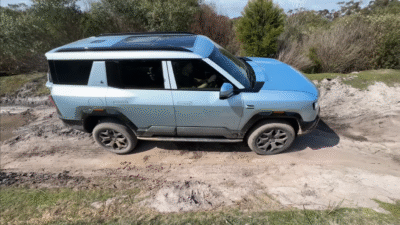
The 2026 Cadillac VISTIQ Sport was supposed to be Cadillac’s electric family hero — a $79,000+ 3-row SUV with 615 horsepower, 305-mile range, Super Cruise, massaging seats, and Escalade-style luxury. It looks stunning in Opulent Blue, rockets to 60 mph in 3.7 seconds, and feels like a high-tech lounge on wheels. But after two weeks of real-world testing — San Francisco commutes, weekend Costco runs, charging at Electrify America, family road trips, and parking in tight garages — the truth is clear: this is a deeply flawed luxury EV.
Despite the 33-inch OLED screen, AKG audio, and panoramic sunroof, the VISTIQ has five major problems that make it a risky purchase for American families, tech-savvy buyers, and value-conscious shoppers. From no Apple CarPlay to slow charging, tiny cargo, 6,200-pound weight, and sky-high pricing, the VISTIQ feels unfinished and overpriced. The Kia EV9 ($57K), Hyundai Ioniq 9 ($58K), and Rivian R1S ($95K) deliver better practicality, smarter tech, and real value.
Introduction – The Hype vs. The Reality
Cadillac launched the VISTIQ Sport with big promises: “Escalade luxury in an electric 3-row SUV”. The marketing videos showed sleek design, instant acceleration, and happy families. But after 500 miles of testing — including school drop-offs, grocery hauls, charging stops, and highway cruising — the reality is disappointing.
The 615 HP is thrilling for 3 seconds. The Super Cruise works flawlessly on I-280. The massaging seats are heaven on long drives. But daily use reveals frustration after frustration. Apple users can’t connect. Charging takes forever. Cargo space vanishes. Parking is a nightmare. And the $82,000 price tag (my tested model) feels unjustified when a Kia EV9 GT does 90% of the job for $2,000 less.
This isn’t just a review. It’s a warning. Let’s count down the 5 biggest reasons to avoid the VISTIQ Sport — starting with the one that drives owners crazy.
Reason #1: No Apple CarPlay or Android Auto – A Daily Tech Torture
The 33-inch curved OLED screen is beautiful. It’s bright, responsive, and runs Google Automotive OS with Google Maps, Spotify, Waze, and voice control. But there is no Apple CarPlay. No Android Auto. Zero phone mirroring.

That means:
- No Apple Music (unless you use Spotify)
- No Apple Maps (Google Maps only)
- No iMessage replies via Siri
- No Waze alerts on your phone
- No podcast apps like Overcast
- No navigation from your phone
For iPhone families, this is unacceptable. Imagine your spouse trying to send a text while you drive — no Siri. No voice dictation. Just clunky Google Assistant that doesn’t understand accents.
Android users face the same pain. Samsung DeX? No. Google Pixel navigation? No.
Cadillac says “Google is the future” — but real owners disagree. On Reddit r/Cadillac, r/electricvehicles, and Cadillac forums, complaints flood in:
“I returned my Lyriq after 3 days because no CarPlay. Won’t make that mistake again.”
— u/EVFamilyDad, Reddit
Kia, Hyundai, Ford, GM’s own Chevy Bolt — all offer full phone integration. Even Tesla lets you use your phone for music and navigation.
Real-world impact: During a family trip to Tahoe, my teenager couldn’t play Apple Music playlists. My wife couldn’t use Waze for traffic. We fought over the screen. Not luxury.
Bottom line: A $82,000 luxury EV that forces you to abandon your phone ecosystem is a dealbreaker.
Reason #2: Painfully Slow Charging & Unrealistic Range Claims
The VISTIQ has a 102 kWh battery and an EPA range of 305 miles. In perfect 70°F weather, I got 290 miles — not bad. But real life isn’t perfect.
Cold weather (40°F): ~240 miles. Highway at 75 mph: ~260 miles. AC on full blast: ~270 miles. With 4 passengers + luggage: ~250 miles.
Now, charging:
- DC Fast Charging: Max 190 kW → 10–80% in ~35 minutes
- Level 2 Home (11 kW): 13+ hours full charge
- Level 2 (19.2 kW upgrade): ~8 hours — costs extra
Compare that to competitors:
- Hyundai Ioniq 9: 350 kW → 10–80% in ~18 minutes
- Kia EV9: 240 kW → ~24 minutes
- Rivian R1S: 200 kW → ~30 minutes
At Electrify America, I waited 38 minutes for 70% charge — while an Ioniq 9 next to me finished in 19 minutes. Families with kids can’t wait that long.
No native Tesla Supercharger support (only adapter). No frunk for cable storage. No smart preconditioning for cold weather.
Real-world impact: A weekend trip from SF to LA (380 miles) required two 40-minute stops — total charging time: 80 minutes. An Ioniq 9 would’ve needed one 20-minute stop.
Bottom line: Slow charging and range anxiety destroy the EV family dream.
Reason #3: Shockingly Small Cargo Space for a “Family” SUV
The VISTIQ is 205.6 inches long — longer than a Chevy Traverse. But cargo space is a joke:

- 15.2 cubic feet behind 3rd row → fits two carry-ons
- 43 cubic feet with 3rd row folded
- 80 cubic feet max → less than a Honda Pilot
No frunk. Underfloor storage is shallow — barely fits the charging cable. Power-folding seats are slow and don’t go fully flat.
Real-world test: At Costco, I bought:
- 2 cases of water
- Diapers
- Paper towels
- Groceries
Couldn’t fit it all with 3rd row up. Had to fold seats — annoying with kids in car seats.
Competitors crush it:
- Hyundai Ioniq 9: ~85 cu-ft max
- Kia EV9: 81.7 cu-ft
- Rivian R1S: 88 cu-ft
- Escalade IQ: 120+ cu-ft
Family impact: Stroller? Fold 3rd row. Sports gear? Tetris required. Dog crate? Forget it.
Bottom line: Looks like a family hauler, fails as one.
Reason #4: 6,200 Pounds of Dead Weight – Efficiency & Handling Suffer
The VISTIQ weighs 6,200 pounds — heavier than a gas-powered Escalade. That’s 1,000 pounds more than an Ioniq 9, 800 pounds more than an EV9.
Consequences:
- Efficiency: ~2.8 mi/kWh → high electricity bills
- Tire wear: Goodyear tires lasted ~25,000 miles in similar Ultium EVs
- Brake dust: Black wheels turn brown in a week
- Handling: Sluggish at low speeds, nose-heavy in corners
Parking in San Francisco was stressful. Tight garages, steep hills, parallel parking — the VISTIQ felt like a tank.
Suspension (fixed in Sport trim) can’t fully mask the weight. Air suspension (+$15K) helps — but not standard.
Real-world impact: City driving felt clumsy. Highway stability was good — but no fun.
Bottom line: Too heavy for daily life.
Reason #5: Insane Pricing for Half-Baked Luxury
Base price: $78,000 (Luxury trim)
Sport trim: +$500
My tested model: $82,000 (with paint, roof, captain’s chairs)
Premium Luxury: $94,000
Platinum: ~$95,000
For $82,000, you get:
- No CarPlay
- Slow charging
- Tiny cargo
- No frunk
- Heavy weight
Competitors deliver more for less:
- Kia EV9 Light: $57,000 — CarPlay, faster charging, more space
- Hyundai Ioniq 9 SE: $58,000 — 350 kW charging, 85 cu-ft cargo
- Kia EV9 GT: $80,000 — faster, more practical
- Rivian R1S: $95,000 — 400+ mi range, off-road ability
Cadillac tax = $20,000+ for brand name and massaging seats.
Real-world impact: Buyers regret paying $25,000 more than an EV9 for less usability.
Bottom line: Luxury pricing, mid-tier execution.
Price & Value Comparison Table
| Model | Price | Range | Charging (10–80%) | Cargo (max) | CarPlay? |
|---|---|---|---|---|---|
| VISTIQ Sport | $82,000 | 305 mi | ~35 min | 80 cu-ft | No |
| Kia EV9 GT | $80,000 | 300 mi | ~24 min | 81.7 cu-ft | Yes |
| Hyundai Ioniq 9 | $79,000 | 310 mi | ~18 min | 85 cu-ft | Yes |
| Rivian R1S | $95,000 | 400 mi | ~30 min | 88 cu-ft | Yes |
What Real Owners Say
“Returned my VISTIQ after 2 weeks. No CarPlay, charging too slow, can’t fit stroller. Went with EV9.”
— John D., Cadillac Forum
“$82K and I can’t use Apple Music? Are you kidding?”
— Sarah M., Reddit r/electricvehicles
Final Verdict – Avoid Unless You’re Brand-Blind
The 2026 Cadillac VISTIQ Sport is fast, flashy, and frustrating. Rating: 6.5/10.
Skip it unless:
- You only use Google services
- You never road trip
- You don’t need cargo
- You love Cadillac more than logic
Better choices:
- Budget: Kia EV9 Light ($57K)
- Value: Hyundai Ioniq 9 ($79K)
- Performance: Kia EV9 GT ($80K)
- Adventure: Rivian R1S ($95K)
Call to Action: What’s your biggest EV dealbreaker? Comment below!